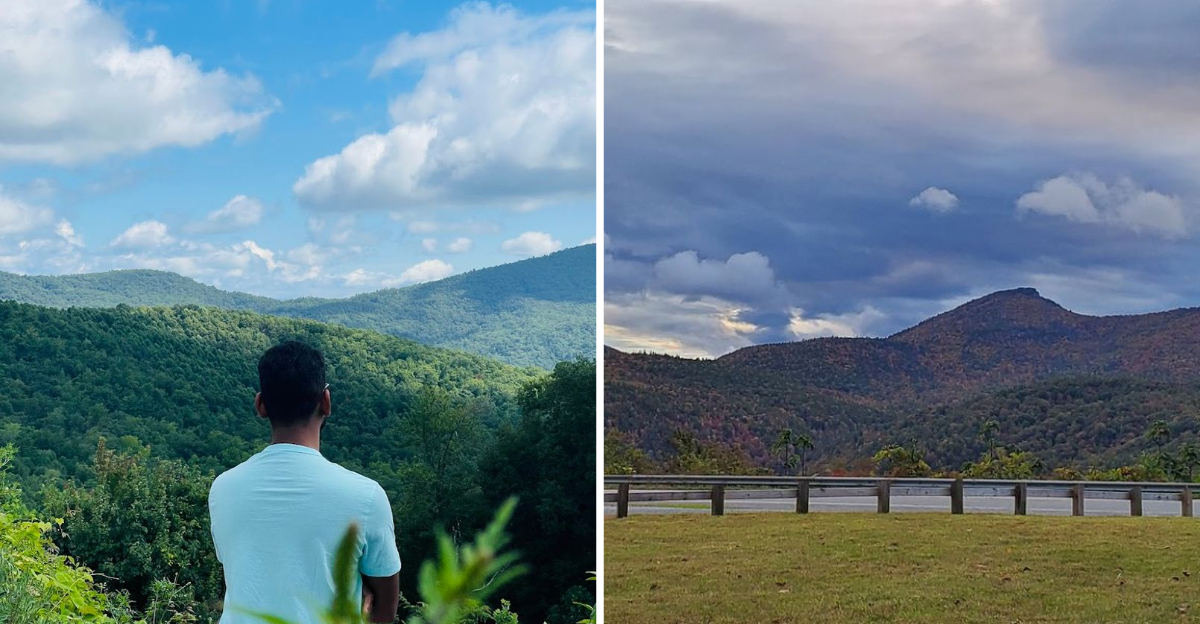
People have been watching the sky above this North Carolina mountain for over two centuries. Native Americans spoke of the lights long before settlers arrived.
Scientists have studied them. Tourists come from across the country hoping to catch a glimpse. But nobody can explain what they are.
Strange colored lights, red and orange and sometimes blue, that rise from the ridge and dance above the treeline before disappearing just as mysteriously as they appeared. Theories range from swamp gas to car headlights to something far stranger. The US Geological Survey investigated in the early 1900s and threw up their hands.
I sat at the overlook on a clear night, waited for hours, and finally saw them. Small glowing orbs, moving in no pattern I could follow.
North Carolina has plenty of mysteries, but the Brown Mountain Lights might be the most persistent.
The Legend Behind the Lights
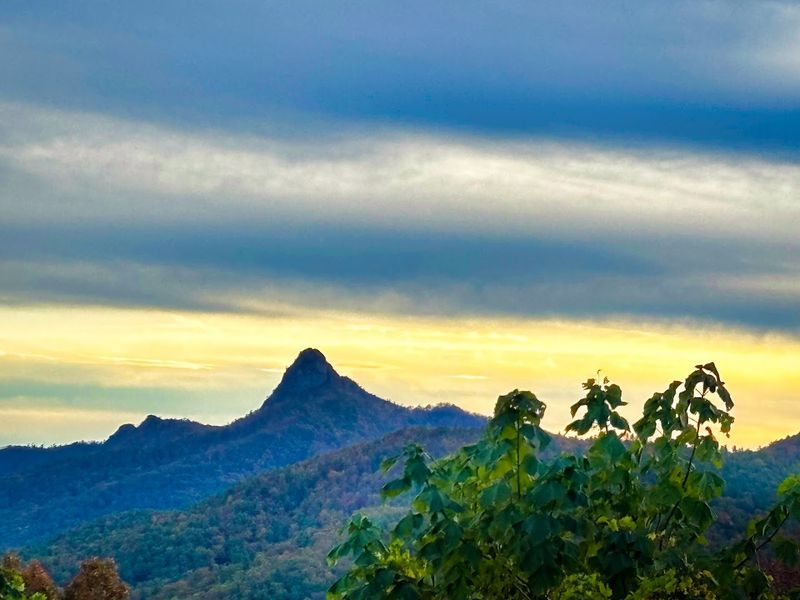
Few mysteries in American history have lingered as long or as stubbornly as the lights above Brown Mountain. Reports of glowing orbs near this ridge in the Pisgah National Forest stretch back centuries, with some Native American oral traditions referencing strange lights as far back as 1200 A.D.
That is not a typo. People have been puzzling over this mountain for nearly a thousand years.
Surveyor John William Gerard de Brahm documented the lights in 1771, describing them as luminous phenomena rising above the ridge at night. By the early 1900s, newspapers were picking up the story and the lights became something of a regional obsession.
The legends attached to them are as colorful as the lights themselves.
Cherokee and Catawba folklore offered their own explanations, speaking of warrior spirits searching the mountain for fallen comrades. Other stories involved a slave searching for a lost master, or the restless spirits of a woman and child.
None of these tales were ever proven, of course, but they gave the lights a kind of emotional weight that purely scientific explanations never quite managed to match. That layered history is part of what makes standing at the overlook feel like more than just a scenic stop.
You are looking at something people have been trying to understand for a very long time.
What the Science Actually Says
Science has taken a few swings at explaining the Brown Mountain Lights, and none of them have landed a clean knockout. A 1913 U.S.
Geological Survey suggested the lights were simply locomotive headlights being bent by atmospheric conditions. That explanation felt tidy until people pointed out that similar lights had been reported long before trains or automobiles existed in the area.
A 1916 flood that knocked out all rail and road traffic in the region offered a natural test. The lights were still seen.
That detail has a way of making the locomotive theory feel a little shaky. A follow-up investigation in 1922 by USGS scientist George R.
Mansfield concluded that most sightings could be explained by trains, car headlights, and brush fires combined with atmospheric refraction bending light over the ridge.
More recent research has pointed toward ball lightning as a possible explanation. Appalachian State University installed low-light cameras overlooking the gorge and collected thousands of hours of footage.
A 2014 report found nothing unexplainable in over 6,300 hours of video, though a stationary light was captured in 2016. Some researchers have also explored whether lithium deposits in the mountain interact with humidity to produce the glow.
None of these theories have been fully confirmed, which is exactly why the mystery refuses to go away.
Finding the Brown Mountain Overlook on NC-181
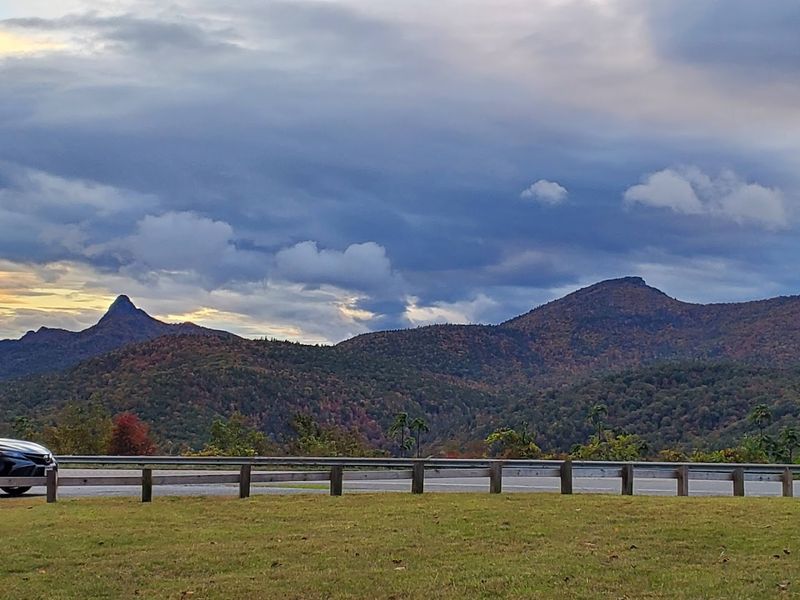
Getting to the Brown Mountain Overlook is refreshingly straightforward, which feels like a small gift when you consider how many great viewpoints in North Carolina require a long hike just to reach them. The overlook sits right off NC Highway 181 near Newland, and there is a clear sign letting drivers know to pull over before they blow past it.
The address is 8176 NC-181, Newland, NC 28657, easy to punch into any navigation app.
The drive up is genuinely enjoyable on its own. Switchbacks curl through dense forest, and the elevation climbs steadily until the trees open up and you get your first proper look at the surrounding ridges.
Motorcyclists love this route, and on weekends you will likely share the overlook with a few riders who stopped for the same reason you did.
Parking is available right at the overlook and fits a decent number of vehicles. There are no restroom facilities on site, so plan accordingly before you head out, especially if you are coming for a late-night light-watching session.
Picnic tables are set up nearby, making it a comfortable spot to settle in for a while. The pavement near the entrance has some rough patches, so just take it slow pulling in.
Once you are parked and out of the car, the view immediately rewards the effort of getting there.
What You Can Actually See from the Overlook
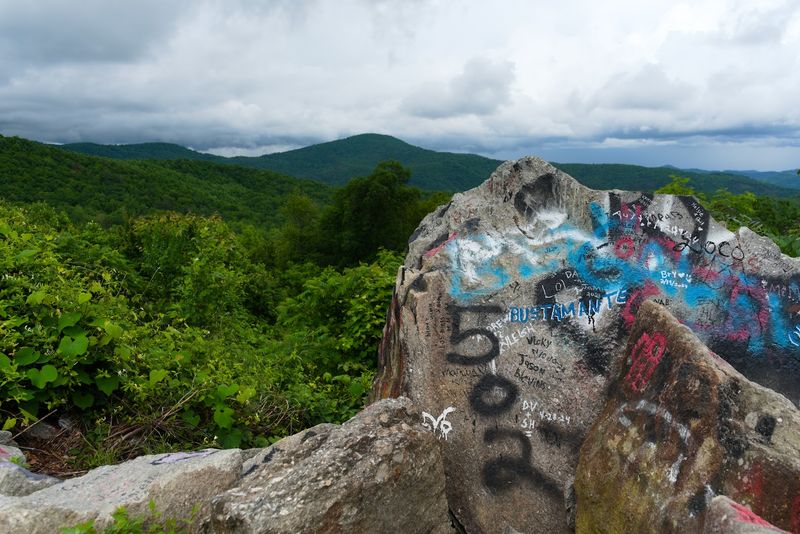
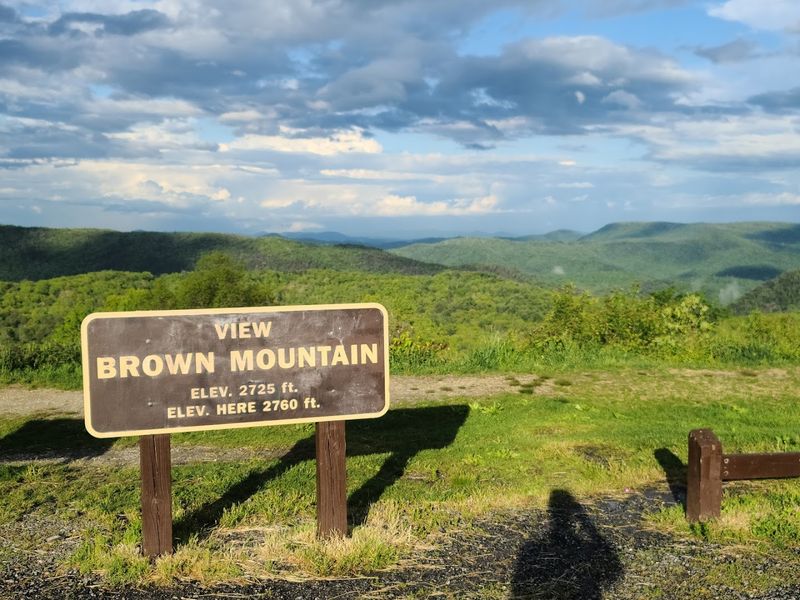
The overlook sits at roughly 2,760 feet in elevation, which puts you slightly above Brown Mountain itself at 2,725 feet. That might not sound dramatic, but the sight line from the viewing area is genuinely impressive.
On a clear day, you can pick out Table Rock Mountain and Chestnut Mountain across the valley, and informational signs help identify the various peaks spread out in front of you.
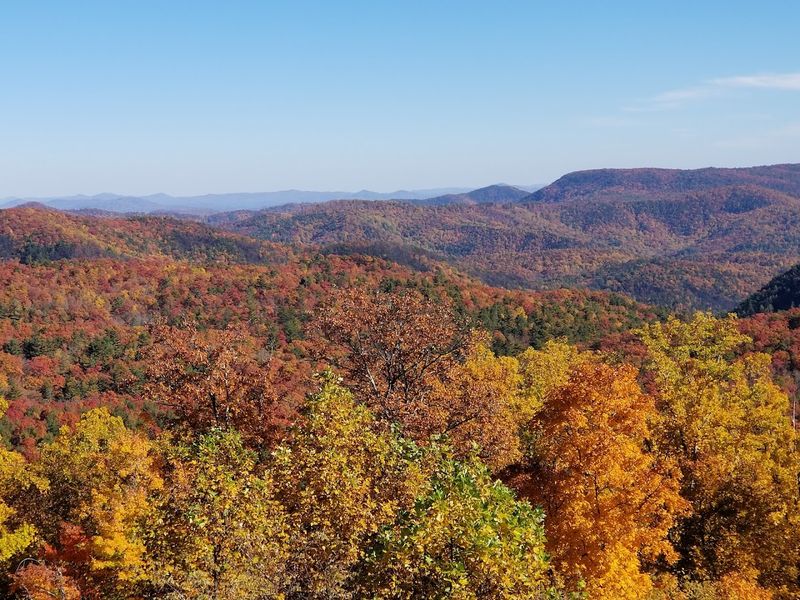
During fall, the whole scene transforms. The ridgelines turn amber and rust and gold, and the color contrast against the blue-gray sky is the kind of thing that makes you reach for your phone immediately.
A few visitors have noted that about two miles further up the road the trees thin out significantly, so the overlook catches that sweet spot of full autumn foliage.
At night, the experience shifts completely. Light pollution is minimal out here, and the stars come out in a way that genuinely surprises people who are used to city skies.
Some visitors arrive before midnight and wait patiently into the early morning hours for the lights to appear. One account describes seeing wavy orange light across the mountain top, followed by red and blue orbs drifting above the tree line.
Even if the famous lights do not show up on your visit, the star gazing alone is more than worth the trip. The mountain has a way of delivering something memorable regardless.
The Best Time to Visit for Light Watching
Timing matters a lot when you are chasing something as elusive as the Brown Mountain Lights. Most accounts point to clear, warm summer evenings after dark as prime viewing conditions, though dry and clear nights in October and November, once the leaves have dropped, are also considered excellent.
The reduced leaf cover in late fall opens up the sight lines and makes it easier to catch movement along the ridge.
Arriving well before midnight and staying past 4 a.m. seems to be the pattern among people who have actually seen something. One visitor parked at the overlook around 1:30 a.m. and reported seeing nothing until 4:30 a.m., when bright orbs appeared near the tree line.
Patience is genuinely part of the experience here, not just a suggestion.
Foggy or overcast nights tend to wash out visibility, so checking the forecast before you go is a practical move. Summer humidity can sometimes work in your favor by enhancing certain atmospheric effects, but thick cloud cover is generally a deal-breaker.
Bringing layers is smart regardless of season, since mountain temperatures drop quickly after sunset even in warmer months. A blanket, some snacks, and a comfortable chair can turn a long wait into something that actually feels pleasant.
The mountain rewards the patient ones far more often than the casual drive-by visitors.
Tips for Making the Most of Your Visit
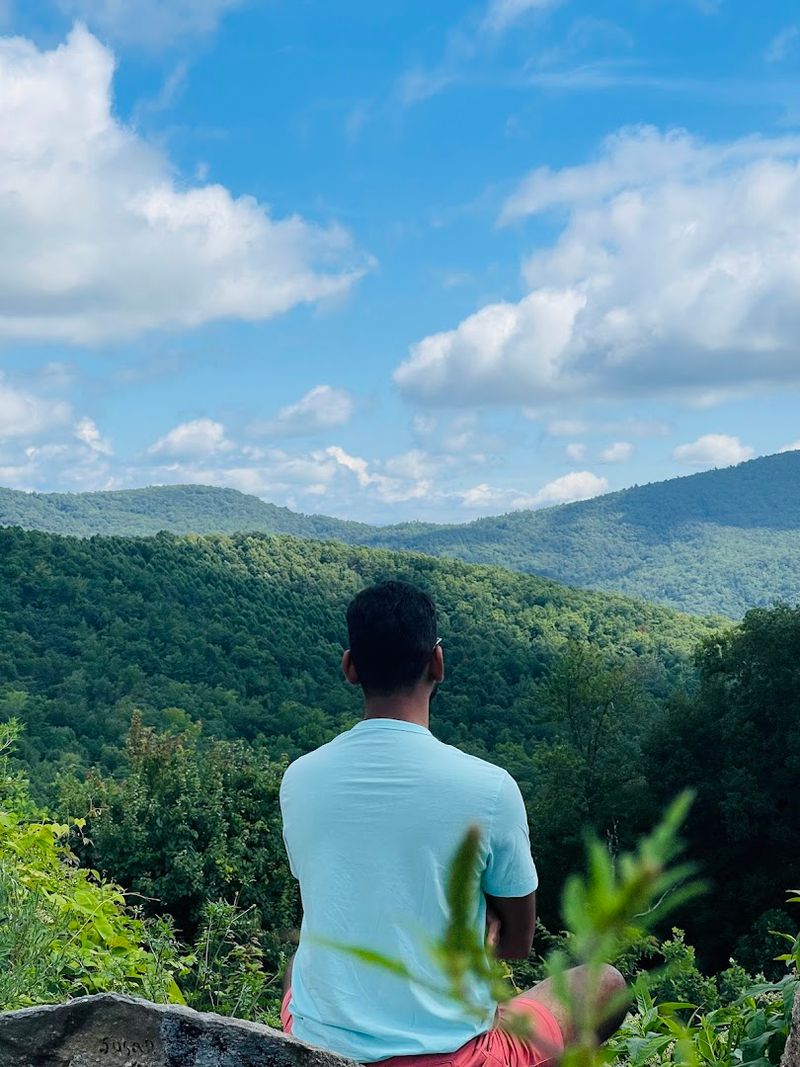
A few practical things can make the difference between a frustrating night and a genuinely memorable one. Bringing a red-light flashlight instead of a standard white-beam one is a small detail that helps preserve your night vision while you scan the ridge.
Binoculars are worth throwing in the bag too, since the lights tend to appear small and distant rather than dramatic and close-up.
The overlook has no facilities, so water, snacks, and a charged phone are all on you to manage before arrival. Some visitors bring folding chairs or a blanket to spread on one of the picnic tables, which makes a long late-night wait far more comfortable than standing in a parking lot.
Dressing in layers is genuinely important, even in summer, because mountain nights cool down fast and the chill can creep up on you.
Being mindful of other visitors is something worth mentioning. The overlook draws a mix of curious tourists, photography enthusiasts, and people who have been coming here for years.
Keeping noise down after dark and being careful with vehicle lights helps everyone get the best possible experience. Litter has been flagged as an issue by some visitors, so packing out everything you bring keeps the spot beautiful for the next person.
The overlook is free, accessible, and genuinely special. Treating it with a little care goes a long way toward keeping it that way for everyone who comes after you.
Address: 8176 NC-181, Newland, North Carolina 28657
