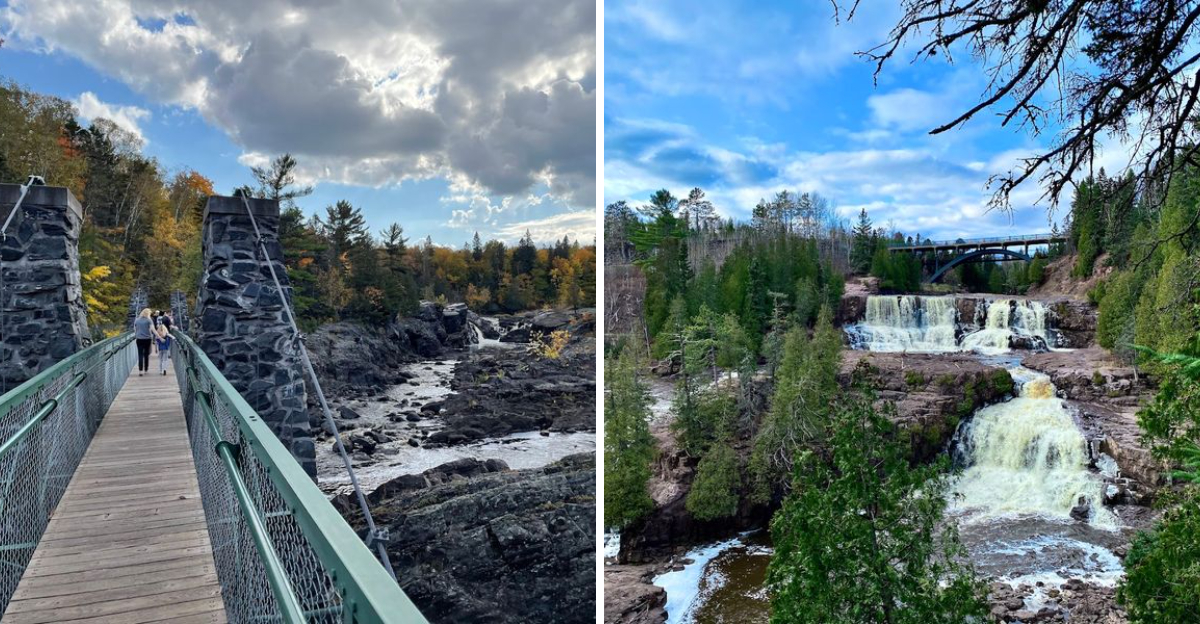
Winter finally loosens its grip and the real show begins. Minnesota’s north shore transforms for about two weeks each spring into something primal and loud.
Snow melts from the hillsides and rushes downhill with nowhere else to go. Waterfalls that trickled politely in summer turn into roaring monsters.
You can hear them from a quarter mile away, a deep thunder that vibrates in your chest. Spray flies everywhere, soaking anyone who gets too close for a photo.
Rivers swell past their banks and crash over rocks that were dry just days earlier. It is messy, dangerous, and absolutely beautiful.
Locals know to time their visits carefully because this version of the falls does not last long. Then the green returns, the water slows, and you have to wait another whole year for the magic to come back.
Jay Cooke State Park: Where the River Goes Wild
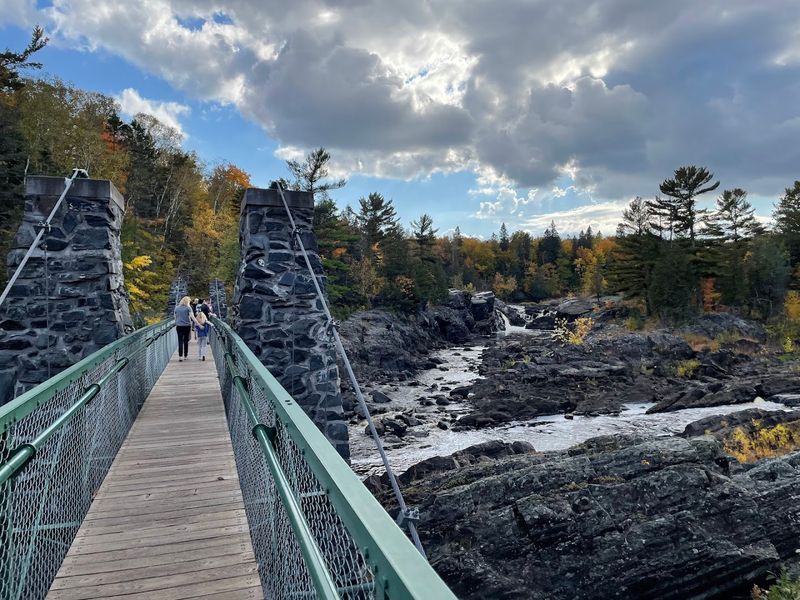
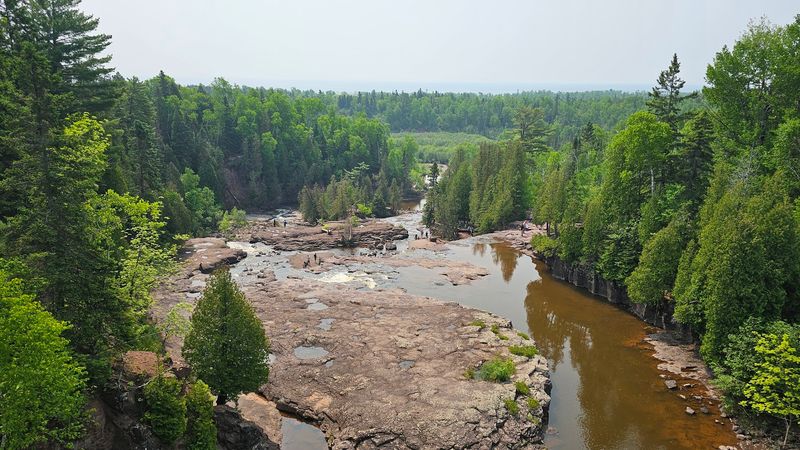
Standing on the swinging bridge at Jay Cooke State Park in late April feels like standing over a living thing. The St. Louis River churns beneath you, brown and foaming, crashing over ancient slate rock formations that jut out at sharp angles.
This park sits near Carlton, Minnesota. It covers over 8,000 acres of rugged terrain.
The spring snowmelt transforms the normally calm river into something that vibrates the bridge under your feet.
Jay Cooke is different from other North Shore parks. It sits inland, fed by the St. Louis River rather than Lake Superior tributaries.
That geography creates a unique, almost canyon-like experience.
The park has over 50 miles of trails. Some follow the riverbank closely, giving you front-row views of the rapids.
Others climb forested ridges above the valley.
Bring waterproof boots. The trail edges near the river get soaked with mist and splash during peak flow.
The sound alone makes the drive worth it.
Gooseberry Falls: Five Waterfalls in One Park
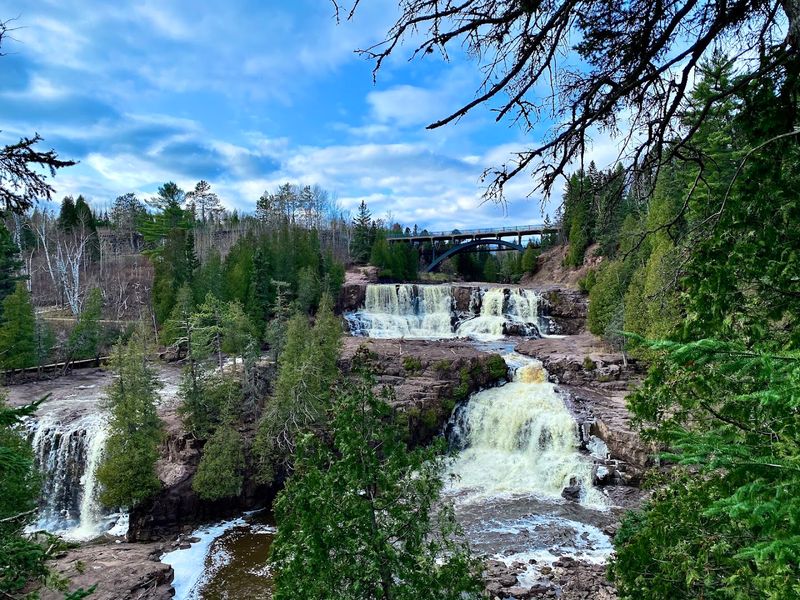
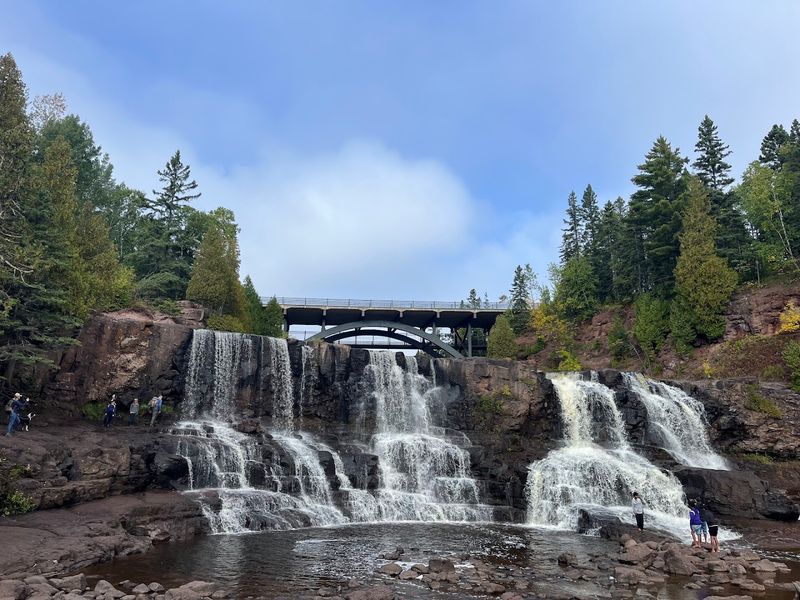
Most people drive up expecting one nice waterfall. What they find instead is five distinct falls stacked along the same river, each with its own personality and power level.
The Upper, Middle, and Lower Falls sit close together near the visitor center. They are easy to reach and absolutely stunning in spring.
The water volume in May can triple what you see in summer.
Gooseberry Falls State Park covers 1,682 acres along Lake Superior’s shore. The Gooseberry River drops dramatically before emptying into the lake.
That final stretch near the lake is especially wild during peak snowmelt season.
The visitor center is well-stocked and staffed. Clean restrooms, a gift shop, and helpful trail maps make the experience smooth.
The staff genuinely know the park and will point you toward the best vantage spots.
Hiking to Fifth Falls requires a bit more effort. The trail on the east side of the river is less crowded and offers the clearest views.
Give yourself at least three hours here.
Tettegouche State Park: Dramatic Drops and Sea Caves
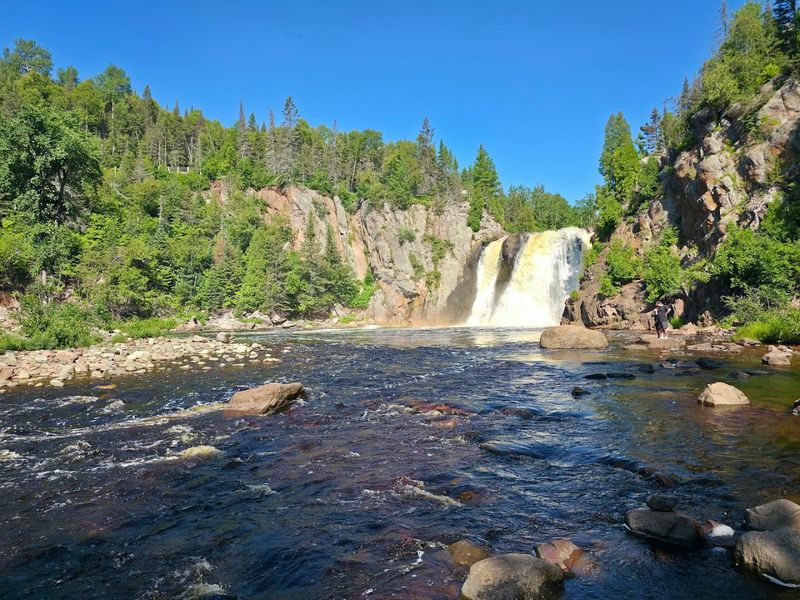
Tettegouche has a waterfall that drops directly into Lake Superior. That alone sets it apart from every other park on the North Shore.
The High Falls of the Baptism River plunge 60 feet into a rocky gorge just above where the river meets the lake. In spring, the volume of water rushing over that ledge is genuinely breathtaking.
The mist rises in visible clouds.
Getting there takes a moderate hike of about two miles round trip. The trail passes through birch and maple forest.
You cross a suspension bridge that sways gently above the rushing river below.
Tettegouche also offers access to rugged Lake Superior shoreline. Sea caves carved into the volcanic rock sit just a short walk from the main trail system.
The combination of inland waterfalls and dramatic coastal scenery is hard to beat.
Spring wildflowers line the trail edges in May. Trillium and hepatica bloom in patches of white and purple.
The Two-Week Window: Why Timing Is Everything
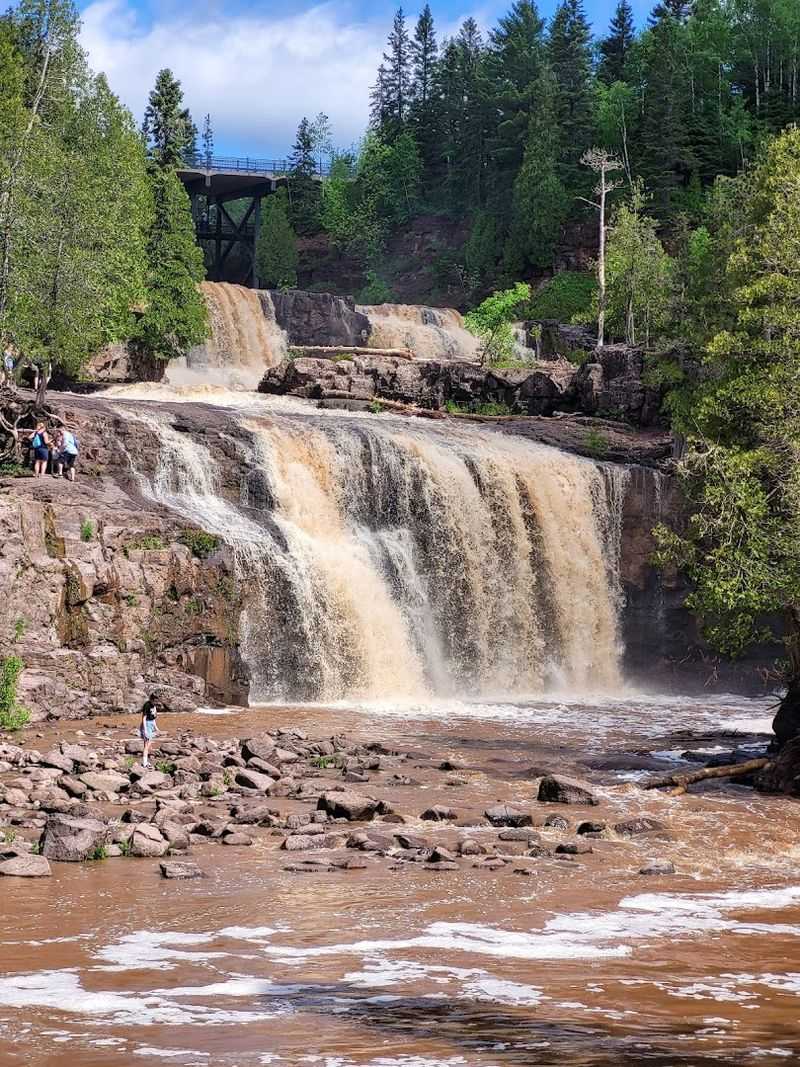
There is a specific window each spring when the North Shore waterfalls hit their absolute peak. It usually falls between late April and mid-May.
The exact timing shifts by a week or two depending on how much snow fell that winter.
Warm temperatures arrive fast in Minnesota. Snow in the highlands melts quickly.
All that water rushes downhill at once, feeding rivers and streams that feed the falls.
Miss that window and you still see beautiful waterfalls. But the spring peak is a different category entirely.
The sound is louder. The spray reaches farther.
The color of the water shifts from clear to a deep, churning amber-brown.
Checking the Minnesota DNR website before your trip helps. They post river flow data and park conditions regularly.
Local visitor centers also share real-time updates during spring season.
Plan for a midweek visit if possible. Weekends during peak flow draw large crowds.
Parking lots at Gooseberry and Tettegouche fill up by mid-morning on Saturdays. An early Tuesday arrival gives you the falls almost to yourself.
Scenic Highway 61: The Road That Connects It All
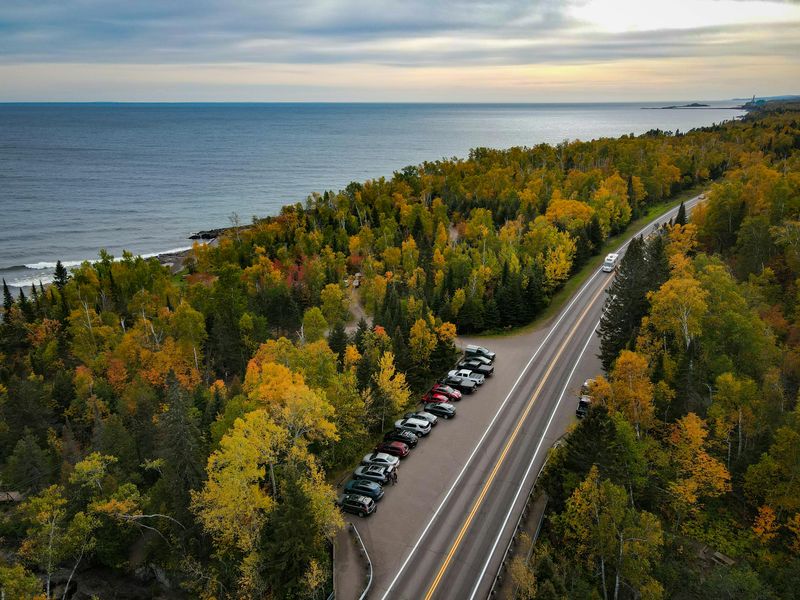
Highway 61 is not just a road. It is the spine of the entire North Shore experience, running northeast from Duluth all the way to the Canadian border.
Every major waterfall park sits right off this highway. Gooseberry Falls is at mile marker 39.
Tettegouche comes a bit further up the road. The drive itself is scenic enough to feel like a destination.
Lake Superior appears and disappears on your left as you drive north. The lake is enormous.
On clear spring days, the water looks almost Caribbean blue against the rocky shoreline.
Small towns dot the route. Two Harbors has a charming downtown with a lighthouse you can tour.
Silver Bay and Beaver Bay offer good rest stops. Each town has its own personality and local character.
Pull over at roadside overlooks whenever you spot them. Some of the best views on the entire drive are not at any official park.
They are just random turnouts where the lake opens up in front of you.
The Sound of Spring: What Nobody Warns You About
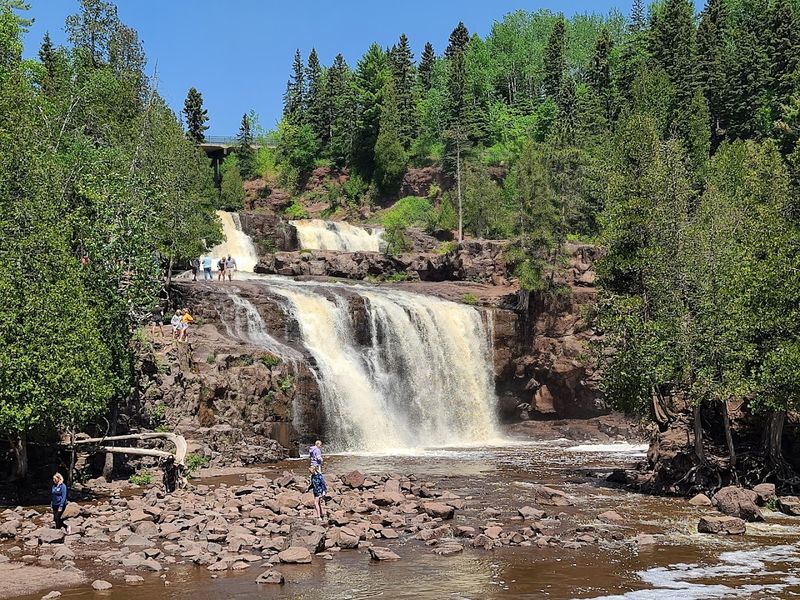
Nobody really prepares you for how loud the falls get in spring. Standing near the base of Gooseberry’s Middle Falls during peak flow, you have to shout to be heard by the person next to you.
The roar is physical. It vibrates in your chest.
It is one of those sounds that immediately quiets whatever was on your mind before you arrived.
That sensory experience is part of what makes spring the best season for this trip. Summer falls are beautiful.
They are quieter, calmer, more photogenic in a postcard kind of way. Spring falls feel alive in a completely different sense.
Birds are also active during this period. Warblers pass through the North Shore in huge numbers during May migration.
The mix of rushing water sounds and birdsong creates something genuinely memorable.
Bring earplugs if you are sensitive to loud environments. This is not a joke.
Extended time near the peak falls can be genuinely overwhelming.
Cascade River State Park: A Hidden Gem Worth Detour
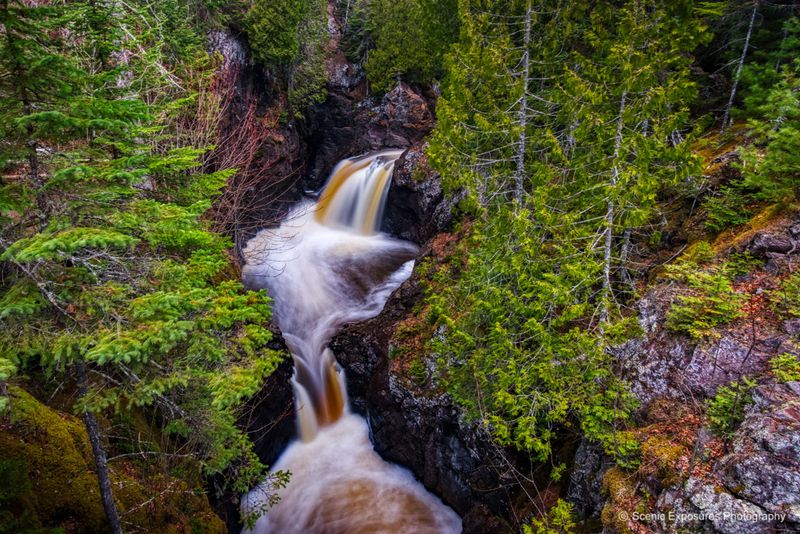
A little further up Highway 61 sits Cascade River State Park. It does not get the same attention as Gooseberry or Tettegouche.
That is honestly a good thing if you enjoy a quieter experience.
The Cascade River drops through a series of small waterfalls and gorges before reaching Lake Superior. The trail follows the river closely.
You feel like you are inside the gorge rather than just looking at it from above.
Spring turns these cascades into a continuous rush of white water. The gorge walls are close on both sides.
The trail weaves back and forth across the river on small footbridges, giving you constantly changing angles on the water.
The park also has a trail that climbs high above the river. From up there, you can see the full drop sequence laid out below you.
It is a completely different kind of view from the one you get at river level.
Cascade River is a good park to visit in the late afternoon.
What to Pack for a Spring Waterfall Trip
Spring on the North Shore is unpredictable. One day hits 65 degrees and sunny.
The next morning brings cold rain and wind off the lake. Packing for both is essential.
Waterproof hiking boots are non-negotiable. Trails near active waterfalls stay wet even on dry days.
The spray and mist keep rocks and boardwalks slippery throughout the season.
Layers work better than a single heavy jacket. A moisture-wicking base layer, a fleece mid-layer, and a waterproof shell cover almost any condition you will encounter.
Mornings near the lake can be cold even in May.
A dry bag or waterproof phone case is worth bringing. Standing close to the falls during peak flow means getting wet.
Cameras and phones do not appreciate that kind of moisture.
Trekking poles help on steep, wet trail sections. They take pressure off your knees on descents.
They also give you confidence on slippery rock surfaces near the water’s edge.
Camping Along the North Shore During Peak Season
Staying overnight along the North Shore changes the entire experience. The parks empty out after the day visitors leave.
The falls sound different at night. Louder somehow, more constant, more present.
Gooseberry Falls State Park has campgrounds that book up fast. Reservations open months in advance.
Spring weekends fill up nearly a year ahead, as longtime visitors know exactly when to reserve.
Tettegouche also offers camping with some sites near the Baptism River. Waking up to the sound of moving water nearby is one of those simple pleasures that sticks with you long after the trip ends.
Jay Cooke State Park has a mix of drive-in and backpack campsites. The backpack sites along the river feel especially remote.
You carry your gear in and have the riverbank almost entirely to yourself.
Spring nights can drop near freezing even in May. A sleeping bag rated for 20 degrees Fahrenheit keeps you comfortable.
Bring a camp stove for hot meals. Cold nights and hot food make for perfect camping conditions.
Why Spring Waterfalls Feel Like a Once-a-Year Event
There is something specific about visiting these falls during their spring peak that feels genuinely rare. It is not just the volume of water.
It is the combination of the cold air, the bare trees just starting to bud, and the overwhelming sound.
Summer visits are lovely. Fall visits offer incredible color.
But spring has this raw, unfinished quality. The landscape has not settled into its comfortable green yet.
Everything feels a little urgent and electric.
The waterfalls themselves seem to know it. They push harder in spring.
They fill their banks and overflow their usual channels. Paths that are normally dry get flooded.
The parks feel genuinely alive in a way that is hard to describe until you experience it.
Locals plan around this window every year. It is a tradition for many Minnesota families to make the North Shore drive each spring.
That communal anticipation adds something to the experience.
Go at least once during peak spring flow. It will reset your idea of what a waterfall can actually do.
