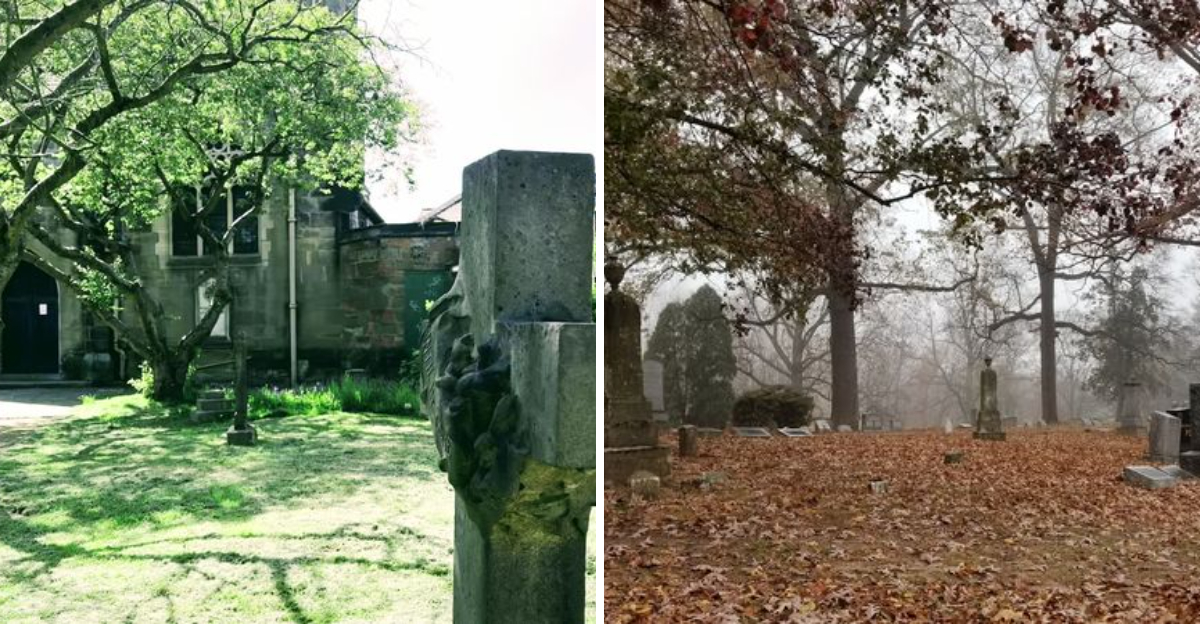
The headstones lean at odd angles, swallowed by vines and moss. The paths have disappeared, reclaimed by the forest.
These forgotten historic graveyards of Virginia have been completely reclaimed by time and nature, places where the dead rest in silence, unvisited and unremembered.
I have walked through several of them on gray afternoons, stepping over fallen branches and pushing aside ferns to read the names on the stones.
Some dates go back to the 1700s, lifetimes that ended before the United States was even a country. Others are from the 1800s, victims of war or disease.
The cemeteries are peaceful, not spooky, just quiet and sad. Virginia has plenty of well-maintained historic sites, but these graveyards are for people who want to see what happens when history is left alone.
Go with respect and leave nothing behind.
1. Contrabands and Freedmen Cemetery, Alexandria
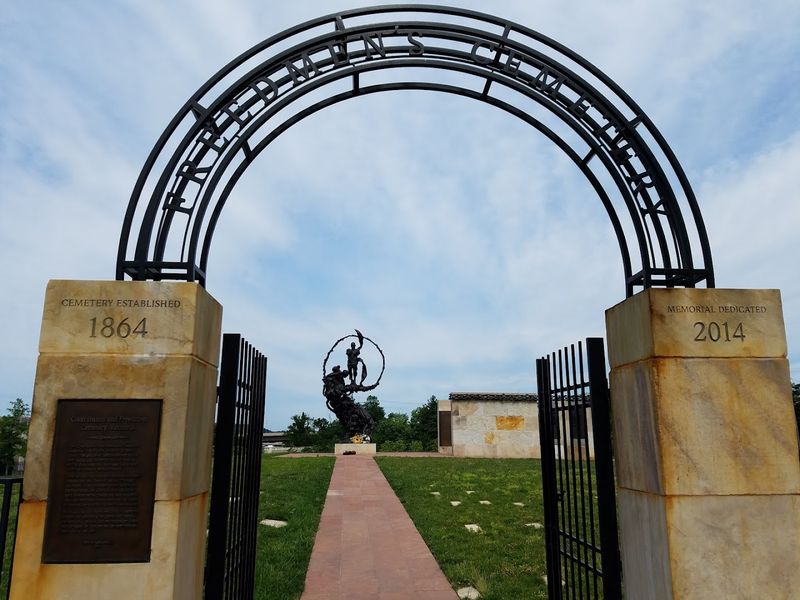
Buried beneath a gas station for decades, this Alexandria cemetery is one of the most remarkable stories of loss and reclamation in all of Virginia. Between 1864 and 1869, more than 1,800 formerly enslaved people and free Black Americans were laid to rest here after fleeing Confederate territory during the Civil War.
They were known as “contrabands,” a term used by Union forces, and this ground became their final refuge.
By the mid-twentieth century, the site had been completely built over. A gas station occupied the land, followed by an office building, and I-95 construction may have disturbed a portion of the graves.
For generations, the community knew something sacred lay beneath, but official recognition was painfully slow to arrive.
In 2007, the gas station and office building were finally removed. The site was rededicated as a memorial burial ground, complete with a deeply moving monument that honors every name recovered from burial records.
Standing there today, it is impossible not to feel the weight of what was nearly erased forever.
The memorial features a striking bronze sculpture and a wall inscribed with the names of those buried here. Located at 1001 South Washington Street in Alexandria, the site is open to the public and serves as a powerful reminder of how quickly history can disappear under concrete.
Visiting on a quiet weekday morning, when the light filters through surrounding trees, makes the experience feel genuinely reverent and unforgettable.
2. Evergreen Cemetery, Richmond
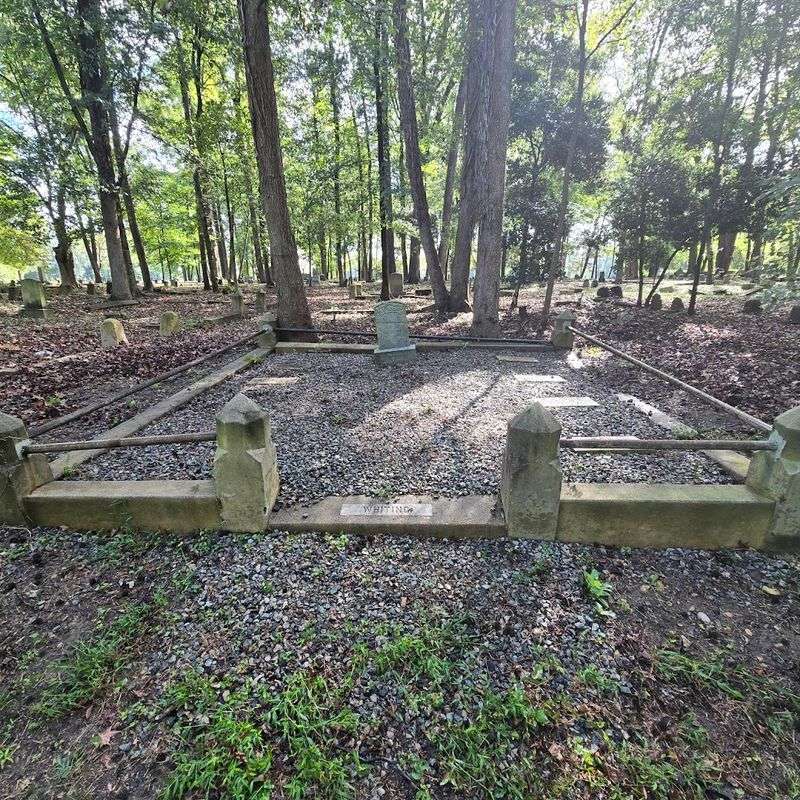
Sixty acres of tangled forest, crumbling headstones, and buried history sit quietly on the eastern edge of Richmond. Evergreen Cemetery, established in 1891, was created specifically because segregation laws prevented Black Americans from being buried alongside white residents.
What began as a dignified resting place for community leaders became, over a century, one of the most heartbreaking examples of neglect in the entire state.
Among those interred here is Maggie L. Walker, the legendary civic leader and the first Black woman to charter and serve as president of a bank in the United States.
Her presence alone makes this ground historically extraordinary. Yet for decades, the cemetery was so overgrown that locating individual graves required machetes and serious determination.
Cleanup efforts began in earnest around 2016, when volunteers started hacking through brush that had swallowed entire rows of headstones. Trees had rooted themselves directly through grave markers.
Stones lay split, sunken, or completely buried under leaf litter and fallen limbs. The scale of what nature had reclaimed was staggering.
Today, restoration continues in phases, and the cemetery remains a living project rather than a finished memorial. Located at 1500 Evergreen Avenue in Richmond, it welcomes volunteers and curious visitors alike.
Walking through the sections that have been cleared feels like watching history breathe again, while the still-overgrown areas serve as a sobering reminder of how much work remains. This place earns its reputation as one of Virginia’s most hauntingly important burial grounds.
3. East End Cemetery, Richmond
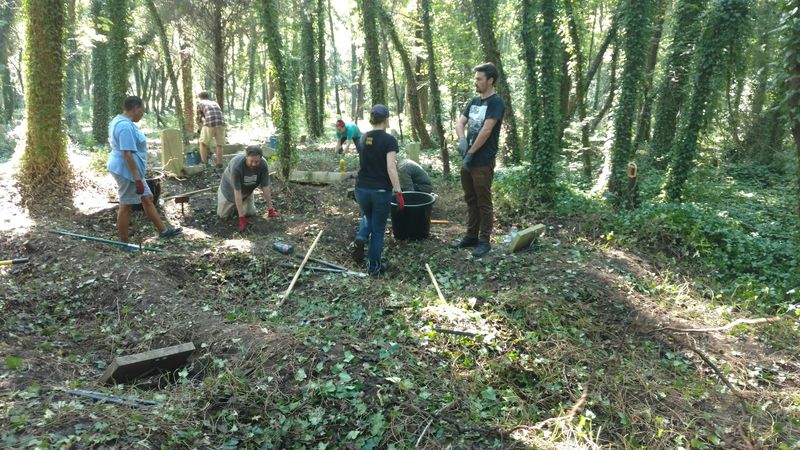
Right next door to Evergreen, East End Cemetery carries its own staggering weight of history and neglect. Established in 1897, this sixteen-acre burial ground holds an estimated 15,000 people, making it one of the most densely populated forgotten cemeteries in Virginia.
Like its neighbor, it was created during the Jim Crow era as a designated burial space for Black Americans who were legally excluded from white cemeteries.
Without a perpetual care fund, the cemetery had no financial mechanism to sustain maintenance once active burials slowed and eventually stopped by the early 1980s. Nature moved in fast.
Within a generation, veritable forests had grown where memorial parks once stood. Gravestones split under the pressure of tree roots, sank into the earth, and vanished beneath decades of debris and fallen timber.
The sheer scale of what was lost here is difficult to absorb. Fifteen thousand individuals, many of them formerly enslaved or the children of enslaved people, rest beneath ground that the wider world simply forgot about.
Volunteers began clearing sections around 2016, and Virginia pledged restoration funding, though progress has been gradual given the scope of the overgrowth.
Located adjacent to Evergreen Cemetery on Evergreen Avenue in Richmond, East End is accessible to the public and actively welcomes volunteer participation. Only about three of its sixteen acres have been meaningfully cleared so far.
Spending time here is a quietly powerful experience, especially when you realize that nearly every depression in the forest floor marks a grave that deserves to be remembered.
4. Nash Family Cemetery, Woodbridge
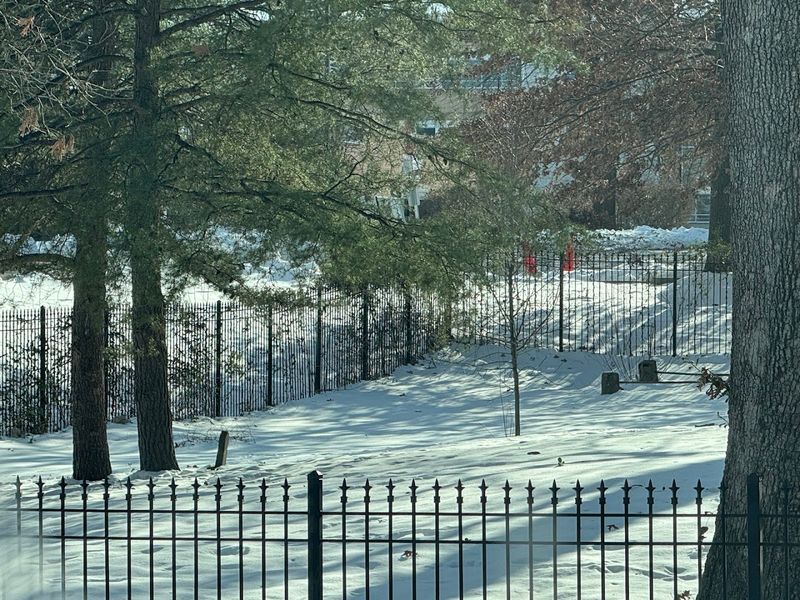
Tucked improbably against the sprawling Potomac Mills shopping center in Woodbridge, the Nash Family Cemetery is one of Virginia’s most surreal burial sites. This small plot holds the remains of a prominent Black American farming family who worked and lived on this land long before strip malls and parking lots arrived.
When Potomac Mills was developed in 1985, the cemetery could not legally be removed, so the entire shopping complex was quite literally built around it.
Today, the graves sit fenced off within the commercial landscape, surrounded by retail traffic and the hum of everyday suburban life. It is a jarring juxtaposition: ancient headstones standing a short walk from chain stores and food courts.
Yet the Nash family’s presence here is a quiet act of defiance, a reminder that this land had a life and a community long before it became a shopping destination.
The cemetery represents one of two historic burial plots protected within the Potomac Mills development. Both sites were fenced off and preserved as a legal and ethical requirement during construction.
That protection, while meaningful, does not fully address the isolation these graves now endure, cut off from the broader landscape that once surrounded them.
Finding the cemetery requires a bit of deliberate searching within the shopping center property near Potomac Mills Boulevard in Woodbridge. Most shoppers walk past without ever knowing it exists.
Pausing there for a few minutes, reading the names on weathered stones, transforms a routine shopping trip into something unexpectedly moving and historically grounding.
5. Pocahontas Hillside Cemetery, Pocahontas
High in the mountains of Tazewell County, the small town of Pocahontas carries one of Virginia’s most devastating industrial histories. In April 1884, a mine explosion killed at least 114 miners in what became one of the deadliest coal mining disasters in American history up to that point.
The men who died were buried on a hillside that became the Pocahontas Cemetery, and the community that formed around their graves was as diverse as any in the nineteenth-century South.
Gravestones here bear inscriptions in Hebrew, Hungarian, Italian, Polish, and Russian, reflecting the extraordinary mix of immigrant laborers who came to work the coal seams of Southwest Virginia.
This is not the kind of cemetery you expect to find in rural Appalachia, and that surprise is exactly what makes it so historically compelling.
The diversity carved into these stones tells a story of global migration driven by industrial promise and ended by industrial tragedy.
Decades of neglect allowed the hillside to grow wild. Overgrowth crept across grave markers, erosion shifted stones, and the cemetery faded from public consciousness.
Restoration efforts have been underway in recent years, driven by local historical societies and descendants of those buried here who refused to let the site disappear entirely.
Located in the town of Pocahontas off Pocahontas Road in Tazewell County, the cemetery is accessible and worth a respectful visit.
The combination of mountain scenery, multilingual epitaphs, and the weight of industrial tragedy makes this hillside one of the most emotionally complex burial grounds in all of Virginia.
6. Maury Family Slave Cemetery, Charlottesville
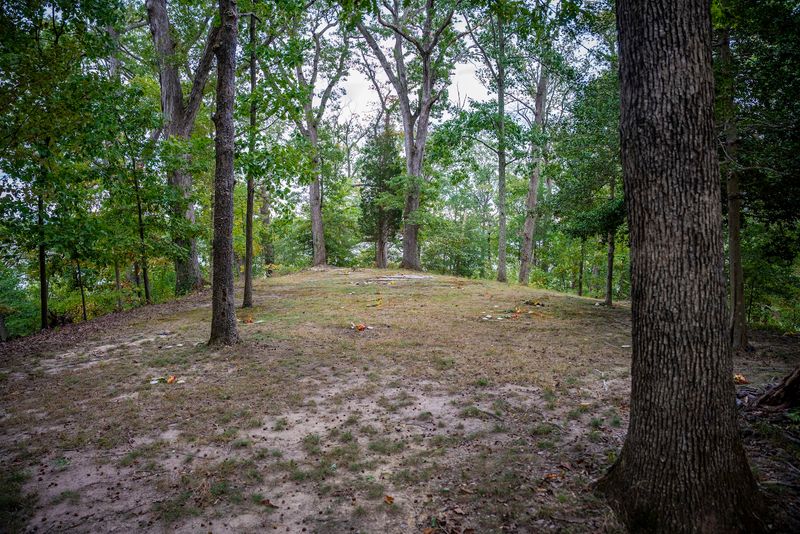
Just outside Charlottesville, on land once associated with the prominent Maury family, a small cemetery holds the remains of enslaved people whose names were rarely recorded and whose graves were marked only by simple fieldstones.
This kind of burial site is tragically common across Virginia, where plantation-era properties often contained separate, unmarked, or minimally marked burial areas for the people forced to work the land.
The Maury family cemetery for enslaved individuals reflects a pattern seen across the Commonwealth. There are rows of fieldstone markers placed without carved names, arranged in the same head-and-footstone pattern used for ordinary graves.
Depressions are in the ground where coffins eventually collapsed beneath the soil. Without carved inscriptions, these graves depend entirely on oral history, property records, and archaeological survey to be identified and honored.
Nature has not been kind to sites like this one. Vines, tree roots, and decades of leaf accumulation can completely obscure fieldstone markers that were never very prominent to begin with.
Many similar cemeteries across Virginia have been lost entirely to development or agricultural activity, making the ones that survive all the more precious and fragile.
Visiting a site like this near Charlottesville requires research and sometimes coordination with local historical preservation organizations before access is granted.
The University of Virginia and local groups have worked to document and protect enslaved burial grounds in the region.
Taking time to learn about these sites before visiting ensures that the experience is approached with the care and seriousness these forgotten lives deserve.
7. Preston Family Cemetery, Blacksburg
Blacksburg is best known today as a college town, home to Virginia Tech and all the energy that comes with it.
But long before the university arrived, this part of Montgomery County was shaped by powerful landowning families whose influence stretched across generations.
The Preston family was among the most prominent, and their private burial ground on historic Smithfield Plantation property stands as one of the more atmospheric forgotten cemeteries in the New River Valley region.
The Smithfield Plantation house itself has been preserved and is open for tours, but the cemetery that sits on the surrounding grounds carries a quieter, more melancholy energy. Weathered limestone markers lean at odd angles, their inscriptions softened by two centuries of rain and frost.
The trees that shade the graves have grown enormous, their roots pushing against the earth in ways that slowly disturb what lies beneath.
What makes this cemetery particularly interesting is its layered history. The Preston family were slaveholders.
The property almost certainly contained a separate burial area for enslaved individuals that has not received the same level of preservation attention as the main family plot.
That imbalance is itself a historical statement worth sitting with.
The Smithfield Plantation is located at 1000 Smithfield Plantation Road in Blacksburg. The grounds are managed by the Association for the Preservation of Virginia Antiquities.
Visiting during a weekday offers a genuinely peaceful encounter with a corner of Virginia that most people driving through Blacksburg never think to seek out.
8. Moseley Cemetery, Chatham
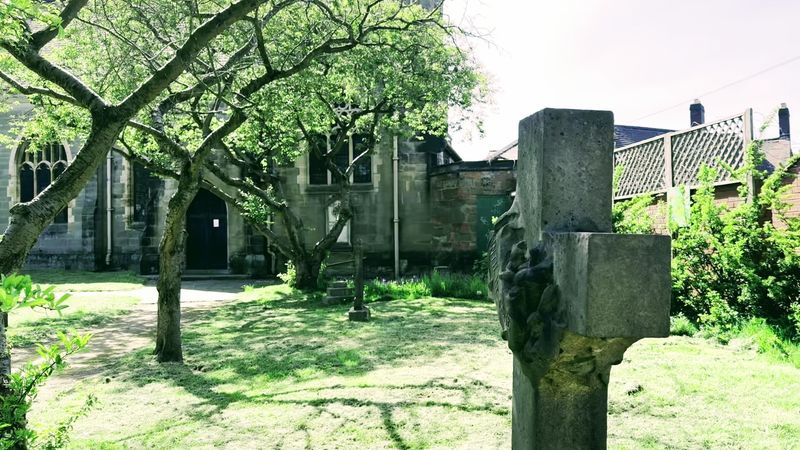
Chatham, a small town in Pittsylvania County in southern Virginia, sits in a landscape shaped by tobacco farming and deep family roots.
The Moseley Cemetery is the kind of burial ground that appears suddenly at the edge of a field or just inside a tree line, easy to miss from the road but impossible to forget once you have stood inside it.
Rural family cemeteries like this one dot the Virginia countryside by the hundreds, many of them gradually disappearing as the families who maintained them scatter or die out.
What sets the Moseley Cemetery apart is its combination of brick tomb enclosures and iron fencing, architectural features that signal a family of some means and social standing in their time. Those same brick structures, however, have suffered the ravages of neglect.
Mortar crumbles, iron rusts and bends, and the surrounding vegetation presses in from every side with quiet persistence.
The cemetery’s location on private or semi-private land means that access can be complicated, and many such sites in Pittsylvania County exist in a legal gray zone where preservation responsibility is unclear.
Local historical societies have documented the Moseley site, but meaningful restoration requires funding and sustained community attention that rural Virginia communities often struggle to maintain.
Chatham itself is located along Route 29 in Pittsylvania County.
Exploring the surrounding countryside with an eye for old iron fencing or brick enclosures peeking through tree lines can turn an ordinary drive into a genuinely fascinating historical discovery. Virginia’s rural south is full of such moments for those patient enough to look.
9. Marshall Family Cemetery, Burke
Burke, Virginia, sits in Fairfax County, one of the most densely developed suburban jurisdictions in the entire country. Amid the cul-de-sacs, townhouse developments, and commuter traffic, a small Marshall family cemetery survives as a quiet geographical anomaly.
Like many old family plots scattered across Northern Virginia, it predates the suburban explosion by well over a century, and its continued existence is something close to a miracle of preservation law rather than community intention.
Old sandstone markers characterize this type of colonial-era burial ground, their inscriptions worn to near-illegibility by freeze-thaw cycles and acid rain. The Marshall family were landowners in this part of Fairfax County during an era when Burke was entirely agricultural.
Their graves represent a direct physical link to a Virginia that has otherwise been completely paved over and built up.
Suburban development has a particularly ruthless relationship with old family cemeteries. Builders are legally required to work around them.
But, the resulting preservation is often minimal: a small fenced area surrounded by parking lots or backyards, with no interpretive signage and no real invitation for the public to engage with what is preserved there.
The Marshall cemetery fits this pattern precisely.
Burke is accessible via the Burke Centre VRE station and major roadways through Fairfax County.
For anyone interested in the layers of history buried beneath Northern Virginia’s suburban surface, seeking out sites like this one offers a genuinely unexpected and thought-provoking experience that most commuters never pause long enough to discover.
10. Laura Ratcliffe Hanna Family Cemetery, Herndon and Reston
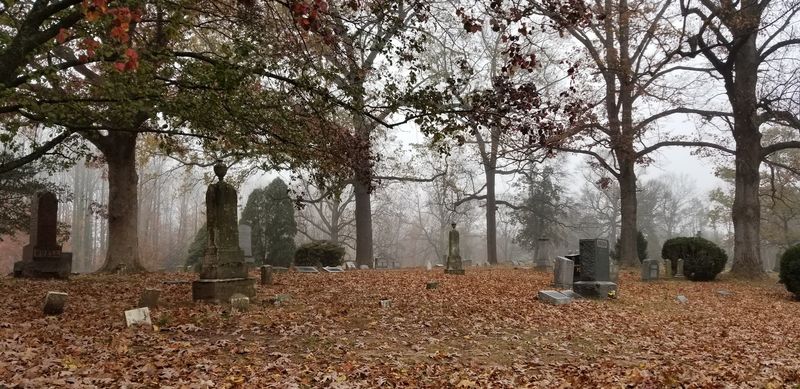
Laura Ratcliffe was one of the Civil War’s most fascinating figures in Northern Virginia, a Confederate spy who passed intelligence to Mosby’s Rangers and became a local legend in Fairfax County.
Her family cemetery is located in the area straddling what is now Herndon and Reston.
It connects the suburban present to a deeply eventful past that most residents of these modern communities know almost nothing about.
The Hanna family cemetery, where Laura Ratcliffe and members of her family are interred, sits in a landscape that has transformed almost beyond recognition since the nineteenth century.
Reston was famously developed as a planned community beginning in the 1960s, and Herndon grew rapidly alongside it.
Old family burial plots caught in the path of that development faced enormous pressure, and not all of them survived intact.
What remains of the Ratcliffe-Hanna cemetery offers a direct connection to a woman who navigated one of the most turbulent periods in American history with remarkable nerve and ingenuity.
She reportedly hid gold for Mosby under a rock near her home and used her local knowledge to provide tactical advantages to Confederate forces operating throughout Fairfax County.
Locating the cemetery requires coordination with local historical preservation groups, as the site sits within a landscape that has changed dramatically. The Herndon Historical Society and Fairfax County Public Library’s Virginia Room are excellent starting points for research.
For history enthusiasts exploring Northern Virginia, this quietly tucked-away cemetery rewards the effort of finding it with a genuinely personal encounter with Civil War history.
