Kansas rewards patient travelers who are willing to veer onto quiet county roads and see what locals proudly build in their own backyards.
You will find curious monuments, heartfelt folk art, and small town landmarks that feel like personal invitations to linger.
Each stop tells a story about community, craft, and the playful spirit that defines the Sunflower State.
If you like surprises that spark conversation, this Kansas list belongs on your next road trip.
1. World’s Largest Belt Buckle, Abilene
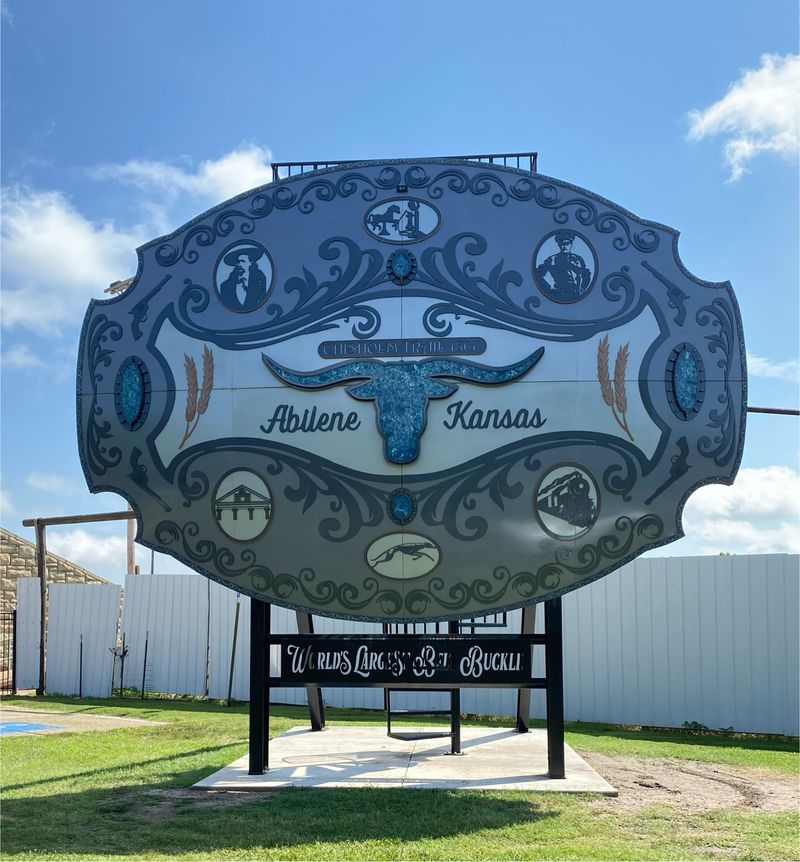
The World’s Largest Belt Buckle stands beside SE 5th Street near the Eisenhower Presidential Library and Museum, 200 SE 4th St, Abilene, Kansas.
This oversized buckle celebrates cowboy culture and the town’s rodeo heritage with polished metal gleam and a friendly photo spot.
You can pull over along a quiet stretch, stretch your legs, and admire how Kansas leans into big fun with small town pride.
Sunlight catches the engraved details, and the surrounding lawn frames the buckle like a stage.
Parking is simple, and the site pairs well with a stroll through Abilene’s historic downtown along Buckeye Avenue.
Bring a camera, because the scale turns an ordinary accessory into sculpture that feels both playful and iconic.
Locals keep the area tidy, and wayfinding signs help newcomers find the display without stress.
The buckle nods to ranching roots that still shape daily life across central Kansas.
Nearby, the heritage neighborhood adds brick facades, train history, and a relaxed walking loop.
Even a short stop becomes a memory when you frame the buckle against prairie sky and drifting clouds.
Travelers often compare roadside giants, but this one stands out for craftsmanship and community pride.
It feels like a friendly handshake from Abilene, inviting you to slow down and enjoy the ride.
If you time your visit for golden hour, shadows carve crisp lines across the surface.
The buckle glows with warm color, and the open space makes it easy to step back for perspective.
Kansas thrives on road culture, and this landmark captures that spirit with charm and humor.
It is a simple stop, and that simplicity is exactly what makes it stick.
The nearby museum traffic gives the spot a steady but never crowded flow.
Benches and open grass make it easy to pause without feeling hurried.
It works especially well as a first or last stop when tracing Abilene’s historical loop.
2. World’s Largest Czech Egg, Wilson
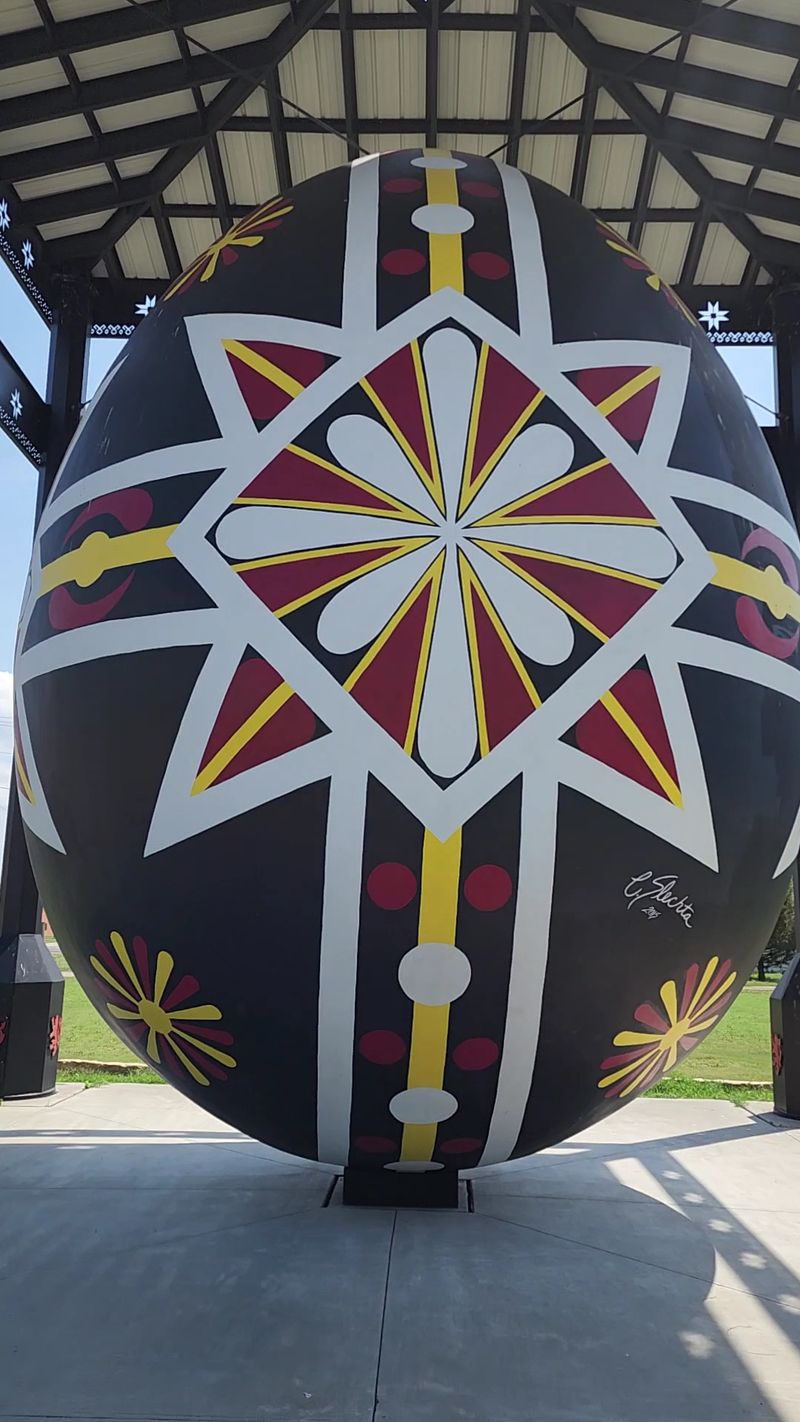
The World’s Largest Czech Egg rises at 2520 Avenue D, Wilson, Kansas, where bright folk patterns turn a simple form into a community landmark.
This giant egg honors the town’s Czech heritage, with intricate motifs that wrap the shell in color and symbolism.
You can step close to see crisp lines, then back up to frame the sculpture with downtown stone buildings.
Wilson embraces visitors with tidy sidewalks, friendly storefronts, and a small plaza that suits quick breaks.
The egg anchors festivals and everyday pride, reminding travelers how Kansas communities keep cultural roots alive.
Parking is straightforward along Avenue D, and the site pairs well with a walk through the historic district.
Patterns echo traditional designs, yet the scale turns folk art into public sculpture with personality.
Morning light gives soft shadows that help the motifs pop without glare.
Afternoon sun amplifies color, which makes photos vivid even on a breezy day.
The sculpture’s curves feel welcoming, and the town’s limestone architecture adds texture behind it.
You will sense how heritage lives not in archives alone, but in everyday streets where neighbors gather.
Wilson’s pace is relaxed, so lingering never feels rushed or complicated.
This stop also fits neatly into a route linking Lucas and other Smoky Hills art sites.
Kansas rewards curiosity, and the egg proves that small places can deliver big surprises.
Stand a moment in quiet and you might hear flags rustle and birds cross the open sky.
Then roll on, glad you made space for color and craft along the highway.
Seasonal decorations sometimes appear nearby, subtly changing the scene across the year.
The egg’s placement makes it easy to appreciate without crossing busy streets.
It feels less like a roadside stop and more like a shared town symbol.
3. World’s Largest Souvenir Travel Plate, Lucas
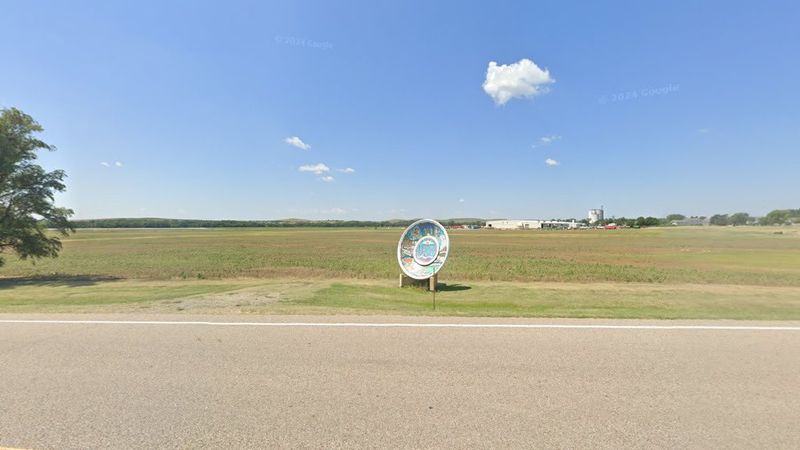
The World’s Largest Souvenir Travel Plate greets you near the east entrance to Lucas along K-18, Lucas, Kansas, marking the Grassroots Art Capital.
This towering plate riffs on classic keepsakes, turning a humble memento into a roadside welcome sign with wit.
You can pull over safely at a turnout, study the illustrations, and trace the town’s creative identity through playful imagery.
Lucas makes a strong first impression, because folk art spills into streets, yards, and pocket parks.
The plate hints at that spirit, inviting you to explore galleries and outdoor installations at an unhurried pace.
Morning or late afternoon light works best for photos, when shadows help the motifs stand out.
From here, the town center is only a short drive, with parking that keeps small detours low stress.
Kansas road trips benefit from places like this, where a single object sets a friendly tone.
The plate’s edges frame local scenes, and the scale turns nostalgia into statement art.
Wind moves through prairie grass, and the horizon stretches wide like a canvas beyond the sculpture.
You will feel welcomed before meeting a single person, because the art does the talking with a smile.
The sign’s clean backdrop keeps the composition uncluttered, making it easy to photograph from several angles.
Pair this stop with neighboring attractions to build a loop that rewards curiosity over speed.
Lucas proves that Kansas creativity is not confined to museums, it thrives outdoors.
Take a breath, enjoy the quiet, and let the plate set your travel rhythm.
Then follow the art breadcrumbs into town, where whimsy meets heartfelt community.
Interpretive elements nearby help first time visitors understand Lucas’s art identity quickly.
The open shoulder allows quick stops without disrupting through traffic.
It sets expectations that the town ahead values creativity over convention.
4. Bowl Plaza, Lucas
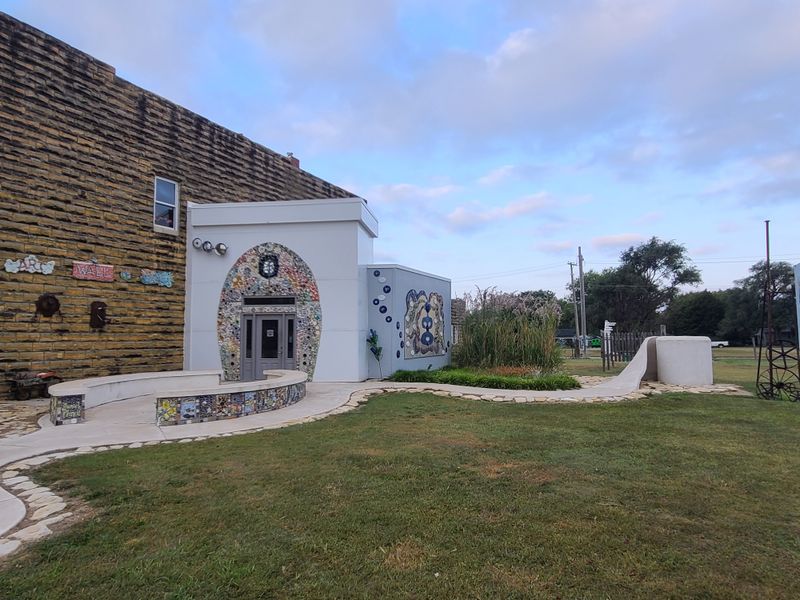
Bowl Plaza sits at 123 Main Street, Lucas, Kansas, a mosaic covered public restroom that doubles as a joyful art installation.
The exterior sparkles with tile, glass, and found objects, creating patterns that turn a necessary stop into a destination.
You can admire the sculpted seats, playful signage, and carefully embedded details that reward slow looking.
Inside, the craftsmanship continues with tidy stalls, mirrored inlays, and imaginative flourishes that remain clean and functional.
This is community made folk art that respects visitors and celebrates the town’s creative energy.
Parking lines Main Street, and the compact footprint makes arrival easy for a quick leg stretch.
Across the way, small galleries and pocket exhibits keep the experience cohesive and walkable.
Light bounces across glass bits, so photos come alive without complicated setup.
The design is whimsical yet purposeful, a reminder that Kansas builds beauty into everyday spaces.
Signage shares the project’s story, and volunteers often tend the grounds with care.
You will leave impressed that a restroom can be both practical and artful without compromise.
Each tile seems to hold a tiny narrative, which nudges you to look closer at the walls.
It is a feel good stop, especially during a long drive when comfort and delight matter.
Nearby benches offer a calm pause with views of the shimmering facade.
Lucas makes hospitality an art form, and Bowl Plaza embodies that welcoming approach.
Plan a few extra minutes, because every corner contains another small surprise.
Visitors often arrive smiling before they even step inside.
The plaza’s scale keeps the experience intimate rather than overwhelming.
It reinforces the idea that usefulness and delight do not have to compete.
5. Truckhenge, near Topeka
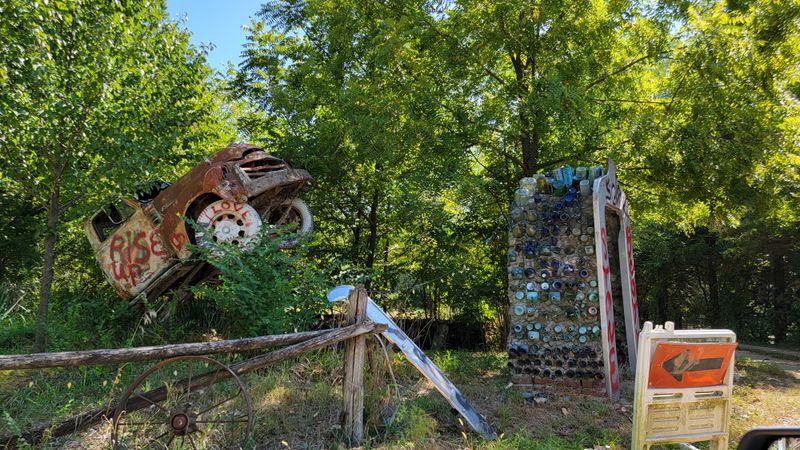
Truckhenge stands at Lessman Farm, 4124 NE Brier Road, Topeka, Kansas, a folk art site where trucks tilt from the earth like colorful monoliths.
Each vehicle becomes sculpture, painted with phrases and patterns that turn scrap into an outdoor gallery.
You can drive the gravel approach, park in the designated area, and wander the displays with unhurried curiosity.
The setting is a working property, so respect posted signs and follow on site guidance for a smooth visit.
Bottle and metal pieces dot the landscape, and the river bottom backdrop adds open sky drama.
This Kansas original embraces do it yourself spirit, building art from what the land and workshop provide.
Textures change as light shifts, making morning and late day especially photogenic.
The trucks form sightlines that draw your eye through fields, fence lines, and sculptural clusters.
It is equal parts humor and grit, a place that favors imagination over polish.
Expect a rustic experience, with ground surfaces that may be uneven after rain.
You will appreciate how hand painted details keep the mood personal and welcoming.
Photos work best when you step back to capture both vehicles and horizon.
The site feels like a living project, growing and evolving as ideas shift.
Kansas folk art thrives in spaces like this, where experimentation has room to breathe.
Give yourself time to explore, because surprises hide behind trucks and along fence rows.
Leave with dust on your shoes and a story that could only come from here.
Sounds of wind and open land add to the sense of isolation and focus.
Each visit feels slightly different depending on light, weather, and recent additions.
It rewards slow wandering rather than quick snapshots.
6. Mount Sunflower, Wallace County
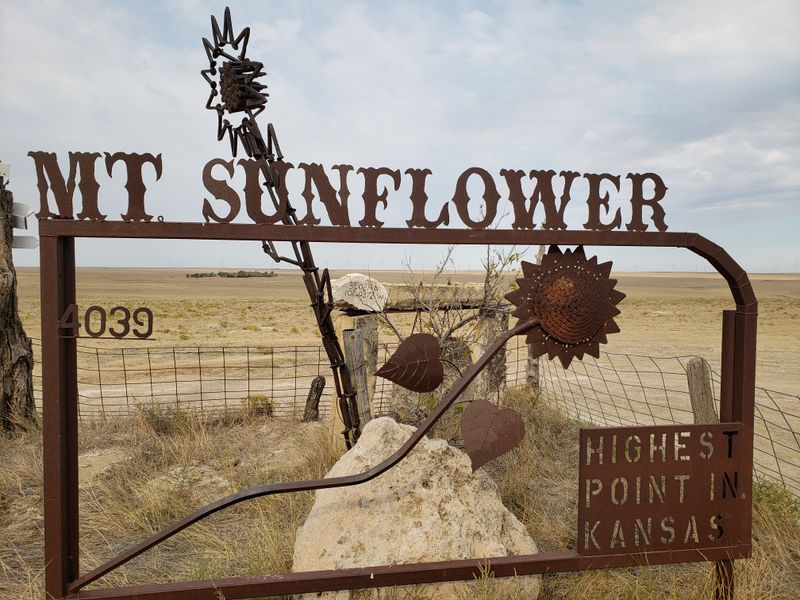
Mount Sunflower sits on private land with public access near County Road 3 and Road W, Wallace County, Kansas, close to the Colorado line.
A modest sign, picnic table, and metal sunflower sculpture mark the state high point on gently rising prairie.
You can drive gravel roads, then walk a short path to the marker and a sweeping horizon.
The charm lies in understatement, a humorous nod to elevation in a famously flat landscape.
Wind rolls through grass, and meadowlarks add bright notes to the quiet.
This Kansas stop invites reflection, with open space that clears road trip noise from your mind.
The approach requires patience, so check conditions and fuel before leaving the highway.
Sunrise glows across the plains, and sunset paints long shadows around the sculpture.
Photographers enjoy the compositions that pair simple objects with endless sky.
Facilities are minimal, which suits the lean character of the site.
You will likely have it to yourself, giving the moment unexpected intimacy.
Bring water, sturdy shoes, and a map, then let the quiet guide your time.
Signs request respectful behavior, and the gate area keeps parking orderly.
The high point connects geography to personality, proving Kansas humor is part of the landscape.
Even brief stops feel restorative, because the view stretches wider than worry.
When you leave, the road feels smaller and the sky somehow larger.
The drive itself becomes part of the experience as pavement gives way to gravel.
Minimal markers keep attention on the land rather than the sign.
It quietly reframes expectations about what a high point can feel like.
7. World’s Largest Hand-Dug Well, Greensburg
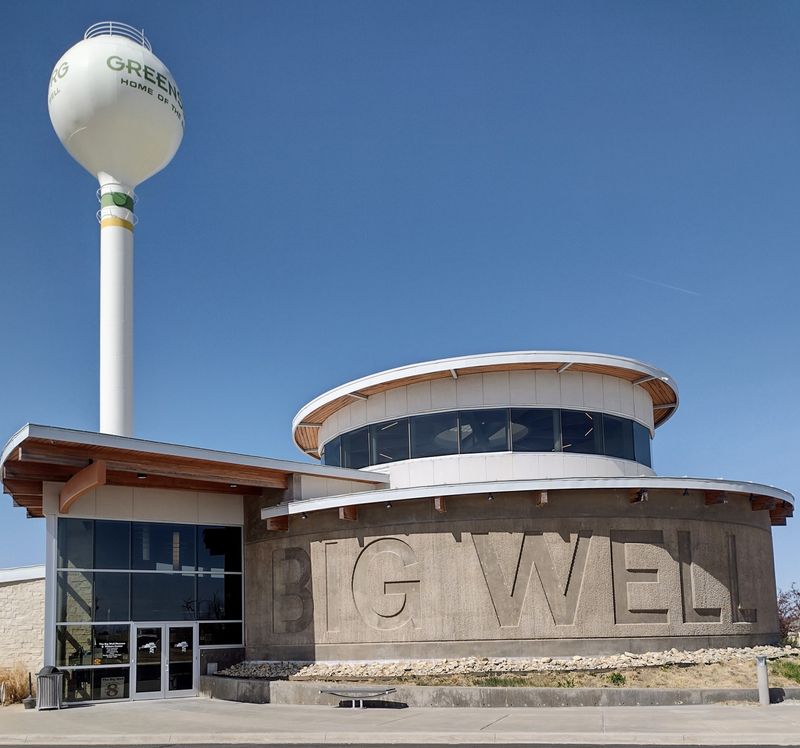
The World’s Largest Hand-Dug Well anchors the Big Well Museum at 315 S Sycamore Street, Greensburg, Kansas.
This historic well reveals the town’s grit, with a modern museum that shares stories of ingenuity and community resilience.
You can explore exhibits, view the well opening, and learn how neighbors carved infrastructure from unforgiving ground.
The building’s contemporary design contrasts with the old stone shaft, balancing past and present in one stop.
Clear signage guides you through displays, and the plaza out front offers an easy meeting point.
Kansas road trippers appreciate how this site mixes education with a memorable visual centerpiece.
Parking is simple along Sycamore Street and nearby side streets.
Inside, interpretive panels keep details accessible without overwhelming new visitors.
The well’s scale becomes tangible when you stand at the railing and look down.
You will leave with a deeper respect for the labor that shaped towns across the plains.
Greensburg’s broader story of recovery adds context, giving the museum a thoughtful tone.
Natural light softens the interior, while exterior panels offer concise orientation.
The museum sits within a compact downtown grid that is easy to navigate.
Plan time to walk the surrounding blocks, where public art and clean sidewalks create a pleasant loop.
It is a straightforward detour that pays off with perspective, pride, and a strong sense of place.
Kansas history feels close here, as if the well still echoes with voices from below.
Docents and staff often add local insight that deepens the visit.
The museum balances regional history with broader plains context.
It is a stop that leaves travelers informed without feeling weighed down.
Dear Reader: This page may contain affiliate links which may earn a commission if you click through and make a purchase. Our independent journalism is not influenced by any advertiser or commercial initiative unless it is clearly marked as sponsored content. As travel products change, please be sure to reconfirm all details and stay up to date with current events to ensure a safe and successful trip.
