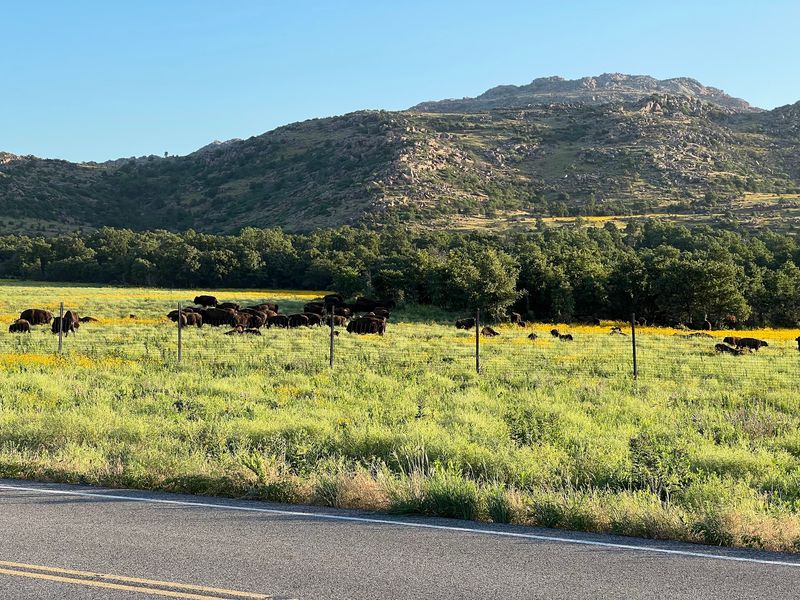
You round a bend on a quiet two-lane road in southwest Oklahoma, and suddenly a shaggy, two-thousand-pound neighbor is standing right beside your window, chewing grass like he owns the place. Honestly, he kind of does.
What looks like a simple drive past some rocky hills turns into a morning of bison, longhorns, elk, and prairie dogs, all for the cost of a tank of gas. Stick around, because this corner of the state has a story as big as its herd.
A Granite Refuge on the Edge of Lawton
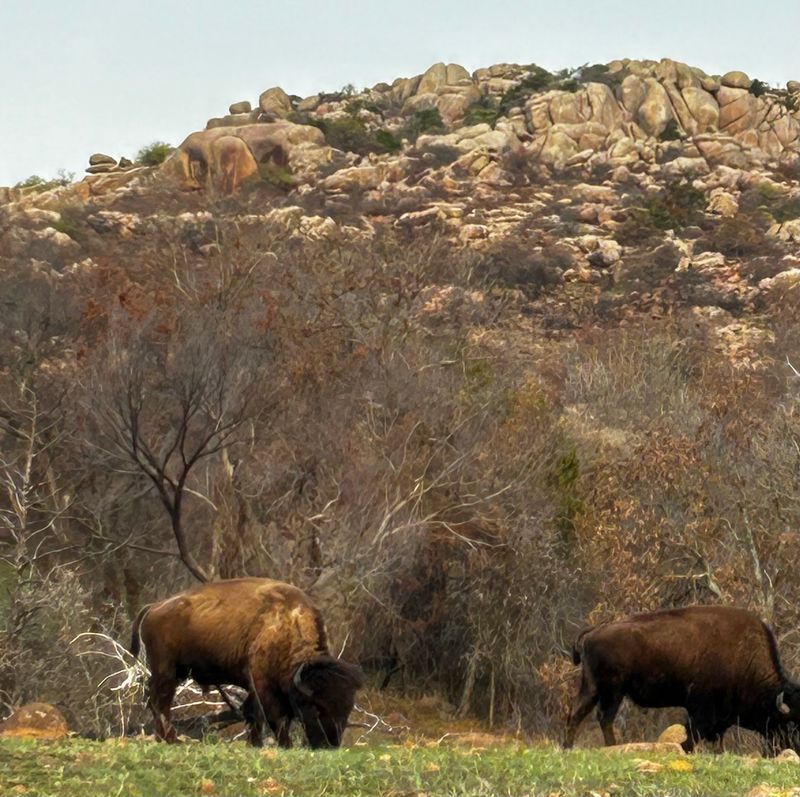
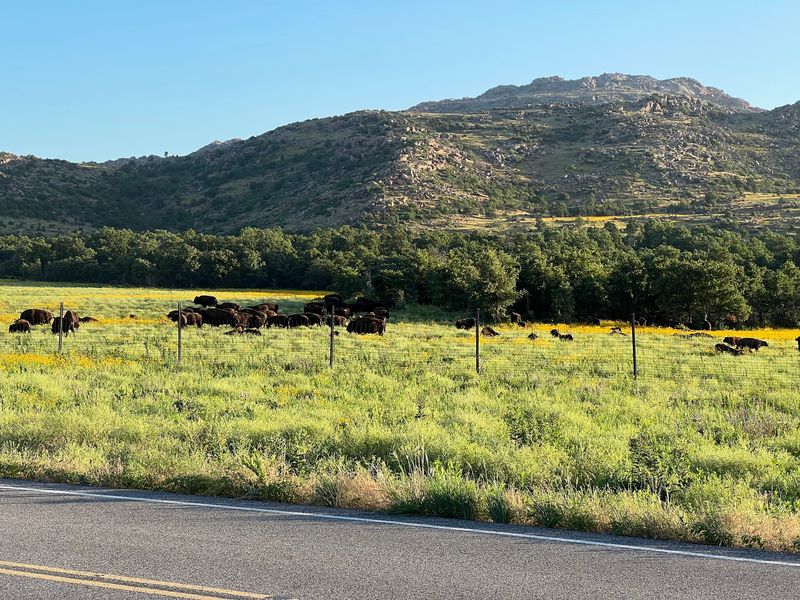
Picture a stretch of southwestern Oklahoma where ancient granite knobs rise out of rolling grass and a bison might be the one deciding when you move on. That is the everyday scene at the Wichita Mountains Wildlife Refuge, tucked near Lawton and the small town of Cache.
The refuge covers roughly 59,000 to 60,000 acres of mixed grass prairie, rocky peaks, quiet lakes, and winding streams.
Right in the middle of all that open country sits the Quanah Parker Nature and Visitor Center, listed at OK-49 in Lawton. Most folks treat it as their very first stop, and for good reason.
Inside, you can grab a free map, ask questions, cool off, and get your bearings before heading out to find the herd.
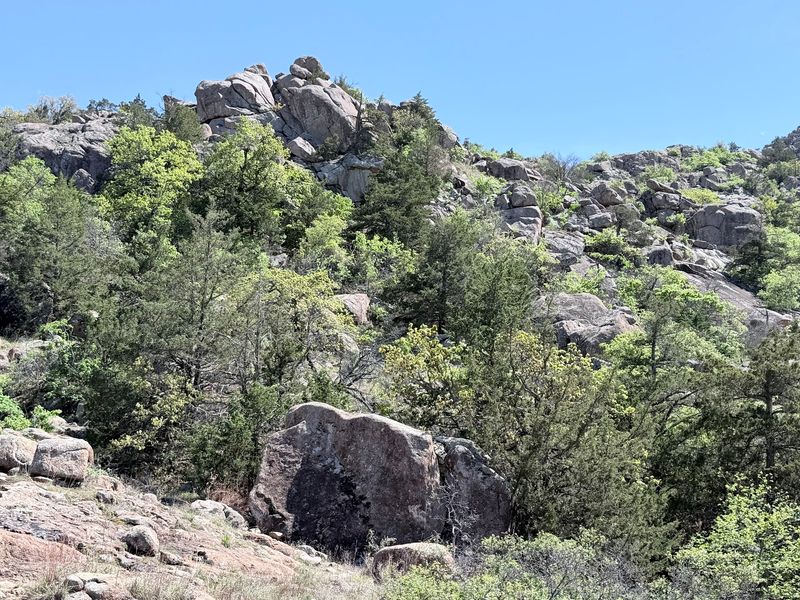
Geologists estimate the Wichita Mountains are about 500 million years old, which makes them some of the oldest ground you can stand on in the region. Time has worn them down into rounded stacks of pink and gray boulders rather than jagged alpine peaks.
Visitors often say the beauty sneaks up on you instead of hitting all at once, and then it keeps pulling you back.
Think of the visitor center as the front porch to a very big, very wild backyard.
The Oldest Managed Refuge in the Federal System
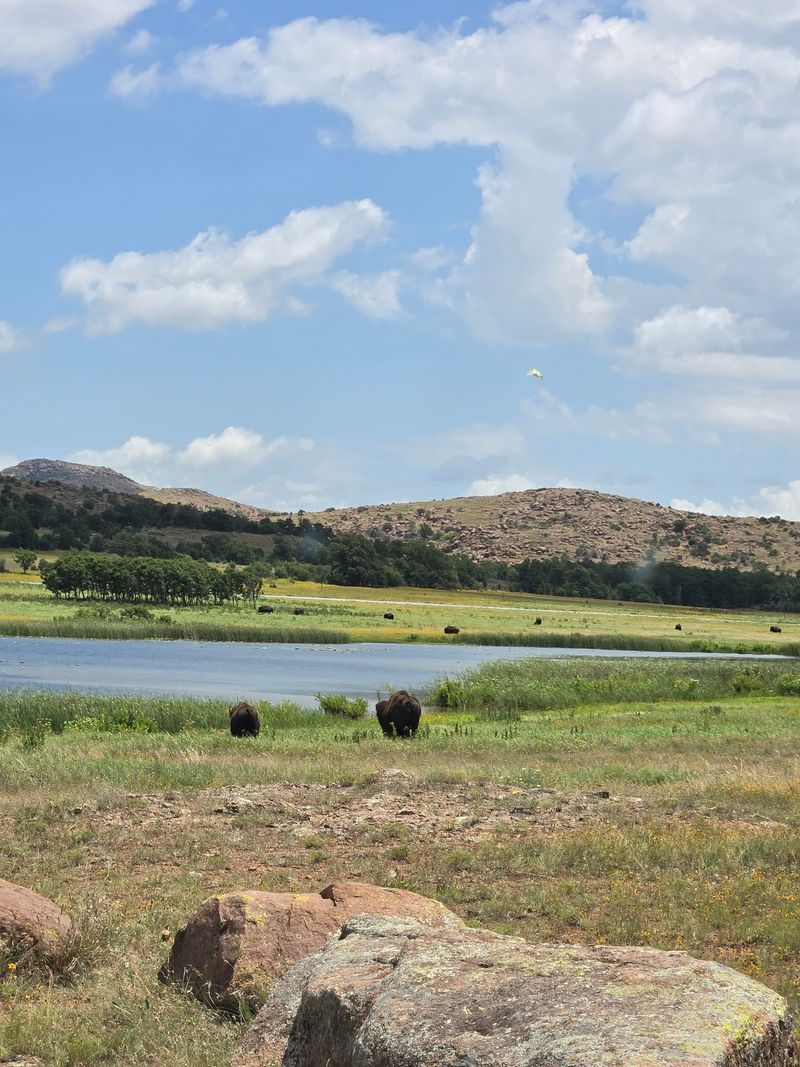
Long before road trips and phone cameras, somebody decided this land was worth protecting. The area was first set aside in 1901 as a forest reserve.
Just four years later, in 1905, President Theodore Roosevelt designated it a game preserve.
That timing matters more than you might guess. Today the Wichita Mountains Wildlife Refuge holds the title of the oldest managed wildlife facility within the U.S.
Fish and Wildlife Service system. Plenty of famous parks out west get the headlines, but this spot in Oklahoma was quietly ahead of the curve.
Here is a fun way to think about it. When the refuge was created, Oklahoma was not even a state yet, since statehood arrived in 1907.
So the land was being cared for as wildlife habitat before the map lines we know today were finalized.
Over the decades, the refuge grew into a living classroom for prairie conservation. Its biggest claim to fame came from helping the American bison bounce back after the species had nearly vanished from the plains.
That effort is a big part of why you can now watch a herd graze beside the pavement.
History buffs will find plenty of that backstory explained inside the visitor center exhibits, so give yourself time to read.
Fifteen Bison and a Long Train Ride From New York
Believe it or not, the herd roaming these hills traces its roots to New York City. In 1907, fifteen bison were shipped from the Bronx Zoo to the Wichita Mountains.
The goal was simple but huge: give the American buffalo a real home on the prairie again.
Back then, bison numbers had fallen so low that many people worried the animals would disappear from the plains for good. Returning them to wild grassland in Oklahoma was a bold experiment.
It worked better than most folks could have hoped.
The arrival was a celebrated event. Quanah Parker, the renowned Comanche chief who built his home near the refuge boundary, welcomed the bison along with other Native American leaders.
For tribes whose lives and traditions had long been tied to the buffalo, seeing the animals come home carried deep meaning.
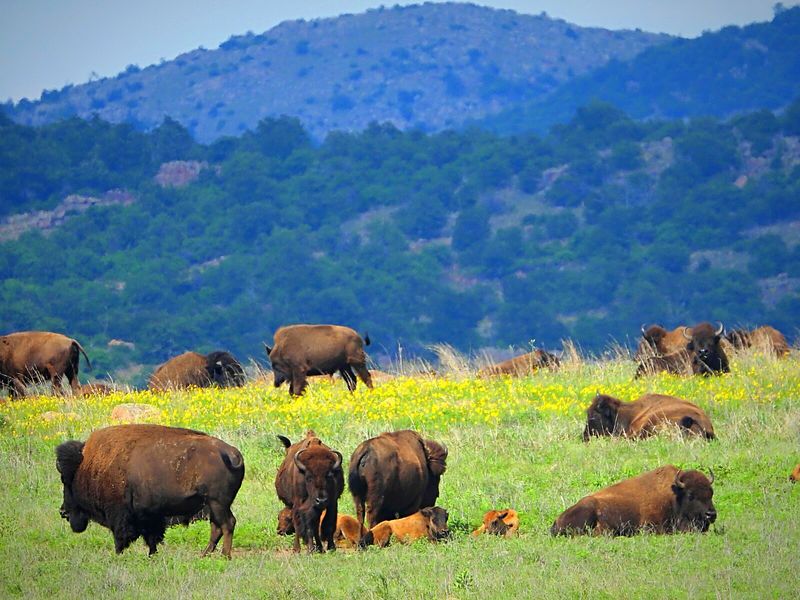
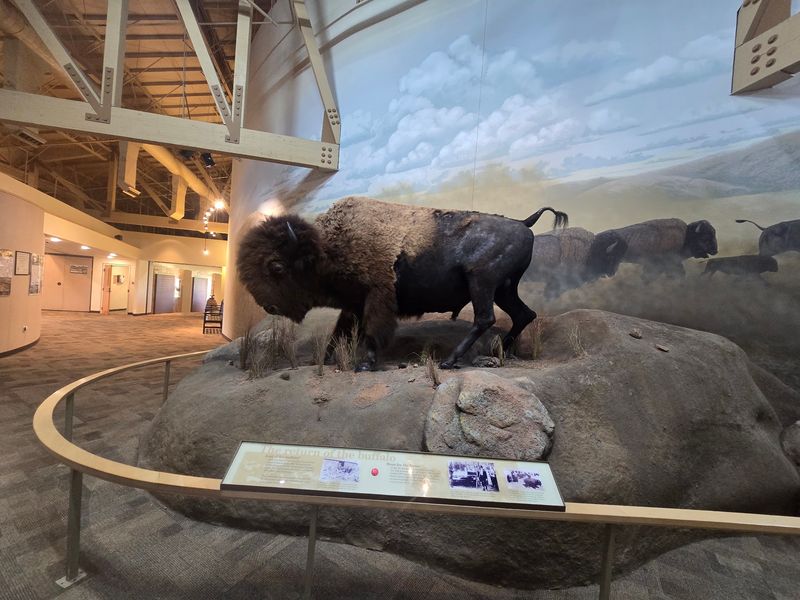
Fast forward to today, and those original fifteen have grown into a free-roaming herd of around 650 American plains bison. Every calf you spot in spring is part of that long comeback story.
It is a pretty good reminder that a small, determined start can grow into something remarkable.
Next time a bull ambles across the road in front of you, you will know just how far his family traveled.
Tribal Roots Beneath the Wichita Peaks
Names on a map often hide a story, and this one is worth knowing. The mountains are named after the Wichita people, who believed their ancestors originated from the area’s rocky points.
That belief gives these weathered hills a meaning that goes far beyond scenery.
For generations, the Wichita Mountains also served as hunting grounds for the Kiowa, Apache, and Comanche nations. These were living landscapes, shaped by seasonal travel, bison hunts, and traditions passed from elders to children.
Many of those nations remain active, vibrant communities in Oklahoma today.
Quanah Parker holds a special place in that story. As a Comanche leader, he chose to build his home near the edge of what is now the refuge.
His support for bringing the bison back in 1907 connects the herd directly to tribal leadership and memory.
Visitors curious about this heritage will find helpful context at the visitor center, which carries his name. Some travelers also pair their refuge day with a stop at nearby Fort Sill, which has a museum that one guest described as excellent.
Taking a moment to learn whose homeland you are driving through makes those granite views feel even richer. It turns a pretty drive into a respectful visit.
Traffic Jams, Bison Style
Brake lights ahead? Out here, the cause is rarely a fender bender.
It is usually a bison that decided the other side of the road looked tastier, and nobody is going to argue with him.
Bison are often spotted along the Main Loop Road, especially the stretch between Boulder and French Lake. Indiahoma Road is another reliable place to look.
Smaller groups sometimes graze in the west pasture near the visitor center, so keep your eyes open even before you park.
Road crossings are not unusual at all, and cars sometimes simply have to stop and wait. Visitors love it.
One guest said they saw bison and longhorns almost immediately after entering, while another counted close to 25 bison on a cold, rainy day.
Now for the important part. Stay inside your vehicle and keep at least 100 feet between you and any bison, which is about the length of two school buses.
These animals are wild, powerful, and can be unpredictable, no matter how calm they look while munching grass.
Roll the windows down, turn the engine noise low, and just enjoy the show. Watching a massive animal lumber past your bumper is the kind of moment kids talk about for years.
Sunrise, Sunset, and Seasonal Surprises
Set an alarm, because the early bird really does get the bison. The herd tends to be most active around sunrise and again in the late afternoon toward sunset.
Midday heat often sends them looking for a lazier pace.
Fall brings a bonus. Cooler temperatures can make the animals easier to spot, and it is also the season when you might catch bulls sparring.
Watching two giants push and shove across the prairie is a sight that makes the drive feel instantly worthwhile.
Spring has its own charm. That is calf season, when reddish-orange little ones wobble alongside their mothers.
Families with young kids often find this the sweetest time to visit, since the babies are playful and easy to pick out from the adults.
Winter can surprise you too. One visitor who came during the colder months still saw bison, longhorns, and elk, though they noted there is very little shade no matter the season.
Rain did not stop another traveler from spotting dozens of bison.
Summer is the trickiest stretch, since Oklahoma heat can get intense. If you visit then, plan your wildlife drive for early morning, pack cold water, and save the afternoon for the air-conditioned visitor center.
Longhorns, Elk, and a Town Full of Prairie Dogs
Bison may be the headliners, but the supporting cast deserves its own applause. The refuge is home to around 1,000 Rocky Mountain elk and about 450 white-tailed deer.
Spotting a big elk silhouetted against the granite feels like a scene from a nature documentary.
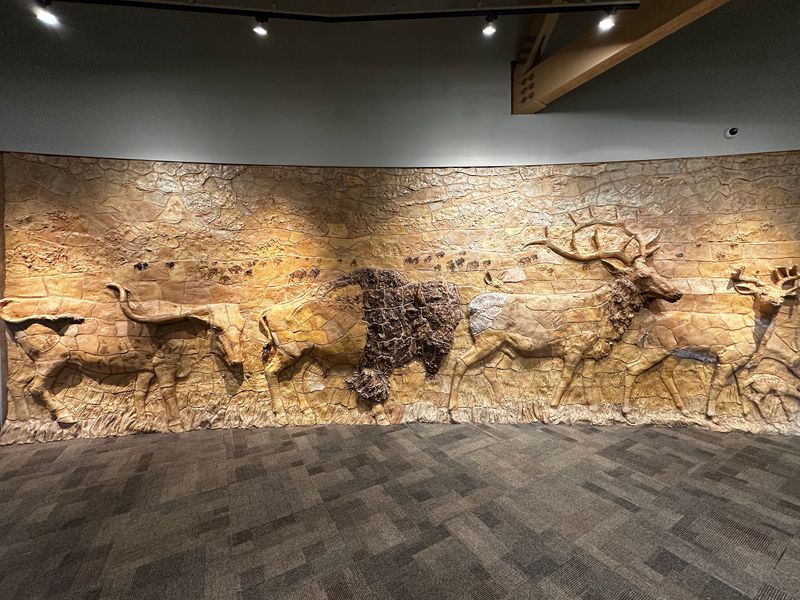
Then there are the Texas longhorns. The refuge keeps a herd for their cultural and historical significance, and those impossibly wide horns make them a favorite with photographers.
Visitors mention seeing them almost as often as the bison, so keep that camera handy.
Kids usually fall hardest for the black-tailed prairie dogs. These chatty little critters pop up from their burrows, bark warnings to each other, and dart back underground in a flash.
It is pure entertainment for anyone who can sit still for a few minutes.
Keep looking and the list keeps growing. River otters, burrowing owls, reptiles, amphibians, and fish all live here, along with more than 240 species of birds.
One guest suggested watching for the Eastern Collared Lizard, known locally as the mountain boomer, with its bright colors.
A pair of binoculars turns every pullout into a scavenger hunt. You never quite know which animal will show up next.
Exhibits, a Theater, and a Friendly Front Desk
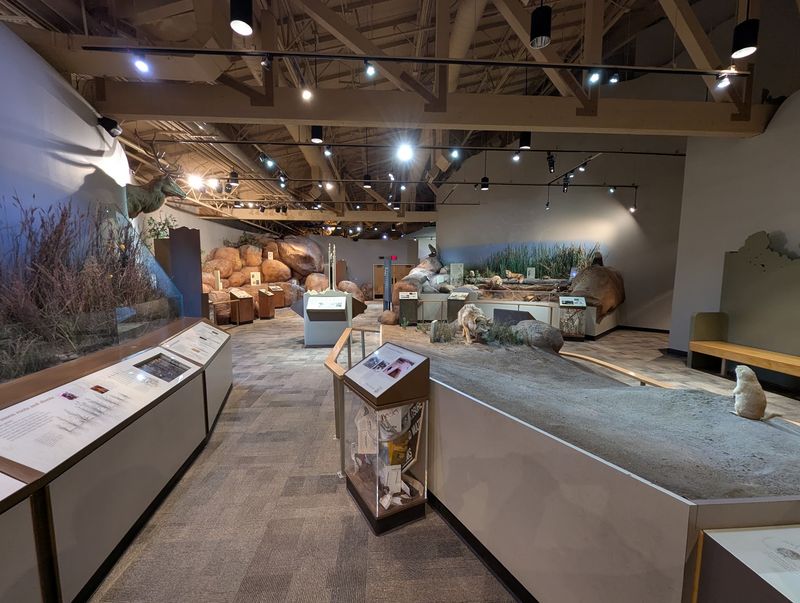
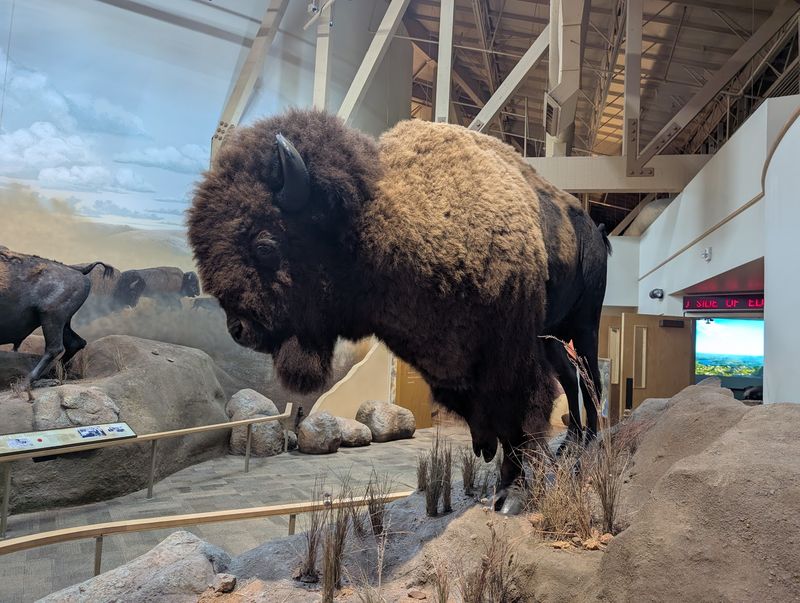
Step through the doors on a hot day and the cool air alone feels like a gift. Inside the visitor center, you will find exhibits covering the refuge’s history, wildlife, and plants.
Guests describe the displays as detailed, educational, and friendly for kids.
There is a lot packed in here. Visitors mention mounted animals, photographs, artwork, interactive learning stations, and a theater that shows a documentary about the area.
Some say the museum feels small but thorough, while others found it surprisingly large and informative.
The real standout, though, might be the people. Travelers often praise the staff for marking up maps, pointing out the best wildlife spots, and sharing where prescribed fires were happening.
One family visiting from Philadelphia said the man at the front desk drew personalized directions that made their whole trip special.
Plan on spending anywhere from 15 minutes to an hour, depending on how much you like to read. One visitor wisely noted not to linger too long, since there is so much waiting outside.
Budget travelers will appreciate that the museum is free. Grab a map, watch the film, ask a few questions, and you will head out knowing exactly where to point the car.
Souvenirs and Snacks at the Gift Shop
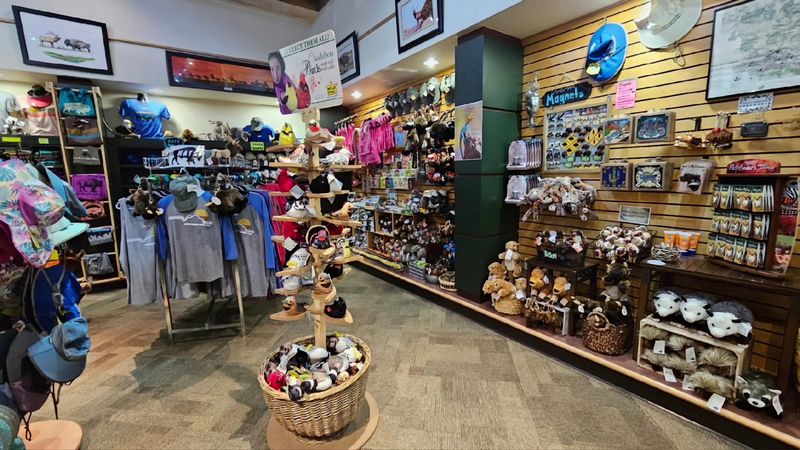
Few things in the building get talked about as much as the gift shop. It is small but well stocked with souvenirs, and it often ends up being the place where kids pick out their favorite memory of the day.
Think bison-themed keepsakes, wildlife books, and fun refuge mementos.
Friendly service seems to be a theme here too. One visitor said the woman working the shop helped them save money and suitcase space by explaining that more merchandise could be ordered online later.
That kind of small kindness sticks with people long after the trip ends.
Hungry or thirsty after a morning drive? Vending machines offer drinks, and there is a water fountain for refilling bottles.
Do not expect a full snack bar, so packing a cooler for the picnic areas is a smart move.
Here is a practical heads-up worth remembering. One guest pointed out that there is no ATM in the building, so bring a card or a little cash if you plan to shop.
Another visitor loved the place so much they offered to share their own refuge photos for postcards. When people want to contribute to a gift shop, you know it has made an impression.
Mount Scott and Its Winding Summit Road
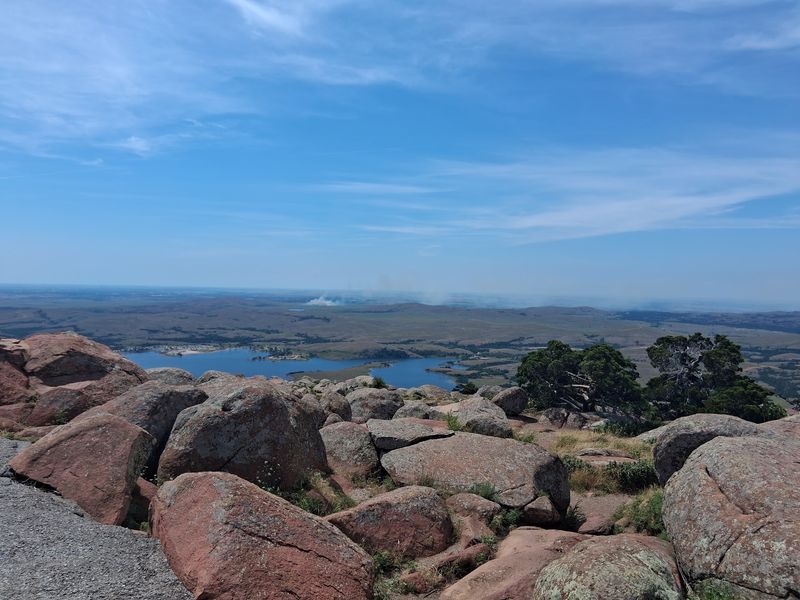
Some views make you forget to take the photo. Mount Scott is one of them, and many people travel to the area just for the trip to the top.
A three-mile paved road climbs to the summit, where panoramic views stretch across lakes, prairie, and granite ridges.
The drive itself is half the fun. One family said the curving route up was a ton of fun, and the reward at the top was worth every switchback.
Another visitor described the summit as almost a spiritual experience.
Weather can be fickle, though. One guest arrived to find thick fog blanketing the peak, which hid the view but gave them a perfect excuse to come back.
Checking the sky before heading up can save a little disappointment.
Go around sunrise or sunset if you can. The light on the rocks turns warm and golden, and you might spot wildlife on the drive up or down.
Bring a jacket, since it can feel breezier on top than down below.
Regulars have one gentle piece of advice. Do not stop at Mount Scott and call it a day, because the refuge offers so much more once you leave the main road behind.
Trails, Lakes, and a Forest Planted in Rows
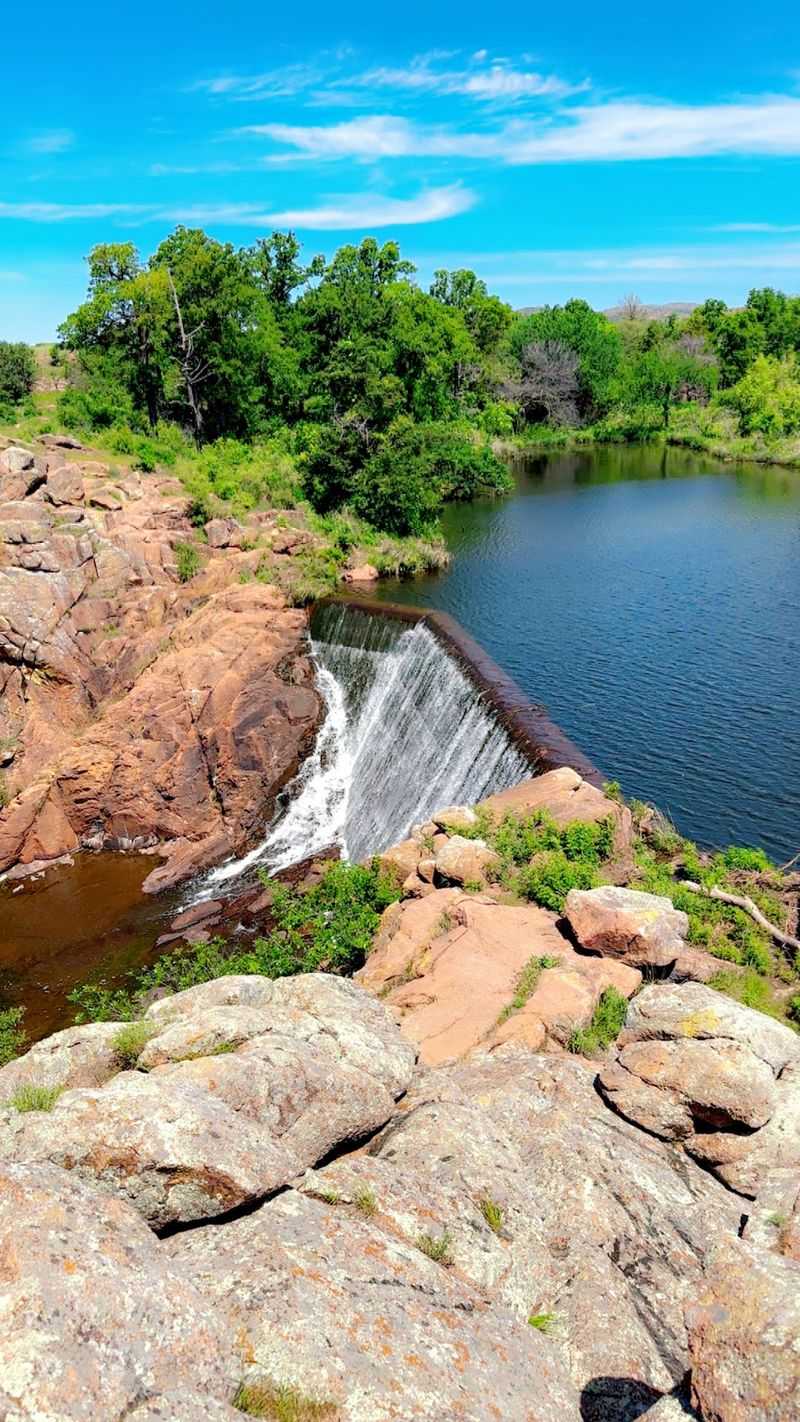
Lace up your boots, because the best parts of the refuge often sit a short walk from the pavement. Numerous trails wind through the area, including the 6-mile Bison Trail loop.
It offers wildlife sightings and wide views of those ancient mountains.
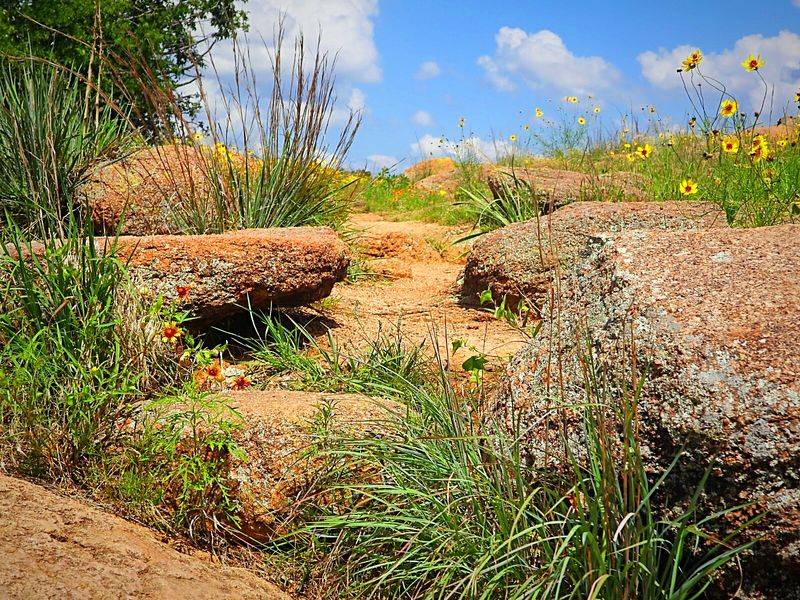
Visitors have their favorites. One guest loved the Wildflower Hike and called it a must, while another family mentioned finding a waterfall at certain times of the year.
Longtime visitors recommend spending a day kayaking or fishing at the lakes, too.
Curious spots add a dash of quirkiness. The Parallel Forest is filled with cedar trees planted in rows exactly six feet apart, which feels almost magical as you walk between them.
The Holy City of the Wichitas is another stop that visitors say is worth the detour.
Trails can be rocky with limited shade, so carry more water than you think you need. During extreme heat, hiking access may be limited to sunrise until 10 AM.
Wear a hat and light, loose clothing, and plan to finish early in summer.
One more tip from a seasoned guest: check yourself for ticks after hiking, especially if you wander off trail. A quick look can save an itchy car ride home.
Plan-Ahead Details for a Free Day Out
Good news for the wallet first. There is no charge for general day use at the refuge, which covers the grounds, picnic areas, hiking trails, and the visitor center.
As one visitor put it, where else can you get this much for so little?
Public use areas are open daily from sunrise to sunset. The visitor center runs from 9 AM to 5 PM every day of the week, though hours can vary, so a quick call to 580-429-3222 before you go is a smart idea.
Early birds sometimes arrive before the doors open and wait a bit.
Parking is plentiful most of the time, with a large lot out front. Weekends are a different story, according to one regular, so arrive early to grab a spot.
The building offers clean restrooms, air conditioning, and wheelchair accessibility.
Want to stay the night? Doris Campground offers primitive sites and RV spots with electric hookups for a fee, and reservations are available on Recreation.gov.
Backcountry camping requires a permit, with only 10 issued per day.
Looking for a meal nearby? One visitor suggested grabbing a burger at the Meers Store and Restaurant, a popular stop close to the refuge.
Worth the Drive, Worth the Wait
So, is it worth loading up the car? For most families, the answer comes easy.
Free admission, wild bison by the roadside, and a helpful visitor center make this one of the best bargains in Oklahoma.
It suits a wide range of travelers. Grandparents can enjoy the scenic drives without much walking, while kids get a front-row seat to prairie dogs and longhorns.
Hikers, photographers, and anglers will find plenty to keep them busy well past lunchtime.
One visitor summed it up nicely. The scenery, like the people, is humble but never in a bad way, and it does not feel crowded or overbuilt like some big national parks.
Instead, it feels like a haven for wildlife with room for a few lucky guests.
Locals say it is a great place to bring out-of-town relatives, and it is easy to see why. You get history, tribal heritage, ancient mountains, and a bison traffic jam all in one day.
Few places pack that much into a trip that costs nothing to enter.
Start at the visitor center, grab that marked-up map, and let the herd set the pace. Chances are you will already be planning your next visit on the drive home.
