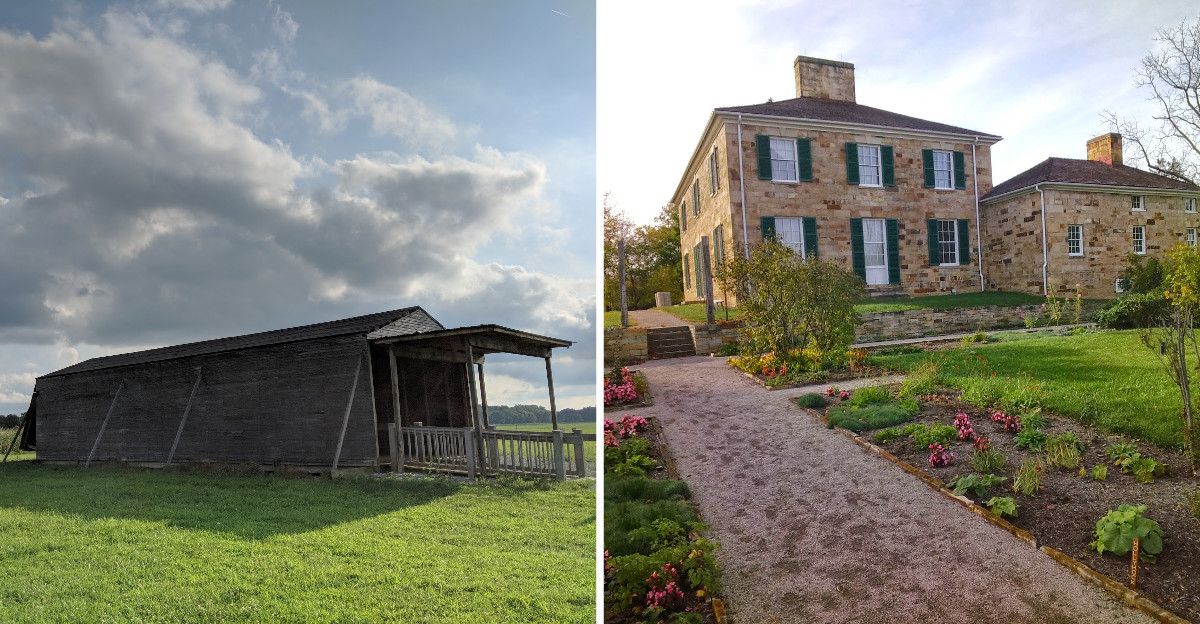
Cornfields and truck stops were the expectation, but Ohio had other ideas. The first drive across the state with a full tank and no real plan turned into a series of detours where the country quietly changed direction.
Windows above the river glow with lamplight. Pastures where two brothers learned to fly in circles.
Earthworks shaped like a giant serpent on a ridge older than almost anything written down. The route stitches together southern river towns, the flat farm country near Dayton, and the small cities up north where big decisions were made on ordinary porches.
Each stop looks unremarkable until you learn what happened there. What makes these places stick is how modest they appear from the road.
That modesty is the point. History here feels close enough to touch, and the drive is worth clearing a weekend for.
1. John Rankin House, Ripley
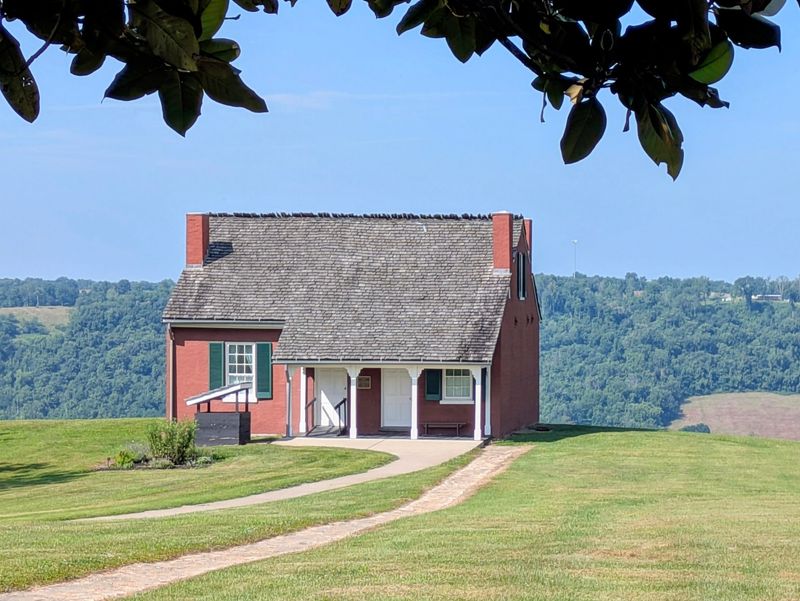
The climb gets your attention before the house does. A long wooden staircase runs up the hillside from the town below, and by the time I reached the top my legs were burning and my thinking had shifted.
Up on Liberty Hill sits a small brick home built in 1828, where Presbyterian minister John Rankin lived with his wife and their thirteen children. From that bluff the family could watch the river, and a lamp left burning in the window told people crossing from Kentucky that help waited on the other side.
Over the years the Rankins are credited with helping more than 2,000 people reach freedom, and they never lost one to slave catchers. Rankin also wrote Letters on American Slavery, which circulated widely among abolitionists.
Inside, much of the original woodwork survives, along with family belongings including their Bible. Guides here are genuinely good storytellers, and the hour goes fast.
The story of Eliza Harris crossing the breaking river ice with her child is connected to this house, later echoing through Uncle Tom’s Cabin.
What stayed with me was the view. Standing on that lawn, the river looks narrow and the distance between bondage and freedom looks impossibly short, which somehow makes the courage involved feel even larger.
Address: 6152 Rankin Hill Road, Ripley, OH 45167
2. Harriet Beecher Stowe House, Cincinnati
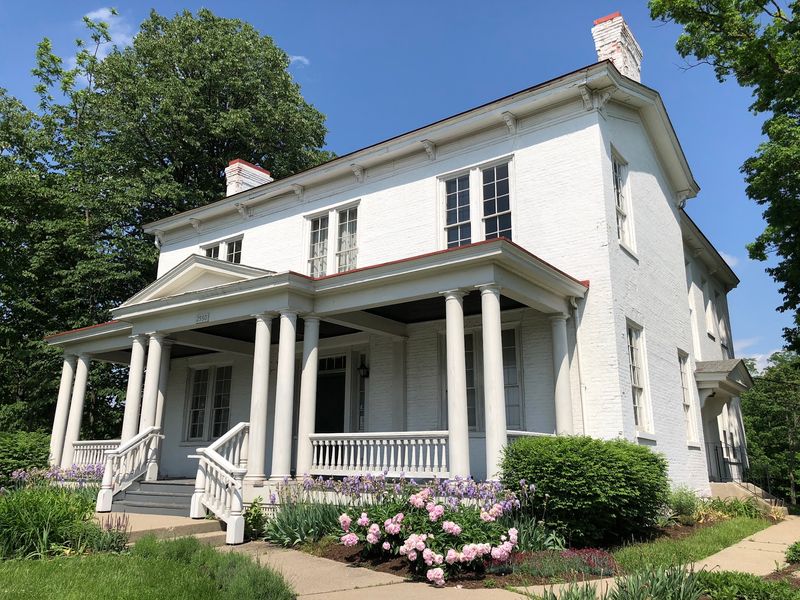
Cincinnati traffic hums right past this one, which is part of its charm. You could drive by a dozen times without realizing a book that shook a country started taking shape behind those windows.
Harriet Beecher Stowe lived here during her young adult years, in the decades before the Civil War, surrounded by a family deeply involved in abolitionist work. Her time in the city, just across the river from a slave state, shaped everything that later poured into Uncle Tom’s Cabin.
The tours cover Stowe herself, but also her relatives and the wider circle of people connected to civil rights work and the Underground Railroad between the 1830s and 1860s.
Then comes the second chapter, and honestly it was my favorite part. Long after Stowe moved away, the building became the Edgemont Inn, an African American boarding house and community gathering place listed in The Green Book for Black travelers.
Two very different eras, one address, both wrapped around the same stubborn fight for dignity.
Programming here leans toward conversation rather than velvet ropes, with cultural events and talks scheduled through the year. I left thinking about how ordinary rooms hold extraordinary weight, and how easily a neighborhood house can outlast the era that made it famous.
Address: 2950 Gilbert Avenue, Cincinnati, OH 45206
3. Paul Laurence Dunbar House, Dayton
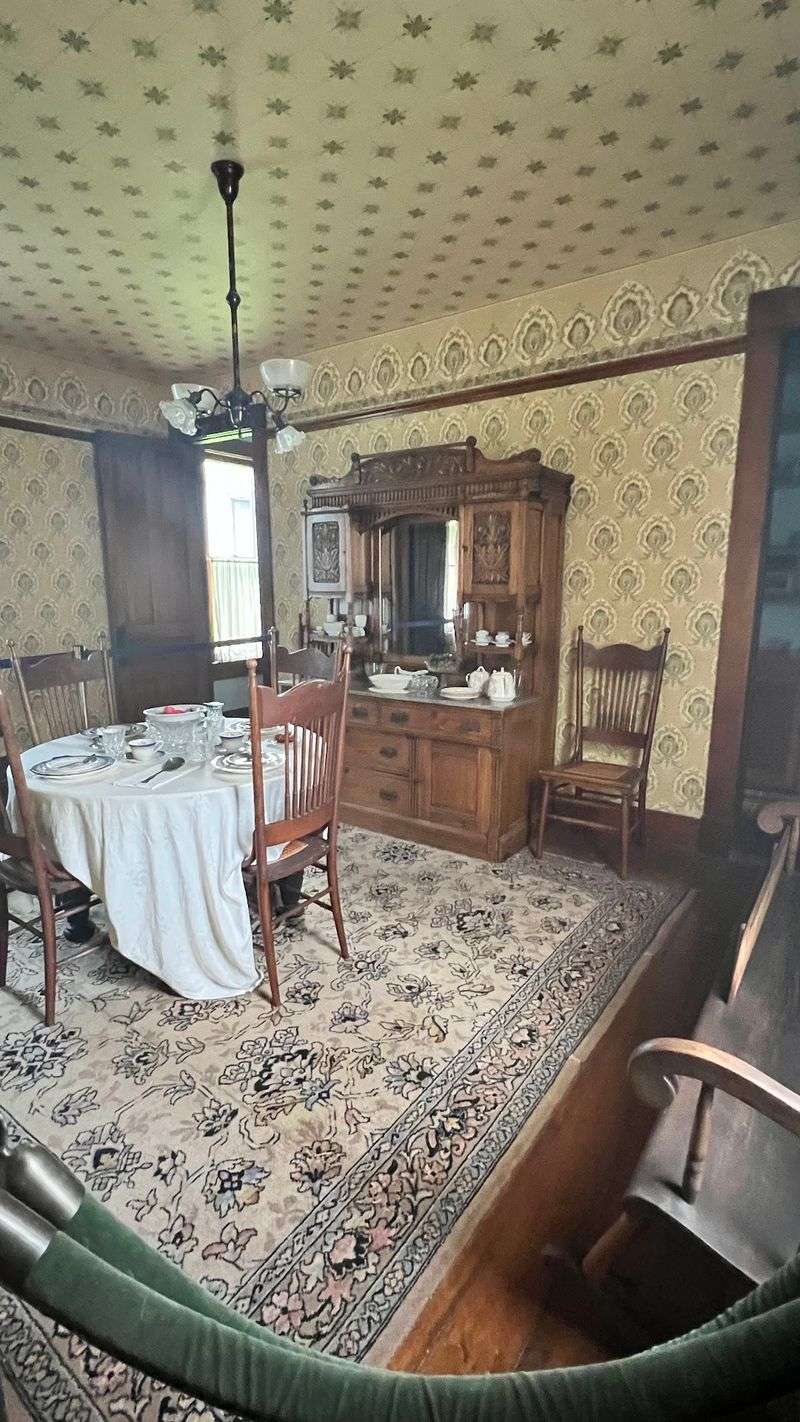
Wallpaper, of all things, is what grabbed me here. Nearly every room has a pattern, and once a guide points out that the paper itself signaled success, you start reading the whole house differently.
Paul Laurence Dunbar bought this two-story brick Victorian in 1904 for his mother, Matilda, and lived in it until his passing in 1906 at just thirty-three years old. He was the first African American writer to earn national fame and support himself entirely through his writing, which in that era was close to unthinkable.
Some of his final poems and stories were written inside these walls.
The rooms have been restored to match how they looked when Paul and Matilda shared the house, right down to the furnishings. Personal items and books sit where you can actually study them, and the effect is less museum and more someone’s home paused mid-life.
Here is the part most visitors do not expect. After Matilda passed away, Ohio acquired the property, making it the first house museum in the country dedicated to an African American.
Dayton gets talked about for airplanes, but this quiet street gave the nation a voice that spoke for people rarely heard in print, and the visit lands harder than its size suggests.
Address: 219 North Paul Laurence Dunbar Street, Dayton, OH 45402
4. Huffman Prairie Flying Field, Dayton
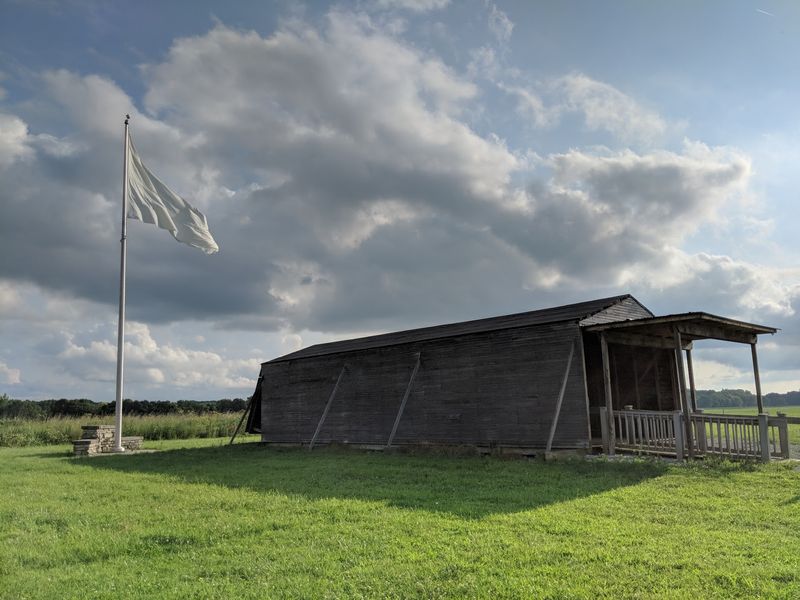
Eighty-four acres of grass does not look like a monument. That is honestly the best thing about it.
Kitty Hawk gets the postcards, but the real work happened on this pasture outside Dayton between 1904 and 1905. Wilbur and Orville Wright made roughly 150 flights here, rent free, figuring out the messy problems that sand dunes could not teach them.
The first sustained turn happened over this ground. So did the first complete circle in the air, flown with the Wright Flyer II.
By 1905 they had built the Wright Flyer III, which they considered the world’s first genuinely practical airplane, capable of banking, circling and carving figure eights. Starting in 1910, the field hosted the Wright Company flying school, training some of the earliest pilots anywhere.
Today the site is kept as grazed pasture so it resembles what the brothers saw, with replicas of the 1905 hangar and the catapult they used for launching.
A nature trail curls through tall-grass prairie next door, and I ended up walking it just to hear the wind move. A couple of miles away, the interpretive center on Wright Brothers Hill fills in the technical details with exhibits.
Stand in the middle of the field and the sky feels genuinely enormous, which I suspect is exactly how it felt to them.
Address: Gate 16A off State Route 444, Wright-Patterson AFB, Dayton, OH 45433
5. Fallen Timbers Battlefield, Maumee
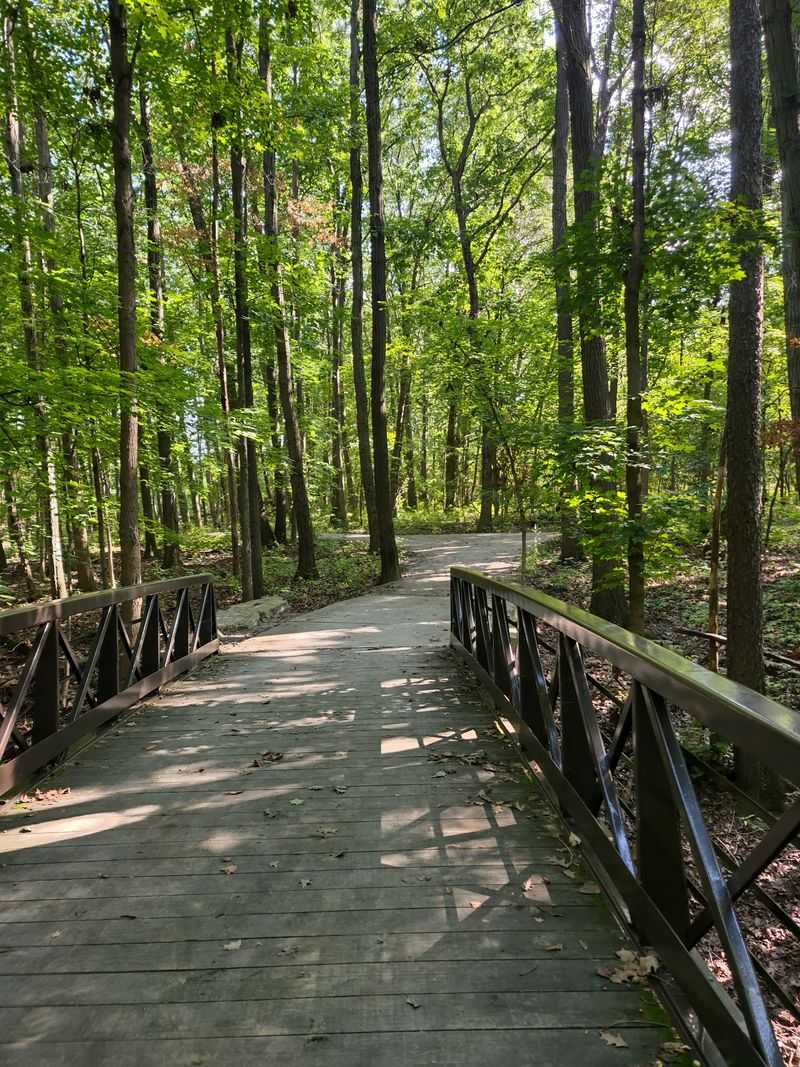
A tornado gets partial credit for the name here, which is a strange sentence to write. Trees knocked flat by an earlier storm littered the ground when the fighting started on August 20, 1794.
The Battle of Fallen Timbers closed out the Northwest Indian War. Major General Anthony Wayne’s Legion of the United States defeated a confederacy of Native nations that included Shawnee and Ottawa warriors, and the whole thing lasted barely more than an hour.
Short fight, enormous consequences. The outcome led directly to the Treaty of Greenville in 1795, the ceding of huge stretches of land, and the westward push that eventually produced Ohio statehood.
Historians frequently rank it among the most consequential battles in the country’s development, though you would never guess it from the peaceful fields.
The preserved site covers 187 acres of grassland and woods, crossed by the 1.5-mile Northwest Territory Trail with interpretive panels along the way. Monuments honor both the American soldiers and the Native warriors who passed, and I appreciated that both sides are named.
A short drive away sit the remains of Fort Miamis, a British post tied to this battle and later to the War of 1812, with earthworks still clearly visible in the grass.
Bring decent shoes and give yourself an unhurried hour.
Address: 4949 Jerome Road, Maumee, OH 43537
6. Serpent Mound, Peebles
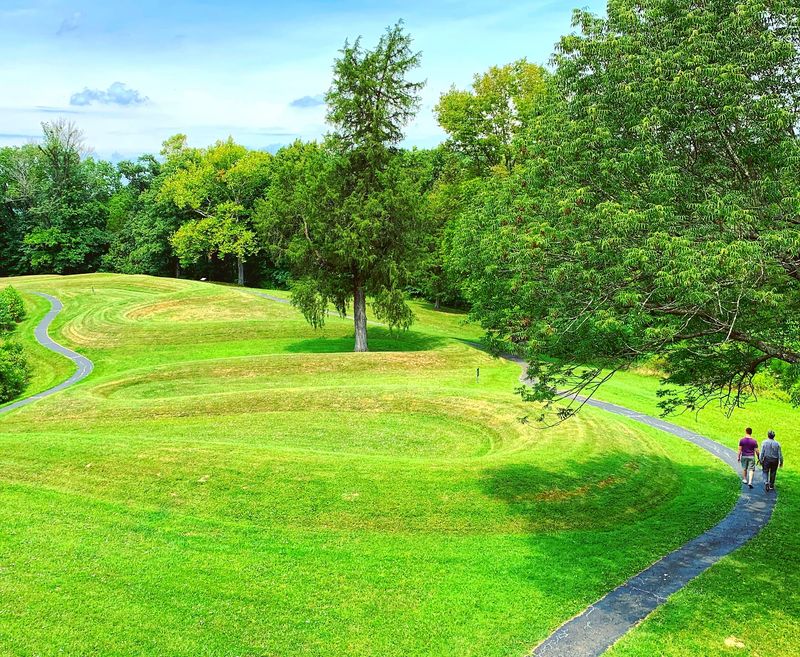
Some places make you lower your voice without meaning to. This ridge in Adams County did that to me within about a minute of arriving.
Serpent Mound stretches 1,330 feet across the plateau in the shape of a winding snake with a tightly coiled tail, making it the largest prehistoric effigy mound on the planet. It is a National Historic Landmark, and the scale only truly registers once you start walking the footpath that follows its curves.
Who built it, and why, remains genuinely open. Strong evidence points to the Fort Ancient culture around A.D. 1100, while the earlier Adena culture left burial mounds nearby.
Early observers thought the shape showed a serpent swallowing an egg. Others have argued for alignments with the sun and sky, and the debate has never fully settled.
What is not debatable is the craftsmanship. Building something this precise, this large, without any way to see it from above takes planning that still impresses engineers.
Wooded trails run off from the main loop, and a small museum near the parking area fills in context about pre-contact American Indian history in the region. Morning visits felt best to me, when the grass is damp and the whole ridge is quiet.
Address: 3850 State Route 73, Peebles, OH 45660
7. Adena Mansion & Gardens, Chillicothe
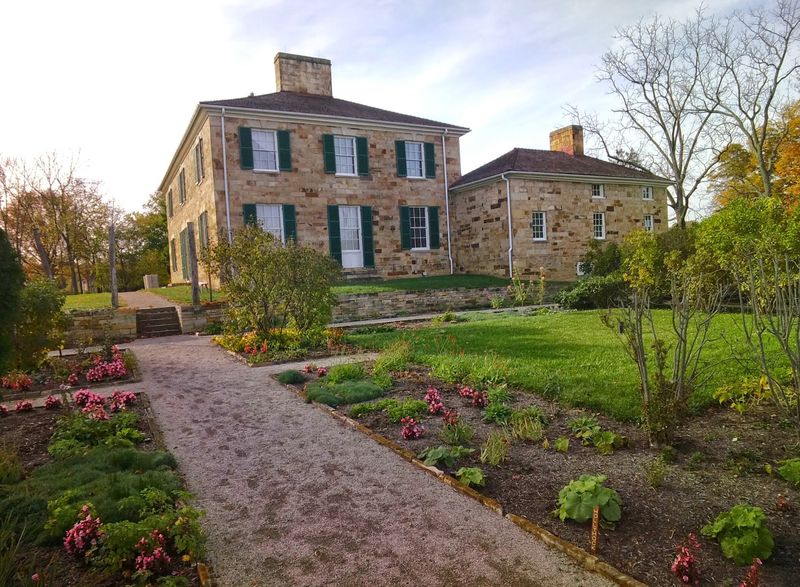
The north lawn is where I would send anyone who only has ten minutes. Look east across the Scioto River Valley and you are looking at the view said to have inspired the Great Seal of Ohio, sunrise, hills and all.
Behind you sits the home of Thomas Worthington, often called the Father of Ohio Statehood and later the state’s sixth governor. The mansion was finished in 1807 and designed by Benjamin Henry Latrobe, the same architect connected to the U.S.
Capitol, which is a serious pedigree for a house out in the Ohio countryside.
Inside, the restoration is careful without being stuffy. Rooms show how a prominent family actually lived in the early 1800s, when Chillicothe served as the young state’s capital.
The grounds surprised me most. Three terraces hold flowers and vegetables planted in the style of the period, and wandering them feels pleasantly unhurried.
A visitor center and museum handle the bigger picture, with interactive exhibits covering Worthington’s political work and the many people, including those who were enslaved and employed here, connected to the estate.
Chillicothe has a habit of quietly holding origin stories. Ohio’s earliest chapters were argued out in this county, and the hilltop still carries that founding-era weight.
Address: 847 Adena Road, Chillicothe, OH 45601
8. William Howard Taft National Historic Site, Cincinnati
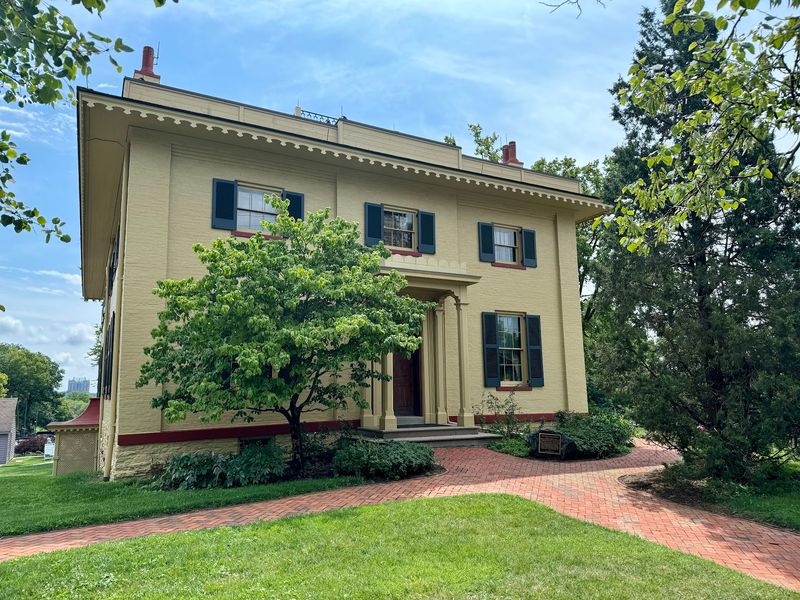
Only one person in American history served as both President and Chief Justice of the Supreme Court, and he grew up in this Mount Auburn house. That fact alone got me up the hill.
Built around 1845, the two-story Greek Revival home was William Howard Taft’s birthplace and childhood address. He became the 27th President, then later led the Supreme Court, which is a resume with no duplicates.
The site exists specifically to explain how a kid becomes that. Taft’s family put enormous stock in education, hard work and public duty, and those expectations show up everywhere in the rooms.
Guided tours walk you through the restored spaces, and the guides are good about connecting the furniture to the family habits that shaped him.
I liked how domestic it all feels. Nothing about the parlor screams future world figure, and that gap between an ordinary Cincinnati household and two of the highest offices in the country is the real story.
Mount Auburn itself is worth a slow drive, with steep streets, old brick and long views back toward downtown. Pair it with the Stowe House a short distance away and you get two very different Cincinnati chapters in one afternoon, one literary and one legal, both rooted in the same hillside neighborhoods.
Address: 2038 Auburn Avenue, Cincinnati, OH 45219
9. Harding Home Presidential Site, Marion
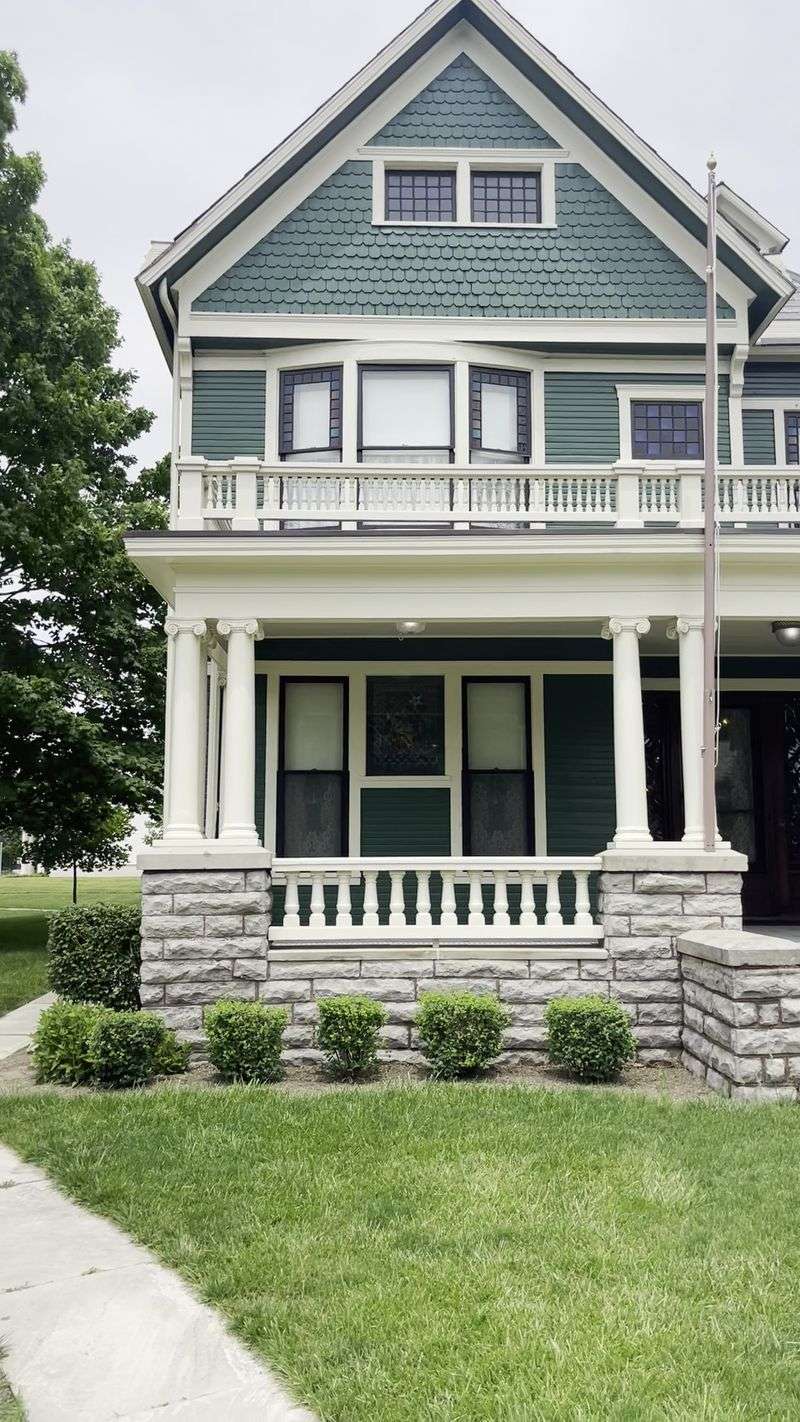
A front porch won a presidential election once. Not a slogan, not a stadium, an actual wooden porch in Marion, Ohio.
Warren G. Harding and Florence Kling designed this Queen Anne Victorian together and lived in it for thirty years, from their 1891 marriage until he headed to Washington in 1921.
He had been a small-town newspaper owner, which makes the trajectory even odder.
During the 1920 campaign, Harding stayed home and let the country come to him. Crowds of supporters and reporters filled the yard while he spoke from the porch, and the strategy worked well enough to carry him to the White House.
The house opened as a museum in 1926, only a few years after his passing, which explains the remarkable state of the interiors.
More than 5,000 original items fill the rooms, including roughly 300 pieces brought back from the White House. Walking through, it genuinely seems like the Hardings stepped out for the afternoon and forgot to tidy up.
Next door, the presidential library and museum adds context with exhibits covering his term and the era around it.
Marion makes a fitting last stop on this route. It is proof that American history did not only happen in capitals, and sometimes it happened between the railing and the porch swing.
Address: 380 Mount Vernon Avenue, Marion, OH 43302
