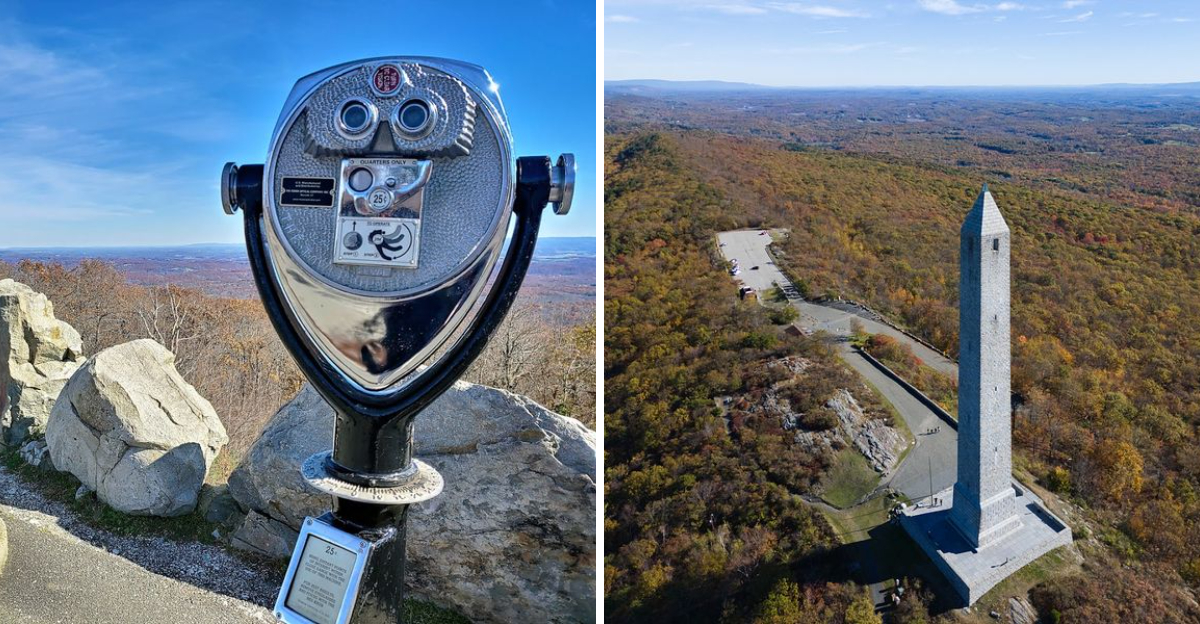
I wasn’t expecting much when I first heard about High Point Lookout, honestly.
A monument in northern New Jersey that supposedly lets you see three states at once? It sounded like one of those travel claims that gets exaggerated over time.
But the moment I pulled into the parking area off Monument Road and caught my first glimpse of that tall obelisk rising against the sky, I felt a little flutter of excitement.
The air up here was different, cooler and cleaner, and the landscape stretched out in every direction like someone had unrolled a giant map.
I’d driven through plenty of scenic spots before, but standing at New Jersey’s highest point with Pennsylvania to my left, New York to my right, and the Garden State sprawling beneath me felt genuinely special.
The monument itself looked almost out of place in the best way, like a piece of history someone carefully planted on this mountaintop.
I grabbed my jacket from the car and started walking toward the base, already planning how long I could linger before hunger kicked in.
The Monument That Commands Attention
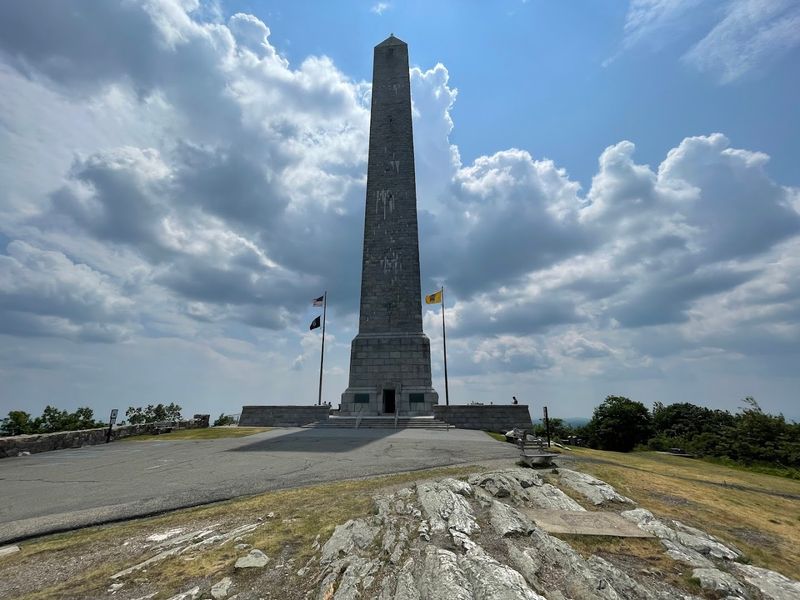
Walking up to the High Point Monument feels a bit like approaching a lighthouse that got lost and ended up on a mountain instead of by the sea. The structure rises 220 feet into the air, built from local granite and quartzite that gives it this solid, timeless quality.
It was dedicated back in 1930 as a war memorial, and you can feel that sense of purpose in every stone.
The base is wide and sturdy, with plaques explaining the history and honoring those who served. I spent a few minutes reading them before looking up at the tower itself, which seemed even taller from this angle.
On clear days, the monument becomes a beacon you can spot from miles away, drawing visitors who want to stand at the very top of New Jersey.
Climbing the interior stairs is an experience in itself. There are 291 steps winding upward in a tight spiral, and I’ll admit my legs were burning by the time I reached the observation platform.
But every step was worth it. The views from up there are nothing short of spectacular, with the landscape unfolding in every direction like a living painting.
You can actually see the Catskill Mountains in New York, the Pocono Mountains in Pennsylvania, and the rolling farmland of New Jersey all at once.
What struck me most was how quiet it felt at the top despite being surrounded by such vastness. The wind whispered through the openings, and I could hear birds calling from the trees far below.
It’s the kind of place that makes you want to linger, to soak in every angle and take far too many photos that never quite capture what your eyes are seeing.
Three States Spread Before Your Eyes
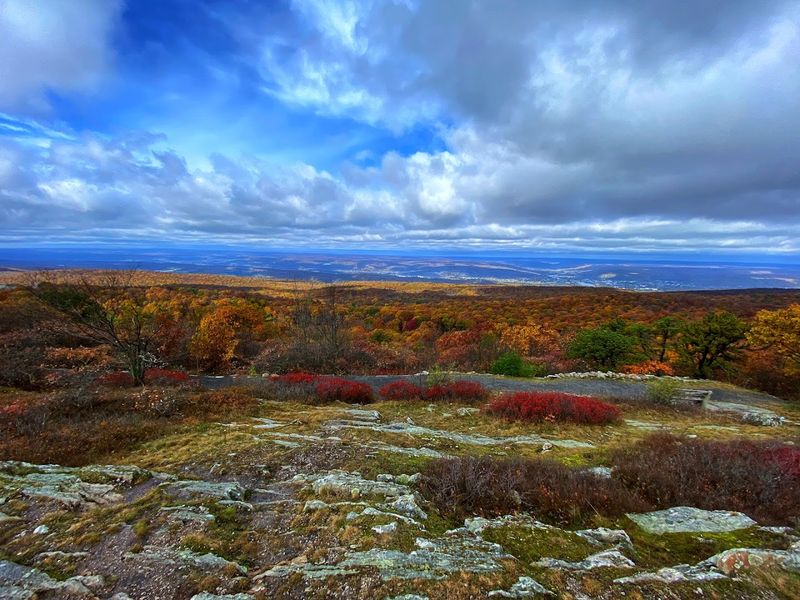
Standing at the observation points around High Point, you get this incredible sense of geography that’s hard to find anywhere else. To the west, Pennsylvania’s farmlands and forests stretch toward the horizon in patchwork greens and golds.
Looking north, the Catskills rise in hazy blue layers that seem to go on forever. And turning east, New Jersey’s own landscape rolls away in waves of trees and valleys.
I found myself spinning slowly, trying to take it all in at once. There’s something almost magical about being able to point in three different directions and say you’re looking at three different states.
It makes you realize how connected everything is, how these invisible boundary lines we draw on maps don’t really exist in nature.
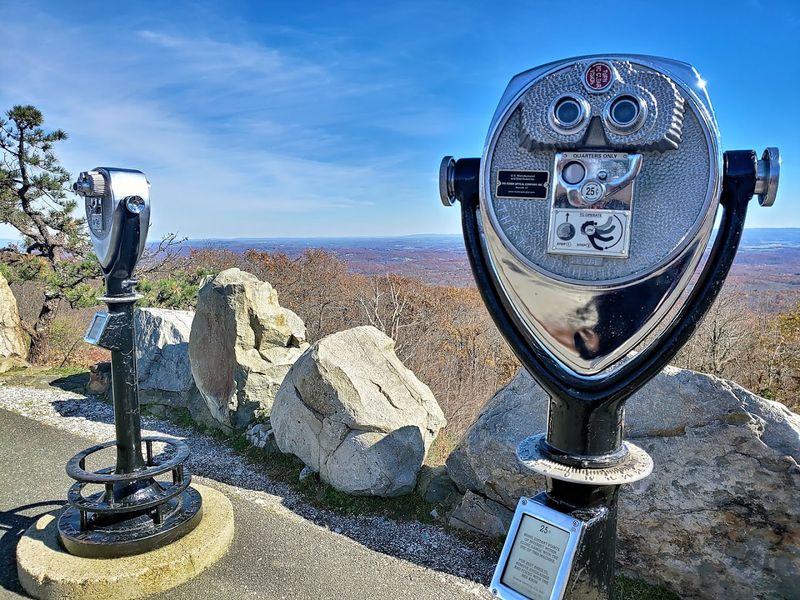
The interpretive signs around the monument help identify specific landmarks, which I appreciated since I’m not great at geography without a little help. They point out Port Jervis, the Delaware Water Gap, and various mountain ranges that would otherwise just be pretty shapes on the horizon.
I spotted what looked like a lake glinting in the distance and later learned it was one of several bodies of water visible from this vantage point.
What really got me was watching the weather move across the landscape. Clouds cast traveling shadows over the valleys, and sunlight broke through in shifting beams that highlighted different areas every few minutes.
It felt like watching a slow-motion movie of the natural world doing its thing, completely indifferent to the state lines humans decided to draw through it.
The Uphill Walk That Earns Your View
Getting to the monument involves a bit of effort, but it’s the good kind that makes you feel like you’ve earned what’s waiting at the top. The main path from the parking area is paved and well-maintained, winding gradually upward through the trees.
It’s not a difficult hike by any means, but you definitely feel the incline in your calves after a few minutes.
I passed families with young kids making the trek, which told me it’s accessible for most fitness levels. The path is wide enough that people can easily pass each other, and there are spots where you can step aside to catch your breath while pretending you’re just admiring the scenery.
Which, to be fair, you probably are because even the walk up offers glimpses of the views to come.
The trail takes you through a beautiful stretch of forest where the trees form a canopy overhead in summer and create a tunnel of color in autumn. I visited during fall, and the leaves were putting on their best show, crunching satisfyingly under my feet with every step.
Birds flitted between branches, and I spotted a deer watching me from a safe distance before bounding away into the undergrowth.
What I appreciated most was how the path gradually reveals the monument. You catch glimpses of it through the trees as you climb, each view showing it from a slightly different angle.
It builds anticipation in a way that feels almost cinematic, like the landscape itself is directing your experience. By the time you reach the base, you’re ready to tackle those interior steps and claim your three-state view.
Elevation That Makes Everything Feel Different
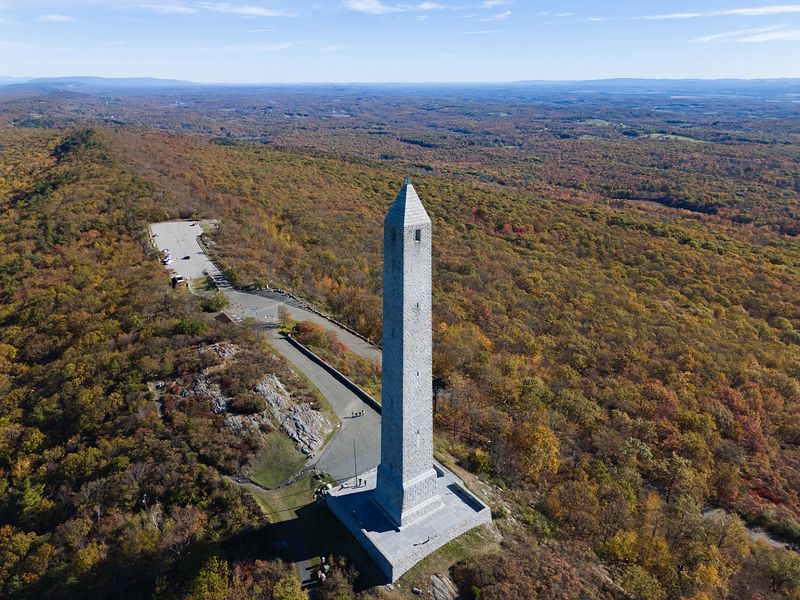
At 1,803 feet above sea level, High Point isn’t exactly Everest, but it’s the tallest spot in New Jersey, and that distinction carries weight. The elevation creates a noticeably different atmosphere from the rest of the state.
The air feels crisper, cleaner, like it hasn’t been breathed by as many people. Temperatures drop a few degrees, which is refreshing in summer and requires an extra layer in cooler months.
I noticed the difference immediately when I stepped out of my car. There’s something about mountain air that just hits differently, even when the mountain isn’t particularly tall by western standards.
It made me want to take deeper breaths, to fill my lungs with this cleaner version of the air I usually breathe down in the valleys.
The elevation also affects the vegetation in subtle ways. The trees up here are slightly different from those at lower elevations, adapted to the cooler temperatures and stronger winds.
I’m no botanist, but even I could see how the landscape had a slightly wilder, more rugged quality than the manicured parks closer to urban areas.
Being at the highest point in the state also comes with bragging rights that I didn’t know I cared about until I got there. There’s something satisfying about standing somewhere and knowing there’s literally no higher ground in New Jersey.
It’s a small achievement, sure, but it made me feel like I’d accomplished something just by showing up. Plus, it’s a great conversation starter when people ask what you did over the weekend.
Seasonal Colors That Transform the View
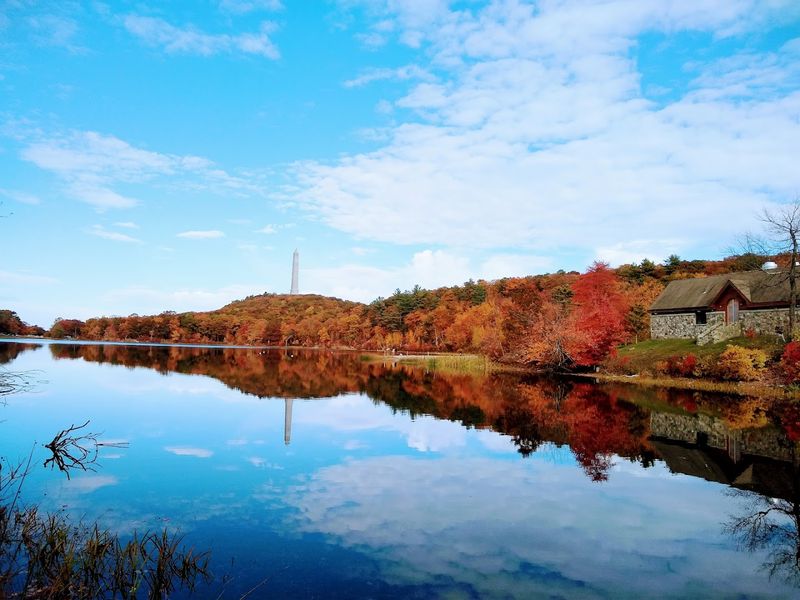
Visiting High Point in autumn is like stepping into a painting that someone spent way too much time perfecting. The entire landscape erupts in shades of orange, red, yellow, and gold that seem almost too vivid to be real.
From the monument’s observation platform, you can see the fall colors spreading across three states simultaneously, which is the kind of view that makes you understand why people drive hours just to see leaves change.
I happened to visit during peak foliage season, and I felt genuinely lucky. The trees closest to the monument were ablaze with color, while the distant mountains showed subtler, hazier versions of the same palette.
It created this layered effect where the colors gradually faded from intense to soft as your eye traveled toward the horizon.
Spring brings its own magic with wildflowers dotting the meadows and fresh green growth covering the trees. Summer offers the fullest, deepest greens and the warmest weather for exploring the park’s various trails and facilities.
Winter transforms High Point into something starker and more dramatic, with bare trees revealing views that summer foliage hides and occasional snow adding a pristine quality to the landscape.
Each season essentially gives you a different version of the same place, which is why some visitors return multiple times throughout the year. I can see the appeal.
The monument and the tri-state views remain constant, but the setting changes completely, offering fresh perspectives and new photo opportunities every few months.
Wildlife Encounters in Unexpected Places
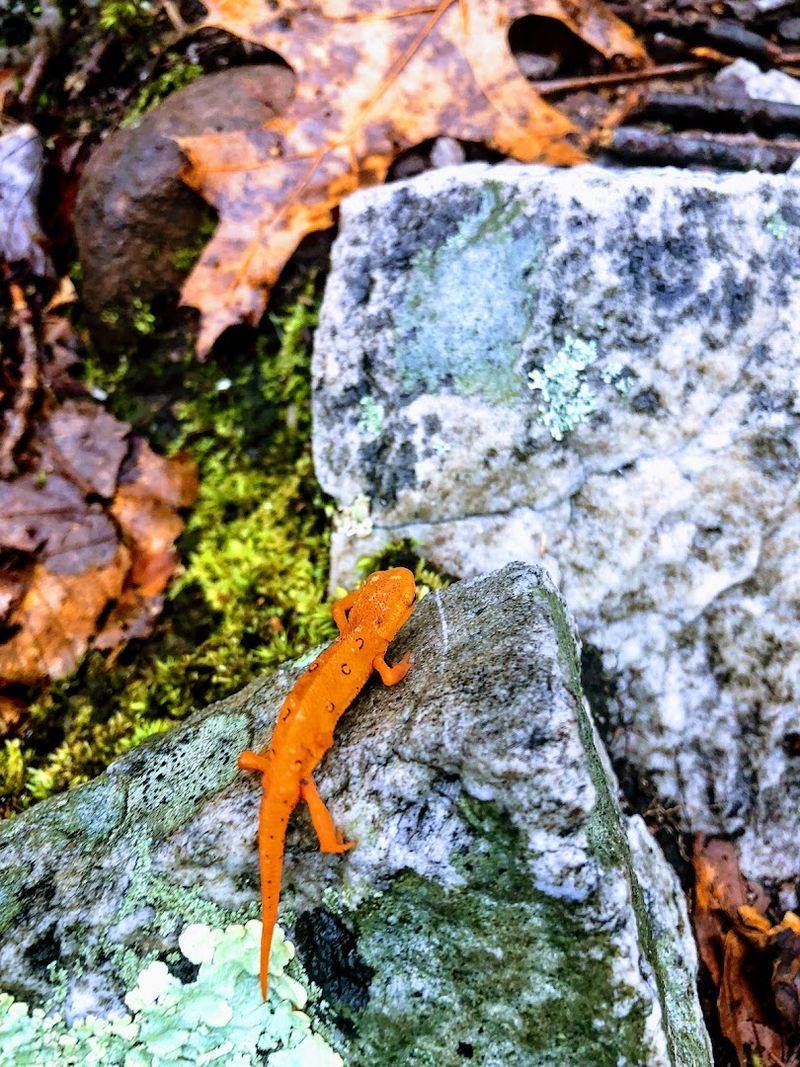
I didn’t expect to see much wildlife at a popular tourist spot, but High Point surprised me. The park’s location at the intersection of three states and its relatively undeveloped terrain create habitats for all sorts of creatures.
During my visit, I spotted deer grazing near the tree line, completely unbothered by the handful of visitors wandering the area.
The deer were beautiful, with their brown coats blending perfectly into the autumn landscape. They watched us with mild curiosity but didn’t bolt, suggesting they’re fairly accustomed to human presence.
I kept a respectful distance, which felt like the right move for everyone involved. One doe had a fawn with her, and watching them move through the grass together was one of those simple moments that stays with you.
Birds are everywhere up here, from common songbirds to hawks circling on thermal currents above the mountain. I’m not great at bird identification, but I definitely saw several hawks during my visit, their broad wings catching the light as they soared.
The interpretive signs mentioned that the area is part of a migration corridor, which explains the variety of species you might spot depending on the season.
Other visitors told me they’d seen foxes, wild turkeys, and even black bears in the park, though not usually right at the monument. The surrounding forest provides plenty of space for wildlife to thrive away from the main tourist areas.
It’s a good reminder that even popular destinations can maintain their wild character if managed properly, offering visitors glimpses of nature alongside the scenic views.
The Lake That Offers Summer Relief
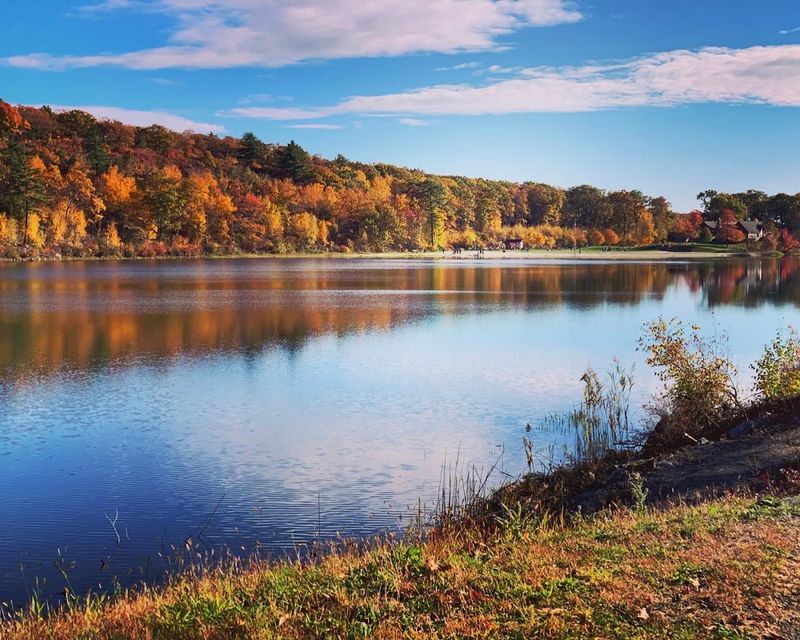
After hiking around the monument area, I was glad to learn that High Point State Park includes a lake with a designated swimming beach. I didn’t have time to visit during my trip, but I could see the appeal, especially on hot summer days when the elevation provides only so much relief from the heat.
The lake sits at a lower elevation than the monument, nestled among the trees in a way that makes it feel like a hidden retreat.
According to the park information, the beach area includes amenities like restrooms, picnic areas, and designated swimming zones with lifeguards during peak season. It’s the kind of setup that makes High Point more than just a quick stop for photos.
Families can make a full day of it, splitting time between the monument’s views and the lake’s recreational opportunities.
The water comes from natural sources, kept clean by the surrounding forest and park management efforts. It’s not a massive lake, but it doesn’t need to be.
The size feels appropriate for the setting, offering enough space for swimming and wading without overwhelming the natural landscape. The beach area includes both sandy spots and grassy sections, giving visitors options for setting up their picnic blankets or chairs.
What I found interesting was how the park manages to serve different types of visitors. Some come purely for the monument and views, while others focus on the lake and hiking trails.
The layout lets everyone pursue their own interests without crowding each other, which is harder to achieve than it sounds. It’s thoughtful planning that makes the whole experience more enjoyable for everyone.
Picnic Spots With Million-Dollar Views
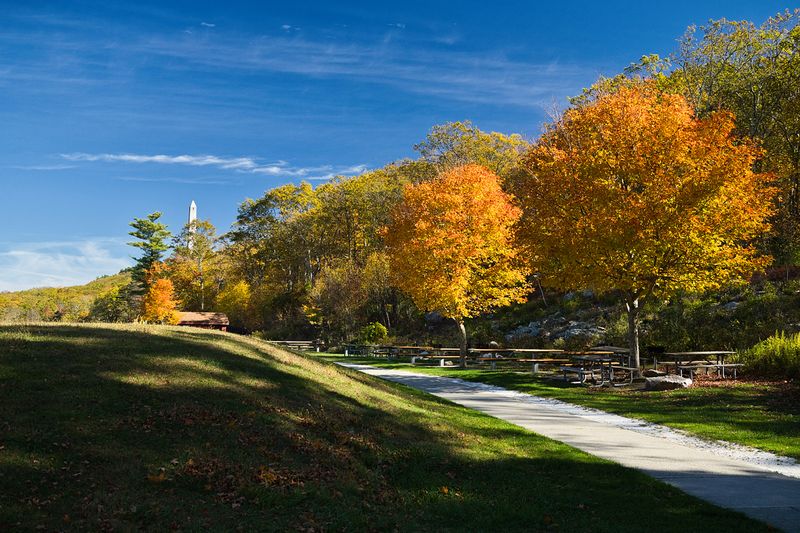
Scattered throughout the High Point area are picnic spots that range from simple tables near the parking area to more secluded spots along the trails. I grabbed a sandwich from a nearby town before visiting, and eating it on a bench overlooking the valley felt like dining at a restaurant with the world’s best view, except without the bill at the end.
The picnic areas near the monument offer the most dramatic scenery, with tables positioned to take advantage of the elevation and sightlines. You can sit there with your lunch and watch the landscape stretch away in three directions, which beats staring at your phone in a parking lot somewhere.
Some tables have shade from nearby trees, while others sit in full sun, giving you options depending on the weather and your preferences.
I noticed several families had brought full picnic spreads with coolers, blankets, and games, turning their visit into a proper outdoor feast. It made sense.
Why rush through a place like this when you can settle in and enjoy it properly? The relaxed atmosphere encouraged lingering, and I found myself sitting longer than I’d planned, just watching clouds drift across the sky and listening to the wind in the trees.
The park also offers designated barbecue areas where you can grill if you’re planning a more elaborate meal. I didn’t see anyone using them during my visit, but the facilities looked well-maintained and ready for summer cookouts.
It’s another example of how High Point accommodates different visiting styles, from quick photo stops to all-day family outings with food as a central component.
Trails That Extend Beyond the Monument
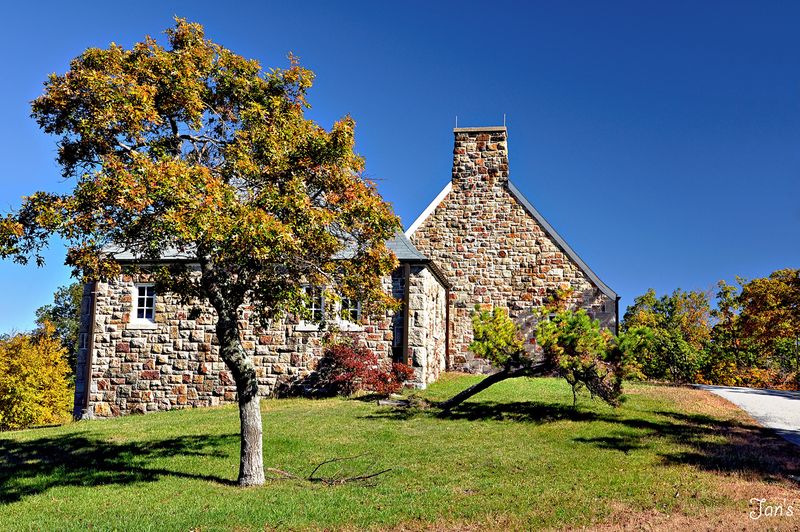
While the monument is the main attraction, the surrounding trails offer opportunities to explore High Point more thoroughly. The park includes several hiking options ranging from easy walks to more challenging routes that take you deeper into the forest and along the ridge.
I only had time for a short walk beyond the monument, but I could see how serious hikers could spend hours here.
The trails are well-marked and maintained, with clear signage indicating difficulty levels and distances. I appreciate when parks make it easy to choose a route that matches your ability and available time.
Some trails loop back to the parking area, while others connect to longer routes that extend through the state park’s broader network.
Walking these trails gives you a different perspective on the landscape than you get from the monument. You’re down in the forest instead of above it, surrounded by trees and the sounds of nature rather than commanding a panoramic view.
Both experiences have their appeal, and combining them creates a more complete sense of place.
I passed several other hikers on the trails, and everyone seemed to be in good spirits, offering friendly nods or brief comments about the beautiful day. There’s something about being outdoors that brings out a more sociable side in people.
The trails aren’t so crowded that you feel like you’re in a line, but you’re also not completely isolated, which strikes a nice balance between solitude and community.
Accessibility That Welcomes Everyone
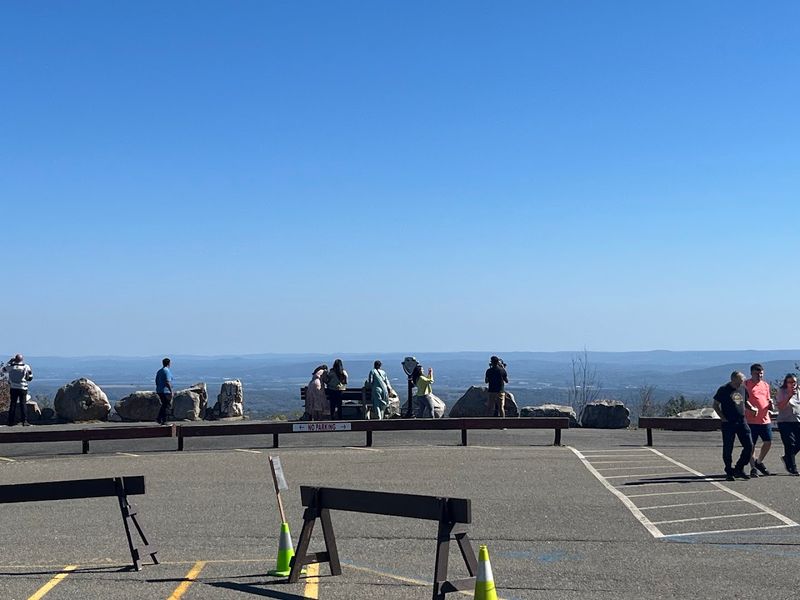
One aspect of High Point that impressed me was the effort to make the monument accessible to visitors with different mobility levels. The parking area is large and includes designated accessible spaces close to the monument path.
The main walkway is paved and, while uphill, has a gradual grade that wheelchairs and strollers can manage with some effort.
I watched a family with a child in a wheelchair make their way up the path, and while it clearly required some pushing, they reached the monument base without major difficulty. That kind of accessibility matters because places this beautiful should be available to everyone, not just those who can handle steep climbs or rough terrain.
The monument itself has steps inside, which limits who can reach the top observation platform, but the views from ground level are still impressive. You don’t need to climb to the top to appreciate the tri-state panorama.
The surrounding area offers plenty of vantage points where you can see across the valleys and mountains, making it possible for visitors of all abilities to enjoy the essential High Point experience.
Restroom facilities are available and meet accessibility standards, which is a practical consideration that doesn’t always get mentioned but matters a lot when you’re planning a visit. The park staff seemed attentive and helpful, ready to provide information or assistance when needed.
It’s these details that transform a scenic spot into a welcoming destination where everyone feels like they belong.
Address: Monument Rd, Wantage, NJ 07461
Dear Reader: This page may contain affiliate links which may earn a commission if you click through and make a purchase. Our independent journalism is not influenced by any advertiser or commercial initiative unless it is clearly marked as sponsored content. As travel products change, please be sure to reconfirm all details and stay up to date with current events to ensure a safe and successful trip.
