That wooden water wheel slapping against the current was the first thing I heard after shutting the car door in a green bowl of Pennsylvania hills. I had pulled off a winding road expecting a quick leg stretch and ended up staying half the day.
The village operated from the late 1700s until the 1880s, making iron with charcoal, creek water, and a whole lot of muscle, and much of it still stands exactly where the workers left it.
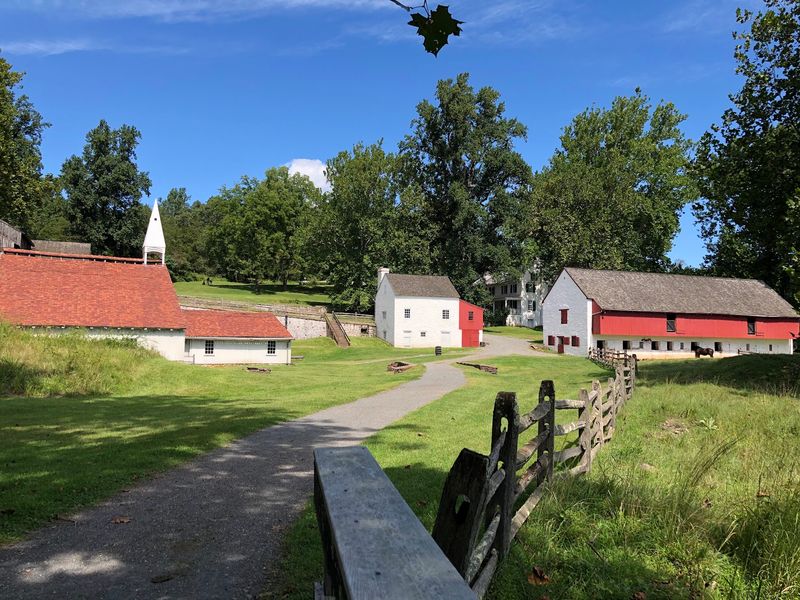
Cottages with tiny bedrooms line the hillside, a company store still holds goods behind its counter, and sheep graze near the barn while the furnace stack rises above it all.
Rangers here clearly love the place, and their stories filled in everything the signs could not. The furnace itself is a massive stone structure that you can walk right up to and touch, and the water wheel still turns when the creek runs high.
By the time I climbed back up the hill, I understood why people keep coming back year after year.
The Blast Furnace Stack Where It All Started
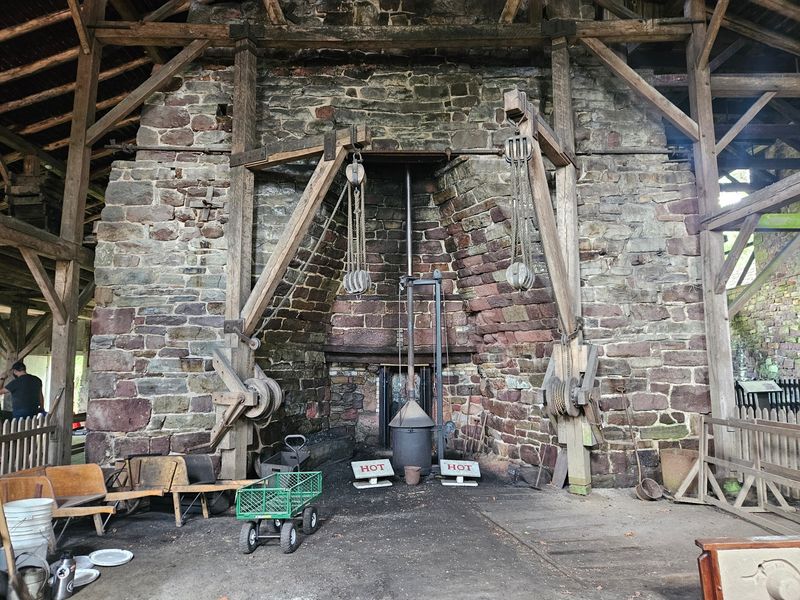
My first stop in this part of Pennsylvania was the furnace itself, tucked at the bottom of the hill to the right of the visitor center. It is bigger and blockier than I pictured, a stone tower built into the slope so wagons could dump ore, charcoal, and limestone straight into the top.
Cold air was forced in through pipes, the mixture burned at scorching temperatures, and molten iron trickled out below. Walking around the base felt a little like exploring a stone maze.
What surprised me most was how quiet the spot is now. During the busy years this place ran around the clock, glowing orange all night, with heat that must have been brutal in July.
The furnace supplied 115 cannons to the Continental Navy during the Revolutionary War, which is a wild thing to picture in such a peaceful valley.
Take your time reading the panels here, because they explain the chemistry in plain language. Then look up at the hillside behind you and imagine wagons rolling down loaded with charcoal.
Photos never quite capture the scale, so stand close before you move on.
That Enormous Waterwheel Still Turning in the Cast House
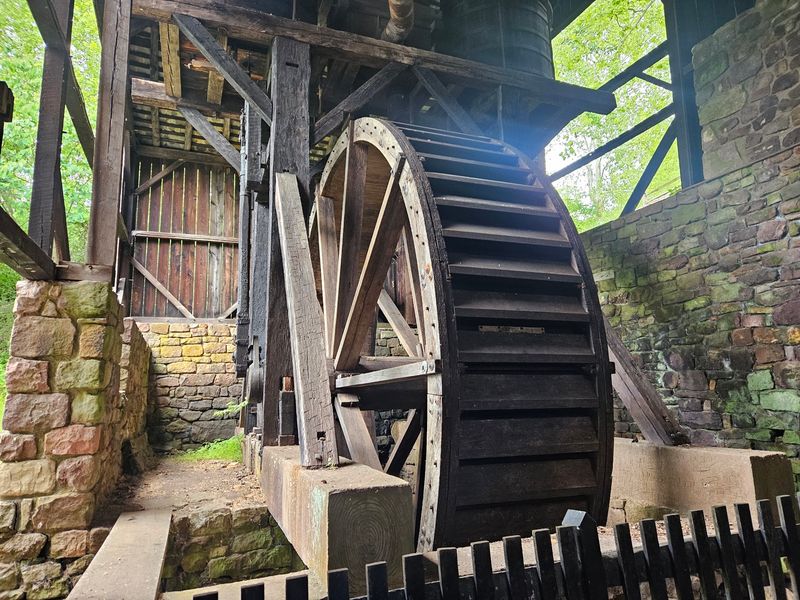
Nothing prepared me for the sound. You step through the cast house, eyes adjusting to the dim light, and there in the back is a wooden waterwheel about 22 feet across, groaning and dripping as it turns.
Water from the headrace pours over the top, the wheel spins, and that motion once powered the bellows that pushed air into the furnace. No steam, no electricity, just gravity and a creek doing the heavy lifting.
I stood there far longer than planned, watching water spill off the buckets and listening to the timbers creak.
Photographers should know the room is darker than it looks, so brace your camera against a beam or bump your settings before shooting. A short video captures it better than any still image.
The cast house floor beside it is where molten iron ran into sand molds, forming pig iron and stove plates. Rangers sometimes run molding demonstrations in this space, and visitors get to cast a miniature stove door out of plaster.
Ask at the desk when you arrive so you do not miss the schedule.
Workers’ Homes That Still Smell Like Old Wood and Plaster
Small doorways, low ceilings, and a hearth that doubled as the kitchen. That is what greeted me inside the tenant houses lining the village lane, and it hit harder than any exhibit panel could.
The site preserves two single family houses, a duplex, and a boarding house, each furnished with the sort of everyday items families actually used. Simple beds, wash basins, cooking pots, a few personal touches.
Standing in a room that housed an entire family really shifts your sense of what a home needed to be.
Colliers, miners, moulders, and teamsters all lived here with their families, forming a working community rather than a scattering of employees. Women and children often cleaned and finished cast products, and women brought in extra money through sewing, laundering, and taking in lodgers.
Kids grew up learning the trade by watching it happen outside their door.
Some of the audio buttons in the buildings can be temperamental, so read the printed signs as backup. Better yet, catch a ranger nearby and ask about daily life, because their explanations bring these rooms alive in a way recordings never manage.
Shopping at the Company Store, 1830s Style
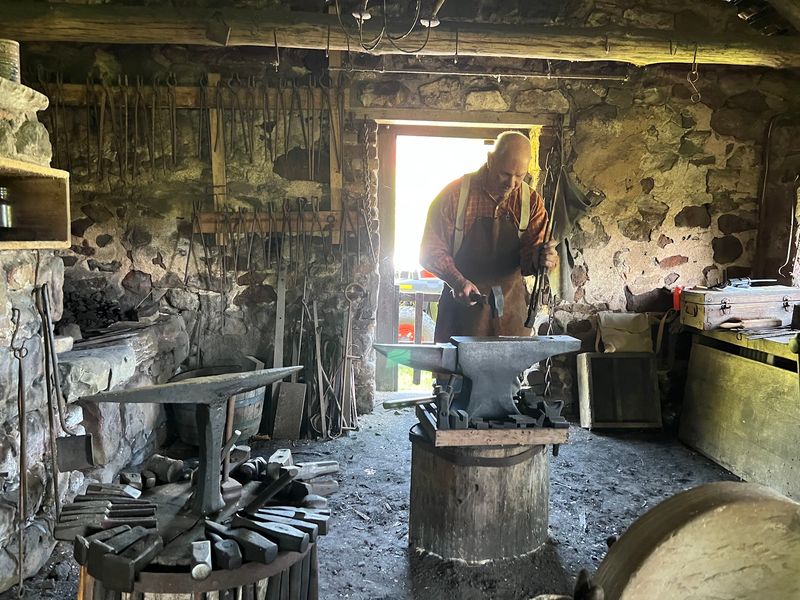
Shelves stacked with tins, barrels, bolts of cloth, tools, and sacks of animal feed greeted me inside the Buckley and Brooke Office and Store. It is arranged to show how the place looked between 1820 and 1840, the village’s most prosperous stretch.
Workers bought their necessities right here, and it doubled as the business office where accounts were kept.
Here is the part I found genuinely interesting. Instead of cash wages, workers earned credit for their labor, and store purchases were subtracted from what they were owed.
If a worker’s balance was in the black, they could ask for cash. Plenty of company stores across the country used this system to squeeze employees, but Hopewell’s store had a reputation for charging prices in line with other shops in the area.
The store also displays a collection of stoves cast at the furnace, and the detail in the plates is genuinely beautiful.
Look closely at the raised patterns and lettering, because those decorative faces were the selling point. Thousands of these stoves left this valley and warmed homes across the region during the early 1800s.
Charcoal Hearths and the Collier’s Lonely Hut
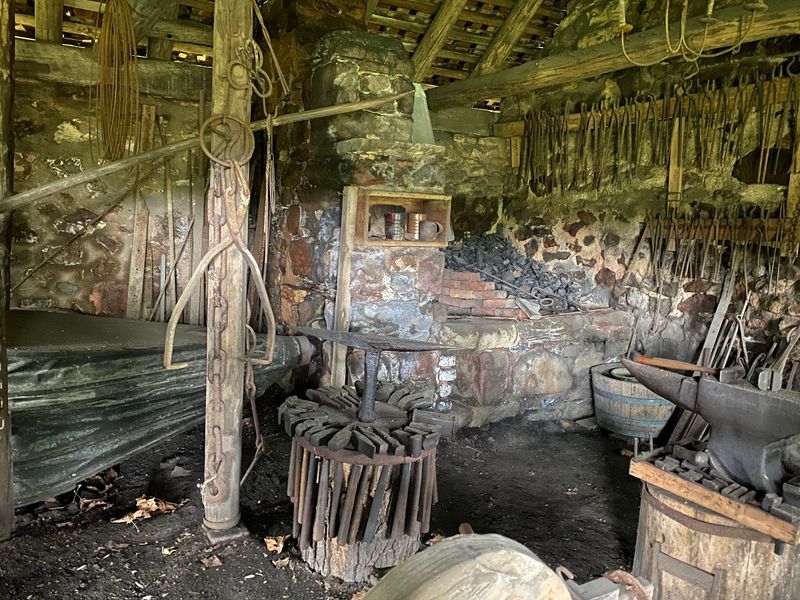
Follow the path downhill past the furnace and you reach a wide flat clearing with a mound of stacked wood covered in dirt and leaves. Thin smoke was drifting off it when I visited, and a ranger explained the pile smolders for roughly two weeks.
That slow burn turns wood into charcoal, the fuel the furnace devoured by the wagonload.
Nearby sits the collier’s hut, a low shelter of poles and earth that looks barely big enough to lie down in. Colliers slept out here through the burning season because the mound could not be left alone.
If flames broke through the covering, the whole batch would be ruined in minutes.
The demonstrations are one of the most memorable parts of a visit, especially if you catch a ranger mid explanation with the pile actively smoking. You smell it before you see it.
It also drives home how much forest this operation consumed, since acres of woodland were cut on rotation to keep the furnace fed. The surrounding trees are the regrown version of that story.
Inside the Ironmaster’s Mansion
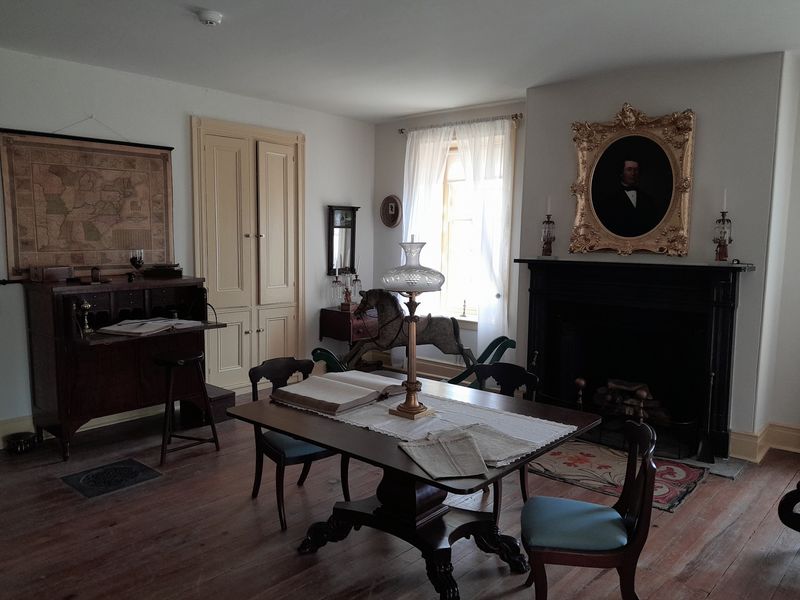
The contrast could not be sharper. After ducking through those cramped worker cottages, the Ironmaster’s Mansion feels enormous, with formal rooms, a piano, a proper dining space, rocking chairs, and even children’s toys set out.
The ironmaster ran the entire operation from here, managing accounts, workers, and shipments while his family lived comfortably above the noise of the furnace.
Visitors can wander the first floor, though most rooms are viewed from behind railings to protect the furnishings. The front door is sometimes kept closed, which makes the interior dim, so give your eyes a second to adjust.
Reading the interpretive signs near the staircase fills in who lived here and how the household functioned.
On busier days you might find costumed interpreters set up outside, and they are worth chatting with if they are not mid setup.
What stuck with me was how close the mansion sits to the workers’ homes. Everybody lived within shouting distance of each other and the furnace, which says a lot about how tightly wound this little industrial community really was.
The Visitor Center, Junior Ranger Books, and a 1772 Stove
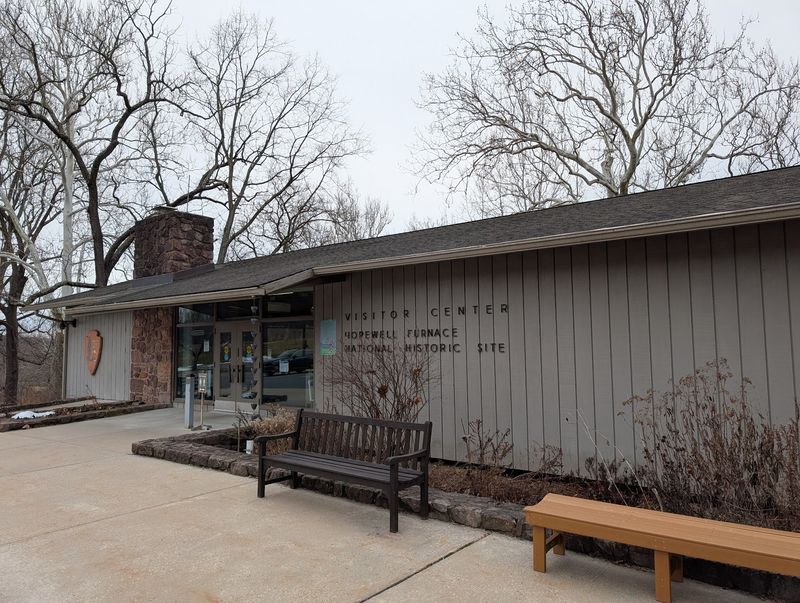
Start here, seriously. The visitor center sits right beside the parking lot, with an information desk in the middle, a small gift shop tucked behind it, exhibits to one side, and a theater on the other.
The orientation film runs about fifteen minutes and sets up the whole walking tour, so ask a staff member to start it for you.
Among the exhibits is an original Mark Bird stove from 1772, cast right here at the furnace. Seeing the real object after learning how molten iron was poured into sand molds ties the whole story together.
There is a touch table too, which kids gravitate toward immediately.
Grab a Junior Ranger booklet even if you are an adult, because staff will happily let grown ups complete it and earn the badge. It also nudges you to notice details you would otherwise stroll past.
National Park Passport stamps live behind the info desk if you collect them.
Outside the entrance there is a small pollinator garden planted by local Master Gardeners, which is a nice pause before heading down into the village.
Sheep, Orchards, and Trails Beyond the Village
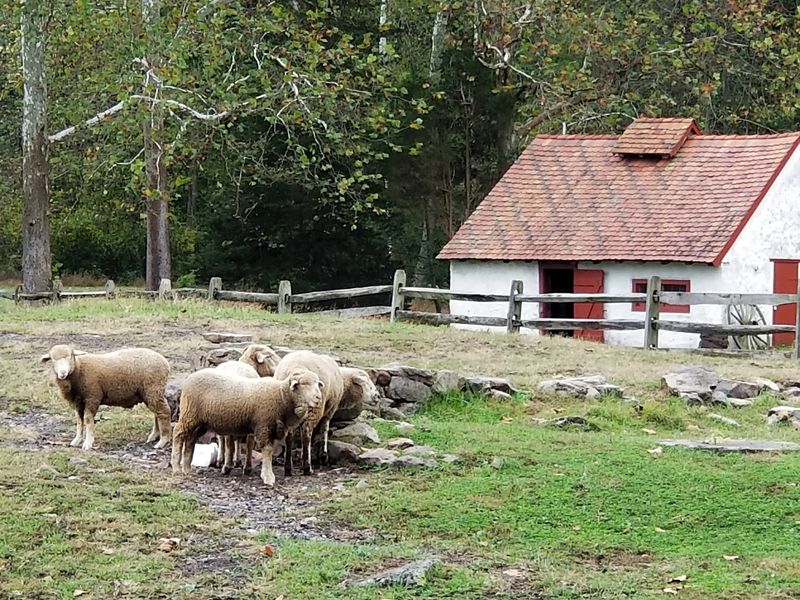
Bleating. That is what pulled me toward the barn area, where sheep graze in a pasture just like livestock did when this was a working iron plantation.
They are a small touch, but they make the village feel inhabited rather than staged.
The barn itself is worth a look for the stonework alone.
Spread across 848 acres, the site includes an apple orchard where visitors can pick apples during harvest season. Wandering between the rows in autumn, with the furnace stack visible downhill, is one of those simple pleasures that sneaks up on you.
Trails wind out from the village into the woods, and French Creek State Park land wraps around the property. Birders do well here, and I spotted plenty of native plants along the edges.
Trail conditions change after storms, so check at the desk before setting off.
Dogs are welcome, and there is a BARK Ranger program for four legged visitors. Wear comfortable shoes, because the walk back up from the furnace is a genuine hill.
Address: 2 Mark Bird Lane, Elverson, Pennsylvania 19520
