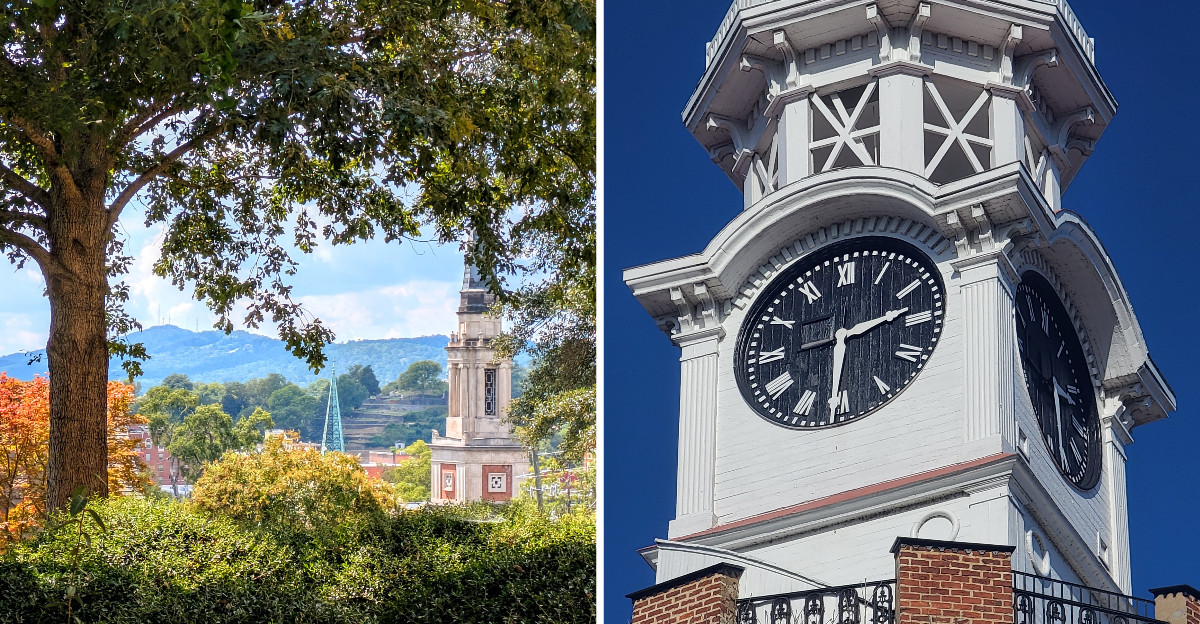
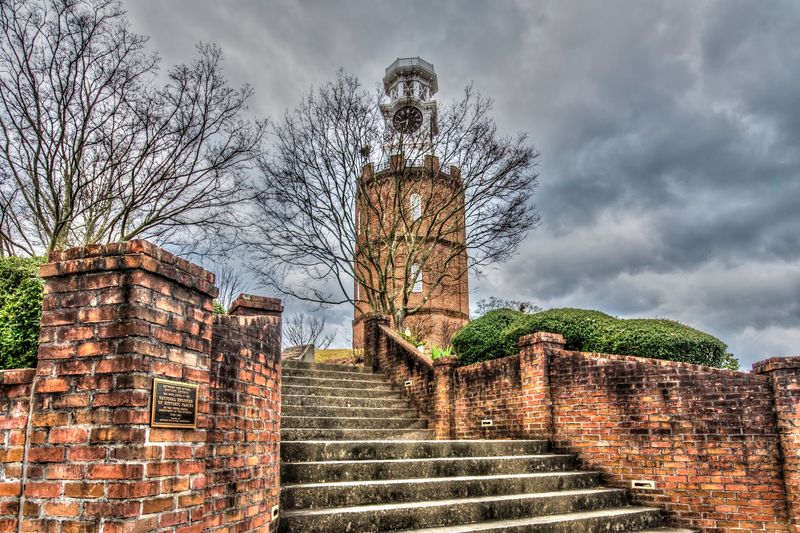
Bells drifting down a hillside stop you on the sidewalk, and looking up reveals a red-brick, ten-sided tower with four big clock faces. Georgia hides this storybook landmark in one of its northern towns, and the surprise is what it started as.
In 1871, the structure began life as a giant iron water tank holding a quarter of a million gallons. The clock and bell arrived a year later, and somehow the whole thing became the heart of the city.
Climbing the steep road is worth the effort, because gardens, murals, and sweeping views wait at the top. The tower has watched over the town for over a century, and its bell still rings on schedule.
Walking the grounds, the mix of history and scenery feels effortless. Few landmarks pack this much personality into such a simple shape.
The climb rewards every step.
A Thirsty City With a Big Idea
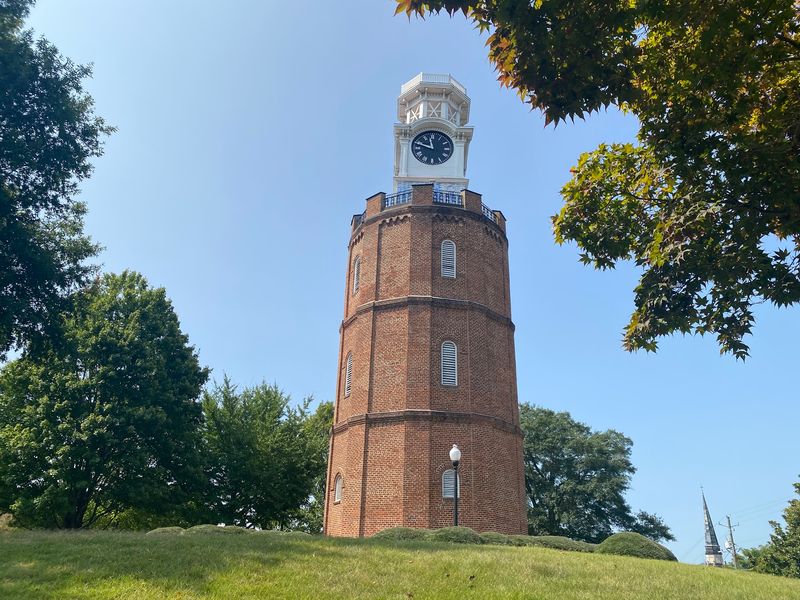
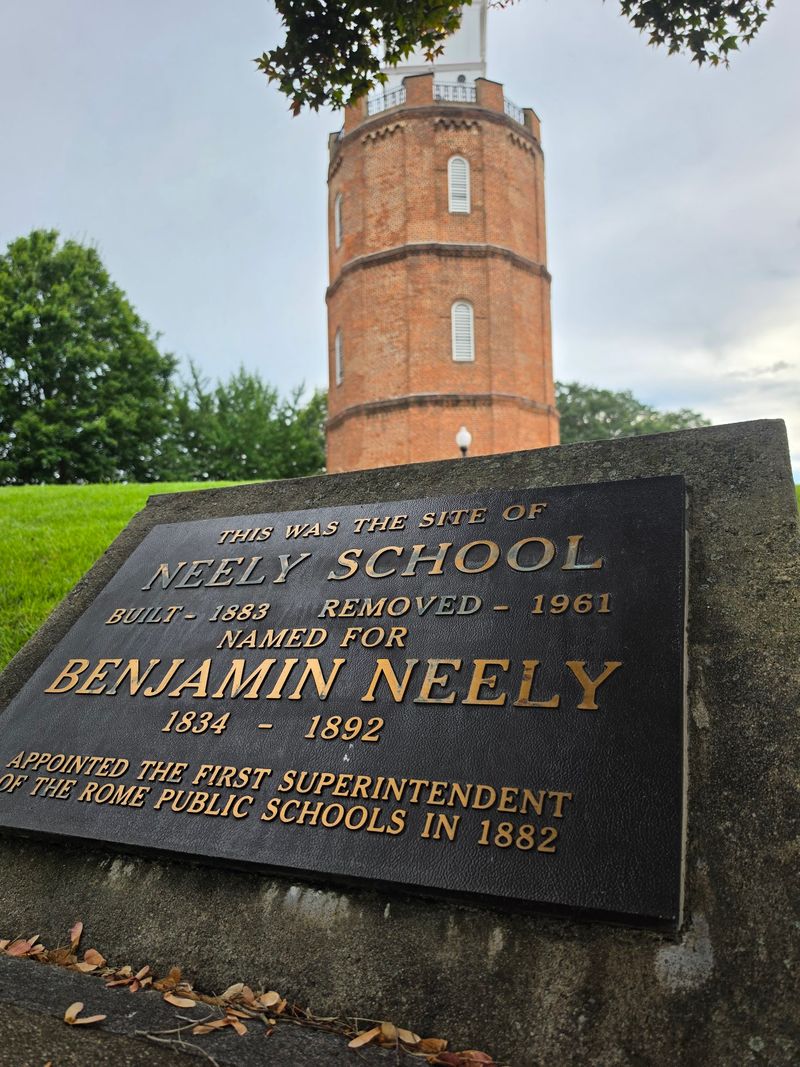
My first thought, reading the little history sign, was that Rome had some serious guts after the Civil War. The town was rebuilding, and wells and cisterns were not cutting it anymore.
Fires were a real danger in growing towns back then, and a weak water supply could mean losing a whole block of buildings in one night. The Noble family, who ran a local foundry and helped drive the city’s industry, pushed for a better system.
Their answer was bold and very practical.
In 1871, workers started building a huge iron tank on top of Neely Hill, one of the famous Seven Hills of Rome. Putting it up high meant gravity could push water down to homes and fire hoses.
Smart thinking, and no fancy pumps needed at every street.
The Noble Foundry supplied the iron sheets for the tank, so the project was homegrown in a big way. I love that the tower started as a problem-solver, not a decoration.
It reminds me that some of the prettiest places in a town began as plain old solutions to everyday worries.
When you visit, look at the base and picture that first rush of water heading downhill. It makes the whole hill feel alive.
Iron Sheets, Rivets, and a Quarter-Million Gallons
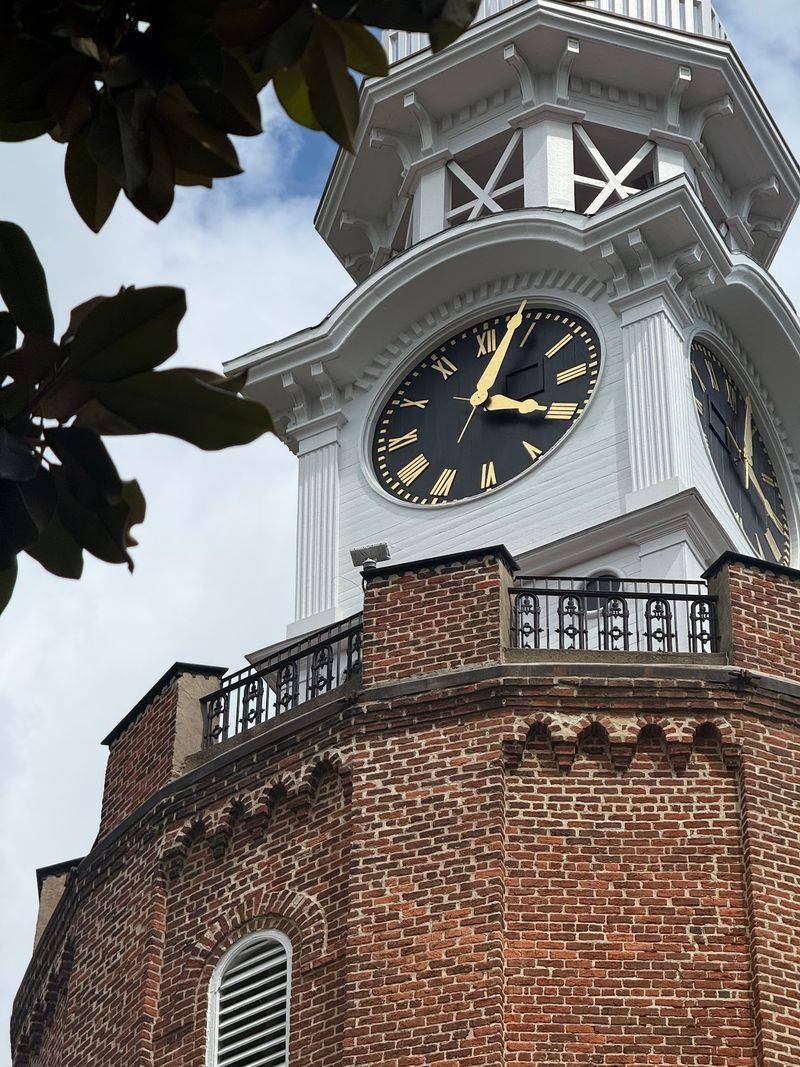
Numbers usually make my eyes glaze over, but these ones got me. The tank measures 26 feet across and stands 63 feet tall, and it held 250,000 gallons of water.
That is enough water to fill several backyard swimming pools many times over. Workers built it from ten-foot iron sheets and riveted every one together by hand, right there on the hill.
Imagine the noise of all that hammering echoing over downtown!
Around the tank, builders wrapped a red-brick tower with ten sides. A ten-sided shape is called a decagon, which is a great word to drop on your friends after the trip.
The brick shell gave the tank protection and gave the city something handsome to look at.
I spent a while just running my eyes over the brickwork from the garden paths. The color shifts from deep rust to soft orange depending on the sun.
Up close, you notice the small imperfections that come with old handmade work, and they add a lot of charm.
The tank was dedicated in January 1872. Rome had pulled off a real engineering win, and folks were proud of it.
Honestly, standing beneath it, you can still feel a bit of that pride today.
How a Water Tank Got Its Clock
Here is the funny part of the story. Once the tank was finished, people in Rome decided it needed a little dressing up.
The first idea was an observatory on top, but the tower could not carry that much weight. So the town went with a clock instead, which turned out to be a much better fit.
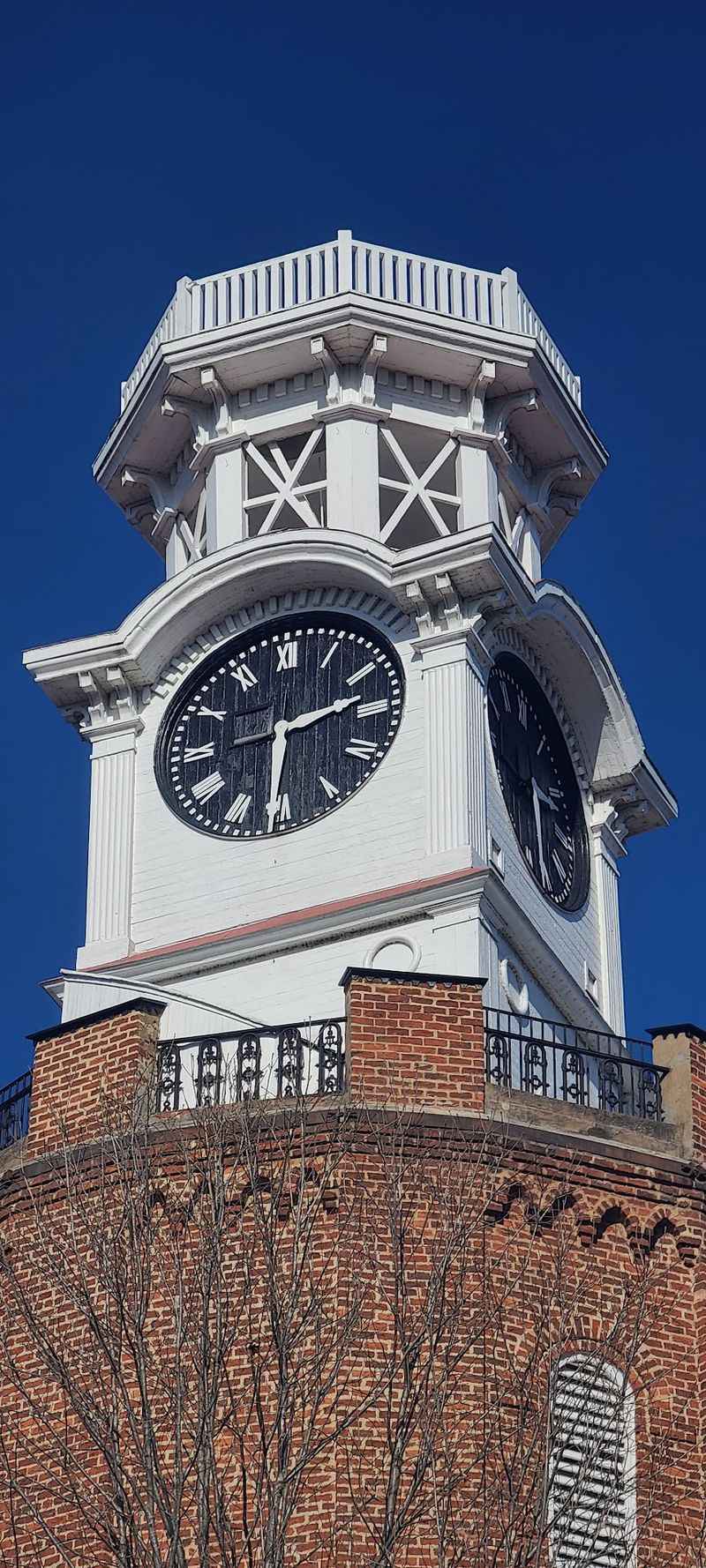
A 41-foot wooden section was added to hold the clockworks, bringing the full height to 104 feet.
The clock came from the E. Howard Clock Company of Boston and arrived in Rome on October 7, 1872.
It was a No. 2 hour-striking, eight-day clock, which meant someone had to wind it about once a week. Each face is nine feet wide, and the minute hand stretches over four feet long.
When I tilted my head back to look at those faces, I realized how they were made for being read from far away. You can spot the time from streets all over downtown.
Before phones, that mattered a lot for catching trains and getting to work.
I caught myself checking my phone, then the tower, just to compare. The tower won.
It felt good to trust a 150-year-old clock over a gadget.
The Bell That Still Keeps Time
Bong. That deep, round sound is what pulled me up the hill in the first place, and I was hooked before I even saw the tower.
The bronze bell was cast by the Meneely Bell Foundry of New York and installed in 1872. It stands 32 inches high and measures 40 inches across.
The year 1872 is still molded right into its rim.
Visitors often mention hearing it chime on the hour, and some say the half hour too. I timed my garden stroll so I would be close when it rang.
Standing nearby, you feel the sound as much as hear it, a soft hum that rolls through your chest.
For generations, this bell has been part of daily life in Rome. Kids heading home, shop owners closing up, families at dinner have all heard the same tone.
That gives the sound a kind of shared memory across the whole town.
My tip is to grab a bench a few minutes before the hour and simply wait. Put the phone down and let the bell do its thing.
It is a tiny moment, but it was one of my favorite parts of the visit, and it costs you nothing but a little patience.
Spiral Stairs Between Brick and Steel
Fair warning, my legs had opinions about this part. Inside the tower, a narrow spiral stairway winds up in the gap between the brick wall and the iron tank.
The space is only about three feet wide, so it feels snug and a bit adventurous. The stairs are riveted to the tank and anchored into the brick, which actually helps hold the whole structure together.
Counts vary a little, with sources listing 107 or 109 steps, but trust me, you will feel every one.
As I climbed, I kept thinking about the clock keepers who once made this trip regularly to wind the weights. They did it in all kinds of weather, without handrails as nice as today’s.
Respect to those folks.
Take it slow and enjoy the details on the way up. You can see rivet heads lined up in neat rows and the curve of old brick close enough to touch.
The light shifts as you rise, which makes each turn feel new.
Wear comfy shoes and bring a water bottle. Tours run seasonally through the Rome Area History Center, mainly in spring and fall, so check before you go.
The climb is short, but it sticks with you.
Murals Inside an Old Water Tank
Who paints a museum inside a water tank? Rome does, and I am so glad it did.
By the 1890s, the city had outgrown the tank, and it stopped being the main water source. The tower sat quietly for years and slipped into mild disrepair.
Then the Rome Jaycees stepped up in the 1980s, raising money for landscaping and pushing to bring the tower back to life.
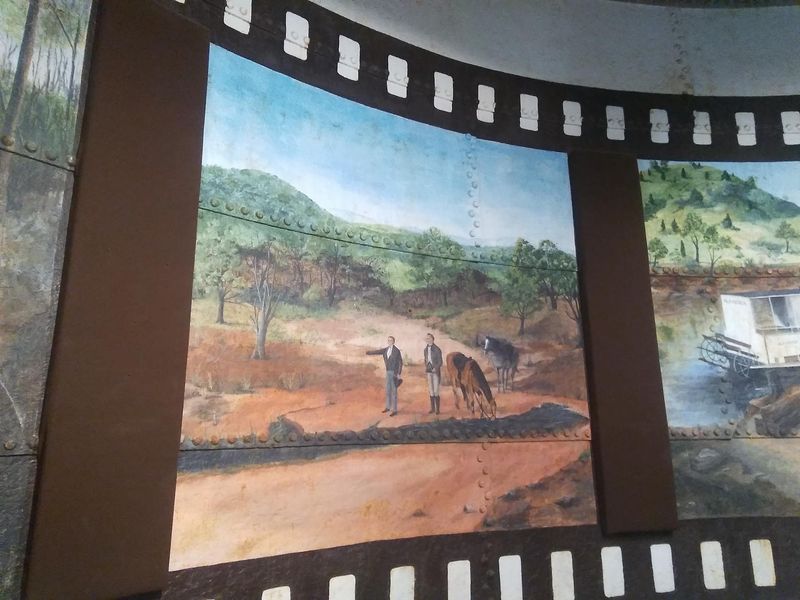
The tower opened as a museum in 1995. Inside the old tank, murals by local artist Chuck Smultz wrap around the curved walls and tell Rome’s story from its early days onward.
Reading them felt like flipping through a giant picture book while standing inside a drum.
Down near the bottom, the restored original clockworks are on display. I stared at those gears longer than I want to admit.
Watching how each piece fits together made me appreciate the clock faces high above in a whole new way.
If you bring kids, turn the murals into a game and have them spot rivers, trains, or buildings they saw downtown. It keeps everyone curious.
The tower was also added to the National Register of Historic Places in 1980, so you are walking through official history.
Gardens, Sunsets, and Rome From the Hilltop
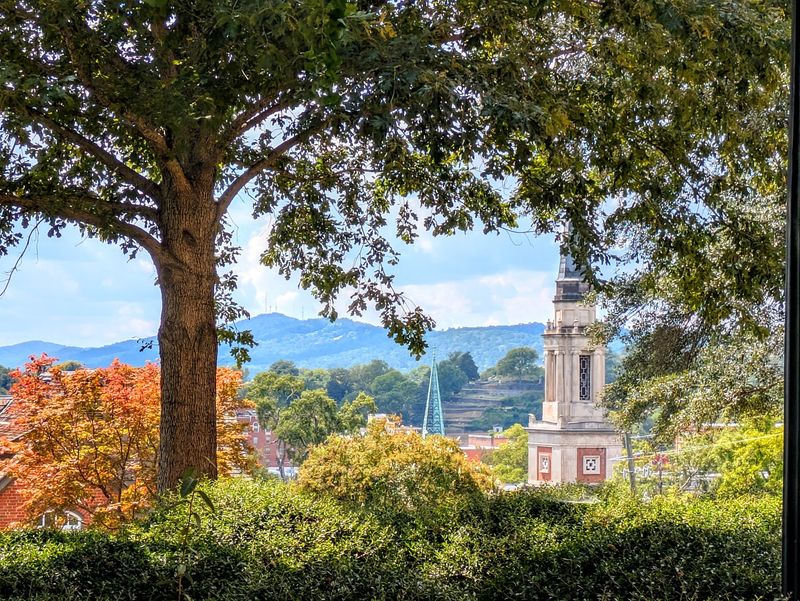
After all that climbing and history, I flopped onto a shady bench and grinned like a kid. The grounds around the tower are calm, green, and full of flowers.
Paved paths loop through the gardens, including spots known as Bailey Park and the As Time Goes By Garden. Visitors also love the butterfly trail, which is a cheerful surprise on a summer afternoon.
It is a lovely place for a picnic lunch.
From the top of the tower, and even from the hill itself, you can look out over Rome. The Etowah and Oostanaula rivers meet to form the Coosa, and downtown’s Victorian streets spread out below.
You can even spot Myrtle Hill Cemetery across the way.
Sunset here is something special, with warm light washing over the brick. I stayed longer than planned, and I do not regret it one bit.
A few practical notes help. The road up is steep, so walkers should pace themselves, and there is a small parking lot off E. 2nd St. There are no restrooms on site, so plan ahead.
Recent restoration work earned the tower a Marguerite Williams Award from The Georgia Trust for Historic Preservation, and it shows.
Address: 410 E 2nd St, Rome, Georgia 30161
