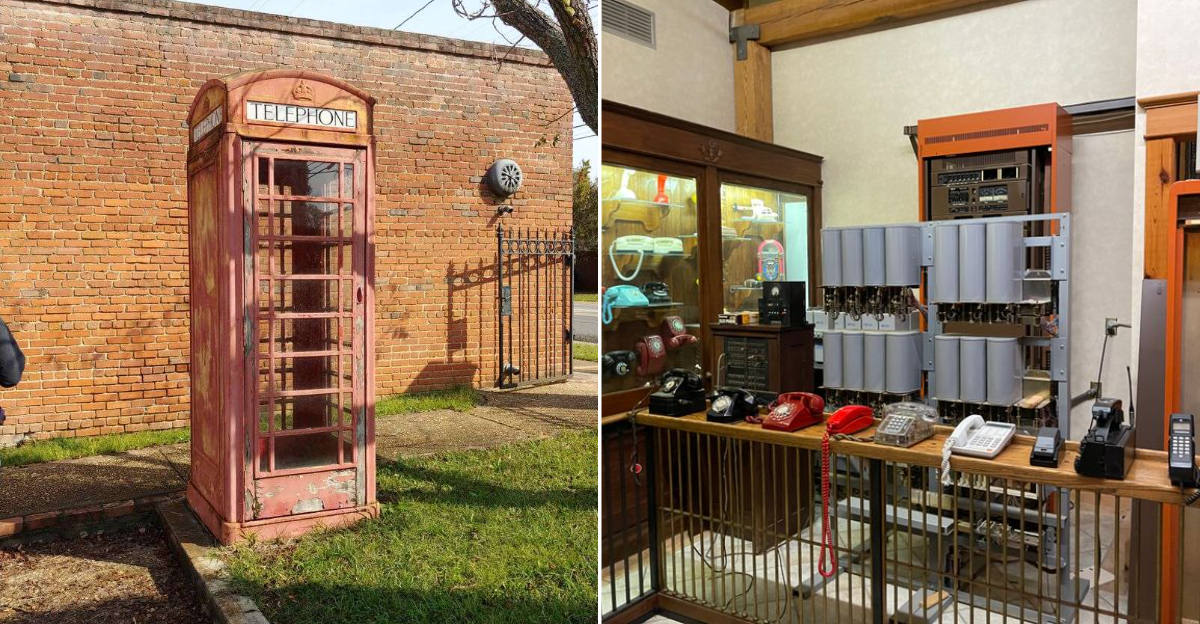
Have you ever thought about how different life was before smartphones? There’s a place that shows you exactly that: the Georgia Rural Telephone Museum. It’s not your typical museum, and that’s what makes it so memorable.
Inside, you’ll find one of the largest collections of antique telephones in the world, along with switchboards, tools, and quirky pieces of communication history. Walking through feels a bit like stepping back in time, when making a call meant cranking a handle or talking to an operator.
The museum is tucked away in a small town, but it’s surprisingly massive once you’re inside, with exhibits that stretch far beyond what you’d expect. I’ve always thought places like this are fun because they make history feel personal.
You can imagine the conversations these phones once carried. If you’re exploring Georgia, this small town museum proves even the quirkiest collections can tell big stories.
A Museum About Phones Sounds Boring Until It Isn’t
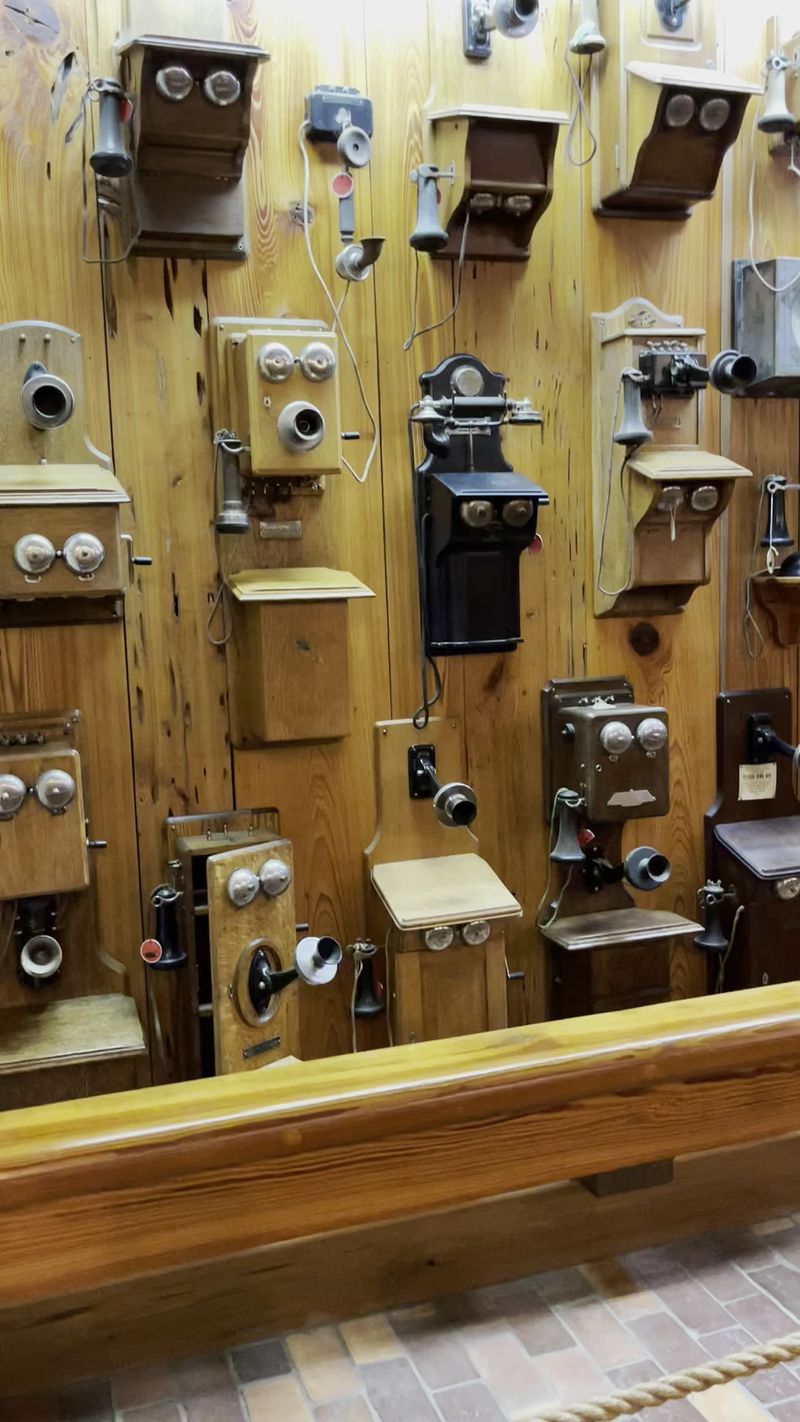
Think you already know what a phone museum is? You walk in expecting dusty gadgets, then you start reading the labels and everything clicks.
These aren’t just machines, they are traces of people. You hear the echo of a ring and suddenly you picture a neighbor picking up on the second jingle.
I like how the whole place feels like a long conversation, paused and saved.
What starts as a wall of old phones turns into stories that get under your skin. Operators with sharp memory connected lives one cord at a time.
Party lines meant everyone knew a little more than they should. Privacy was different, and that is kind of fascinating.
You can feel how each handset carried someone’s news, secrets, and small talk.
It’s surprising how personal this all becomes. Before long, you stop seeing parts and start seeing moments.
You catch yourself thinking about the first time someone heard a distant voice ring through the wood and metal. That jump from silence to connection is huge.
It’s not dramatic, just quietly life changing, the kind of shift that shaped towns like Leslie.
I’m sure you will not rush here, you will linger.
It Lives In A Tiny South Georgia Town
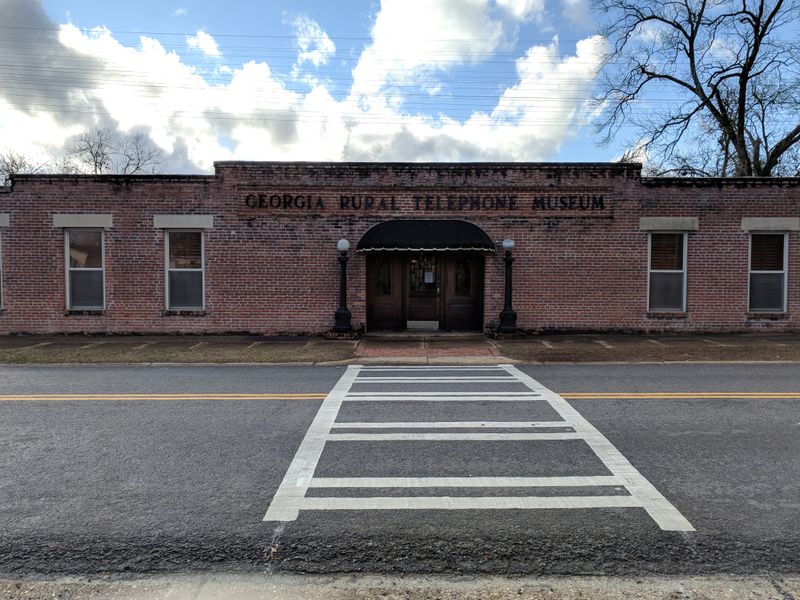
Here’s the twist: you roll into Leslie and think, that’s it?
Then you find the museum at 135 N Bailey Ave, Leslie, GA 31764, and it changes your read on the town. The building sits low and steady, like it has nothing to prove.
No flashy stuff, just a door that invites you in. It feels personal immediately, and I love that about it.
Inside, the scale surprises you. It’s not a single room, it’s deeper and wider than you expect, with aisles that keep branching.
You keep turning corners and bumping into another story. In a small Georgia town, the size alone feels like a plot twist.
I think it makes you slow down and pay attention, which is kind of the point.
The town and the museum suit each other. The quiet street keeps your thoughts close, and the old phones do the rest.
You can almost hear how the first ring would have sounded out here. That mix of distance and closeness is baked into the place.
Leslie may be a small town in Georgia, but this spot stretches it, like a voice carried a little further than before.
Thousands Of Real Telephones Are Inside
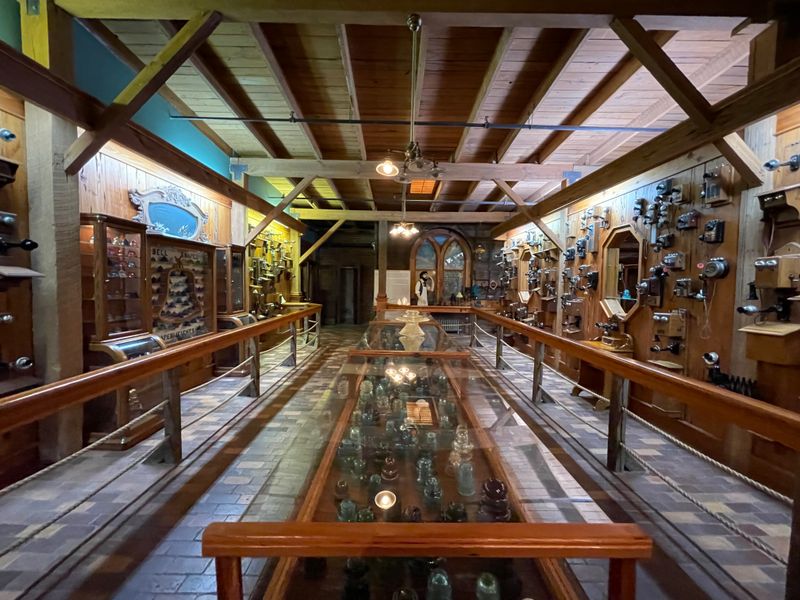
You want scope? This place has it!
Aisles of handsets, switch hooks, and cords line up like a timeline you can touch. There are candlestick phones with delicate curves, and heavy rotary models that click with patience.
I feel like each display nudges you to pick a favorite, even if you swear you’re not a collector.
The variety makes the story bigger. You see the jump from crank handles to dials, from dials to buttons, from buttons to something that fits a pocket.
But in here, the pocket part is still a future idea, not the star. What matters are the steps in between.
I like how every design tells you what people needed and what could be built at the time. You feel progress without the lecture.
Some pieces will look familiar, others like props from a movie. But they all share that same job.
In a room full of thousands, the pattern becomes clear. Georgia history threads through it because these tools served farmers and shopkeepers, families and friends.
You will wander and point and say “that one, that’s the sound I remember.”
Old Switchboards Steal The Show
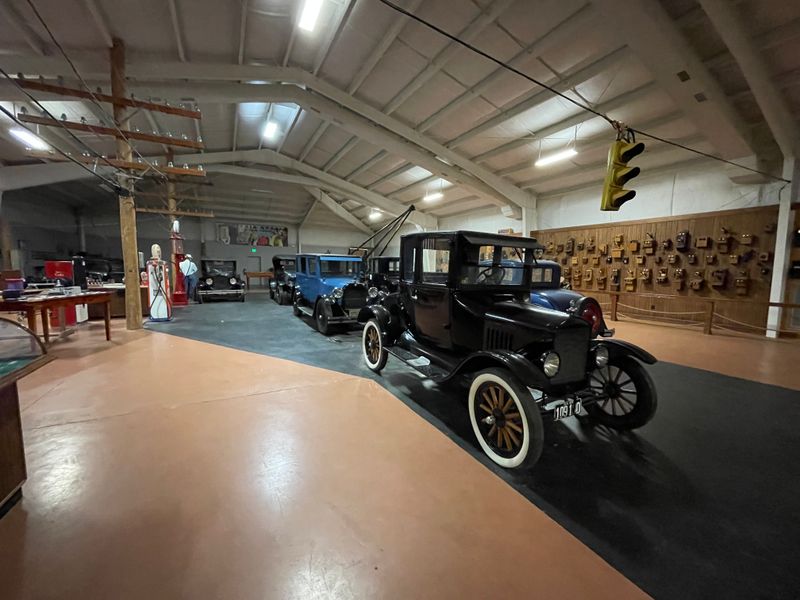
Let’s talk switchboards because they absolutely own the room. Whole sections fill with cords, lamps, and jacks like a living puzzle.
You stand there and picture the rhythm: plug, ring, connect.
Picture an operator’s hands flying with muscle memory, it feels almost musical. These were the systems that mapped a community in real time.
Seeing the physical steps makes everything modern feel light. A quick text feels like magic when you’ve just watched a connection get built by hand.
Here you can imagine the pause before a voice arrived. There is a tiny beat where the town waited together.
I think that pause has weight and warmth. It makes conversation feel earned.
Some boards look like furniture, polished and proud. Others are more industrial, all business.
Either way, the presence is strong. You can hear the soft clack of cords in your head.
Standing in here, it adds a thoughtful hush to the visit. You leave with an odd respect for patience.
Not nostalgia exactly, more like appreciation for how connection used to work.
The Building Has A Past Too
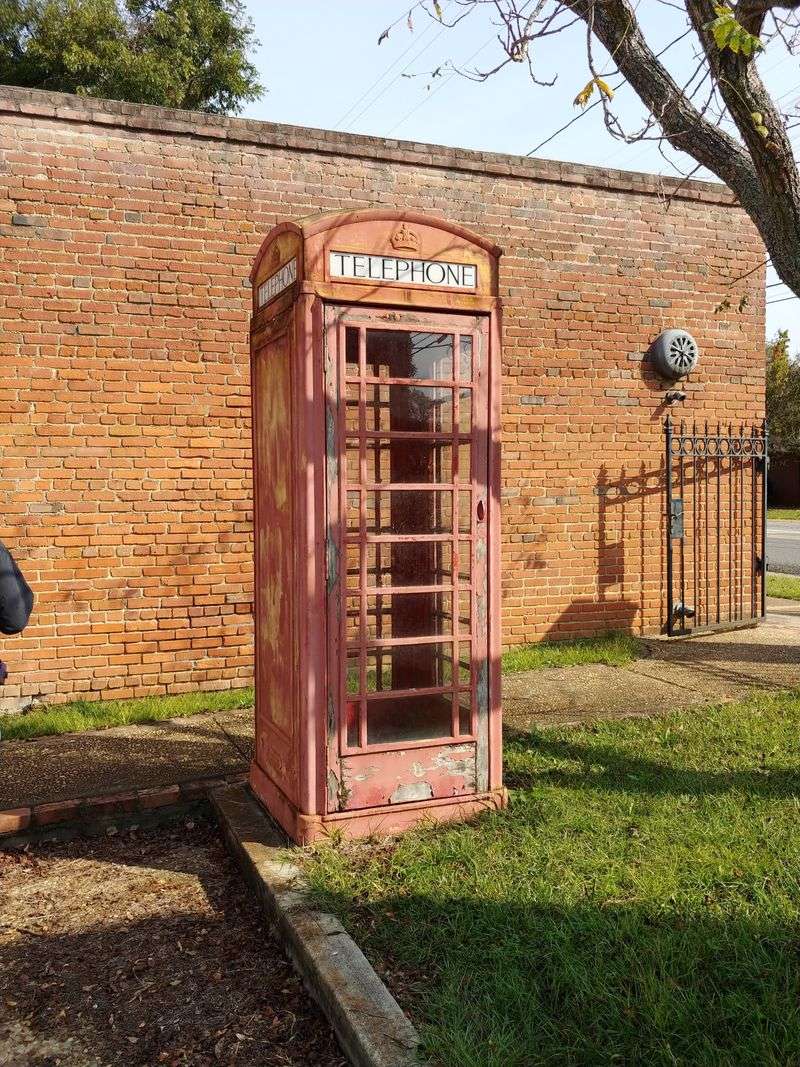
The building greets you before the exhibits do. It’s an old cotton warehouse with big bones and easy light, and the phones fit right in.
You feel the blend of agriculture and communication as soon as you step through, trust me. The walls seem to hold echoes of both work and conversation.
I think it makes every ring and dial feel grounded in real life.
That rural backdrop matters too. You remember this wasn’t built for show.
It was built to store and move things that mattered to the town. Now it holds memories and stories.
The structure keeps the history honest. You can almost smell the wood and dust in the beams, softened by years of care.
I also like how the museum isn’t pretending to be anywhere else. It is exactly where it should be, in Georgia.
The building carries that truth with every brick and beam, and you walk slower because of it.
Party Lines Were Basically Social Media
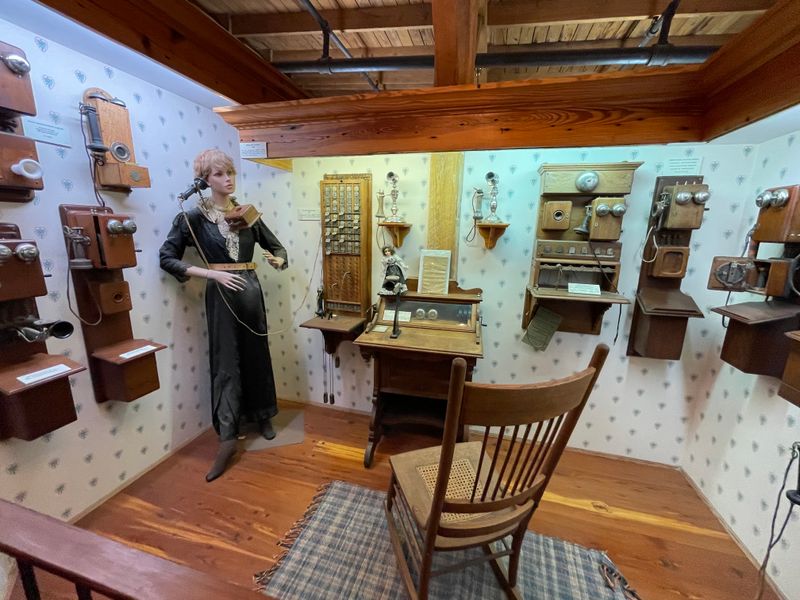
Here’s the bit that always gets laughs: party lines were shared lines, which meant neighbors could hear the ring pattern and know whose call was whose.
Sometimes folks listened in. Sometimes they pretended not to.
It sounds messy, and it was, but it was also community. People learned to be polite, or at least clever.
The museum lays it out clearly. You see diagrams of the system and read small-town stories that feel familiar.
It makes the internet comparison feel obvious. You hear voices in your head, not notifications.
I’d say it’s charming, awkward, and unavoidably human.
Standing here, you can imagine how a rumor traveled down a line faster than a car could travel the road. You picture a kitchen phone, a hand over the mouthpiece, someone quietly listening.
It wasn’t perfect, but it worked.
You leave that exhibit smiling, and maybe checking your own urge to eavesdrop.
Rural Life Shaped How Phones Worked
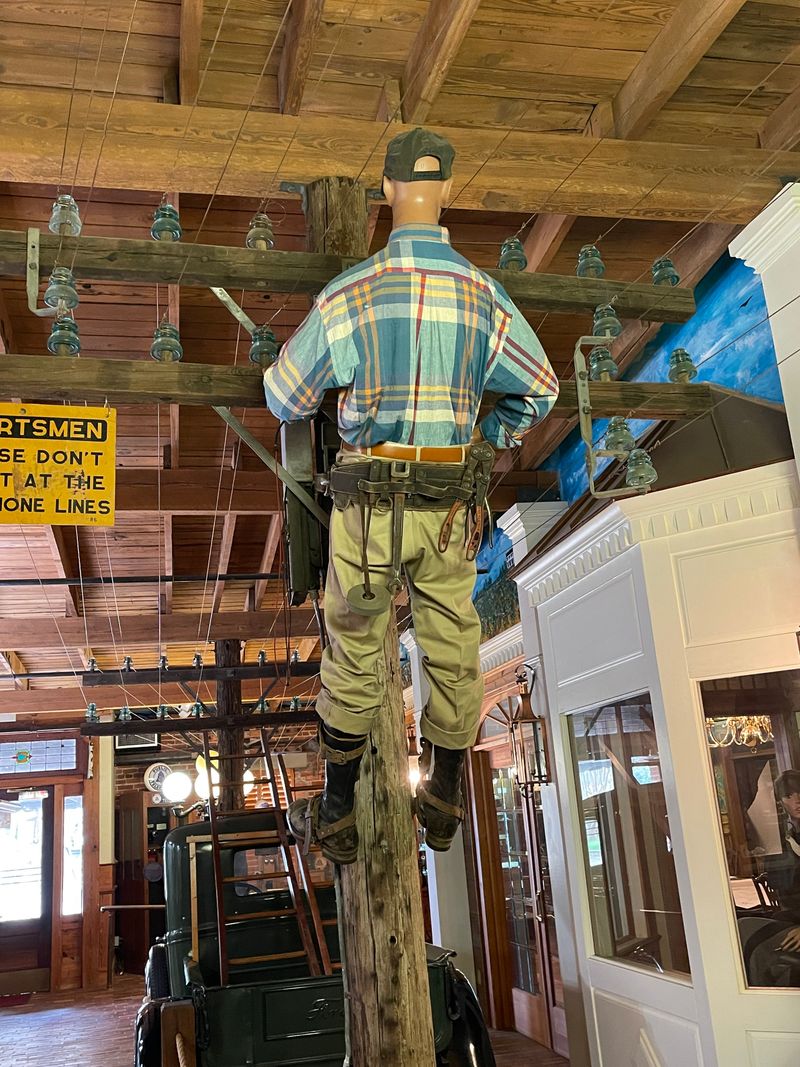
This part hits a little harder. Service reached cities first and only later pushed into the countryside.
You see maps with gaps, then lines arriving like new veins.
Rural life meant distance, weather, and budgets made connection complicated. The museum shows how folks made it work anyway, one pole and insulator at a time.
There are tools from linemen, heavy and worn. I love how you get a sense of the labor, patience, and know-how.
A storm would change everything in a blink, and someone had to climb and fix it. The stories feel steady and respectful.
Progress looks like boots on the ground and call after call finally going through, and those miles matter.
Farms, dirt roads, and a lot of space between houses set the pace.
I like how you can see how geography shaped connection here, not just technology, but terrain.
It makes modern coverage feel like a small miracle. You walk out with a new appreciation for every bar on your screen.
It’s Not Just About The Devices
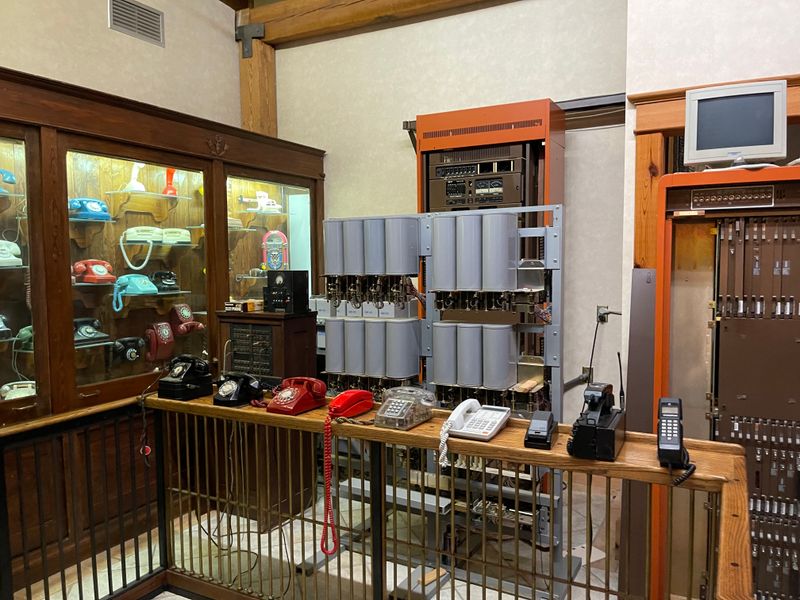
Devices get you in the door, but people keep you there. The museum leans into faces and names, not just parts.
Old photos show teams of operators lined up with headsets. There are uniforms that look crisp and proud.
Tools sit next to letters and notes that feel like fragments of a day.
You start building a mental movie: there’s the operator with a steady voice, the lineman with a careful climb, and the subscriber waiting for news from a brother across the county.
Those are the beats that stick. It becomes less about hardware and more about the way connection changes moods and plans.
That focus gives the place its warmth in my opinion.
I like how you sense how much community work lived inside these jobs.
The human side fills the gaps between objects here. It keeps the story from turning technical.
I’m sure you leave feeling like you met people, not just looked at things, and that is the best surprise!
The Growth Of America Runs Through These Phones
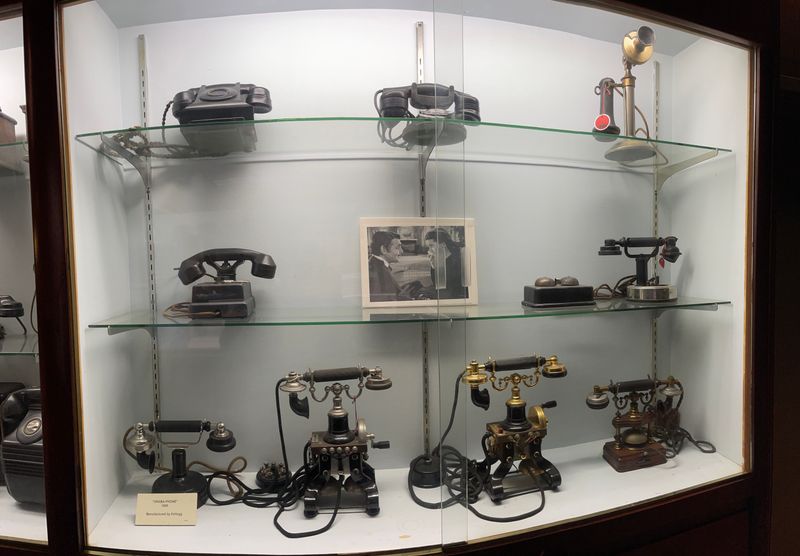
Here’s where the big picture sneaks in. You start tracing how communication scaled alongside everything else.
Industry, infrastructure, and national shifts all show up in these cases.
Long distance service gets faster, and emergency calls find their way.
Businesses build new habits around reliable lines, and the country changes step by step.
I love how the museum does it without fanfare, just a line of artifacts and patient captions. You end up seeing how a rural call in Georgia ties to a bigger grid.
A simple ring carries a lot of weight when it supports towns, farms, and faraway plans. It feels steady and practical, which somehow makes it more impressive.
By the end of that section, you feel connected to more than a local story.
You feel a thread running across states, then back to Leslie. It all circles right to this location, where the journey feels close enough to touch.
You leave with a sense that progress can be quiet, just a voice moving faithfully from here to there.
Visitors Don’t Expect To Stay This Long
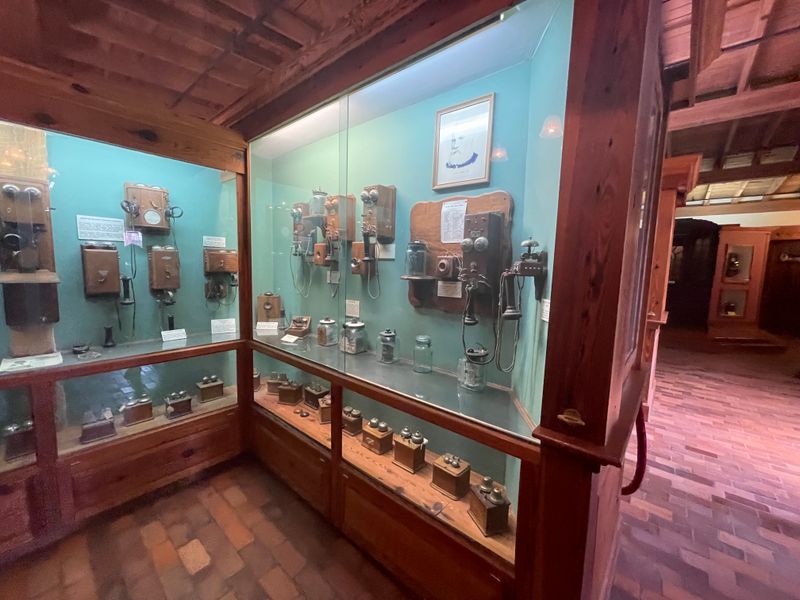
Everyone says the same thing on the way out.
Thought it would be quick? It wasn’t.
The rooms keep unfurling, and the stories keep stacking.
You glance at your watch and realize you’ve wandered far longer than planned. Not because it’s overwhelming, but because it feels relaxed.
You’re just following curiosity around corners. There’s a softness to the pacing here: no pressure, no lines, just time.
The exhibits invite you to read one more card, then another, then just one more. That’s the trap, in the best way possible to me.
You are present, not scrolling. It’s almost meditative, which is not what anyone expects from old phones.
You will laugh at yourself for staying so long, then talk about it all the way home.
Kids And Adults React Differently
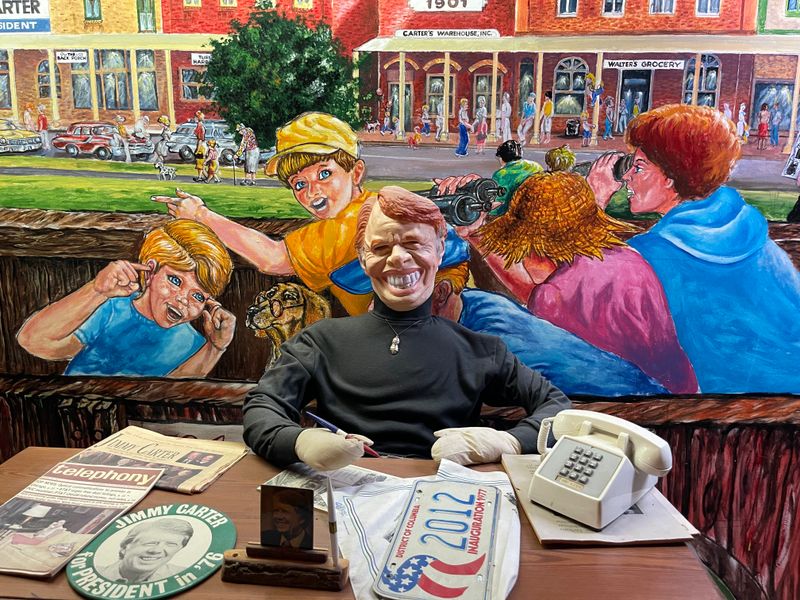
The reactions split fast.
Older visitors get a flash of recognition, a ring tone lands like a memory.
A handset fits the hand the way it once did at home.
Meanwhile, younger visitors stare at a wall phone like it’s a sci-fi prop. You can see the questions forming before they speak.
That gap becomes a conversation starter. You hear stories about first calls, important news, and waiting by the phone.
Kids ask how long things took, and the answers are simple and kind of satisfying.
Slower isn’t always worse. Sometimes it just means you remember it longer.
In a town like this, that shared moment feels extra warm. Different generations find common ground faster than you’d think.
One thing I love about this place is that the exhibits do the heavy lifting. You just point and talk.
That’s the magic. The museum becomes a bridge without trying too hard, which is exactly why you should go!
It’s The Definition Of A Stunner
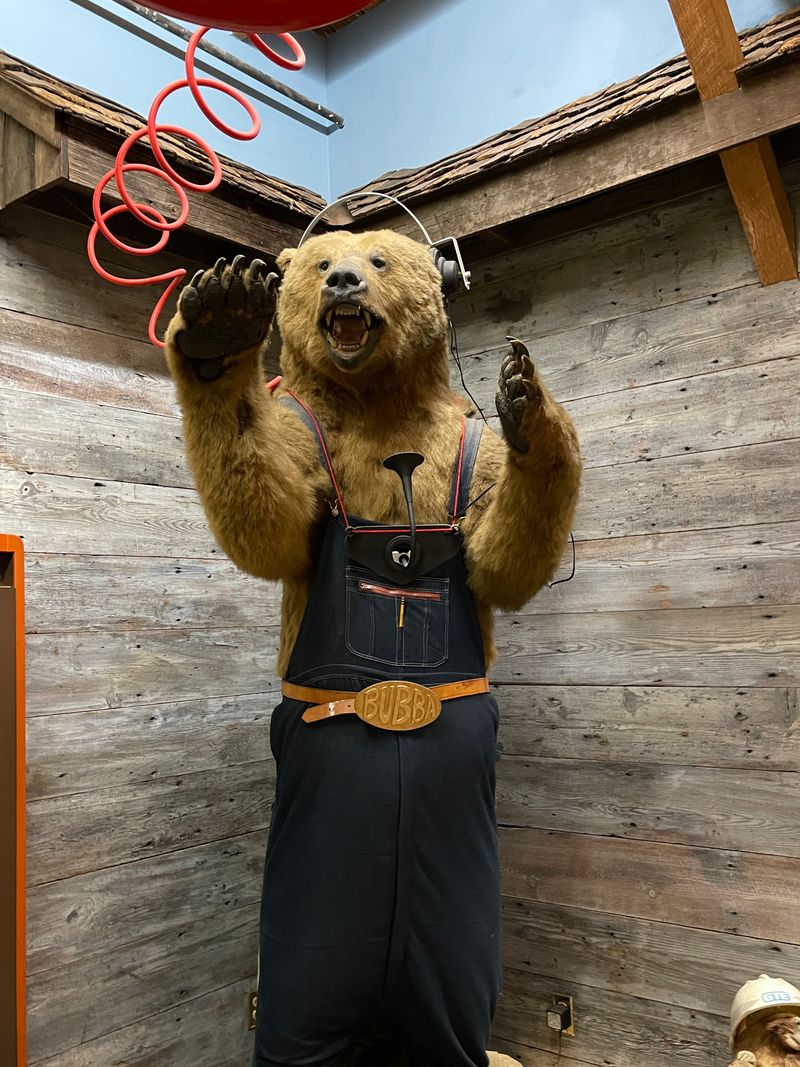
I like how there is no hype here, which is refreshing. You park on a quiet street and walk up to a modest entrance.
There are no crowds or flashing signs, just a door into a place that knows what it is.
I’d describe it as a museum that is at ease with itself. That confidence shows in the care, the layout, and the tone.
Inside, the surprises stack but never shout. You feel welcomed, not wowed, and that’s rarer than it should be.
The collection is deep, the storytelling calm, and the setting completely tied to Georgia. It’s specific in a way that lands.
You remember details because nothing is trying too hard. By the time you step back outside, you’re a little quiet.
You look down the street here and think about how many calls started lives in motion. Then you check the address one more time, and tuck it away so you can tell someone else later.
It’s definitely a keeper, and that’s why people who find it never forget it.
Dear Reader: This page may contain affiliate links which may earn a commission if you click through and make a purchase. Our independent journalism is not influenced by any advertiser or commercial initiative unless it is clearly marked as sponsored content. As travel products change, please be sure to reconfirm all details and stay up to date with current events to ensure a safe and successful trip.
