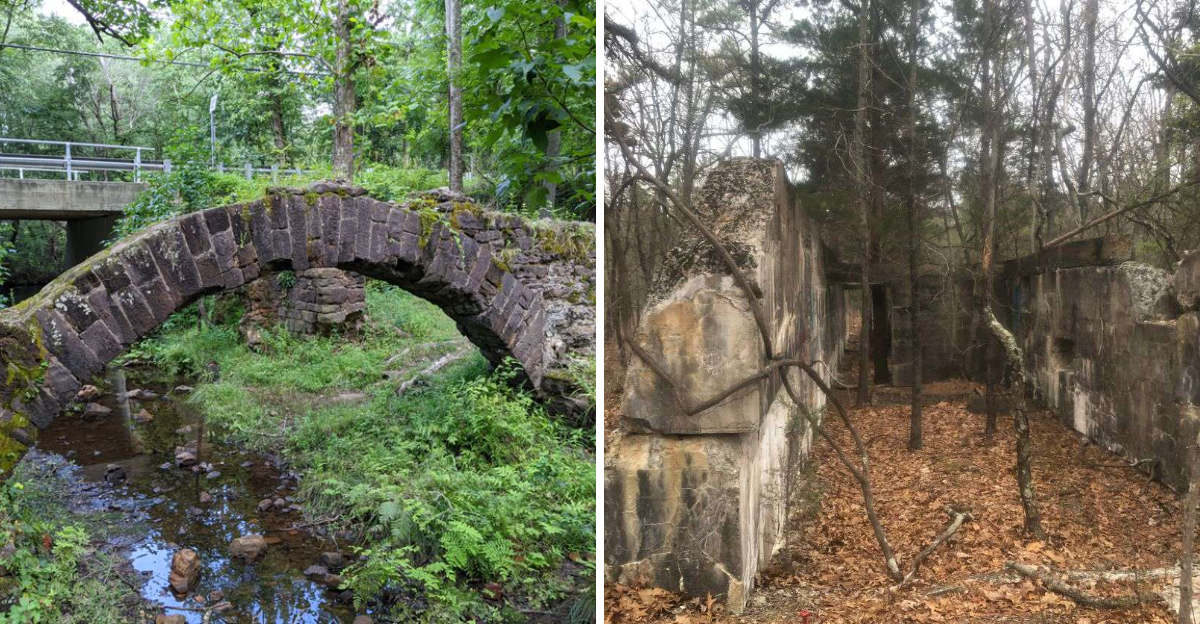
New Jersey holds more secrets than most people realize, tucked away in forgotten corners where time seems to stand still.
Scattered across forests, valleys, and quiet countryside, ghost towns whisper tales of bustling industries, vibrant communities, and dreams that faded into history.
These abandoned villages and settlements once thrived with ironworks, mills, and hardworking families before economic shifts, natural disasters, or changing times left them behind.
Walking through these eerie yet fascinating places feels like stepping into a living museum where every weathered building and overgrown path has a story to tell.
Picture wandering through old colonial villages frozen in time, stumbling upon crumbling furnaces that once roared with fire, and discovering legends that sound too wild to be true.
Ever wondered what happens when an entire town just vanishes from the map?
Pack your curiosity and sense of adventure because these forgotten places are begging to be rediscovered!
1. Batsto Village
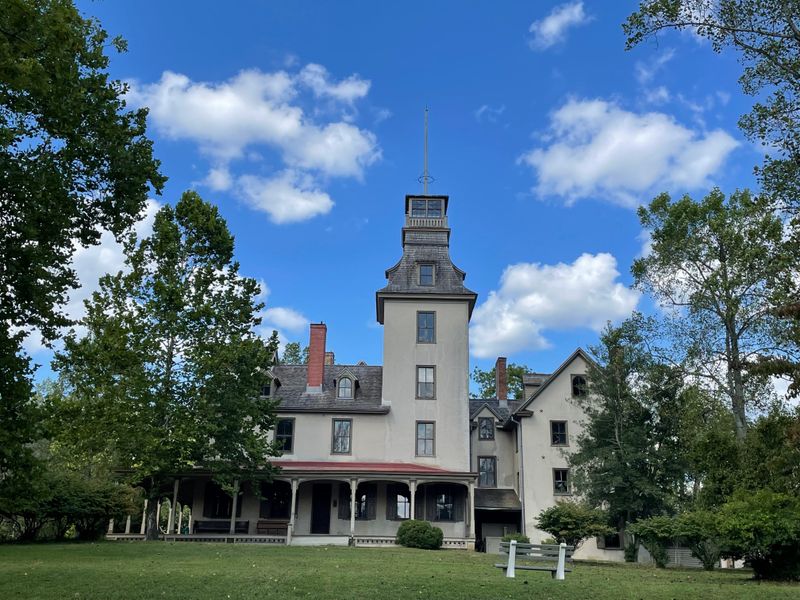
Batsto Village stands as one of the most beautifully preserved ghost towns in New Jersey, nestled deep within Wharton State Forest where pine trees tower overhead and history echoes through every corner. Founded in 1766, this ironworks community once produced everything from household pots to cannonballs for the Revolutionary War, making it a vital industrial hub during colonial times.
Workers and their families lived in charming cottages surrounding the mansion, creating a self-sufficient village complete with a general store, post office, and gristmill.
Today, visitors can wander through restored buildings that showcase what life looked like for workers who labored in the sweltering furnace rooms and tended the surrounding cranberry bogs. The grand Batsto Mansion, with its distinctive tower and Italianate architecture, offers guided tours revealing how wealthy ironmasters lived compared to their employees.
Nature trails wind through the surrounding pine barrens, leading to the tranquil Batsto Lake where you can almost hear the creaking of old water wheels.
The village hosts seasonal events including craft demonstrations where blacksmiths hammer away just like their ancestors did centuries ago. Children love exploring the old sawmill and imagining what it was like when steam engines chugged and workers shouted over roaring machinery.
Walking these paths feels like traveling back to an era when this remote forest location buzzed with constant activity and ambition.
Address: 31 Batsto Rd, Hammonton, NJ 08037
2. The Deserted Village of Feltville
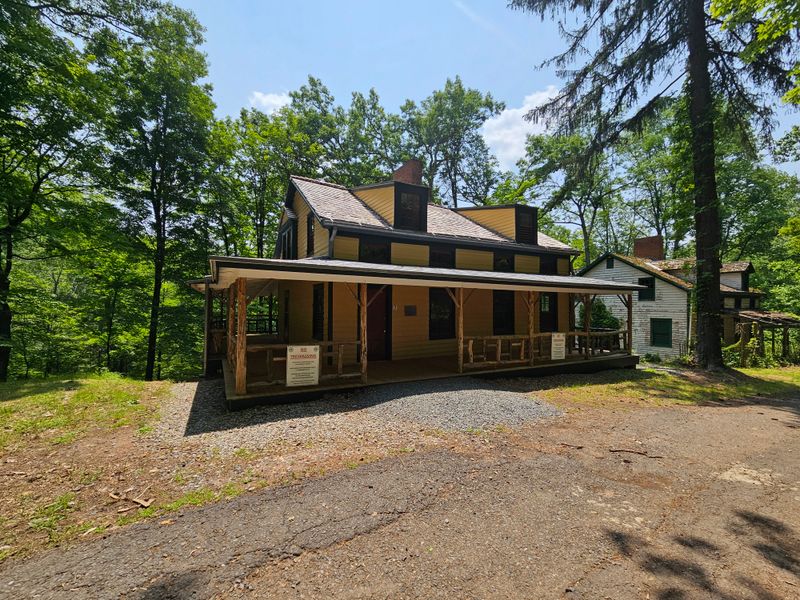
Feltville earns its haunting nickname honestly, sitting isolated within the Watchung Reservation where fog rolls through the valley and creates an otherworldly atmosphere that makes your imagination run wild. Built in 1845 by businessman David Felt as a company town for his paper mill workers, this planned community featured identical white cottages arranged in neat rows along a central street.
Families who worked the mills lived simple lives here until economic troubles forced the operation to close, leaving the village eerily quiet.
Nicknamed Glenside Park during a brief revival as a summer resort in the late 1800s, the town never quite recaptured its former glory and slowly slipped into abandonment. Local legends swirl around these buildings, with tales of mysterious lights, phantom footsteps, and the ghostly White Lady who supposedly wanders the old church ruins on moonless nights.
Whether you believe in spirits or not, the isolated location and deteriorating structures definitely create an eerie vibe that sends shivers down your spine.
Several restored cottages now serve as private residences, but most of the village remains frozen in time with crumbling foundations and overgrown gardens marking where busy families once lived. The old general store building stands as a reminder of community gatherings and daily life from nearly two centuries ago.
Hiking trails circle the village, offering glimpses into windows of empty buildings where wallpaper peels and floorboards sag under the weight of forgotten years.
Address: 2 Cataract Hollow Rd, Berkeley Heights, NJ 07922
3. Historic Whitesbog Village
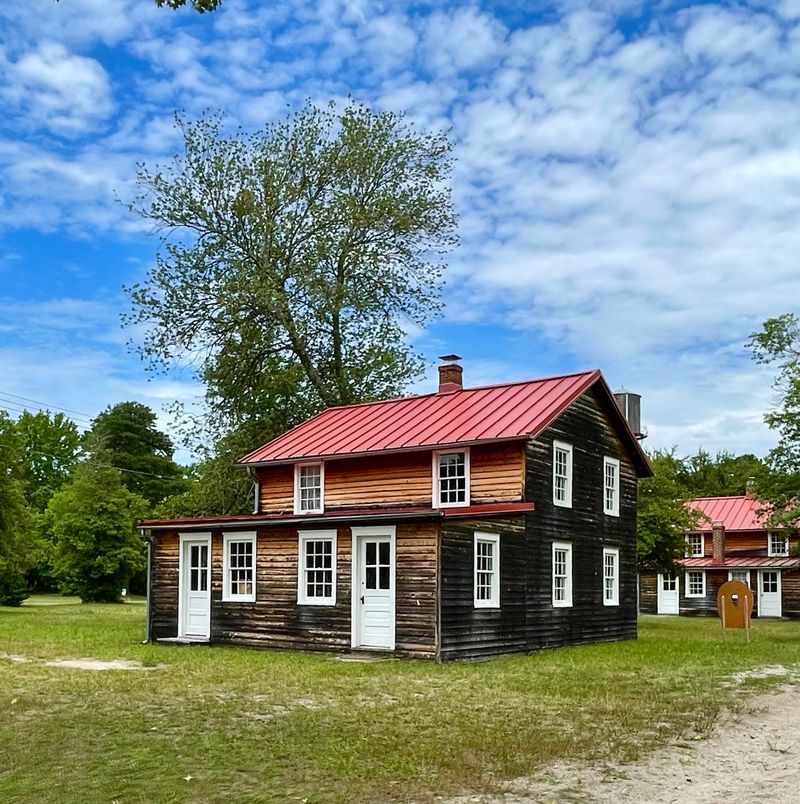
Whitesbog Village made agricultural history as the birthplace of the cultivated blueberry, transforming from a cranberry bog operation into a groundbreaking fruit research center that changed American farming forever. Elizabeth White, daughter of the cranberry farm owner, partnered with botanist Frederick Coville in the early 1900s to develop the first commercially viable blueberry varieties right here in the New Jersey pinelands.
Workers lived in company-owned houses forming a tight-knit community that harvested berries by hand and processed them in nearby packing houses.
The village thrived through the mid-twentieth century before mechanization and corporate farming made small operations like this economically challenging to maintain. Buildings slowly emptied as workers moved away seeking opportunities elsewhere, leaving behind a snapshot of agricultural innovation frozen in the sandy soil.
Red-painted structures with white trim still dot the landscape, their weathered boards telling stories of long harvest days and families who called this remote location home.
Restoration efforts have brought new life to several buildings, including the general store where you can learn about blueberry cultivation history and purchase locally made products. Miles of trails wind through surrounding bogs and forests, especially beautiful during spring when blueberry bushes burst into delicate white blooms.
Annual festivals celebrate the harvest season with berry picking, live music, and demonstrations of traditional farming techniques that once sustained entire communities.
The village serves as an educational destination where agricultural students and history buffs alike discover how innovation happened in unexpected places far from urban centers.
Address: 120 Whitesbog Rd, Browns Mills, NJ 08015
4. Allaire Village
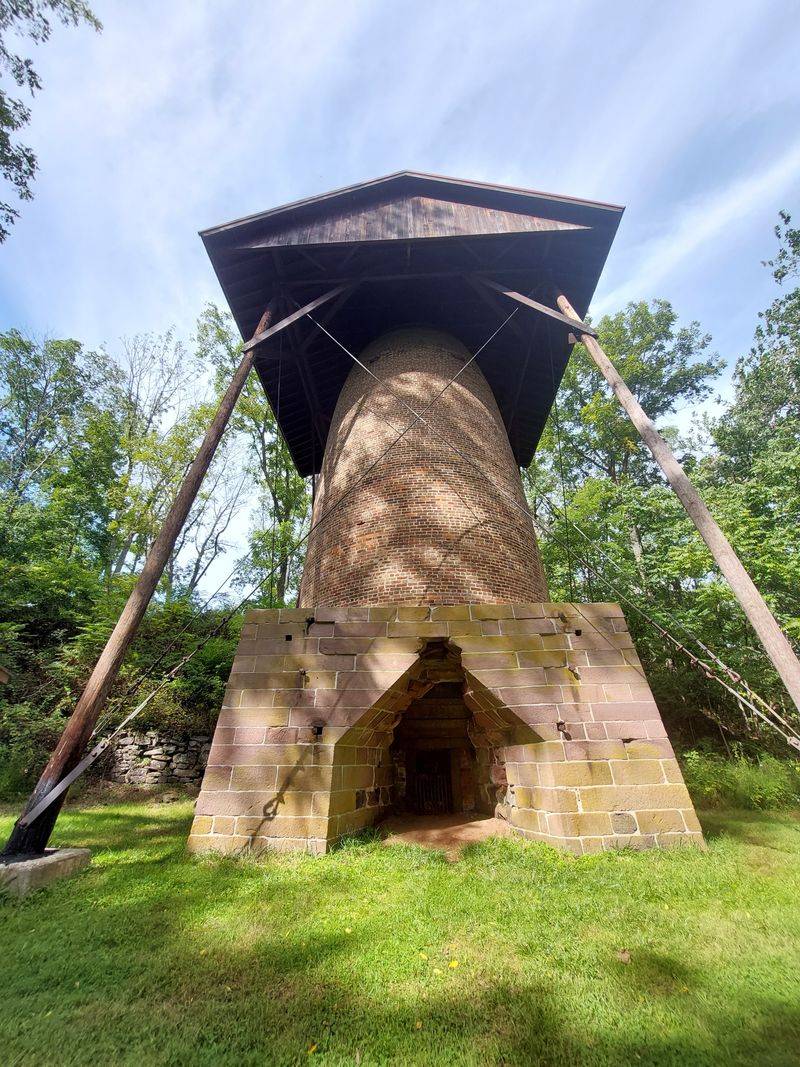
Allaire Village roared to life in the early 1800s as a booming ironworks operation owned by James Allaire, who manufactured everything from engine parts to decorative cast-iron pieces that shipped across the growing nation. At its peak, nearly 500 people called this self-contained community home, living in worker housing while laboring in the blast furnace, carpentry shop, blacksmith forge, and various support buildings.
The village featured its own bakery, general store, church, and school, creating a miniature society centered entirely around iron production.
Economic changes and the discovery of better iron ore deposits elsewhere caused the furnace to shut down in 1846, sending workers scattering to find employment in more promising locations. Buildings fell into disrepair as nature slowly reclaimed cleared land, with vines crawling up brick walls and roots pushing through foundation stones.
Fortunately, preservation efforts beginning in the 1940s saved this remarkable example of industrial heritage from disappearing completely.
Today, Allaire Village operates as a living history museum within Allaire State Park, where costumed interpreters demonstrate blacksmithing, carpentry, and other traditional crafts using period-appropriate tools and techniques. Kids absolutely love watching sparks fly from the blacksmith’s anvil and trying their hand at colonial-era games on the village green.
The old chapel still hosts occasional services, its simple wooden pews and hand-carved pulpit transporting visitors back to simpler times when faith and hard work defined daily existence.
Steam train rides on the Pine Creek Railroad circle the park, offering a fun way to arrive at this fascinating destination just as travelers might have done generations ago.
Address: 4265 Atlantic Ave, Wall Township, NJ 07727
5. Waterloo Village
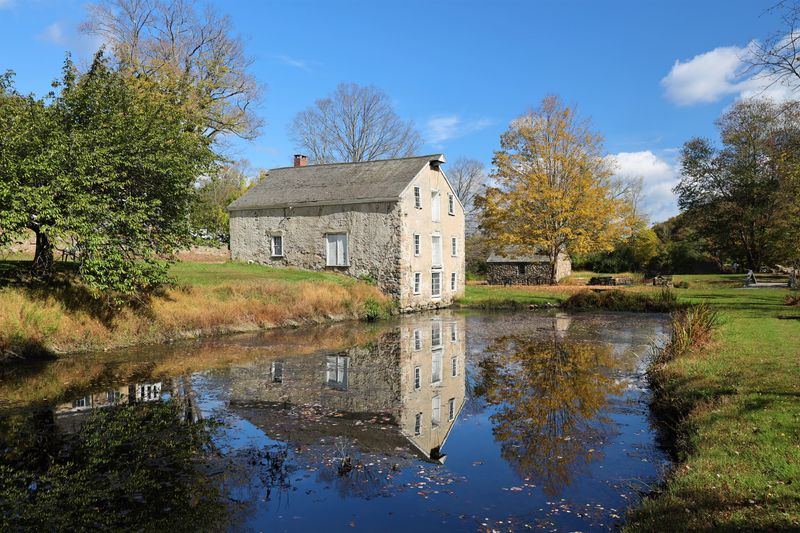
Waterloo Village sits along the Morris Canal in a picturesque valley where the Musconetcong River flows past centuries-old buildings that witnessed everything from Native American settlements to colonial commerce. Originally inhabited by Lenape people, the location became a strategic canal port in the 1830s when the Morris Canal connected the Delaware River to New York Harbor, creating a vital transportation route for coal and iron.
Canal workers, shopkeepers, and their families transformed this quiet riverside location into a bustling commercial center where boats loaded and unloaded cargo while travelers stopped for supplies and rest.
The canal’s decline following the rise of railroads gradually drained life from Waterloo, leaving buildings empty and the once-busy towpath silent except for birdsong and rustling leaves. By the mid-twentieth century, this ghost town had become overgrown and nearly forgotten until preservation groups recognized its historical significance.
Restoration work brought many structures back from the brink of collapse, including the general store, blacksmith shop, Methodist church, and several impressive homes that housed wealthy merchants.
Waterloo operated as a popular cultural venue for decades, hosting concerts and festivals that drew thousands to this scenic location tucked between forested hills. Though currently closed for additional restoration work, the village remains visible from surrounding trails where you can peek through fences at buildings waiting patiently for their next chapter.
The canal ruins still trace their path through the property, stone locks and spillways testament to engineering ambition that once moved mountains of cargo.
Address: 1050 Waterloo Rd, Stanhope, NJ 07874
6. Double Trouble Village
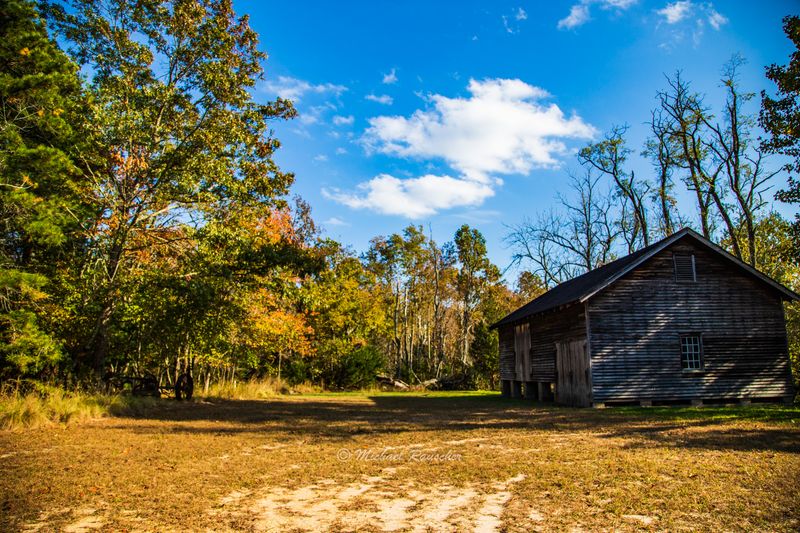
Double Trouble Village got its memorable name from either a troublesome dam that kept breaking or a pair of mischievous beavers, depending on which local legend you prefer to believe. Established in the mid-1800s as a cranberry and sawmill operation deep in the pine barrens, this remote community relied entirely on the surrounding forest and bogs for survival.
Workers harvested cranberries by hand each fall, processed lumber at the steam-powered sawmill, and lived in company housing scattered among the pines where isolation was simply part of everyday life.
The cranberry business continued operating until 1967, making Double Trouble one of New Jersey’s longest-running bog operations before economic pressures finally forced closure. Buildings stood empty for years, slowly weathering under sun and rain while the forest crept closer, reclaiming cleared spaces with ferns and saplings.
The state eventually acquired the property, recognizing its value as both historical site and natural habitat worth protecting for future generations.
Visitors can explore restored structures including the packing house where workers sorted berries, the general store that served as community gathering spot, and the schoolhouse where children learned their lessons between harvest seasons. Nature trails wind through cranberry bogs still visible beneath layers of vegetation, offering glimpses of the manual labor required to maintain these agricultural operations.
The village sits within Double Trouble State Park, where cedar swamps and pine forests create habitat for rare plants and wildlife found nowhere else.
Photography enthusiasts love capturing the weathered red buildings against brilliant autumn foliage or winter snow that blankets everything in peaceful silence.
Address: 581 Pinewald Keswick Rd, Bayville, NJ 08721
7. Walpack Center
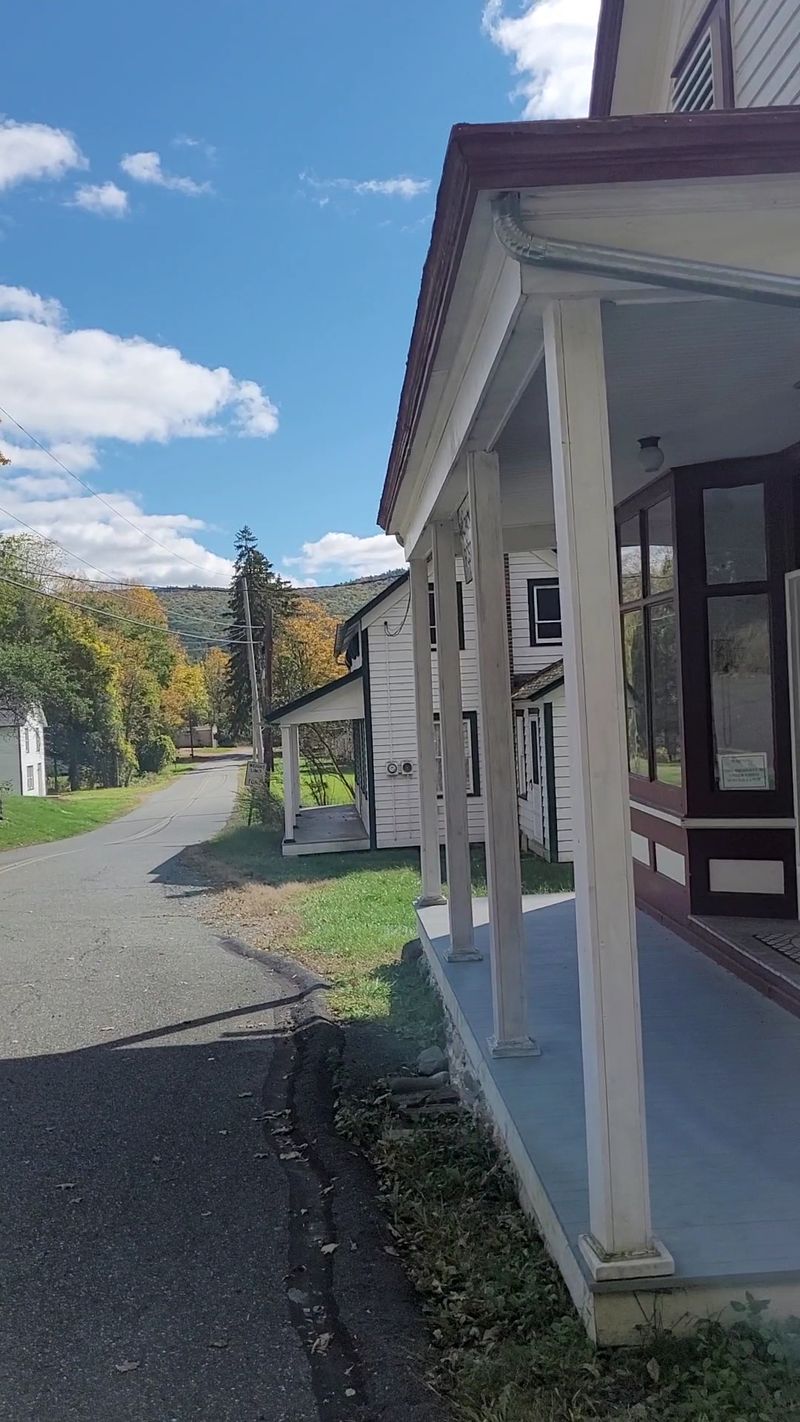
Walpack Center represents one of the most poignant ghost town stories in New Jersey, a thriving agricultural community deliberately emptied by government decree rather than economic collapse or natural disaster. Settled in the 1700s by Dutch and German farmers who recognized the fertile valley’s potential, this close-knit township grew slowly but steadily through generations of families working the same land their ancestors cleared.
Churches, schools, a general store, and the Walpack Inn served residents who rarely needed to venture beyond their peaceful valley surrounded by forested mountains.
Everything changed in the 1960s when the federal government proposed the Tocks Island Dam project, which would have flooded the entire valley to create a massive reservoir. Authorities purchased properties and relocated families, scattering a community that had existed for over two centuries in anticipation of construction that never actually happened.
Opposition mounted as environmental concerns grew, eventually killing the dam project but leaving Walpack Center empty and eerily preserved as an accidental time capsule.
Today, a handful of buildings stand maintained by the National Park Service, including the beautifully restored Walpack Inn and the one-room schoolhouse where lessons ended abruptly mid-century. Driving through feels surreal, with well-kept structures surrounded by fields returning to forest and roads leading to foundations where homes once welcomed generations of families.
The cemetery remains as perhaps the saddest reminder, headstones marking settlers who never imagined their descendants would be forced to abandon everything they built.
Address: Walpack Flatbrook Rd, Walpack Township, NJ 07881
8. Weymouth Furnace
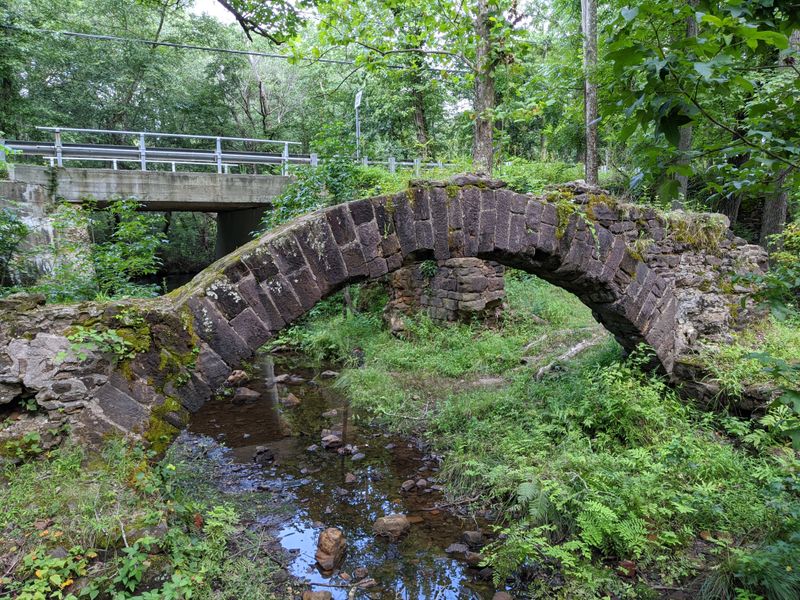
Weymouth Furnace blazed to life in 1801 as an ambitious ironworks operation that produced everything from stove plates to military supplies during the War of 1812, establishing itself as a crucial industrial center in southern New Jersey. The operation required massive amounts of charcoal produced from surrounding forests, keeping dozens of colliers busy tending smoking mounds while furnace workers labored in brutal heat to pour molten iron into molds.
A substantial village grew around the furnace, with worker housing, a company store, a school, and even a racetrack where employees spent their limited leisure time.
Competition from Pennsylvania’s anthracite coal furnaces eventually made bog iron operations economically unviable, forcing Weymouth to shut down in the 1860s after decades of profitable production. The village declined rapidly as workers departed for opportunities elsewhere, leaving buildings to decay slowly under the relentless assault of weather and vegetation.
What remains today offers fascinating glimpses into industrial archaeology, with massive stone furnace walls still standing despite over 150 years of abandonment.
Exploring the site feels like discovering ruins of an ancient civilization, though these structures are only a couple of centuries old rather than millennia. Foundation outlines mark where dozens of buildings once stood, now barely visible beneath leaf litter and creeping vines.
The surrounding Great Egg Harbor River provides beautiful scenery for hiking and kayaking, with the furnace ruins serving as a dramatic reminder of human ambition rising and falling in remote wilderness.
Interpretive signs help visitors understand the complex process of iron production and imagine the village at its smoky, noisy peak.
Address: 2050 Weymouth Rd, Mays Landing, NJ 08330
9. Millbrook Village
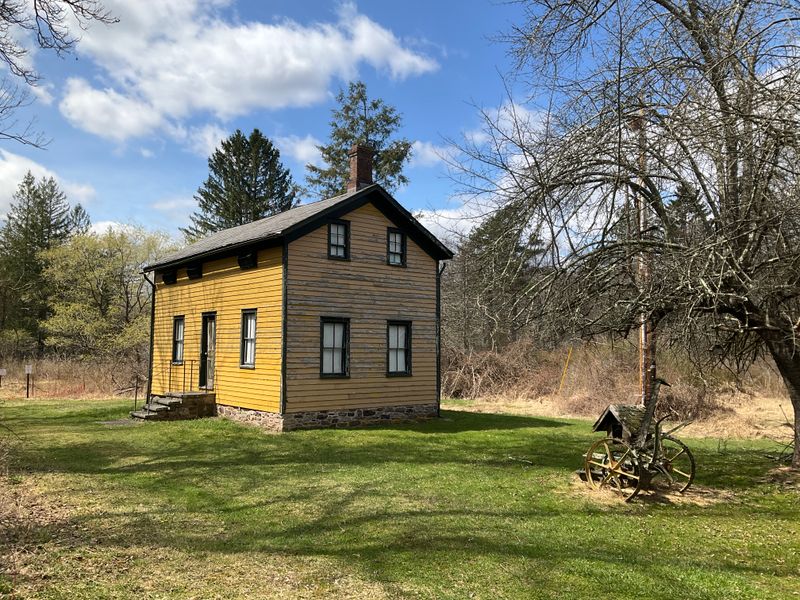
Millbrook Village nestled in a remote valley near the Delaware River served as a modest farming community where residents lived simple lives largely unchanged from colonial times well into the twentieth century. Unlike industrial ghost towns that boomed and busted quickly, Millbrook simply faded slowly as younger generations left seeking modern conveniences and opportunities unavailable in this isolated location.
Families who stayed maintained their farms and small businesses even as the outside world modernized rapidly, creating an unintentional living museum of rural American life.
The last permanent residents departed in the 1960s when the Tocks Island Dam project threatened to flood the valley, though like Walpack Center, the dam never materialized. The National Park Service took over the abandoned village, recognizing its value as an exceptionally well-preserved example of nineteenth-century rural community life.
Rather than letting structures collapse, preservation efforts restored buildings to their appearance during Millbrook’s peak around 1900.
Walking through today feels like stepping onto a movie set, with the general store, blacksmith shop, church, school, gristmill, and several homes all carefully maintained and furnished with period-appropriate items. Costumed interpreters demonstrate traditional crafts on weekends during warmer months, showing visitors how blacksmiths shaped iron, weavers created cloth, and families survived without electricity or running water.
The village sits within Delaware Water Gap National Recreation Area, surrounded by hiking trails that lead to waterfalls, overlooks, and other scenic destinations.
Kids particularly enjoy seeing the one-room schoolhouse with its slate boards and wooden desks that seem impossibly small and uncomfortable compared to modern classrooms.
Address: Old Mine Rd, Hardwick, NJ 07825
10. Amatol Ghost Town
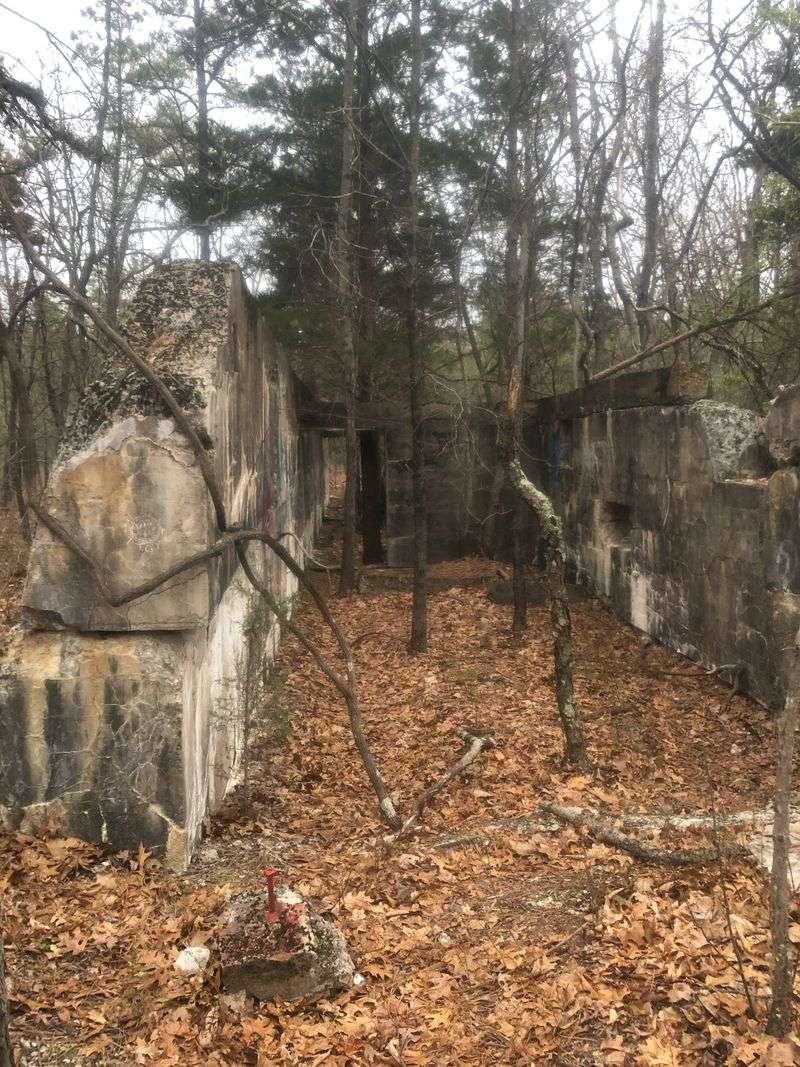
Amatol sprang up practically overnight in 1918 as a massive munitions manufacturing complex built to supply explosives for World War I, transforming empty pine barrens into a bustling company town almost instantly. At its peak, over 6,000 workers lived in hastily constructed housing while laboring in dangerous conditions producing TNT and other explosives shipped to European battlefields.
The town featured everything needed for a self-contained community including stores, schools, a hospital, fire department, and recreation facilities, all built with wartime urgency and little concern for long-term durability.
When the war ended in November 1918, the need for munitions evaporated just as suddenly as it had appeared, leaving Amatol without purpose or economic foundation. Workers departed en masse, and within months the once-thriving town stood nearly empty, buildings already showing signs of the hasty construction that prioritized speed over quality.
The government sold off equipment and salvageable materials, leaving structures to collapse slowly under the weight of time and weather.
Today, Amatol exists primarily as scattered foundations and concrete remnants hidden among pine trees and undergrowth within the Hammonton Creek Wildlife Management Area. Exploring requires careful navigation and respect for private property boundaries, as much of the original townsite sits on restricted land.
Concrete bunkers that once stored explosives still dot the landscape, their thick walls slowly crumbling but stubbornly refusing to disappear completely.
The site serves as a sobering reminder of how war mobilization transformed landscapes and lives, creating entire communities that vanished almost as quickly as they appeared once peace returned.
Address: 6128 White Horse Pike, Egg Harbor City, NJ 08215
11. Ong’s Hat
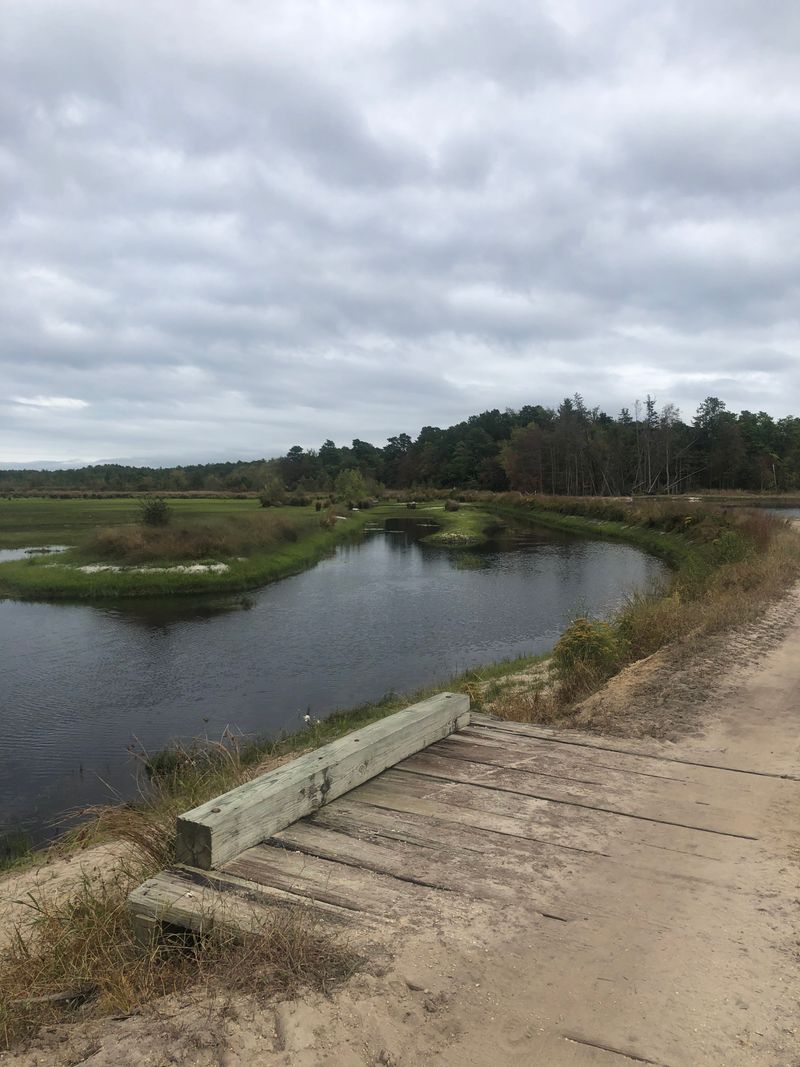
Ong’s Hat barely qualifies as a town in the traditional sense, existing more as a scattered settlement and crossroads in the pine barrens that collected colorful legends far exceeding its modest reality. Named supposedly after a man named Ong who tossed his hat into a tree after celebrating too enthusiastically at a local tavern, this remote location served travelers and locals as a stopping point along sandy roads winding through endless forest.
A few buildings stood here at various times, but the settlement never developed into anything resembling a proper village with permanent infrastructure.
What makes Ong’s Hat fascinating isn’t its physical remains, which amount to almost nothing, but rather the wild conspiracy theories and internet legends that grew around the name starting in the 1980s. Stories circulated about secret research facilities, dimensional portals, and mysterious disappearances, creating an elaborate fictional mythology that some people actually believed was real.
The tales spread across early internet forums, making Ong’s Hat one of the first viral internet urban legends decades before social media existed.
Visiting today means standing at the northern terminus of the Batona Trail where Magnolia Road intersects the hiking path, with nothing but forest and a clearing marking where the legendary settlement supposedly existed. Hikers use this spot as a trailhead for backpacking trips through the pine barrens, probably never realizing they’re standing at the center of one of the internet’s strangest early conspiracy theories.
The lack of physical evidence hasn’t stopped people from searching for signs of the elaborate fiction that captured imaginations worldwide.
Address: Magnolia Rd (CR 644), Pemberton Township, NJ 08068
Dear Reader: This page may contain affiliate links which may earn a commission if you click through and make a purchase. Our independent journalism is not influenced by any advertiser or commercial initiative unless it is clearly marked as sponsored content. As travel products change, please be sure to reconfirm all details and stay up to date with current events to ensure a safe and successful trip.
