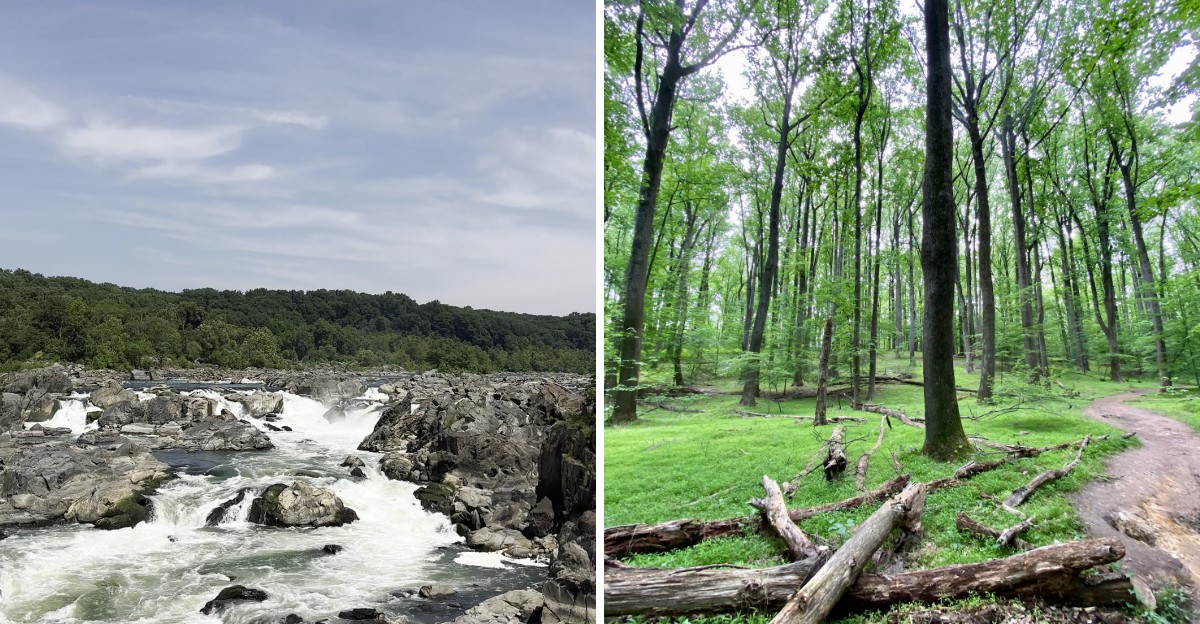
A Union soldier reportedly found gold while washing a skillet in a creek. He wasn’t hunting for treasure.
He was stationed nearby during the Civil War, and that discovery helped spark roughly 30 small mines in Maryland. Quite a legacy for one shiny speck.
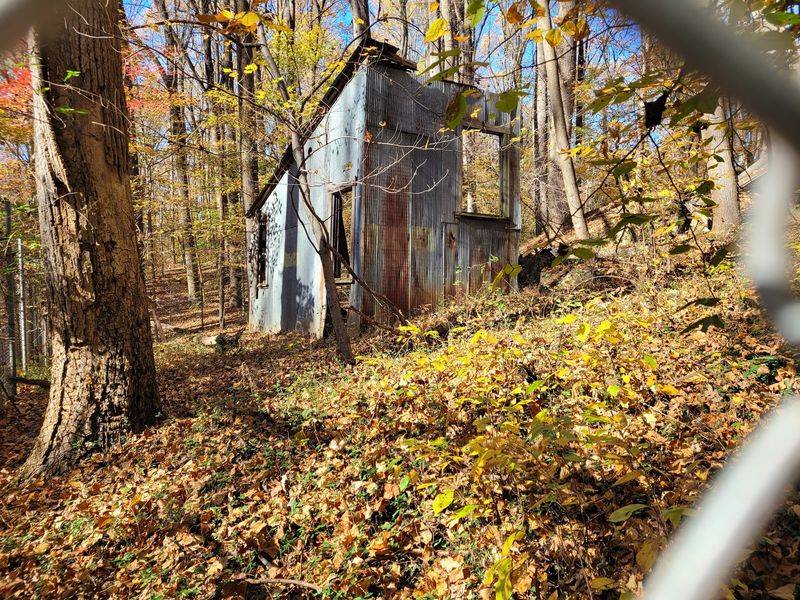
One of the largest operations dug into the hills, leaving industrial structures that still stand in pieces among the trees. A hiking loop connects to a short spur leading toward the old mine ruins.
The forest has largely reclaimed the site.
I can’t get over the fact that a soldier doing chores helped set all this in motion. Today, you can walk near the historic canal, knowing the ground once drew people hoping to strike it rich.
The rusting remains tell a much stranger story than the peaceful trail initially suggests.
A Soldier’s Lucky Splash Started Everything
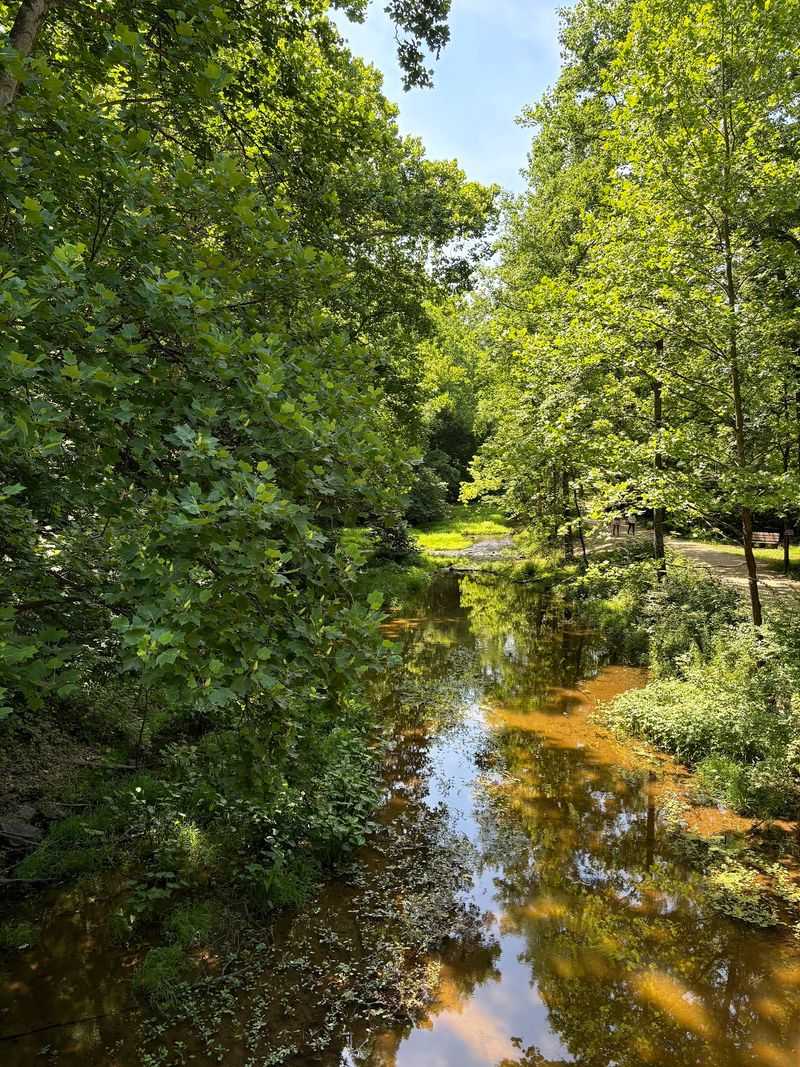
Some people find loose change in the couch. One Union soldier found gold in a creek.
That small discovery is the reason the Gold Mine Trail exists today.
The soldier was stationed on the Maryland side of the Potomac River near Great Falls. Records spell his name a few ways, including McCleary and McCarey.
Accounts also differ on the year, landing on either 1861 or 1864.
He was reportedly cleaning up or doing chores in a creek when he noticed the shine. Most people would grab a handful and move on.
He had bigger plans.
After the fighting ended, he returned to Montgomery County and bought farmland. Then he started mining.
Commercial gold mining in the county began in 1865, and the rush was officially on.
I love that the whole thing hinges on such an ordinary moment. Nobody went looking for treasure here.
It simply showed up in the water one day.
Keep that in mind as you hike. The creeks you cross today look calm and quiet.
Still, one of them once changed the history of this corner of Maryland in a single glance.
Thirty Mines Sprang Up, and One Stuck Around for Decades
Gold fever spreads fast. Once word got out, about 30 small mines opened across the area.
The biggest name in the bunch was the Maryland Mine.
That operation started in 1867 and hung on, in fits and starts, until 1939. It briefly reopened in 1912.
It came back again from 1934 to 1939 before finally closing for good.
Now for the plot twist. The mines weren’t exactly money machines.
The gold came in small amounts, and pulling it out took enormous effort.
The Maryland Mine produced less than $200,000 in precious metal over its long run. That sounds decent until you consider decades of crushing rock by hand and machine.
Talk about working hard for your paycheck.
Miners found the gold as grains, wires, or thin sheets. It sat inside quartz veins and along fault zones in old metamorphic rock.
So every flake was hiding inside something tough.
In 1965, the National Park Service acquired the Maryland Mine property. That move protected the ruins and the forest around them.
It’s why you can wander through this history today instead of staring at a housing development.
Ruins Peek Out From the Brush Like Clues in a Mystery
Old stonework in the woods always feels like a secret waiting to be solved. The Gold Mine Trail serves up several of these.
You just have to keep your eyes open.
Look for the crumbling base of an old water tank. You can also spot the remains of a blacksmith shop.
Overgrown, sealed shaft entrances add to the scene.
Most of the wooden structures are long gone. The stonework that remains is usually fenced off.
That keeps both the ruins and curious hikers safe.
Wayside exhibits along the path explain what you’re looking at. They also break down how the mining process worked.
Think of them as your free tour guides, minus the jokes.
The work itself was rough. Miners crushed gold-bearing rock, then often used mercury to separate out the gold.
It was slow, dangerous, and poisonous labor.
Knowing that makes the ruins hit differently. These aren’t just pretty piles of stone.
They’re the leftovers of people who sweated through brutal work for tiny rewards.
One firm rule applies here. Entering old mine shafts is extremely dangerous and prohibited, so admire from the trail.
An Easy Loop That Still Feels Like an Adventure
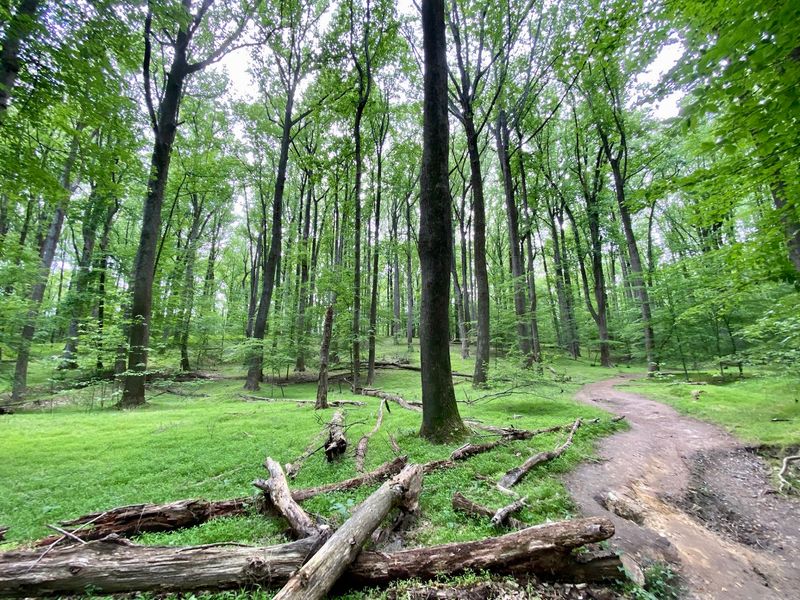
Good news for anyone who prefers hiking over scrambling. The Gold Mine Loop is rated easy.
It’s the kind of trail where you can actually chat while you walk.
Distance estimates vary a bit depending on the source. Most put the loop between 1.8 and 2.5 miles, while some say closer to 3 miles.
Plan on about an hour for the main loop.
The trail sits inside the Chesapeake and Ohio Canal National Historical Park. That means you get national park scenery without a long road trip.
Not bad for a weeknight stroll.
A handy perk is the network of connecting paths. Several spurs branch off the loop, so you can stretch your hike as long as you like.
Short visit or full afternoon, it’s your call.
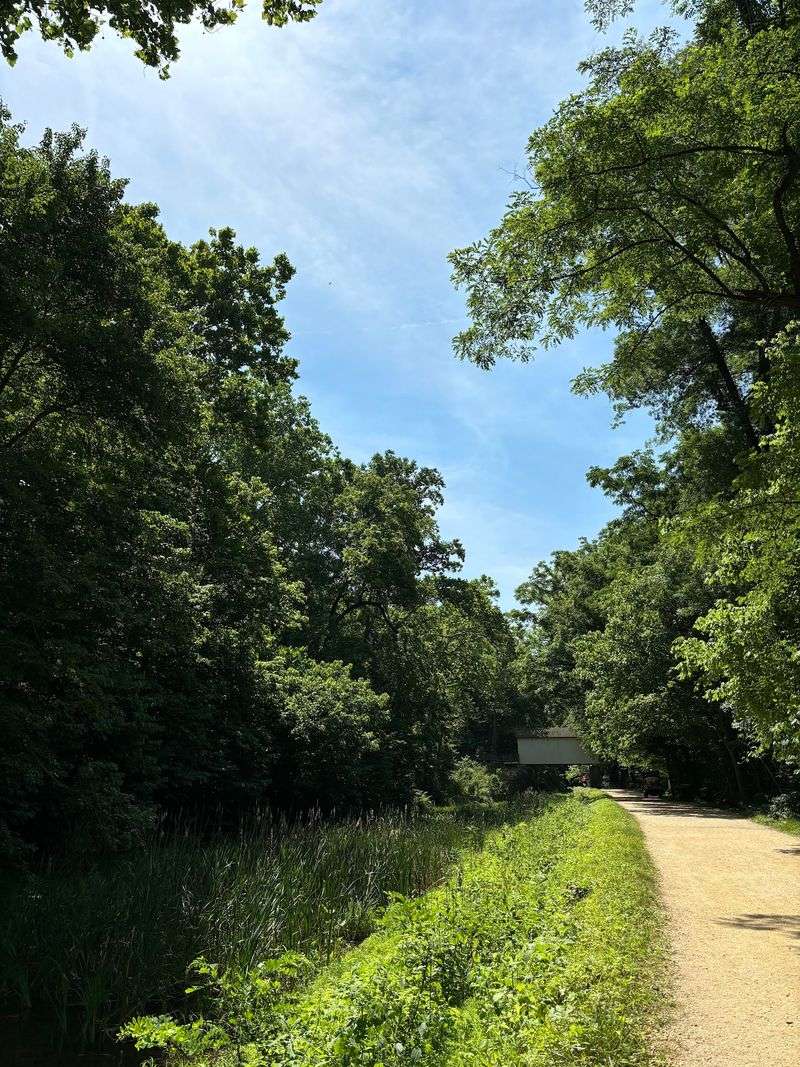
The terrain mixes flat stretches with some gentle climbs. Creeks and towering trees keep things interesting the whole way around.
Your legs get a workout without filing a complaint.
Bring water and decent shoes anyway. Even easy trails deserve a little respect.
Plus, you’ll want to stop often to read the signs and poke around the ruins.
Your Hike Starts Behind a Historic Tavern
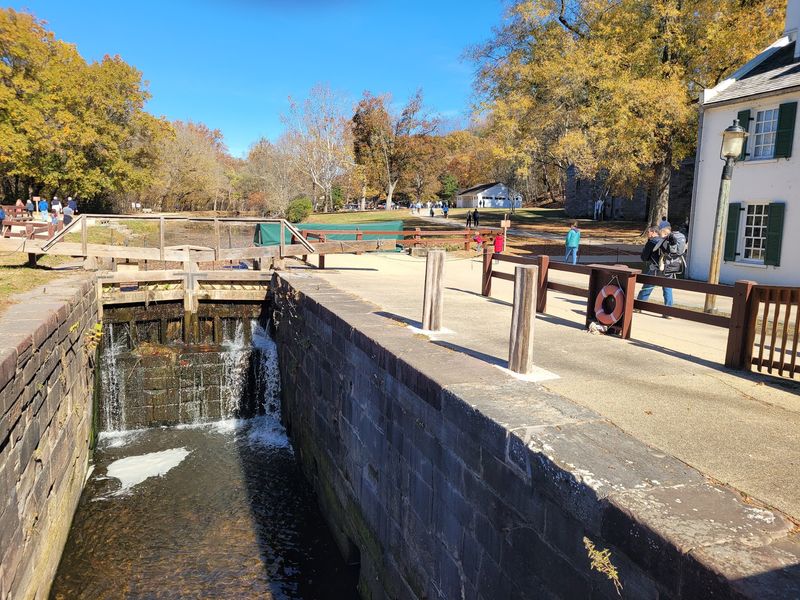
Most trailheads are a gravel lot and a sign. This one starts behind the Great Falls Tavern Visitor Center.
That’s a pretty classy way to begin a hike.
You’ll find the visitor center at 11710 MacArthur Boulevard, Potomac, MD 20854. It’s a common launch point for the Gold Mine Trail.
Stop in first if you want a little background before heading out.
From there, the Gold Mine Spur leads you to the main loop. Expect an uphill climb right at the start.
After that, the spur stays mostly flat.
Don’t let that first hill scare you off. Consider it the trail’s way of checking your commitment.
Once you pass the test, the walking gets much easier.
The spur also tends to be less crowded than other paths nearby. That’s a nice bonus in a park this popular.
You can enjoy the forest without bumping elbows.
Since the trail sits within a national park, an entrance fee applies. The trail area is listed as open daily from 6 AM to 8 PM.
Check conditions before you go, especially after big storms.
Maryland’s Largest Piedmont Forest Surrounds Every Step
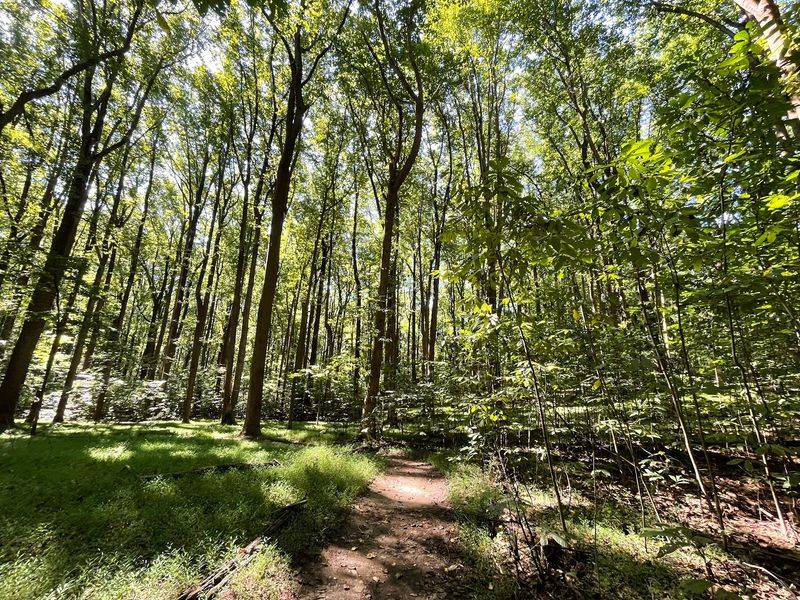
Here’s a fact worth bragging about at dinner. The Gold Mine Tract covers 528 acres.
It’s considered the largest Piedmont Forest in Maryland.
That means you’re hiking among serious trees. Towering hardwoods rise on all sides and form a thick canopy overhead.
It feels miles away from the busy suburbs nearby.
The Piedmont is the rolling region between the coastal plain and the mountains. Its old rocks are the same ones that held the gold.
So the forest and the mining story are tied together underground.
Small creeks wind through the woods and add a soothing soundtrack. They’re a fun reminder of how this whole saga began.
Somewhere, a soldier once washed up in water just like this.
The shade is a real gift on hot days. Trees block much of the sun, making summer hikes far more pleasant.
Your sunscreen might feel a little underused.
I believe forests like this are rare treasures in their own right. Gold drew people here first.
The trees are what keep people coming back today, and they’re not going anywhere.
Every Season Paints the Trail a New Color
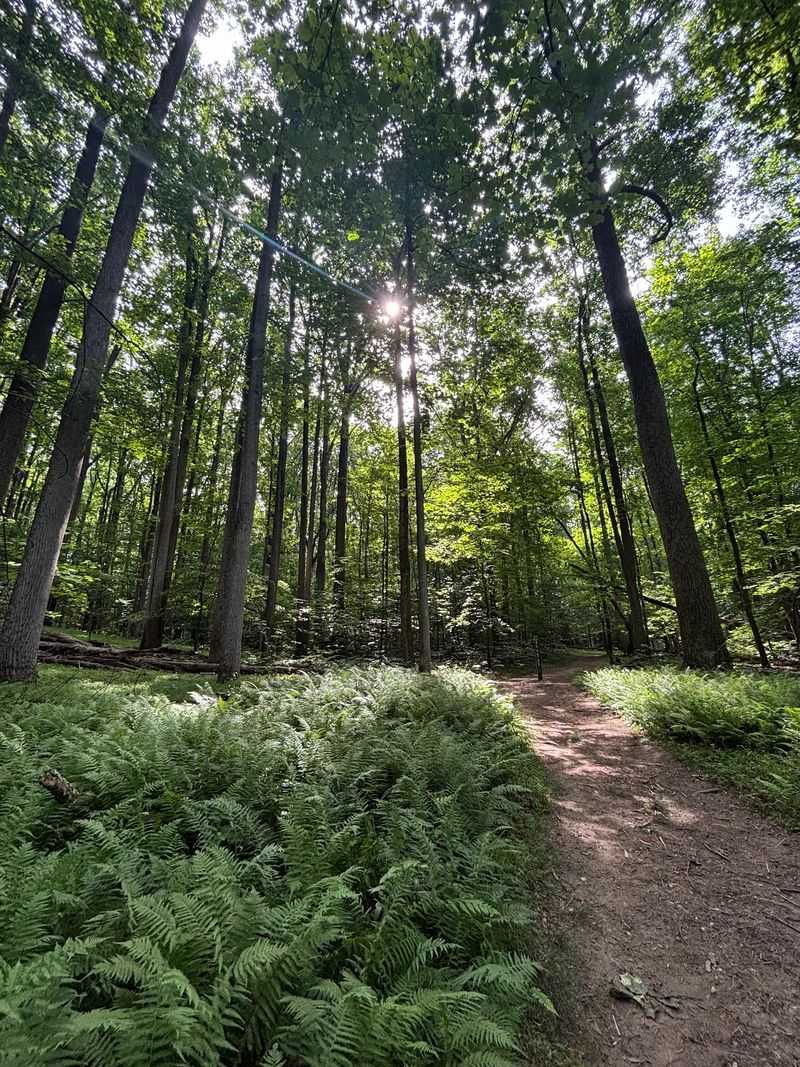
Spring, summer, fall, or winter, this trail refuses to look the same twice. Each season brings its own reason to visit.
You might end up making it a yearly habit.
Summer turns the trees into a giant green umbrella. That thick shade keeps the path cooler when the heat cranks up.
It’s one of the comfiest summer walks around.
Spring rain doesn’t have to ruin the plan either. The canopy offers some shelter from those passing showers.
Just watch for muddy patches underfoot.
Autumn is the showoff season. The hardwoods burst into bright colors that make every bend look photo-ready.
Fittingly, some of the leaves even turn gold.
Winter brings a quieter kind of magic. With fresh snow or soft mud, you might spot footprints of woodland creatures.
It’s like reading the forest’s guest book.
Bare branches in winter also open up views you’d miss in summer. The ruins become easier to see without leafy cover.
So the coldest months can be the best time for history hunting.
Dress for the weather and pick your favorite season. Then come back for the rest.
Detour Over to Potomac River Views
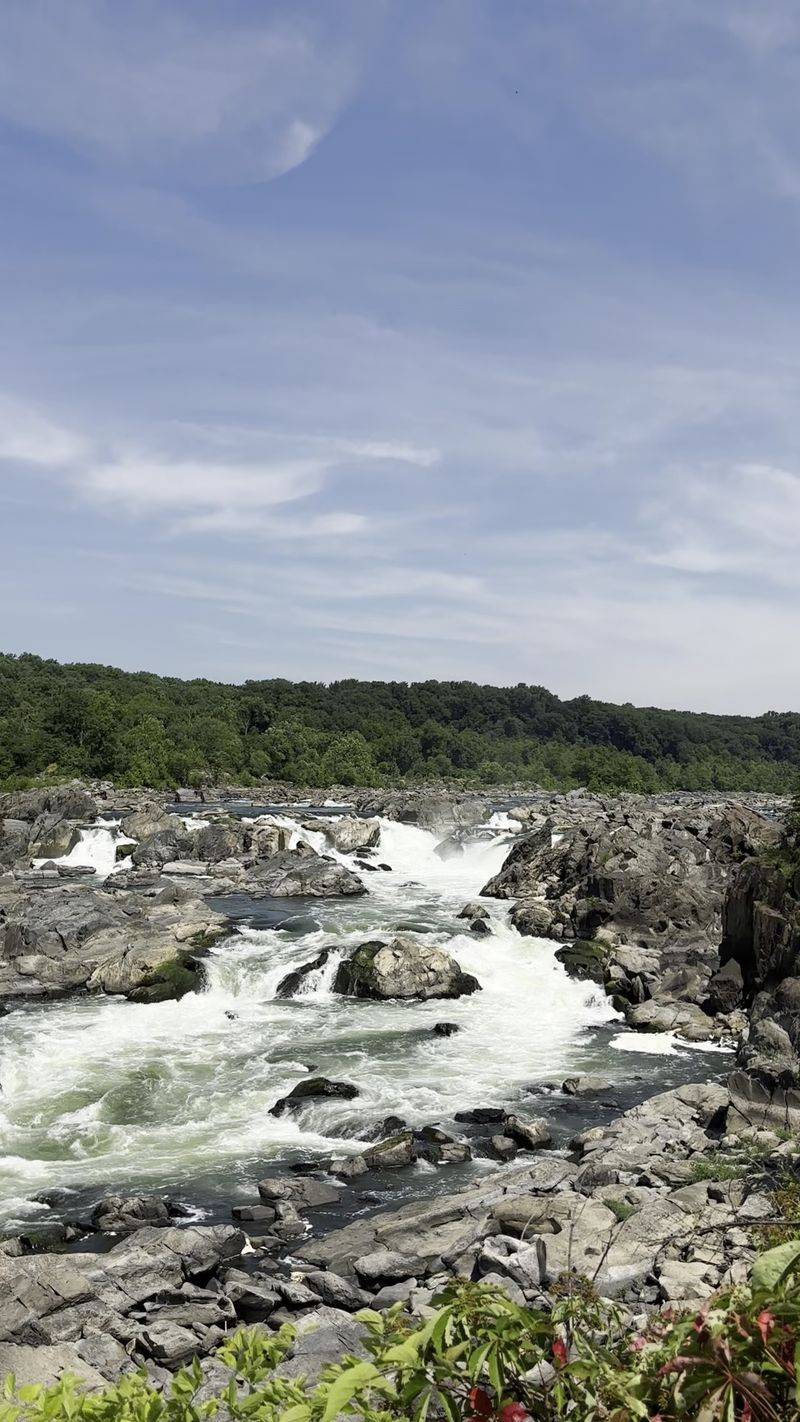
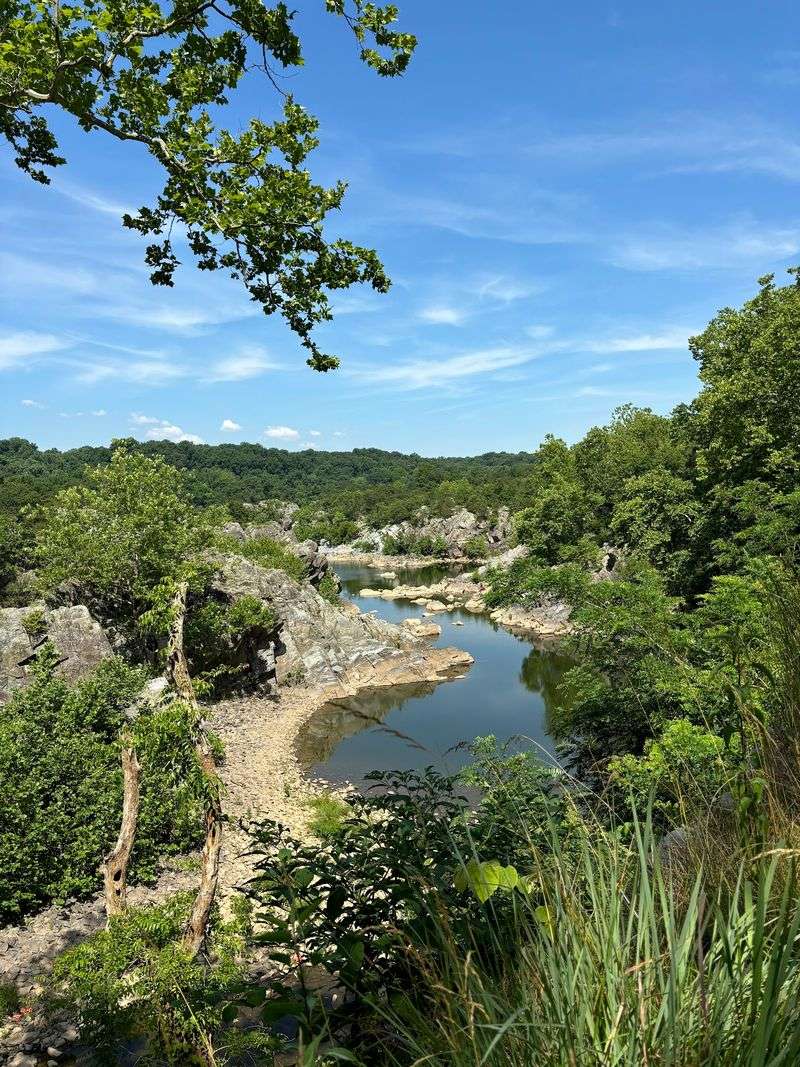
Mine ruins are great, but rushing water is hard to beat. The trail system connects to the Overlook Trail.
That path rewards you with views of the Potomac River.
Think of it as a scenic bonus round. You get history on the Gold Mine Trail and river drama on the detour.
Two experiences, one pair of tired legs.
The Overlook Trail runs near the edge of a hillside in spots. Stay on the path and keep a close eye on kids.
A little caution goes a long way here.
Summer leaves can block parts of the view. Cooler months usually give you a clearer look at the river below.
Timing your visit can make a big difference.
Other connecting trails branch off the loop too. Mixing and matching lets you build a hike that fits your mood.
Want quiet woods or big views? You can have both.
Bring a simple trail map before heading out. The many spurs make it easy to wander farther than planned.
That’s part of the fun, as long as you know your way back.
Leave the Gold Pans at Home, Bring Your Curiosity
Yes, there’s still gold in Maryland rocks. No, you can’t start panning here on a whim.
Rules protect this place, and they’re pretty clear.
Panning for gold on Federal Park property requires permission from the Superintendent of the park. Collecting rocks on State-owned land also needs the owner’s approval.
So that shovel stays in the trunk.
The National Park Service sums it up nicely. Leave only footprints and take only memories.
Honestly, it’s the golden rule of hiking, pun fully intended.
Remember the shaft warning, too. Old mine openings are extremely dangerous, and entering them is prohibited.
No selfie is worth that risk.
Instead, treat the Gold Mine Trail like an outdoor museum. Read every wayside sign and let kids hunt for ruins along the path.
It turns a simple walk into a real-life treasure map.
Afterward, swing back by the Great Falls Tavern Visitor Center. It’s the perfect spot to wrap up your Maryland gold rush adventure.
You won’t leave richer in coins, but you’ll carry home a story worth telling.
