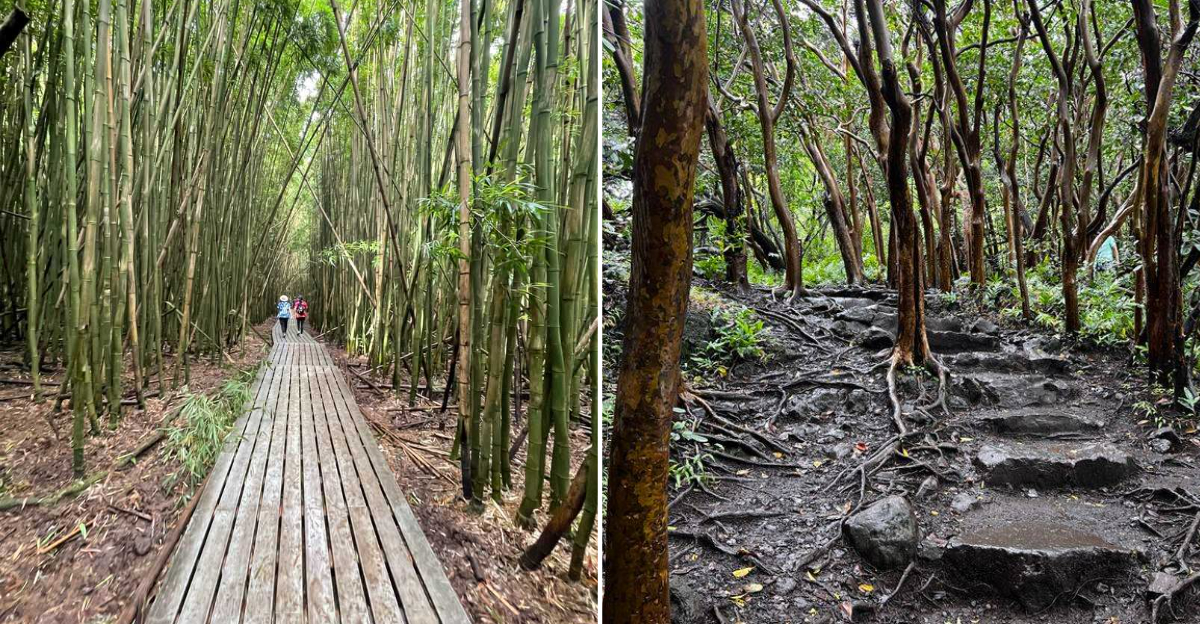
Have you ever hiked a trail that feels like it’s holding onto more than just scenery? That’s the impression you get on the Pipiwai Trail in Haleakala National Park.
At first glance, it’s a classic Hawaiian hike: lush greenery, bamboo groves, and waterfalls that make you stop in your tracks.
But spend a little time here, and you’ll notice the quiet has a way of making you listen differently.
The trail winds through towering bamboo that creaks and sways, almost like it’s whispering.
Then, as you reach Waimoku Falls, the sound of rushing water fills the air, but somehow it doesn’t drown out the feeling that the place has stories tucked into its corners.
Locals talk about the land with respect, and you can sense why, there’s history here, and it lingers in the atmosphere.
Walking Pipiwai is about the mood it leaves with you. One trip to this part of Maui, and you’ll carry home more than photos.
You’ll carry the memory of a trail that feels alive in its own way.
The Path Everyone Mentions First
Let me start simple. Pipiwai Trail is the one your friends whisper about, the one that keeps coming up when people talk about Maui hikes with a vibe.
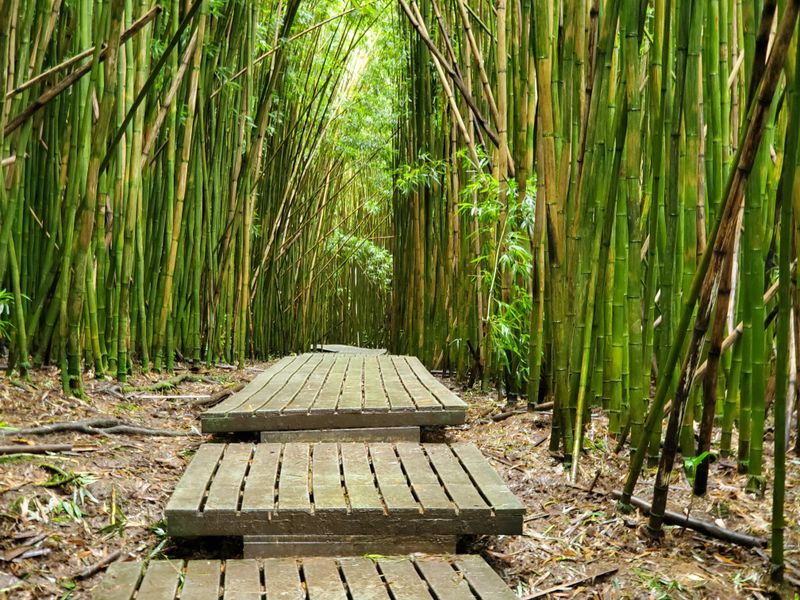
It begins casual enough, with a sign and a smile from the ranger, then the trees tuck you into a soft green hallway that narrows your world fast.
You keep walking and the outside fades, and suddenly it is just you and this steady chorus of water, air, and wood.
What hits first is sound. Even before the famous bamboo, there is a kind of hush full of moving parts, like tiny gears turning somewhere behind the leaves.
Streams chatter, birds slide around the canopy, and the path clicks under your steps.
You may hear feet that are not there, then laugh and call it echo, but your shoulders still rise a touch.
Curves appear, then boardwalk slats, then roots that push your rhythm into smaller, careful moves.
Keep going and you will notice how each bend reshapes your headspace. The light feels filtered, almost careful, like it takes its time crossing the trail.
People say the energy carries old stories, and I believe it, because the farther you go the more your voice stays low.
You stop talking big and start walking softly. That is when the trail starts talking back, not loud, just steady, a murmur under everything you do.
A Trail Wrapped In Old Hawaiian Belief
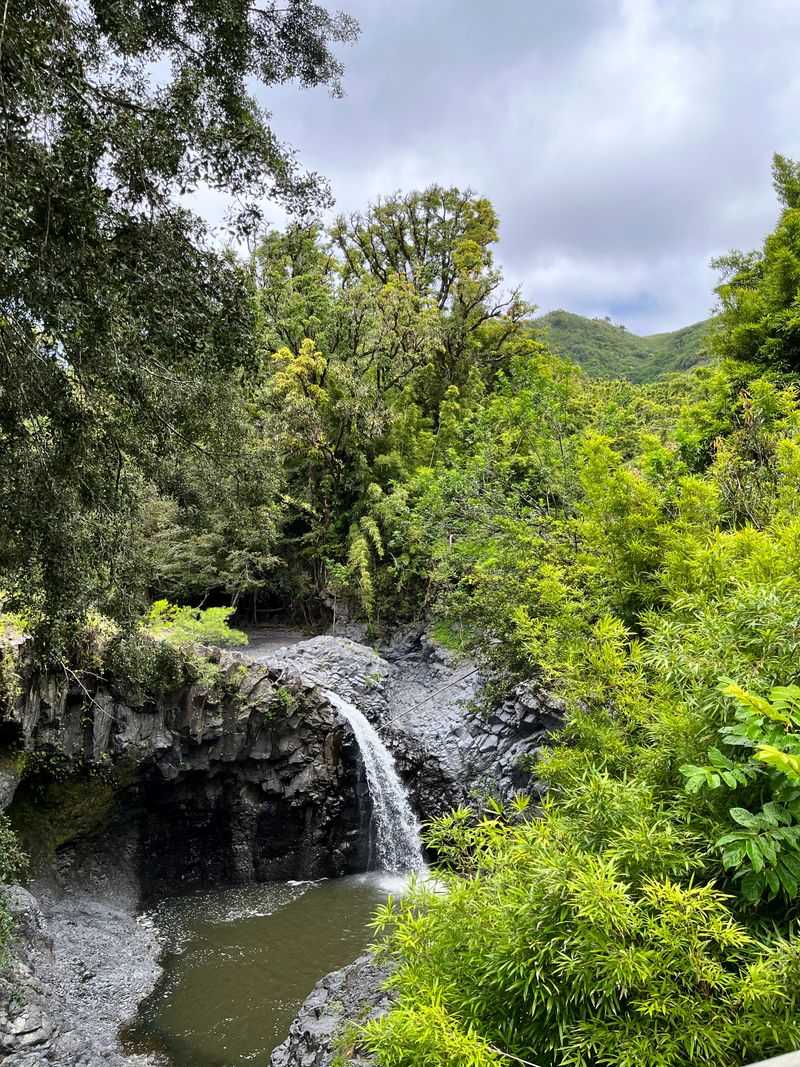
This path does not sit alone. It passes through land woven tight with Hawaiian history and belief, and you feel that as much as you see it.
Locals talk about places here like they have their own house rules. Sensitive zones, quiet spots, areas where you step lighter and keep thoughts neat.
That changes how you move, even if you did not grow up with the stories, because the air seems to carry reminders every few yards.
There is a reason folks speak softly when the breeze picks up. People have long said the forest holds presence, not threatening, just aware.
I would not label anything spooky here. It is more like walking into a family room where the elders are sitting, and you do not take the big chair without asking.
Respect shapes the day. The land knows when you are paying attention, and it shows you more when you do.
Read the signs and actually follow them, not because rangers will scold you, but because it feels right. That care keeps you safe, sure, but it also opens up the hike in small ways.
You hear more layered sound, catch small movements in the grass, and relax into the flow. The stories breathe along the trail, and you breathe with them.
Bamboo Groves That Never Fully Go Quiet
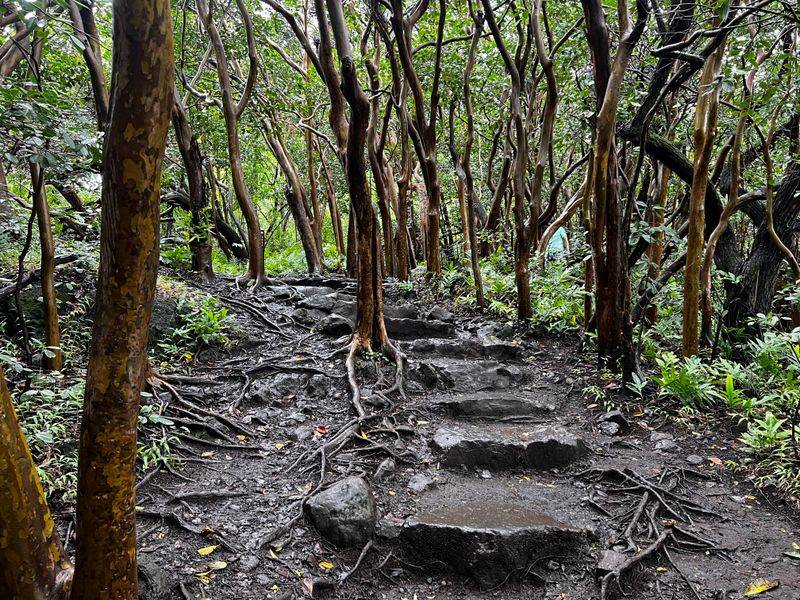
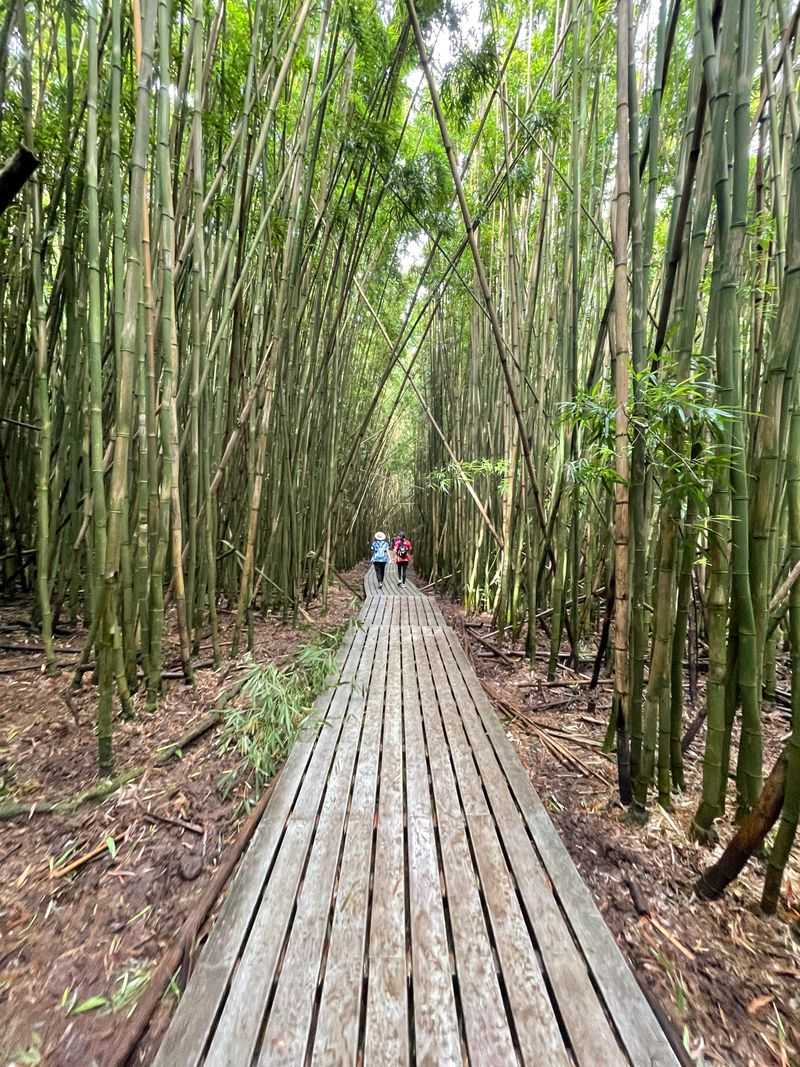
Here is the part that sneaks into your memory. The bamboo section rises around you like a green organ, full of pipes that hum when the air slides through.
Even on calm days the stalks click and murmur, a restless music that feels like whispering from a room over.
Your feet tap the boardwalk while the forest lays down a rhythm, and soon everything blends together.
Listen close and you might swear you hear syllables. Not words, not really, just the shape of talking, phrases riding the breeze and fading before you can catch them.
Every few steps a hollow knock ripples down the grove as the culms brush. It is gentle, then sudden, then gone, and you glance back like someone followed.
There’s only light shivering in stems and a soft ticking under your boots.
Photography is tempting, but I like to stand still and watch the stalks sway in tiny arcs. It is a slow dance, and the sound leans right into your ear.
The air smells green, like cut grass and rain shadow. People move quieter here without being told.
It is peaceful and eerie at the same time, which is kind of the point of this whole hike. You keep walking, but the whispers keep pace.
Footsteps That Echo When No One’s Behind You
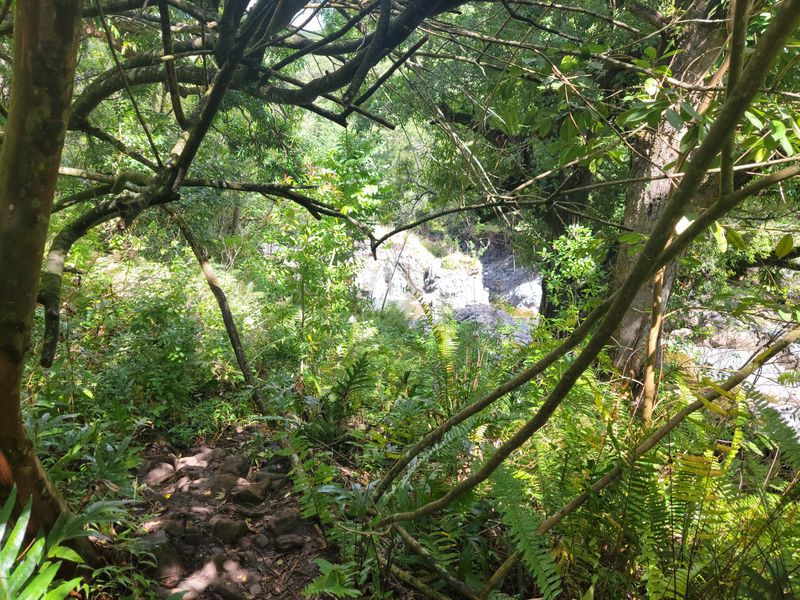
Okay, tell me you have not felt this. You step along the narrow boardwalk, and the planks answer back with a second set of taps.
The forest is packed tight, and sound bounces in weird ways, so you get echoes that feel personal. It is unnerving for a beat, then your brain labels it wind or timing.
Still, more than a few hikers say they felt company where there was none.
The trick is how the curve of the path hides people a few bends ahead. When their steps line up with yours, it stacks like a duet.
Add bamboo clicks and the stream hush, and you have the full soundtrack. Even knowing all that, your shoulders creep up when the rhythm doubles, then fades.
I think it is like someone matched your pace and peeled off quietly into the trees.
I try not to rush when that happens. Take a breath, feel the boards, and let the echo pass through.
The forest always proves it was just physics, but it takes a minute for nerves to catch up. That little jolt is part of the trail’s personality, not a threat.
You learn to smile at it, shake it off, and carry on, steps steady and easy, eyes on the next bend.
Water Sounds Follow You Constantly
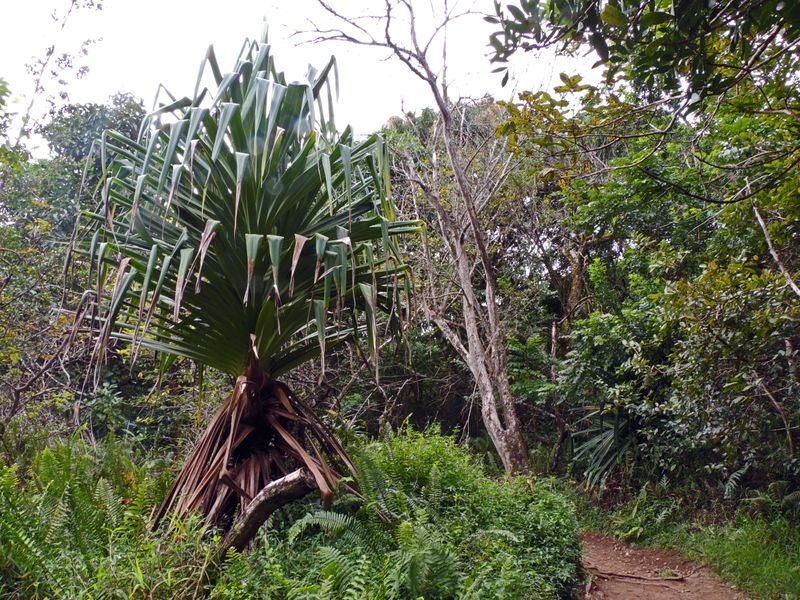
If you like the sound of water, this trail is a playlist on loop. Streams cross and reappear, hiding behind brush, slipping under bridges, humming near your ankles.
Even when you cannot see a drop, there is a low steady murmur that fills the gaps between bamboo knocks.
It becomes the heartbeat of the hike, calm but insistent, reminding you that everything here runs downhill toward the falls.
That sound shapes the mood. Your thoughts fall into a softer cadence, like the trail is pacing you without asking.
You hear rattles on leaves, a splash near a rock, and a faint tumble from a far up valley. Every piece clicks into a larger rhythm that just keeps going.
I like to pause at the little crossings and watch water spread over stones. The pattern changes every time a leaf drops or a stick shifts.
Nothing feels stuck, nothing feels rushed. In Hawaii, water has a way of getting into your head kindly and completely.
On Pipiwai, it does that plus a little mystery. By the time you reach the clearing, the murmur is part of your stride, like a song you forgot you knew.
Waimoku Falls Looms Like A Cathedral
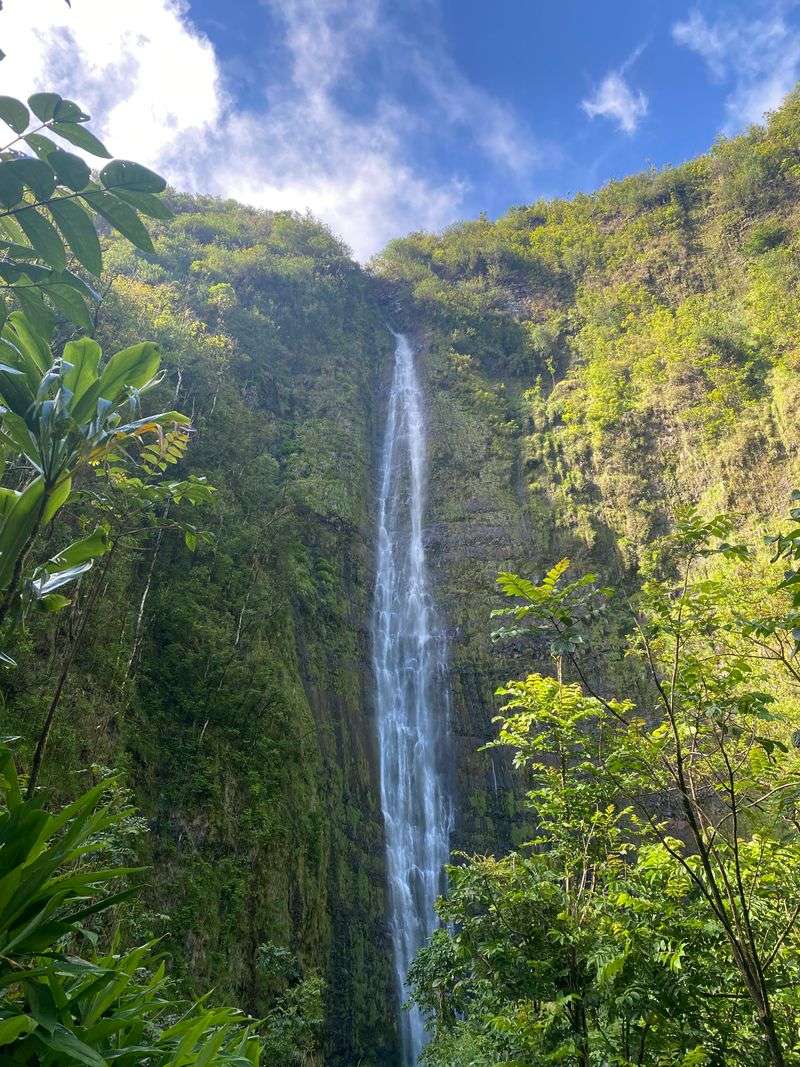
Then the valley opens and Waimoku Falls takes over your whole field of view. The drop is so clean and so tall that your brain needs a beat to size it.
The roar wraps the clearing, a full body sound that softens the ground conversation to a hum. It feels like stepping into a hall built by water, where every wall wants you to keep your voice low.
Stand facing the cliff and you can feel the spray on your cheeks, cold and fine like static.
The pool edge looks tempting, but signs and common sense both say hold back. The cliff is sheer, the rocks are slick, and loose rubble sits where it pleases.
Power lives here. You respect the space and take it in from a safe view.
What gets me is how the falls change the air. Everything moves in slow circles, mist drifting, leaves quivering at the edge of the wind.
People go quiet without trying. Some smile, some go thoughtful, some just stare.
The place feels watchful in a kind way, like it notices how you show up. You leave a little lighter, ears still full of that deep, ongoing rush.
Mist Creates Shifting Shapes
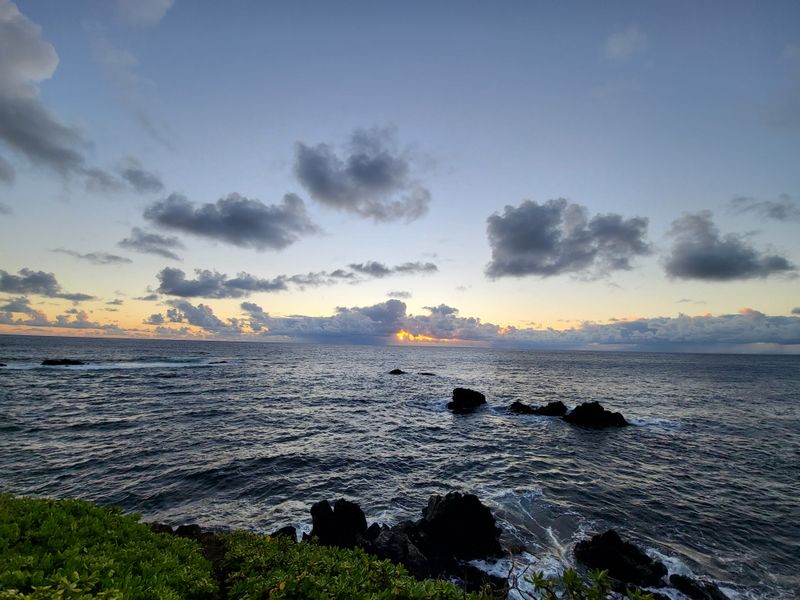
Ever watched mist pretend to be something else? Down by the clearing, spray drifts across the open space and builds flimsy shapes that slide apart as soon as you blink.
Light sneaks between leaves, catches a veil of water, and turns it into a figure for half a second. Your eyes try to lock on, then the wind moves and it is gone.
It is not spooky so much as playful, but it tugs at the edges of your focus.
I like to stand a little off the main line and watch the show. There is shadow from the cliff, bright spots from sky breaks, and a moving curtain of droplets that acts like a stage.
Sometimes the pattern lines up like someone just stepped into view, then it unravels. You laugh a little and lean in for the next scene.
The whole clearing breathes with it.
On days when clouds hang low, the effect stacks. The waterfall voice gets deeper, and the ground seems to hum.
Keep your footing, keep your distance, and let your eyes wander. The land polishes your attention, one shimmer at a time.
Ancient Landslide History Adds Weight
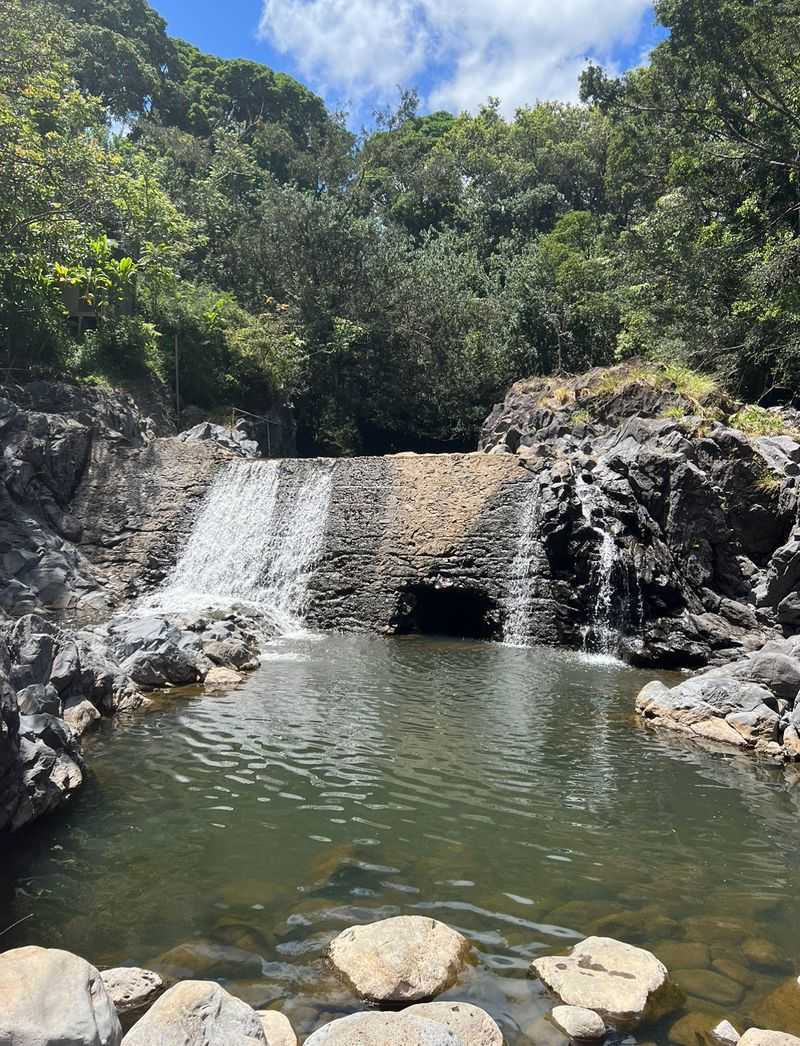
There is another layer under the beauty here. Geology did big work on this valley, and massive slides shaped the cliff that frames Waimoku Falls.
You can see it in broken lines and shelves that look like pulled taffy, only rock heavy and serious. That history explains the real rockfall risk and why the park draws clear boundaries.
It is not a suggestion. The land is still moving on its own schedule.
When you look up, notice the stacked ledges and grooves where water threads down. Loose stones perch like they are mid decision.
After rain, everything feels more awake, and tiny pebbles shift underfoot on side paths. That is your cue to stay centered and steady.
The place is alive in the most literal way, and that energy hums through the hike.
I am here to say the weight you feel has roots. It comes from millions of small changes and some huge ones, and from people who paid attention long before we showed up.
Respect the signs, skip the scramble, and let the falls be grand from a safe line.
That mix of awe and care is how Hawaii asks you to show up. It makes the experience better, not smaller.
Quiet Feels Heavier The Farther You Go
There is a point on this hike when the chatter thins out.
Fewer voices, more leaf rustle, and a kind of velvet hush that settles on your shoulders. The deeper you go, the heavier the quiet feels, not in a bad way, just denser.
You start hearing small sounds you missed earlier, like a distant tap or a tiny slide in the brush. It makes you slow down without trying.
I like that soft pressure. It nudges your focus toward the next step and the breath after that.
The forest seems closer, shadows a little cooler, colors a touch richer. You become very aware of where your shoes land.
There is trust in that, and a bit of suspense, the friendly kind that wakes your senses.
Some folks call it eerie, I call it present. Hawaii has this way of asking you to match its pace, and this stretch feels like the ask.
You do not need big talk or fast moves. You just need to walk with it.
By the time the falls voice reaches you, the quiet has already done its work, and you are ready for whatever comes next.
Dear Reader: This page may contain affiliate links which may earn a commission if you click through and make a purchase. Our independent journalism is not influenced by any advertiser or commercial initiative unless it is clearly marked as sponsored content. As travel products change, please be sure to reconfirm all details and stay up to date with current events to ensure a safe and successful trip.
