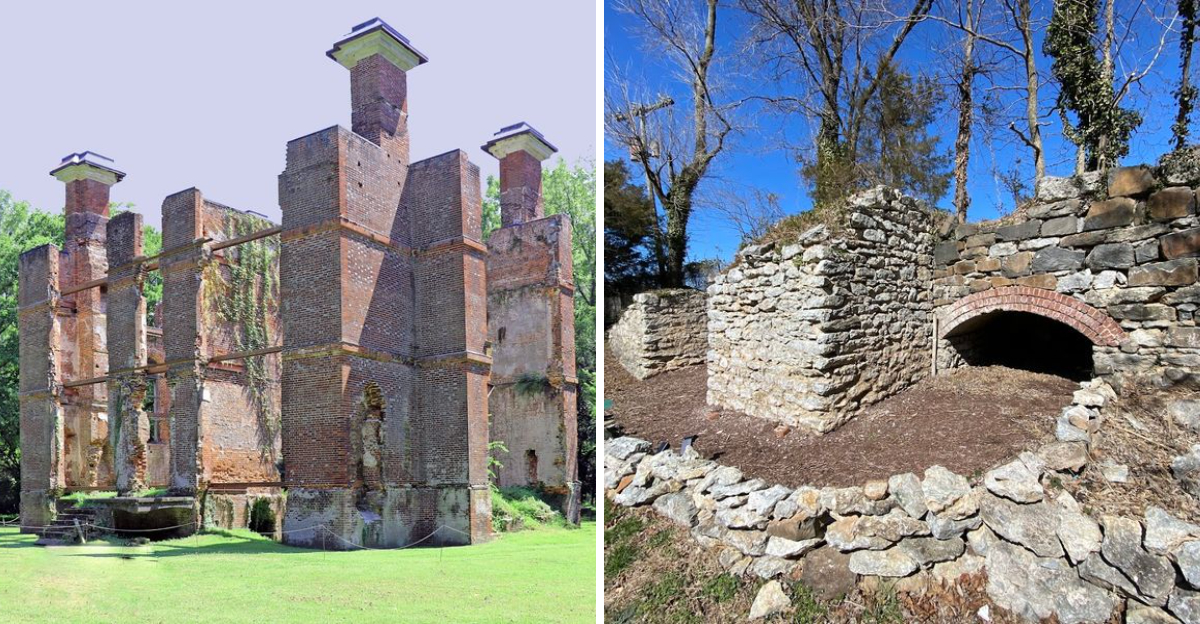
There is a certain kind of beauty in things that are falling apart. A crumbling factory wall covered in ivy.
A rotting barn with the sun streaming through its missing roof. Virginia has plenty of these places, scattered across the state, slowly being reclaimed by nature.
Some were once grand homes, others busy mills or forgotten churches. Now they stand empty, silent, and heartbreakingly beautiful.
Nobody is saving them. No preservation funds, no restoration crews, no plans to turn them into museums or wedding venues.
Just time, weather, and the slow work of decay. I have visited a few of these ruins, and each time I left feeling a mix of wonder and sadness.
Virginia’s history is crumbling. Someone should care.
1. Rosewell Plantation Ruins, Gloucester
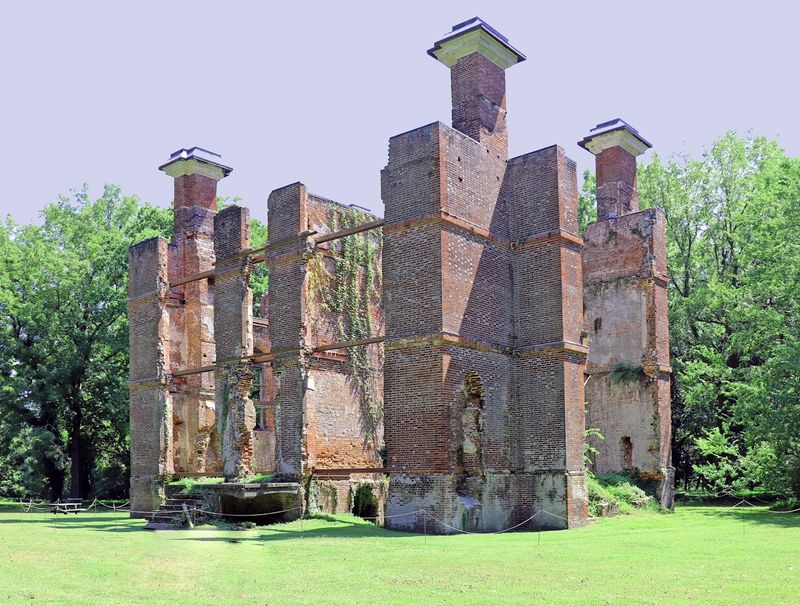
Standing in a field in Gloucester County, the walls of Rosewell Plantation look like something out of a fever dream. These are not modest foundations or crumbled chimneys.
These are colossal, three-story brick walls reaching skyward with the kind of authority that stops you cold the moment you round the bend.
Rosewell was once considered the grandest private home in colonial America. Built by the Page family in the early 1700s, it reportedly served as a place where Thomas Jefferson drafted early versions of the Declaration of Independence.
That alone should have every preservationist in the country camping on the lawn.
The mansion burned in 1916, and what remains is a skeletal masterpiece of colonial craftsmanship. The brickwork is extraordinary, featuring arched windows and intricate details that somehow survived over a century of neglect, weather, and indifference.
Every surface tells a story about the ambition and artistry of an era long gone.
A small nonprofit called the Rosewell Foundation has made genuine efforts to stabilize the walls and maintain access to the site. Their work is admirable, but the scale of what needs saving is enormous.
Funding is tight, awareness is low, and time is not on anyone’s side here.
The ruins are open to the public and sit near the York River, adding a scenic backdrop that makes the whole experience feel cinematic. Address: 5113 Old Rosewell Lane, Gloucester, VA 23061.
Go before the walls decide they have waited long enough.
2. Barboursville Ruins, Barboursville
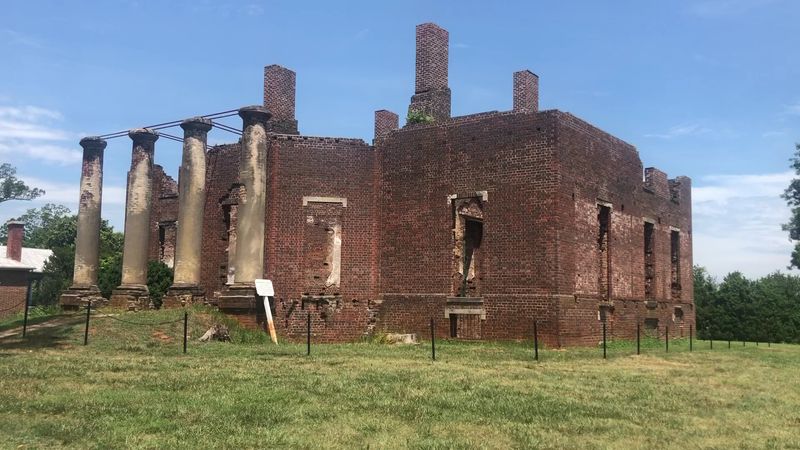
Thomas Jefferson designed a lot of impressive things, and the Barboursville Mansion was absolutely one of them. Built for Virginia Governor James Barbour in the early 1800s, this elegant Jeffersonian structure featured the kind of refined symmetry and classical detailing that made Jefferson’s architectural work legendary across the country.
Then, on Christmas Day in 1884, the mansion burned to the ground. What remained was a hauntingly beautiful brick shell, a ghostly outline of arched windows, crumbling cornices, and roofless rooms open to the sky.
It is the kind of ruin that makes you feel the weight of history pressing down on your chest.
Today, the ruins sit on the grounds of Barboursville Vineyards, which is a genuinely lovely setting that adds an almost surreal quality to the experience. Visitors to the winery can walk among the skeletal walls and stand inside rooms that once hosted some of Virginia’s most powerful political figures.
The juxtaposition of lush vineyards and hollow architecture is striking in a way that photographs barely capture.
Preservation efforts here have been minimal beyond basic stabilization. The structure is not actively crumbling at a dramatic pace, but it is not being restored either.
It exists in a kind of suspended decay, beautiful and melancholy all at once.
Seeing this ruin in person is one of those experiences that stays with you long after you have driven away. Address: 17655 Winery Road, Barboursville, VA 22923.
Jeffersonian design deserves better than slow erasure.
3. Belle Isle Ruins, Richmond
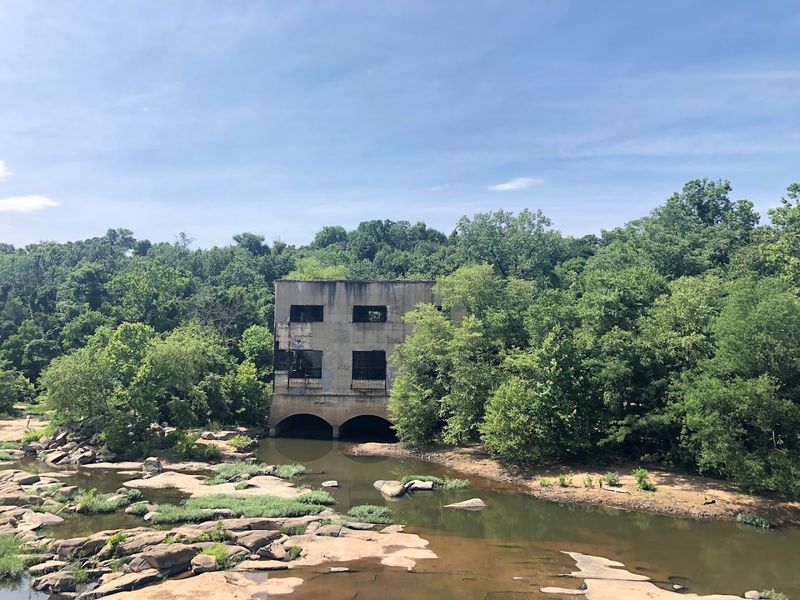
Belle Isle is one of Richmond’s most beloved outdoor spaces, a rocky island in the middle of the James River that draws hikers, cyclists, and sunbathers by the thousands. Most people cross the pedestrian bridge, enjoy the river views, and never realize they are walking through the bones of a brutal and fascinating industrial past.
The ruins scattered across the island include the remnants of a 19th-century nail factory, iron foundry operations, and a Civil War-era prison camp that held thousands of Union soldiers under horrific conditions. The stone foundations and rusted iron machinery that remain are slowly being swallowed by Virginia’s relentless vegetation, which is both beautiful and deeply sobering.
What makes Belle Isle particularly poignant is the contrast between its current recreational vibe and its dark history. People picnic near walls where prisoners once suffered.
Kids climb rocks that once anchored industrial machinery. The layers of history compressed into this small island are staggering, and almost none of it is properly interpreted or protected.
Richmond’s park system maintains the island as a recreational space, but meaningful preservation of the industrial and historical structures has not been a priority. Interpretive signage is minimal, and the ruins themselves continue to deteriorate without serious intervention.
It feels like a missed opportunity of genuinely epic proportions.
Belle Isle is free to access and absolutely worth a long, thoughtful visit. Address: Belle Isle, Richmond, VA 23220.
Walk slowly, look carefully, and pay attention to what the stones are trying to tell you.
4. Idlewild Gothic Mansion, Fredericksburg
Gothic Revival architecture was never meant to be subtle, and Idlewild proves that point even in ruins. Built in 1859, this mansion featured the soaring chimneys, steep gabled rooflines, and pointed arched windows that defined the Gothic Revival style at its most theatrical.
It must have been an absolutely jaw-dropping sight in its prime.
The mansion burned in 2003, which was devastating enough on its own. Then an earthquake in 2011 further destabilized what remained.
Today, the towering chimneys and decaying gables still stand with a kind of defiant drama, but they are surrounded by razor wire and sit directly behind a middle school, which makes the whole situation feel even more surreal.
Idlewild represents a particularly painful kind of architectural loss because it happened so recently. This was not a Civil War-era casualty or a gradual 19th-century decline.
A building that could have been standing today, inhabited and loved, is instead a fenced-off ruin that most Fredericksburg residents drive past without a second glance.
There has been virtually no organized preservation effort here. The property sits in limbo, its dramatic ruins visible but inaccessible, its history largely unacknowledged by the surrounding community.
The contrast between the active middle school next door and the silent, crumbling mansion feels almost accusatory.
You can view the ruins from the road, and the sight of those chimneys against a stormy sky is genuinely unforgettable. Address: Near Idlewild Road, Fredericksburg, VA 22401.
Some ghosts wear Gothic arches.
5. Kiptopeke’s Concrete Fleet, Cape Charles
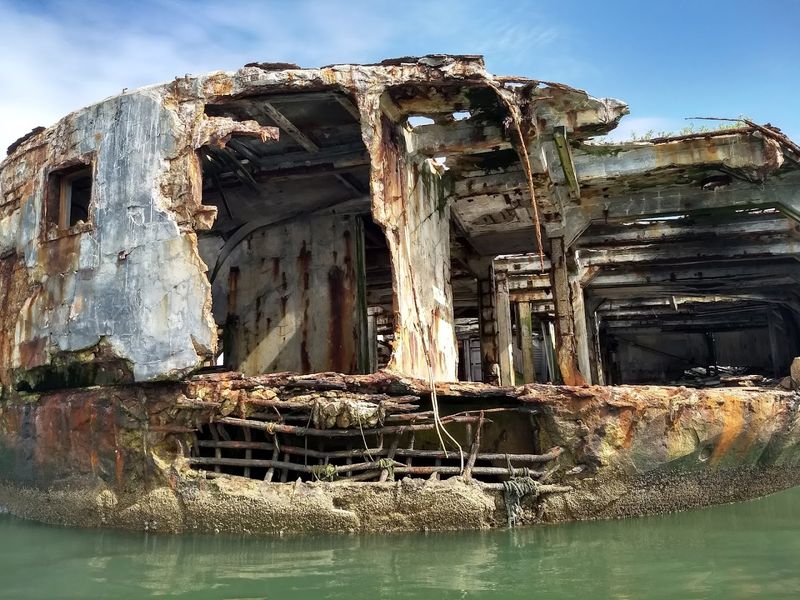
Concrete ships sound like a joke, but the nine vessels forming the breakwater at Kiptopeke State Park are absolutely real, and they are one of the most bizarre and beautiful sights on the entire East Coast. Sunk deliberately after World War II to protect the ferry terminal from Chesapeake Bay’s punishing waves, these hulking grey masses now rise from the water like the ruins of some forgotten maritime civilization.
The ships are enormous, and even in their advanced state of decay, they command serious respect. Waves crash against their crumbling hulls, seabirds nest in every crevice, and the whole scene has an otherworldly quality that makes it feel less like a beach park and more like the set of a post-apocalyptic film.
Anglers love casting from the breakwater, which adds an oddly domestic touch to the spectacle.
What makes this site so compelling is its sheer improbability. Concrete ships were a wartime innovation born of steel shortages, and only a handful were ever built.
That nine of them ended up forming a functional reef off the Virginia coast is the kind of historical accident that deserves far more recognition than it currently receives.
The ships are not being preserved in any meaningful sense. They are slowly dissolving back into the bay, and nobody seems particularly alarmed by this.
As maritime relics go, they are irreplaceable and completely unique to this stretch of coastline.
Kiptopeke State Park is open year-round and the view is free. Address: 3540 Kiptopeke Drive, Cape Charles, VA 23310.
Concrete was never supposed to be this poetic.
6. Liberty Hall Academy Ruins, Lexington
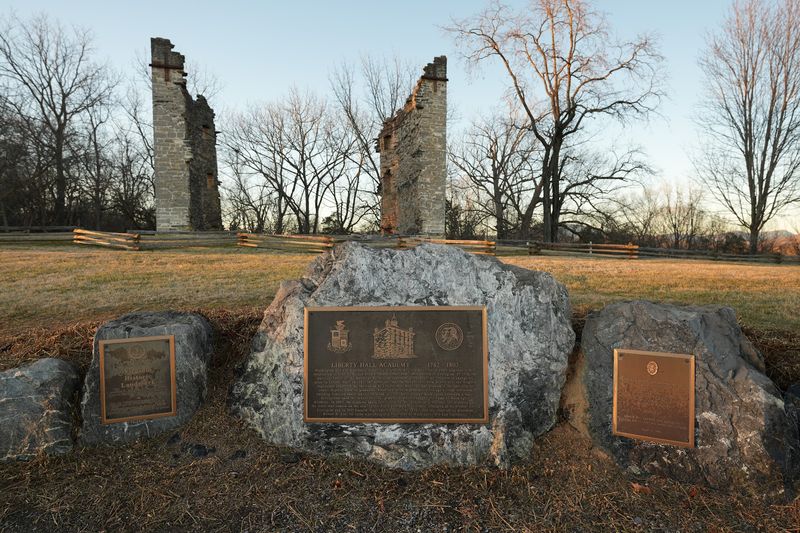
Before Washington and Lee University became one of Virginia’s most distinguished institutions, it was Liberty Hall Academy, a modest but ambitious school that occupied a remarkable limestone building in Lexington. That building burned in 1803, and what remained are ruins so architecturally distinctive that they deserve to be far better known than they are.
The most striking feature of the Liberty Hall ruins is the placement of the corner chimneys. Rather than sitting flush against the walls as was standard practice, these chimneys are positioned at the actual corners of the structure, creating a gaunt, angular silhouette that looks unlike almost anything else in American architectural history.
Standing in the field looking at those stone sentinels, you feel like you have stumbled onto something genuinely rare.
Washington and Lee University maintains the ruins on its campus, and they are accessible to visitors who know to look for them. However, active preservation and interpretation of the site remain limited.
The ruins sit quietly in a field, largely overlooked by the students and faculty who pass nearby every day.
The historical significance here is substantial. Liberty Hall was the predecessor to an institution that shaped American education and culture for generations.
The ruins are a physical link to that early chapter, and losing them entirely would mean losing a tangible connection to the founding era of Virginia higher education.
The site is located on the Washington and Lee campus and is free to visit. Address: Washington and Lee University, Lexington, VA 24450.
Corner chimneys and quiet fields keep the oldest stories alive.
7. Leesburg Lime Company Kiln, Leesburg
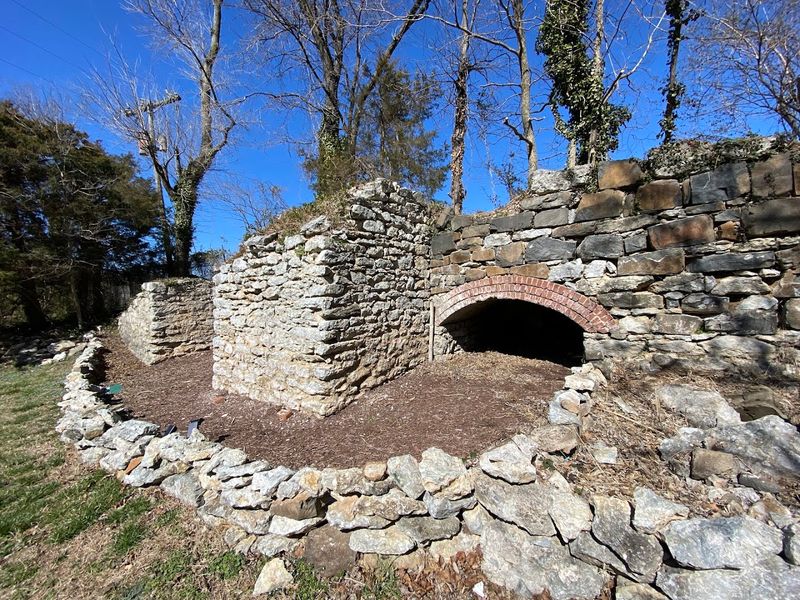
Most people cycling or hiking along the Washington and Old Dominion Trail in Leesburg are focused on the path ahead, the fresh air, and maybe what they packed for lunch. Very few stop to consider the enormous, moss-covered stone structure lurking just off the trail, which is a genuine shame because the Leesburg Lime Company Kiln is one of the most compelling industrial ruins in northern Virginia.
Lime kilns were essential to 19th-century agriculture and construction, producing quicklime used to neutralize acidic soil and make mortar for buildings across the region. This particular kiln was a major operation, and the scale of the remaining structure reflects just how significant lime production was to the local economy.
The stonework is massive, deliberate, and built to last centuries, which is exactly what it has done.
A historical marker nearby acknowledges the kiln’s existence, which is more than most Virginia industrial ruins receive. But acknowledgment and preservation are very different things, and the kiln continues to weather and deteriorate without any serious conservation effort.
The vegetation creeping across its surface is picturesque in a moody, atmospheric way, but it is also slowly doing structural damage.
For urban explorers, history enthusiasts, and anyone who appreciates the beauty of functional industrial architecture, this kiln is a genuine find. It sits in plain sight and yet remains almost invisible to the thousands of trail users who pass it regularly.
The kiln is accessible from the W&OD Trail near the trailhead. Address: Near South King Street, Leesburg, VA 20175.
Industrial history rarely looks this dramatically overgrown.
8. Wash Woods Settlement, Virginia Beach
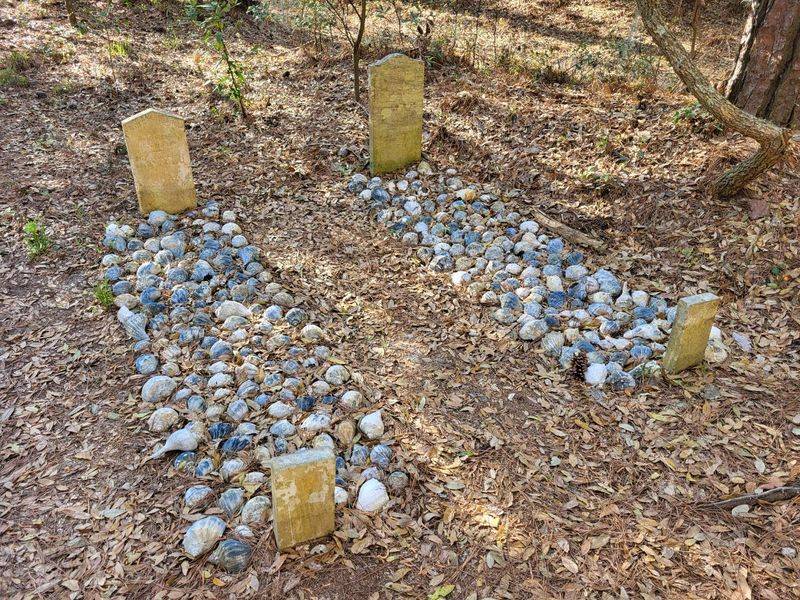
False Cape State Park is already one of the most remote and wild places in all of Virginia, accessible only by boat, bike, or a very long hike through Back Bay National Wildlife Refuge. Getting there requires real commitment, which means most people never make it, and the ruins of Wash Woods Settlement stay blissfully undiscovered by the casual crowd.
The story of Wash Woods is as haunting as the ruins themselves. Founded in the 1800s by survivors of shipwrecks along this treacherous stretch of coastline, the settlement grew into a small but functioning community that thrived for generations in near-total isolation.
The residents built homes, a church, and a cemetery, carving out a life in one of the most remote corners of the state.
By the mid-20th century, the community had dispersed, and the maritime forest began its slow, relentless reclamation of everything the settlers had built. Today, scattered brick foundations, the ghostly remnants of a church, and an overgrown cemetery are all that remain.
The forest presses in from every direction, and the atmosphere is profoundly, beautifully eerie.
No preservation effort of any significance is underway here. The ruins are technically within a state park, which offers some protection from development, but active conservation of the structures themselves is essentially nonexistent.
The settlement is dissolving back into the landscape one season at a time.
The journey to reach Wash Woods is part of the experience. Address: False Cape State Park, Virginia Beach, VA 23456.
Some ghost towns are built by the sea itself.
9. Swannanoa Palace, Afton Mountain
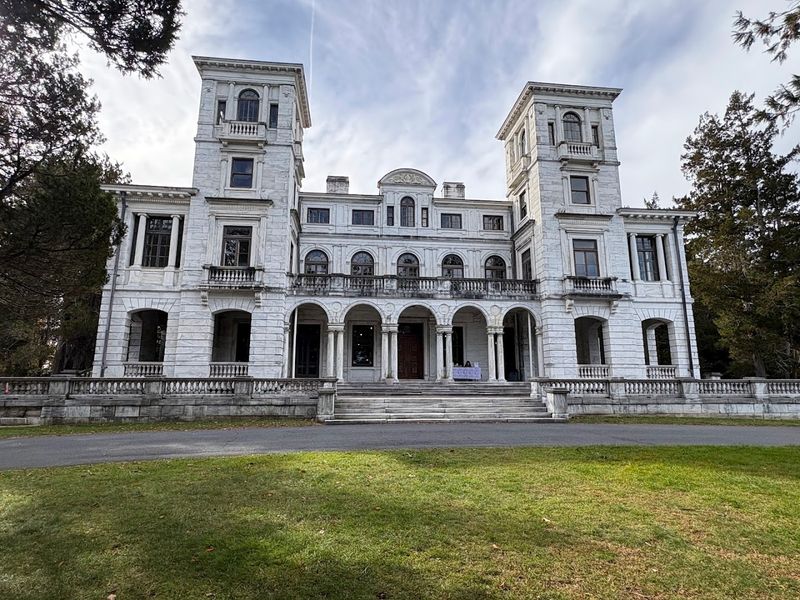
Swannanoa Palace sits atop Afton Mountain like a fever dream of Italian Renaissance ambition dropped into the Blue Ridge Mountains, and the first time you see it, your brain genuinely struggles to process what your eyes are reporting. Completed in 1912, this marble mansion was modeled after Rome’s Villa de Medici and built as a summer home for a railroad magnate who clearly had no interest in doing anything halfway.
The craftsmanship is extraordinary, featuring carved marble columns, ornate ironwork, stained glass, and formal gardens that once made Swannanoa one of the most talked-about private estates on the East Coast. For decades it served various purposes, including as a museum and spiritual retreat, but the building has been in private hands for years and the condition has steadily worsened.
Reports from those who have seen the interior in recent years describe serious deterioration. Water damage, structural concerns, and years of deferred maintenance have taken a visible toll on a building that was designed to project permanence and grandeur.
The contrast between its architectural ambition and its current condition is genuinely painful to witness.
The palace is privately owned, which complicates any public preservation effort. Without a well-funded buyer or an institutional partner willing to take on the enormous cost of restoration, Swannanoa’s future looks uncertain at best and bleak at worst.
The estate is visible from Afton Mountain and occasionally opens for limited tours. Address: 1 Swannanoa Rd, Waynesboro, VA 22980.
Marble does not forgive neglect, no matter how beautiful the mountain view.
10. Lorton Prison and Laurel Hill House, Lorton
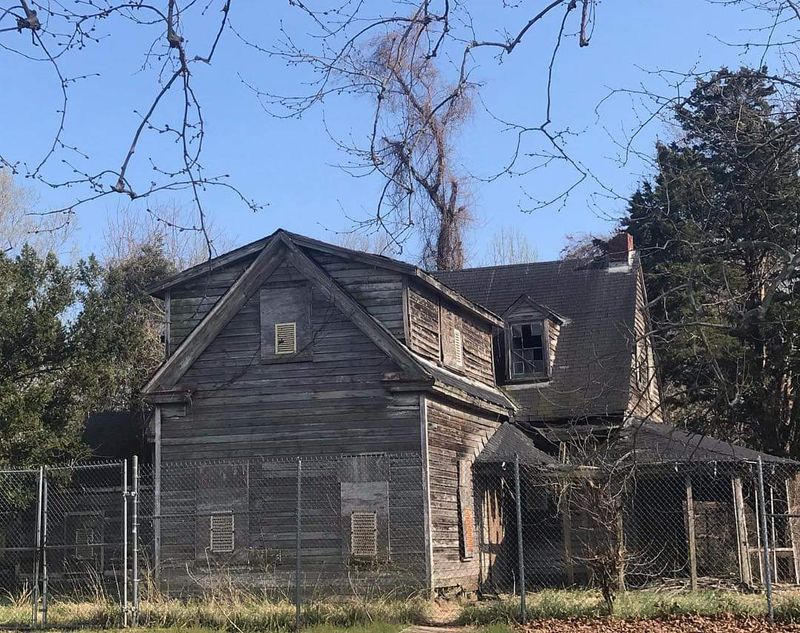
Few places in Virginia pack as much layered history into a single location as the Lorton complex, where a Revolutionary War hero’s colonial home became entangled with a sprawling prison campus that operated for most of the 20th century. The result is a site where colonial American history and the history of incarceration collide in ways that are complicated, fascinating, and deeply underappreciated.
The Laurel Hill House, standing for over two centuries, was once the home of a prominent figure in the American Revolution. It later found itself surrounded by the buildings and infrastructure of the Lorton Reformatory, which opened in the early 1900s as a progressive experiment in prison reform.
Both chapters of this property’s history are significant, and both are now deteriorating together in the dense Virginia woods.
Many of the prison-era structures, including dormitory buildings, workshops, and administrative facilities, are in various stages of decay. The colonial house fares little better.
Trees have grown through rooflines, walls have buckled, and the entire complex has a quality of abandonment that feels almost deliberate in its completeness.
Some portions of the Lorton property have been redeveloped into an arts and community center, which is genuinely positive. But the historically significant structures deeper in the complex remain largely untouched, slowly surrendering to the elements without any organized intervention.
The area is partially accessible to the public through Occoquan Regional Park. Address: 9518 Workhouse Way, Lorton, VA 22079.
Two centuries of Virginia history deserve more than a slow disappearance into the trees.
