If you’re traveling through Pennsylvania’s Amish Country – perhaps along the winding roads of Lancaster County or the backroads near Intercourse and Bird-in-Hand – it’s easy to feel like you’ve stepped into another century. Horse-drawn buggies clip-clop down narrow lanes, fields stretch out in neat rows, and handmade signs advertise fresh pies and furniture. But behind the postcard-perfect image lies a world that’s far more nuanced than most visitors realize. The Amish are not frozen in time – they’re a deeply rooted yet adaptable community, balancing faith, practicality, and modern challenges in fascinating ways.
Misunderstood Rumspringa
Rumspringa, often dramatized, is more about choice than rebellion. It’s a time for Amish youth to explore the world beyond their community.
For most, it’s a period of socializing and reflection, deciding on their future commitment to the Amish faith. Far from wild, it’s a gentle exploration.
This rite of passage is a thoughtful process, allowing young Amish to make informed, authentic decisions.
Modern Medicine Acceptance
Many imagine the Amish as entirely self-reliant, but when health is at stake, practicality prevails. They frequently visit local clinics and hospitals, blending modern medicine with traditional remedies.
Amish families build relationships with non-Amish doctors, valuing their expertise while respecting their own beliefs. This collaboration showcases the community’s balance between faith and the necessity of good health.
Despite traditional appearances, their adaptability in health matters reflects a community willing to embrace change when it serves its members.
Battery-Powered Homes
While public electricity is absent, Amish homes aren’t devoid of modern conveniences. Many households employ generators, batteries, and propane to power essential devices.
From lighting to refrigeration, these tools facilitate daily life without breaching religious tenets. On hot days, a discreet fan might hum, providing comfort without compromising beliefs.
This method of integrating technology paints a picture of a community adept at navigating modernity while maintaining core values.
Technology’s Selective Embrace
Technology in Amish life is a patchwork, not a blanket ban. Each community’s Ordnung dictates its use, leading to diverse practices across Pennsylvania.
Some allow cell phones for business, recognizing the necessity in today’s world, while others strictly limit such connectivity. This selective adoption reflects a nuanced understanding of modern needs.
Thus, the relationship with technology is not black and white but a spectrum of choices tailored to each community’s values.
Diverse Occupations
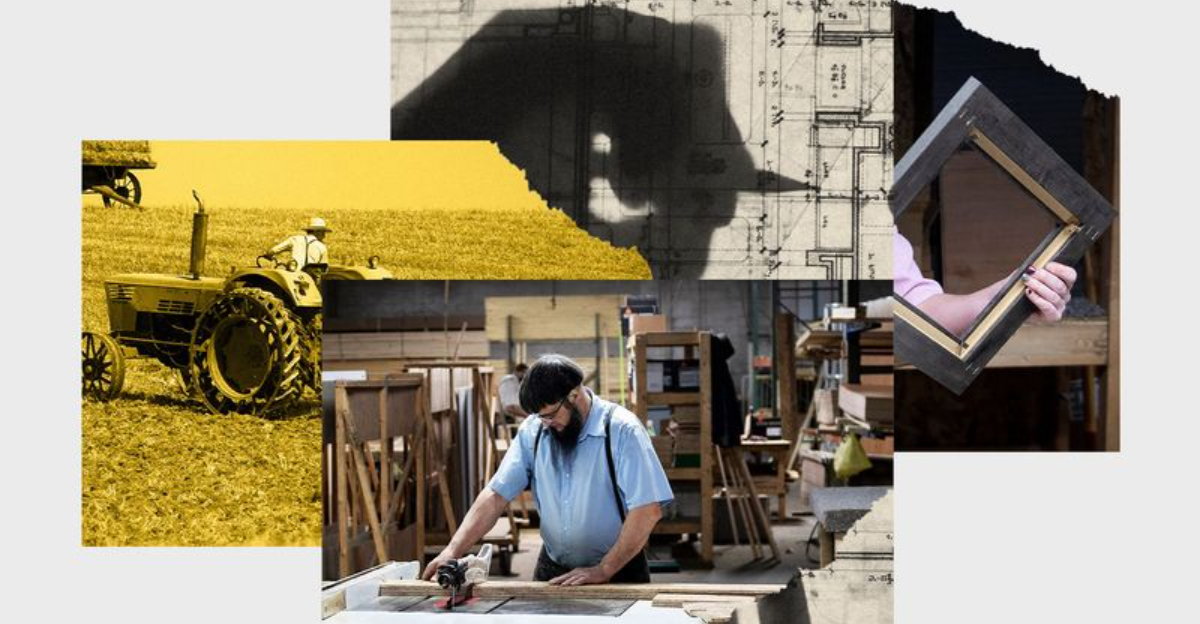
Farming is an iconic image, yet many Amish now venture into diverse vocations. Land costs have driven families into woodworking, baking, and construction.
These enterprises showcase remarkable craftsmanship and a thriving entrepreneurial spirit. Such ventures allow the Amish to sustain their communities amidst economic pressures.
The evolution from agriculture to varied trades illustrates adaptability and innovation, ensuring their cultural and economic survival.
Banking and Debit Cards
Surprisingly, Amish commerce isn’t cash-only. Many businesses embrace debit and credit cards, blending tradition with modern financial practices.
This pragmatic approach aids in maintaining economic viability, especially in areas frequented by tourists. Yet, cash remains a preferred method, reflecting a cautious engagement with technology.
The use of banks and cards reveals a practical side of Amish life, balancing modernity with tradition.
Mirrors over Photos
Mirrors are common in Amish homes, seen as tools for self-grooming, not vanity. It’s a subtle distinction that allows personal care without pride.
Conversely, photographs are largely avoided, perceived as a form of self-exaltation. This perspective emphasizes humility, a cornerstone of Amish values.
The choice reflects a nuanced approach to self-image, prioritizing inner character over external representation.
Varied Diet
There’s no monolithic Amish diet. While they cherish Pennsylvania Dutch dishes, they also enjoy dining at local eateries.
The lack of strict dietary rules leads to a culinary openness that surprises many outsiders. Meals are hearty, reflecting the agricultural roots yet varied enough to include modern flavors.
This culinary diversity exemplifies an openness to change, while still valuing tradition.
Tax Contributions
Amish citizens contribute to society in overlooked ways, particularly through taxes. They pay property, income, and sales taxes like any other citizens.
Their exemption from Social Security stems from self-sufficiency, relying on the community for support instead. This balance of autonomy and contribution often surprises outsiders.
Their participation in the tax system underscores civic responsibility, often misunderstood by visitors.
Language Nuances
The term “Pennsylvania Dutch” is misleading; it’s a German dialect. This linguistic nuance reveals a rich heritage and cultural depth.
Amish often speak Pennsylvania Dutch at home, High German in worship, and English in commerce. It’s a linguistic blend that reflects historical roots and modern needs.
This tri-lingual ability is a testament to their adaptability, connecting them with both past and present.
Dear Reader: This page may contain affiliate links which may earn a commission if you click through and make a purchase. Our independent journalism is not influenced by any advertiser or commercial initiative unless it is clearly marked as sponsored content. As travel products change, please be sure to reconfirm all details and stay up to date with current events to ensure a safe and successful trip.
