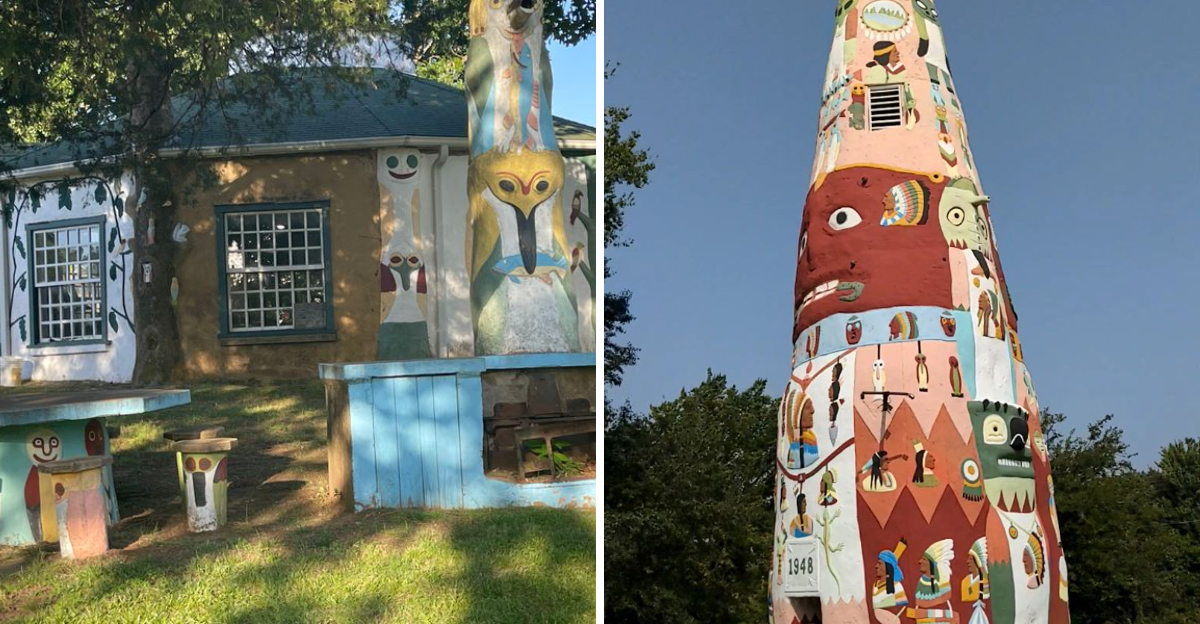
Ed Galloway’s Totem Pole Park is one of Oklahoma’s most unexpected treasures.
Tucked away in rural countryside, it showcases towering folk art creations bursting with color and character.
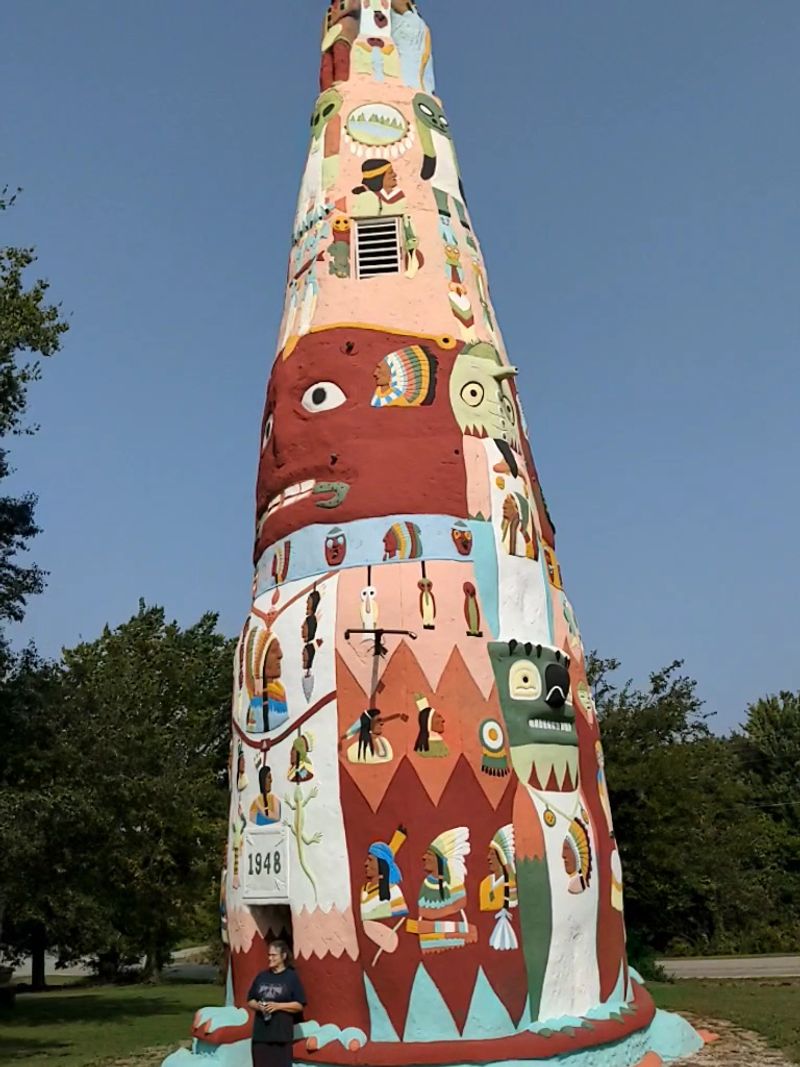
The centerpiece is a massive concrete totem pole, surrounded by whimsical carvings and vibrant designs.
Visitors come not just for the art, but for the quirky history and the sense of stepping into a storybook world.
It’s a stop that proves rural Oklahoma holds surprises worth exploring.
How to find the park and what to expect on arrival
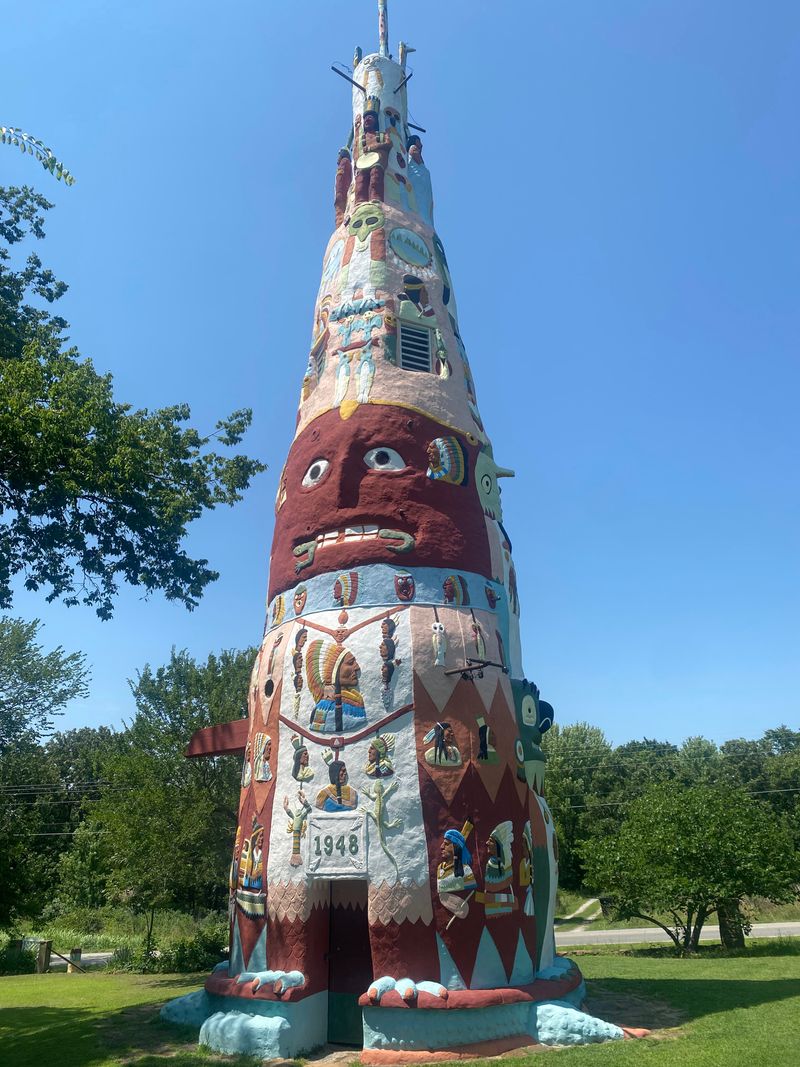
Ed Galloway’s Totem Pole Park sits at 21300 OK-28 A, Chelsea, OK 74016, a short scenic detour from historic Route 66, and it is easy to spot once the tallest totem breaks the tree line.
You pull into a small gravel lot, step out into big Oklahoma skies, and notice bright concrete figures wrapping the lawn like a handmade museum without walls.
There is no gatehouse feeling here, only a welcoming yard with paths that wander between sculpted animals, faces, and symbols that invite slow, curious walks.
First impressions are bold colors and textured surfaces that show brushmarks and hand grooves, and those details make the space feel personal, almost like a backyard project scaled to legend.
Wayfinding signs point toward the Fiddle House museum, the gift shop, and the central totem, so you never feel lost even on a first visit.
Hours typically run 10 AM to 5 PM most days and 1 PM to 5 PM on Sundays, but it is smart to check the posted schedule or the official website before you go.
Volunteers often answer questions about restoration and history, and they are generous with stories if you ask kindly.
Benches sit in pockets of shade and let you pause while kids trace shapes on the concrete with eyes wide and lively.
Expect an unhurried rhythm that matches a rural Oklahoma pace, where photographs are easy to frame and wide angles capture the entire scene.
The atmosphere blends roadside whimsy with museum care, and that combination turns a quick stop into a full morning.
Bring comfortable shoes for short walks, and carry water in warm months because the sun can be direct in the open areas.
You leave with more than pictures, because the park reveals its heart through handmade detail that stays in your memory longer than you expect.
The towering main totem and its layered symbolism
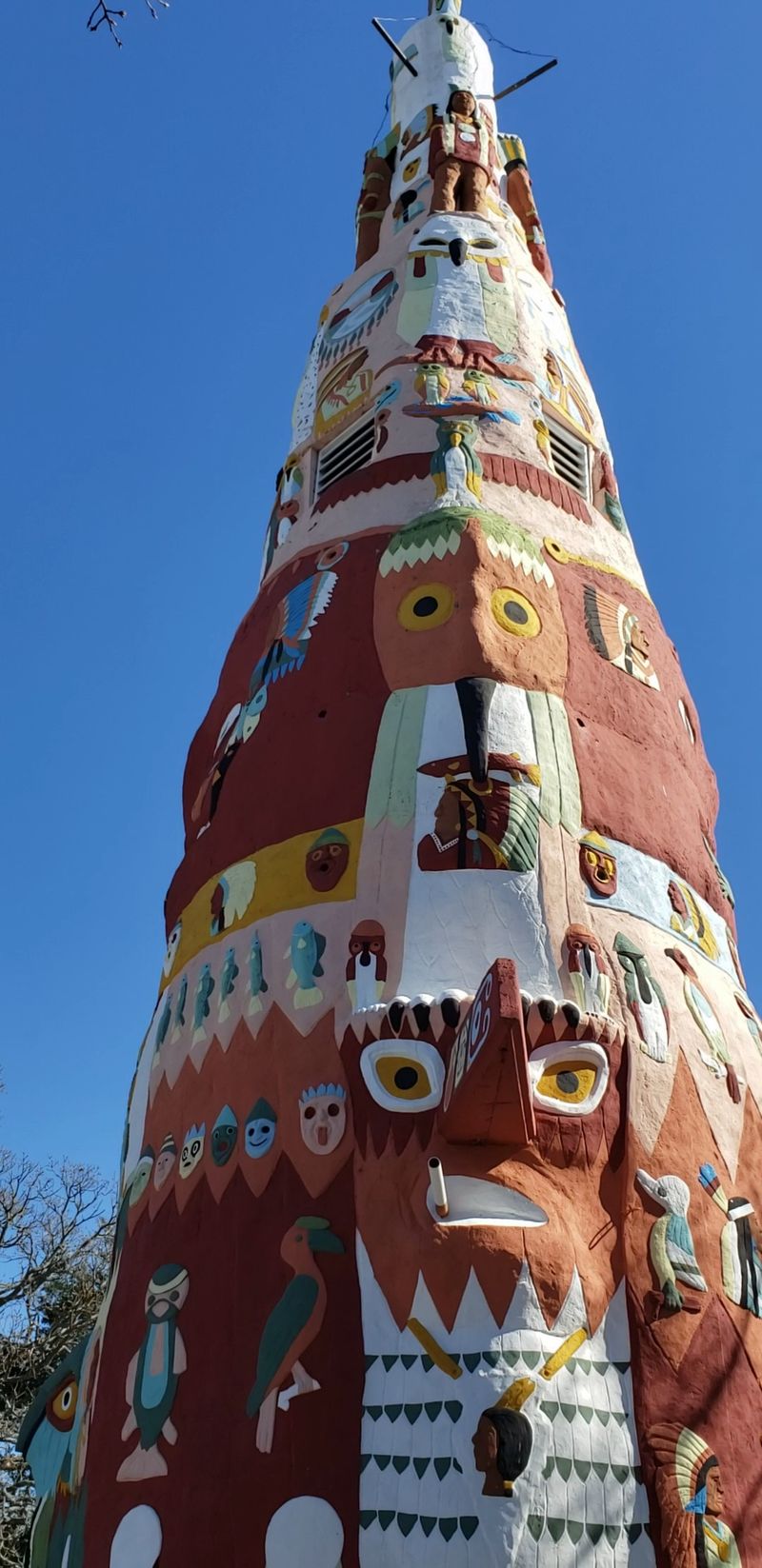
The centerpiece totem rises like a storybook pillar, with stacked faces and animals that gaze in different directions and create a moving rhythm as you circle the base.
The concrete skin, painted in reds, blues, and creams, carries motifs that reference lore, personal meanings, and a lifetime of tinkering by a single maker.
Standing directly under the overhang, you feel how textures shift from smooth patches to pebble rough ridges that catch light in surprising ways.
Photographs rarely capture the layered depth, because each tier holds separate scenes that demand slow attention and a steady step back.
The scale invites comparisons to roadside giants found across Oklahoma, yet this tower feels intimate because it was poured and carved by hand on site.
Interpretive signs explain restoration work and place the finished date in the early 1960s, which helps you map the historical arc against Route 66 travel culture.
Details like turtles, owls, and mask like visages carry symbolic readings that vary by viewer, and docents encourage open interpretation rather than a single answer.
Kids often count faces while adults trace lines with their eyes, and both find new shapes on a second loop around the base.
Morning light softens contrast for photos, while late afternoon gives warmer tones that make the painted lines glow.
The structure becomes a focal point for picnics and quiet rests, because the lawn forms a natural amphitheater around the pillar.
You can view the totem from many angles without barriers, though respect for the art means keeping hands off fragile edges.
With patience and calm steps, the main totem turns from a roadside stop into a layered narrative that grows richer the longer you look.
The Fiddle House museum and handmade instruments
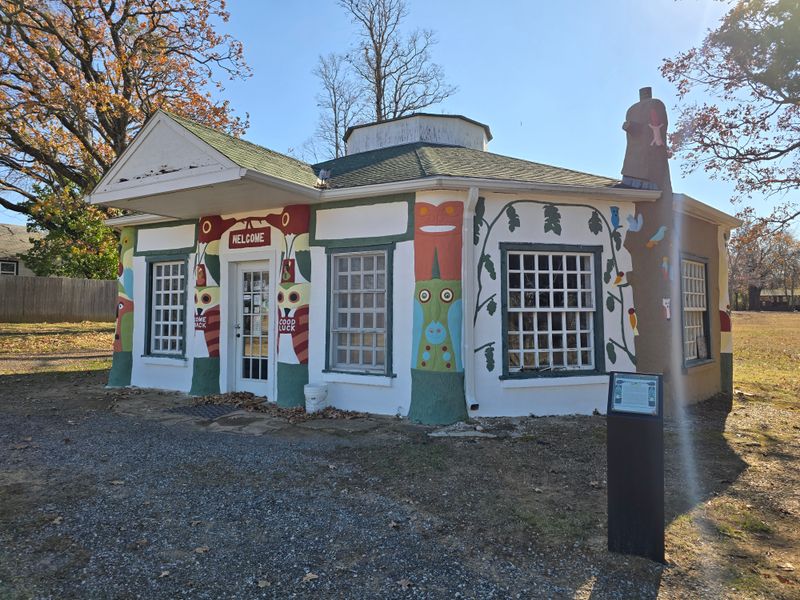
The Fiddle House sits on the park grounds and holds a trove of handmade instruments, carved wall art, and historical panels that frame the life of the builder.
The room feels warm and lived in, with wood tones, glass cases, and carefully labeled displays that make it easy to follow the story.
Many visitors come for the totems and stay longer because the fiddles reveal patience, skill, and a love for craft that ties music to sculpture.
Exhibits often include portraits, building tools, and letter excerpts that help you picture long evenings spent carving in steady rhythms.
You notice repeated motifs in the scrolls and bridges, where animal forms echo shapes outside on the concrete poles.
Docents point out how the maker taught woodworking to children, and those lessons continue in spirit through workshops when schedules permit.
The collection layout favors slow movement and clear sight lines, which helps families explore without crowding or confusion.
Dim reflections in the cases can make photography tricky, so a careful angle and a gentle step back usually help.
Quiet background sound lets you read without strain, and the lighting highlights grain patterns that are easy to miss at a glance.
Plan at least twenty minutes for the museum, though many guests linger longer when a volunteer shares context.
Seasonal displays sometimes rotate, so repeat visits offer new details that keep the experience fresh.
You leave the Fiddle House with a deeper sense of continuity, where music, tools, and folk art meet under one Oklahoma roof.
Hours, admission, and practical planning tips
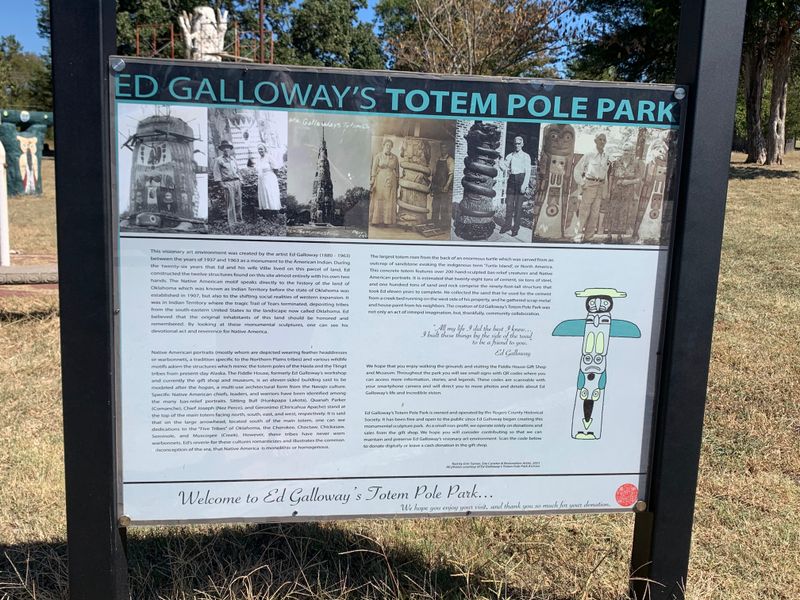
Planning works best when you check current hours, which are generally 10 AM to 5 PM Monday through Saturday and 1 PM to 5 PM on Sunday.
The park is a historical site operated with community support, so modest donations help maintain paint, signage, and preservation projects.
Phone lines and the website provide updates on closures, special events, and volunteer schedules that might affect your visit window.
Morning arrivals tend to be quieter, while mid afternoon brings small surges from road trippers crossing this slice of Oklahoma.
Parking is free and straightforward, with a gravel lot that keeps turnaround simple even for larger vehicles.
Restrooms and shade spots sit near the museum building, and benches make good meeting points for families.
Wear comfortable shoes for lawn walking and consider sunscreen, because open areas can feel bright on clear days.
Photography is welcomed in outdoor spaces and permitted in many indoor areas, but always ask a volunteer if signs list restrictions.
Service animals are typically allowed under standard guidelines, and common courtesy keeps pathways easy for other guests.
If thunderstorms roll through, staff may pause outdoor activities, so have a flexible plan and watch the sky.
Cell reception is generally fine, although coverage can vary by carrier in rural parts of Oklahoma.
With a light bag, a water bottle, and time to wander, you will find the park comfortable, friendly, and easy to enjoy.
A brief history of Ed Galloway and his vision
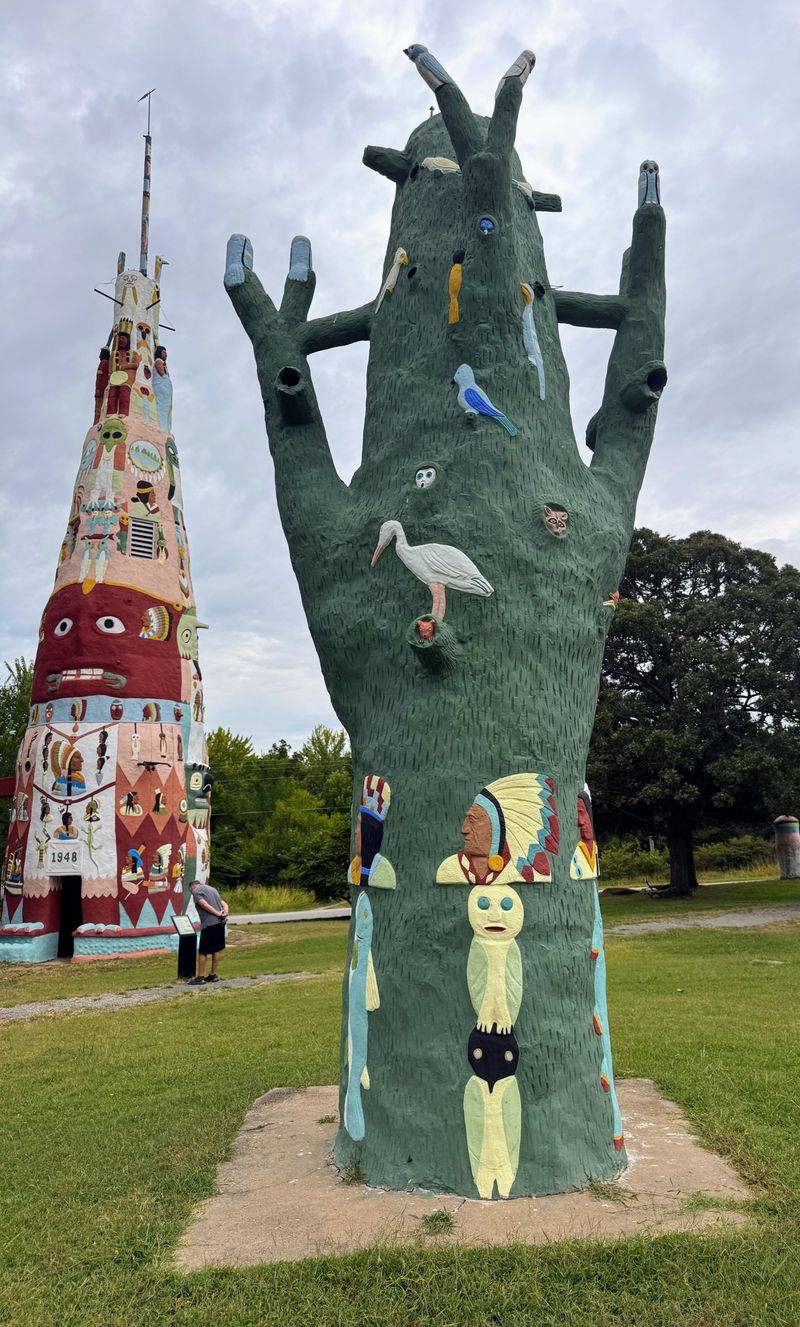
Ed Galloway dedicated decades to building a personal landscape of concrete art, and his steady work culminated in a park that finished in the early 1960s.
He trained as a woodworker and teacher, and that background shows in the precise patterns that repeat across poles and carved panels.
Stories in the museum describe long hours of mixing concrete, shaping wet surfaces, and painting details until figures emerged with quiet dignity.
His approach balanced utility and imagination, where practical forms like benches took on symbolic features that fit the larger narrative.
Travelers on Route 66 began stopping, then spreading the word, and the site evolved into a beloved Oklahoma waypoint for curious drivers.
Volunteers and local groups later rallied to preserve the art, stabilize aging sections, and protect the setting for future generations.
Archival photos show stages of construction and reveal trial and error, which brings humanity to the monumental results seen today.
Many visitors recognize echoes of folk traditions from different regions, yet the overall style remains personal and distinct.
Interpretive panels emphasize that symbolism is open, and they invite you to draw meaning from animals, masks, and geometric bands.
The vision reads as a lifetime conversation with materials, community, and the landscape of northeastern Oklahoma.
Because the work was built by hand on site, its scale surprises those who expect a small roadside novelty.
The history feels intimate and accessible, which is why the park inspires repeat visits and thoughtful conversations long after you leave.
Accessibility and family friendly features
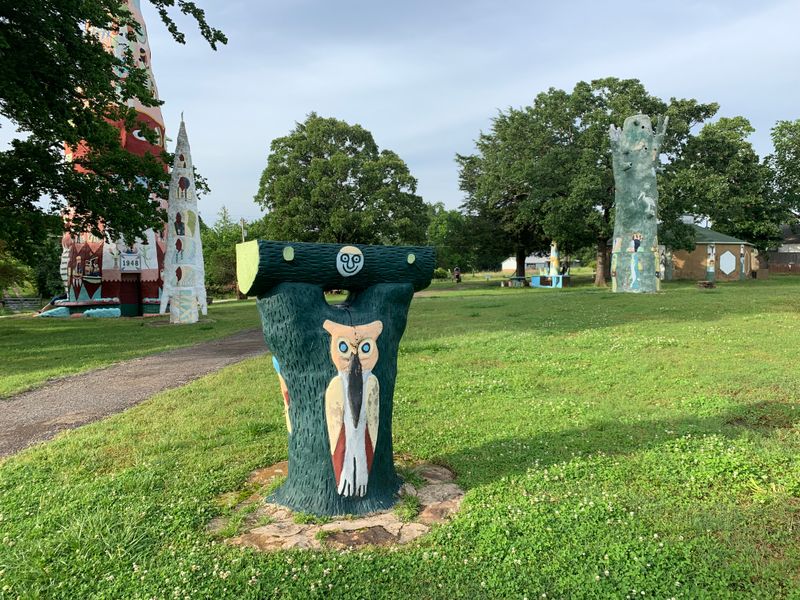
Families find easygoing pathways across the lawn, with gently sloped areas that make strollers and assisted mobility devices manageable in fair weather.
Benches and shade trees offer regular rest points, and small interpretive signs sit at readable heights for kids and adults.
The museum doorways and main entries are straightforward, though assistance may help on soft ground after heavy rain.
Staff and volunteers answer questions with care and can suggest the smoothest routes between the central totem and the Fiddle House.
Open sight lines help parents keep track of kids while still enjoying the art at their own pace.
Rest areas near the buildings let you regroup, refill water, and plan a second loop for favorite corners.
Photographs are easier to take when crowds are light, so early hours often suit families who prefer calm spaces.
Wayfinding markers use plain language and clear arrows that reduce confusion and make navigation simple.
Educational panels use concise text that sparks curiosity without overwhelming new readers.
Seasonal weather in Oklahoma can shift quickly, so layers and hats keep everyone comfortable when breezes pick up.
Group visits from schools sometimes appear, and the grounds absorb them well because movement naturally spreads out.
Overall comfort comes from welcoming staff, good pacing, and art that meets visitors at eye level with friendly charm.
Photography tips and the best light
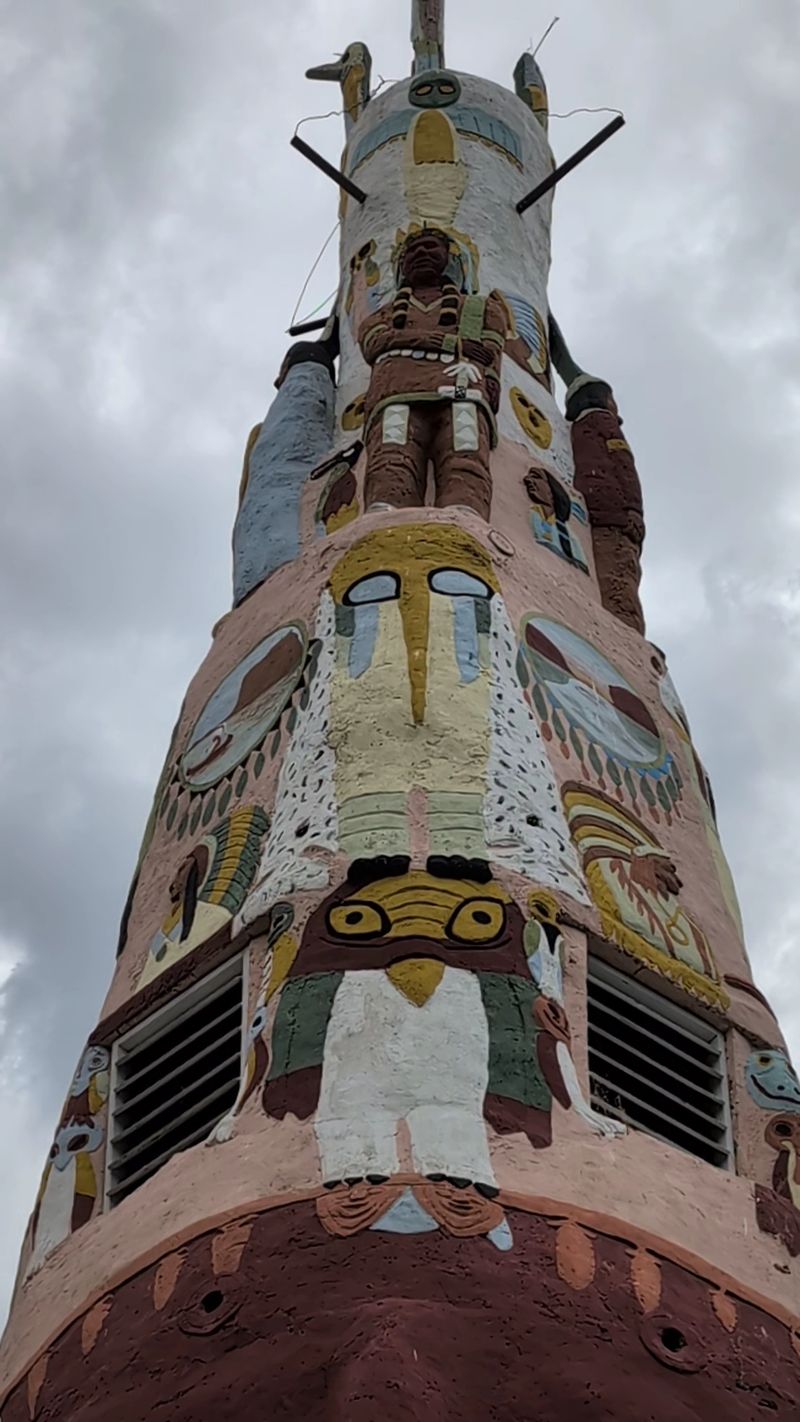
Photographers thrive here because textures, color blocks, and repeating faces create strong compositions with very little effort.
Golden hour brings soft edges that flatter the concrete surfaces, while midday works for true color documentation with crisp focus.
A circular route around the main totem yields varied angles, and each step shifts how shapes align against the sky.
Look for shadow play under overhangs, where lines carve depth and make faces appear more sculptural than in flat light.
Bring a wide lens for context and a short telephoto for details, then switch positions rather than stepping too close to fragile features.
Tripods are generally welcome outdoors, but remain mindful of pathways and other guests when setting legs on the lawn.
Cloud cover works like a softbox and smooths highlights that can otherwise clip in bright Oklahoma sun.
The museum interior calls for gentle ISO increases and steady hands, because reflections favor careful alignment away from glass glare.
Consider bracketing a few frames if you plan high contrast edits later, since the sculptures pop with subtle dodging.
Horizons stay clean when you kneel slightly, which helps separate figures from background tree lines.
Always avoid climbing, leaning, or touching artwork, and use composition choices to get drama rather than risky proximity.
Patience pays in every corner, and small adjustments in distance often reveal new rhythms that feel like a quiet discovery.
Responsible visiting and preservation efforts
The park thrives because visitors treat the art gently and support the preservation work that keeps colors bright and surfaces sound.
Respectful choices include staying on paths, keeping hands off painted areas, and giving any active restoration zones a wide berth.
Donations at the museum or gift shop help fund materials, equipment, and professional consultations for conservation.
Volunteers often organize touch up days, and staff coordinate efforts so maintenance aligns with weather and material needs.
Interpretive signs explain why certain paints, primers, and sealers are chosen, which deepens appreciation for the craft behind care.
Photography etiquette matters, so step aside for others and avoid blocking narrow spots when framing a shot.
Group leaders can model good behavior by setting expectations before students or teams spread out across the lawn.
Trash cans near the buildings make clean up simple, and packing out your own water bottles helps during busy weekends.
When storms approach, closing access to certain areas prevents damage, and patience ensures preservation for future visits.
Questions are welcome at the front desk, where staff share updates on grants, partnerships, and current priorities.
Responsible choices ripple beyond one trip and support the broader network of folk art sites across Oklahoma.
With care and small acts, the park remains vibrant, safe, and ready to inspire travelers for many seasons to come.
Nearby Route 66 context and scenic drives
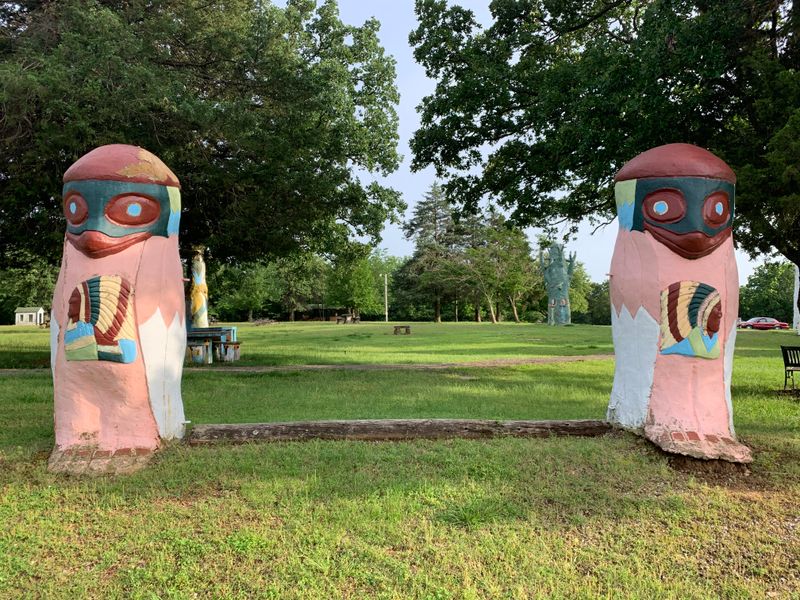
The park sits a short drive from classic Route 66 corridors, which makes it an easy side quest on a longer road trip.
Scenic stretches roll past fields, ponds, and stands of trees, and the rhythm of the road complements the quiet pace on site.
Waypoints nearby include small towns with murals, farm stands, and antique shops that invite unhurried browsing.
Because distances are short, you can cluster a morning at the park with an afternoon of leisurely driving and photo stops.
Look for interpretive pullouts along older alignments where historic markers tell stories about travel in mid century Oklahoma.
Birders enjoy the open views and predictable perches that make roadside photography forgiving for beginners.
Weather can swing from bright sun to quick showers, so a light jacket and a flexible plan keep the day smooth.
Traffic remains relaxed compared to urban routes, and turnouts give safe space for scenic pauses or orientation breaks.
Roadside services cluster in nearby towns, and a quick map check helps you time fuel and rest stops without stress.
Sunset drives deliver pastel horizons that amplify the park colors if you swing back for a final look.
The broader loop frames the totems as part of a living travel tradition, not just a single stop on a checklist.
This context deepens appreciation, and it shows how folk art and open roads intertwine across Oklahoma history.
Events, tours, and how to maximize your visit
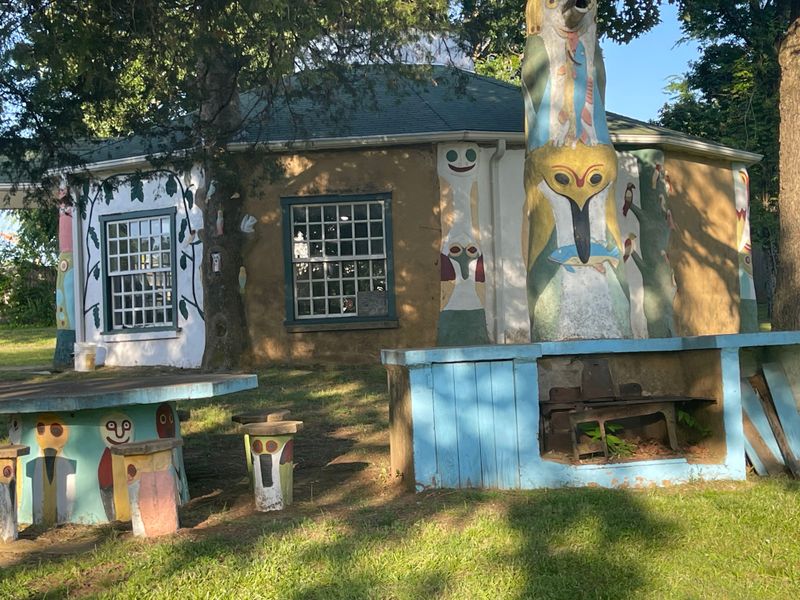
Small tours run when volunteers are available, and they add color to the visit by weaving timelines and maker stories into a relaxed walk.
Guides highlight motifs you might overlook, then point you toward the museum so the narrative completes with tools and photos.
Self guided visits work well too, and printed brochures or posted maps keep the route clear even on busy weekends.
Arrival near opening time gives mellow light and fewer crowds, which helps photographers and families find their flow.
Plan a loop that starts at the main totem, crosses to smaller poles, and ends with the Fiddle House for a calm finish indoors.
Breaks on shaded benches reset energy and let kids recharge while adults review panels or adjust camera settings.
Special programs occasionally appear on the calendar, so checking ahead can add a workshop or talk to the day.
Gift shop purchases support operations, and they also serve as lightweight souvenirs that travel easily in a day bag.
Friendly conversation with staff often reveals fun details, including restoration milestones and upcoming projects.
Set a flexible timeline that leaves room for surprises, because new angles and patterns reveal themselves with slow looking.
End with a final slow circle around the main tower, since late light can transform colors and shadows in striking ways.
Leave a kind note in the guest book, and your visit becomes part of the living record that keeps this Oklahoma gem thriving.
Dear Reader: This page may contain affiliate links which may earn a commission if you click through and make a purchase. Our independent journalism is not influenced by any advertiser or commercial initiative unless it is clearly marked as sponsored content. As travel products change, please be sure to reconfirm all details and stay up to date with current events to ensure a safe and successful trip.
