I’ve spent years exploring Indiana’s back roads and small towns, chasing places that never make the usual tourist lists. More than once, a wrong turn down a quiet country road has led to something better than what I planned to see.
What I’ve discovered is that some of the state’s most fascinating attractions are completely free and barely mentioned in guidebooks. They’re the kinds of spots locals shrug about like they’re no big deal.
From bizarre roadside oddities that make you hit the brakes to peaceful natural preserves where it’s just you and the breeze, Indiana hides treasures in plain sight. These aren’t flashy tourist traps with gift shops and admission fees.
They’re genuine slices of Hoosier culture, history, and scenery that reward anyone willing to wander a little.
1. World’s Largest Ball of Paint (Alexandria)
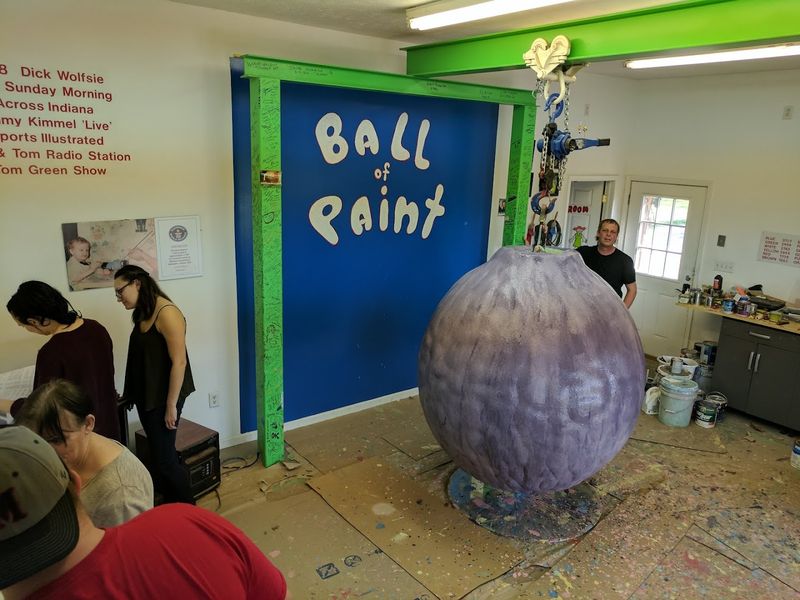
Mike Carmichael started painting a baseball in 1977, and he never stopped. What began as a simple hobby has transformed into a genuine roadside marvel weighing over 5,000 pounds and standing taller than most adults.
The ball sits in a modest barn at 10696 N 200 W in Alexandria, where Mike and his wife Glenda welcome visitors by appointment only.
Each layer tells a story, with contributions from visitors spanning decades and continents. You can add your own coat of paint during your visit, becoming part of this ever-growing artwork.
The Carmichaels keep meticulous records of every layer, noting who applied it and when.
Calling ahead at (765) 724-4088 is essential since this attraction lives on private property. Mike enjoys sharing the ball’s history and the stories behind memorable paint sessions.
Some visitors return multiple times over the years, adding new layers and checking on their previous contributions.
The weight alone makes this ball remarkable, but the human connection makes it unforgettable. Families travel from across the country specifically to add their mark.
The barn itself feels like stepping into someone’s personal museum, filled with photographs and documentation of the ball’s growth. Plan for about 30 minutes to fully appreciate this quirky piece of Indiana history and contribute your own brushstroke to an ongoing masterpiece.
2. Twisted House at Indianapolis Art Center
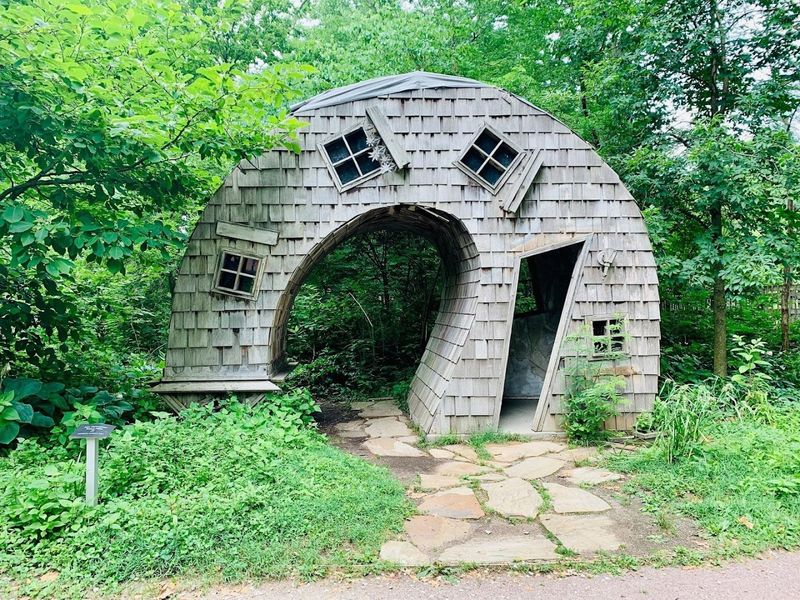
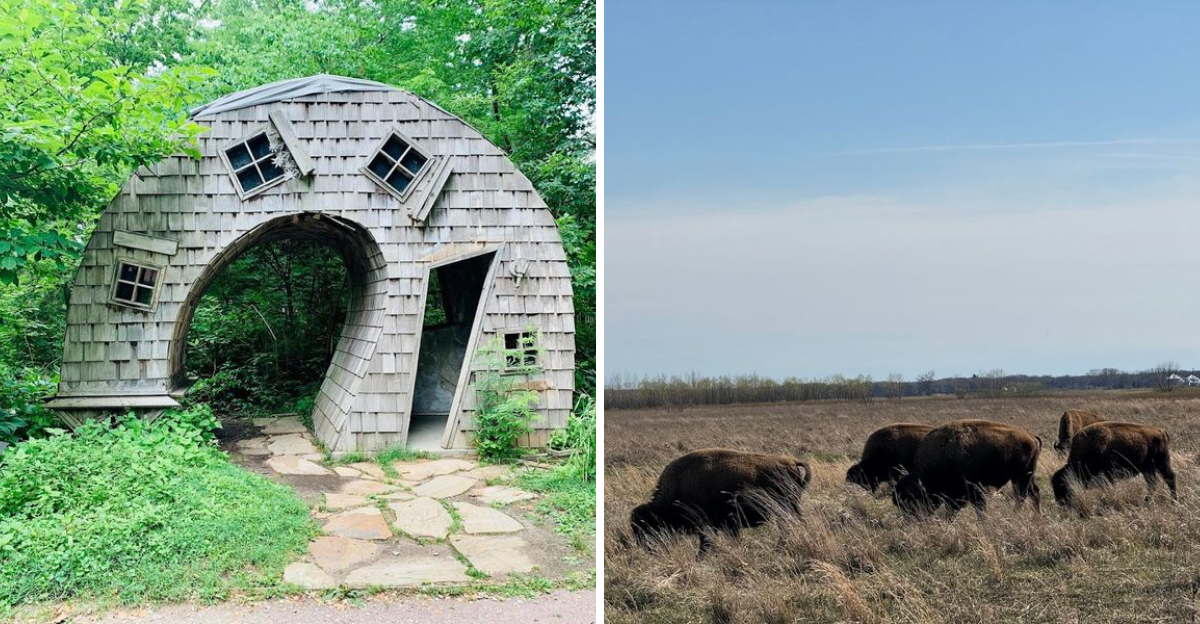
Walking through the ARTSPARK behind the Indianapolis Art Center at 820 E 67th St, you’ll encounter a house that defies gravity and logic. This sculptural installation leans at an impossible angle, creating perfect photo opportunities and challenging your sense of balance just by looking at it.
Kids absolutely love climbing around it, while adults marvel at the engineering.
The outdoor sculpture park surrounding Twisted House features rotating installations from local and regional artists. You might find metal sculptures, interactive pieces, or thought-provoking installations during any given visit.
The park encourages touching and exploring, unlike traditional galleries where everything stays behind velvet ropes.
Broad Ripple Village sits just minutes away, offering plenty of dining options before or after your visit. The art center itself hosts classes and exhibitions, though the outdoor ARTSPARK remains free and accessible during daylight hours.
Parking is straightforward, and the grounds provide a peaceful escape from city noise.
Families appreciate that children can run freely while parents enjoy genuine art in a relaxed setting. The Twisted House has become an Instagram favorite, but it offers more than social media appeal.
It sparks conversations about perception, architecture, and creativity. Visit during different seasons to see how changing foliage and weather transform the sculptures’ appearance and the overall park atmosphere.
3. Kankakee Sands Bison Viewing Area (Morocco)
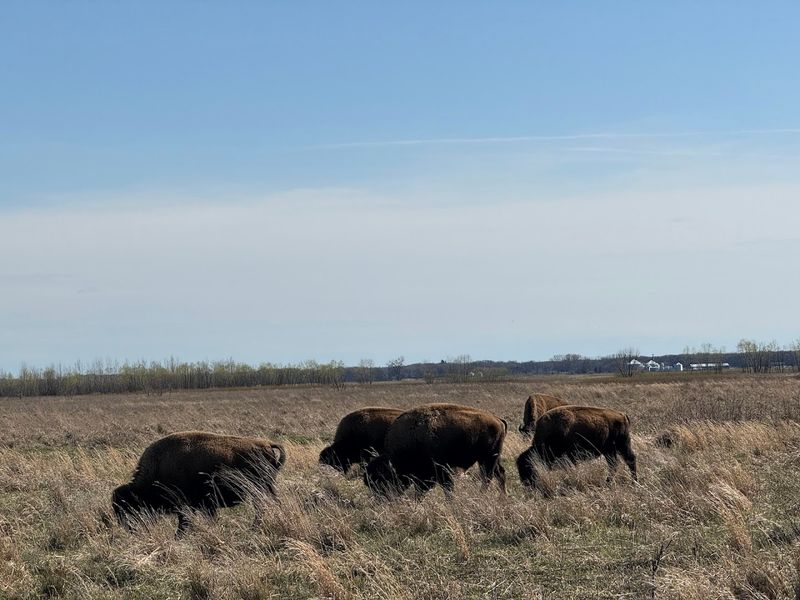
Northwestern Indiana conceals one of the state’s most successful conservation stories at 3294 N US Highway 41 in Morocco. The Nature Conservancy has restored thousands of acres of tallgrass prairie, and American bison now roam freely across this landscape just as they did centuries ago.
High-elevation viewing platforms offer safe vantage points to observe these magnificent animals without disturbing them.
The bison herd typically numbers around 50 individuals, including calves born each spring. Watching these massive creatures move across the prairie feels like stepping back in time to when vast herds dominated the American landscape.
Bring binoculars for the best viewing experience, especially if the herd grazes in distant sections of the preserve.
Early morning and late afternoon provide optimal viewing times when bison are most active. The preserve also supports hundreds of bird species, making it a paradise for birdwatchers.
Well-maintained trails wind through the prairie, offering opportunities to explore beyond the viewing platforms. Wildflowers paint the grasslands in brilliant colors during summer months.
Educational signs explain prairie restoration efforts and the ecological importance of bison to grassland health. The preserve demonstrates how conservation work can reverse habitat loss and bring native species back from the brink.
Pack water and sunscreen since shade is limited on the open prairie. This free attraction rivals paid wildlife experiences found in western states.
4. Old Ben Statue (Kokomo)
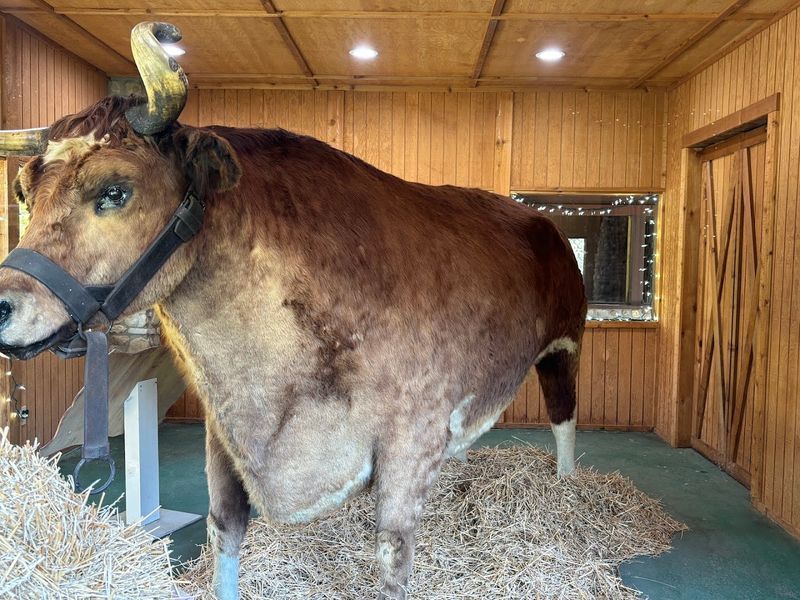
Highland Park in Kokomo houses a tribute to agricultural legend that sounds too incredible to be true. Old Ben was a real steer who weighed 4,720 pounds and stood over six feet tall at the shoulder, earning recognition as the world’s largest steer in the early 1900s.
His preserved form now rests in a permanent glass pavilion at 1402 W Defenbaugh St, protected from the elements but visible to curious visitors.
Born in 1902, Old Ben toured county fairs and exhibitions across America, amazing crowds with his gentle disposition despite his enormous size. His owner, John Murphy, cared for him until Ben’s death in 1910.
The decision to preserve and display him honored his fame and the agricultural heritage of Howard County.
The glass pavilion allows 24-hour viewing, making this one of the few attractions you can visit anytime. Highland Park surrounds the pavilion with playgrounds, walking paths, and picnic areas, creating a pleasant afternoon destination.
The park also features a swimming pool and other recreational facilities during warmer months.
Old Ben represents an era when agricultural achievements captured public imagination before modern entertainment dominated culture. Reading the historical plaques provides context about early 20th-century farming and the celebrity status some animals achieved.
Children find the sheer size captivating, while history enthusiasts appreciate the preservation effort. It’s a quick stop that offers a genuine glimpse into Indiana’s agricultural past.
5. Kawachinagano Japanese Garden (Carmel)
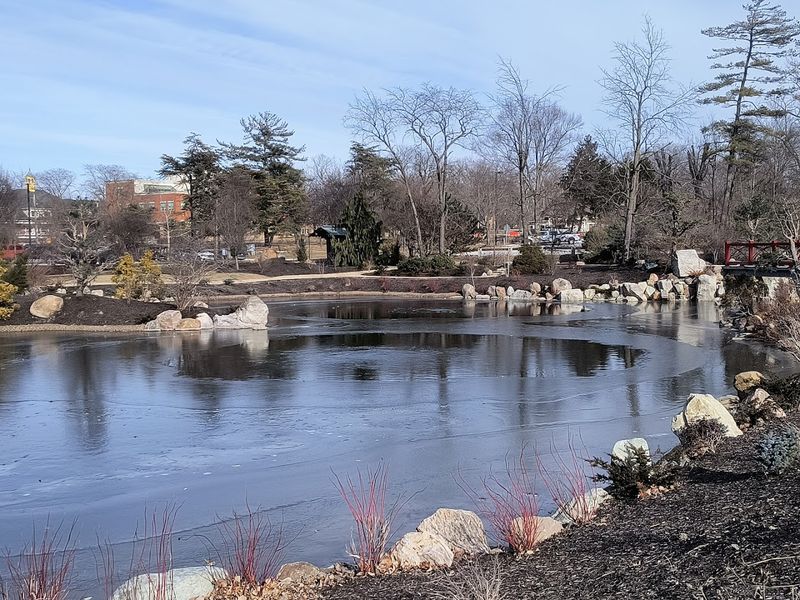
Carmel’s sister city relationship with Kawachinagano, Japan, blossomed into something tangible and beautiful south of City Hall at 1 Civic Square. This authentic Japanese garden offers a meditative escape from suburban sprawl, featuring traditional design elements including stone lanterns, carefully pruned plants, and a peaceful pond.
The garden remains open from dawn to dusk year-round without charging admission.
Landscape architects from Japan consulted on the garden’s design, ensuring authenticity in every detail. Winding paths encourage slow, contemplative walks while bridges cross water features at strategic points.
Each season transforms the garden’s appearance, from spring cherry blossoms to autumn foliage to winter’s stark beauty highlighting the garden’s structural bones.
Benches positioned throughout provide spots for quiet reflection or reading. The garden serves as a popular location for photography, meditation, and casual visits.
Its downtown location means you can easily combine a garden visit with lunch at nearby restaurants or shopping in Carmel’s Arts and Design District.
The garden demonstrates how international relationships can create lasting community assets. Maintenance crews work diligently to preserve the garden’s authentic character and seasonal beauty.
Morning visits offer the most solitude, though the garden never feels crowded even during busy periods. Photographers particularly love the golden hour light filtering through trees and reflecting off the pond.
This hidden gem provides a taste of Japanese garden design without leaving Indiana.
6. Jug Rock Nature Preserve (Shoals)
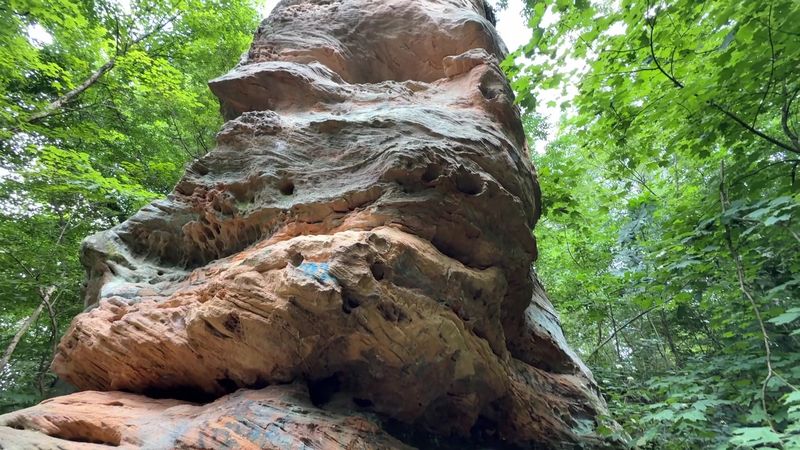
Southern Indiana’s landscape hides a geological oddity that geologists travel specifically to study. Jug Rock stands as the only freestanding table rock formation east of the Mississippi River, rising from the forest floor along Albright Lane in Shoals.
Wind and water carved this sandstone pillar over millions of years, creating a mushroom-shaped rock that seems to defy collapse.
The preserve surrounding Jug Rock protects not just the formation itself but also the diverse forest ecosystem supporting it. Short trails lead from the parking area to viewing areas where you can photograph and examine the rock from multiple angles.
The formation’s precarious appearance makes you wonder how it remains standing, yet it has survived centuries of weather.
Spring wildflowers carpet the forest floor, while fall foliage creates a colorful backdrop for the pale sandstone. The preserve sees relatively few visitors compared to more famous Indiana attractions, offering a peaceful experience for those who make the trip.
Bring a camera because the rock’s unusual shape creates striking photographs.
Educational signs explain the geological processes that created and continue to shape Jug Rock. The formation serves as a reminder of the powerful forces that sculpted Indiana’s landscape over deep time.
Local residents take pride in this natural wonder, though it remains largely unknown to people from other parts of the state. The short walk from parking to the rock makes this accessible for most fitness levels and age groups.
7. Rensselaer Art Walk (Downtown Rensselaer)

Downtown Rensselaer transformed its alleyways into an outdoor art gallery that rivals urban murals found in much larger cities. Concentrated around Van Rensselaer Street and W Washington Street, these world-class murals cover building walls with vibrant colors and compelling imagery.
Local and international artists have contributed pieces that range from realistic portraits to abstract designs to whimsical scenes.
Walking the art route takes about 30 minutes if you move quickly, but most visitors spend an hour or more photographing and appreciating each mural’s details. Some pieces incorporate local history or agricultural themes, while others offer pure artistic expression.
The murals have revitalized downtown Rensselaer, drawing visitors who then patronize local businesses.
New murals appear periodically as the project continues growing. The town embraced public art as an economic development strategy, and the results speak for themselves.
Previously plain alleyways now serve as destinations, with families making special trips to see the latest additions. Each mural includes information about the artist and the piece’s inspiration.
Downtown shops and restaurants benefit from the increased foot traffic the murals generate. Visitors often discover that Rensselaer offers more than just painted walls, including antique stores and local eateries worth exploring.
The art walk demonstrates how small towns can leverage creativity to attract visitors and build community pride. Bring your camera and comfortable shoes for exploring these transformed alleyways that prove great art doesn’t require museum admission fees.
8. Rose Island Ruins (Charlestown State Park)
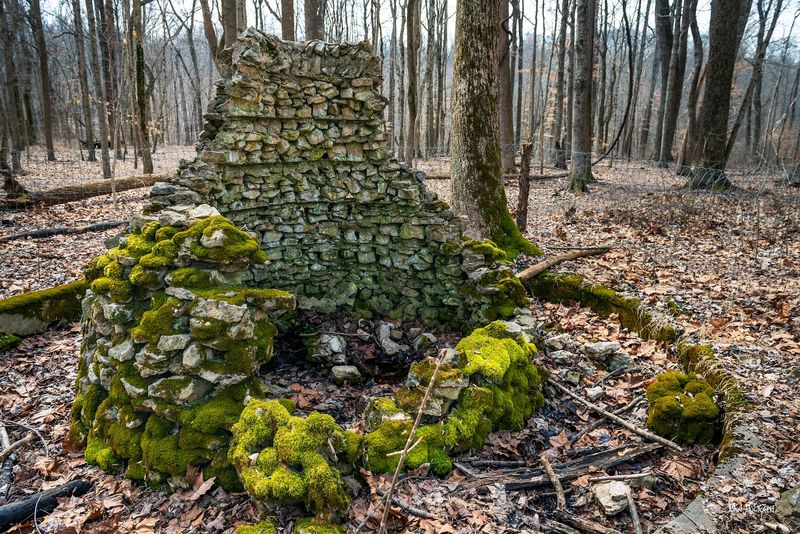
Nature reclaimed what was once a thriving 1920s amusement park along the Ohio River near Charlestown. Rose Island operated for just 15 years before a devastating flood in 1937 forced its permanent closure.
Now the ruins rest within Charlestown State Park at 12500 Indiana 62, where crumbling structures peek through the forest like ghosts from a forgotten era.
Hiking trails lead to the remains of the swimming pool, hotel foundations, and other structures slowly dissolving back into the landscape. The site carries an eerie beauty as trees grow through concrete and vines drape over walls.
Interpretive signs help visitors imagine the park during its heyday when thousands came to swim, dance, and escape summer heat.
The park requires a gate fee for Charlestown State Park, which costs seven dollars for in-state residents and nine dollars for out-of-state visitors. This fee grants access to the entire park, including trails, picnic areas, and other facilities beyond Rose Island.
The ruins trail involves moderate hiking over uneven terrain, so wear appropriate footwear.
Photographers love the atmospheric quality of abandoned places being reclaimed by nature. The site raises questions about impermanence and how quickly nature erases human construction.
Spring and fall offer the best visiting conditions, avoiding summer heat and humidity. The ruins remind us that even popular attractions can vanish, leaving only traces for future generations to discover and interpret.
9. Grotto of Our Lady of Lourdes (Notre Dame Campus)
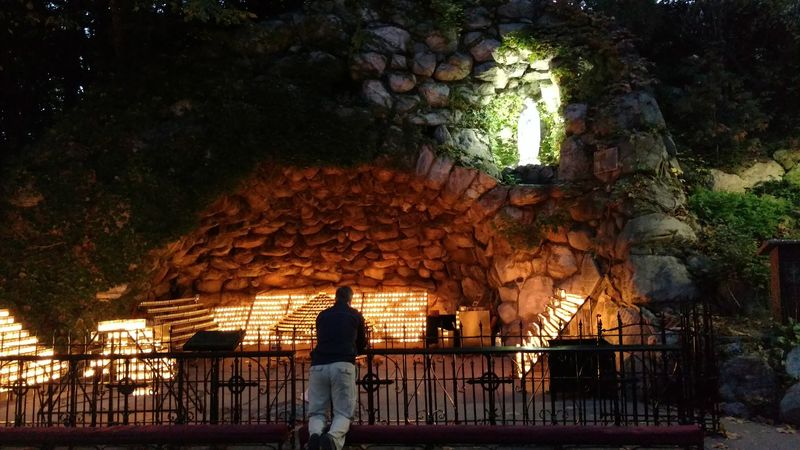
Notre Dame’s campus contains numerous architectural and spiritual treasures, but the Grotto near 100 Library Circle offers something uniquely peaceful and accessible to everyone. Built in 1896 as a one-seventh scale replica of the famous grotto in Lourdes, France, this sacred space welcomes visitors regardless of religious affiliation.
Hundreds of flickering candles create an atmosphere of reflection and hope.
The limestone cave houses a statue of Mary with rough stone walls surrounding the alcove. Visitors light candles year-round, creating a constantly changing display of tiny flames representing prayers and intentions.
Benches provide seating for quiet contemplation, while the surrounding trees offer shade and natural beauty. Even non-religious visitors appreciate the grotto’s serene atmosphere.
The campus location means you can explore other Notre Dame landmarks during the same visit. The famous Golden Dome, Basilica of the Sacred Heart, and various museums all welcome public visitors.
Campus walking paths connect these sites, creating a pleasant afternoon of exploration. Football season brings crowds, but the grotto maintains its peaceful character even during busy weekends.
Early morning and evening visits offer the most solitude and the most dramatic candlelight effects. The grotto never closes, remaining accessible 24 hours daily throughout the year.
Winter visits carry special beauty when snow blankets the surrounding landscape. This spiritual landmark demonstrates how sacred spaces can serve broader communities beyond their immediate congregations, offering peace and reflection to all who visit.
10. Indiana War Memorial Museum (Indianapolis)

Downtown Indianapolis features one of America’s most impressive war memorials, yet many residents don’t realize the museum inside offers free admission. Located at 55 E Michigan St, this neoclassical building honors Hoosier veterans from multiple conflicts while providing extensive exhibits about military history.
The museum opens Wednesday through Sunday from 9 AM to 5 PM, though verifying current hours before visiting prevents disappointment.
The building itself impresses with soaring ceilings, marble columns, and architectural details worthy of the nation’s capital. Inside, exhibits cover conflicts from the Revolutionary War through modern deployments.
Personal stories of Indiana service members bring history to life beyond statistics and dates. Artifacts, photographs, and interactive displays engage visitors of all ages.
The Shrine Room on the upper level creates a powerful space for reflection with its altar and eternal flame. Large windows flood the room with natural light, creating an atmosphere both solemn and uplifting.
Military history enthusiasts can spend hours examining the detailed exhibits, while casual visitors appreciate the main highlights in under an hour.
The memorial sits along the city’s downtown canal, making it easy to combine with walks along the water or visits to nearby attractions. Free parking can be challenging downtown, but several paid lots operate within walking distance.
The museum’s free admission makes it an exceptional value, offering educational experiences that rival paid institutions. Veterans particularly appreciate how the memorial honors their service while educating civilians about military sacrifice and history.
Dear Reader: This page may contain affiliate links which may earn a commission if you click through and make a purchase. Our independent journalism is not influenced by any advertiser or commercial initiative unless it is clearly marked as sponsored content. As travel products change, please be sure to reconfirm all details and stay up to date with current events to ensure a safe and successful trip.
