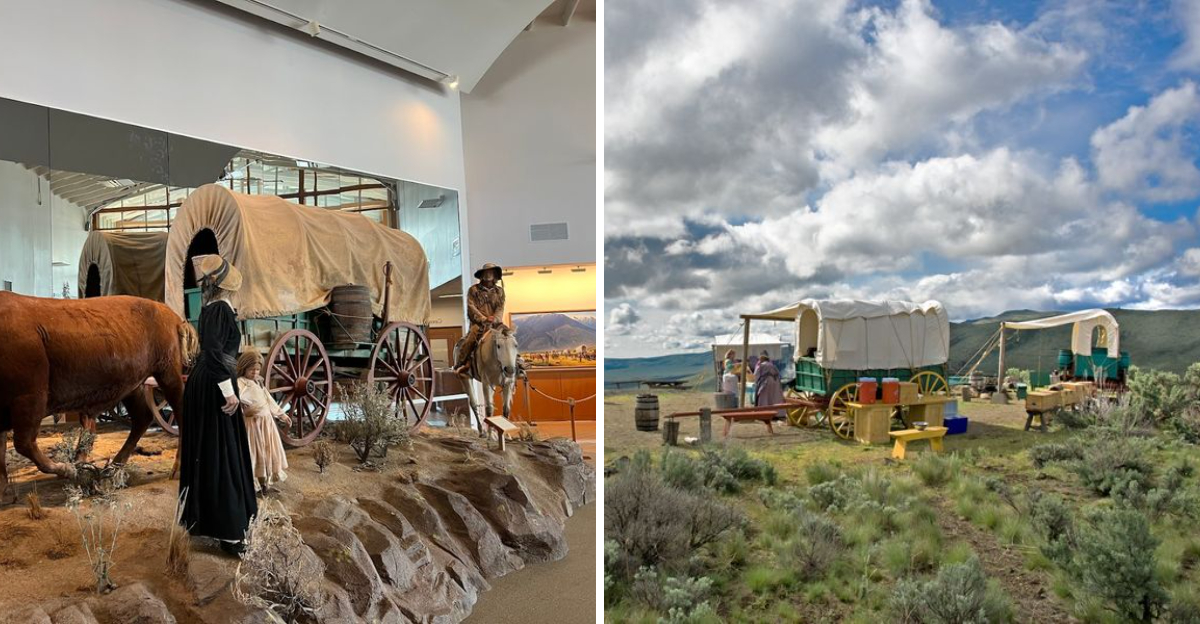
The Oregon Trail isn’t just a line on a map – it’s a living collection of stories still echoing through the state today. I followed traces of hidden history and kept stumbling into moments where the past feels surprisingly close.
Old wagon routes, weathered landmarks, and quiet stretches of land all hint at the people who once risked everything to get here. Locals treat these stories like familiar heritage, while I found myself slowing down just to take it all in.
Every stop adds another layer, like the land is quietly narrating its own origin story. Even the silence along the trail feels meaningful, like it remembers more than it shows.
I leave with that rare feeling that history isn’t behind you here – it’s still walking right alongside you.
The Wagon Ruts That Time Could Not Erase
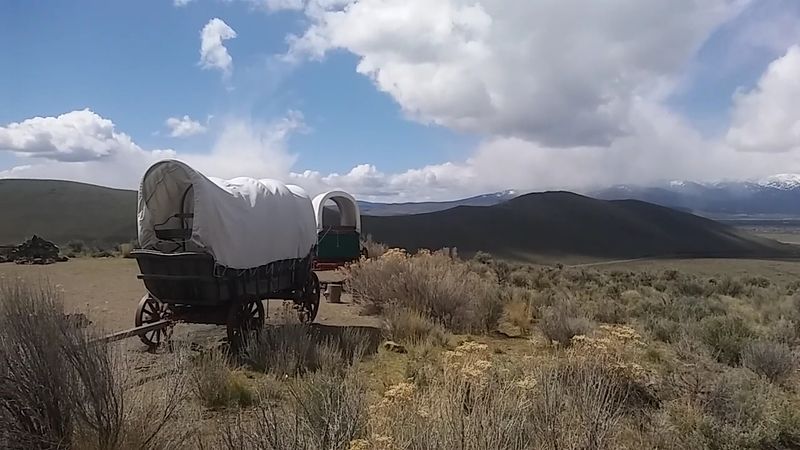
Few things stop you in your tracks quite like seeing the actual ruts left by pioneer wagons still pressed into the earth. Out on the trail at Flagstaff Hill, those grooves are still there.
They are real, deep, and quietly powerful.
Thousands of wagons rolled through this exact ground during the 1840s and 1850s. The weight of those wheels, repeated over and over, carved marks that no weather has fully smoothed away.
Standing inside those ruts feels almost surreal.
The center makes it easy to reach the ruts on foot. Trails wind through the high desert scrub and lead visitors directly to the preserved sections.
Rangers often point out the best spots to stop and reflect.
These ruts shaped more than just the soil. They marked the path that helped populate Oregon’s Willamette Valley.
Entire towns, farming communities, and family legacies grew from this very route. The ruts are not just a curiosity.
They are the physical memory of one of America’s greatest migrations.
Pioneer Diaries That Speak Across Centuries
Reading someone’s diary from the 1840s hits differently than reading any history textbook. The center displays excerpts from actual settler diaries, and some of the original journals are part of the collection.
The words are raw and honest.
Pioneers wrote about sore feet, lost cattle, sick children, and the strange beauty of the land they crossed. They were ordinary people doing something extraordinary.
Their voices come through clearly, even across 170 years.
One entry might describe the fear of crossing a swollen river. Another captures the quiet joy of a cool evening after a brutal day of walking.
These small human moments are what make the exhibit so gripping.
Oregon’s identity has always carried a certain resilience. That quality did not appear by accident.
It was passed down from the people who crossed this land and wrote about it honestly. The diaries at the center are a direct link to that inheritance.
Reading them leaves a mark you carry with you long after leaving.
The Flagstaff Gold Mine Remnants on the Hill
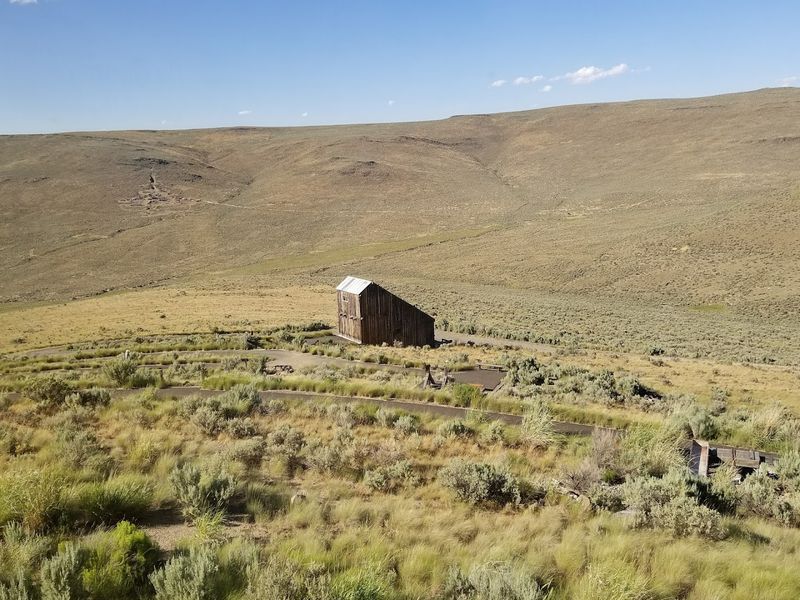
Most visitors come for the Oregon Trail, but the Flagstaff Gold Mine adds a whole other chapter to this hill’s story. The 500-acre site includes actual remnants of the mine, and the trails lead right past them.
It caught me off guard in the best way.
Gold was discovered in eastern Oregon during the 1860s, drawing a different wave of migrants than the farming families heading to the Willamette Valley. Miners came fast and worked hard.
Some struck it rich. Most did not.
The mine ruins sit quietly among the sagebrush, half-forgotten but still standing. Old structures and equipment tell the story of that frantic era without needing much explanation.
The landscape does most of the talking.
Baker City itself grew partly because of mining wealth. The ornate Victorian buildings still standing downtown are evidence of that prosperity.
The Flagstaff mine remnants on the hill connect directly to the town below. Understanding one helps you understand the other.
It is a layer of history most people miss completely.
Life-Size Dioramas That Make History Feel Real
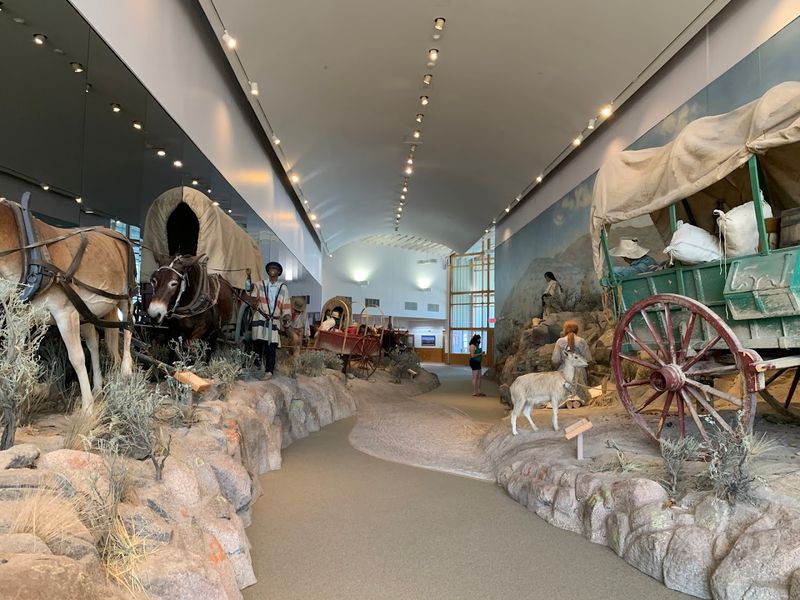
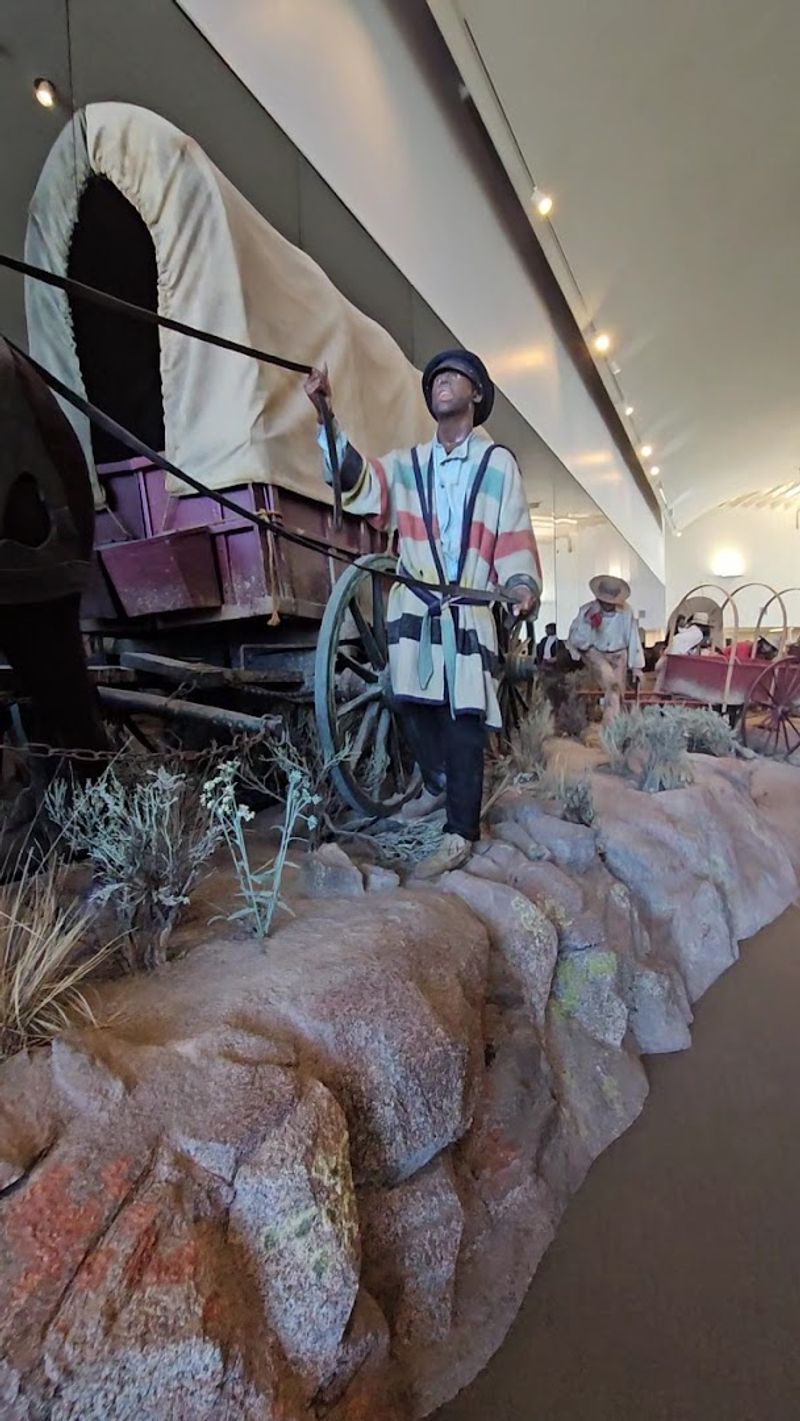
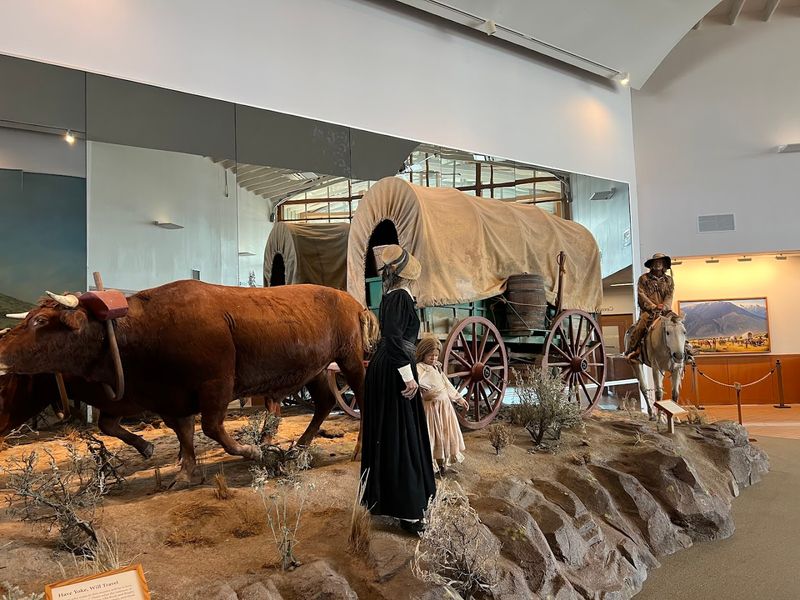
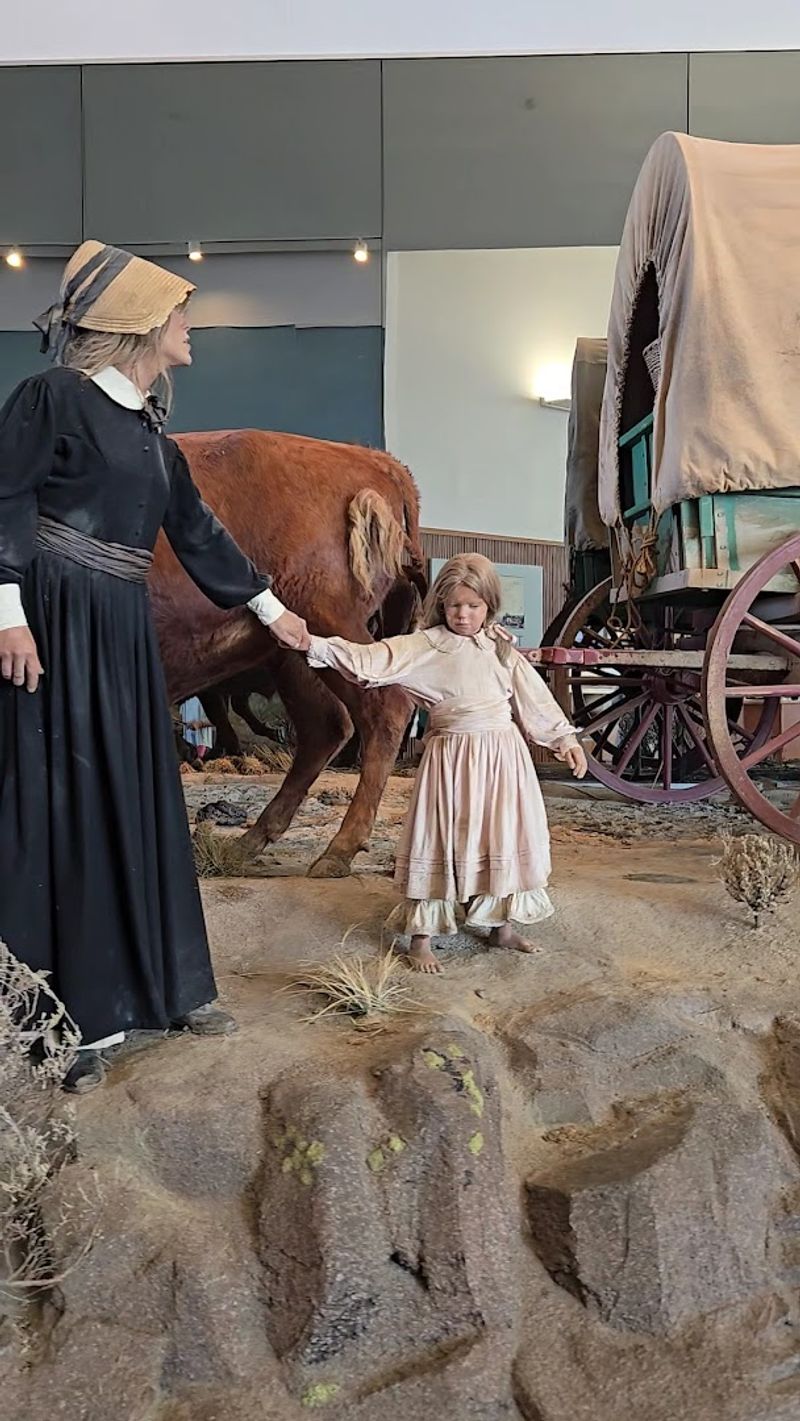
Walking into the main exhibit hall at the center, the first thing that hits you is scale. The dioramas are enormous.
Life-size figures of pioneers stand beside loaded wagons, dressed in period clothing, frozen mid-journey.
The detail is remarkable. Pots hang from wagon hooks.
Children sit on blanket rolls. Dogs rest near wagon wheels.
It does not feel like a display. It feels like a moment caught in time.
Each diorama tells a specific part of the journey. There are scenes of river crossings, camp setups, and the long flat stretches of the high desert.
Moving between them feels like walking through chapters of a single long story.
Kids especially respond to these displays in a big way. Seeing history at human scale makes it click in a way that flat images never quite manage.
Several visitors have described feeling genuinely moved standing next to these figures. The craftsmanship is first-class, and the storytelling behind each scene is thoughtful and deeply researched.
This is history made tangible.
The Indigenous Stories Woven Into the Trail’s History
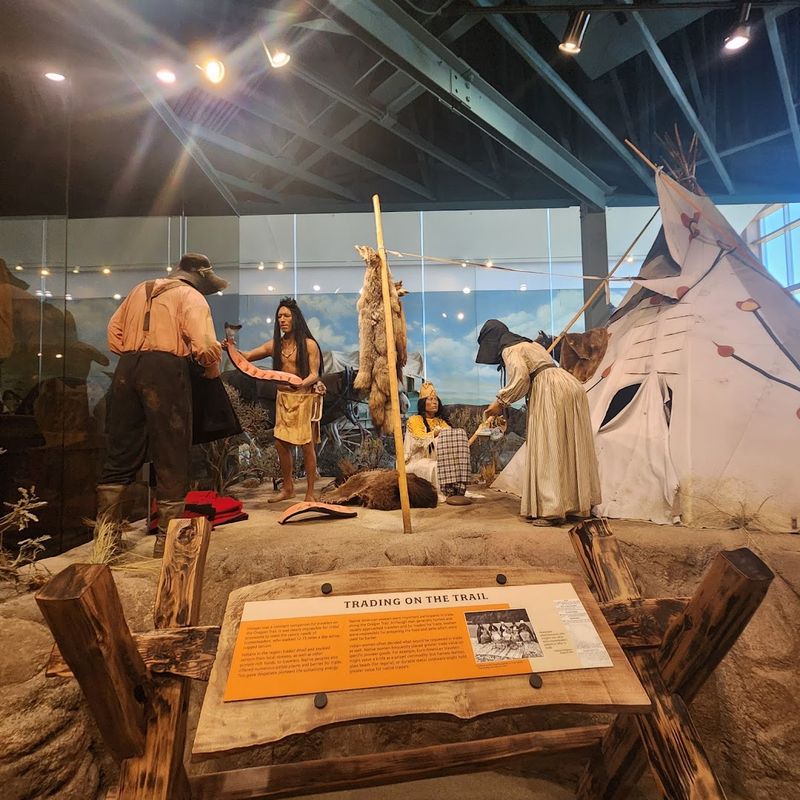
The Oregon Trail story is often told from one perspective. The center makes a real effort to include the experiences of the Native peoples whose lands the trail crossed.
That inclusion changes the whole picture.
Tribes including the Cayuse, Umatilla, and Nez Perce had complex relationships with the wave of settlers moving through their territory. Some traded with emigrants.
Others resisted the intrusion. All were affected in lasting ways.
Exhibits at the center address this history with care. They do not flatten it or rush past it.
The information presented acknowledges both the courage of the settlers and the immense disruption their arrival caused.
Oregon’s modern relationship with Indigenous communities is still shaped by what happened during the trail era. Land rights, cultural preservation, and tribal sovereignty are ongoing conversations in the state.
Understanding the trail’s full history, not just the settler side, is essential for understanding Oregon today. The center offers a starting point for that broader understanding.
It is one of the most important parts of the entire visit.
Panorama Point and the View That Stops You Cold
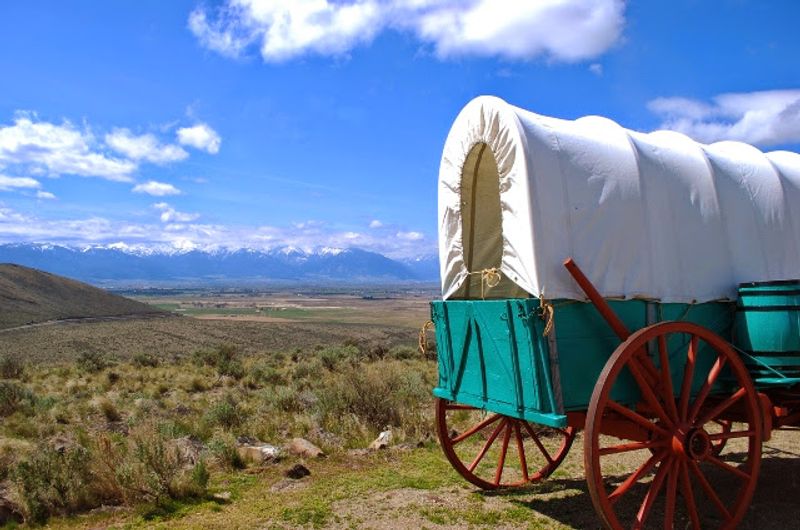
There is a moment on the trail hike when the path opens up and Baker City spreads out below you. The Blue Mountains rise in the distance.
The Oregon Trail route is visible, curving across the valley floor. That view is called Panorama Point, and it earns the name.
Pioneers would have seen something very similar from this same hill. After months of hard travel, spotting the valley below must have felt like relief and fear all at once.
The journey was not over. But the end was finally visible.
The hike to Panorama Point is part of the center’s trail system. It takes some effort but nothing extreme.
The path winds past the mine ruins and through fragrant sagebrush before opening onto the viewpoint.
Standing up there with the wind coming off the mountains, the scale of the pioneer journey becomes real in a new way. You can see how far they still had to go.
You can also see why they kept moving. The valley below looks like exactly what it was: a promise.
It is genuinely breathtaking.
Interactive Exhibits That Teach Without Feeling Like School
Bingo with a ranger sounds like a strange museum activity until you are actually playing it. The center runs interactive programs that pull visitors into the history instead of just presenting it at them.
It works surprisingly well.
Activity books for kids, hands-on stations, and live presentations make the experience layered. Families with children can spend hours here without anyone getting bored.
The engagement level stays high throughout.
Rangers lead talks that cover specific parts of the trail experience. Topics range from what pioneers packed to how they navigated without GPS or maps.
The presentations are casual and full of personality.
One of the most effective interactive elements lets visitors try to figure out what to load into a wagon given a strict weight limit. The exercise sounds simple.
It is actually quite hard, and it immediately builds empathy for the real decisions pioneers faced. Oregon’s culture of self-reliance and practicality has deep roots in exactly those kinds of choices.
The exhibit makes that connection feel personal and immediate.
The Blacksmith Shop and What It Tells Us About Community
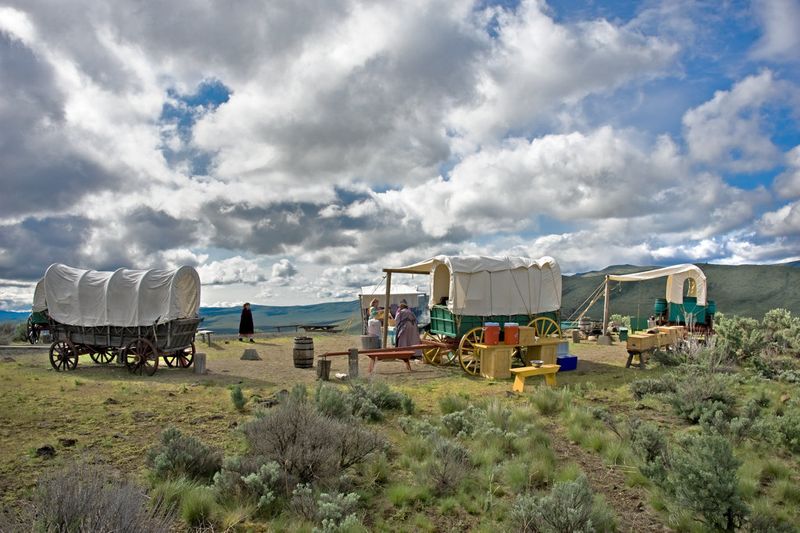
Out along the hiking trail, a replica blacksmith shop sits off the path like it just stopped operating yesterday. It is a small structure, but it carries a lot of meaning.
Blacksmiths were not just craftsmen on the trail. They were survival infrastructure.
A broken wagon wheel axle could strand a family in the middle of nowhere. A skilled blacksmith could fix it.
Communities formed around people with essential skills. The trail taught settlers very quickly that survival was a group project.
That lesson did not disappear when the migration ended. Oregon’s early towns were built on that same cooperative instinct.
Neighbors helped neighbors. Skills were shared.
Communities grew from mutual dependence, not just individual ambition.
The blacksmith shop replica at the center is modest in size but rich in context. Rangers sometimes demonstrate period techniques nearby during living history events.
Watching someone work iron with basic tools makes the difficulty of frontier life land differently. It is one of those outdoor stops that adds real texture to the indoor exhibits.
Do not skip it on the trail walk.
Multimedia Films That Tie the Whole Story Together
After walking through the dioramas and reading the diary excerpts, sitting down in the center’s film presentation room feels like a natural exhale. The films pull all the threads together.
They are old-style documentary productions, but they work.
Footage of the actual landscape, combined with historical images and narrated accounts, gives the whole experience a sense of completion. You leave the theater understanding the journey as a whole, not just as disconnected scenes.
One film reviewed by visitors focuses on the full arc of the migration, from the departure points in Missouri to the arrival in Oregon’s Willamette Valley. The emotional weight of the stories builds steadily across the runtime.
Oregon’s settlement history is complicated and layered. The films at the center do not pretend otherwise.
They present the hardship, the loss, and the determination without turning anyone into a cartoon hero. That honesty is what makes the presentations stick.
Several visitors have described the film as the moment the whole visit clicked into place for them. It is worth sitting through every minute.
How the Trail’s Legacy Still Lives in Oregon Today
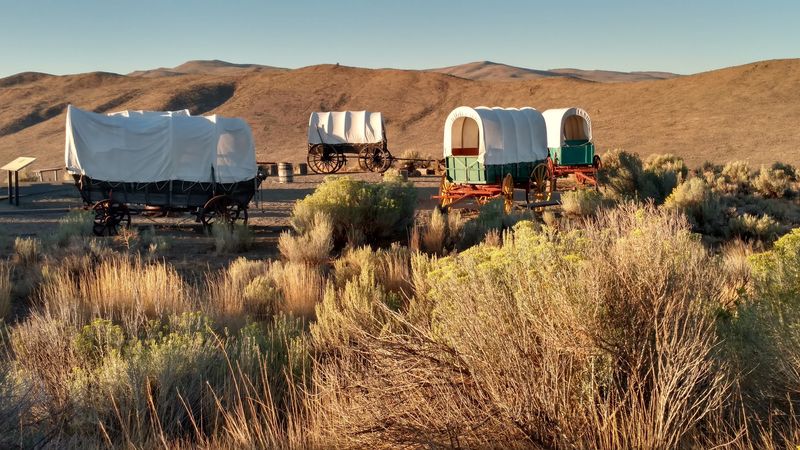
Baker City is not just a gateway to the interpretive center. It is living proof that the Oregon Trail’s legacy never really ended.
The town’s Victorian-era buildings, still standing and still in use, were funded by the gold rush wealth that followed the pioneer migration.
Oregon’s agricultural heartland in the Willamette Valley exists because those wagon trains kept rolling west. Farms, orchards, and vineyards cover land that settlers first broke open in the mid-1800s.
The connection between then and now is not abstract.
The state’s stubborn independent streak, its land conservation efforts, and even its approach to community governance all carry echoes of the trail era. People came here to build something new on their own terms.
That impulse never left.
Visiting the center in Baker City makes that lineage feel personal. You walk out of the building with a different understanding of why Oregon feels the way it does.
The landscape, the towns, the people, all of it traces back to those wagon ruts still pressed into the hill. History here is not behind glass.
It is under your feet.
Address: 22267 OR-86, Baker City, OR 97814
Dear Reader: This page may contain affiliate links which may earn a commission if you click through and make a purchase. Our independent journalism is not influenced by any advertiser or commercial initiative unless it is clearly marked as sponsored content. As travel products change, please be sure to reconfirm all details and stay up to date with current events to ensure a safe and successful trip.
