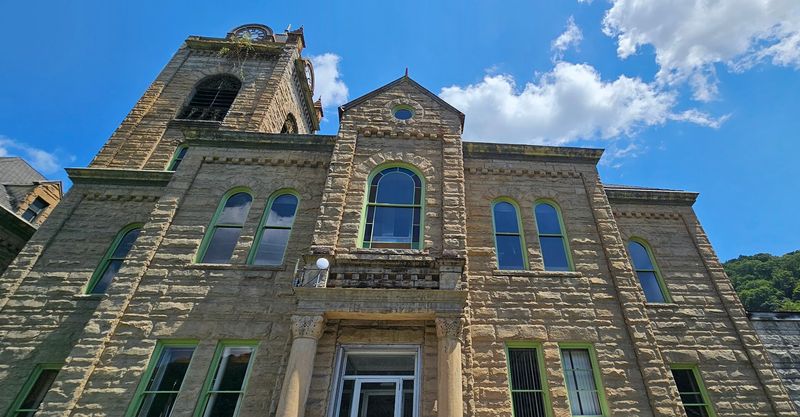
A county courthouse from the 1890s still handles everyday paperwork like vital records and vehicle registration. The building is old, but it is still working.
Its stone walls rise above a narrow mountain downtown, and its tower can look almost out of place there. I like how a coalfield county built something this bold for a town tucked between steep ridges.
It reads like a promise carved into rock.
This West Virginia landmark also holds a famous piece of labor history. Generations of families have climbed its front steps for court dates, marriage licenses, and property deeds.
I can’t imagine a better place to feel how the coal era shaped real lives.
So what makes a courthouse in a small mountain town worth a detour? The answer starts with that tower and keeps going once you notice the details.
A Coalfield County Seat With A Castle-Sized Statement
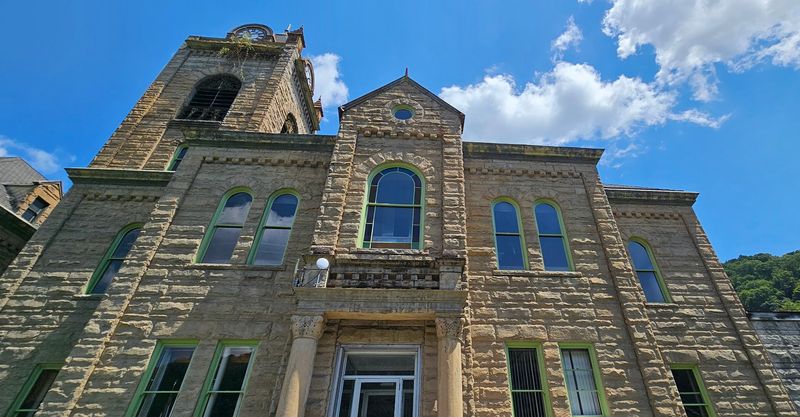
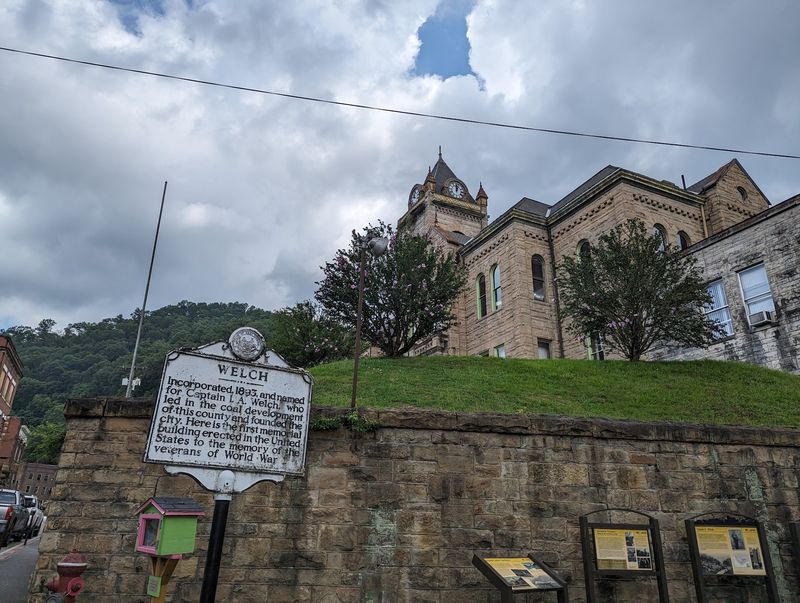
Few people expect a mountain town this small to hold a courthouse this commanding. The McDowell County Courthouse rises in Welch, the county seat of McDowell County in southern West Virginia.
It is a working county court, not a museum. Judges, clerks, and residents still use it on regular weekdays.
The building dates to the 1890s, when coal money was transforming the region. Local leaders wanted a seat of government that matched their ambitions.
What they got was a heavy, handsome stone structure with a tall tower. In a town squeezed between ridges, that tower is hard to miss.
Welch itself sits along the Tug Fork and Elkhorn Creek, where flat land is precious. Buildings here stack close and climb, so the courthouse stands out even more.
The title of this article calls it a rival to big-city capitols, and the comparison makes sense in spirit. The scale feels borrowed from a much larger place.
For anyone curious about how coal country spent its boom years, this is a fine starting point. You see the confidence of an era in a single building.
It also gives a quick, free way to meet the town before exploring further.
Boom-Era Ambition Behind Every Stone
Coal changed everything in McDowell County during the late 1800s. Railroads pushed into the hollows, and mining towns sprang up almost overnight.
The county needed a proper home for its government as population and wealth grew. The courthouse in Welch was reportedly completed around 1894.
Architect Frank Pierce Milburn is widely credited with the design. He drew many courthouses across the South during that period.
His work often leaned toward Romanesque Revival, with sturdy stone, rounded arches, and towers. Those traits fit a county that wanted to look permanent.
Back then, McDowell was one of the busiest coal-producing counties in America. A grand courthouse signaled that this place mattered.
That pride still shows today, even though the boom years are long past. The building carries memories of a busier, louder Welch.
Plenty of West Virginia families trace roots to the coal camps around here. For them, the courthouse holds deeds, marriages, and birth records tied to grandparents.
That history makes the place personal, not just pretty. Standing outside, you get a sense of how much hope went into building it.
It is a monument to working people as much as to officials.
That Tower Steals The Whole Skyline
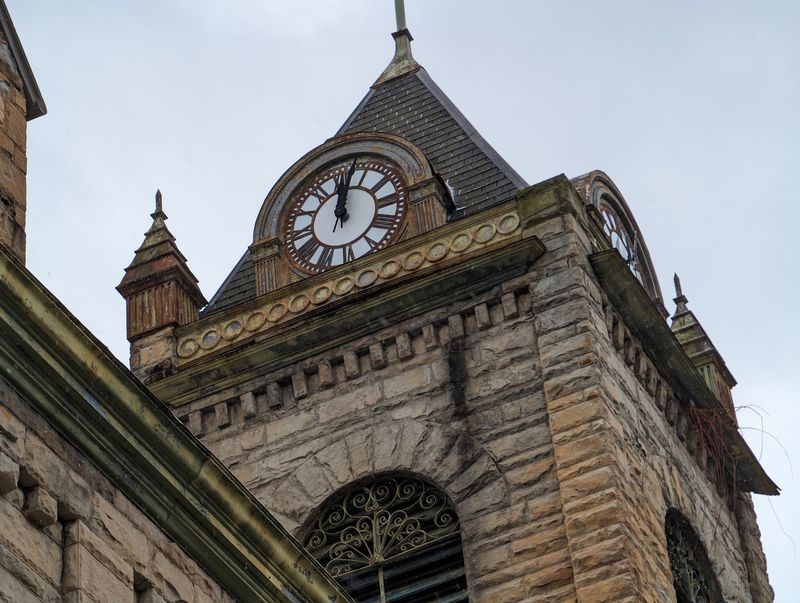
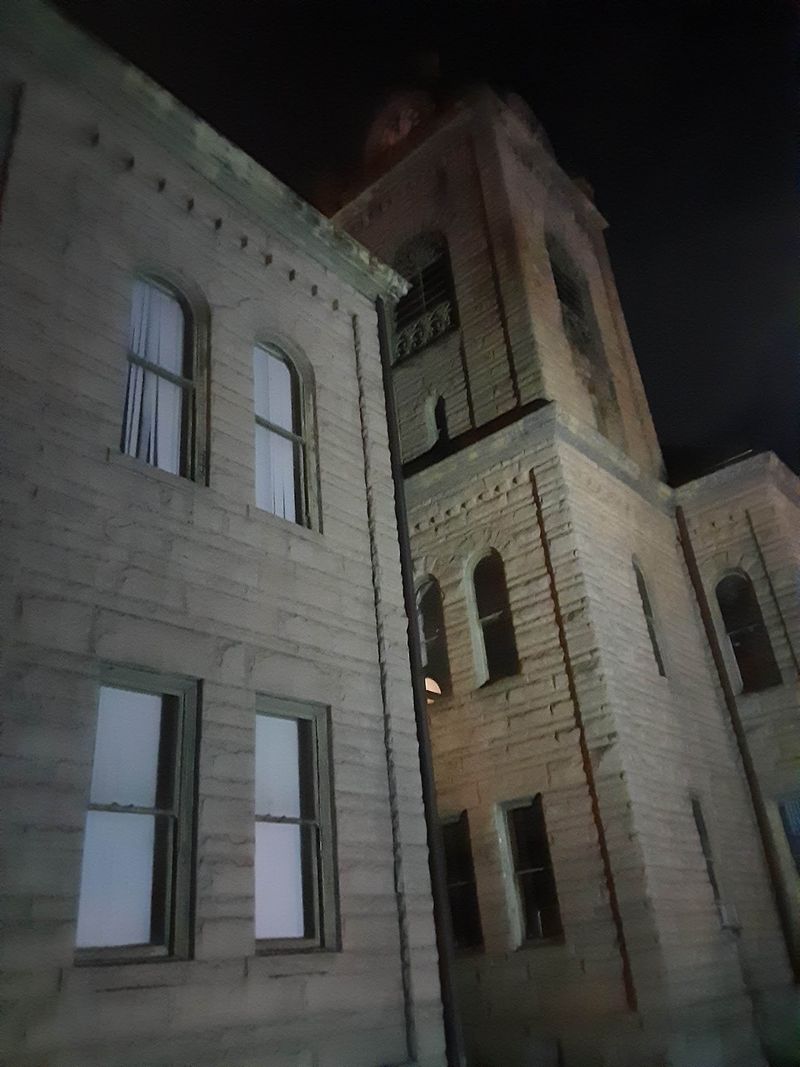
Look up first. The tower is the feature most people notice before anything else.
It climbs above the roofline and gives the building a vertical punch. In a valley town, that height reads even taller.
Romanesque Revival design loves this kind of drama. Towers were a way to say a building held authority.
Here, the effect is almost medieval. Heavy stone, deep window openings, and a steep top create a fortress feel.
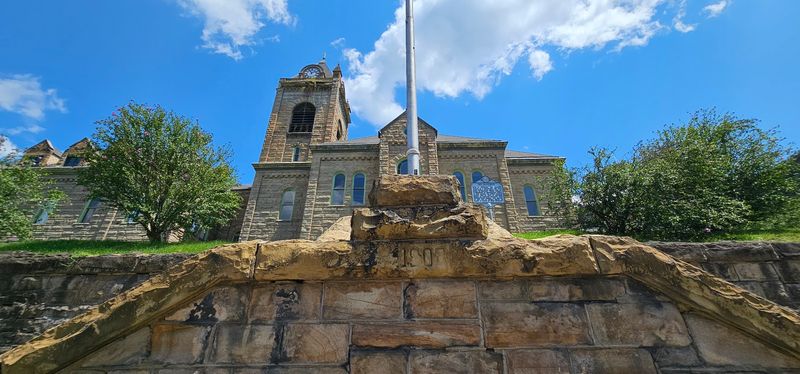
Photographers tend to frame it from the street below for good reason. The angle makes the whole structure seem to tower over Welch.
Morning and late afternoon light can bring out the texture of the stone. Shadows settle into the arches and make the details pop.
You don’t need any special gear to enjoy it. A phone camera and a little patience will do.
Families on a road trip can treat it as a quick, free stop. Kids may enjoy spotting the tower from a few blocks away.
Adults will likely linger longer, though. There is a lot of craftsmanship packed into one tall shape.
Give yourself a few minutes to walk around and catch it from different sides.
Stonework Built To Outlast Everyone
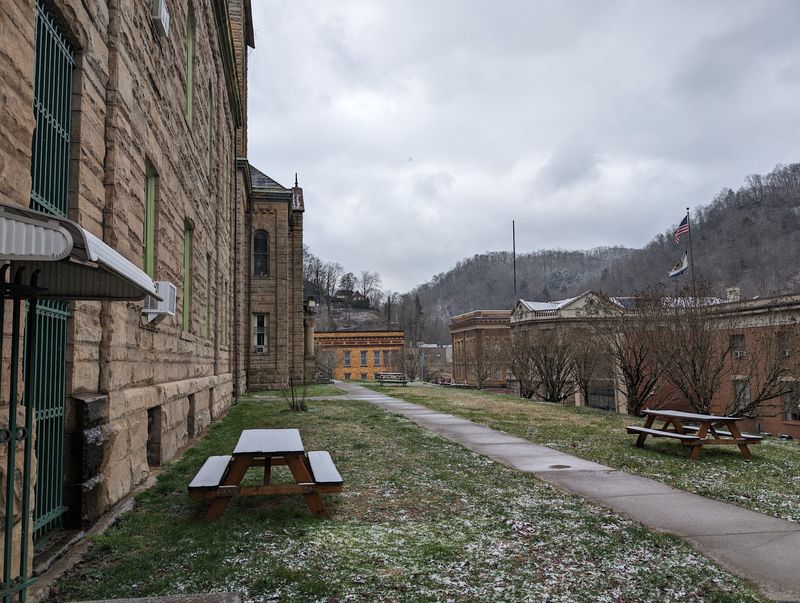
Stone was the message. Builders chose heavy masonry to make the courthouse feel solid and lasting.
Rounded arches frame openings in true Romanesque style. They give the facade rhythm and a sense of weight.
Rough-faced blocks add texture you can almost feel from the sidewalk. Smooth trim around windows sharpens the contrast.
Some writers describe the building in grander terms, including marble. The safest way to enjoy it is simply to study the stone in person.
Every course of masonry represents hours of skilled hands. Masons in the 1890s cut, lifted, and set each piece without modern machines.
That effort is part of the appeal. You are looking at labor as much as design.
I believe buildings like this deserve slow attention. The more you look, the more patterns appear.
Notice how the arches line up with the windows above. Small decisions add up to a calm, balanced front.
It is the kind of place where a casual glance turns into a ten-minute study. Bring curiosity and comfortable shoes.
The craftsmanship rewards anyone who enjoys old-world building methods.
Those Famous Front Steps And Their Story
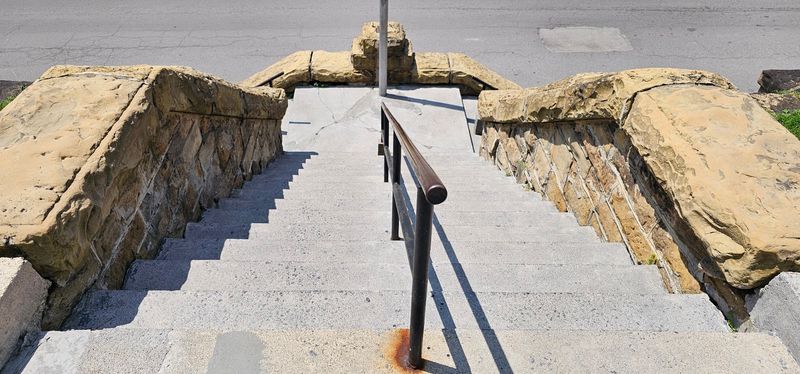
Steps matter here more than you might guess. The climb to the entrance is steep enough to get your attention.
Plenty of folks who grew up in McDowell remember those stairs well. They are part of the building’s personality.
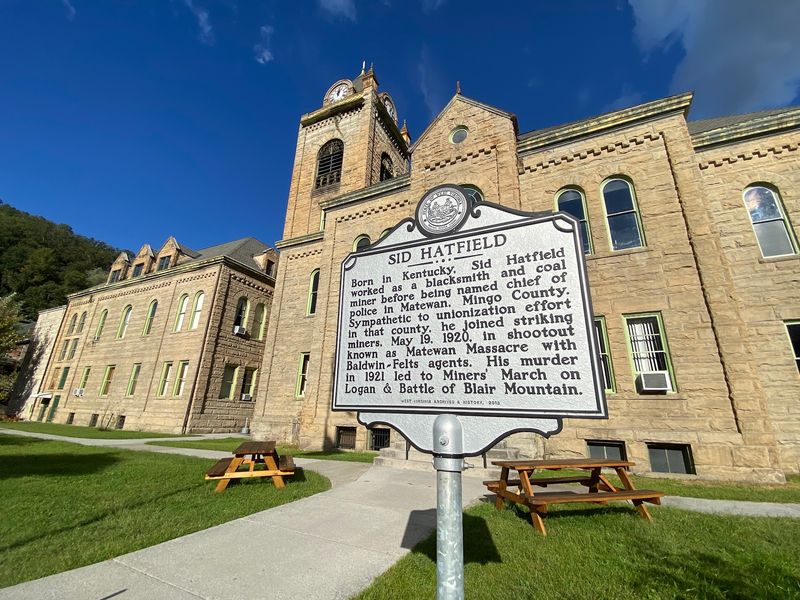
The steps also connect to one of the best-known chapters in coalfield labor history. In 1921, Matewan police chief Sid Hatfield came here for a court appearance.
What happened on these steps that August became part of the larger mine labor struggle in southern West Virginia. Historians still tell the story today.
That event helped push tensions that led to the famous march toward Blair Mountain. The courthouse sits right at the heart of that legacy.
Standing at the bottom, it is easy to feel the weight of that history. The steps carry more than footsteps.
History buffs often travel to the region for this labor story alone. Pairing it with Matewan makes a meaningful day trip.
Take the stairs slowly and enjoy the view as you rise. Your legs may notice the effort.
It is a small climb with a very large backstory.
A National Register Honor That Fits
Official recognition came decades after the masons packed up their tools. The courthouse is listed on the National Register of Historic Places.
The listing reportedly dates to 1979. It honors both the architecture and the building’s role in county life.
National Register status doesn’t freeze a building in time. It does highlight why a place deserves care and attention.
For the McDowell County Courthouse, the honor feels earned. Few buildings in the region tell the coal story so clearly.
Welch also has a historic commercial district around the courthouse. Older storefronts and brick buildings line the streets nearby.
Walking those blocks fills in the picture of a once-bustling downtown. You can imagine Saturday crowds from the coal camps.
That faded-glory feel is part of the charm, not something to pity. Welch carries its past with real dignity.
Preservation in small towns often depends on local pride and steady upkeep. A working courthouse helps keep the lights on, literally.
Because people still use it daily, the building stays part of community life. That is the best kind of preservation.
It remains useful, not just admired.
Still Doing The County’s Real Work
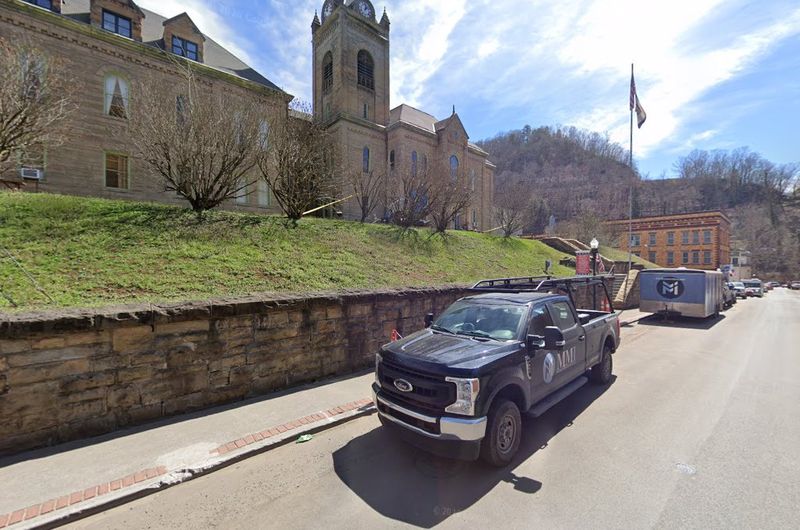
Here is the practical part. This courthouse is not retired, and it handles plenty of everyday business.
The county court system operates here. Legal matters for McDowell County move through these rooms.
Residents also come in for vital records. Birth and other official documents are part of the routine.
Vehicle registration services are available too. That is a surprisingly ordinary errand in a very extraordinary building.
I like how history and paperwork share the same address. Renewing a sticker beneath a 19th-century roof feels oddly satisfying.
Genealogy fans may find the records angle especially useful. Coal-era families often left paper trails through the county offices.
Plan ahead before making a long trip for records. Calling or emailing the right office first can save you a frustrating drive.
Staff handle real government work, so visits are about service, not tours. Be respectful of people waiting for their own business.
That working rhythm is part of the experience. The building feels lived-in rather than staged.
For locals, it is just where you go to get things done. For visitors, that normalcy is the fascinating part.
Timing Your Stop Around The Lunch Break
Hours matter here, especially midday. The courthouse is open Monday through Friday on a split schedule.
Doors open from 9 am to 12 pm. Business resumes from 1 pm to 5 pm.
That one-hour midday closing catches people off guard. Arriving at 12:15 could mean a short wait outside.
Saturdays and Sundays are closed. Weekend road-trippers can still admire the exterior anytime.
The outside is honestly the main event for sightseers. You can photograph the tower and steps without stepping indoors.
If you need records or registration, aim for a morning visit. That gives you time to sort out any surprises before the lunch break.
Holiday closures may also apply, as with most county offices. Double-check before planning around a specific date.
Visiting is free, since it is a public building. That makes it a budget-friendly stop on any southern West Virginia drive.
Parents juggling a tight itinerary will appreciate how quick it can be. Twenty minutes is enough for photos and a short stroll.
Longer visits work if you plan to explore downtown Welch too.
Finding It On Wyoming Street
Getting to Welch is half the adventure. Mountain roads curve through steep hollows and old coal communities.
The courthouse sits at 90 Wyoming St #110, Welch, WV 24801. Downtown is compact, so the tower helps you get oriented.
Parking in a hillside town can take a little patience. Streets are narrow, and spaces fill during busy weekdays.
Give yourself extra time on the drive. Twisting routes make distances feel longer than the map suggests.
The scenery makes up for it. Ridges, creeks, and small towns pass by in a steady parade.
Fill your tank before heading deep into the county. Services can be spaced out between communities.
Many travelers combine Welch with other coalfield stops. The region rewards slow, curious driving.
Cell signal can be spotty in the hollows. Downloading directions ahead of time is a smart move.
Once you arrive, walking is the easiest way to see downtown. The courthouse and surrounding blocks sit close together.
You can park once and explore on foot for an hour. That simple plan works well for families and solo travelers alike.
Who Will Love This Mountain Landmark Most
Architecture lovers top the list. Romanesque Revival fans will find plenty to study in the arches and tower.
Labor history buffs come next. The 1921 story ties this building to one of America’s most important worker struggles.
Genealogists may feel right at home too. Records connected to coal-camp families can make a trip feel deeply personal.
Retirees exploring their roots often find this kind of stop meaningful. Hometown memories tend to surface fast in Welch.
Families can enjoy it as a short, free history lesson. Kids may get a kick out of counting the steps.
Photographers will appreciate the contrast of stone against green hills. Each season changes the backdrop.
People who need instant entertainment might find it quiet. This is a reflective stop, not a theme park.
I believe it suits anyone who enjoys stories hidden in ordinary places. The courthouse rewards those who ask questions.
It also works for travelers passing through southern West Virginia on longer routes. A short detour adds real depth to the drive.
Bring your own curiosity, and the building does the rest. Few small-town stops pack this much meaning into one block.
Why This Courthouse Earns A Detour
Big cities don’t own grand architecture. The McDowell County Courthouse proves a coalfield town could dream just as large.
Its tower, stonework, and steep steps make an impression in minutes. Its history keeps you thinking long after.
It is also refreshingly real. People still renew registrations and request records under that old roof.
That mix of everyday use and deep heritage is rare. Most landmarks this old become museums or empty shells.
Welch deserves more visitors who arrive with respect and curiosity. The town carries its coal legacy with quiet pride.
A stop here costs nothing but time. That makes it an easy add to any southern West Virginia road trip.
Plan around the weekday hours if you want to step inside. Otherwise, the exterior is ready whenever you roll through.
Bring a camera and a little patience for the mountain roads. Both will pay off.
I can’t imagine driving nearby without pausing for that tower. Some buildings simply ask to be noticed.
This one asks politely, then holds your attention with stone and story.
Go see it, and let the steps tell their tale.
