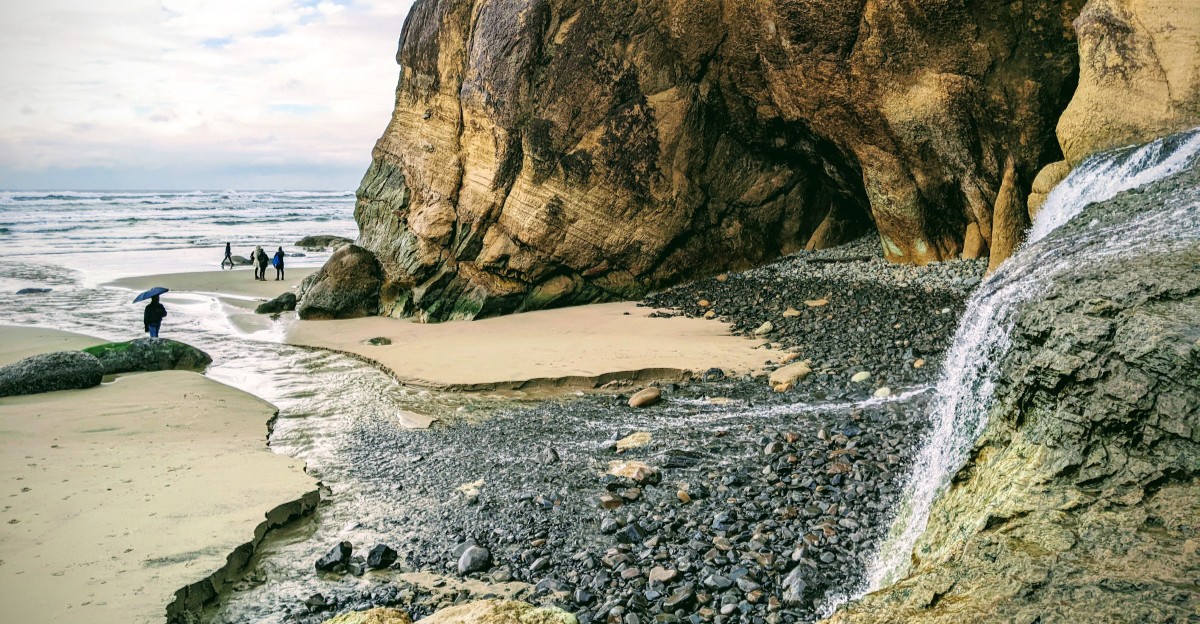
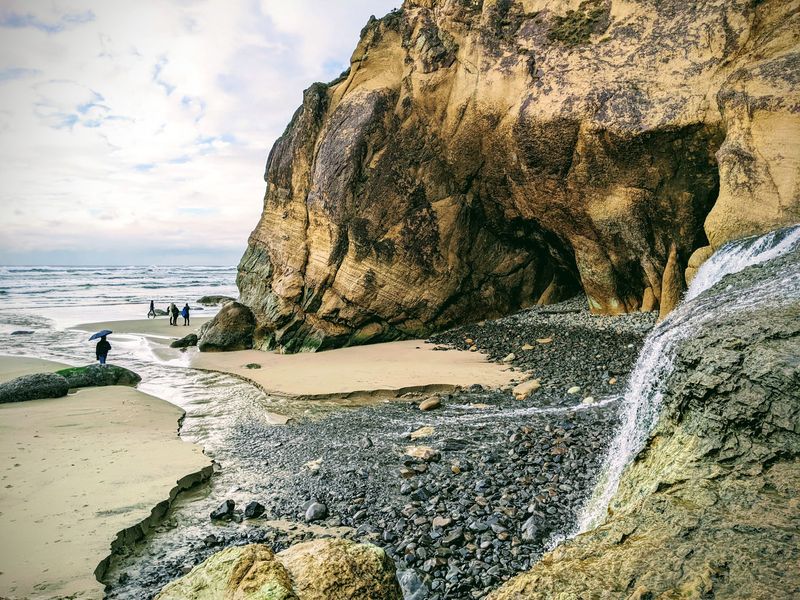
A waterfall spills straight onto the sand here, and you can only reach it when the ocean steps back. Miss the low tide, and the falls stay politely out of reach.
The surprises keep stacking up. Sea caves are carved into the sandstone cliffs. Old wagon wheel ruts are etched into the rock above the surf.
I like how this spot on the Oregon coast mixes nature with a real history lesson. Stagecoaches once had to squeeze around a rocky point to keep from getting soaked. That tight squeeze even gave the place its name.
The beach is free to visit and open all year. So what else is hiding around that point?
The Waterfall That Lands Right on the Sand
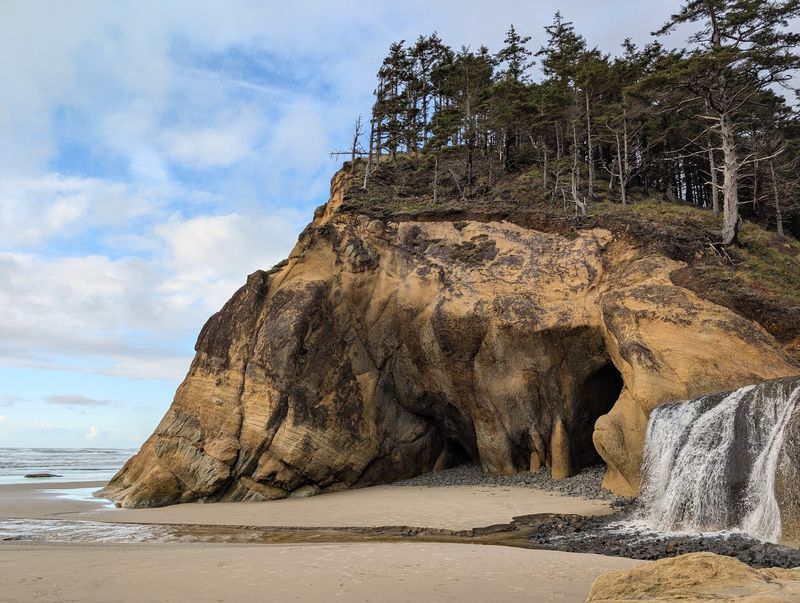
Most waterfalls make you hike into the woods to find them. At Hug Point State Recreation Site, the waterfall comes to the beach instead.
Hug Point Falls drops off the cliff and splashes right onto the sand. The water then trickles across the beach toward the Pacific. It’s the kind of view that makes people stop mid-sentence.
Timing matters a lot with this one. The falls run strongest in fall and winter or after a good, soaking rain. During a dry summer, the flow can shrink to a sad little trickle.
Spring can also bring a healthy flow after the wet months. So if you crave the full show, plan around the rainy season. A gray Oregon day suddenly sounds pretty great, right?
Here’s the catch that keeps things interesting. You can only reach the waterfall at low tide. The falls sit around a rocky point from the main beach access.
Bring shoes that can handle a little water. You may need to cross shallow runoff from the falls to keep exploring. Wet toes are a small price for a waterfall that skips the forest entirely and heads straight for the ocean.
Your Tide Chart Is the Real Entry Ticket
No gate or fee stands between you and this beach. The ocean, however, has strong opinions about your schedule.
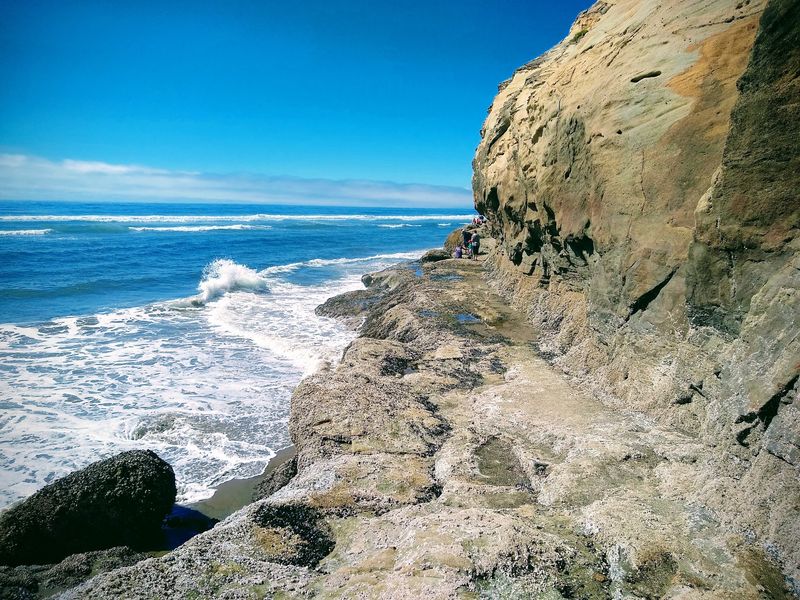
The waterfall, the sea caves, and the old road all depend on low tide. When the water rises, the point becomes impossible to pass. Worse, people can get stranded on the far side.
Visiting near low tide is essential, but no specific tide height guarantees safe passage because surf conditions and beach levels can change. Check a tide table before you even leave the house. Then plan to arrive a little before the lowest point.
That gives you time to explore without rushing. Keep an eye on the water as you go. The incoming tide can move faster than you expect.
Sneaker waves are another reason to stay alert on the Oregon coast. These surprise waves can rush far up the sand with little warning. Never turn your back on the ocean for long.
Treat tide timing as a serious safety requirement, since rising water can trap visitors on the far side of the headland. Get the timing right, and the whole headland opens up like a secret door. Get it wrong, and you’ll only see one small cave and a lot of splashing water.
Sea Caves Worth a Careful Peek
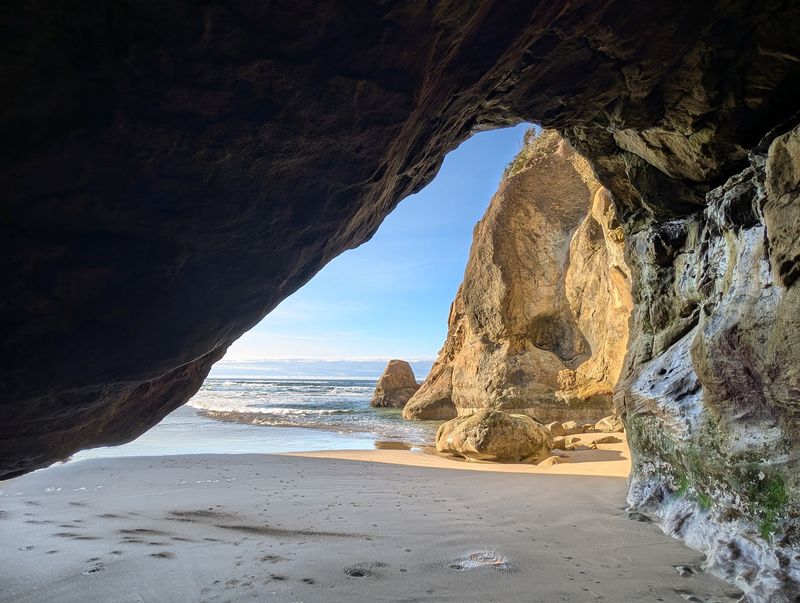
Waves have spent a very long time sculpting these cliffs. The result is a row of sea caves cut right into the sandstone.
Some caves are shallow and easy to step into. Others reach deeper into the rock and feel a bit more mysterious. All of them are best explored during low tide.
Kids tend to treat caves like built-in adventure zones. Adults usually do too, if we’re being honest. Just move slowly, since wet rock can get slippery.
Keep an eye on where you put your hands. Small sea critters sometimes hang out on the cave walls. They’re harmless, but nobody enjoys a surprise handshake with a bug.
The caves also come with a colorful backstory. During Prohibition in the 1920s, smugglers reportedly used these hideaways to stash illegal goods. That’s why some folks once called the area Smugglers Cove.
Today the only treasure is the view. Looking out from a cave toward the bright ocean makes a striking photo frame. Watch the water, step back out before the tide turns, and save some curiosity for the rest of the beach.
Old Wagon Ruts Still Carved in the Rock
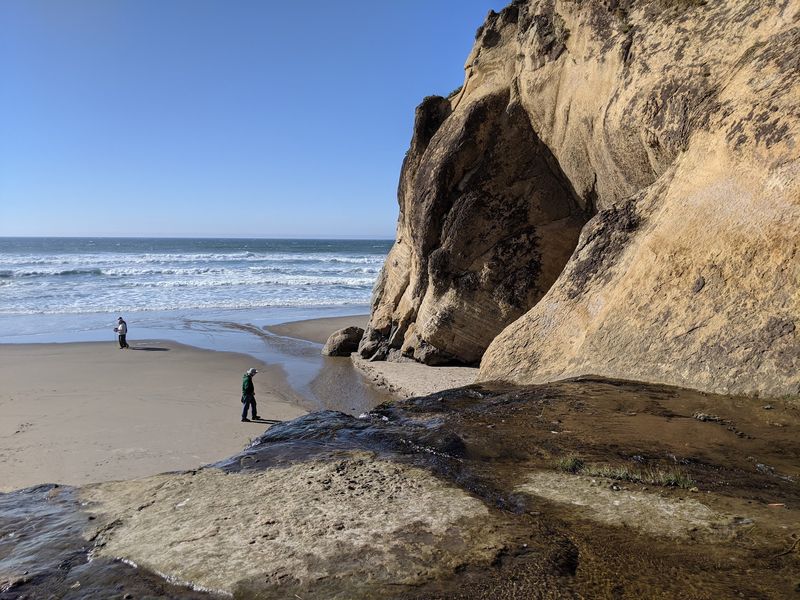
Long before Highway 101, the beach itself was the main road along this coast. Travelers had to time their trips around the tides, just like you do now.
Hug Point created a serious roadblock. The rocky headland stuck out too far to pass at most tides. So around the turn of the 20th century, someone chipped a primitive road into the rock.
Nobody knows exactly who did the work. Later, the path was widened with dynamite. Some sources say hand-holds were carved here as early as 1893.
Stagecoaches and early cars used this narrow route. Drivers had to hug the point tightly to dodge the incoming waves. That’s how the park earned its memorable name.
You can still see the old roadbed at low tide. Look for wagon wheel ruts etched right into the stone. It’s like finding tire tracks from over a century ago.
The carved road stayed in use until the Oregon Coast Highway was built between 1920 and 1936. Standing on it now feels oddly personal. You’re walking the same tight curve those nervous drivers once crawled along.
Tide Pools Packed With Tiny Neighbors
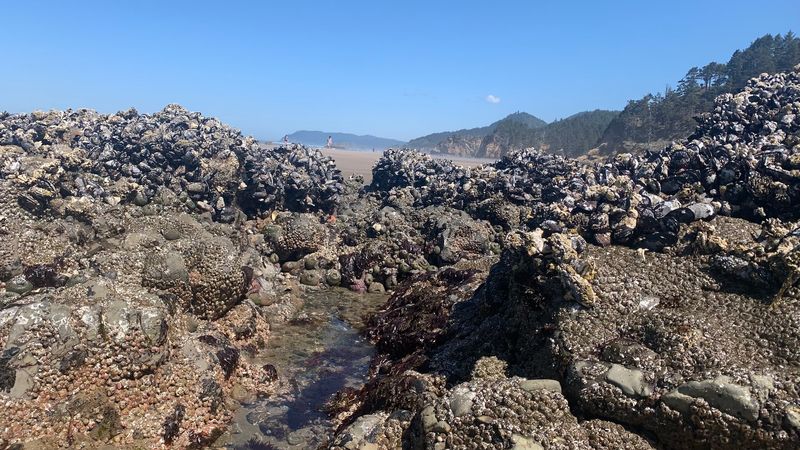
Sea stars in bright colors, spiky urchins, and squishy anemones all live here. Low tide is when they finally get visitors.
As the water pulls back, rocky areas reveal pools full of life. You might spot crabs scuttling sideways under ledges. Mussels and barnacles cover the rocks in crowded clusters.
Sea urchins can show up in surprising numbers. Their purple spines make the rocks look almost decorated. Anemones wave their soft arms in the shallow water.
Treat these pools like someone’s living room. Look closely, but avoid poking or pulling animals off rocks. Step on bare rock or sand instead of on living creatures.
A good tip is to walk slowly and let your eyes adjust. Small crabs and hidden critters often appear once you stop moving. Patience pays off far more than speed here.
Some of the best pools sit past the waterfall and around the point. That makes a low-tide trip a double win. You get the falls and a natural aquarium in the same walk, and nobody charges admission for either one.
A Sandy Cove Made for Doing Very Little
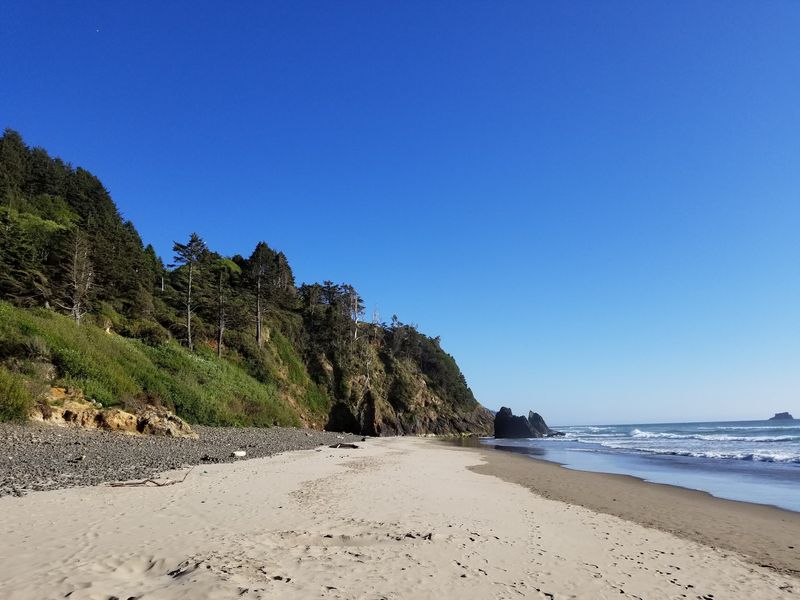
Not every beach day needs a mission. Sometimes the best plan is a long stroll and a good sit.
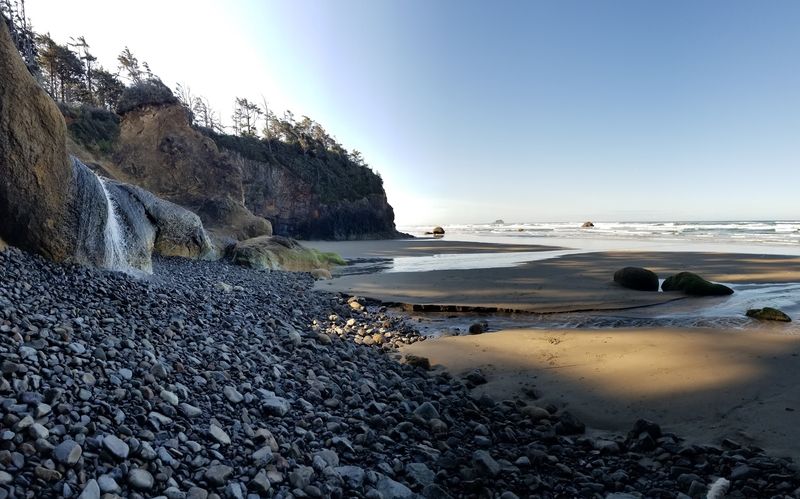
Hug Point State Recreation Site has a lovely sandy cove with wide views of the Pacific Ocean. Green hills rise behind the beach. They’re covered with salal, ferns, and tall Sitka spruce.
That mix of forest and ocean feels very Oregon. It’s great for beachcombing, picnicking, or just watching waves roll in. You could easily lose track of time here.
Beachcombers may find shells and interesting rocks along the sand. Keep your eyes down near the tide line. That’s where the ocean likes to leave its little gifts.
The Oregon Coast Trail also passes through the park along the beach. Hikers can use it to stretch their legs farther. It’s a nice option if you’re feeling energetic.
Sunset here can be especially pretty. The cliffs and rocks catch the warm evening light. Even at higher tide, part of the beach often remains for relaxing, so the cove still works when the point is closed off.
Picnic Tables Under the Trees, Restrooms Nearby
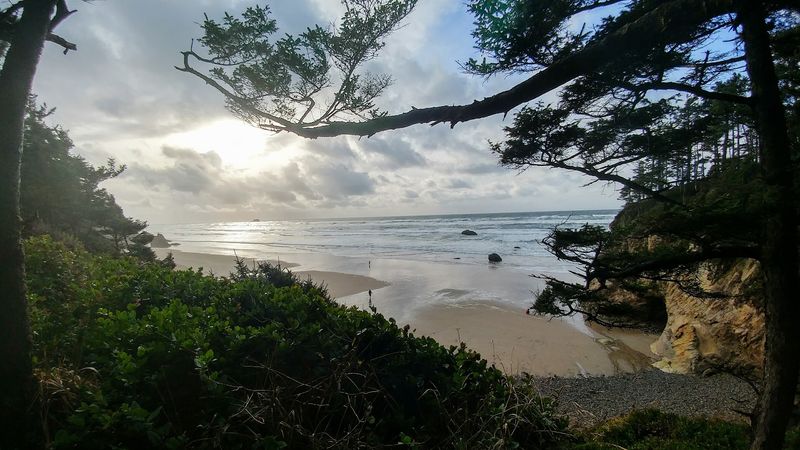
Exploring caves and chasing waterfalls builds an appetite fast. Luckily, the park has forested picnic areas ready for a break.
Pack lunch and grab a shady spot under the trees. The forest setting feels calm compared to the windy beach. It’s a nice reset before or after your tide walk.
Restrooms sit near the parking area. That’s a real bonus on a coast where facilities can be spread out. Just know they may not always be open.
A short walkway leads from the parking lot down to the beach. The route includes stairs and some rocky footing near the bottom. Go slowly, especially if you’re carrying kids or gear.
The path isn’t designed for wheelchairs. Anyone with mobility concerns should plan carefully. A helping hand on the last steps can make a big difference.
Dogs are welcome to enjoy the beach with you. Bring bags and clean up after your pup. A tidy beach keeps this place lovely for everyone, and your dog will be too busy sniffing seaweed to complain about the rules.
Getting There Is Easy if You Watch for the Turn
Blink, and you might cruise right past the turnoff. The entrance sits quietly along U.S. Highway 101.
You’ll find it about 5 miles south of Cannon Beach, near the small community of Arch Cape. The address is Beach Access Rd, Arch Cape, OR 97102. A steep driveway drops down to the parking lot.
Hug Point reopened in September 2026 after a roughly 10-month closure caused by erosion damage to its beach-access stairs, but repairs are temporary, so visitors should check current park notices before traveling. There’s no fee to visit. The Oregon Parks and Recreation Department manages the site.
Parking can fill up on spring and summer weekends. Arriving early or visiting on a weekday helps a lot. Weekdays can feel much quieter overall.
Please don’t park along the highway if the lot is full. Road shoulders here can be dangerous. Other beautiful beaches sit nearby, so you can try again later.
The park’s land story is fun too. The state got its first 1.3 acres from Clatsop County in 1957. Later purchases in 1968 and 1978 grew it to roughly 42 or 43 acres, which is a pretty big glow-up for such a modest start.
Plan Your Visit Around Rain, Tide, and Daylight
Great trips here come down to three things lining up. Rain feeds the falls, low tide opens the point, and daylight keeps you safe.
Fall and winter usually bring the strongest waterfall. Spring can also deliver after a wet season. Summer offers drier weather, but the falls may slow way down.
So choose your priority before you pick a date. Want a roaring waterfall? Go wetter. Want comfy beach weather?
Go drier and enjoy the caves and pools instead.
Next, match that date to a low tide during daylight hours. Exploring around the point in the dark is a bad idea. Give yourself plenty of time to get back before water returns.
Dress in layers, since coastal weather changes quickly. Wear shoes with grip for wet rocks and sand. A small towel helps after crossing the waterfall runoff.
This area also has deep roots. Native American tribes hunted and fished along this coast for thousands of years. Remembering that adds meaning to every step, and it makes Hug Point feel like far more than a pretty photo stop.
