Michigan hides some amazing museums that even longtime residents haven’t discovered yet. Beyond the famous Henry Ford Museum and Detroit Institute of Arts lie fascinating collections tucked away in small towns and unexpected locations. These lesser-known treasures showcase everything from maritime history to musical instruments, offering unique experiences without the crowds of more popular attractions.
1. Pickle Barrel House Museum
Nestled in Grand Marais sits a house literally shaped like two giant pickle barrels. Built in 1926 as a summer retreat for cartoonist William Donahey, this quirky structure once served as advertising for the Heinz pickle company.
Inside the wooden barrels, visitors discover period furnishings showing how the cartoonist and his wife actually lived in this tiny home. The main barrel served as their living and dining space, while the smaller barrel was their bedroom.
The museum opens seasonally from June through September, making it a perfect summer roadtrip destination when exploring Michigan’s Upper Peninsula.
2. American Museum of Magic
Hidden in downtown Marshall stands the largest magic museum in the United States open to the public. Founded by amateur magician Robert Lund, this charming collection houses over half a million magical artifacts, posters, and memorabilia from famous illusionists.
Visitors marvel at Harry Houdini’s handcuffs, Doug Henning’s costumes, and vintage magic kits that sparked childhood wonder decades ago. The museum occupies a historic 1868 building that once served as a saloon and later a billiard parlor.
Even skeptics find themselves enchanted by the stories behind famous magic tricks and the personalities who performed them throughout history.
3. Tuskegee Airmen National Museum
Tucked inside Detroit’s Coleman A. Young International Airport sits a powerful tribute to America’s first African American military pilots. Many Michiganders drive past without realizing this important historical collection exists right in their backyard.
The museum features original aircraft, flight simulators, and compelling personal stories of the brave men who fought discrimination while defending their country during World War II. Visitors can see a restored PT-17 Stearman biplane similar to what cadets trained on.
What makes this museum special is how it connects Michigan directly to this pioneering group – several Tuskegee Airmen called Detroit home after their service.
4. Marvin’s Marvelous Mechanical Museum
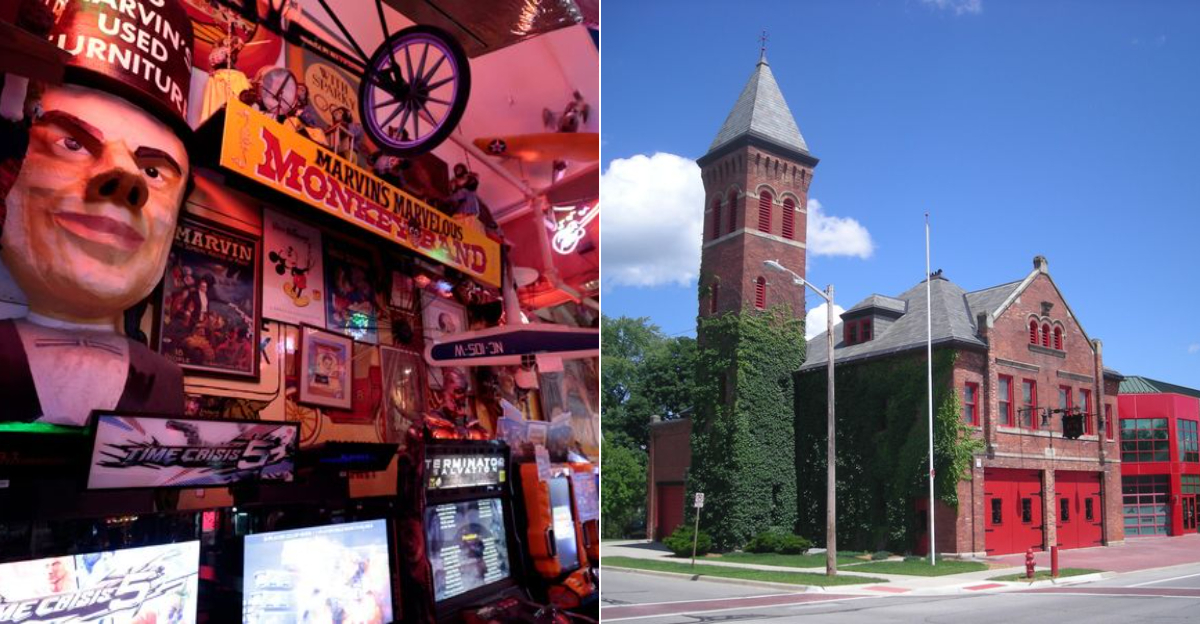
A sensory explosion awaits at this hidden gem in Farmington Hills. Not quite a traditional museum, Marvin’s houses the world’s largest collection of vintage coin-operated machines, bizarre automatons, and carnival curiosities gathered by pharmacist Marvin Yagoda over decades.
Flashing lights bounce off antique fortune teller machines while mechanical music fills the air. Kids and adults alike can play century-old arcade games still in working condition or watch mechanical dioramas perform their jerky dances when activated by quarters.
Unlike silent, stuffy museums, this lively space encourages visitors to touch, play, and interact with history through these lovingly restored mechanical wonders.
5. Wellington Farm Park
Step back into the Great Depression at this living history museum near Grayling. Most travelers zip past on I-75 without knowing this 60-acre working farm exists, demonstrating how rural Michiganders survived the 1930s economic collapse.
Volunteers in period clothing operate original equipment in the blacksmith shop, gristmill, and sawmill. The farm’s depression-era general store sells penny candy just as it would have nearly a century ago. Visitors can watch demonstrations of forgotten skills like making lye soap or pressing apple cider.
What makes Wellington special is its focus on a difficult period in Michigan history that shaped an entire generation’s attitudes toward work and frugality.
6. Leelanau Historical Society Museum
Housed in an 1853 stone building in Leland’s historic Fishtown district, this small museum tells the fascinating story of the Leelanau Peninsula’s diverse cultural heritage. The collection focuses on Native American history, early European settlers, and the area’s maritime traditions.
Artifacts range from delicate Ojibwe beadwork to commercial fishing equipment that once supported the local economy. Photographs document the peninsula’s transformation from isolated farming and fishing communities to a premier tourist destination.
Summer visitors flock to nearby wineries and beaches, often missing this historical treasure that explains how the region’s unique character developed through generations of hardworking residents.
7. Music House Museum
A converted barn near Traverse City houses one of America’s most impressive collections of automated musical instruments. Founded by two local businessmen passionate about mechanical music, this museum showcases everything from tiny music boxes to a massive 1922 Mortier dance organ from Belgium.
The highlight for many visitors is the 1922 Wurlitzer theater organ originally installed in Detroit’s Fisher Theatre. Guided tours include demonstrations of these remarkable instruments, bringing century-old technology to life through melodies that once entertained generations past.
The museum sits among cherry orchards and vineyards, making it easy to miss despite being just minutes from Traverse City’s busy tourist areas.
8. Gilmore Car Museum
Spread across 90 rural acres near Hickory Corners sits North America’s largest auto museum that somehow remains unknown to many Michiganders. The museum campus features multiple historic buildings including a 1930s gas station, a 1941 diner serving authentic blue plate specials, and several restored barns housing over 400 vehicles.
Unlike many automotive museums focusing solely on luxury or performance cars, the Gilmore collection tells the complete story of America’s automotive heritage. Visitors can see everything from an 1899 Locomobile to muscle cars of the 1970s.
The museum’s Disney-esque attention to historical context sets it apart, creating immersive environments around the vehicles rather than simply displaying them.
9. Muskegon Heritage Museum
Housed in a century-old industrial building downtown, this museum celebrates Muskegon’s manufacturing history through working machinery demonstrations. The centerpiece is a massive working 1893 Corliss steam engine that once powered the city’s factories, now lovingly restored by retired engineers.
Visitors watch craftsmen operate vintage equipment that produced everything from piano parts to paper products during Muskegon’s industrial heyday. One fascinating exhibit showcases the Brunswick bowling equipment once manufactured in the city, explaining how Muskegon helped create America’s bowling culture.
Despite its significant collection, the museum operates with volunteer staff and limited hours, making it one of West Michigan’s best-kept historical secrets.
10. Besser Museum for Northeast Michigan
Alpena’s cultural gem combines natural history, art, and technology in a surprisingly comprehensive collection. The museum’s planetarium offers stellar shows about Michigan’s night skies, while the recreated pioneer village transports visitors to the region’s lumber boom days.
Native American artifacts dating back thousands of years showcase the area’s original inhabitants. The museum takes its name from the Besser Company, which revolutionized concrete block manufacturing – an industry highlighted through working machinery demonstrations.
Located away from Michigan’s major tourist corridors, this museum receives mostly local visitors despite offering exhibits that rival those found in much larger cities.
11. Michigan Firehouse Museum
Behind the bright red doors of Ypsilanti’s original 1898 firehouse stands a loving tribute to firefighting history. The museum combines the restored fire station with a modern addition housing antique fire trucks, hand-pumped engines, and firefighting equipment spanning over 200 years.
Children marvel at the brass fire poles while adults appreciate the collection of alarm systems, extinguishers, and personal gear showing how firefighting technology evolved. The museum’s memorial wall honors Michigan firefighters who lost their lives in the line of duty.
Despite being just minutes from Ann Arbor’s popular attractions, many visitors discover this gem only by accident while exploring Ypsilanti’s historic Depot Town neighborhood.
Dear Reader: This page may contain affiliate links which may earn a commission if you click through and make a purchase. Our independent journalism is not influenced by any advertiser or commercial initiative unless it is clearly marked as sponsored content. As travel products change, please be sure to reconfirm all details and stay up to date with current events to ensure a safe and successful trip.
