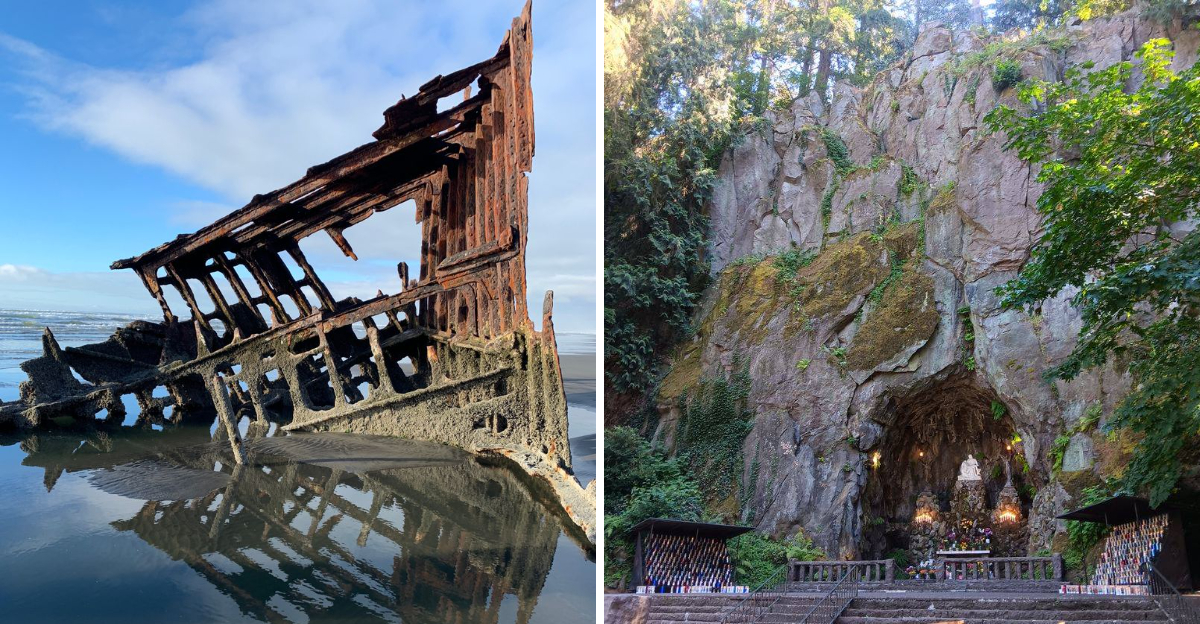
Winter in Oregon reshapes the roadside into a theater of mist, tide, and evergreen glow.
You roll past quiet towns and discover places that feel designed for the cold, where waves thunder and moss wakes bright against basalt.
The crowds thin, the air sharpens, and suddenly those detours look irresistible.
You can time the weather, pick your windows, and still find paths and museums open when you need them.
The coast becomes moodier, the forests deepen, and the Gorge trades shimmer for drama.
What you get is intimacy, shorter lines, and light that makes photos look cinematic without trying.
If Oregon is your favorite summer drive, this season will change your map for good.
1. Sea Lion Caves, Florence
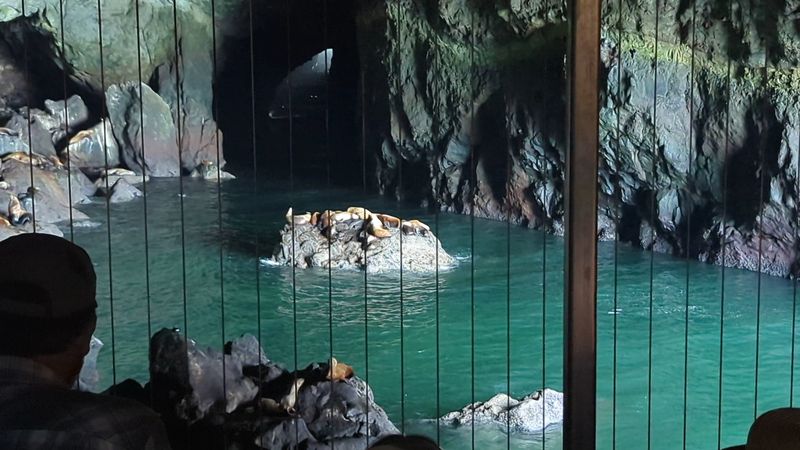
Winter favors this cavern, because the Steller sea lions often shelter inside when swells rise outside.
You ride the elevator down the basalt cliff and step into a dim chamber where the surf booms like distant thunder.
Benches face the colony, and the platform stays protected, so you can linger while spray flickers at the cave mouth.
Bring layers, since ocean air chills quickly, and plan patience while the animals shuffle and roar over the rocks.
Interpretive signs explain migration and habitat, and staff share updates on visibility when storms roll through.
Photography works best with higher ISO, and a lens cloth helps when mist drifts across the viewing windows.
The gift shop upstairs offers warm shelter if the wind cuts, and the cliff viewpoints deliver sweeping coastline frames.
Parking sits close to the entrance, which helps on short winter daylight and brisk coastal mornings.
Road conditions along the scenic highway can be wet and gusty, so watch for standing water and drive with care.
The cave feels timeless, yet winter turns it into a living amphitheater that you will remember.
Sea Lion Caves, 91560 Highway 101, Florence, Oregon.
2. Thor’s Well, Cape Perpetua Scenic Area, Yachats
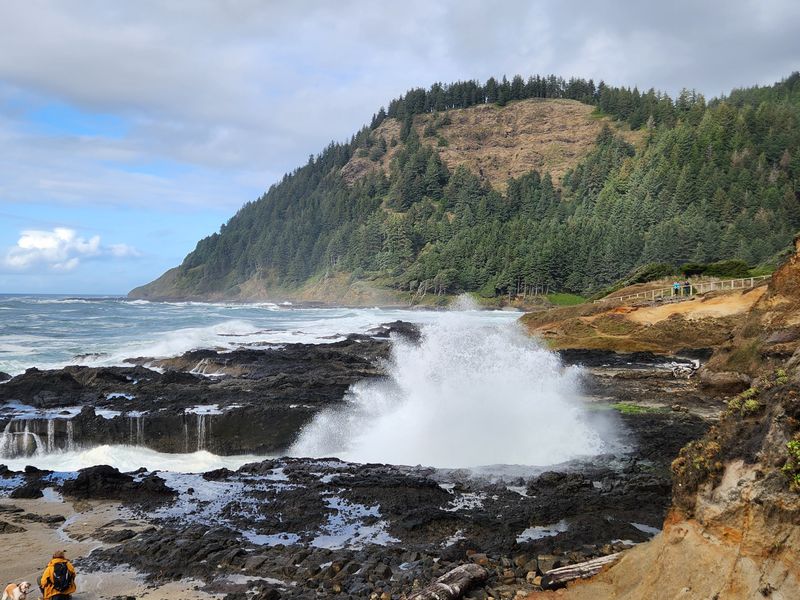
Thor’s Well turns wild in winter, when swells surge and drain into the basalt opening like a breathing earth.
You stay well back from the edge, because sneaker waves ignore every plan and timing chart.
The drama lives in the rhythm, foam lifting, then sliding into the bowl as spray laces the air.
Good boots help on slick rock, and a rain shell keeps you comfortable between bursts of wind.
Tripods need stable footing, so arrive with caution, and avoid low ledges during active surf.
Nearby viewpoints along Cape Perpetua offer safer perspectives, with parking turnouts and short paths.
Interpretive panels explain the volcanic shoreline, and winter color shifts create striking contrasts for photos.
Cloud gaps sometimes gift silver beams that transform the entire headland into a stage.
Keep plans flexible, because conditions can change fast, and high tide adds both spectacle and risk.
You will leave with salt on your jacket and the coast roaring in your ears.
Thor’s Well, Cape Perpetua Scenic Area, 2400 Highway 101, Yachats, Oregon.
3. Wreck of the Peter Iredale, Fort Stevens State Park, Warrenton
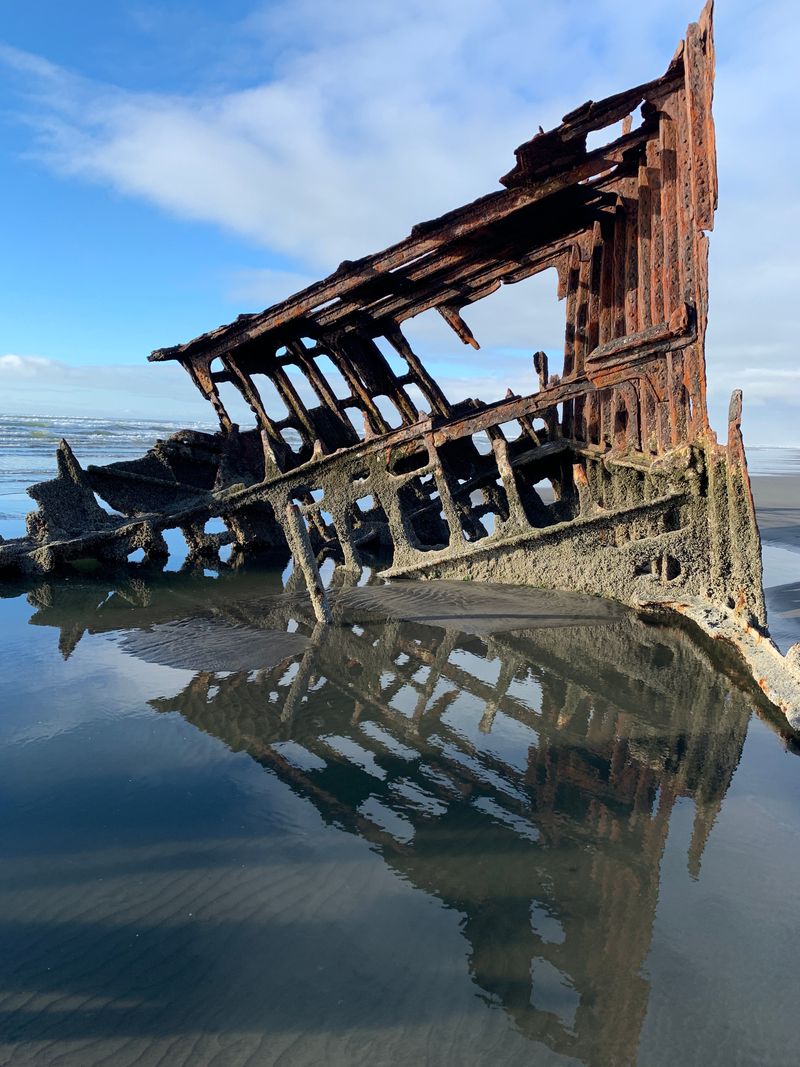
The steel ribs of the Peter Iredale lean out of the sand like a weathered sculpture in winter light.
Low sun and drifting mist give the beach a subdued palette that flatters every angle.
You can walk from the nearby lot along firm sand and reach the wreck with ease.
Tides shift the foreground, sometimes reflecting the bones in a shimmering mirror.
A windproof layer helps, and gloves make camera work friendlier when the chill bites.
Interpretive signs recount the grounding, and the surrounding park offers wide beach walks.
Winter often means fewer visitors, so compositions stay clean, and your footprints tell the story.
Stormy days add mood, but check tide times and avoid surf zones when seas grow rowdy.
Sunbreaks can paint rust with sudden warmth, then fade to pewter in minutes.
It is a classic Oregon stop that feels new when the season quiets the coastline.
Peter Iredale Wreck, Fort Stevens State Park, 100 Peter Iredale Road, Warrenton, Oregon.
4. Drift Creek Falls Suspension Bridge, Lincoln City Area
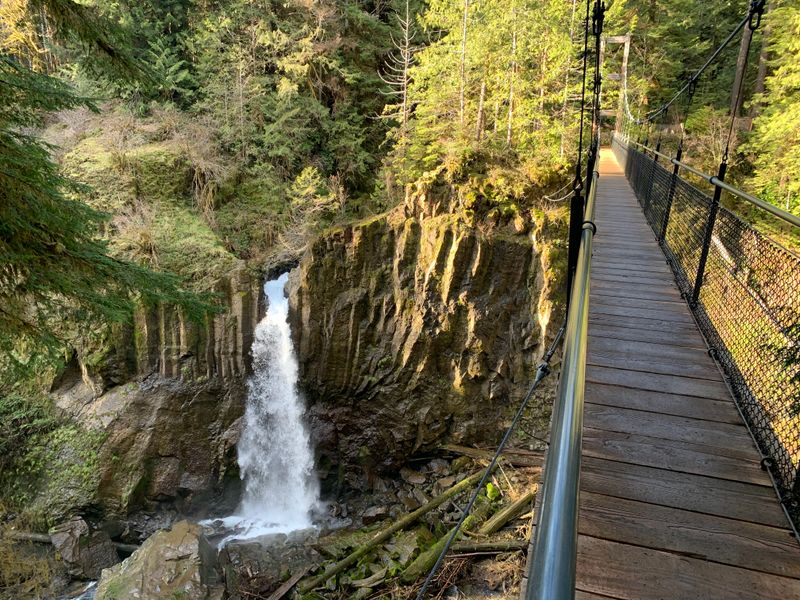
This trail offers a steady walk under Sitka spruce and hemlock, ending at a high suspension bridge over a roaring falls.
Winter keeps the moss bright and the water loud, while the path stays mostly clear at lower elevation.
You start from the trailhead and descend gently through ferns, with footbridges and switchbacks that feel friendly.
Trail surfaces can be slick, so sturdy shoes and patience pay off in comfort.
The bridge moves slightly underfoot, adding a playful thrill without feeling precarious.
Views down the canyon tighten into a photogenic frame, especially when mist rises from the plunge pool.
Signage notes seasonal access, and Highway 18 often offers the most reliable approach.
Carry a warm layer, because canyons trap cool air even when the coast feels mild.
Cell service can be spotty, so download maps before leaving town.
Even a short stop rewards careful observation of ferns, moss, and rushing water.
The slight sway of the bridge encourages slowing down, noticing the canyon’s scale and texture.
Photographs capture mist, shadows, and the layered forest in ways the eye alone might miss.
Walking back, the sound of the falls lingers, carrying a sense of calm through the forest trail.
The soundtrack is water, wind in needles, and your footsteps crossing steel grating into spray.
Drift Creek Falls Trailhead, 2400 Forest Service Road 17, Otis, Oregon.
5. Toketee Falls, Umpqua National Forest
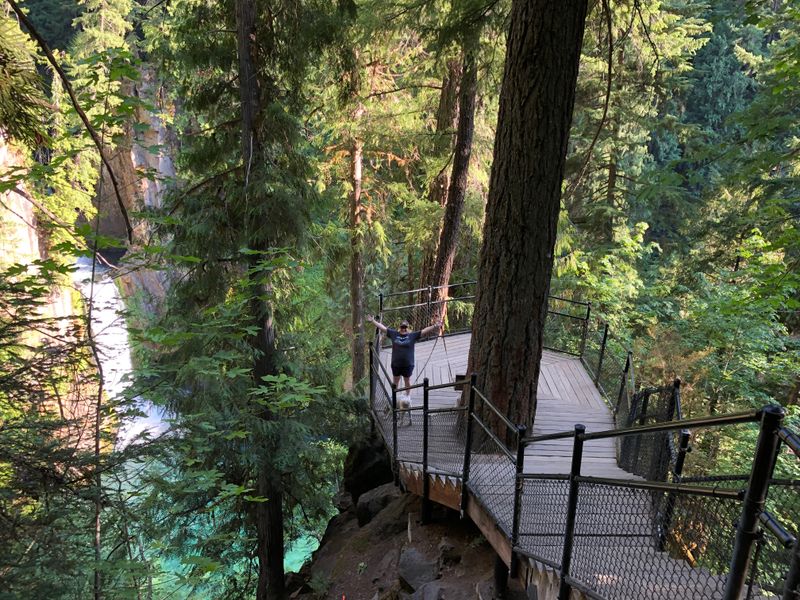
Toketee Falls drops in two clean tiers through columnar basalt, and winter lends the scene crisp air and soft steam.
The short path rolls through forest to a sturdy overlook that feels safe and photogenic.
You listen to the river tighten into a channel before it vaults into the amphitheater below.
Icicles can fringe the walls during cold snaps, though the trail remains a manageable outing.
Bring traction if forecasts hint at frost, and take your time on wooden steps.
The basalt pattern resembles organ pipes, and a mid lens captures both tiers cleanly.
Parking sits near the trail, and the walk keeps you close to the highway for winter timing.
Quiet mornings deliver gentle fog that lifts as light grows, revealing the cyan pool.
Respect barriers at the viewpoint, because rock edges can be unstable and slick.
It is a compact stop that rewards patience with layered textures and steady sound.
Even a brief pause lets you notice the subtle mist patterns and shifting light on the basalt.
Birdsong and the roar of water combine into a steady, meditative rhythm.
Winter colors – deep evergreens, dark rock, and icy accents – create a striking contrast.
Photographers find multiple angles, from wide shots capturing both tiers to close-ups of frosted edges.
The trail’s compactness makes it ideal for a short stop without feeling rushed, even in cold weather.
Walking away, the sound and sight of the falls linger, a calm reminder of Oregon’s layered landscapes.
Toketee Falls Trailhead, North Umpqua Highway, Idleyld Park, Oregon.
6. Oregon Film Museum, Astoria
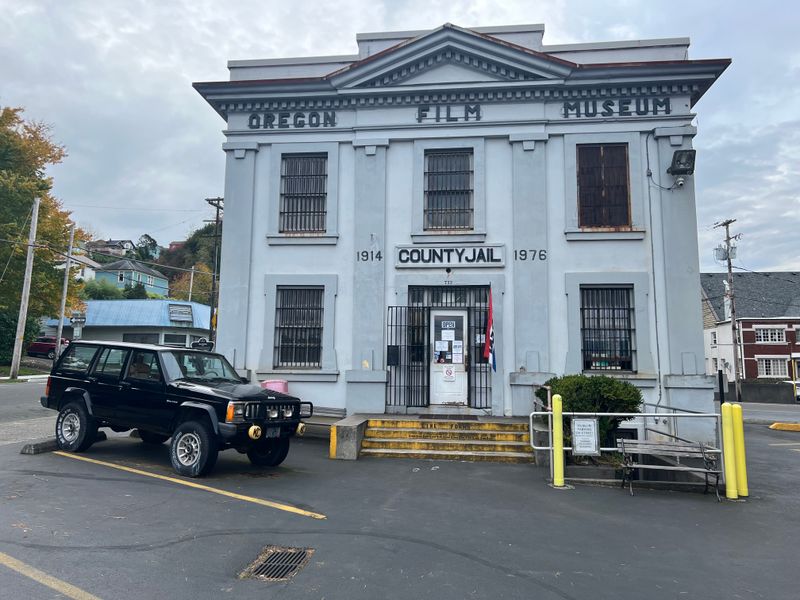
This compact museum sits inside the former Clatsop County Jail, and winter rain turns it into a perfect indoor pause.
Exhibits highlight productions filmed across Oregon, with sets, props, and behind the scenes details.
You can step into small staged rooms that recreate scenes and offer lighthearted photo spots.
Staff share background on locations, and screens loop clips that connect town blocks to famous frames.
The building itself tells a story, with preserved cells and corridors that echo on quiet afternoons.
It pairs well with nearby maritime sites, making a tidy Astoria circuit within walking distance.
Bring curiosity and a camera, because signage invites exploration without rushing.
Winter hours are posted at the entrance, and the lobby provides shelter while showers pass.
The tone is playful, yet it honors craft and community roots in statewide filmmaking.
You leave with a list of places to scout on your next Oregon loop.
Even brief visits reward attention, revealing small props and Easter eggs tucked into displays.
The contrast between historic jail architecture and colorful film sets creates a playful tension.
Staff anecdotes bring the local film scene to life, connecting movies to streets and landmarks outside.
Interactive spots invite visitors to step into scenes, making the museum feel lively without crowding.
Photography captures both the architecture and the playful exhibits, especially on gray, rainy days.
Walking out, you carry both curiosity and a sense of connection to Oregon’s creative communities.
Oregon Film Museum, 732 Duane Street, Astoria, Oregon.
7. Petersen Rock Garden and Museum, Redmond Area
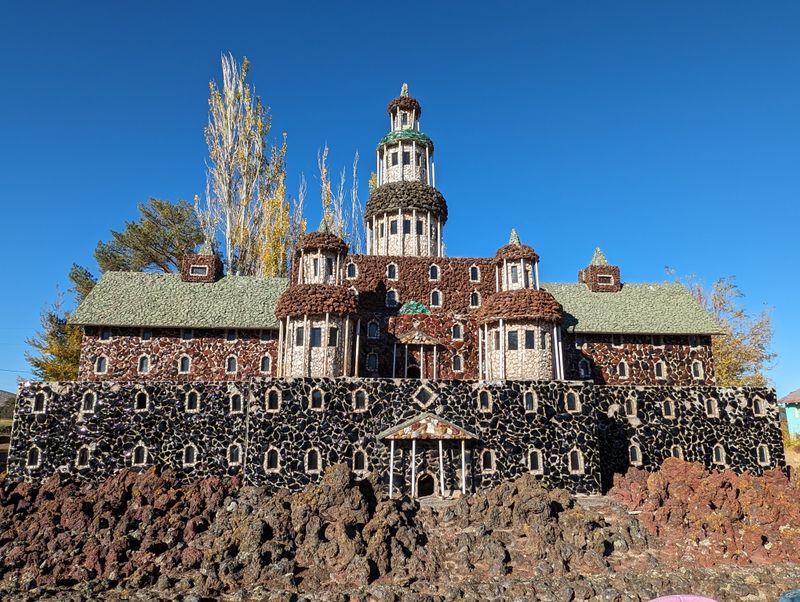
This quirky landmark spreads miniature castles and bridges across a small park built from colorful stones and fossils.
Winter quiet lets you wander at your pace, listening to gravel crunch and watching peacocks strut if they appear.
Textures rule here, with mosaics, shells, and glass catching pale light between conifers.
Paths thread around ponds and arches, and the museum rooms display regional minerals and keepsakes.
Some features show age, which adds charm, and care is advised on damp steps.
It feels homemade and heartfelt, perfect for travelers who favor character over polish.
Photography thrives on overcast, because contrast stays gentle and colors read true.
Bring warm layers, since the open grounds can feel brisk on high desert afternoons.
The experience is unhurried, and every corner reveals another surprising pattern.
You will drive away with pockets free of stones and a camera full of textures.
Even a short stroll rewards careful attention, revealing hidden mosaics and tiny architectural flourishes.
The garden invites a slow pace, letting light, shadow, and texture guide the eye.
Sounds of wind and birds enhance the feeling of stepping into a miniature, living world.
Small details – a fossil here, a patterned stone there – spark curiosity and quiet wonder.
Leaving the garden, you carry a sense of delight in handmade creativity and Oregon’s subtle beauty.
Petersen Rock Garden and Museum, 7930 SW 77th Street, Redmond, Oregon.
8. The Shoe Tree, Near Mitchell
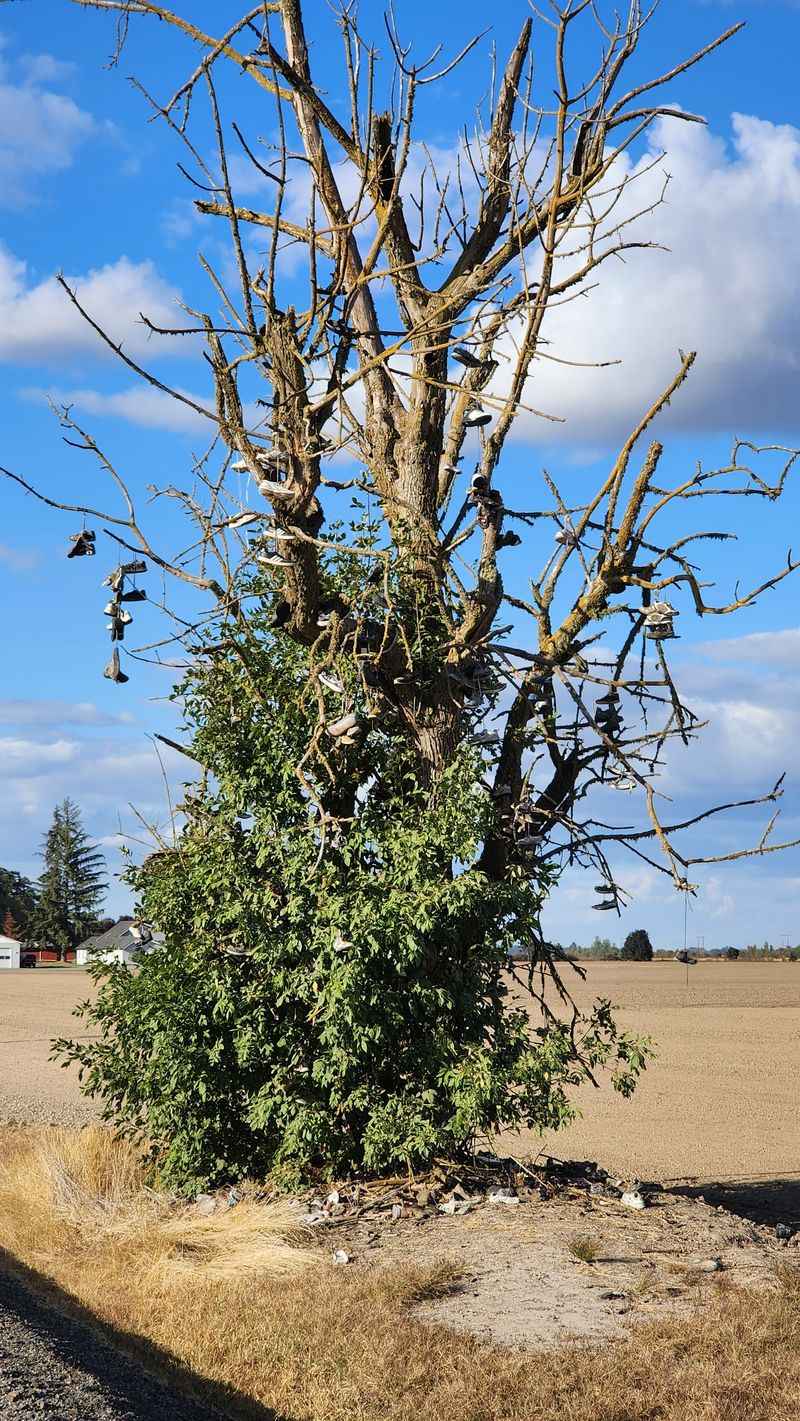
Out along Highway 26, a cottonwood bristles with hundreds of shoes that sway and clack in the wind.
It is a tiny stop that feels like a roadside riddle, inviting quick photos and smiles.
You pull into a wide shoulder, step out, and listen to the quiet sweep of the high desert.
Winter brings crisp air and clean light, which makes the silhouette read sharply against the sky.
Leave the branches as you find them, because the charm lives in accumulated stories.
Nearby rock formations create a simple frame, and the empty road amplifies the mood.
Clouds roll fast over the hills, shifting shadows across wheat tones and sage.
It is pure Americana, stitched into Oregon with twine and memory.
Five minutes is enough, yet the image lingers long after the engine starts.
You will remember the clatter when the next trailhead feels too quiet.
The wind becomes part of the installation, turning each shoe into a small, kinetic sculpture.
Stopping here invites a pause, letting the emptiness of the surrounding desert sink in.
Even brief visits spark imagination, as you wonder about travelers who left their mark.
Shadows stretch and shrink as the sun moves, giving the tree a subtly shifting personality.
Driving away, the image clings – a playful, fleeting reminder of Oregon’s roadside whimsy.
The Shoe Tree, US Highway 26 pullout, near Mitchell, Oregon.
9. National Neon Sign Museum, The Dalles
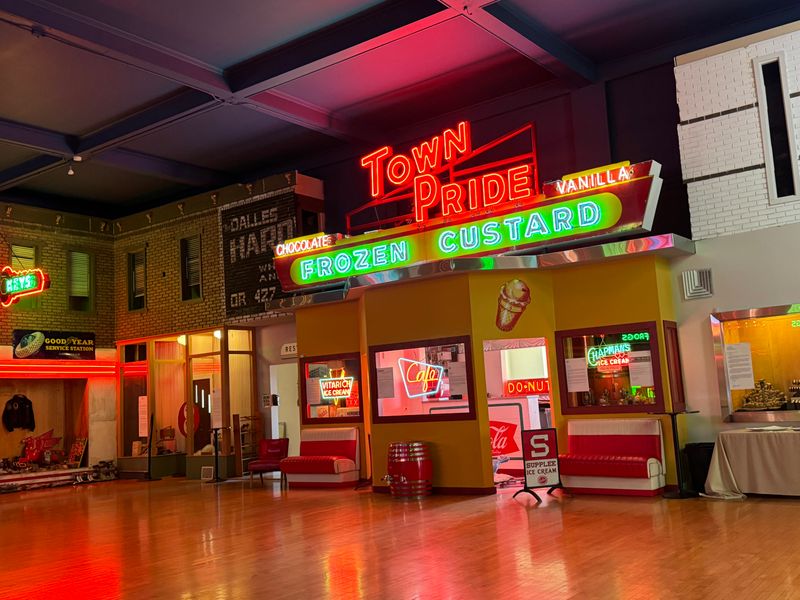
When skies turn gray in the Gorge, the glow inside this museum feels warm and kinetic.
Rooms stack with restored neon, chase lights, and marquees that chart a century of design.
You stroll through curated galleries that explain materials, typography, and the craft of bending glass.
Interpretive panels keep the focus on culture and cities, while the layout invites slow pacing.
Photographers will love reflections on polished floors and the layered color fields.
It is a perfect roadside pause that pairs with river viewpoints between showers.
Volunteers and staff answer questions and point out hidden details worth a second look.
Winter hours are posted online, so plan your time around daylight and dinner.
The building itself is handsome, and the lobby gives you a bright welcome from the street.
You leave charged up to spot vintage signs on your next Oregon drive.
Even brief visits spark an appreciation for craftsmanship and design that often goes unnoticed.
The glow of neon and reflections on polished surfaces create a playful, immersive atmosphere.
Small details – a carefully restored letter, a subtle animation, a hidden logo – reward careful eyes.
Pausing here encourages noticing the way light and color shape experience, both in the museum and on the street.
Walking out, you carry a renewed sense of curiosity, spotting beauty in familiar signs and cityscapes along your route.
National Neon Sign Museum, 200 E 3rd Street, The Dalles, Oregon.
10. The Grotto, Portland
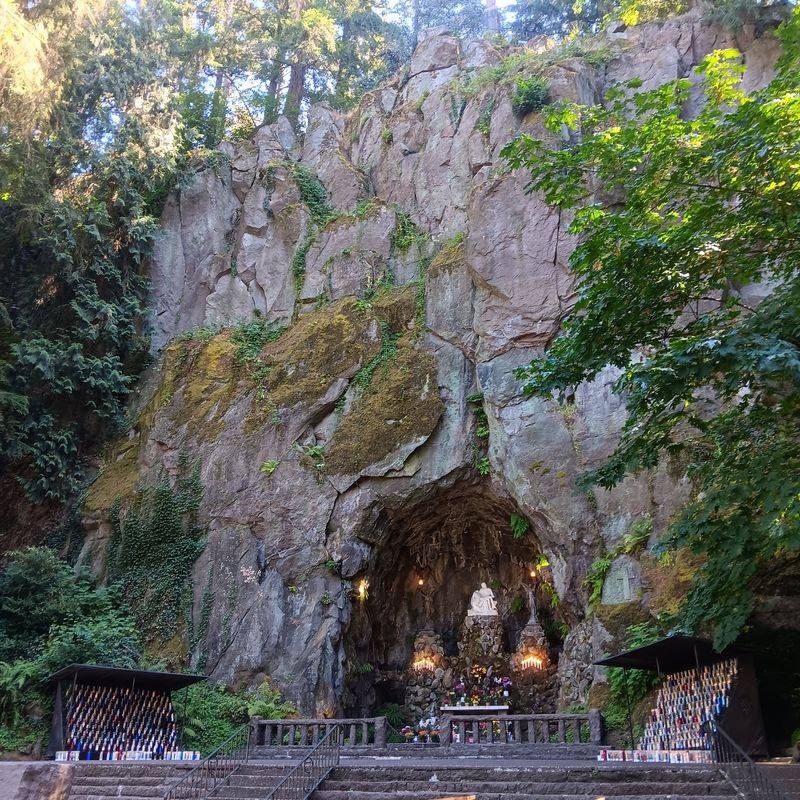
This sanctuary sits on a forested hillside, offering quiet paths, chapels, and viewpoints above the city.
Winter brings a gentle hush, and the grounds feel especially peaceful after a rain.
You can ride the elevator to the upper garden and stroll among evergreens and statuary.
Seasonal lights add a soft glow on select evenings, creating a reflective atmosphere.
Benches tuck into alcoves, and signage shares the story of the site and its mission.
Dress for cool air, because the hillside catches breeze even on calm days.
Photography favors the architecture, pathways, and trees, keeping the mood thoughtful.
It is a welcome pause between city errands and longer Oregon road loops.
Monastic calm pairs with panoramic views that open over rooftops and river.
You will carry the quiet with you long after the gate fades in the mirror.
Walking slowly here feels intuitive, as if the setting gently adjusts your pace.
Sounds of traffic dissolve into wind, bells, and the soft crunch of gravel underfoot.
Moments of stillness arrive easily, without instruction or expectation.
Leaving the grounds, the city feels less insistent and the day more balanced.
The Grotto, 8840 NE Skidmore Street, Portland, Oregon.
Dear Reader: This page may contain affiliate links which may earn a commission if you click through and make a purchase. Our independent journalism is not influenced by any advertiser or commercial initiative unless it is clearly marked as sponsored content. As travel products change, please be sure to reconfirm all details and stay up to date with current events to ensure a safe and successful trip.
