I’ll be honest with you. I’ve driven past plenty of Indiana exits without a second glance, assuming there was nothing out there worth slowing down for.
But after years of poking around back roads and stumbling onto things that made me pull over and just stare, I can tell you that Indiana is hiding some genuinely wild, beautiful, and weird stops that most people never see.
From a ball of paint that’s been growing for decades to a church with no roof and all the sky, this state has a personality that doesn’t advertise itself loudly.
You have to go looking. And trust me, once you start, you won’t want to stop.
1. World’s Largest Ball of Paint
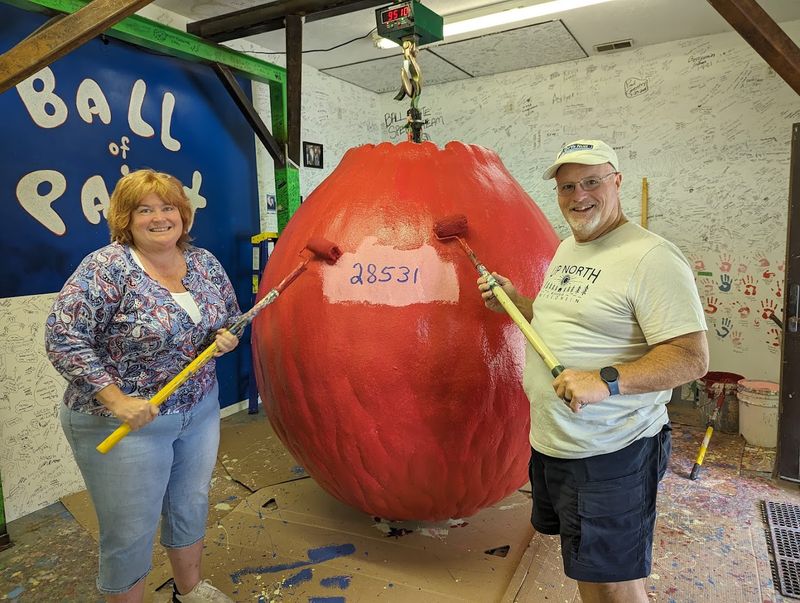
Nobody sets out to build a world record in their garage, but that’s exactly what Mike Carmichael did starting in 1977 with a single baseball and a coat of paint. What lives at 10696 N 200 W in Alexandria, Indiana, today is a jaw-dropping sphere that weighs over 5,000 pounds and has been painted more than 26,000 times.
Visitors are actually invited to add their own layer, which makes this one of the most interactive roadside attractions anywhere in the country.
The ball sits in a modest outbuilding on a private property, and the Carmichael family has welcomed curious strangers for decades with genuine warmth. You bring your own paint color, they hand you a brush, and suddenly you’re part of something much bigger than yourself.
It’s oddly moving for what is, technically, a painted baseball.
Plan to spend about 30 minutes here, and consider stopping at the nearby Alexandria Main Street district for a bite before or after. This stop is proof that the most memorable places are often the ones nobody expects.
2. Muensterberg Plaza & Clock Tower
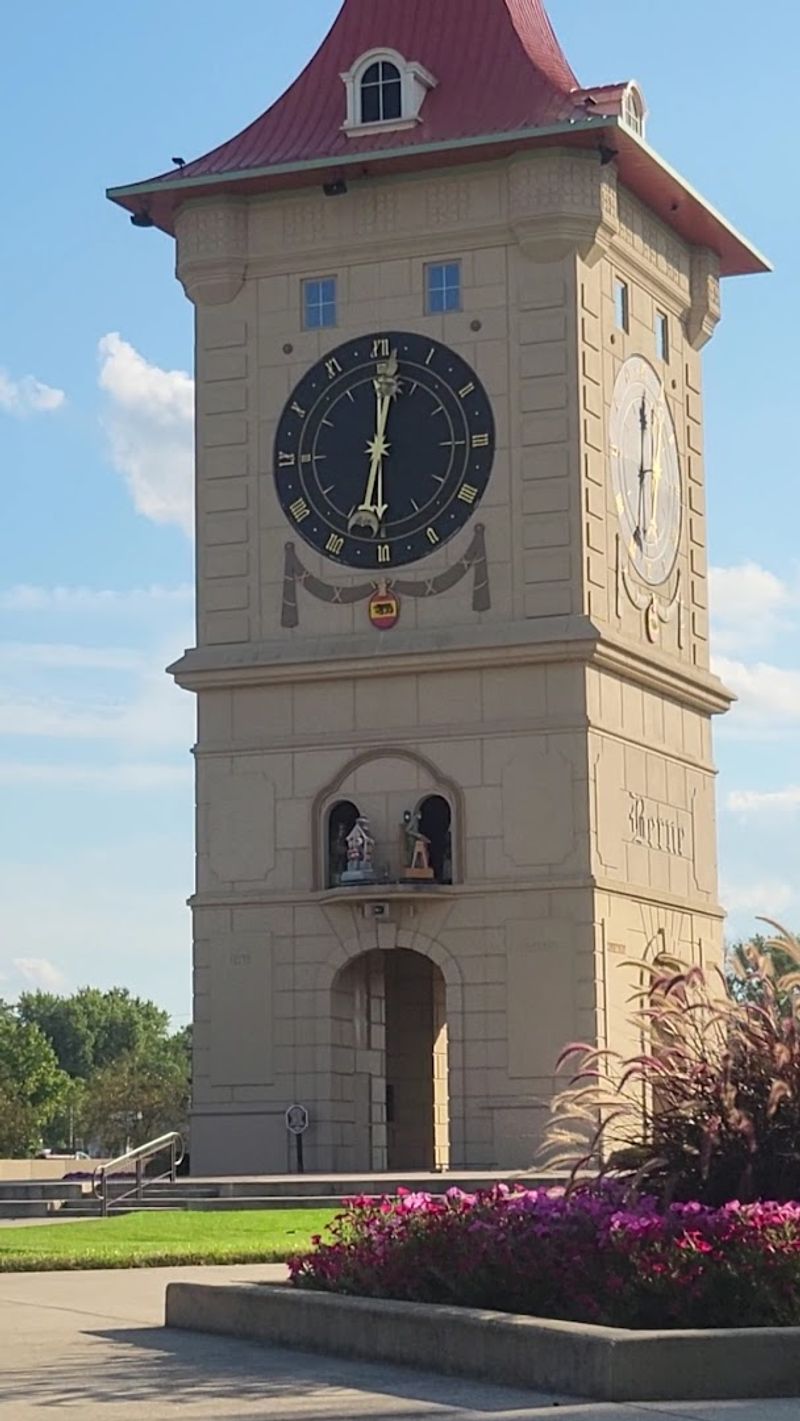
Berne, Indiana, has a story rooted in Swiss Mennonite heritage, and nowhere is that more visible than at Muensterberg Plaza and its striking clock tower at 160 N Church St. The plaza feels like a small corner of Switzerland dropped into the flat Indiana countryside, and that contrast alone makes it worth the detour. The clock tower chimes on the hour and draws visitors who weren’t even looking for it.
The surrounding downtown is walkable and genuinely charming, with local shops and bakeries that reflect the town’s cultural roots. Berne hosts the annual Swiss Days festival every July, pulling in crowds who come specifically for the food, crafts, and community spirit.
But visiting outside of festival season has its own quiet appeal, when the plaza feels almost entirely yours.
Grab something from a local bakery and sit near the tower for a few minutes. The architecture here isn’t trying to imitate anything.
It’s a living continuation of a culture that the original settlers brought with them generations ago. For a town of fewer than 4,000 people, Berne punches well above its weight in character and charm.
3. The Giant Mushroom at Krider Gardens
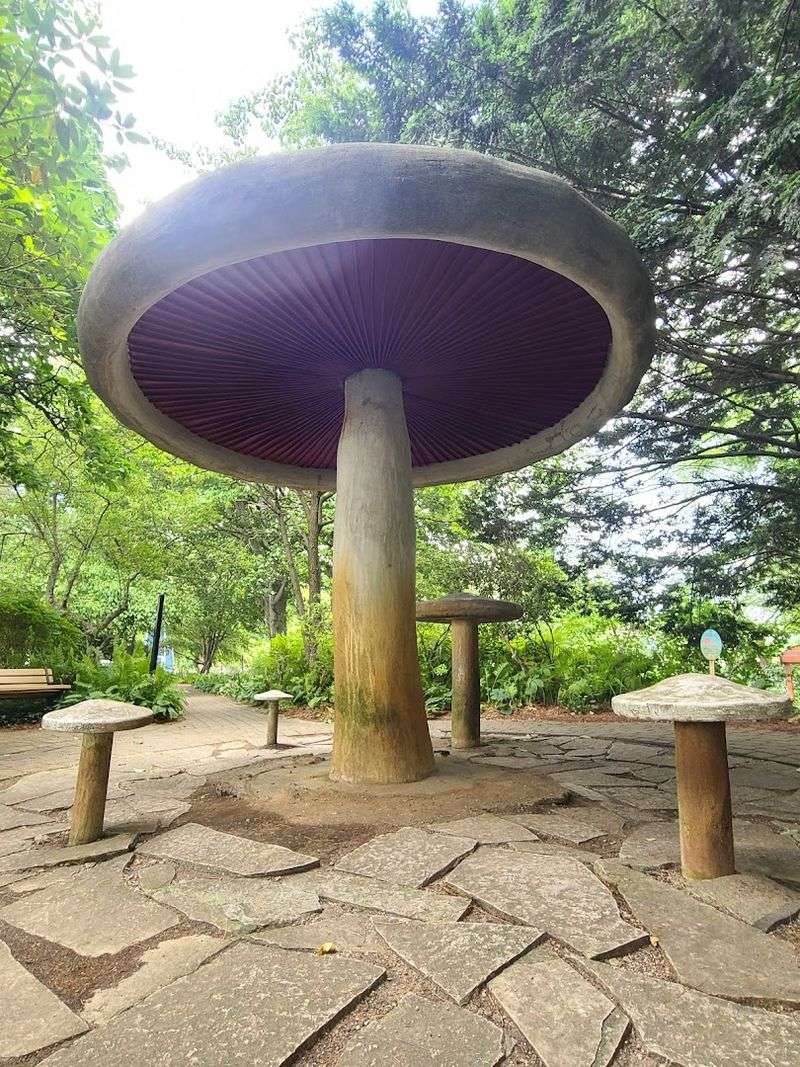
Krider World’s Fair Gardens in Middlebury has been a local treasure since the 1930s, and the giant concrete mushroom sitting at its heart is one of the most photographed oddities in northern Indiana. The gardens at 302 W Bristol Ave were originally developed by a nurseryman named Krider who wanted to showcase plants from the 1933 Chicago World’s Fair.
What grew from that vision is a peaceful, slightly surreal green space that feels frozen in a gentler era.
The mushroom itself is oversized and cartoonish in the best possible way, rising out of the garden beds like something from a storybook. Children gravitate toward it immediately, and adults tend to laugh and then quietly admit they want a photo too.
The surrounding gardens are well-maintained and free to visit, making this an easy and rewarding stop on any northern Indiana road trip.
Middlebury sits in the heart of Amish country, so the drive in and out is scenic and unhurried. After the gardens, the town’s local restaurants and shops are worth a slow walk-through.
There’s a calm here that’s hard to find closer to the highway. The mushroom is the hook, but the whole atmosphere of Krider Gardens is what actually keeps people lingering longer than they planned.
4. The KokoMantis Sculpture
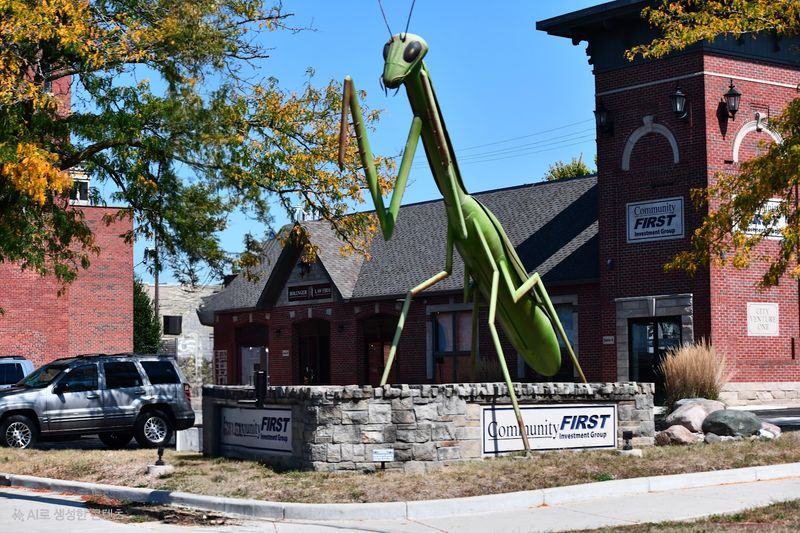
Kokomo has been reinventing itself for years, and the KokoMantis sculpture at 259 W Sycamore St is one of the boldest statements that city has made about its creative identity. The giant praying mantis, constructed from repurposed metal, stands several feet tall and commands attention in a way that stops foot traffic cold.
It’s the kind of public art that makes you feel like the city actually has a sense of humor about itself.
The sculpture was part of a broader effort to bring striking public installations to downtown Kokomo, and it has become one of the most-shared images of the city on social media. Local residents seem genuinely proud of it, which says something meaningful about how public art can shift the way a community sees itself.
Visiting during daylight gives you the best view of the metalwork details.
The surrounding Sycamore Street area has seen growth in local eateries and small businesses, so there’s plenty of reason to park and walk around after admiring the mantis. Kokomo’s Depot District nearby offers additional murals and creative installations worth exploring.
This stop works perfectly as a midday break on a longer drive through central Indiana.
5. Gravity Hill

Gravity Hill on Keller Hill Road in Mooresville is the kind of place that sounds like an old campfire story until you actually go and experience it yourself. You pull your car to a stop at the marked spot, put it in neutral, and then watch as it slowly rolls uphill.
Or at least, that’s what it looks like. The optical illusion created by the surrounding landscape is so convincing that even knowing the science behind it doesn’t fully break the spell.
Locals have known about this spot for generations, and it’s become a low-key rite of passage for teenagers and curious families alike. The road itself is unremarkable, which somehow makes the experience even more disorienting.
There are no signs, no ticket booths, and no crowds most of the time. Just you, your car, and a hill that refuses to behave the way hills are supposed to.
Mooresville itself has a comfortable small-town feel worth exploring before or after. The town is about 20 minutes southwest of Indianapolis, making it a genuinely easy day-trip addition for city residents.
Pack a snack, bring a friend who hasn’t heard of it yet, and enjoy watching their face when the car starts rolling the wrong direction.
6. The Twisted House at Indianapolis Art Center
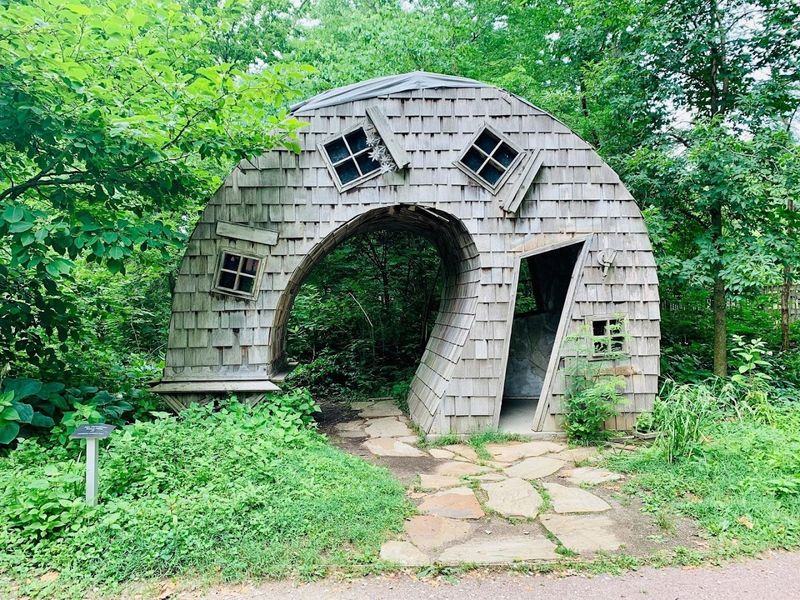
The Indianapolis Art Center at 820 E 67th St is already one of the city’s most underappreciated cultural spaces, but the outdoor grounds take things to a completely different level. Among the sculptures and installations that dot the property, the Twisted House is the one that stops people mid-step.
It looks exactly like what it sounds: a residential structure that appears warped, tilted, and pulled in directions a house should never go.
The effect is part visual trick and part genuine architectural statement about perception and the idea of home. Visitors often circle it multiple times, looking for the angle that makes it make sense.
It never quite does, and that’s entirely the point. The Art Center’s grounds are free to walk and open to the public, making this one of Indianapolis’s most accessible outdoor art experiences.
The surrounding Broad Ripple neighborhood is full of local restaurants, coffee shops, and boutiques worth spending an afternoon in. Broad Ripple Village itself has a walkable, creative energy that pairs well with an art center visit.
Combine this stop with the nearby Monon Trail for a full afternoon out. The Twisted House is the kind of installation that sticks with you, not because it’s the biggest thing you’ve ever seen, but because it quietly challenges what you assume you already know.
7. The Idle Urban Park
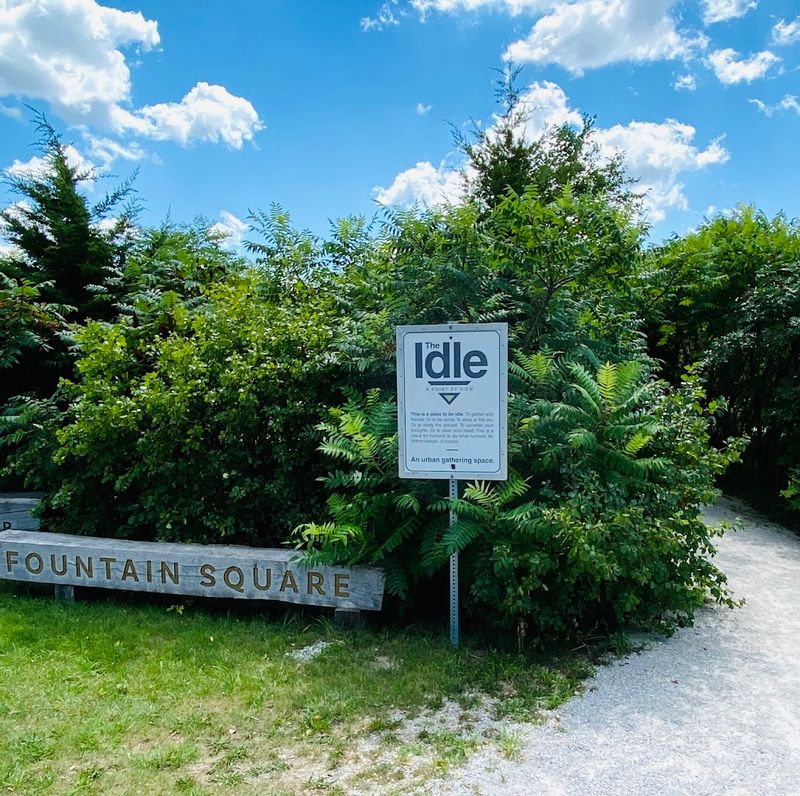
Fountain Square in Indianapolis has built a reputation as one of the city’s most creative and community-driven neighborhoods, and The Idle at 800 Virginia Ave fits right into that identity. This small urban park transforms what could have been a forgotten sliver of city land into a lively, artful gathering space.
Murals, seating, and thoughtfully placed installations make it feel intentional and alive in a way that bigger, more manicured parks sometimes miss.
The park sits along the Virginia Avenue corridor, which has become a hub for local businesses, galleries, and food spots that reflect the neighborhood’s independent spirit. Spending time at The Idle means you’re also within easy walking distance of some of Indianapolis’s best local restaurants and music venues.
The whole area rewards slow, aimless wandering in the best possible way.
What makes The Idle special is that it was built with the community in mind, not just for tourists passing through. Locals use it daily, which gives it an authenticity that purpose-built attractions often lack.
Nearby spots like Bluebeard restaurant at 653 Virginia Ave and the Fountain Square Theatre Building add even more reason to spend a full afternoon in the area.
8. Wilbur Wright Birthplace & Museum
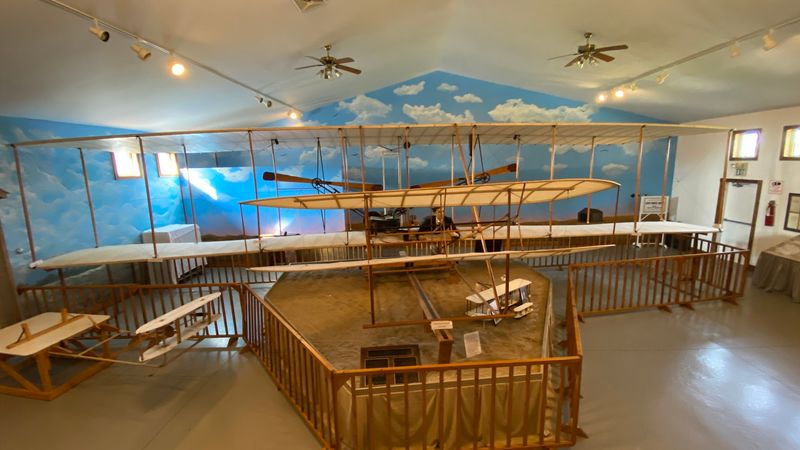
Most people know the Wright Brothers story begins in Ohio, but Wilbur Wright was actually born in Indiana, and the birthplace at 1525 N County Rd 750 E near Hagerstown is one of the most quietly significant historic sites in the entire state. The simple farmhouse where Wilbur came into the world in 1867 has been preserved and opened to the public alongside a small but genuinely interesting museum.
Standing there, looking at that ordinary house, makes the whole story of flight feel more human and less mythological.
The museum contains reproductions of early aircraft, photographs, and exhibits that walk through the Wright family’s history and the road to Kitty Hawk. It’s the kind of place where the scale feels right.
Nothing is overproduced or over-explained. The story speaks clearly on its own, and the rural setting adds to the sense that great things really can come from anywhere.
Hagerstown itself is a small town worth a quick walk-through, and the surrounding countryside of eastern Indiana is beautiful in a flat, open, quietly dramatic way. This stop works especially well for families with kids who have covered the Wright Brothers in school.
9. Jug Rock Nature Preserve
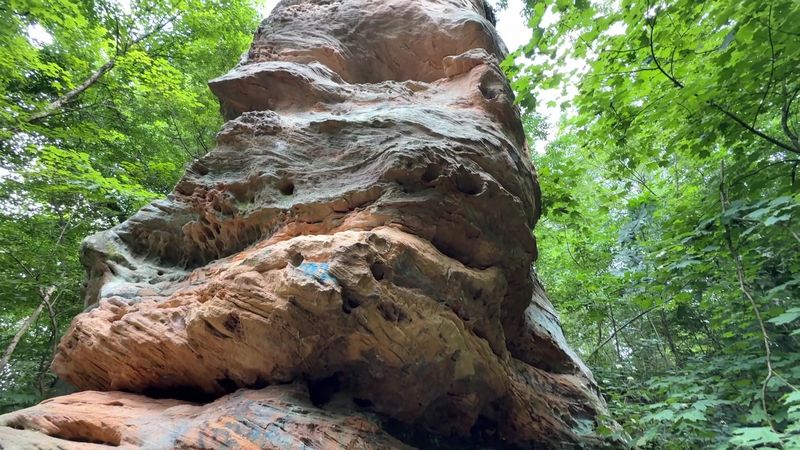
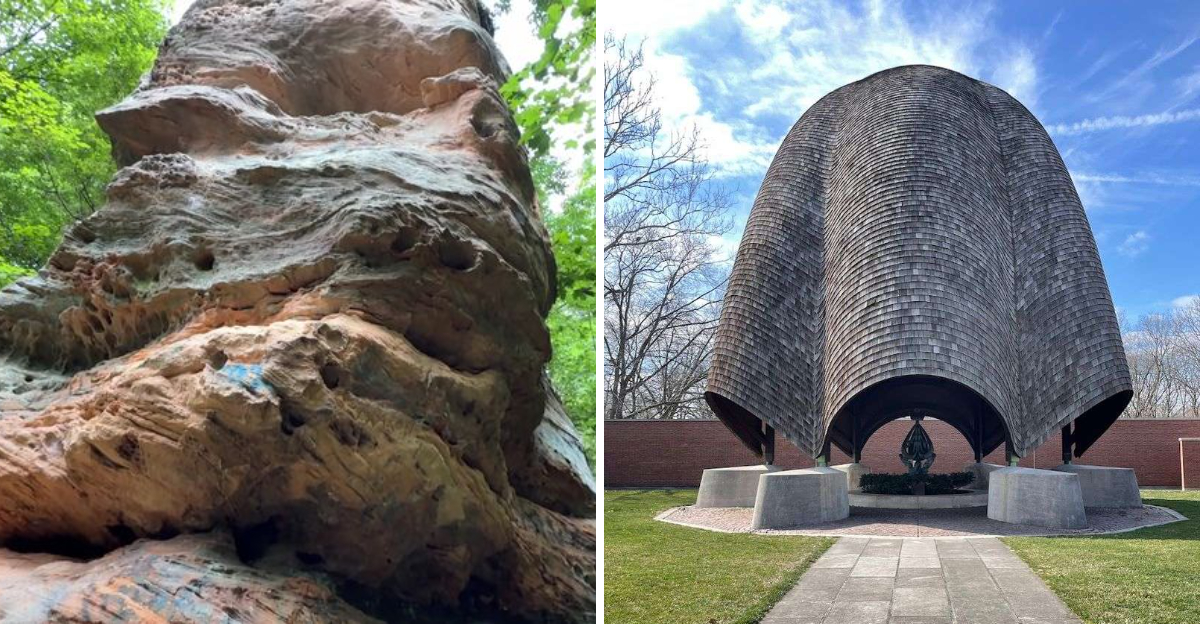
Jug Rock near Shoals, Indiana, is one of those places that genuinely earns the word dramatic. This freestanding sandstone pillar, rising about 60 feet from the forest floor near 722 Albright Ln, is the largest freestanding table rock formation east of the Mississippi River.
That’s not a small claim, and once you see it in person, you understand completely why people make the trip.
The surrounding Hoosier National Forest gives the whole area a wild, unhurried feel that’s increasingly rare in the Midwest. The hike to Jug Rock is accessible and relatively short, making it a good option for families and casual hikers who want a payoff without a brutal climb.
The formation itself looks almost architectural, like something a sculptor planned rather than something erosion built over millions of years.
Shoals is a small river town along the East Fork of the White River, and the drive through Martin County to get here is one of the more scenic routes in southern Indiana. After the hike, the nearby town has a few local spots worth a stop.
The Jug Rock Nature Preserve is free to visit and rarely crowded, which makes the whole experience feel like a genuine discovery.
10. The Shoe Tree

Nobody fully agrees on how the Shoe Tree along Devils Hollow Road in Milltown got started, and that mystery is honestly part of its appeal. Dozens of shoes hang from the branches of a single roadside tree, dangling by their laces in a display that’s equal parts strange, funny, and oddly poignant.
People have been adding to it for years, and the collection keeps growing in ways that feel both spontaneous and weirdly communal.
Shoe trees pop up across the country, but this one in Crawford County has a particularly rural character that makes it feel genuinely rooted in its place. The surrounding hills and hollows of southern Indiana give the whole area a rugged, off-the-grid energy that the shoe tree fits right into.
It’s not trying to be a tourist attraction. It just is one, because people can’t resist it.
The Milltown area sits near the Blue River, which is one of Indiana’s best paddling destinations. Blue River Canoe Rental operates nearby and offers a full afternoon on the water if you want to make a day of the trip south.
The Shoe Tree itself takes about five minutes to visit, but it photographs beautifully and tends to spark conversations that last much longer.
11. The Big Peach
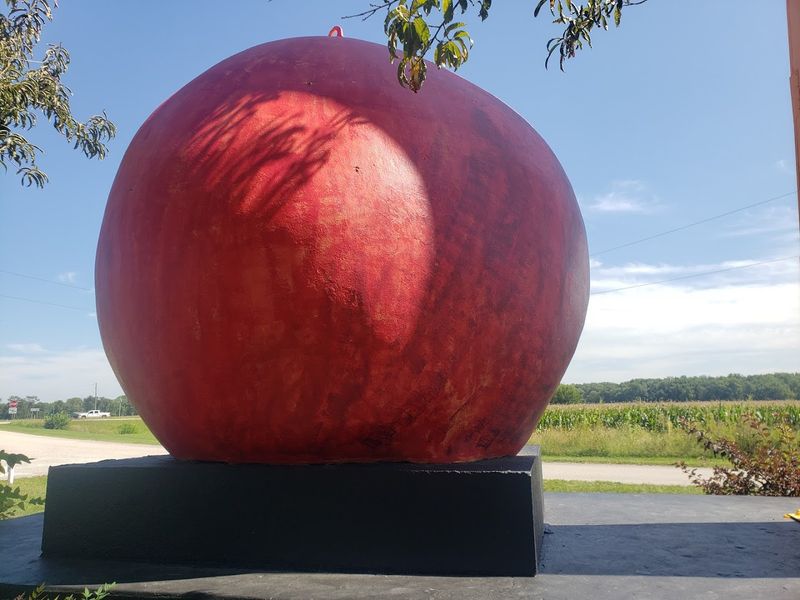
Indiana isn’t the first state that comes to mind when you think about peaches, which is exactly what makes The Big Peach along N Old 41 in Bruceville such a delightful surprise. This oversized roadside peach marks the presence of a local orchard operation that has been serving the area for years, and it’s the kind of cheerful, unironic roadside icon that used to be everywhere before the highway era flattened American travel culture.
The surrounding Daviess County landscape is agricultural and wide-open, giving the peach a backdrop that makes it pop against the flat horizon. Stopping here feels like stepping into an older version of road-trip America, where local businesses competed for your attention with giant fruit rather than digital billboards.
There’s something genuinely refreshing about that approach.
The nearby town of Vincennes, about 15 miles southwest, is one of Indiana’s most historically rich communities, home to the George Rogers Clark National Historical Park at 401 S 2nd St. Pairing The Big Peach with a Vincennes history stop makes for an unexpectedly satisfying day in southwestern Indiana. The peach itself is quick to visit, but the whole stretch of Old 41 through this part of the state has a slower, more personal rhythm than anything you’d find on I-69.
That rhythm is worth experiencing at least once.
12. The Roofless Church
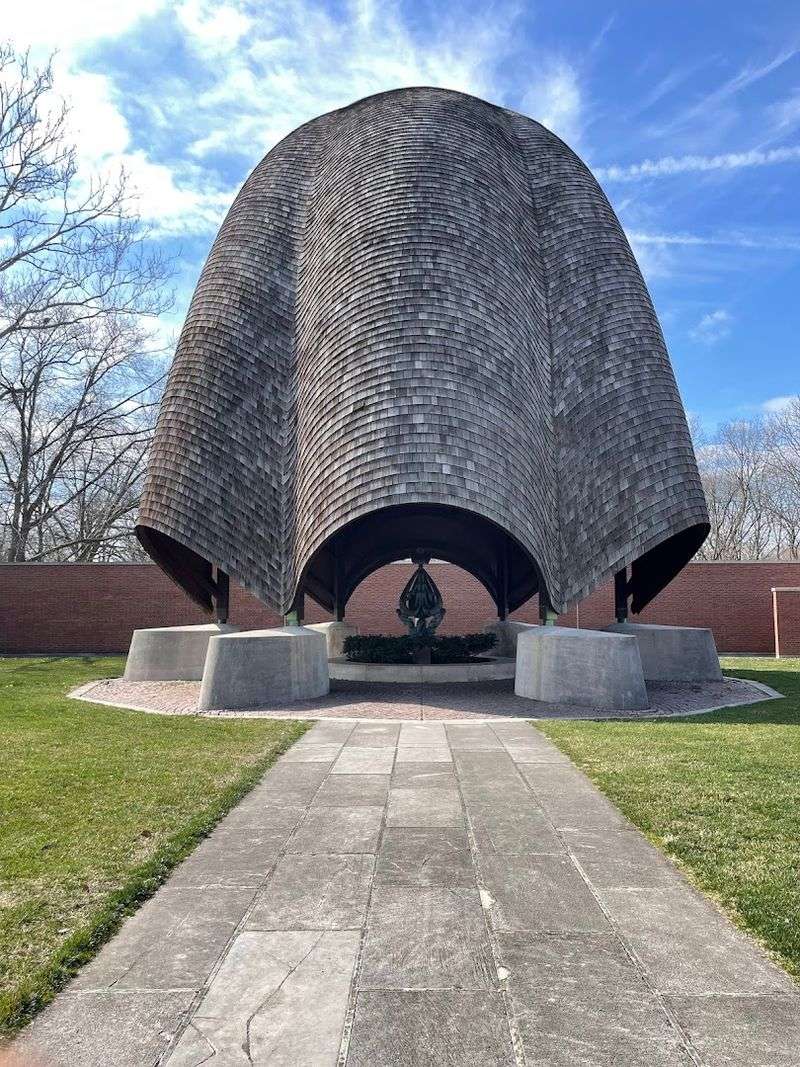
New Harmony, Indiana, is one of the most quietly extraordinary towns in the entire Midwest, and The Roofless Church at 420 North St is its spiritual centerpiece in every sense of that word. Designed by architect Philip Johnson and completed in 1960, the church has walls but no roof, opening directly to the sky above a central bronze sculpture by Jacques Lipchitz.
The idea was that only the sky is large enough to encompass all of humanity’s worship, and standing inside it, that concept lands with real force.
New Harmony itself has a remarkable history as the site of two utopian community experiments in the early 1800s, and that legacy of idealism and thoughtful living is still present in the town’s atmosphere. The Atheneum Visitors Center at 401 N Arthur St offers an excellent introduction to the town’s layered history and is worth a stop before or after the church.
Walking the streets of New Harmony feels genuinely unlike anywhere else in Indiana.
The surrounding Wabash River bottomlands add natural beauty to a town already rich in human history. Plan at least half a day here, because rushing through New Harmony is a genuine waste of what the town offers.
The Roofless Church is free to enter and open to the public.
Dear Reader: This page may contain affiliate links which may earn a commission if you click through and make a purchase. Our independent journalism is not influenced by any advertiser or commercial initiative unless it is clearly marked as sponsored content. As travel products change, please be sure to reconfirm all details and stay up to date with current events to ensure a safe and successful trip.
