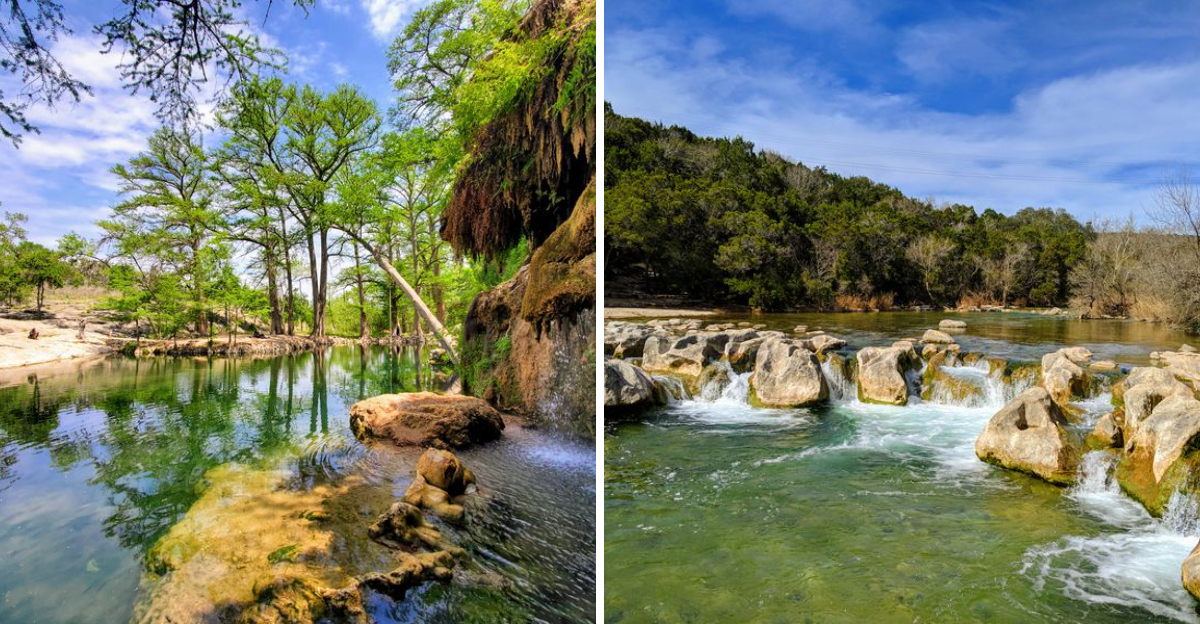
Texas might be famous for its wide-open plains and desert landscapes, but tucked away in its hills and canyons are some of the most breathtaking waterfalls you’ll ever encounter.
Winter transforms these hidden gems into magical sanctuaries where the crowds thin out, the air turns crisp, and the water flows with a quiet power that feels almost otherworldly.
Locals have long cherished these secret spots, visiting them during the colder months when the summer heat fades and nature reveals a softer, more mystical side.
Whether you’re seeking a peaceful escape or an adventure off the beaten path, these Texas waterfalls promise unforgettable moments wrapped in winter’s enchanting embrace.
1. Hamilton Pool Preserve
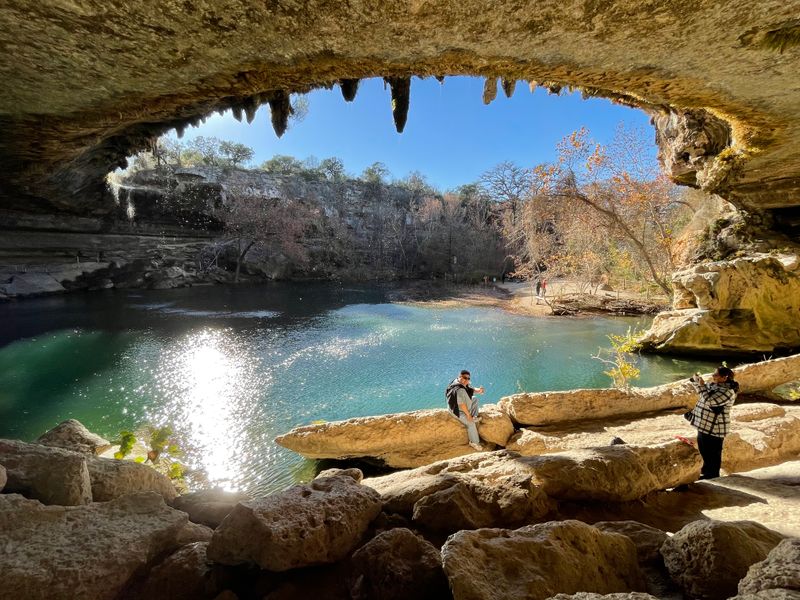
Imagine standing beneath a massive limestone overhang while a 50-foot waterfall tumbles into a pool so green it looks like liquid emerald.
Hamilton Pool Preserve offers exactly that kind of magic, especially when winter brings cooler temperatures and fewer visitors to this natural wonder near Austin.
Thousands of years ago, the dome of an underground river collapsed, creating this stunning grotto that now serves as one of Texas’s most photographed natural landmarks.
The jade-colored waters remain surprisingly clear during winter months, inviting you to marvel at their beauty even if swimming isn’t on your agenda.
Limestone cliffs tower overhead, draped with hanging gardens of ferns and moss that thrive in the constant mist from the waterfall.
Winter visits mean you can actually hear the water’s gentle roar without competing with summer crowds, making the experience feel almost sacred.
The trail leading to the pool winds through a scenic canyon filled with cypress trees and rocky outcrops that take on a golden hue in the low winter sun.
Local legend says the preserve holds a special kind of energy during the colder months, when the combination of mist, cool air, and solitude creates an atmosphere that feels transported from another world.
Reservations are required year-round, but winter slots tend to be easier to snag than those scorching summer dates.
Pack layers because the temperature near the water can drop quickly, and bring a camera to capture the ethereal quality of light filtering through the cave opening.
2. Gorman Falls
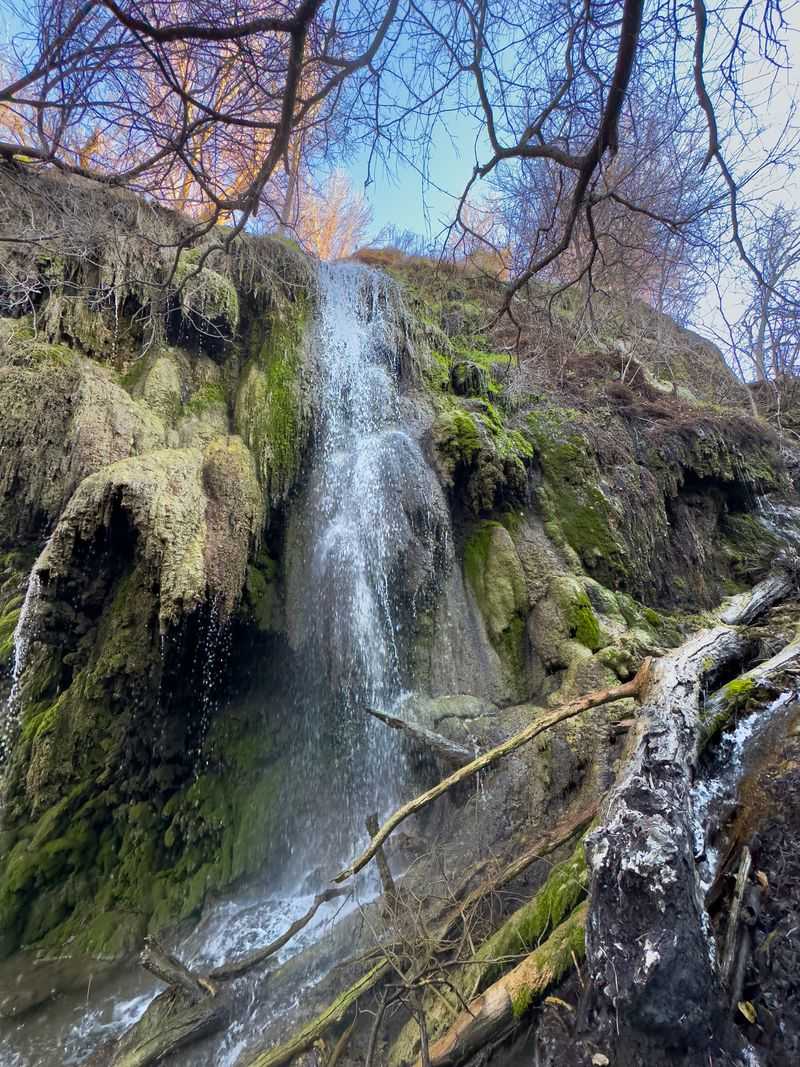
Moss-covered limestone glows in shades of emerald and gold as water tumbles 70 feet down Gorman Falls, creating one of the most stunning natural displays in the Texas Hill Country.
Tucked within Colorado Bend State Park, this waterfall rewards those willing to make the moderately challenging hike with views that feel almost tropical despite being in the heart of Texas.
Winter transforms the trail into a peaceful sanctuary where the usual summer heat gives way to comfortable hiking temperatures and the sound of your footsteps crunching on fallen leaves.
The falls themselves are fed by natural springs, meaning they flow year-round, but winter brings a special clarity to the water and a softness to the surrounding landscape.
Vibrant mosses and ferns cling to the limestone face, creating a living tapestry that shifts in color depending on the angle of the winter sun.
Many locals believe the falls hold a mystical quality during the colder months, when morning mist rises from the pool below and hangs in the air like a delicate veil.
The three-mile round-trip hike takes you through rugged terrain with panoramic views of the Colorado River valley, making the journey as rewarding as the destination.
Wildlife sightings increase in winter when animals venture closer to the water sources, so keep your eyes peeled for deer, armadillos, and countless bird species.
Photography enthusiasts flock here during golden hour when the low winter light illuminates the waterfall’s mossy curtain in spectacular fashion.
Remember to wear sturdy shoes with good traction, as the trail can be rocky and the area near the falls tends to stay damp year-round.
3. Cattail Falls
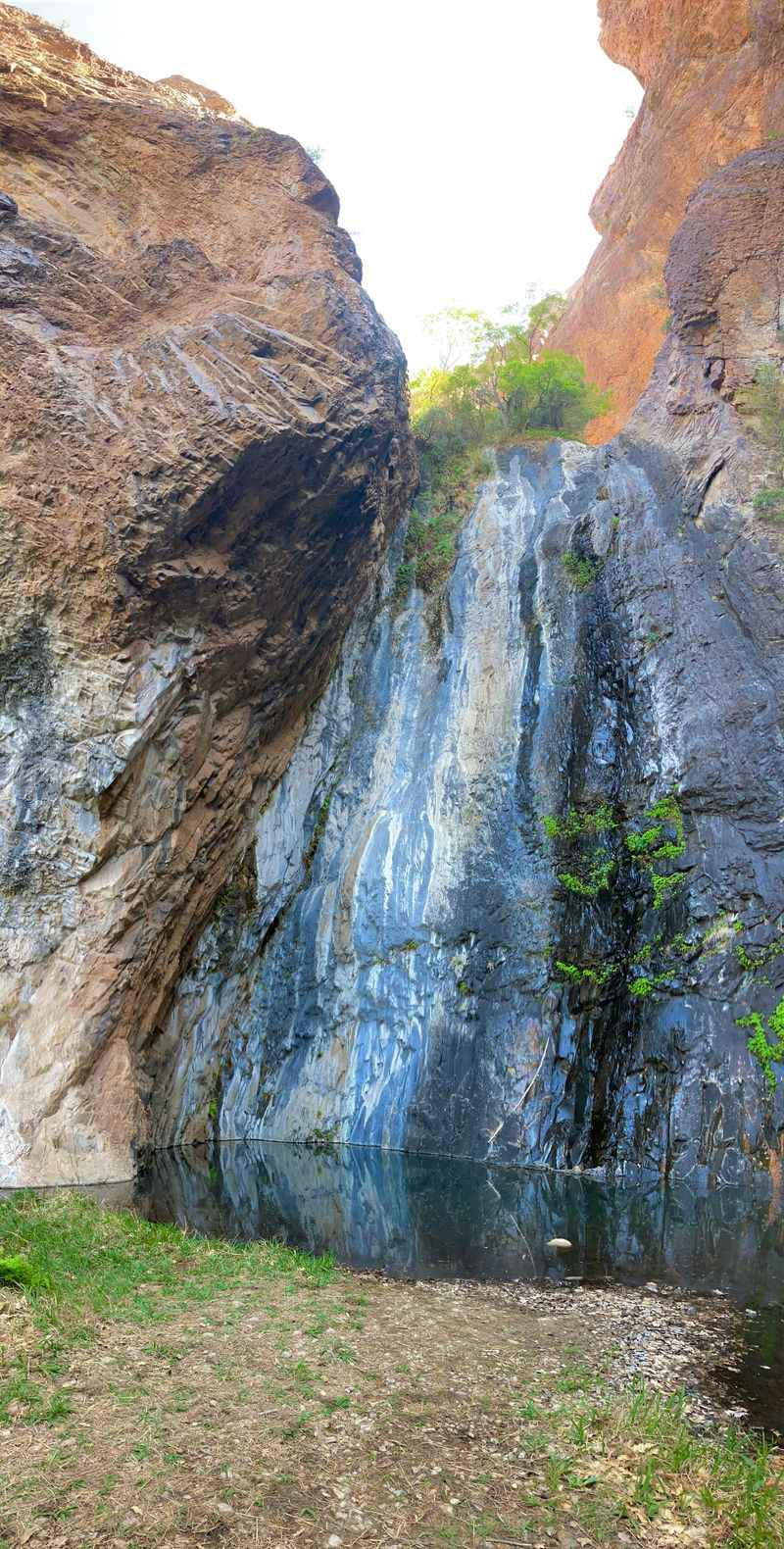
Deep in the heart of Big Bend National Park, where the desert meets the mountains, Cattail Falls appears like a mirage after winter rains bless the parched landscape.
This seasonal waterfall only flows when conditions are just right, making every sighting feel like a precious gift from nature itself.
The hike to reach it winds through the stunning Chisos Mountains, where rugged peaks frame endless desert vistas that stretch all the way to Mexico.
Winter brings the best chance of catching the falls in action, as cooler temperatures encourage rainfall and snowmelt that feed this temporary wonder.
When the water does flow, it creates a dramatic contrast against the rust-colored cliffs and golden desert grasses that dominate the landscape.
Local guides speak of the falls with reverence, describing how the sound of rushing water in such an arid environment feels almost supernatural.
The trail itself offers solitude that’s hard to find in more popular national parks, with winter visitors often having entire sections to themselves.
Chisos Mountain views become even more spectacular during the colder months when occasional snow dusts the highest peaks, creating a landscape that defies typical Texas stereotypes.
Birdwatchers treasure this area year-round, but winter brings migrating species that turn the desert into an unexpected avian paradise.
Check recent rainfall reports before making the trek, as the falls may not be flowing during drier periods, though the journey through Big Bend’s winter landscape remains worthwhile regardless.
Bring plenty of water, sun protection, and layers, as desert temperatures can swing dramatically from warm afternoons to chilly evenings even in winter.
4. Krause Springs
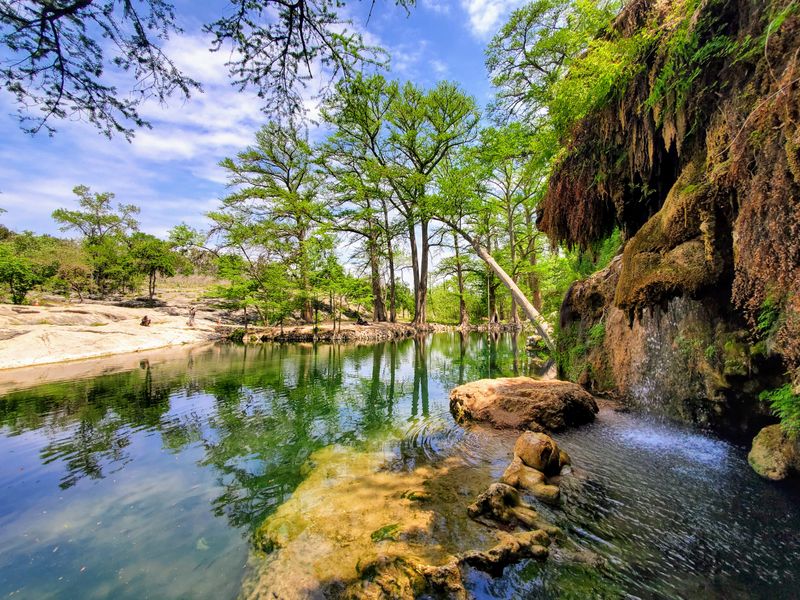
Thirty-two natural springs bubble up from the earth at Krause Springs, creating a wonderland of cascading water, mossy grottos, and crystal-clear pools that feel like something from a fairy tale.
Located in the small town of Spicewood, this privately-owned oasis has been welcoming visitors for generations, with locals considering it one of the Hill Country’s best-kept secrets.
Winter strips away the summer crowds, leaving behind a serene environment where the sound of flowing water becomes a meditation all its own.
The main waterfall tumbles into a natural pool surrounded by limestone walls covered in thick, velvety moss that stays vibrant green throughout the colder months.
Ancient cypress trees frame the springs, their gnarled roots creating natural sculptures that look especially dramatic when reflected in the still winter waters.
While swimming might be reserved for the brave during winter, simply sitting beside the pools and watching the water dance over rocks provides its own kind of therapy.
Locals swear that the springs possess healing properties, and spending time in their presence during winter’s quiet months does indeed seem to restore something deep within the soul.
The property includes camping areas and picnic spots that take on a magical quality when morning frost coats the grass and mist rises from the warm spring water.
Butterflies still flutter around during mild winter days, drawn to the microclimate created by the constant flow of spring-fed water.
Photographers love capturing the interplay of light and water here, especially during winter when the sun sits lower in the sky and creates longer, more dramatic shadows.
Address: 424 Krause Spring Rd, Spicewood, TX 78669
5. Capote Falls
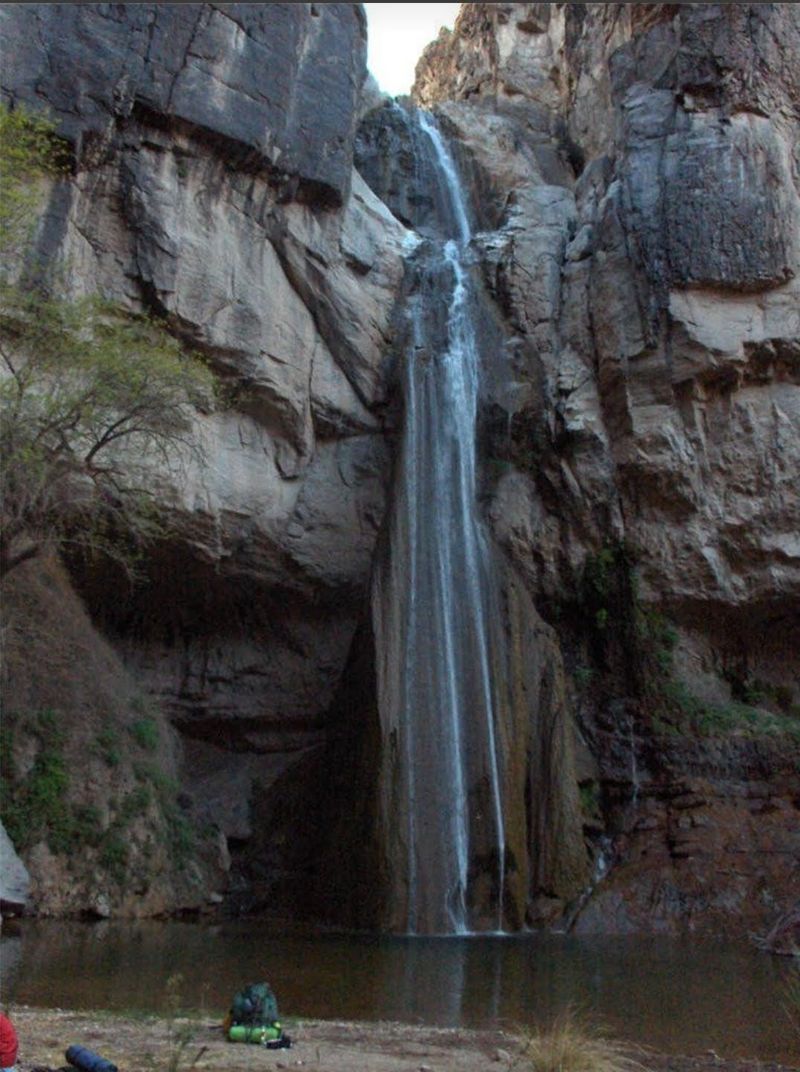
Standing as Texas’s tallest waterfall, Capote Falls plunges an impressive 175 feet down a remote canyon in Presidio County, creating a spectacle that few Texans even know exists.
Access requires permission from private landowners, which adds an element of exclusivity that makes actually reaching the falls feel like discovering a closely-guarded treasure.
Winter rains and occasional snowmelt from the surrounding mountains feed the falls, bringing them to their most powerful and photogenic state.
The remote West Texas location means you’re more likely to encounter javelinas and golden eagles than other hikers, creating an experience that feels genuinely wild and untamed.
Canyon walls rise dramatically on either side of the falls, their layers of ancient rock telling stories that span millions of years of geological history.
Local ranchers who’ve seen the falls in every season say winter brings out its true character, when the combination of flowing water and stark desert landscape creates contrasts that border on the surreal.
The sound of water crashing into the pool below echoes off the canyon walls, amplified into a thunderous roar that seems impossible in such an arid environment.
Indigenous peoples considered this area sacred long before European settlers arrived, and spending time near the falls during winter’s contemplative months makes it easy to understand why.
Photography here requires careful timing and permission, but images of Capote Falls have become increasingly sought-after as more people discover this hidden Texas wonder.
The surrounding high desert landscape takes on subtle beauty in winter, with native grasses turning golden and the clear air allowing views that stretch for dozens of miles.
Always secure proper permissions before attempting to visit, and be prepared for rugged conditions that demand respect and proper preparation.
6. Westcave Preserve
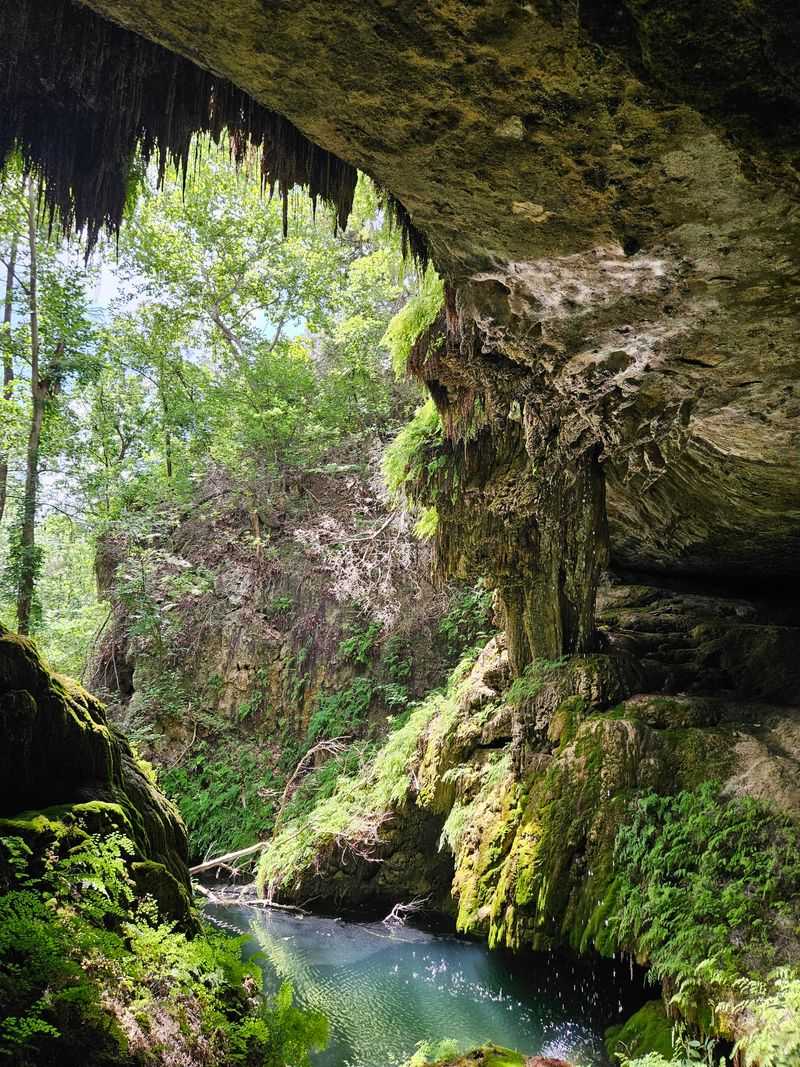
A collapsed grotto creates the stunning backdrop for Westcave Preserve’s waterfall, where water trickles over limestone ledges into a pool surrounded by ferns and moss that thrive in the constant shade and moisture.
This Hill Country gem offers guided tours that lead visitors down into the preserve’s crown jewel, a cave-like canyon that maintains its own microclimate year-round.
Winter visits provide the most comfortable experience, as the naturally cool grotto becomes a welcome refuge rather than a chilly shock.
The preserve protects a unique ecosystem where plants typically found in East Texas rainforests grow alongside desert species, creating biological diversity that fascinates botanists and nature lovers alike.
Sunlight filters through the grotto opening in winter’s lower angle, creating beams of light that illuminate the waterfall in ways that summer’s harsh overhead sun simply cannot match.
Locals describe the preserve as feeling like stepping into another world, where the outside noise and chaos fade away beneath the limestone overhang.
The waterfall itself may be smaller than some on this list, but what it lacks in height it makes up for in ethereal beauty and the intimate setting of the collapsed cave.
Maidenhair ferns cascade down the walls in delicate curtains, their fronds trembling in the gentle breeze created by falling water.
Educational programs offered by the preserve teach visitors about the delicate balance required to maintain this unique ecosystem, making each visit both beautiful and enlightening.
Winter months bring migrating bird species that stop at the preserve to rest and refuel, adding soundtrack variety to the constant whisper of falling water.
Reservations are required for the guided canyon tours, which limit visitor numbers to protect the fragile environment while ensuring everyone gets an up-close experience with this natural wonder.
Address: 24814 Hamilton Pool Rd, Round Mountain, Texas
7. Twin Falls at Barton Creek
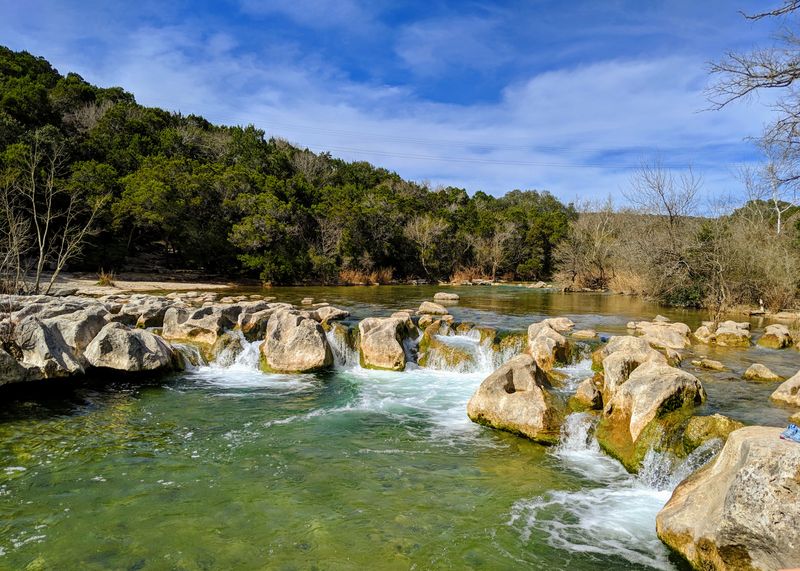
Two waterfalls flow side by side at this beloved Austin spot, creating a symmetrical display that gives Twin Falls its name and makes it a favorite destination for locals seeking natural beauty without leaving the city limits.
The Barton Creek Greenbelt provides easy access to these falls, though reaching them still requires a pleasant hike that feels worlds away from the urban environment just minutes down the road.
Winter transforms the greenbelt into a peaceful corridor where the usual summer crowds thin out and the creek flows with renewed vigor from seasonal rains.
Limestone ledges create natural steps for the water to tumble down, with each cascade catching light differently and creating an ever-changing display of movement and sound.
Dog walkers, trail runners, and families seeking weekend adventures all share the path to Twin Falls, creating a community atmosphere that feels quintessentially Austin even in the natural setting.
The pools below the falls deepen during winter months, their clear water revealing smooth rocks and the occasional fish that somehow thrives in this urban-adjacent ecosystem.
Ancient cypress trees line the creek banks, their roots exposed by centuries of water flow and their branches providing homes for countless bird species that serenade winter hikers.
Local photographers know that early morning visits during winter produce the best light, when mist rises from the water and the low sun creates golden tones that make the falls glow.
The relatively easy trail access makes Twin Falls perfect for introducing children to the magic of Texas waterfalls without requiring advanced hiking skills or remote travel.
Seasonal variations mean the falls can range from gentle trickles to powerful cascades depending on recent rainfall, giving repeat visitors new experiences with each trip.
Pack a picnic and plan to linger, as the area around the falls offers plenty of flat rocks perfect for sitting and soaking in the peaceful winter atmosphere.
Address: 3918 S MoPac Expy, Austin, TX 78746
8. Pedernales Falls
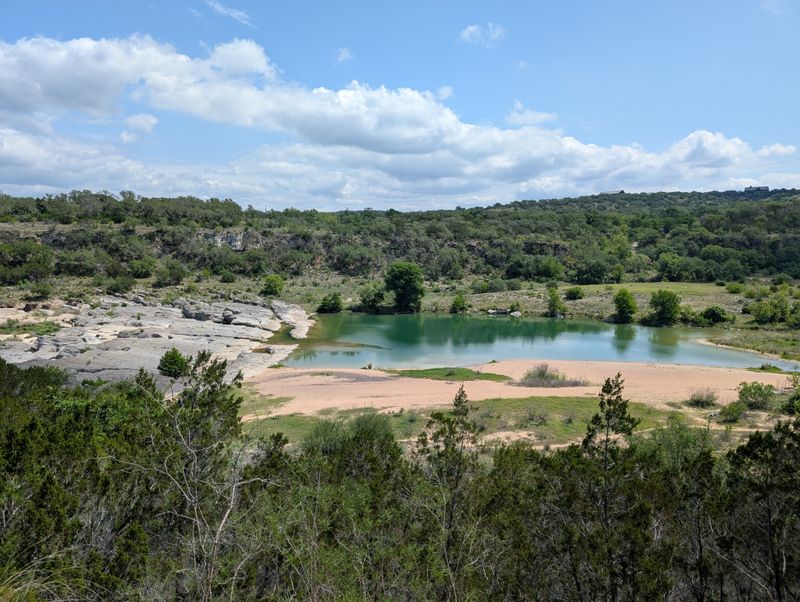
Rather than a single dramatic drop, Pedernales Falls spreads across a wide expanse of layered limestone, creating a series of cascades that transform the river into a stunning display of water and rock working together.
Located in the state park that bears its name, these falls showcase the raw power of the Pedernales River as it carves its way through the Texas Hill Country.
Winter brings the most reliable water flow, turning what can be a trickle in summer drought into a rushing torrent that demonstrates why flash floods are taken so seriously in this region.
The layered limestone creates natural steps and pools that look almost deliberately designed, though they’re entirely the work of millions of years of water erosion.
Viewing platforms allow visitors to safely observe the falls from multiple angles, each perspective revealing new details in how water interacts with ancient rock.
Local geology enthusiasts love pointing out the different rock layers visible in the falls, each representing a different era in Earth’s history when this area lay beneath ancient seas.
Winter sunsets paint the limestone in shades of pink and orange, creating photographs that capture both the falls’ power and the subtle beauty of Hill Country light.
The state park surrounding the falls offers extensive trail systems that showcase different aspects of the landscape, from river overlooks to upland areas dotted with juniper and oak.
Camping facilities mean you can wake up to the sound of rushing water and catch the falls in early morning light when mist hangs low and wildlife emerges for their dawn routines.
Swimming is prohibited at the falls themselves due to dangerous currents and underwater hazards, but designated swimming areas upstream provide safe alternatives during warmer winter days.
The falls’ accessibility and dramatic appearance make them perfect for visitors who want impressive natural beauty without extreme hiking demands.
Address: 2585 Park Rd 6026, Johnson City, TX 78636
Dear Reader: This page may contain affiliate links which may earn a commission if you click through and make a purchase. Our independent journalism is not influenced by any advertiser or commercial initiative unless it is clearly marked as sponsored content. As travel products change, please be sure to reconfirm all details and stay up to date with current events to ensure a safe and successful trip.
