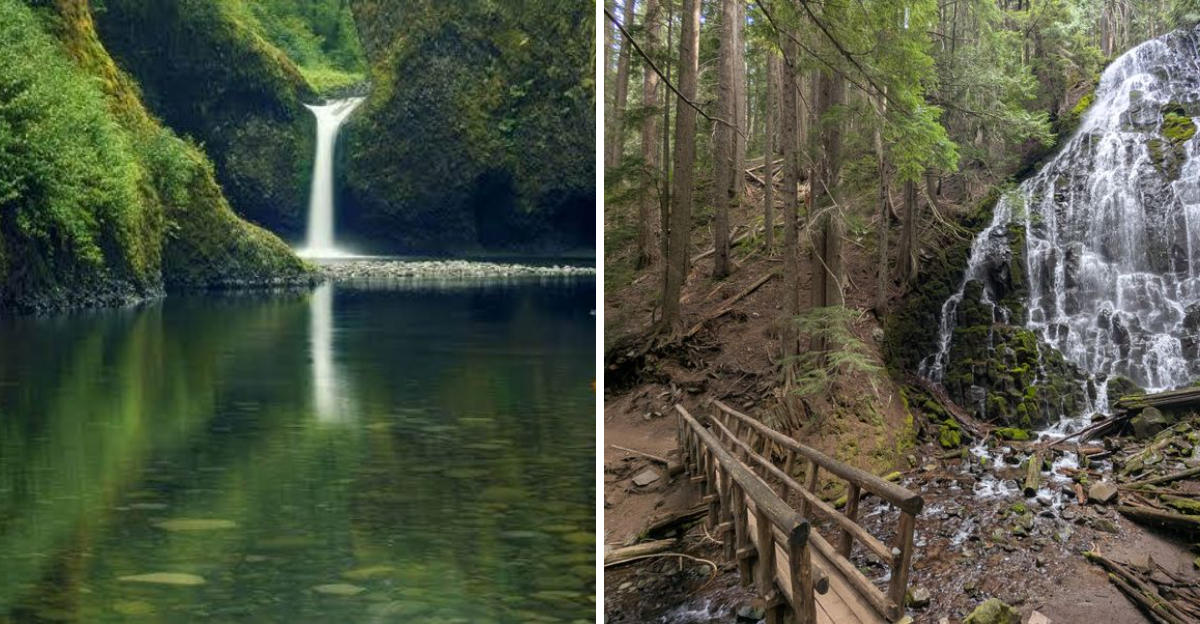
Oregon stands as one of the most stunning states for outdoor enthusiasts who love exploring nature on foot.
From coastal forests draped in moss to mountain trails with breathtaking views, this state offers something special for every type of hiker.
Whether you’re looking for an easy stroll through ancient trees or a challenging climb with rewarding vistas, Oregon’s diverse landscape provides countless opportunities.
The combination of accessible trails, well-maintained paths, and spectacular scenery makes Oregon a top destination for anyone wanting to experience the beauty of the Pacific Northwest.
Many of these trails wind through protected forest areas where visitors can witness ecosystems that have thrived for centuries.
Families, solo adventurers, and experienced hikers alike will find trails that match their skill level and interests.
The state’s commitment to preserving natural spaces means these areas remain open and welcoming to visitors year-round, though some seasonal closures may apply.
Planning a hiking trip in Oregon means preparing for variable weather and bringing appropriate gear for the terrain.
With so many incredible options available, choosing where to start your Oregon hiking adventure can feel overwhelming but exciting at the same time.
1. Silver Falls State Park Trail of Ten Falls
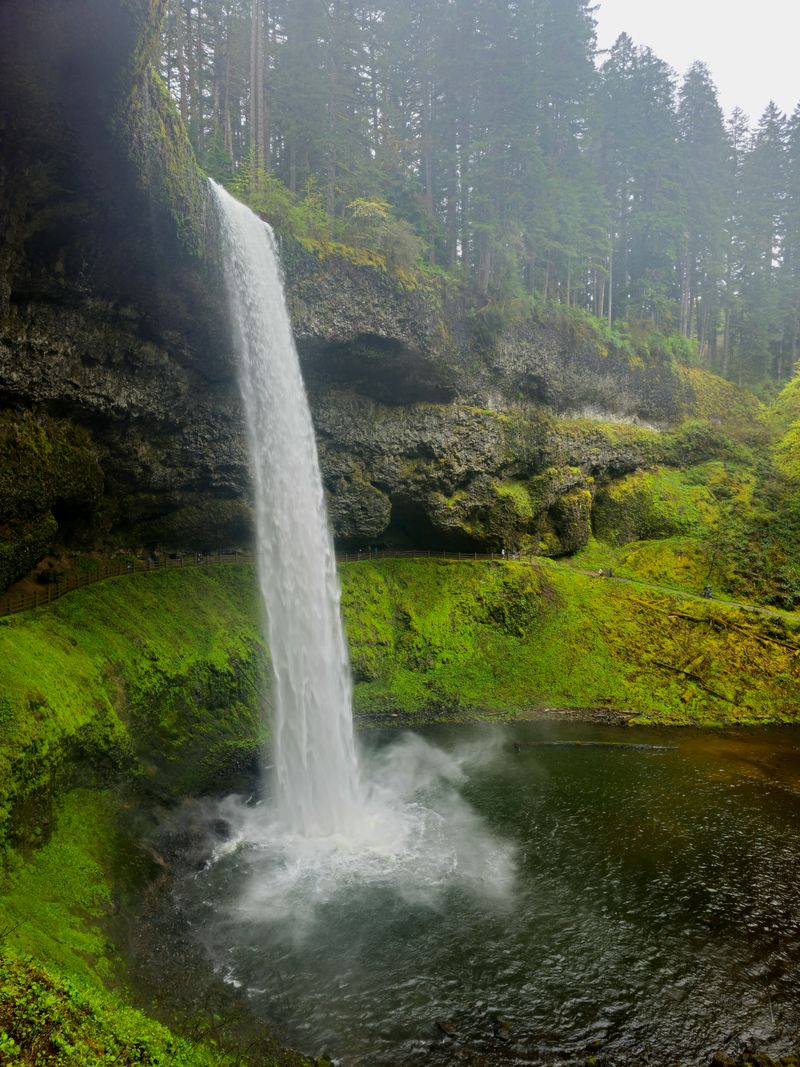
Silver Falls State Park sits about 26 miles east of Salem and showcases one of Oregon’s most magnificent hiking experiences.
The Trail of Ten Falls lives up to its name by taking hikers past ten stunning waterfalls, each with its own character and beauty.
This 7.2-mile loop trail winds through old-growth forest where Douglas firs tower overhead and ferns carpet the forest floor.
What makes this trail truly special is the chance to walk behind several of the waterfalls, creating an immersive experience you won’t find in many other places.
South Falls, the tallest at 177 feet, greets visitors near the beginning of the trail and sets the tone for the adventure ahead.
The trail itself is well-maintained with clear signage, making it accessible for families with older children who have some hiking experience.
Spring brings the most dramatic water flow when snowmelt feeds the creeks, though the trail remains beautiful throughout all seasons.
Visitors should plan for about four to five hours to complete the entire loop at a comfortable pace with time for photos and rest stops.
The park charges a small day-use fee, and the address is 20024 Silver Falls Highway SE, Sublimity, OR 97385.
Restrooms and picnic areas are available near the trailhead, making it convenient for a full day outdoors.
Remember to wear sturdy shoes because the path can be slippery near the waterfalls, especially after rain.
The elevation gain is moderate at about 1,400 feet, spread evenly throughout the loop rather than concentrated in one steep section.
2. Opal Creek Wilderness and Ancient Forest
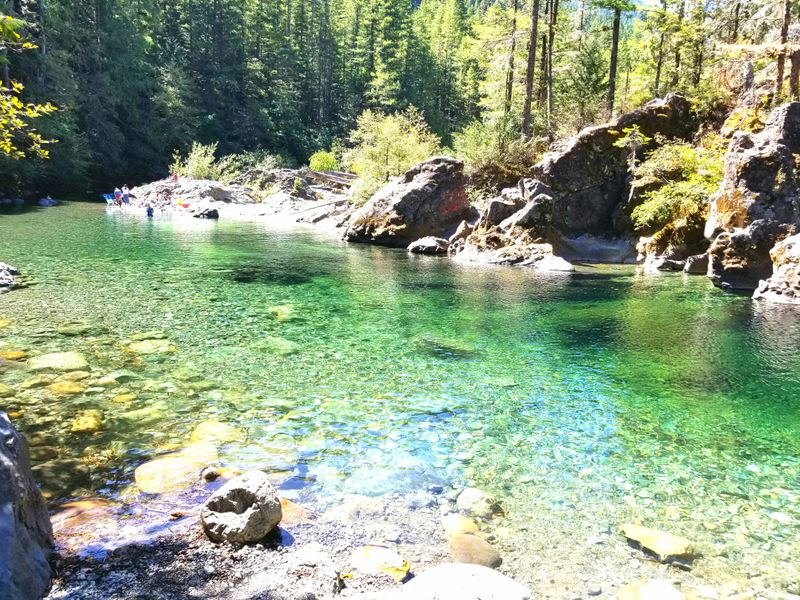
Nestled in the Cascade Mountains, Opal Creek Wilderness protects one of the largest remaining old-growth forests in the United States.
Getting there requires a bit of effort since the access road is gated, meaning visitors must walk or bike about three miles before reaching the main trailhead.
This extra distance keeps crowds smaller and preserves the wilderness character that makes Opal Creek so special.
Once you arrive at the actual trail, you’ll understand why people make the journey.
Ancient cedars and Douglas firs, some over 1,000 years old, create a cathedral-like atmosphere that feels almost sacred.
The creek itself runs crystal clear with a distinctive blue-green color that seems almost unreal in its vibrancy.
Opal Pool, a popular swimming spot during summer months, offers refreshing relief after the hike in.
The main trail to Opal Pool covers about 6.6 miles round trip with relatively gentle elevation changes, making it manageable for most fitness levels.
Along the way, remnants of old mining equipment and cabins tell stories of the area’s history before it became protected wilderness.
Jawbone Flats, a small collection of historic buildings, serves as a research station and provides a fascinating glimpse into the past.
Visitors should bring plenty of water and snacks since no facilities exist once you leave the parking area.
The trailhead is located off Highway 22 near the town of Gates, Oregon.
Peak season runs from late spring through early fall when the road is reliably clear of snow.
Photography enthusiasts will find endless opportunities to capture the interplay of light through ancient trees and the remarkable clarity of the water.
3. Mount Hood National Forest Ramona Falls Loop
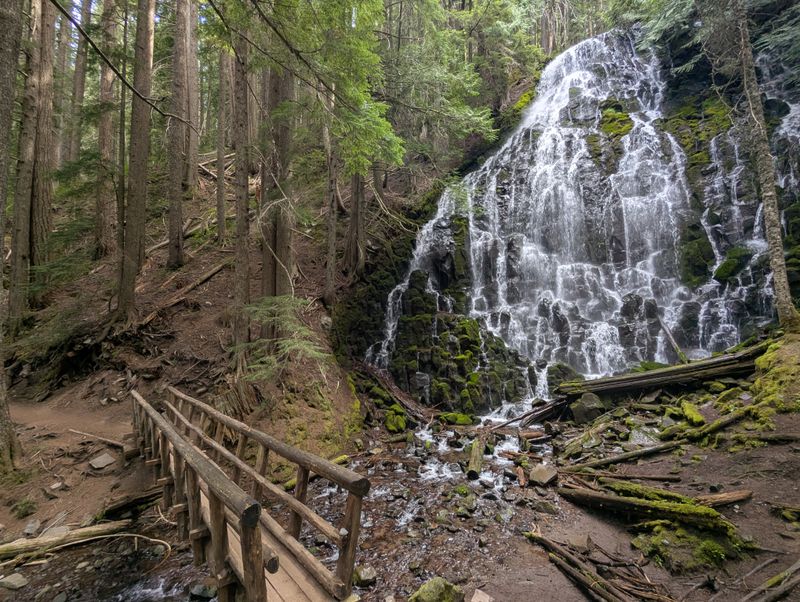
Mount Hood National Forest encompasses over one million acres of diverse terrain, and the Ramona Falls Loop stands out as a favorite among both locals and visitors.
This 7.3-mile loop trail offers something for everyone, from river crossings to meadows filled with wildflowers to the stunning namesake waterfall.
The journey begins with a crossing of the Sandy River, which can be challenging during high water in early summer but becomes manageable as the season progresses.
Ramona Falls itself drops about 120 feet over a wall of columnar basalt, creating a fan-shaped cascade that looks like nature’s own work of art.
The falls area provides plenty of spots to sit and enjoy lunch while taking in the sight and sound of rushing water.
Hikers can choose to complete the loop in either direction, though most prefer going clockwise to save the falls as a midpoint reward.
The trail passes through different forest types, from old-growth stands to areas recovering from past fires, offering lessons in forest ecology along the way.
On clear days, views of Mount Hood appear through breaks in the trees, reminding hikers of the volcanic forces that shaped this landscape.
The elevation gain is moderate at around 1,000 feet, distributed gradually throughout the loop.
To reach the trailhead, take Highway 26 to Zigzag and follow signs to the Ramona Falls trailhead at the end of Forest Road 1825.
A Northwest Forest Pass is required for parking.
Summer weekends can get busy, so arriving early or visiting on weekdays provides a more peaceful experience.
Black bears inhabit the area, so proper food storage and awareness are important.
4. Columbia River Gorge Eagle Creek Trail
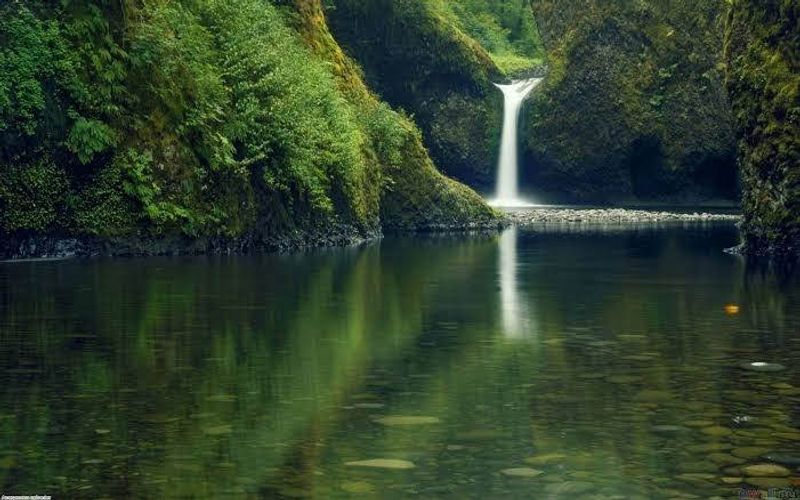
Few trails in Oregon match the drama and beauty of the Eagle Creek Trail, which winds through the stunning Columbia River Gorge.
This trail gained fame for its narrow cliff-side sections with cable handrails and the spectacular waterfalls that appear around nearly every bend.
After the 2017 Eagle Creek Fire, the trail underwent restoration and has reopened in sections, allowing visitors to once again experience this iconic hike.
The trail follows Eagle Creek upstream through a narrow canyon where moss-covered walls rise steeply on both sides.
Metlako Falls and Punchbowl Falls are two highlights in the first few miles, each offering unique perspectives on the power of water over time.
For those seeking more adventure, continuing to Tunnel Falls at about 6 miles one-way provides the ultimate reward as the trail actually passes behind this 100-foot waterfall.
The full round trip to Tunnel Falls covers about 12 miles with roughly 1,200 feet of elevation gain.
Families with young children might prefer turning around at Punchbowl Falls, making for a more manageable 4-mile round trip.
The trail can be slippery in places, and the exposed sections require careful attention, especially when wet.
Eagle Creek Trail begins at the Eagle Creek Trailhead off Interstate 84 at Exit 41, about 40 miles east of Portland.
Parking fills quickly on nice-weather weekends, so early arrival is essential.
The Columbia River Gorge experiences its own weather patterns, often different from Portland, so checking conditions before heading out is wise.
Poison oak grows along parts of the trail, so staying on the established path protects both you and the recovering ecosystem.
5. Tillamook State Forest Kings Mountain Trail
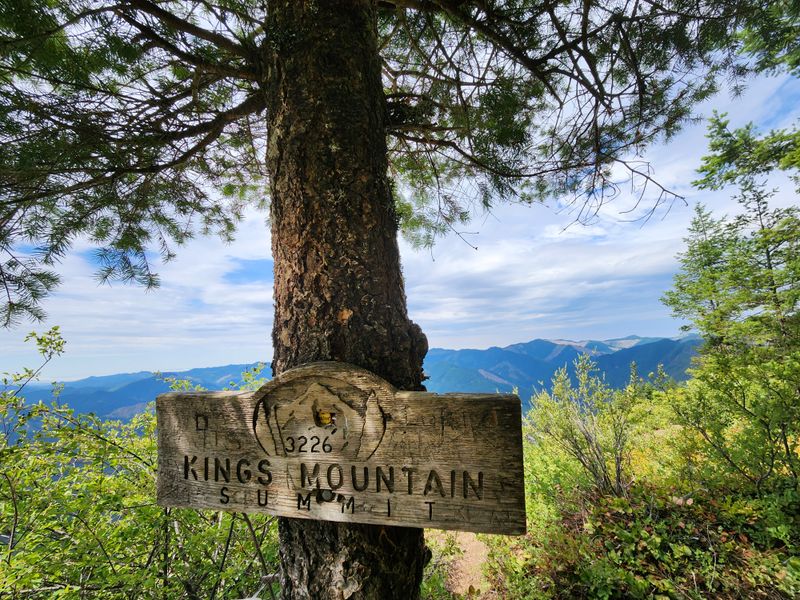
Tillamook State Forest covers over 360,000 acres of coastal mountains between Portland and the Pacific Ocean, offering numerous recreational opportunities.
Kings Mountain Trail presents one of the more challenging hikes in the forest, rewarding those who tackle it with panoramic views that stretch from the Coast Range to the ocean on clear days.
The trail climbs steeply from the start, gaining about 2,500 feet of elevation over just 2.5 miles to the summit.
This makes for a demanding workout that tests your cardiovascular fitness and leg strength.
The forest here tells a story of renewal, having been replanted after devastating fires in the 1930s and 1940s that burned much of the Tillamook area.
Today, second-growth forest thrives, providing habitat for elk, deer, and numerous bird species.
As you climb higher, the vegetation changes from tall Douglas firs to smaller trees and eventually opens to meadow areas near the summit.
The top of Kings Mountain offers 360-degree views on clear days, making the challenging ascent worthwhile.
Spring brings wildflowers to the upper meadows, while fall colors paint the hillsides in gold and red.
The trailhead is located along Highway 6 at milepost 25, about 24 miles west of Forest Grove.
Limited parking is available, and the lot fills on popular hiking days.
This trail is best attempted when you’re in good physical condition and prepared for a strenuous climb.
Weather in the Coast Range can change quickly, so bringing layers and rain gear is always smart.
The round trip typically takes three to four hours depending on your pace and how long you spend enjoying the summit views.
6. Willamette National Forest Proxy Falls and Linton Lake Loop
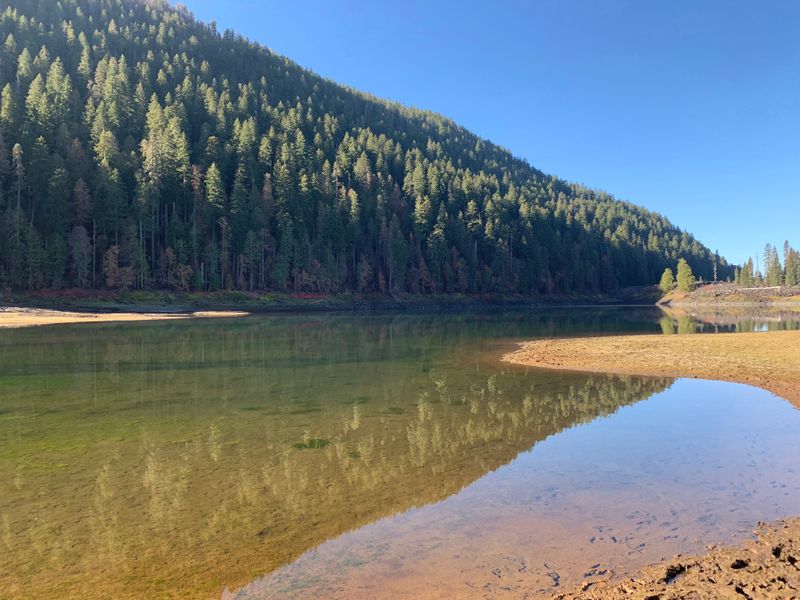
Highway 242, also known as the McKenzie Pass Scenic Byway, provides access to some of the most stunning waterfalls in Oregon’s Cascade Mountains.
Proxy Falls Trail offers an easy yet spectacular hike that showcases two beautiful waterfalls in a relatively short distance.
The 1.6-mile loop is accessible for most fitness levels and makes an excellent option for families or anyone wanting big scenery without extreme effort.
Lower Proxy Falls drops about 200 feet in a fan-shaped cascade over moss-covered basalt cliffs, creating a scene that looks straight from a fantasy novel.
Upper Proxy Falls, reached by a short side trail, flows year-round and disappears into a lava tube at its base, creating an intriguing geological feature.
The trail winds through old-growth forest where massive Douglas firs and western hemlocks create a peaceful atmosphere.
Late summer brings ripe huckleberries along the trail, a favorite treat for both hikers and local wildlife.
Nearby Linton Lake offers an optional extension for those wanting to add more distance to their hike.
The lake sits in a glacial basin and reflects surrounding peaks on calm days, providing excellent photography opportunities.
To reach Proxy Falls, take Highway 126 east from Eugene toward McKenzie Bridge, then turn onto Highway 242 and continue about 9 miles to the trailhead.
A Northwest Forest Pass is required for parking.
Highway 242 typically closes in winter due to snow, making this a seasonal destination best visited from July through October.
The short distance and relatively flat terrain make this trail perfect for introducing children to hiking or for a quick nature break during a longer road trip.
7. Siuslaw National Forest Cape Perpetua Scenic Area
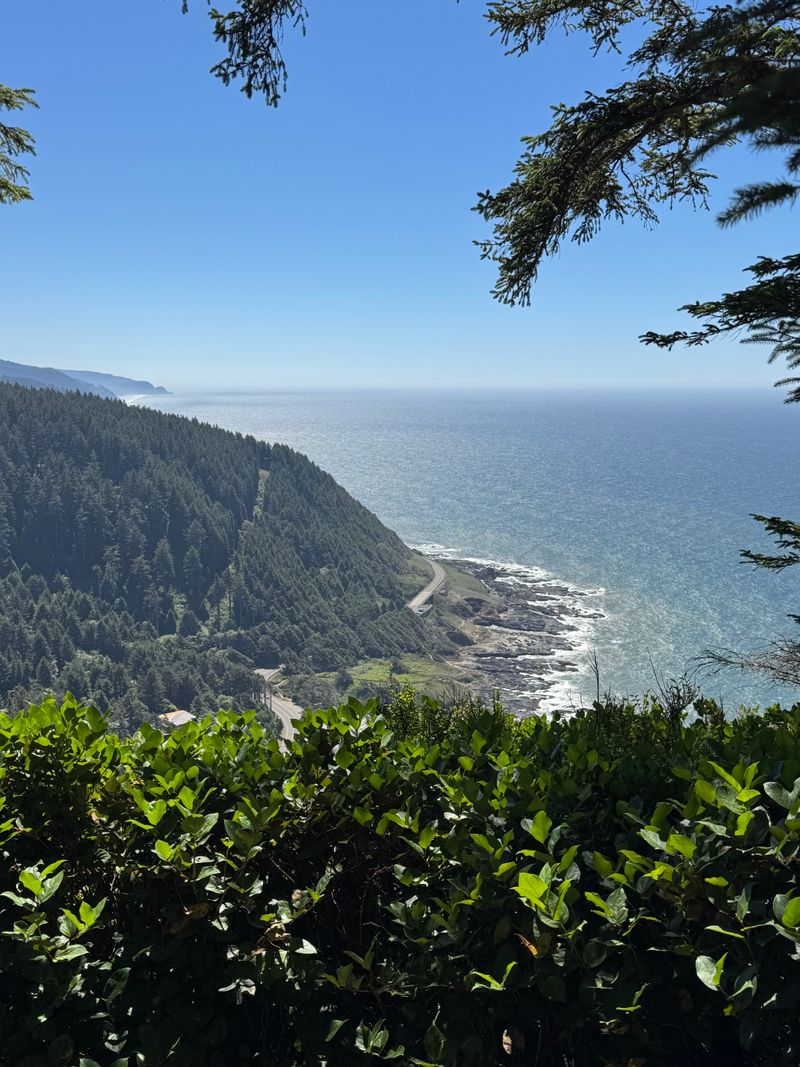
Where forest meets ocean, Cape Perpetua stands as one of the most spectacular spots on the Oregon coast.
This scenic area within Siuslaw National Forest offers multiple trails ranging from easy beach walks to more challenging climbs to panoramic viewpoints.
The Cape Perpetua Scenic Area Visitor Center, located at 2400 Highway 101, Yachats, OR 97498, provides maps and information about the various trails.
The Saint Perpetua Trail climbs about 600 feet in less than a mile to the Cape Perpetua Overlook, where views extend up to 70 miles on clear days.
From this vantage point, you can watch gray whales during their migration seasons and witness the endless expanse of the Pacific Ocean.
For those preferring coastal exploration, the Captain Cook Trail and Restless Waters Trail loop past fascinating tidal features like Thor’s Well and the Spouting Horn.
These geological formations create dramatic displays when waves crash against the rocky shore, sending spray high into the air.
Tide pools along the coast teem with life, including sea stars, anemones, and crabs, offering educational opportunities for curious minds.
The coastal forest here differs from inland forests, with Sitka spruce adapted to salt spray and constant wind shaping their growth.
Multiple trails can be combined for longer hikes, or visitors can sample several short walks to experience the area’s diversity.
The area remains accessible year-round, though winter storms bring the most dramatic ocean displays.
A day-use fee applies at Cape Perpetua, and facilities include restrooms and picnic areas.
Bringing binoculars enhances wildlife watching opportunities, and cameras will get plenty of use capturing the stunning coastal scenery.
Dear Reader: This page may contain affiliate links which may earn a commission if you click through and make a purchase. Our independent journalism is not influenced by any advertiser or commercial initiative unless it is clearly marked as sponsored content. As travel products change, please be sure to reconfirm all details and stay up to date with current events to ensure a safe and successful trip.
