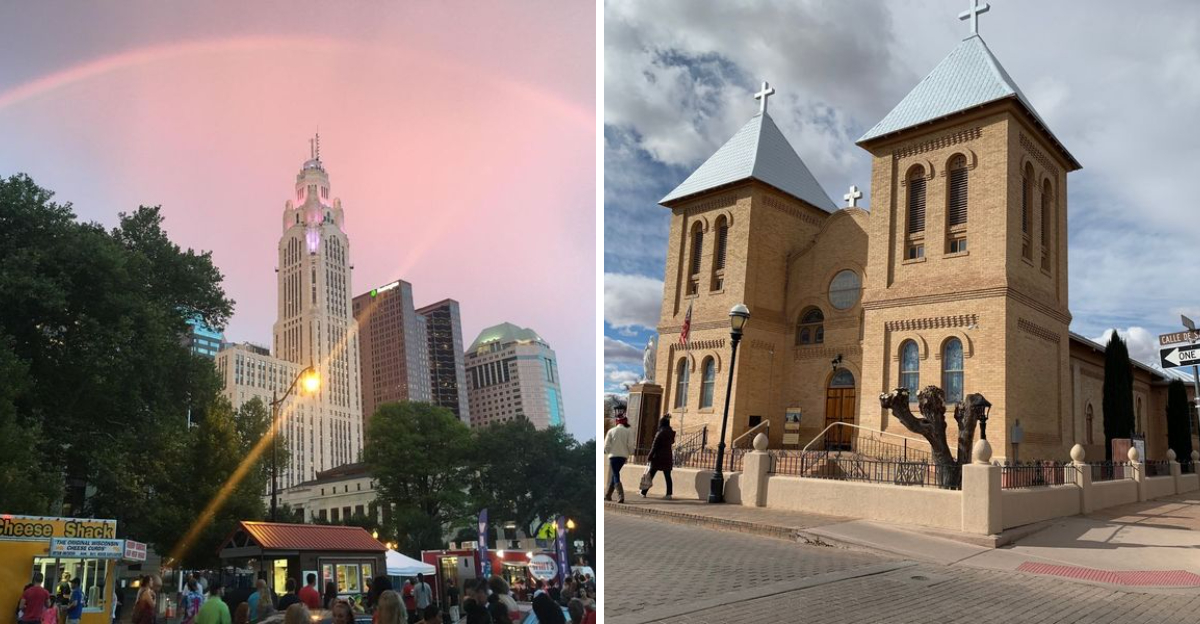
New Mexico’s borderland is a place where history comes alive through the people who call it home.
For centuries, Indigenous tribes, Spanish explorers, Mexican settlers, and American pioneers have crossed paths in this region, creating communities that celebrate multiple heritages at once.
The towns along this border are not just geographic markers on a map.
They are living museums where adobe architecture stands next to modern buildings, where Spanish is spoken as often as English, and where traditions from different eras blend into something entirely new.
From quiet villages with stories of revolution to bustling towns famous for their chile harvests, each community offers a unique window into the complex cultural tapestry of the American Southwest.
Walking through these streets, you can taste the fusion in the food, see it in the festivals, and feel it in the warm hospitality of the residents.
Whether you are a history enthusiast, a cultural explorer, or simply curious about how different worlds merge, these borderland towns will surprise and inspire you.
1. Columbus
Columbus holds a unique place in American history as the site of the last foreign attack on U.S. soil.
In the early morning hours of a spring day, Mexican revolutionary leader Pancho Villa led his forces across the border in a raid that changed this quiet village forever.
Today, the village maintains a peaceful, almost sleepy character that belies its dramatic past.
Just three miles south lies Palomas, Mexico, connected to Columbus by a port of entry that sees daily traffic from residents, workers, and visitors moving between two nations.
The cultural exchange here is constant and organic.
Many Columbus residents have family ties in Palomas, and vice versa, creating a community that exists in both countries simultaneously.
Small businesses cater to customers from both sides, and Spanish flows as naturally as English in conversations on the street.
The Pancho Villa State Park preserves the memory of the raid with exhibits and historic buildings.
Walking through the village, you can still see adobe structures that witnessed those turbulent times.
Columbus represents the borderland experience in its purest form, where two nations meet not with conflict but with cooperation and shared daily life.
Address: Columbus, NM 88029
2. Mesilla
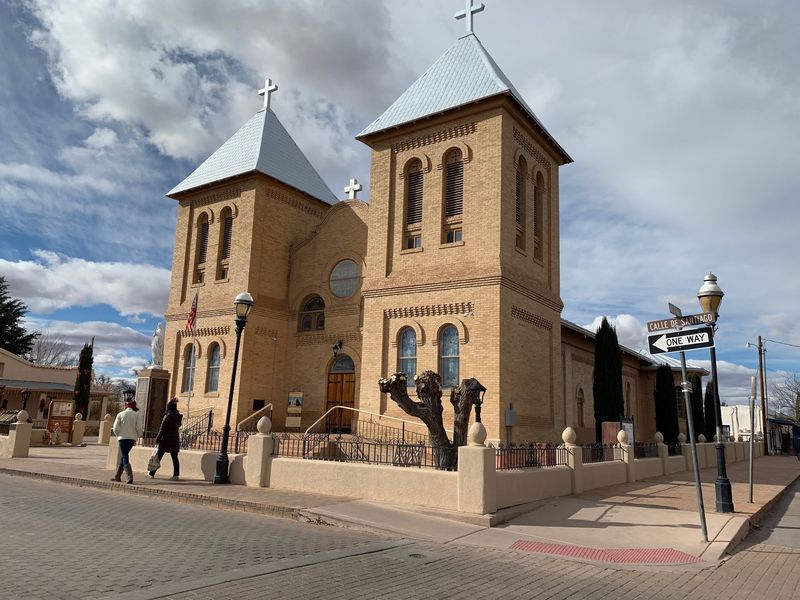
Mesilla stands frozen in time, a perfectly preserved snapshot of life when New Mexico belonged to Mexico.
Mexican authorities established the settlement just after the war between the United States and Mexico concluded.
Families who wanted to remain under Mexican rule moved south of the new border and created this community.
Within a few years, however, the Gadsden Purchase transferred the land to American control, and Mesilla found itself under a new flag without its residents moving an inch.
The town plaza remains the heart of community life, surrounded by thick-walled adobe buildings that have sheltered generations.
Unlike many historic sites that feel like museums, Mesilla functions as a living village where people actually reside and work.
Local shops, galleries, and restaurants occupy buildings that once served as mercantile stores and homes for early settlers.
The architecture follows traditional Mexican design principles, with interior courtyards and flat roofs.
Cultural festivals throughout the year celebrate both Mexican and American heritage, often blending elements from both traditions into something uniquely Mesilla.
The town’s careful preservation efforts mean visitors can experience an authentic borderland atmosphere.
Address: Mesilla, NM 88046
3. Puerto de Anapra
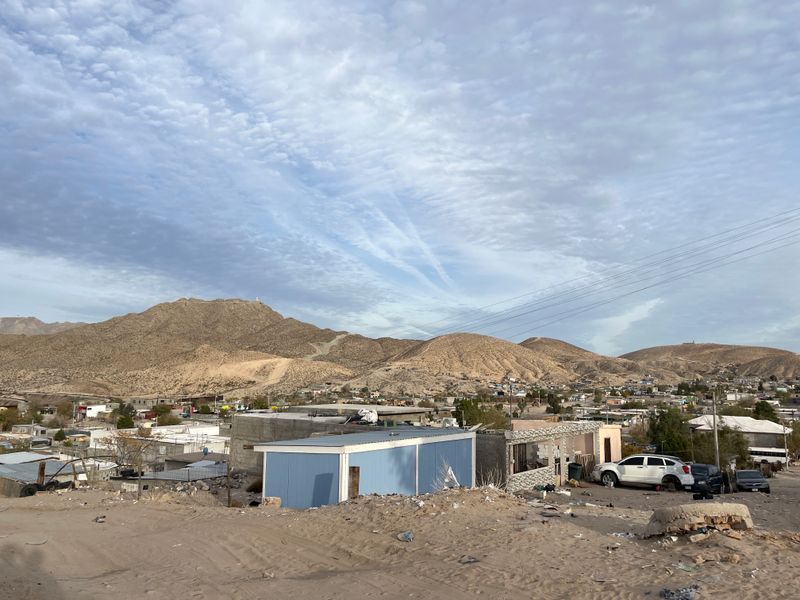
Puerto de Anapra exists in the shadow of the border itself, a neighborhood where the international boundary is not just nearby but defines daily existence.
Directly adjacent to Ciudad Juárez, this community developed organically as families built homes and established lives in the borderland.
The residents here do not think of themselves as living in one country or another so much as living in the border region itself.
Family connections stretch across the line in both directions.
Grandparents might live in Juárez while grandchildren attend school in New Mexico, creating a constant flow of people maintaining relationships that ignore political boundaries.
The culture of Puerto de Anapra reflects this reality with a strong emphasis on cooperation and community solidarity.
Neighbors support each other through shared challenges that come with borderland life.
The social fabric here is tightly woven, built on generations of families who have navigated the complexities of living between two nations.
Working-class neighborhoods stretch across the landscape, homes built by the people who live in them rather than by developers.
This bottom-up development creates a distinctive character where community needs and cultural practices shape the physical environment.
Address: Sunland Park, NM 88063
4. Las Cruces
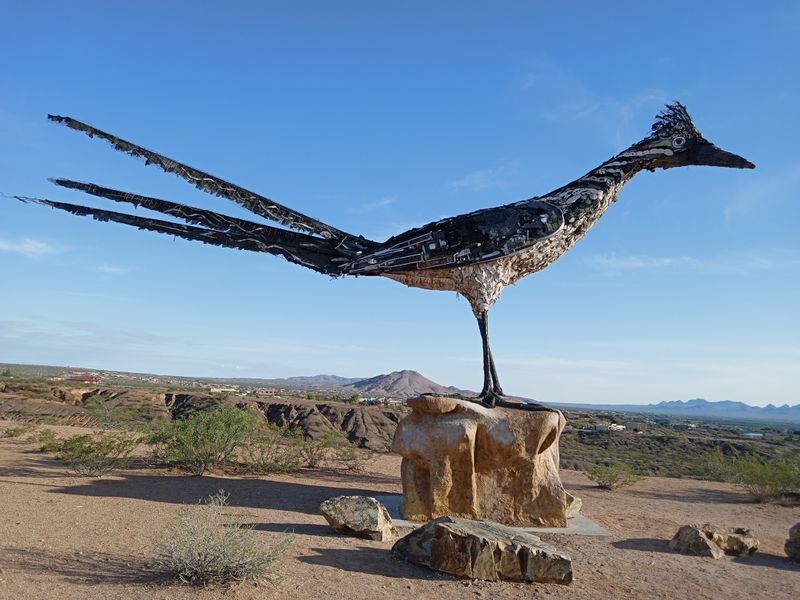
Las Cruces sprawls across the Mesilla Valley as New Mexico’s second-largest urban center, yet it maintains deep connections to its multicultural roots.
The city’s name translates to “The Crosses,” a reference to graves that marked a tragic event in the area’s past.
This proximity to the border region has shaped Las Cruces into a place where Hispanic, Native American, and Anglo cultures intersect in everyday life.
The local food scene showcases this blend spectacularly.
Green chile appears on nearly every menu, prepared according to recipes passed down through generations of New Mexican families.
The city celebrates this culinary heritage with festivals and trails that guide visitors to the best examples of regional cooking.
Art galleries and cultural centers display works that draw from multiple traditions, creating visual expressions that could only emerge from this particular crossroads.
Music heard at local events might combine mariachi instruments with country influences, or traditional Indigenous rhythms with contemporary styles.
The university brings additional diversity, attracting students and faculty from across the globe.
Despite its size, Las Cruces retains a welcoming, small-town atmosphere where strangers greet each other on the street.
Address: Las Cruces, NM 88001
5. Ysleta del Sur Pueblo
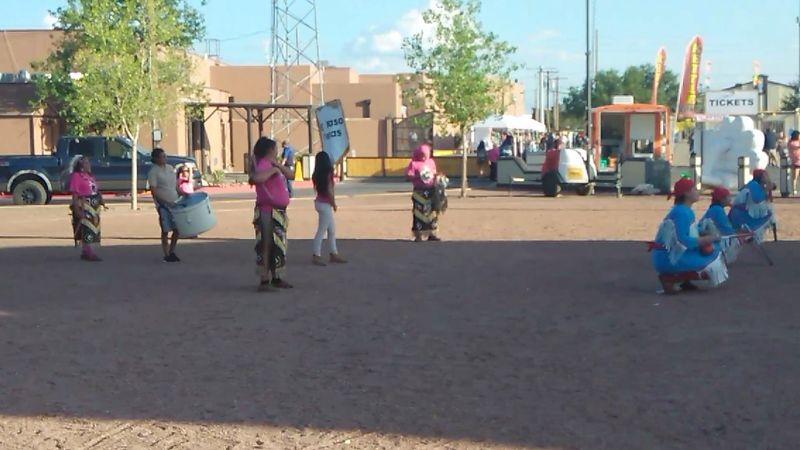
Ysleta del Sur Pueblo represents one of the oldest continuously inhabited communities in the entire region, home to the Tigua people whose history stretches back centuries before borders existed.
Though technically located just across the state line, the pueblo’s cultural and historical ties to the New Mexico borderland make it an essential part of the area’s mixed heritage.
The Tigua fled south during a major uprising, eventually establishing their community in what is now the El Paso area.
Spanish colonial influence merged with Indigenous traditions, creating unique cultural practices that survive to this day.
Later, Tejano and American influences added additional layers to this cultural foundation.
The pueblo maintains its traditional governance structure and cultural practices while also participating in the modern economy of the border region.
Ceremonial dances and rituals connect current residents to ancestors who lived in this valley long before any European arrived.
The community operates cultural centers where visitors can learn about Tigua history and traditions.
Artisans continue traditional crafts, passing skills from elder to youth.
The pueblo stands as a testament to Indigenous resilience and adaptation, maintaining identity while embracing necessary changes.
Address: 119 S Old Pueblo Rd, El Paso, TX 79907
6. Rodeo
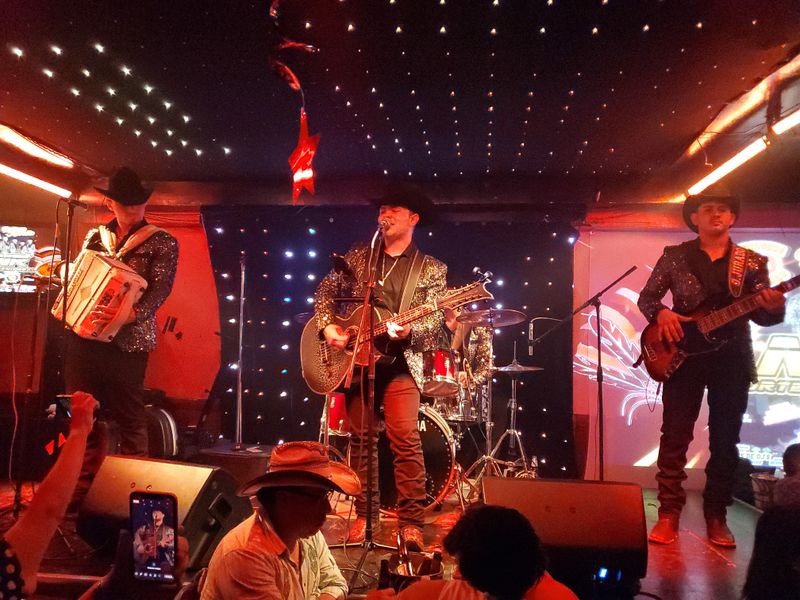
Rodeo occupies the extreme southwest corner of New Mexico, a tiny community where isolation becomes a defining characteristic.
Most border towns develop cultures shaped by constant cross-border traffic and interaction, but Rodeo takes a different path.
Its remoteness attracts a specific type of resident: artists seeking solitude for their work, astronomers taking advantage of dark skies unpolluted by city lights, and naturalists drawn to the unique ecosystems where New Mexico, Arizona, and Mexico meet.
This eccentric mix of residents creates a local culture unlike anywhere else in the borderland.
The population remains small enough that everyone knows each other, yet diverse enough in interests and backgrounds to generate fascinating conversations.
The landscape surrounding Rodeo is harsh and beautiful, with desert vegetation and dramatic mountain views.
Wildlife thrives in this sparsely populated area, making it a destination for birdwatchers and nature photographers.
The community embraces its quirky character, celebrating independence and self-sufficiency.
Residents must travel significant distances for supplies and services, fostering a spirit of cooperation and mutual support.
Rodeo proves that borderland culture is not monolithic but varies dramatically based on local conditions and the people who choose to call each place home.
Address: Rodeo, NM 88056
7. Antelope Wells
Antelope Wells barely qualifies as a town in the traditional sense, functioning primarily as a border crossing point in one of the most isolated stretches of the entire U.S.-Mexico boundary.
The permanent population can be counted on one hand, consisting mainly of border patrol personnel and logistics workers who facilitate the crossing.
What makes Antelope Wells culturally significant is precisely this extreme isolation and the unique lifestyle it creates.
The people who work here experience the border in its rawest form, without the softening influence of urban development or tourist traffic.
Days might pass with only a handful of vehicles crossing in either direction.
The surrounding landscape stretches endlessly, empty desert punctuated by distant mountains.
This environment shapes a culture defined by self-reliance, patience, and an appreciation for solitude.
The nearest town of any size lies hours away by road.
Those stationed at Antelope Wells must be comfortable with their own company and capable of handling emergencies without immediate backup.
Yet even here, cultural exchange occurs as Mexican and American personnel interact during their duties.
Antelope Wells represents the borderland at its most elemental, stripped of everything except the essential fact of the boundary itself.
Address: Antelope Wells, NM 88020
8. Palomas
Palomas exists in a symbiotic relationship with Columbus, its sister city three miles north across the international boundary.
The two communities function almost as one entity divided by a political line, with residents crossing daily for work, shopping, family visits, and recreation.
Many Palomas families have relatives in Columbus, and many Columbus businesses depend on customers from Palomas.
This interdependence creates a culture where cooperation is not just valued but necessary for survival and prosperity.
The main street of Palomas caters to visitors from the north, with shops offering goods and services that complement rather than compete with what is available in Columbus.
Restaurants serve authentic regional Mexican cuisine that draws food lovers from both sides of the border.
Local festivals and celebrations often see participation from Columbus residents, just as Palomas residents cross north for events and services.
The border here feels less like a barrier and more like a membrane, allowing constant exchange while maintaining distinct identities on each side.
Children might attend school on one side while their parents work on the other.
Palomas demonstrates how borderland communities adapt to their unique circumstances, creating cultures that transcend national boundaries while respecting them.
Address: Puerto Palomas, Chihuahua, Mexico
9. Animas
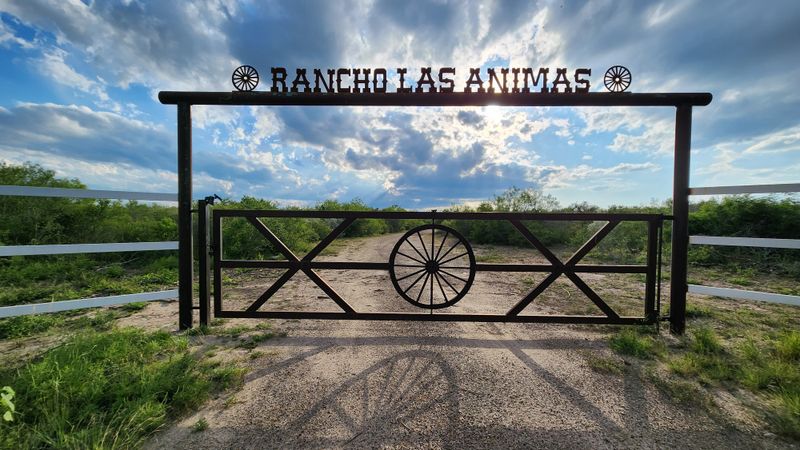
Animas sits in the remote Playas Valley of Hidalgo County, an agricultural community where the rhythms of farming and ranching govern daily life.
Far from major urban centers, the culture here develops independently, shaped more by the land and the work it requires than by outside influences.
The families who settled Animas came seeking opportunities in agriculture, willing to endure the isolation in exchange for independence and the chance to work their own land.
Generations later, their descendants continue these traditions, raising cattle and cultivating crops suited to the high desert environment.
Border life in Animas differs markedly from the experience in larger crossing points.
The international boundary lies nearby but does not dominate local consciousness the way it does in towns with ports of entry.
Instead, the culture focuses on agricultural cycles, weather patterns, and the cooperative relationships necessary in rural communities.
Neighbors help each other during harvest, share equipment, and gather for community events that bring together everyone in the valley.
The landscape is stark and beautiful, with vast open spaces under enormous skies.
Animas represents a quieter aspect of borderland culture, where proximity to Mexico influences identity without overwhelming other aspects of community life.
Address: Animas, NM 88020
10. Hatch
Hatch has achieved international fame for a single crop: the green chile that bears the town’s name.
While located slightly north of the immediate border, Hatch embodies the Hispanic agricultural traditions that define much of southern New Mexico’s cultural identity.
The annual chile harvest transforms the quiet village into a bustling center of activity as farmers bring in their crops and buyers arrive from across the country.
The festival celebrating this harvest has become a major event, drawing thousands of visitors who come to taste, purchase, and celebrate the crop that made Hatch famous.
The culture of Hatch revolves around this agricultural heritage, with families who have farmed the same land for generations passing down not just property but knowledge, techniques, and pride in their work.
The fields surrounding the village turn green with chile plants during growing season, and the aroma of roasting chiles fills the air during harvest.
Local businesses cater to the chile trade, offering roasting services, retail sales, and shipping to customers worldwide.
Yet Hatch remains fundamentally a small farming village where neighbors know each other and community bonds remain strong.
The success of Hatch chile has brought prosperity without destroying the traditional character that made the town special in the first place.
Address: Hatch, NM 87937
Dear Reader: This page may contain affiliate links which may earn a commission if you click through and make a purchase. Our independent journalism is not influenced by any advertiser or commercial initiative unless it is clearly marked as sponsored content. As travel products change, please be sure to reconfirm all details and stay up to date with current events to ensure a safe and successful trip.
