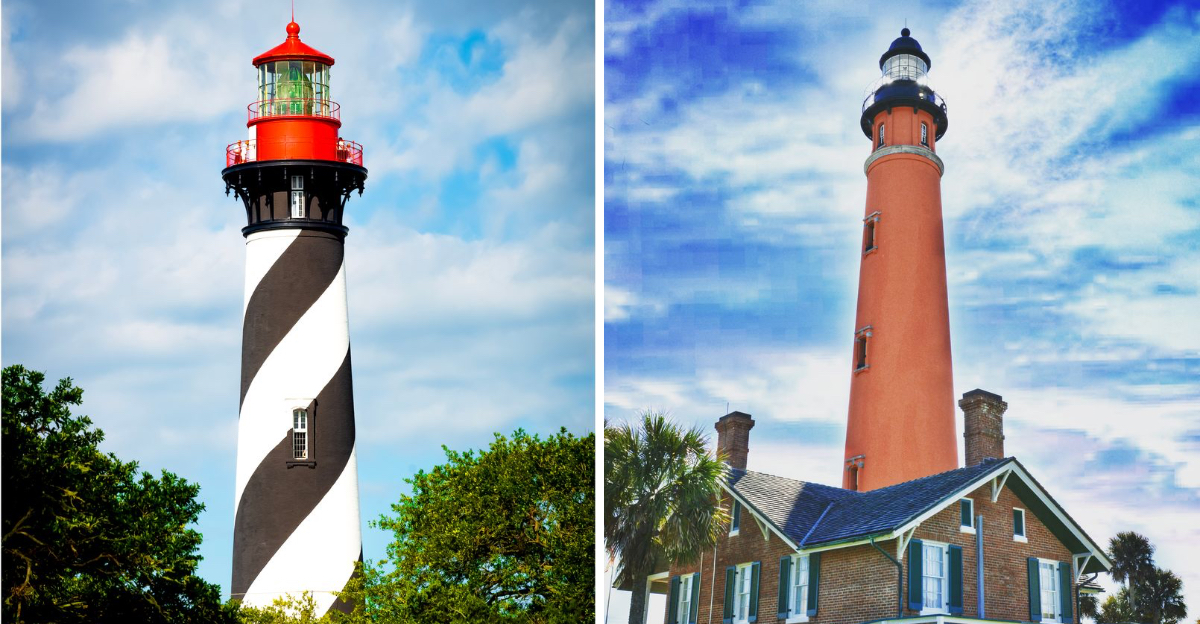
Florida’s coastline has always drawn me in, not just for its beaches but for the lighthouses that stand as quiet witnesses to centuries of maritime history.
Each lighthouse featured here is a local favorite, chosen not for hype but for their authentic stories, accessibility, and the sense of place they bring to their corners of the state.
Whether you’re looking for a museum, a scenic spot for a picnic, or just a glimpse of the past, these nine lighthouses offer something unique, one panoramic view, one weathered step, and one piece of history at a time.
1. St. Augustine Lighthouse
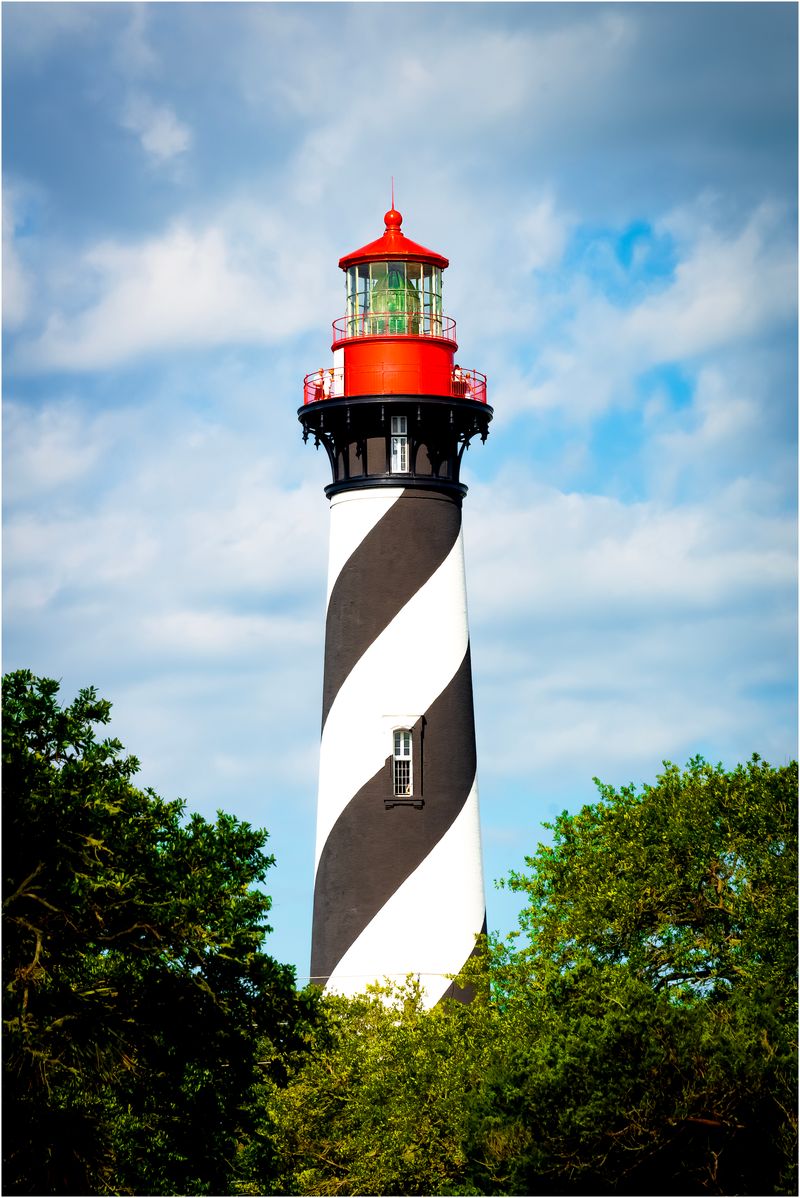
Ghost stories swirl around St. Augustine Lighthouse, but its real tale comes from nearly two centuries of standing guard over the oldest city in the U.S.
Locals love the dramatic black and white spiral paint and, of course, the view from the top.
There’s something both exhilarating and grounding about climbing those 219 steps, emerging to a sweeping view of sea and city.
The attached Maritime Museum is a treasure.
It brings shipwrecks and lighthouse keeper stories to life with real artifacts and engaging displays.
The staff, often volunteers, love sharing details about the site’s past, making the visit feel personal and memorable.
Every October, the Lighthouse hosts a popular evening ghost tour.
Some folks come just for the history, others for a good scare.
Either way, this National Historic Landmark makes a strong impression every season, rain or shine.
Address: 100 Red Cox Drive, St. Augustine, Florida.
Families appreciate the grounds, which include a gift shop, picnic areas, and shaded pathways that wind through coastal vegetation.
Even if you don’t climb, there’s plenty to explore at ground level.
The museum’s exhibits rotate occasionally, so repeat visitors often discover something new.
Photography enthusiasts flock here at sunrise and sunset, when the tower glows in golden light.
The contrast between the spiraling stripes and the sky creates postcard-worthy shots every time.
Beyond the aesthetics, the lighthouse serves as a reminder of Florida’s nautical heritage.
Ships once relied on its beam to navigate treacherous waters, and that legacy still resonates today.
Whether you’re a history buff, a thrill seeker, or simply curious, St. Augustine Lighthouse delivers an experience that lingers long after you’ve descended those final steps.
2. Ponce de Leon Inlet Lighthouse
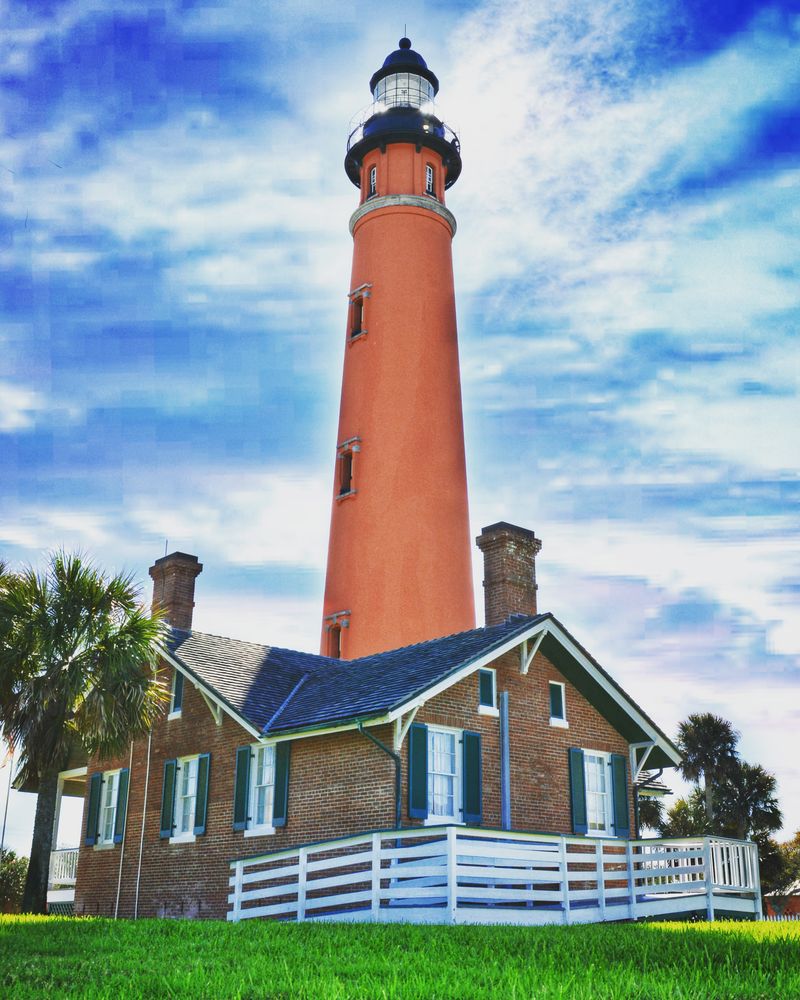
If you ask a local about Florida’s tallest lighthouse, they’ll point you to Ponce de Leon Inlet.
Its sheer height, 175 feet, draws adventurers from across the state, and the 203 steps to the lens are a true workout.
The lighthouse’s striking red tower stands out against the coastal sky, a bold landmark for ships and road trippers alike.
Beyond the climb, the museum complex is a highlight.
Restored keeper’s dwellings and outbuildings hold everything from old Fresnel lenses to uniforms and logbooks.
Every room has its own vibe, like a time capsule from Florida’s heyday of coastal navigation.
This spot isn’t just about the past.
Locals recommend watching for rocket launches from Cape Canaveral if you time your visit right.
The panoramic view is world-class, and the lighthouse’s story grows with each visitor.
Address: 4931 South Peninsula Drive, Ponce Inlet, Florida.
The surrounding grounds include nature trails that meander through coastal hammocks, offering birdwatching opportunities and quiet spots to reflect.
Educational programs run throughout the year, appealing to school groups and curious minds of all ages.
The gift shop stocks local artisan crafts and maritime-themed books, perfect for souvenirs.
During summer months, the lighthouse stays open later, allowing visitors to catch sunset from the observation deck.
The changing colors over the Atlantic create a spectacle that’s hard to match anywhere else in Florida.
For those who prefer staying grounded, the museum’s interactive exhibits provide plenty of engagement without the stair climb.
Young visitors especially enjoy the hands-on displays that explain how lighthouses work and why they mattered.
This isn’t just a monument to the past but a living educational resource that continues to inspire awe and appreciation for maritime history.
3. Amelia Island Lighthouse

Hidden among the moss-draped oaks of Fernandina Beach, Amelia Island Lighthouse is proof that the oldest doesn’t always mean the biggest or flashiest.
Built in 1838 and relocated from Cumberland Island, it quietly presides over the salt marshes and calm waters of the Amelia River.
Locals are proud of its low-key charm and the fact that it’s still operational.
The access here feels exclusive, tours are limited and well worth planning ahead.
Guides often have family connections to the lighthouse or town, adding a personal touch you won’t find everywhere.
It’s these stories, more than any single artifact, that really make this place special.
For many, visiting Amelia Island Lighthouse is about the slow pace and the surrounding historic district.
It’s a great place to reflect on the simple practicality and resilience of Florida’s oldest beacon.
Address: 2 Lighthouse Circle, Fernandina Beach, Florida.
The surrounding neighborhood retains its Victorian-era character, with beautifully preserved homes and tree-lined streets that invite leisurely strolls.
After your tour, many visitors wander into downtown Fernandina Beach, where independent shops and cafes offer a taste of local life.
The lighthouse’s modest size belies its historical significance.
It has guided countless vessels safely to port and remains an active aid to navigation today.
Photography here captures a different mood than at larger lighthouses.
The interplay of light filtering through ancient oaks and the simple elegance of the tower creates intimate, evocative images.
Timing your visit during the spring or fall ensures pleasant weather and fewer crowds, allowing for a more contemplative experience.
The lighthouse stands as a testament to endurance, having survived storms, wars, and the passage of time with quiet dignity.
Its story is woven into the fabric of Amelia Island, making it a must-see for anyone seeking an authentic connection to Florida’s maritime past.
4. Pensacola Lighthouse
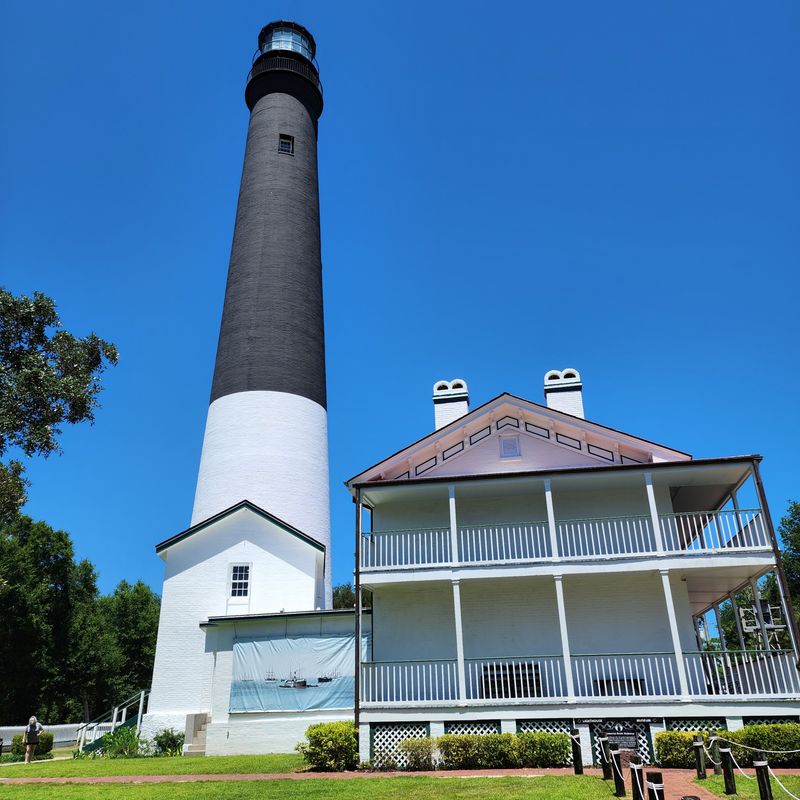
Every time I visit Pensacola, I can’t resist stopping by its lighthouse.
This 1859 structure has weathered war, hurricanes, and more, standing just inside the gates of Naval Air Station Pensacola.
The sense of history here feels immediate, painted on the walls and echoing through the narrow, steep staircase.
The museum inside is hands-on and welcoming, mixing stories from the Civil War with displays about shipwrecks and rescue missions.
I’m always impressed by the local volunteers, who share tales of keepers who braved storms to keep the light burning.
The climb is no joke, but the view over Pensacola Bay and the Gulf is one of the best along the Panhandle.
It’s a favorite stop for families and aviation fans, thanks to regular airshows and the nearby National Naval Aviation Museum.
Address: 2081 Radford Boulevard, Pensacola, Florida.
Visiting requires passing through base security, so bring a valid ID and allow extra time for check-in.
Once inside, the lighthouse grounds offer picnic tables and open spaces perfect for a relaxed afternoon.
The keeper’s quarters have been meticulously restored, giving visitors a glimpse into the daily lives of those who tended the light.
Interactive exhibits engage younger visitors, making this a destination that appeals across generations.
The lighthouse’s proximity to the aviation museum creates a unique pairing of maritime and military history.
Many visitors spend a full day exploring both sites, soaking up stories of courage and innovation.
The climb to the top rewards you with sweeping vistas that stretch from the bay to the open Gulf.
On clear days, you can see for miles, understanding exactly why this location was chosen for a lighthouse.
Pensacola Lighthouse remains an active beacon, still guiding vessels and serving as a proud symbol of the region’s enduring maritime legacy and military heritage.
5. Key West Lighthouse
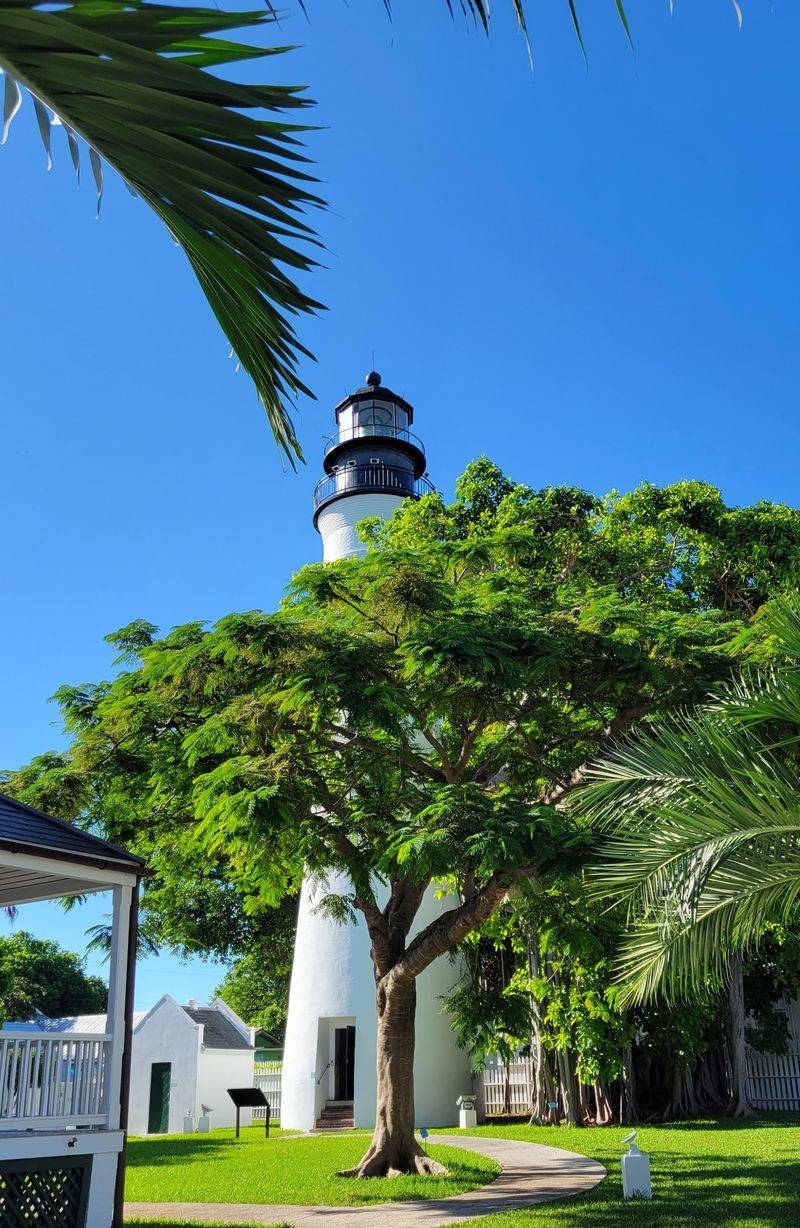
Key West is famous for its quirky character, and the lighthouse fits right in.
After two earlier versions fell to hurricanes, this 1848 structure was built to last, and it has.
The lighthouse stands in the heart of Old Town, just steps from the Hemingway Home and bustling Duval Street.
What sets this spot apart is its approachable feel.
The grounds are lovingly kept, and the Keeper’s Quarters have been turned into a museum with exhibits on both the lighthouse and the island’s maritime heritage.
I always find myself lingering in the garden, admiring the tropical blooms and the sense of calm amid the downtown buzz.
Climb to the top for a rewarding view of tin-roofed houses and the turquoise sea.
Locals recommend bringing a camera at sunset when the light softens and the island’s colors really shine.
Address: 938 Whitehead Street, Key West, Florida.
The museum inside showcases artifacts from shipwrecks, lighthouse lenses, and personal items belonging to former keepers.
Each display tells a story, connecting visitors to the individuals who kept the light burning through storms and solitude.
The garden surrounding the lighthouse is a hidden gem, filled with native plants and shaded benches where you can escape the midday heat.
It’s a peaceful retreat that contrasts beautifully with the lively energy of nearby streets.
The climb consists of 88 steps, manageable for most visitors and well worth the effort.
From the top, the panoramic view captures the essence of Key West, a blend of history, architecture, and natural beauty.
The lighthouse has become a beloved landmark, not just for tourists but for residents who see it as a symbol of resilience and continuity.
Its central location makes it easy to include in a walking tour of Old Town, pairing well with visits to nearby historic sites and cultural attractions.
6. Sanibel Island Light

Sanibel’s lighthouse is the kind you spot from afar and want to see up close.
Built in 1884, its slender iron structure contrasts sharply with the lush greenery and soft beaches of Sanibel Island.
Unlike many others, you can’t climb this one, adding to its mystique.
The real magic is at sunrise, when the light casts long shadows over the dunes.
Locals flock here early with coffee in hand, enjoying the serene start to their day.
The nearby fishing pier is a bonus, often alive with pelicans and friendly anglers.
More than a photo op, Sanibel Island Light has a working history that’s still respected.
The surrounding park is ideal for picnics, shell hunting, or just letting the sea breeze clear your head after a busy week.
Address: 112 Periwinkle Way, Sanibel, Florida.
The beach here is known for its shelling opportunities, drawing collectors from around the world.
After exploring the lighthouse grounds, many visitors spend hours combing the sand for treasures.
The park includes walking trails that wind through native vegetation, offering glimpses of coastal wildlife.
Birdwatchers bring binoculars to spot herons, egrets, and roseate spoonbills that frequent the area.
The lighthouse itself remains an active navigational aid, its light still guiding boats through the waters off Sanibel.
Its skeletal iron frame is both functional and beautiful, a testament to the engineering of its era.
Photographers love the way the structure interacts with the natural environment, creating compositions that blend human ingenuity with coastal wilderness.
Sunset here is equally stunning, with the sky ablaze in oranges and pinks reflected in the calm Gulf waters.
Sanibel Island Light offers a quieter, more contemplative lighthouse experience, perfect for those seeking beauty and tranquility over adrenaline and height.
7. Egmont Key Lighthouse
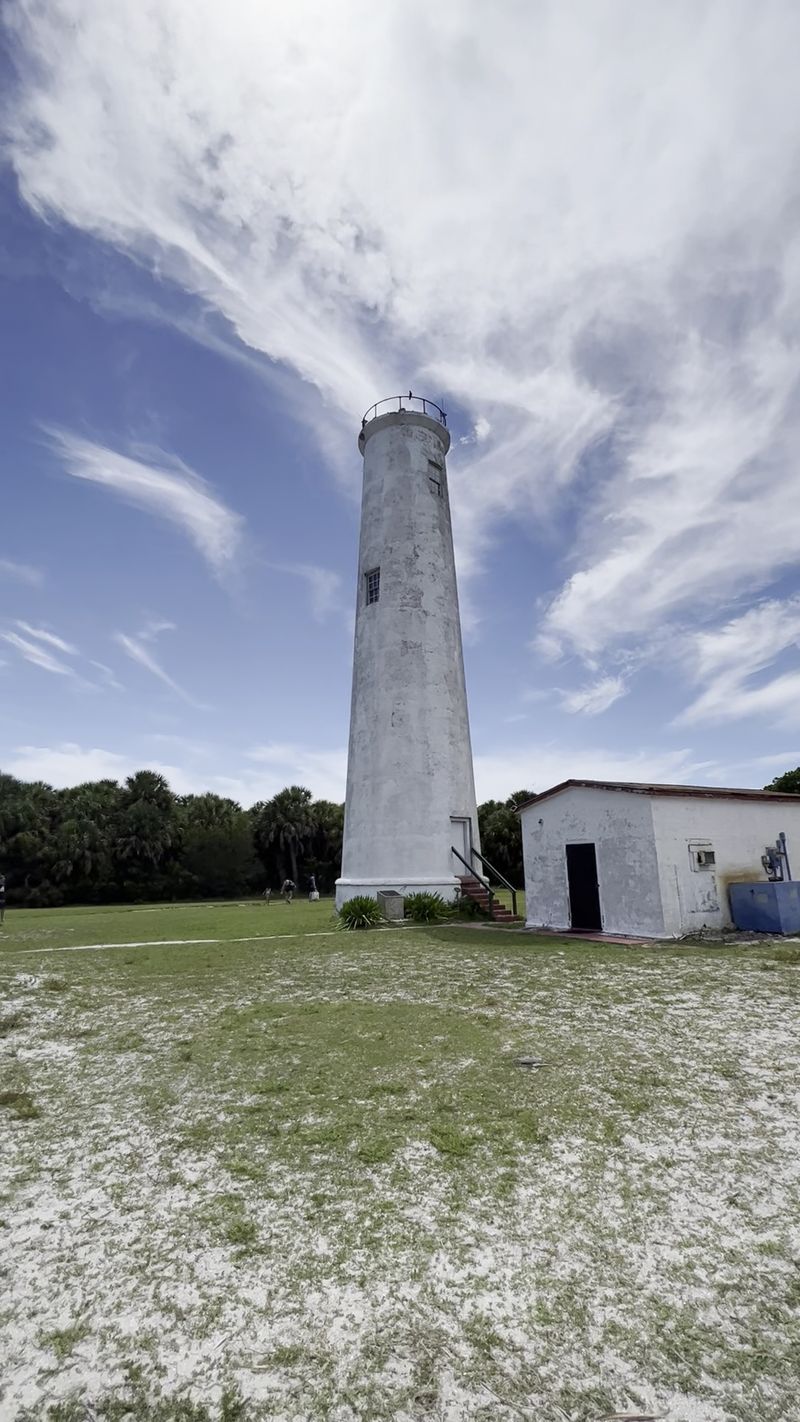
Accessible only by boat, Egmont Key Lighthouse feels like a secret waiting to be discovered.
Built in 1858, it stands sentinel at the mouth of Tampa Bay, keeping watch over passing ships and the protected wildlife refuge around it.
The sense of isolation gives every visit a dose of adventure.
The surrounding island is part of Fort DeSoto State Park.
Once ashore, you’ll find trails leading past historic ruins, nesting seabirds, and pristine beaches.
Locals often pack a picnic for a day of exploring nature and soaking up the coastal history.
The lighthouse itself is simple but striking, with a bright white tower set against blue sky and sea.
Seeing it up close, knowing it’s still active, connects you to the long thread of Florida’s maritime story.
Address: Egmont Key, accessible via boat from Fort DeSoto Park, Florida.
The island’s remote location means fewer crowds and a more intimate experience with nature.
Wildlife thrives here, including gopher tortoises, seabirds, and occasionally dolphins visible from the shore.
The ruins of Fort Dade, a Spanish-American War fortification, add another layer of history to explore.
Walking among the crumbling walls and overgrown pathways, you can almost hear echoes of soldiers who once guarded this strategic point.
The lighthouse has been lovingly maintained, and its light continues to guide vessels navigating the busy shipping lanes of Tampa Bay.
Swimming and snorkeling are popular activities, with clear waters revealing marine life and occasional glimpses of underwater artifacts.
Pack plenty of water and sun protection, as shade is limited and facilities are minimal.
The journey to Egmont Key is as memorable as the destination itself, offering a true escape from the mainland and a chance to experience Florida’s coastal wilderness in its purest form.
8. Port Boca Grande Lighthouse
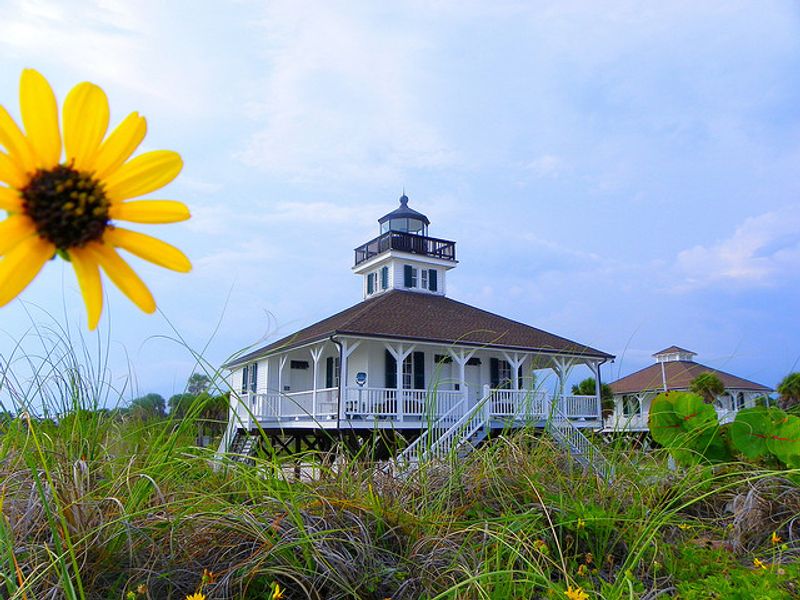
Port Boca Grande Lighthouse has a homey feel that sets it apart from taller, more imposing beacons.
Built in 1890, its broad porch and clapboard siding look more like a beach cottage than a navigational aid.
Locals on Gasparilla Island see it as a piece of community identity as much as history.
After years of neglect, it was restored in the 1980s and now serves as both a museum and a gathering spot.
Exhibits inside range from artifacts salvaged from shipwrecks to displays about local fishing traditions.
School groups and families appreciate the approachable size and friendly guides.
The real treat is sitting on the porch, sea breeze in your hair, watching boats pass by.
It’s the kind of place where history feels alive and everyday at the same time.
Address: 880 Belcher Road, Boca Grande, Florida.
The lighthouse sits at the southern tip of Gasparilla Island, surrounded by sandy beaches and coastal vegetation.
Visitors often combine their lighthouse visit with a day at the beach, taking advantage of the pristine shoreline nearby.
The museum’s exhibits rotate periodically, ensuring that repeat visitors always find something new to learn.
Local volunteers staff the museum, sharing personal anecdotes and historical tidbits that bring the past to life.
The porch is a favorite spot for watching sunsets, with unobstructed views over the Gulf that paint the sky in brilliant hues.
Photographers and artists are drawn to the lighthouse’s charming architecture and picturesque setting.
The surrounding park includes picnic areas and nature trails, making it easy to spend several hours exploring.
Port Boca Grande Lighthouse embodies a relaxed, welcoming spirit that reflects the character of Gasparilla Island itself, a place where time slows down and simple pleasures take center stage.
9. Cedar Key Lighthouse (Seahorse Key)
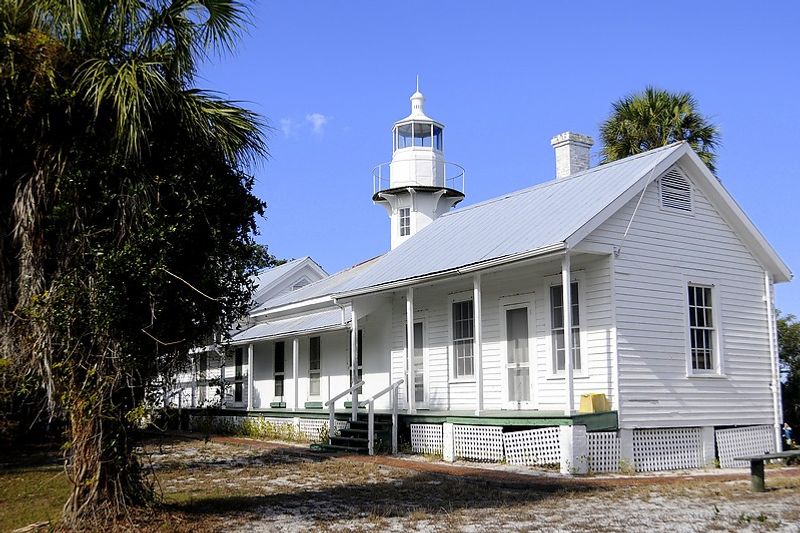
Cedar Key Lighthouse on Seahorse Key is off the beaten path, but that’s what makes it a favorite among locals and birdwatchers.
Built in 1854, this hexagonal brick tower now hosts a University of Florida marine lab and is only open on select open house days.
Its unique shape and forested setting give it a storybook quality.
Wildlife flourishes all around.
On my last visit, I spotted ospreys, herons, and even a few dolphins from the shoreline.
Guided tours share tales of pirate raids and Civil War drama, reminding you that the Gulf Coast’s history is anything but dull.
Getting to Seahorse Key means a short boat ride from Cedar Key, adding a sense of adventure.
The lighthouse feels less like a museum and more like a living piece of Florida’s wilder side.
Address: Seahorse Key, accessible via boat from Cedar Key, Florida.
The island is a designated wildlife refuge, and during nesting season, access is restricted to protect seabirds.
Planning your visit around open house dates ensures you can explore the lighthouse and learn from knowledgeable guides.
The hexagonal design is rare among lighthouses, making this structure architecturally significant as well as historically important.
The surrounding waters are popular with kayakers and anglers, who appreciate the unspoiled beauty and abundant marine life.
On the island, trails lead through coastal hammocks and along sandy beaches, offering opportunities for exploration and wildlife observation.
The lighthouse tower provides a commanding view of the Gulf and nearby islands, a perspective that hasn’t changed much since its construction.
Cedar Key Lighthouse stands as a reminder of Florida’s untamed natural heritage, where history and ecology intertwine in a landscape that feels both timeless and fragile.
Dear Reader: This page may contain affiliate links which may earn a commission if you click through and make a purchase. Our independent journalism is not influenced by any advertiser or commercial initiative unless it is clearly marked as sponsored content. As travel products change, please be sure to reconfirm all details and stay up to date with current events to ensure a safe and successful trip.
