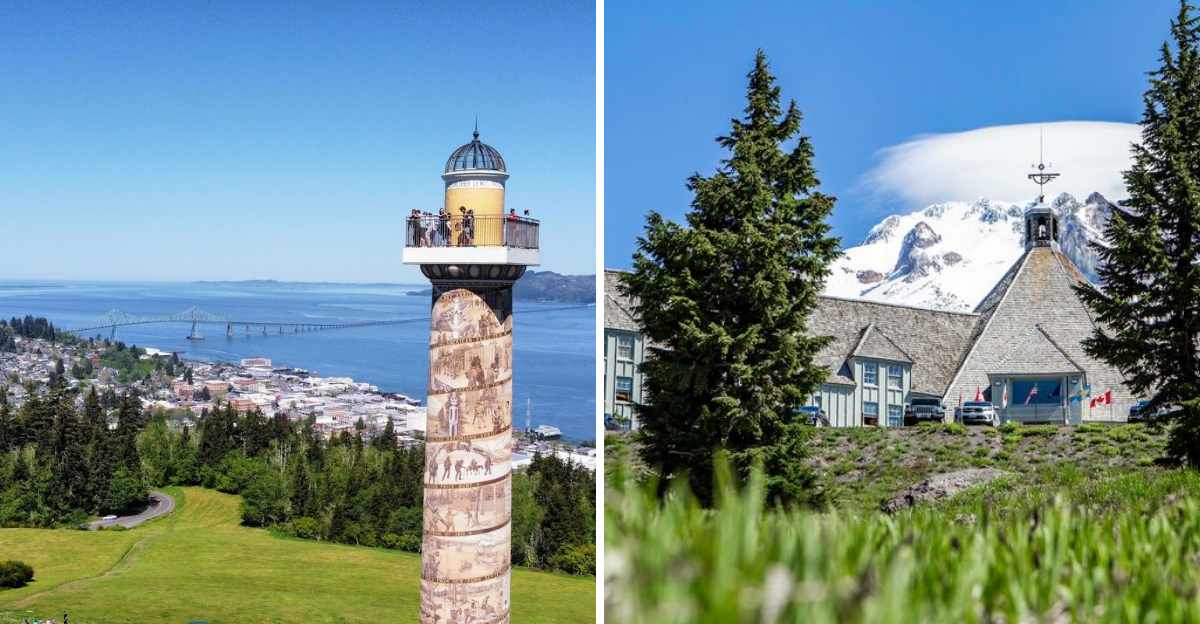
Oregon isn’t just forests, coastlines, and mountains – it’s also a state full of stories carved into stone, metal, and memory. These historic monuments aren’t just markers on a map; they’re snapshots of moments that shaped the region in unexpected ways.
I didn’t expect to feel pulled into history so quickly, but each site seems to carry its own quiet gravity. Some honor big turning points, others preserve smaller but equally powerful local stories.
I kept noticing how easy it is to walk past these places without realizing what they represent. There’s something grounding about standing in front of them and imagining everything that came before.
And exploring them turns the state into more than a destination – it becomes a layered story you can actually walk through.
1. Astoria Column, Astoria, Oregon
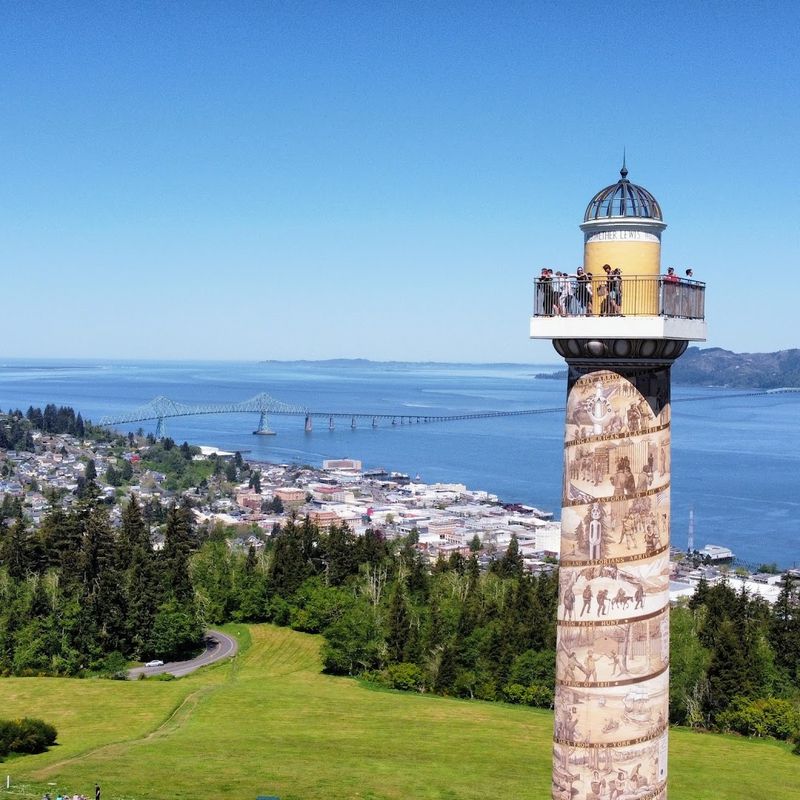
Rising 125 feet above Coxcomb Hill, the Astoria Column has watched over the Pacific Northwest since 1926. It stands in Astoria, Oregon, where the Columbia River meets the Pacific Ocean.
Few landmarks in the state carry this much visual drama.
The column’s exterior displays a continuous mural called a sgraffito frieze. This art form scratches designs into wet plaster in layered stages.
The scenes tell Oregon’s earliest stories, including the Lewis and Clark Expedition and the arrival of the first transcontinental railroad.
Climbing the 164 spiral steps inside rewards visitors with one of the most breathtaking views in the state. On a clear day, you can see Washington’s coastline, the river delta, and rolling forested hills in every direction.
The column reflects a partnership between the Great Northern Railway and the Astor family, descendants of fur trader John Jacob Astor. That partnership shows how commerce and history intertwine in Oregon.
Kids love launching small wooden gliders from the top platform. This quirky tradition has lasted for decades.
Watching those small planes spin down into the treetops below feels oddly satisfying for visitors of all ages. The Astoria Column proves that a monument can feel both educational and genuinely fun to visit.
2. Pittock Mansion, Portland, Oregon
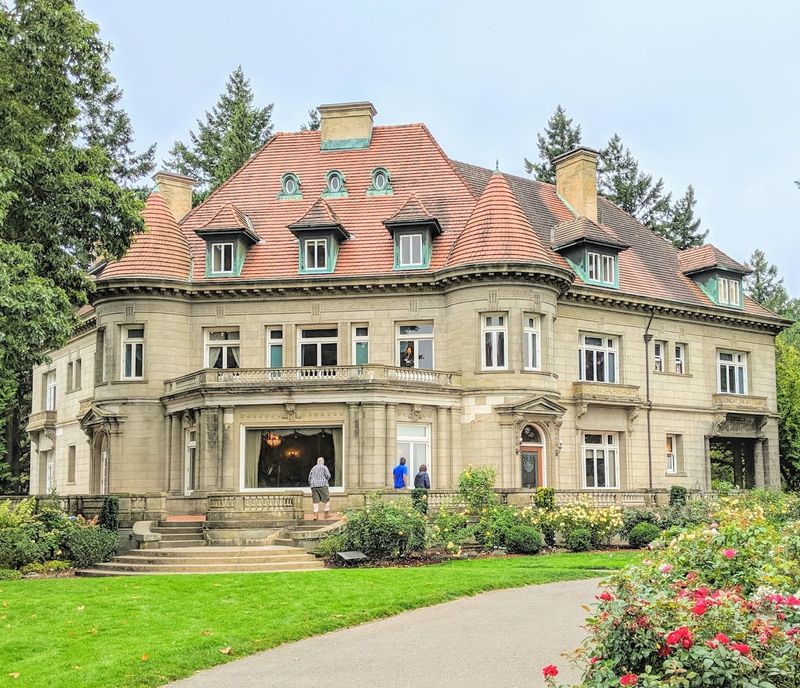
Perched in the West Hills above Portland, Oregon, Pittock Mansion feels like a place where time slowed down and then politely stopped. Builders completed it in 1914 for newspaper publisher Henry Pittock and his wife Georgiana. The estate stands as one of the city’s most beloved landmarks.
The mansion contains 46 rooms spread across four floors. At the time, it felt remarkably modern. It included central heating, intercoms, and a built-in vacuum system.
In 1914, that technology felt genuinely cutting-edge.
Georgiana Pittock played a major role in Portland’s cultural life. She co-founded the Portland Rose Society and helped shape the city’s identity.
Walking through the mansion’s rooms gives you a sense of how ambition and civic pride looked in early 20th-century Oregon.
The house nearly faced demolition after the 1962 Columbus Day Storm caused severe structural damage. A community campaign saved it. The mansion opened to the public in 1965.
That rescue effort says a great deal about how Portlanders value their history.
The grounds offer sweeping views of the city skyline and, on clear days, Mount Hood. The gardens stay beautifully maintained. Visitors can explore them even when the mansion remains closed.
Pittock Mansion rewards slow, curious visitors. It invites you to linger in rooms full of quiet stories.
3. Oregon State Capitol, Salem, Oregon
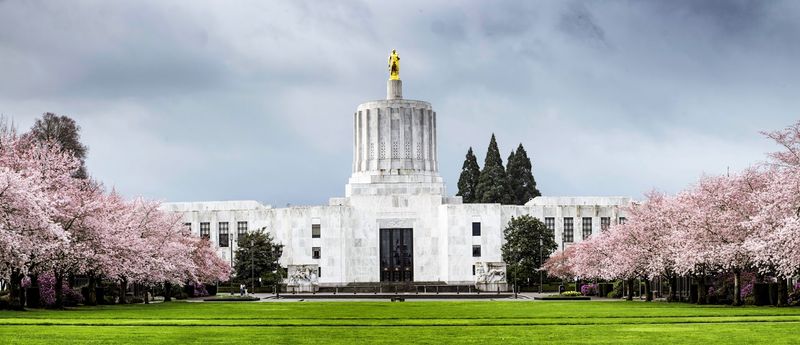
Standing at the heart of Salem, Oregon, the Oregon State Capitol is one of the most architecturally distinctive government buildings in the United States. Its clean Art Deco lines and Stripped Classicism style set it apart from the domed capitols people usually imagine.
The building was completed in 1938 after the earlier capitol burned down in 1935. A gold-leafed bronze statue known as the Oregon Pioneer sits atop the dome.
That gleaming figure is visible from a surprising distance across the city.
Inside, the rotunda displays large murals painted by Frank H. Schwarz and Barry Faulkner.
The scenes show key moments in Oregon history, including the Lewis and Clark Expedition and wagon trains on the Oregon Trail. The artwork feels vivid and detailed. It rewards a slow, careful look.
The capitol grounds welcome the public. They include landscaped gardens, fountains, and the Oregon World War II Memorial. Free weekday tours make the interior easy to explore for history-minded visitors.
Salem sits in the Willamette Valley, about 47 miles south of Portland. The capitol stands downtown, so you can easily combine it with other attractions.
It is a civic landmark that shows how much story a single building can hold.
4. Bonneville Dam Historic District, Columbia River Gorge, Oregon
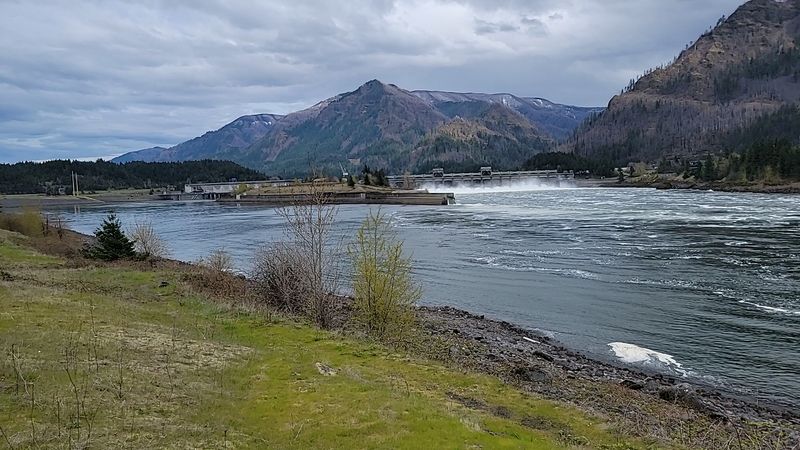
Built during the 1930s as part of President Roosevelt’s New Deal, the Bonneville Dam Historic District sits along the Columbia River Gorge between Oregon and Washington. It was one of the largest public works projects in American history, and walking through the site today, that scale still hits you hard.
The dam’s No. 1 Powerhouse is a centerpiece of the district. Its construction represented a massive leap forward in how the Pacific Northwest generated and distributed electricity.
Entire towns and industries were powered by what this dam made possible.
One of the most popular features for visitors is the fish ladder system. Engineers designed these stepped channels to allow salmon and steelhead to migrate upstream past the dam.
You can watch the fish navigate the ladders through underwater viewing windows at the visitor center.
The district was listed on the National Register of Historic Places in 1987. The structures on site reflect a specific New Deal aesthetic, combining industrial function with architectural detail that was intentional and proud.
These were not just utility buildings. They were statements about what America could accomplish.
The Columbia River Gorge surrounding the dam is stunning in its own right. Towering basalt cliffs, dense forests, and the wide river create a backdrop that makes even a brief stop feel like a genuine adventure.
The Bonneville Dam is where engineering history and natural beauty share the same address.
5. Oregon World War II Memorial, Salem, Oregon
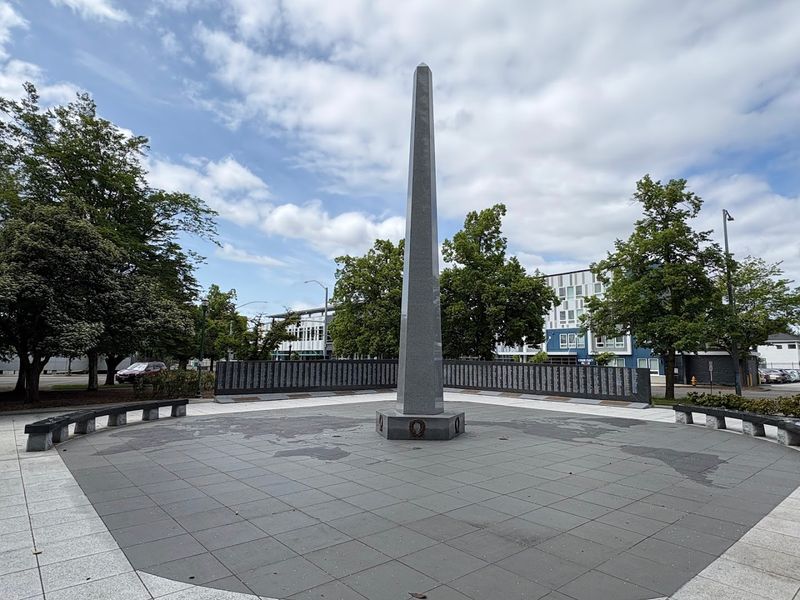
On the grounds of the Oregon State Capitol in Salem, Oregon, the Oregon World War II Memorial stands as one of the most quietly powerful sites in the state. It honors the Oregonians who served during one of history’s most consequential conflicts.
The memorial features a curved granite wall inscribed with the names of Oregon residents who gave their lives during the war. Bronze plaques recount specific stories of courage and sacrifice from the Pacific and European theaters.
Reading those accounts is not something you do quickly. They pull you in.
Oregon sent more than 150,000 men and women into service during World War II. The state also experienced the war on its own soil in ways that most Americans do not realize.
In 1942, a Japanese submarine shelled Fort Stevens on the Oregon coast, making it the only military installation on the U.S. mainland to be attacked by a foreign power since the War of 1812.
The memorial was dedicated in 2004 and designed to serve as both a tribute and an educational resource. Interpretive panels provide historical context that helps younger visitors understand what the war meant for Oregon and for the country.
Visiting the memorial alongside the capitol building makes for a meaningful half-day of reflection. The combination of civic architecture and personal remembrance creates an experience that feels both grand and deeply intimate at the same time.
6. Timberline Lodge, Mount Hood, Oregon
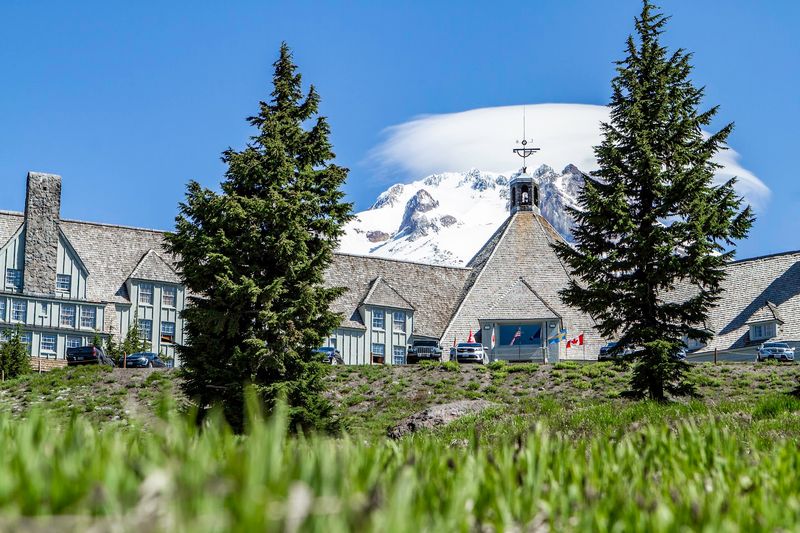
At an elevation of 6,000 feet on the south slope of Mount Hood, Timberline Lodge is one of the most remarkable buildings in the American West. It was constructed between 1936 and 1938 by workers employed through the Works Progress Administration during the Great Depression.
Every detail of the lodge was made by hand. Local craftspeople carved the massive wooden newel posts, wove the wool upholstery, and hammered the wrought iron fixtures.
The building is a living museum of Depression-era artisanship, and it earned National Historic Landmark status in 1977.
President Franklin D. Roosevelt dedicated the lodge in 1937, calling it a monument to the skill and determination of American workers.
That dedication still feels earned when you stand in the hexagonal lobby and look up at the hand-hewn timber beams overhead.
Timberline remains an active ski resort, operating year-round thanks to the glacier on Mount Hood’s upper slopes. It is the only ski area in North America with continuous skiing through every month of the year.
That combination of history and activity makes it genuinely unlike anywhere else.
The lodge also appeared as the exterior of the Overlook Hotel in Stanley Kubrick’s 1980 film “The Shining,” which adds a layer of pop culture intrigue for film fans. But the real story here belongs to the artisans who built something extraordinary out of hardship and community spirit.
7. Oregon Caves Chateau, Cave Junction, Oregon
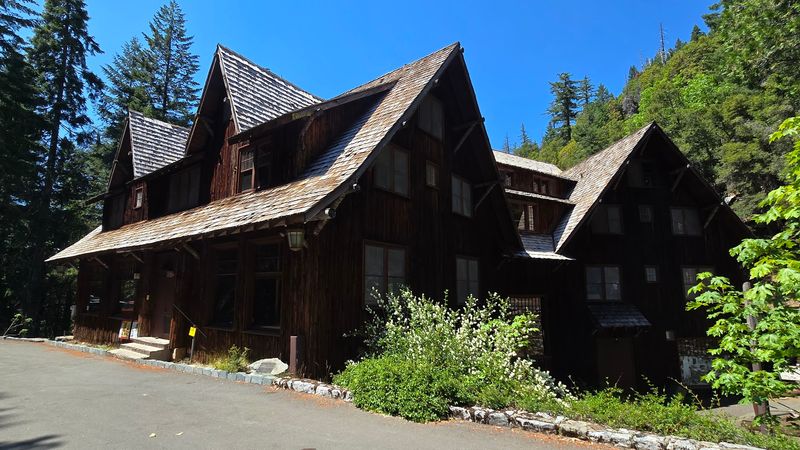
Hidden in the Siskiyou Mountains near Cave Junction, Oregon, the Oregon Caves Chateau is the kind of place that makes you feel like you have stepped into a storybook. Built in 1934, this six-story wooden structure sits directly over a mountain stream, which actually runs through the building’s lower level.
The chateau was constructed to serve visitors exploring the nearby Oregon Caves National Monument and Preserve. The caves themselves were formed over millions of years as acidic groundwater dissolved the surrounding marble rock.
The result is a series of dramatic underground chambers filled with stalactites, stalagmites, and strange geological formations.
The building’s rustic design blends naturally into the surrounding old-growth forest. The architects used local materials and a style that was deliberately unpretentious.
The chateau is listed on the National Register of Historic Places and has been carefully preserved to maintain its original 1930s character. Staying overnight here is a genuinely atmospheric experience, especially when the forest mist rolls in around the building after dark.
Cave Junction sits in southern Oregon’s Illinois Valley, about 30 miles from the California border. The drive up to the chateau winds through dense forest, building anticipation with every curve in the road.
It is the perfect destination for travelers who want history, geology, and a little old-fashioned adventure all in one stop.
8. Witch’s Castle, Portland, Oregon
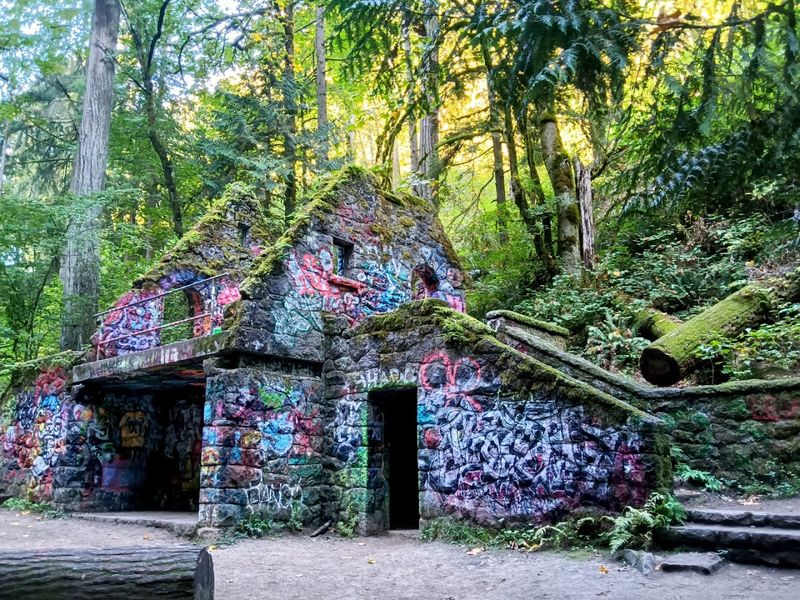
Few historic structures in Oregon spark the imagination quite like the Witch’s Castle. It sits along the Wildwood Trail in Forest Park, Portland, Oregon.
It looks exactly like something out of a fairy tale gone sideways.
The structure was originally built in the 1930s as a park ranger’s restroom and maintenance facility.
Over the decades, moss crept across every surface, ferns sprouted from cracks in the walls, and the surrounding Douglas firs grew tall enough to block most of the sky. The result is a ruin that feels genuinely ancient, even though it is less than a century old.
Local legend gave the structure its colorful nickname, and various eerie stories have attached themselves to the site over the years. None of them are historically verified, but they add to the character of a place that already has plenty of its own.
Getting there requires a moderate hike along the Wildwood Trail from the Lower Macleay Park trailhead. The walk itself is beautiful, winding through one of the largest urban forests in the United States.
The Witch’s Castle rewards the effort with a photo opportunity and a story you will actually want to tell when you get home.
9. Marquam Manor, Portland, Oregon
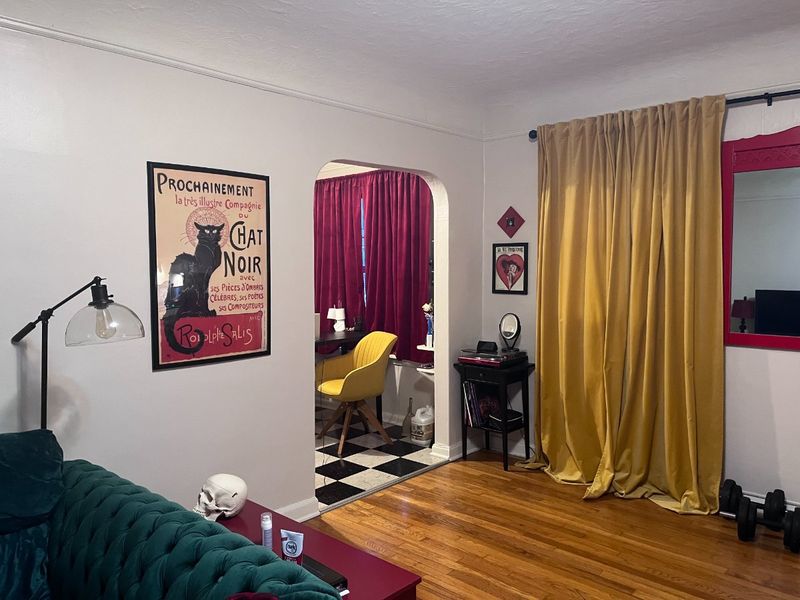
Standing in the Marquam Hill neighborhood of Portland, Oregon, Marquam Manor carries the quiet confidence of a building that knows it has outlasted trends and time. Constructed in 1930, this six-story brick structure is a textbook example of the residential architecture that shaped Portland.
The building was listed on the National Register of Historic Places, recognizing its architectural integrity and its role in Portland’s development as a growing city. Its classical detailing, including ornate brickwork and arched window surrounds, reflects the craftsmanship that was standard for quality construction of that era.
Marquam Manor was built during a period when Portland was expanding rapidly. The city was attracting new residents, new businesses, and new ideas about what urban living could look like.
Buildings like this one were part of a deliberate effort to create neighborhoods that felt permanent and dignified.
The Marquam Hill area is also home to Oregon Health and Science University, which gives the neighborhood an interesting layered identity. Historic residential architecture sits alongside modern medical research facilities in a way that feels uniquely Portland.
For architecture enthusiasts, a visit to Marquam Manor offers a chance to see how the city’s residential ambitions looked in the years between the two World Wars. The building is not a flashy landmark, but its enduring presence on the hill speaks volumes about the lasting value of building things well.
Sometimes the quietest monuments tell the loudest stories.
10. Fort Stevens State Park and Historic Military Site, Hammond, Oregon
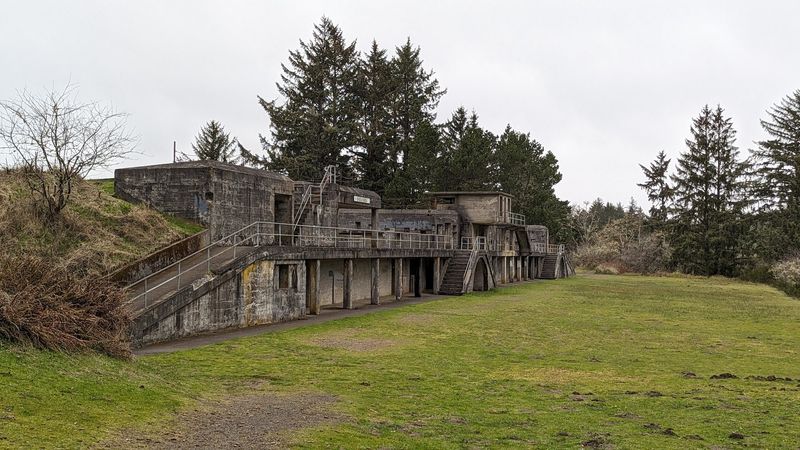
At the very tip of Oregon’s northern coast, near the small community of Hammond, Fort Stevens holds a distinction that no other military site on the U.S. mainland can claim. In June 1942, a Japanese submarine fired on the fort, making it the only American military installation on the continental United States to come under enemy fire since the War of 1812.
The fort was originally established in 1863 during the Civil War to protect the mouth of the Columbia River. It remained an active military installation through World War II, which is a remarkable run of nearly 80 years of continuous service.
Today, Fort Stevens State Park preserves the historic military grounds alongside a popular coastal campground and beach access. The ruins of the old gun batteries are open for exploration, and their sheer concrete mass gives you a visceral sense of the defensive ambitions that shaped this coastline.
A military museum on site details the fort’s full history, from its Civil War origins through its World War II role. Exhibits include original artillery pieces, military vehicles, and photographs that bring the site’s long story into sharp focus.
The wreck of the Peter Iredale, a British sailing ship that ran aground in 1906, sits just offshore on the beach nearby. Its rusted iron skeleton is visible at low tide.
Dear Reader: This page may contain affiliate links which may earn a commission if you click through and make a purchase. Our independent journalism is not influenced by any advertiser or commercial initiative unless it is clearly marked as sponsored content. As travel products change, please be sure to reconfirm all details and stay up to date with current events to ensure a safe and successful trip.
