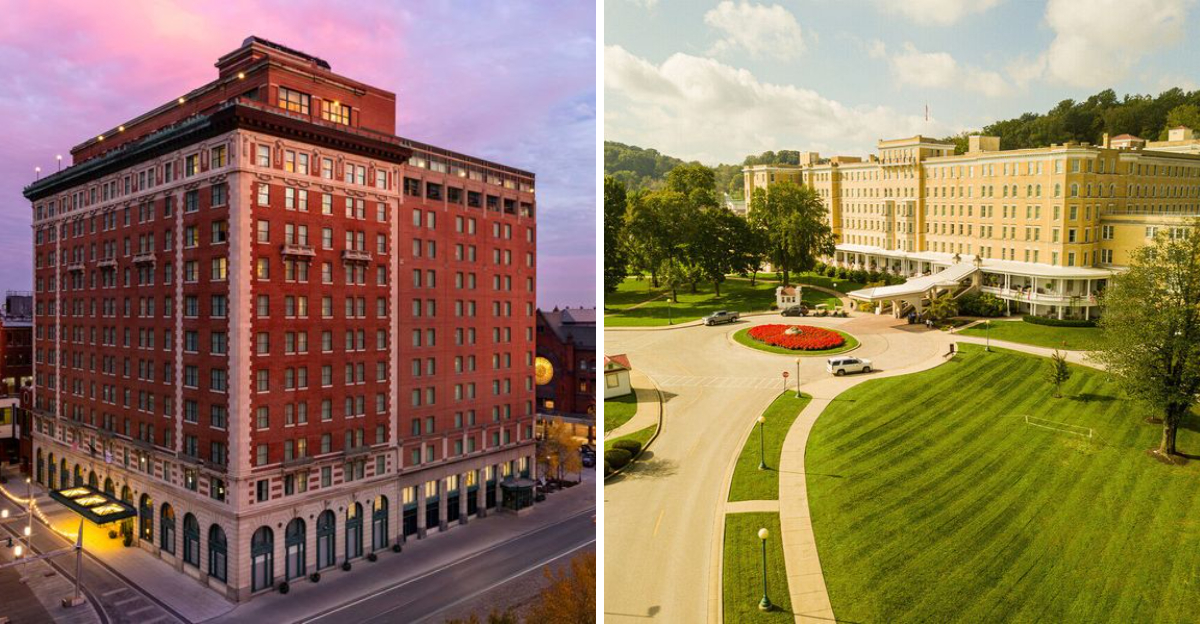
Indiana’s landscape holds more than cornfields and basketball courts.
Scattered across the Hoosier State are historic motels and inns that have witnessed decades of travelers, each with stories stranger than fiction.
From ghost sightings to tragic fortunes, from presidential visits to architectural oddities, these lodging establishments offer glimpses into Indiana’s colorful past.
Whether you’re a history buff, a road trip enthusiast, or simply curious about the unusual, these nine motels reveal the fascinating layers beneath Indiana’s unassuming surface.
1. Roberts Hotel, Muncie
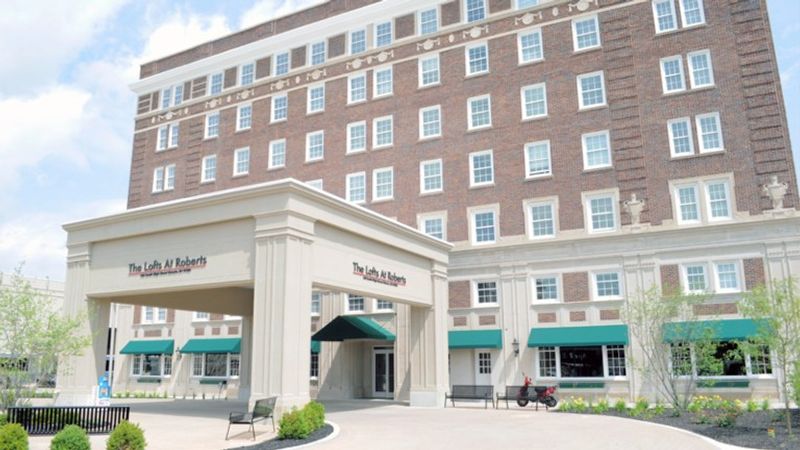
George Roberts arrived in America from Russia with dreams of prosperity, and for a time, those dreams materialized in the form of a stunning six-story Colonial Revival hotel.
Built in 1921, the Roberts Hotel stood as a testament to immigrant ambition in Muncie, Indiana.
The building’s elegant facade and refined interior spaces attracted travelers and locals alike, establishing it as a cornerstone of the community.
But fortune can be as fleeting as Indiana weather.
When the Great Depression swept across America, Roberts watched his carefully built empire crumble.
The financial devastation forced him to reinvent himself entirely, pivoting from hospitality to the oil industry.
His story took a tragic turn when he died in a tent in Tulsa, Oklahoma, far from the grand hotel that once bore his name.
The contrast between his earlier success and final circumstances paints a poignant picture of the era’s economic brutality.
Yet the Roberts legacy didn’t end in that Oklahoma tent.
His grandson, Henry Kravis, would become one of the most influential figures in American finance, co-founding the private equity giant KKR.
The hotel building itself outlived its founder, continuing to serve as a physical reminder of one immigrant’s rise, fall, and enduring family legacy.
Today, the structure stands as both architectural landmark and cautionary tale about the unpredictable nature of the American Dream.
Address: 420 S High St #120, Muncie, Indiana
2. McCurdy Hotel, Evansville
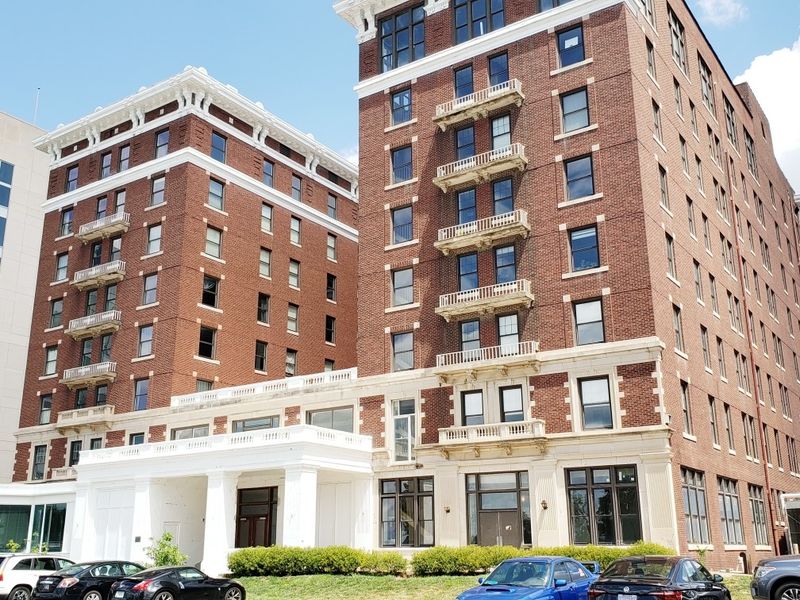
Presidential campaigns have always sought to connect with everyday Americans, and in 1948, Harry Truman brought his whistle-stop tour to Evansville.
He chose the McCurdy Hotel as his lodging, lending the establishment a permanent place in political history.
The Colonial Revival building had opened its doors in 1917, quickly becoming Evansville’s premier accommodation.
Guests appreciated its elegant design and central location, making it a natural choice for dignitaries and business travelers.
For decades, the McCurdy thrived as a social hub where important deals were struck and celebrations held.
However, the mid-century shift toward suburban motels and changing travel patterns took their toll.
By 1969, the hotel faced insurmountable financial difficulties and declared bankruptcy.
The once-grand lobby fell silent, its rooms empty, its future uncertain.
For nearly fifty years, the building stood as a monument to faded glory, watching Evansville transform around it.
Then, in a remarkable reversal of fortune, developers recognized the structure’s potential and historical significance.
A comprehensive renovation project breathed new life into the old hotel, reimagining its interior spaces as modern apartments.
In 2017, the McCurdy reopened, no longer as a hotel but as residential units that honor the building’s architectural heritage.
Former guest rooms became contemporary living spaces, preserving original details wherever possible.
The transformation demonstrates how adaptive reuse can rescue historic structures while meeting current community needs.
Address: 101 SE 1st St #224, Evansville, Indiana
3. Enterprise Hotel, Lafayette
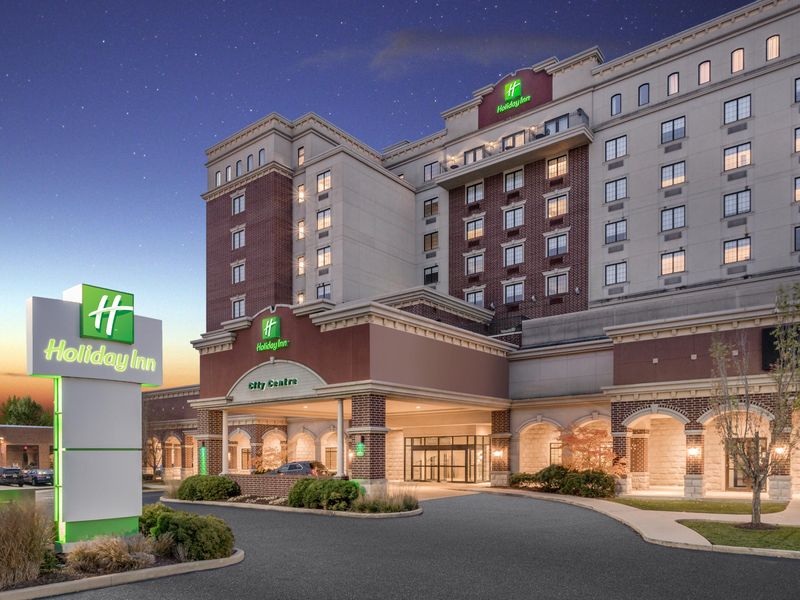
Not every historic hotel maintains its original name, and the Enterprise Hotel offers a fascinating glimpse into Lafayette’s German heritage.
Constructed in 1895, the Italianate-style building later became known as Gasthaus Alt Heidelberg, reflecting the strong German immigrant community that shaped the city’s culture.
The architectural style itself tells a story of the period’s aesthetic preferences.
Italianate design, with its characteristic brackets, tall windows, and decorative cornices, was immensely popular in the late nineteenth century.
The Enterprise embodied these features beautifully, standing out along Lafayette’s streetscape.
When German immigrants established their presence in the area, they brought traditions of hospitality that transformed the hotel’s identity.
Renaming it Gasthaus Alt Heidelberg connected the establishment to the romantic image of German inn culture.
Guests could experience a taste of Old World charm in the heart of Indiana.
The hotel’s dual identity reflects the complex cultural layers that define many Midwestern communities.
Recognition came in 1984 when the building earned placement on the National Register of Historic Places.
This designation acknowledged both its architectural significance and its role in preserving Lafayette’s multicultural history.
The structure continues to remind passersby of the waves of immigration that enriched Indiana’s social fabric.
Its survival through economic changes and shifting neighborhood demographics speaks to the enduring value communities place on tangible connections to their past.
Address: 111 Main St, Lafayette, Indiana
4. Aston Inn, Indianapolis
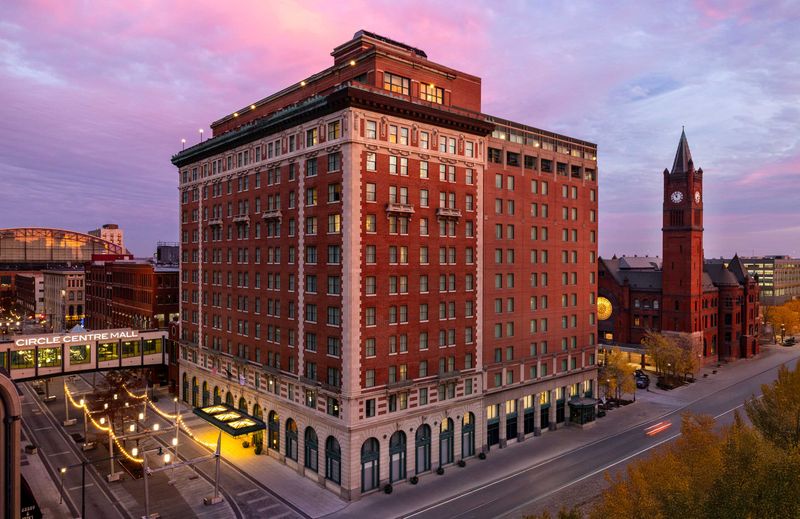
Long before interstate highways and automotive travel, stagecoaches carried passengers across Indiana’s rough roads.
The Aston Inn served as a crucial stop on these routes during the 1850s, offering weary travelers respite and fresh horses.
Built in 1852, the Greek Revival structure embodied the architectural ideals of the antebellum period.
Columns and symmetrical proportions gave the building a sense of dignity and permanence that reassured travelers far from home.
Inside, guests found simple but clean accommodations, hearty meals, and the latest news from other travelers.
Stagecoach inns functioned as more than just lodging.
They served as information hubs where stories, gossip, and important news circulated.
The Aston played this social role while Indianapolis transformed from frontier settlement to thriving state capital.
As railroads gradually replaced stagecoach travel, many such inns disappeared or were repurposed.
The Aston’s survival makes it particularly valuable for understanding Indiana’s transportation history.
In 1985, preservationists successfully nominated the building for the National Register of Historic Places.
This recognition ensures that future generations can appreciate the physical spaces where nineteenth-century travelers rested.
The inn’s Greek Revival details remain remarkably intact, offering architectural historians a clear example of the style’s Midwestern interpretation.
Standing before the Aston today, it’s not difficult to imagine the clatter of hooves and the creak of carriage wheels that once announced arriving guests.
Address: 6620 N. Michigan Rd., Indianapolis, Indiana
5. Hotel LaFontaine, Huntington
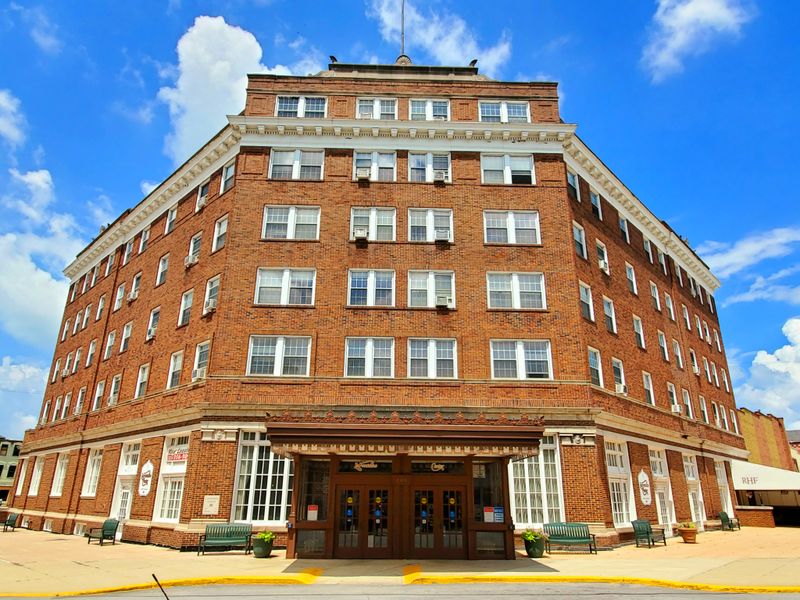
Some hotels are content with conventional design, but the Hotel LaFontaine in Huntington took a decidedly theatrical approach.
Established in 1925, the Colonial Revival exterior gives little hint of the exotic surprises waiting inside.
Step through the entrance and you’re transported to a Spanish courtyard, complete with Mediterranean-inspired details that seem wildly out of place in small-town Indiana.
The architects clearly wanted to offer guests an escape from ordinary Midwestern life.
But the surprises don’t end in the lobby.
Descend to the basement and you’ll discover something even more unexpected: an Egyptian-themed swimming pool.
The 1920s saw widespread fascination with ancient Egypt, fueled by the 1922 discovery of King Tutankhamun’s tomb.
This cultural obsession manifested in everything from fashion to architecture, and the LaFontaine’s designers capitalized on the trend.
Hieroglyphic-inspired decorations and Egyptian motifs transformed a utilitarian pool area into an exotic grotto.
Guests could swim beneath symbols that ancient pharaohs might have recognized, all while staying in Huntington, Indiana.
The juxtaposition of Colonial Revival exterior, Spanish courtyard, and Egyptian pool creates a wonderfully eclectic experience.
This architectural whimsy reflects the optimism and playfulness of the Roaring Twenties, when anything seemed possible.
The hotel’s willingness to embrace multiple cultural influences simultaneously demonstrates the era’s fascination with global aesthetics.
Today, these design choices make the LaFontaine a remarkable time capsule of 1920s imagination and ambition.
Address: 208 W. State Street, Huntington, Indiana
6. Lentz House (Hotel Sheller), North Manchester
Architecture often evolves incrementally, and the Lentz House perfectly illustrates this organic growth.
The building’s oldest section dates to 1847, a simple two-story frame wing that served early travelers.
This modest structure reflected the limited resources and straightforward needs of frontier Indiana.
But by 1881, North Manchester had grown considerably, and the hotel expanded to match the community’s aspirations.
The new addition embraced Second Empire style, the height of architectural fashion in the late nineteenth century.
Characterized by its distinctive mansard roof and elaborate ornamentation, Second Empire design originated in France during Napoleon III’s reign.
American builders eagerly adopted the style, seeing it as sophisticated and modern.
The Lentz House’s mansard roof, with its characteristic double slope, created additional usable space while making a bold aesthetic statement.
The contrast between the 1847 frame wing and the 1881 Second Empire addition tells the story of North Manchester’s development.
From simple frontier settlement to prosperous town, the building’s architecture mirrors the community’s journey.
Later known as Hotel Sheller, the establishment continued serving guests well into the twentieth century.
Its 1982 addition to the National Register of Historic Places recognized both architectural merit and historical significance.
The building stands as a physical timeline, with each section representing a different chapter in North Manchester’s past.
Few structures so clearly demonstrate how Indiana communities evolved from rough settlements into established towns.
Address: 202 N. Walnut Street, North Manchester, Indiana
7. Charley Creek Inn, Wabash
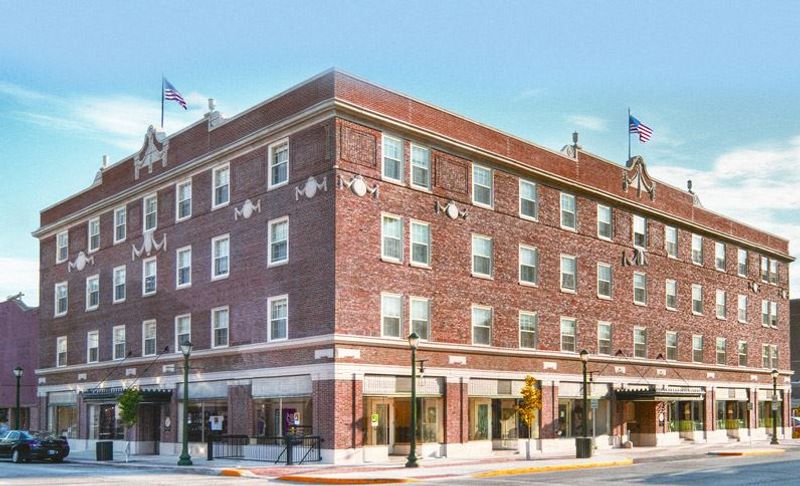
Originally christened Hotel Indiana when it opened in 1920, this Wabash establishment has experienced a remarkable renaissance.
The building served travelers for decades before falling into disrepair as automotive travel patterns changed.
By the early twenty-first century, the structure needed serious intervention to avoid demolition.
Preservationists recognized the building’s potential and launched an ambitious two-year renovation starting in 2010.
The project aimed to restore the hotel’s 1920s elegance while incorporating modern amenities.
Craftsmen carefully repaired original details, from ornate plasterwork to vintage light fixtures.
The result, renamed Charley Creek Inn, offers twenty-one guest rooms and suites that blend historical charm with contemporary comfort.
The lobby became the restoration’s showpiece, featuring period-appropriate furnishings and a player piano that fills the space with nostalgic melodies.
Guests can relax in surroundings that evoke the Jazz Age’s sophistication without sacrificing modern conveniences.
The inn also houses Twenty, an upscale restaurant that has become a destination in its own right.
Diners enjoy refined cuisine in an atmosphere that honors the building’s heritage.
The entire renovation demonstrates how thoughtful preservation can return historic properties to economic viability.
Rather than demolishing a deteriorating structure, the community invested in restoring it, creating both a tourist attraction and a point of local pride.
The Charley Creek Inn now serves as a model for adaptive reuse projects throughout small-town America.
Its success proves that historic buildings can compete in the modern hospitality market when given proper care and creative vision.
Address: 111 W Market St, Wabash, Indiana
8. The Story Inn, Nashville
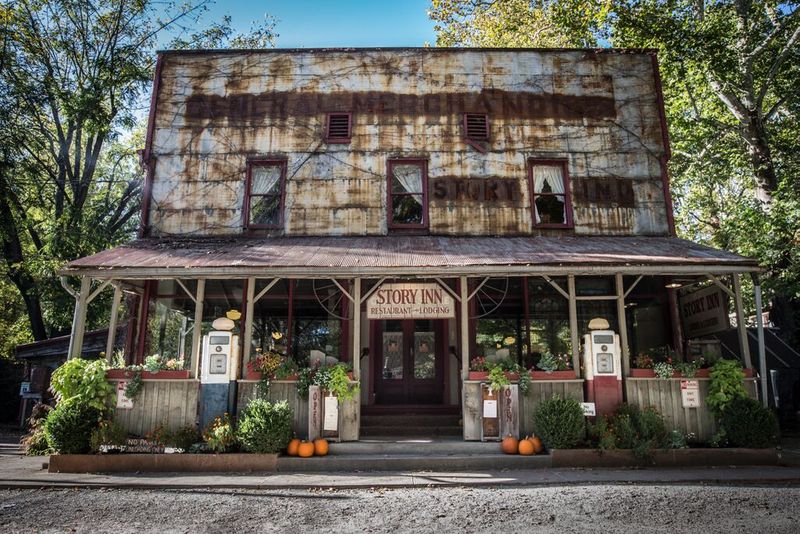
Ghost stories and historic inns seem to go together naturally, but few have a legend as persistent as the Story Inn’s Blue Lady.
Established in 1851 in the artist colony of Nashville, the inn has hosted generations of guests.
Many have reported encounters with a spectral woman dressed in blue, believed to be the wife of the town’s founder, Dr. George Story.
According to local lore, she remains attached to the building her husband helped establish.
Witnesses describe seeing her apparition in hallways and guest rooms, often accompanied by unexplained cold spots or the scent of lavender perfume.
Some guests report objects moving on their own or hearing footsteps when no one is there.
The inn’s staff have collected numerous accounts over the years, creating a rich tapestry of paranormal experiences.
Skeptics might dismiss these stories as imagination or suggestion, but the consistency of reports is striking.
People who know nothing of the legend often describe similar experiences independently.
Whether you believe in ghosts or not, the Blue Lady has become inseparable from the Story Inn’s identity.
The building’s age and atmospheric setting certainly enhance its haunted reputation.
Creaking floorboards, dim lighting, and antique furnishings create an environment where imagination can run wild.
Nashville’s location in Brown County, surrounded by dense forests and rolling hills, adds to the otherworldly feel.
For many visitors, the possibility of encountering the Blue Lady adds excitement to their stay.
The Story Inn embraces its ghostly resident, making her part of the overall experience rather than something to hide.
Address: 6404 IN-135, Nashville, Indiana
9. French Lick Springs Hotel, French Lick
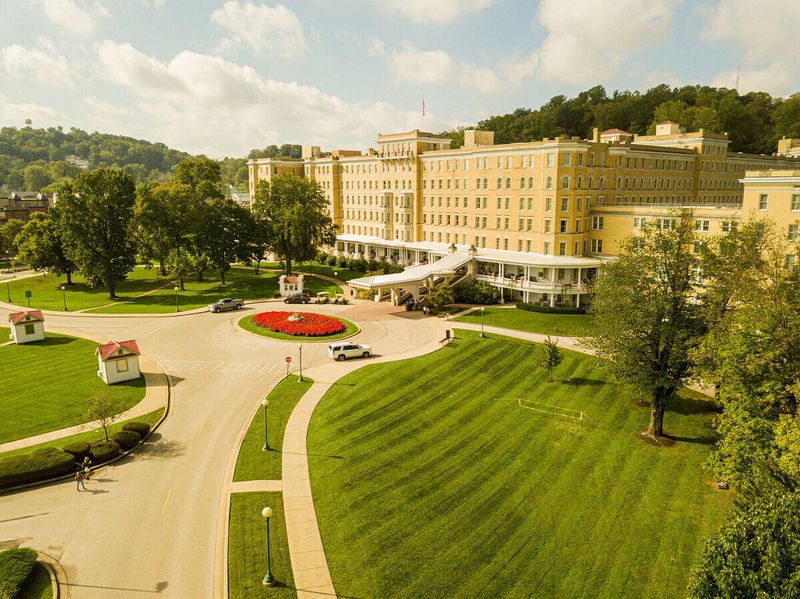
Few Indiana establishments can match the French Lick Springs Hotel’s combination of grandeur and ghostly reputation.
Built in 1845, the resort attracted wealthy guests seeking the supposed healing properties of the area’s mineral springs.
The hotel expanded dramatically over the decades, becoming a destination for America’s elite.
Politicians, industrialists, and celebrities all passed through its ornate lobbies.
Among the hotel’s most notable figures was Thomas Taggart, who purchased and expanded the property.
Taggart served as Indianapolis mayor and played significant roles in Democratic Party politics.
His vision transformed French Lick Springs into a world-class resort.
According to numerous reports, Taggart never truly left.
Guests and staff claim to have encountered his spirit wandering the hallways and public spaces he once oversaw.
Some describe seeing a distinguished gentleman in period clothing who vanishes upon closer inspection.
Others report unexplained phenomena in areas Taggart frequented during his lifetime.
He’s not the hotel’s only spectral resident, according to believers.
Multiple spirits allegedly inhabit different sections of the sprawling complex.
The sheer size and long history of the property provide ample opportunity for paranormal legends to flourish.
Old hotels accumulate stories the way they accumulate guests, and French Lick Springs has had over 175 years to collect both.
The resort’s continued operation allows these legends to evolve and multiply with each new generation of visitors.
Whether the hauntings are real or simply entertaining folklore, they add another layer to an already fascinating history.
Address: 8670 IN-56, French Lick, Indiana
Dear Reader: This page may contain affiliate links which may earn a commission if you click through and make a purchase. Our independent journalism is not influenced by any advertiser or commercial initiative unless it is clearly marked as sponsored content. As travel products change, please be sure to reconfirm all details and stay up to date with current events to ensure a safe and successful trip.
