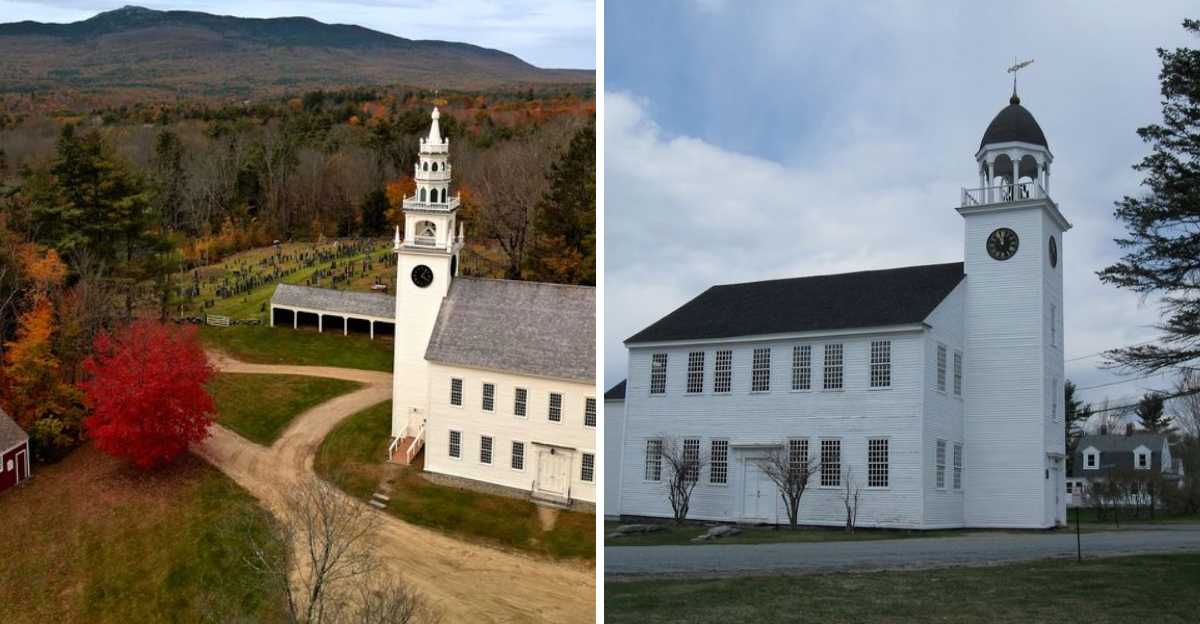
New Hampshire is packed with history, and nowhere is that more alive than inside its oldest meetinghouses. These extraordinary buildings served as the beating heart of colonial communities, doubling as places of worship, civic debate, and community gathering all under one roof.
Some have rung Paul Revere bells, others have hosted town votes that shaped the nation, and a few have barely changed since the 1700s. Pack your curiosity and your camera, because this road trip through New Hampshire’s most storied meetinghouses is one you will absolutely not forget.
1. Sandown Old Meetinghouse
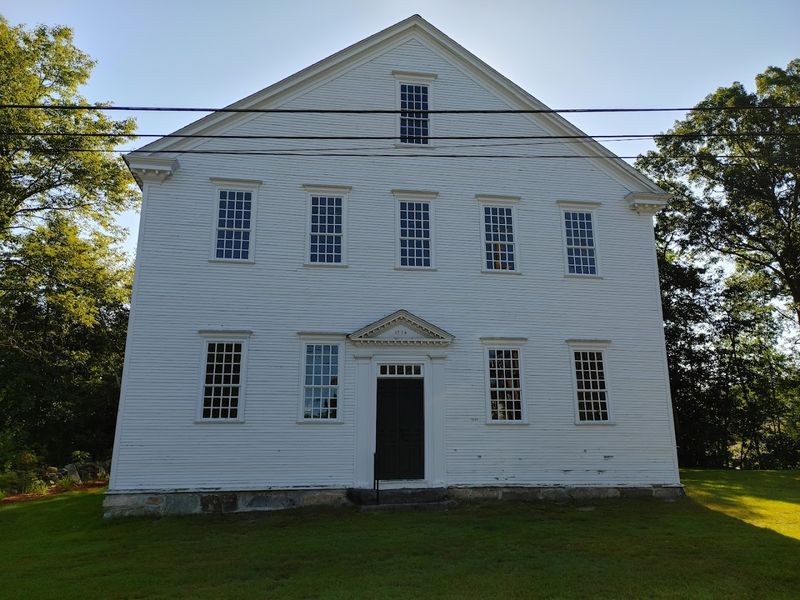
Step inside Sandown Old Meetinghouse and you are stepping directly into 1773. Located at 1 Meetinghouse Lane, Sandown, NH, this remarkably preserved structure is widely considered one of the finest surviving colonial meetinghouses in all of New England.
The building looks almost exactly as it did when local craftsmen first raised its frame, and that is no accident.
The interior is a jaw-dropping time capsule. Original box pews line the floor, the raised pulpit still stands proudly at the front, and the hand-hewn timber framing overhead reminds you that every single piece was shaped by hand without power tools.
Walking through the front door genuinely feels like the colonial era just reached out and grabbed you by the collar.
What makes Sandown especially compelling is the extraordinary level of preservation. Many meetinghouses across New England have been renovated beyond recognition, but Sandown resisted modernization with admirable stubbornness.
The original wide-plank floors creak underfoot, and the wooden shutters still swing on their original hinges.
The building is listed on the National Register of Historic Places, which reflects just how significant it truly is. Local preservation groups work hard to maintain it, organizing open days so the public can experience this architectural marvel firsthand.
The surrounding historic cemetery adds layers of atmosphere that are genuinely moving.
Visiting on a crisp autumn afternoon when the foliage blazes orange and red around the white clapboards is a New Hampshire experience that belongs on every history lover’s bucket list. Sandown Old Meetinghouse is pure, unfiltered colonial America.
2. Danville Meetinghouse
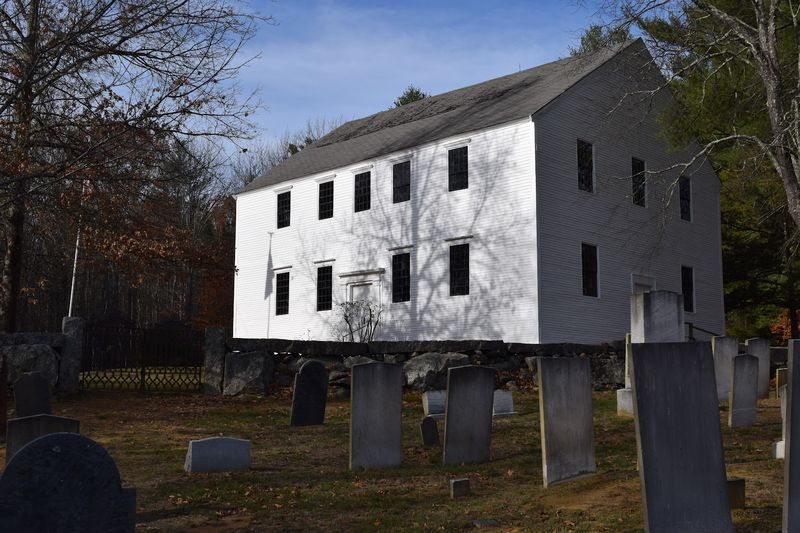
Built around 1755 and completed by 1760, the Danville Meetinghouse holds a reputation that turns historians into giddy schoolchildren. Located in Danville, NH, this extraordinary building is broadly recognized as the oldest meetinghouse of original construction and the least altered in the entire state.
That is a bold claim, and the building absolutely backs it up.
Originally constructed for the west parish of Kingston before Danville was even incorporated, this structure predates the American Revolution entirely. The interior retains original box pews, a beautifully preserved raised pulpit, and a reading desk that has not budged in over two and a half centuries.
Touching the woodwork here means touching something genuinely colonial.
Added to the National Register of Historic Places in 1982, the meetinghouse is now maintained by a dedicated local nonprofit organization that treats the building with the reverence it deserves. Open days and guided visits allow curious minds to absorb the atmosphere without disturbing the fragile historic fabric.
The exterior is classic New Hampshire colonial, all white clapboards and simple lines, completely unpretentious in the way that only genuinely old buildings can be. There are no flashy additions or modern interventions cluttering the view.
What you see is essentially what eighteenth-century parishioners saw every Sunday morning.
Danville itself is a quiet, charming community that wears its history comfortably. Combining a visit to the meetinghouse with a wander through the surrounding countryside makes for a wonderfully unhurried afternoon that feels deeply connected to the roots of New Hampshire life.
3. Hampstead Meetinghouse
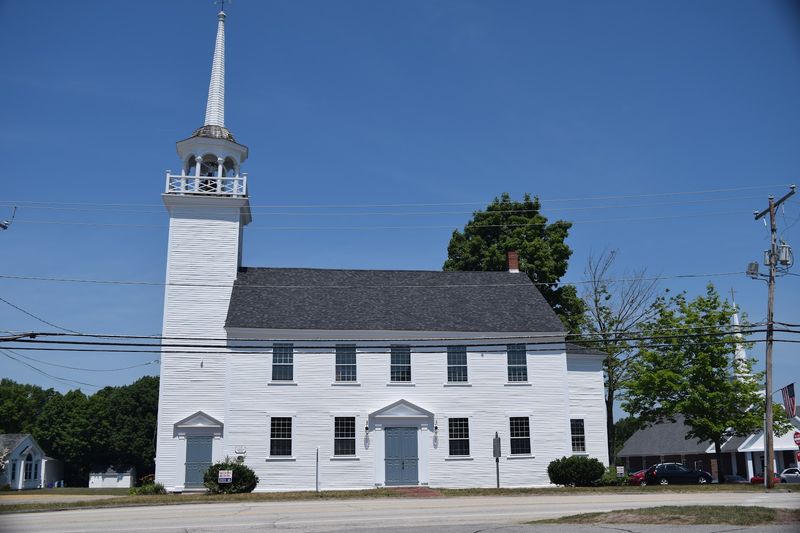
There is one very good reason Hampstead Meetinghouse gets history lovers particularly excited: the belfry houses an original Paul Revere bell. Yes, that Paul Revere.
Located in the heart of Hampstead, NH, this meetinghouse was built in 1745, though its interior was not fully completed until 1792, giving it a delightfully layered construction history that spans nearly half a century.
The exterior has faithfully maintained its original colonial style, presenting those clean white clapboards and simple proportions that define New England meetinghouse architecture at its most honest. Inside, things are a bit different.
The interior has been substantially modernized over the years, including the addition of a floor at the former balcony level, and today the building functions as a community center serving the town’s residents.
That dual identity, ancient outside and adapted inside, is actually part of what makes Hampstead so interesting. It demonstrates how communities have found ways to keep these old structures alive and useful rather than simply museumifying them.
Practical history is living history, and Hampstead embodies that philosophy beautifully.
The Paul Revere bell is the undisputed star of the show, though. Revere’s foundry produced some of the most celebrated bells in New England, and hearing one ring across a quiet New Hampshire village is a genuinely spine-tingling experience.
The tonal quality alone justifies the trip.
Hampstead itself is a lovely, walkable community with classic New England charm oozing from every corner. Pairing a meetinghouse visit with a stroll around the village green makes for an afternoon that feels authentically rooted in the region’s proud past.
4. Jaffrey Meeting House
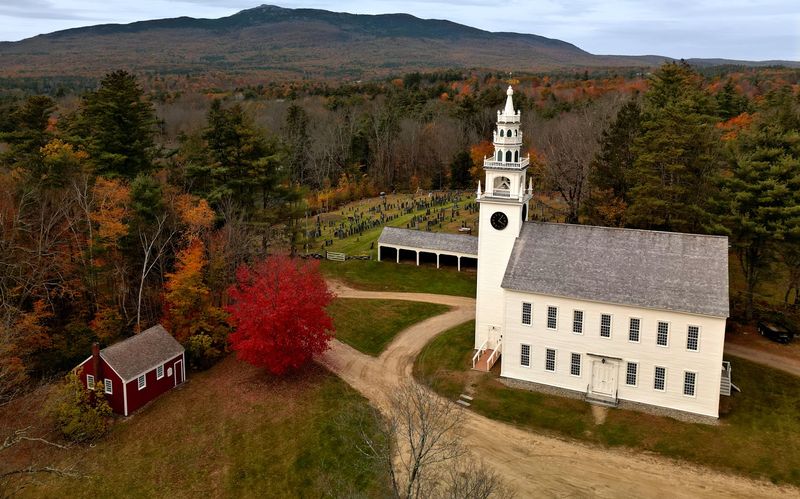
Jaffrey Meeting House sits at the center of Jaffrey Center Historic District like the anchor it has always been, located in Jaffrey, NH.
Built in 1775, just as the American Revolution was igniting across the colonies, this Georgian-style structure played a central role in both the civic and religious development of the surrounding community.
Architecture and history collide here in the most satisfying way imaginable.
The exterior is remarkably well-preserved, presenting the kind of clean Georgian lines that colonial builders executed with extraordinary skill.
The building is a contributing resource within the National Register-listed Jaffrey Center Historic District, which means it carries formal recognition of its significance from the federal government.
That designation is well earned.
Although it is no longer used as an active church, the meetinghouse remains a powerful presence in the landscape. Walking around its exterior, you can almost hear the debates and declarations that once echoed inside its walls.
The 1770s were a time when every town meeting carried enormous weight, and Jaffrey’s meetinghouse was ground zero for those conversations.
The surrounding Jaffrey Center village is one of the most picturesque in New Hampshire, with historic homes, a classic burial ground, and an atmosphere that feels genuinely untouched by modern sprawl. The meetinghouse anchors all of it with quiet authority.
Autumn is an especially magical time to visit. The foliage frames the white clapboards in spectacular color, creating a scene so classically New England that it almost feels staged.
Jaffrey Meeting House is absolutely worth the drive south into the Monadnock region.
5. Second Rindge Meetinghouse
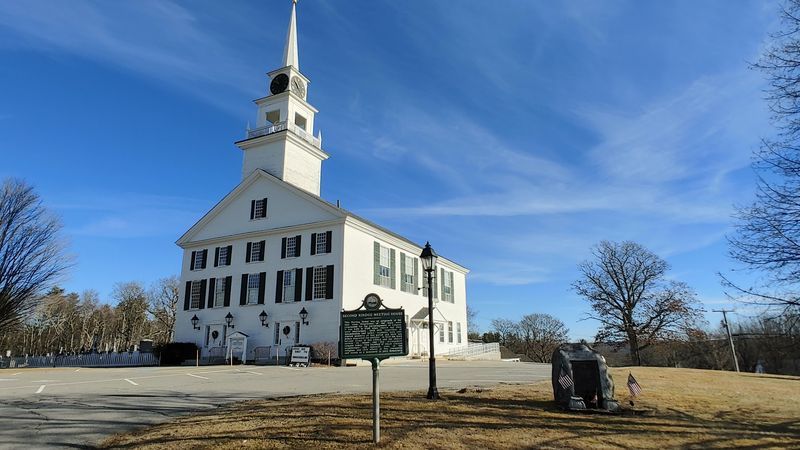
Rindge is one of those quietly remarkable New Hampshire towns that rewards the curious traveler who bothers to look beyond the main road.
The Second Rindge Meetinghouse, built in 1796 and located in Rindge, NH, represents the tail end of the great colonial meetinghouse building era, constructed just as the young republic was finding its footing.
That context makes it feel particularly meaningful.
The name itself tells a story. A first meetinghouse preceded this one, and when the community outgrew or outlived it, the town rallied to build again.
That kind of communal determination is woven into every beam and board of the Second Rindge Meetinghouse. Communities in the late 18th century did not build lightly; every structure was a collective investment of labor, timber, and civic pride.
The building reflects the transitional architectural moment of the 1790s, when colonial forms were beginning to soften toward Federal-era sensibilities. The proportions are honest and unshowy, with the straightforward dignity that characterizes the best New England meetinghouses.
No unnecessary ornamentation, no architectural showboating.
Rindge itself borders Massachusetts and carries a pleasant southern New Hampshire character, with rolling hills, stone walls, and the kind of rural calm that makes you want to slow down immediately. Cathedral of the Pines, a nationally recognized outdoor sanctuary, is also located in Rindge, making the town an unexpectedly rich destination for reflective travelers.
Combining a visit to the Second Rindge Meetinghouse with time spent exploring the wider Monadnock region creates a genuinely satisfying day trip full of history, scenery, and that particular New England soul that keeps people coming back.
6. Hancock Meetinghouse
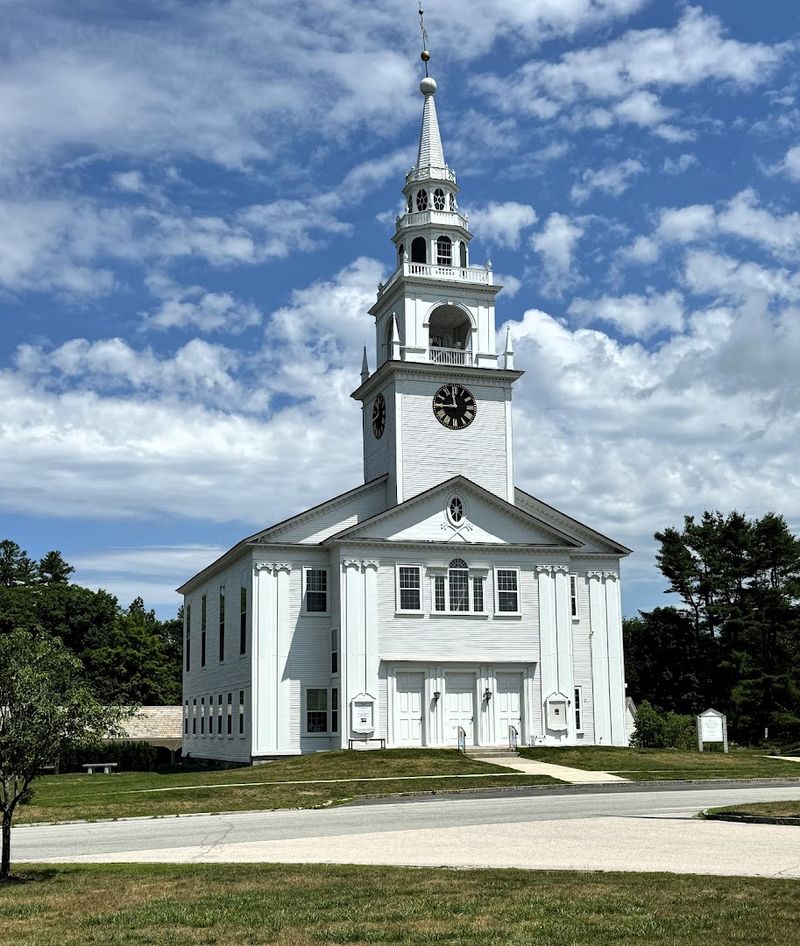
Pull into the village of Hancock, NH, and the meetinghouse immediately commands your attention. Built in 1820, the Hancock Meetinghouse is the youngest structure on this list, and yet it radiates a gravitational authority that makes it feel like it has been there since the beginning of time.
The tall white steeple pierces the sky above the village green in a way that is almost aggressively photogenic.
By 1820, American meetinghouse architecture had evolved significantly from the boxy colonial forms of the 1700s. Hancock reflects this evolution beautifully, incorporating the cleaner lines and more refined proportions of the Federal period.
The building feels confident and composed, a community statement rather than a simple utility structure.
The village of Hancock itself is one of the most charming in the entire state. Historic homes line the main street, the Norway Pond glitters nearby, and the overall atmosphere is the kind of New England perfection that gets used in tourism campaigns.
The meetinghouse anchors the village green with understated elegance.
Inside, the meetinghouse has been maintained with care and continues to serve as an active gathering space for the community. That living quality sets it apart from buildings that have become purely static museums.
Hancock’s meetinghouse breathes, and the community around it keeps it breathing.
Visiting in summer, when the village green is lush and the surrounding hills are deeply green, is a particular delight. The combination of architectural beauty, natural setting, and genuine community life makes Hancock one of the most rewarding stops on any New Hampshire historic meetinghouse tour.
7. Lempster Meetinghouse
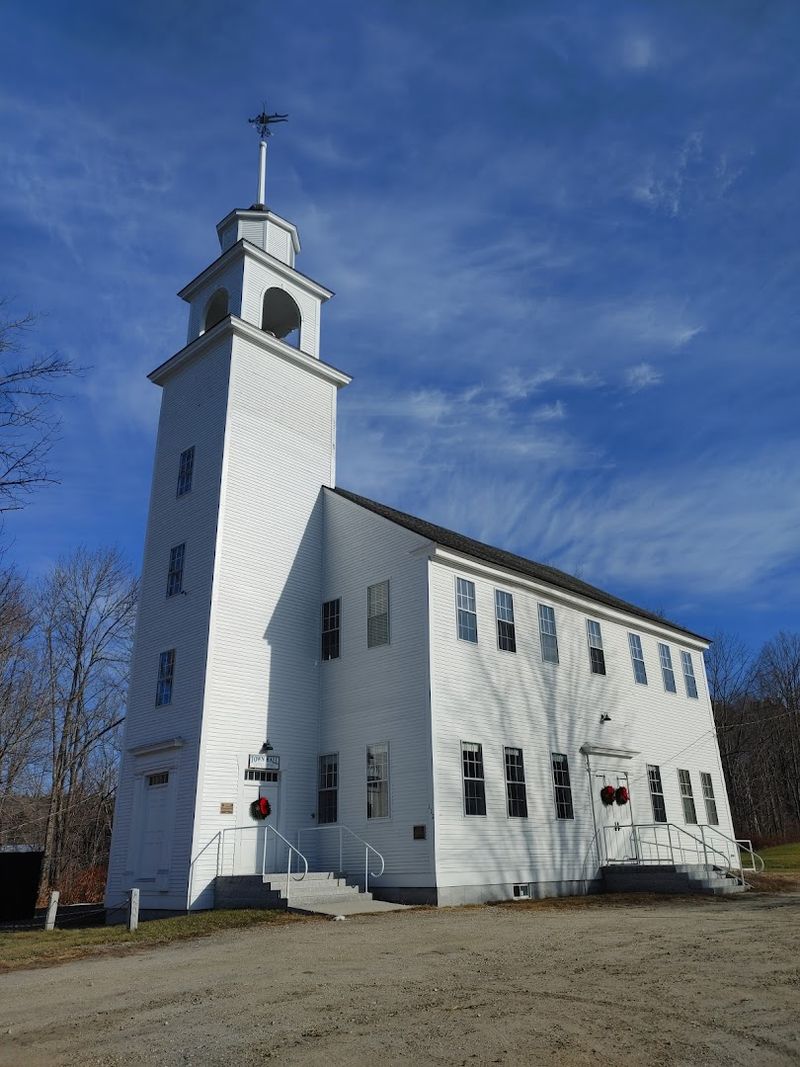
Lempster Meetinghouse sits on a hilltop in Lempster, NH, with the quiet confidence of a building that has absolutely nothing to prove. Completed in 1794, this unassuming structure is one of the most authentically rural meetinghouses in western New Hampshire, and its location alone is worth the drive.
The views from the surrounding hilltop are the kind that make you forget you had anywhere else to be.
The building itself is beautifully simple. No grand steeple, no elaborate ornamentation, just honest colonial carpentry doing exactly what it was designed to do.
Late 18th-century rural New Hampshire communities built for function first, and Lempster’s meetinghouse reflects that practical philosophy without apology. The result is a structure with enormous quiet dignity.
Lempster is part of the western New Hampshire lake country, a region of rolling hills, sparkling ponds, and small towns that have resisted the kind of development that erases character. The meetinghouse fits perfectly into this landscape, as if it grew there organically alongside the stone walls and sugar maples.
The surrounding historic cemetery adds considerable atmosphere to any visit. Old slate headstones leaning at various angles, carved with 18th-century lettering, create a context that makes the meetinghouse feel deeply embedded in the human story of this particular place.
History here is not abstract; it has names and dates and family connections.
For travelers exploring New Hampshire’s Sullivan County back roads, the Lempster Meetinghouse is a genuinely rewarding discovery. Bring good walking shoes, a camera, and enough time to simply sit and absorb the extraordinary stillness of this hilltop corner of New England.
8. Greenfield Meetinghouse
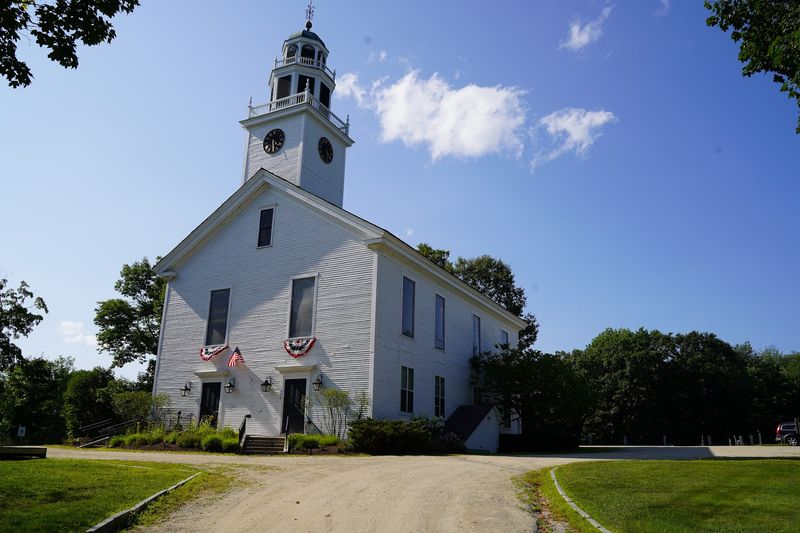
Greenfield, NH, is a small town with a big historic heart, and its meetinghouse, completed in 1795, sits right at the center of that story. Located in the village of Greenfield, this late 18th-century structure represents the kind of architectural integrity that gets preservation historians genuinely emotional.
The building has aged with extraordinary grace.
The year 1795 placed Greenfield’s construction in a fascinating transitional moment. The Revolution was fresh memory, the Constitution was newly ratified, and communities across New Hampshire were building the physical infrastructure of their new civic identities.
Greenfield’s meetinghouse was part of that ambitious, hopeful moment of nation-building at the local level.
The exterior presents classic New England meetinghouse proportions, clean and symmetrical, with the kind of craftsmanship that reflects genuine pride of community.
The surrounding village of Greenfield is small even by New Hampshire standards, which gives the meetinghouse an outsized visual presence in the landscape.
It simply dominates the village center in the best possible way.
Monadnock State Park is not far away, which means Greenfield sits within easy reach of one of New England’s most beloved hiking destinations.
Combining a meetinghouse visit with a hike on the slopes of Mount Monadnock makes for an absolutely brilliant day out that mixes cultural history with spectacular natural scenery.
The quietness of Greenfield is part of its appeal. This is not a destination that announces itself loudly or competes for attention.
It simply exists, beautifully and honestly, in the way that the best historic New Hampshire communities always have. The meetinghouse is the perfect embodiment of that character.
9. Canaan Meetinghouse
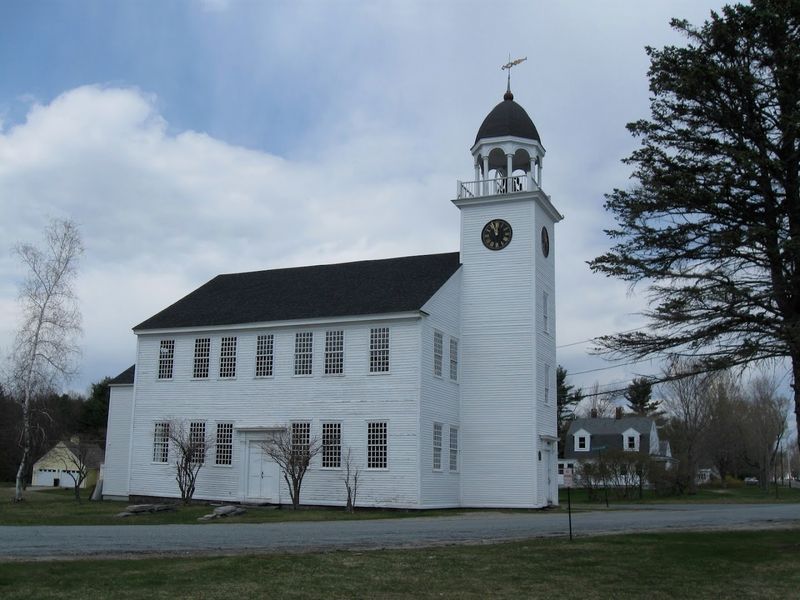
Canaan, NH, occupies a special corner of the Grafton County landscape, and its meetinghouse, built in 1794, is one of the more underappreciated architectural gems in the region.
Located in Canaan, this structure shares its construction year with Lempster, making 1794 quite a productive year for New Hampshire meetinghouse builders.
The building carries its age with considerable composure.
Western New Hampshire in the 1790s was still frontier territory in many respects. Communities were young, resources were limited, and building a meetinghouse was an act of collective determination that required enormous effort from every household in town.
The Canaan Meetinghouse is a physical monument to that kind of communal grit, and knowing that backstory transforms a simple white building into something genuinely moving.
The surrounding landscape around Canaan is lovely in the particular way of the upper Connecticut River valley region. It has forested hills, open meadows, and the kind of rural quietness that feels increasingly rare.
Mascoma Lake is nearby, adding a scenic dimension to any visit that takes the trip well beyond pure historic interest.
Canaan has a slightly unconventional history compared to many New Hampshire towns, having experimented with utopian community ideals in the 19th century. That spirit of independent thinking gives the town an interesting character that makes exploring its history all the more engaging.
The meetinghouse predates those later chapters, representing the more conventional colonial foundation of the community.
For travelers on a New Hampshire back-roads adventure, Canaan rewards a stop with genuine historical depth and scenic surroundings that make the detour completely worthwhile. The meetinghouse stands as quiet proof that the best discoveries often come from the least expected places.
10. Fremont Meeting House
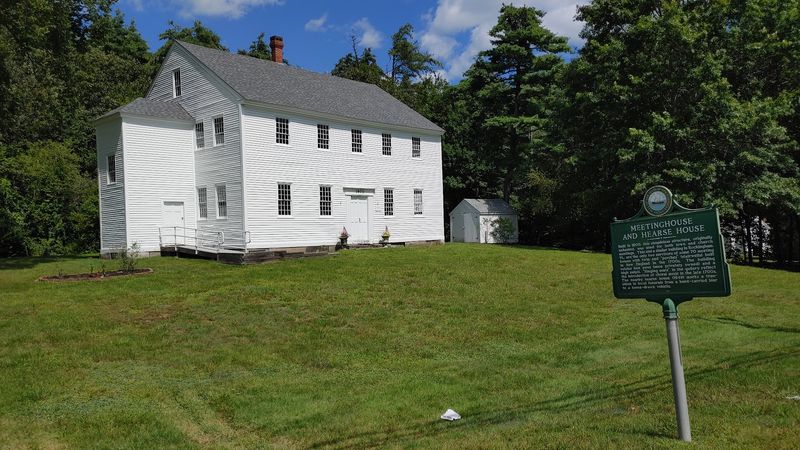
Fremont Meeting House, built around 1800 and located in Fremont, NH, marks the very threshold between the 18th and 19th centuries. This is making it an architectural bridge between two distinct eras of American history.
The building carries the DNA of colonial meetinghouse design while hinting at the Federal-period refinements that would define the decades ahead.
That duality makes it architecturally fascinating.
Fremont is a small Rockingham County town that sits comfortably off the main tourist routes, which is precisely what gives it such authentic character.
The meetinghouse anchors the historic village center with the unpretentious authority of a building that was simply built to last and has quietly done exactly that for well over two hundred years.
The construction date of around 1800 places the meetinghouse at a genuinely pivotal moment in American history. The nation had just survived its first presidential transition of power, and communities across New Hampshire were consolidating the civic institutions that would define American democracy for generations.
The Fremont Meeting House was part of that institutional fabric.
The surrounding area offers pleasant countryside exploration, with the Exeter River running through the broader region and providing a natural backdrop that complements the historic built environment nicely. Fremont is close enough to the Seacoast region to make it a comfortable addition to a broader southern New Hampshire day trip.
What strikes most first-time visitors is the sheer unpretentiousness of the place. No velvet ropes, no admission fees, no gift shop.
Just an extraordinary old building sitting in a quiet New Hampshire village, doing what it has always done: enduring beautifully and connecting the present to the past.
11. Washington Meeting House
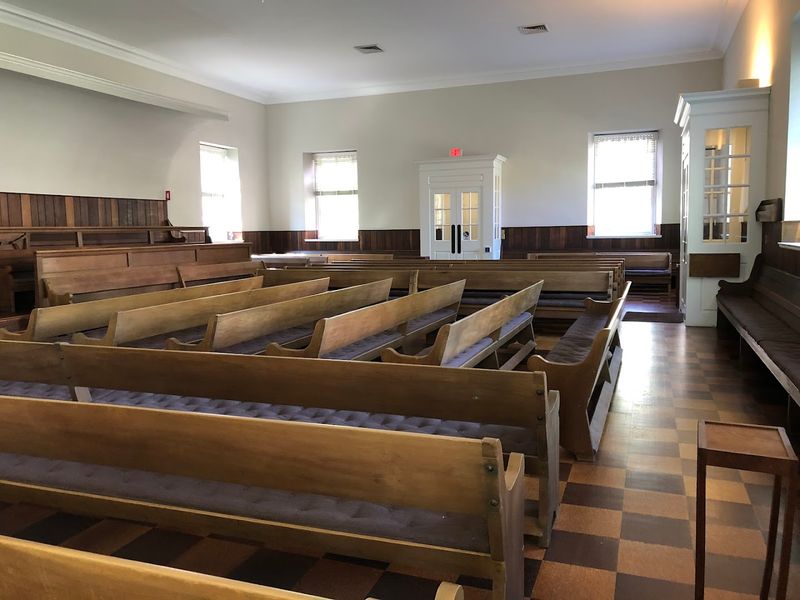
Washington, NH, holds a distinction that makes every visit feel slightly ceremonial: it is the first town in the United States to be named after George Washington.
Its meetinghouse, built in 1787, predates the ratification of the Constitution by just two years. That context alone is enough to make history enthusiasts stop breathing for a moment.
The building is spectacular.
Perched in one of the highest villages in New Hampshire, Washington Meeting House commands views that stretch across rolling hills and forested ridges in every direction. The white clapboard exterior against that dramatic hilltop backdrop creates a visual composition that photographers absolutely lose their minds over.
Every season brings a different version of perfection to this scene.
The meetinghouse was built at a moment when the community was simultaneously navigating the end of the Revolutionary War, the uncertainty of the Articles of Confederation period, and the enormous task of building a functioning town from scratch.
Every beam in this building was raised by people who were living through one of history’s most consequential chapters.
Washington is a genuinely remote destination by New Hampshire standards, sitting in Sullivan County at an elevation that guarantees spectacular foliage in autumn and serious snow in winter.
The journey to reach it is part of the experience, winding through back roads that feel pleasantly removed from the modern world.
The village center around the meetinghouse is extraordinarily well preserved, with historic homes and a classic New England ambiance that feels entirely unforced.
Washington Meeting House is the crown jewel of a community that has quietly maintained its extraordinary character across more than two centuries of American history.
