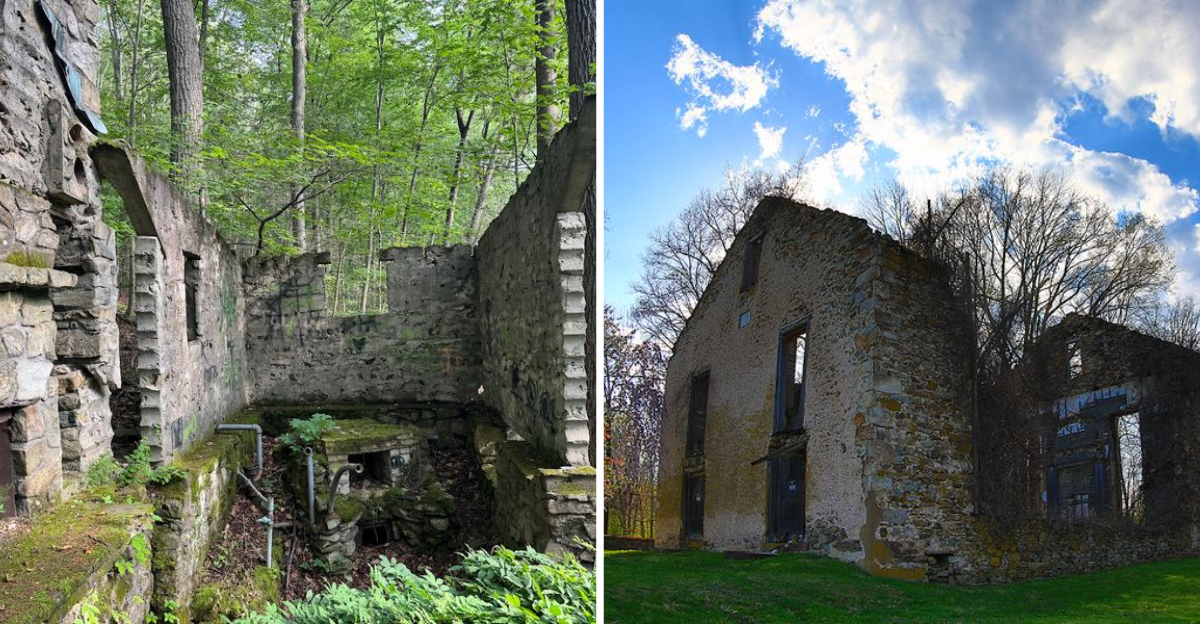
I never thought I’d get this excited about crumbling walls and overgrown foundations, but here we are.
There’s something wildly addictive about stumbling through a place that time just… forgot.
One minute you’re dodging a low-hanging branch, and the next you’re standing inside what used to be someone’s grand estate, wondering what on earth happened.
New Jersey, of all places, turns out to be absolutely packed with these forgotten treasures hiding behind suburban strip malls and pine forests.
Pack your sneakers, charge your camera, and maybe tell someone where you’re going, because these nine historic ruins are genuinely worth getting a little lost for.
1. Van Slyke Castle Ruins
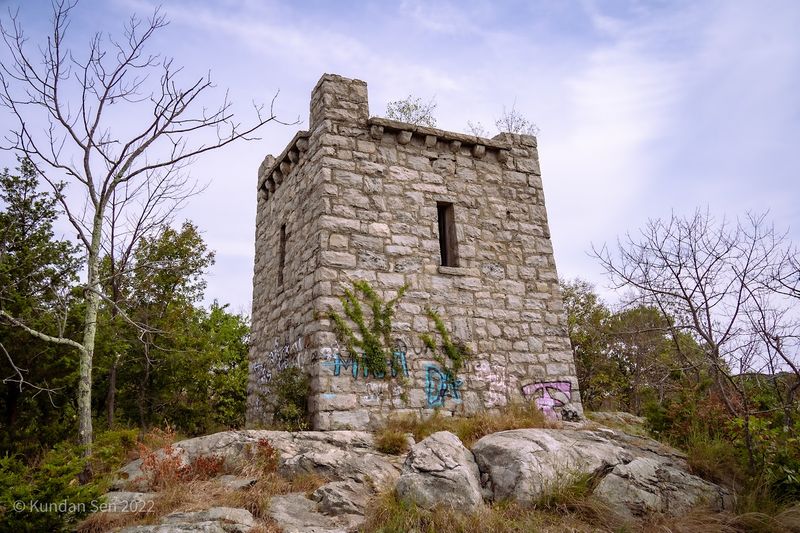
There’s a certain magic to finding a castle in the middle of New Jersey, and Van Slyke Castle delivers that feeling in the most unexpected way. Built around 1910 as a private mansion, the structure was constructed with impressive stone walls that still stand tall despite decades of abandonment.
A fire eventually gutted the interior, but what remains is genuinely breathtaking, especially when sunlight filters through the empty window frames and dapples the forest floor below.
The hike to reach the ruins is part of the appeal. The trail winds through Ramapo Mountain State Forest, offering shaded paths lined with tall oaks and the occasional creek crossing.
The closer you get, the more the stone walls begin to peek through the trees, almost like the forest is slowly revealing a secret it has been keeping for years.
Pack a solid lunch before heading out, because there are plenty of scenic spots along the trail where you can sit, eat, and soak in the atmosphere. Local food trucks sometimes park near the trailhead on weekends, offering sandwiches and fresh-squeezed lemonade that hit differently after a good walk.
The combination of physical effort, natural beauty, and historical mystery makes this spot genuinely unforgettable. Fall is arguably the best season to visit, when the foliage turns and the ruins look like something straight out of a storybook.
Few places in the state offer this particular blend of wilderness and history all in one afternoon.
Address: 150 Skyline Dr, Oakland, NJ 07436
2. The Deserted Village of Feltville
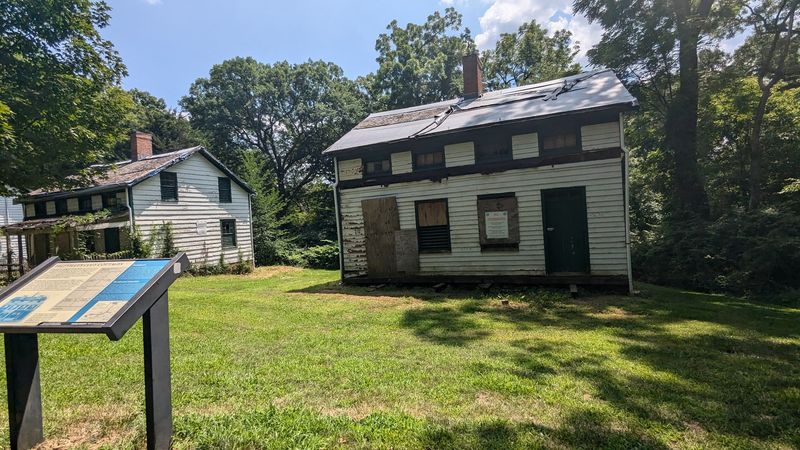
Walking into Feltville feels like stepping through a door that someone forgot to close, and the whole village just froze in place. This former mill community dates back to the 1840s, when it operated as a self-contained industrial village complete with worker housing, a store, and a church.
The buildings still stand, though nature has done its best to reclaim them, wrapping vines around porches and pushing wildflowers up through the floorboards.
Feltville sits inside the Watchung Reservation, which means the surrounding landscape is lush, green, and genuinely beautiful. The walk through the village is short but deeply atmospheric, especially on a quiet weekday when you might have the whole place to yourself.
Every structure tells a slightly different story, from the modest worker cottages to the larger buildings that once served the whole community.
Bringing a picnic here is practically a tradition at this point. The open meadow near the village center is perfect for spreading out a blanket and enjoying some food while surrounded by history.
Local delis in Berkeley Heights make excellent hoagies and wraps that travel well in a backpack. The combination of fresh air, birdsong, and the gentle creaking of old wood creates an experience that no museum could replicate.
Visiting in spring means wildflowers blooming around the building foundations, adding a surprisingly cheerful contrast to the otherwise quiet ruins. It is a place that rewards slow exploration and genuine curiosity.
Address: 13 Myer Ln, Berkeley Heights, NJ 07922
3. The Roebling Brick Ruins
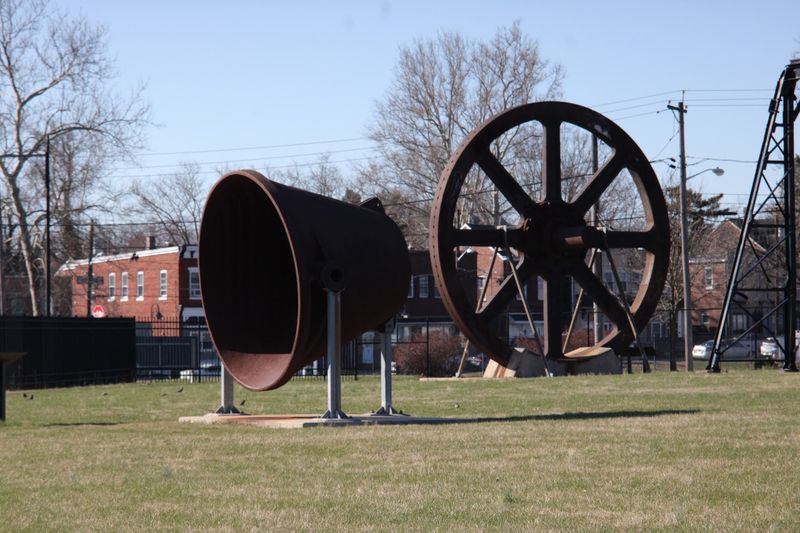
Few ruins in New Jersey carry the raw industrial energy of the Roebling Steel site, a sprawling complex of red-brick giants that once literally held the world together. At its peak in the late 1800s and early 1900s, this facility was the heartbeat of the East Coast, supplying the massive steel cables for iconic landmarks like the Brooklyn Bridge.
What remains today are towering brick facades, arched window frames, and the ghostly skeleton of an operation that shaped the skyline of New York and beyond.
The scale of the brickwork here is genuinely staggering, with mile-long stretches of masonry that have weathered a century of river air. Standing next to the massive gatehouses and workshops gives you a real sense of the “standard-ruining” ambition of the Roebling family, who built an entire village to support the mill.
While the machines are silent, the layers of history are still visible in every cracked brick and rusted iron beam, creating an accidental gallery for anyone who appreciates the beauty of industrial decay.
The town of Roebling itself is a fascinating “time capsule” community, with uniform brick row houses that were originally built for the factory workers. Grabbing a sandwich at a local deli or visiting a nearby diner along the Delaware River makes for a satisfying full-day outing, especially since the river views are surprisingly scenic for an industrial heritage site.
Exploring the grounds on a late autumn or early spring afternoon is a particularly atmospheric choice, when the low sun casts long shadows through the empty window frames and the red brick seems to glow with a deep, historic warmth.
Address: 100 2nd Ave, Roebling, NJ 08554
4. Brooksbrae Terracotta Brick Factory
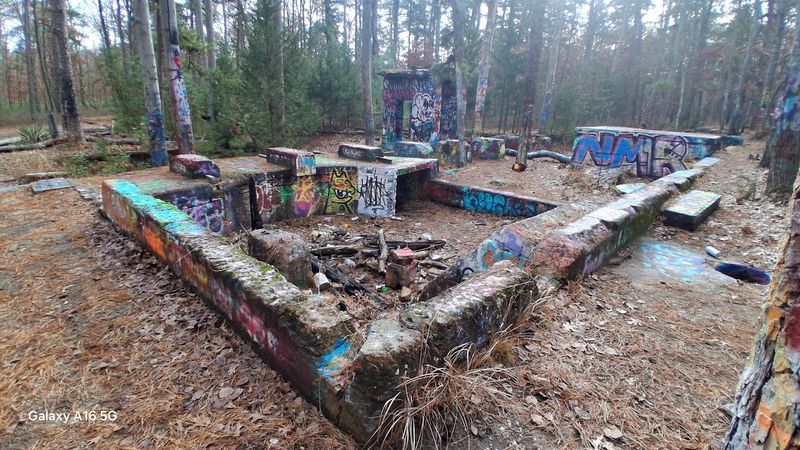
Hidden deep in the heart of the New Jersey Pine Barrens, the Brooksbrae Terracotta Brick Factory ruins feel like a place the rest of the world simply decided to overlook. The factory operated in the early twentieth century, producing terracotta bricks using clay extracted from the surrounding land.
When operations ceased, the buildings were left standing, and the Pine Barrens slowly began the long process of swallowing them whole.
Getting there involves a bit of a trek through sandy trails lined with pitch pines and scrub oaks, which is honestly part of what makes the whole experience worthwhile. The Pine Barrens have a distinctive, almost otherworldly quality, where the light filters differently through the low canopy and the air carries a clean, resinous scent.
Arriving at the factory ruins after that walk feels like a genuine discovery, not just a scheduled tourist stop.
Packing your own food is the smart move here, since the surrounding area is pretty remote. A good homemade sandwich, some fruit, and a thermos of hot coffee or tea make the outing feel properly adventurous.
The ruins themselves include several intact walls, arched openings, and scattered brick debris that makes for fascinating photography. The quiet is remarkable too, with only birdsong and the occasional rustle of leaves breaking the silence.
Visiting during late autumn or early spring means fewer bugs and clearer sightlines through the bare trees, making it easier to appreciate the full scale of what once stood here.
Address: 588 Pasadena Rd, Manchester Township, NJ 08759
5. The Stone House Ruins
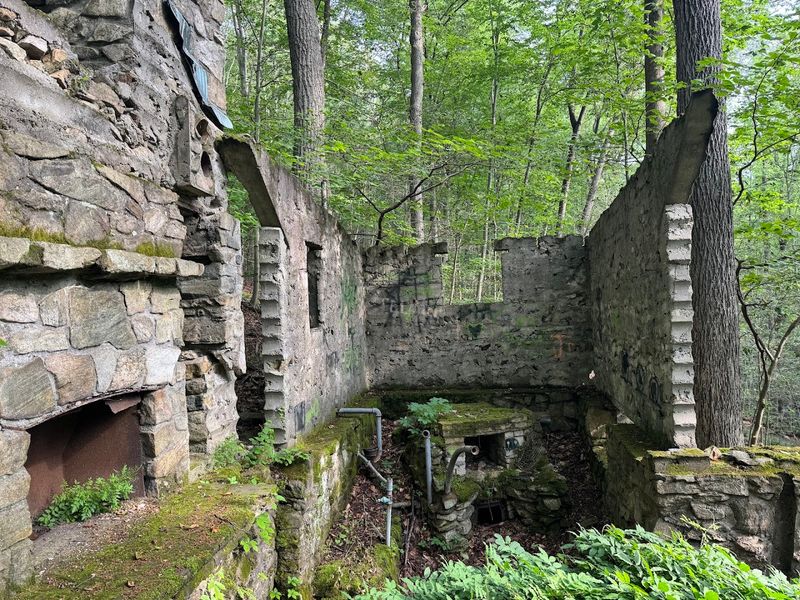
Tucked away in the quiet woods of Mendham, the Stone House Ruins offer a hauntingly beautiful glimpse into New Jersey’s 1920s “summer cabin” era. Originally built as the Badenhausen Cabin, this fieldstone structure was once a sturdy retreat before a massive fallen tree claimed its roof, leaving behind a “standard-ruining” stone skeleton that looks like a forgotten set from a fantasy film.
Today, the thick walls and the towering central fireplace stand as a testament to a era when even a simple woodland cabin was built to last for centuries.
The stonework here is genuinely impressive, with hand-fitted rocks that have since been softened by thick layers of emerald moss and climbing vines. Standing inside the roofless main room, you get a real sense of the craftsmanship that went into the massive hearth, which still dominates the space despite the forest growing through the floorboards.
Spring is a particularly magical time to visit, as the nearby stream swells with snowmelt and the surrounding wildflowers begin to frame the grey stone in vibrant greens and purples.
The town of Mendham itself is a historical treasure, filled with colonial-era architecture and some of the best high-end “diner-adjacent” taverns and cafes in Morris County. Grabbing a warm drink in the village before heading out to the Dismal Harmony Natural Area makes for a perfect, low-key afternoon of exploration.
For the best photos, try to visit on an overcast day; the flat light makes the colors of the moss pop against the dark stone, giving the ruins an almost glowing, ethereal quality.
Address: 108 W Mendham Rd, Mendham Township, NJ 07960 (Park at the Dismal Harmony lot).
6. Batsto Village (The Industrial Ruins)
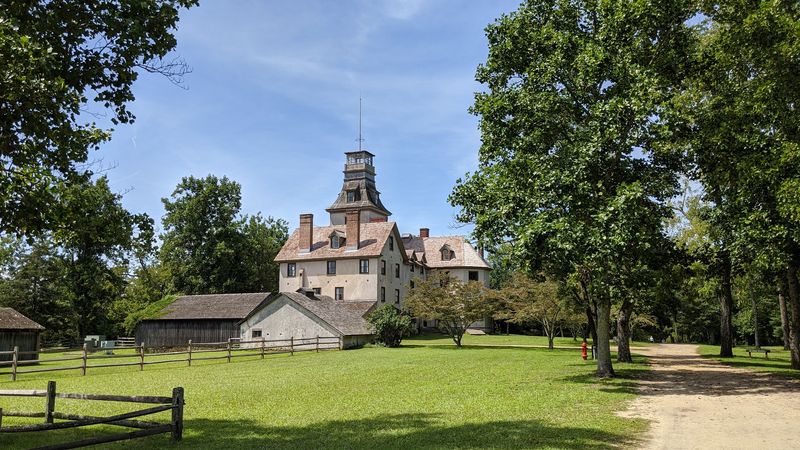
Batsto Village is one of those places that genuinely earns the word “remarkable.” Tucked inside Wharton State Forest, this former bog iron and glass manufacturing community dates back to 1766 and operated for over a century before being abandoned to the pines. The industrial ruins here include the old ironworks, furnace remnants, and a collection of preserved workers’ cottages that paint a vivid picture of life during the colonial and early American industrial eras.
The scale of the village is what hits you first. This was not a small operation but a functioning community with its own infrastructure, social hierarchy, and rhythms of daily life.
Walking through the grounds, you pass sawmill ruins, a gristmill, and the imposing iron master’s mansion, all within easy walking distance of each other. The combination of industrial history and natural Pine Barrens scenery creates a setting unlike anything else in the state.
Batsto is popular enough to have a visitor center, which means there are often food vendors and a small gift shop on busier weekends. The surrounding area also has picnic facilities, making it an ideal spot for a full day out with family or friends.
Local blueberry farms just outside the park sell fresh-picked fruit during summer months, which makes for a sweet and thoroughly local snack to enjoy on the grounds. Evening visits during summer can be especially magical, when the light goes golden and the whole village seems to glow.
This is living history at its most accessible and most beautiful.
Address: 31 Batsto Rd, Hammonton, NJ 08037
7. Bethlehem Baptist Church Ruins
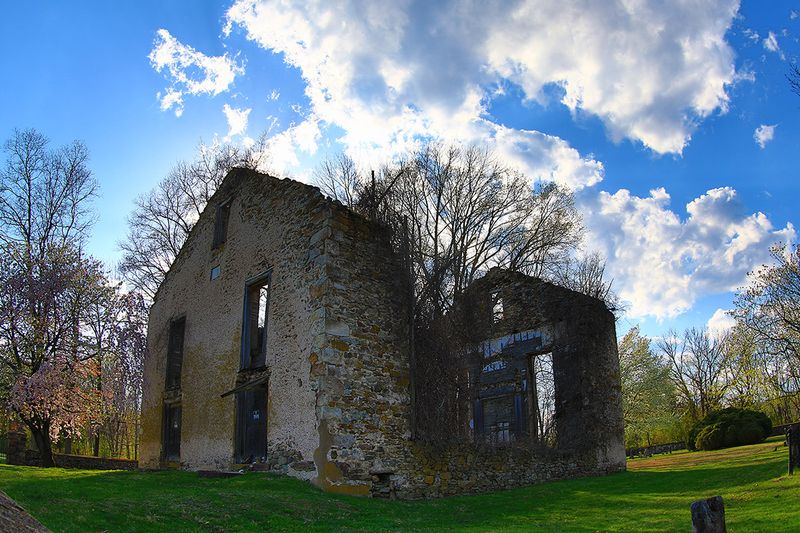
There is a haunting, cathedral-like stillness to the Historic Bethlehem Baptist Church ruins that feels entirely disconnected from the modern hum of nearby I-78.
On a quiet stretch of Baptist Church Road in Asbury, these towering stone walls and empty arched windows are all that remain of a frontier congregation that held its last service in 1906.
Today, the roof is gone and nature has become the new architect; thick curtains of ivy climb the 18th-century masonry, and mature trees grow directly from the dirt floor where pews once stood.
It is a “standard-ruining” experience to stand within the sanctuary and look up to see the sky instead of a ceiling, realizing that the forest has slowly turned this abandoned house of worship into a living, open-air monument.
The surrounding graveyard is equally evocative, with weathered headstones dating back to the Revolutionary War, some leaning precariously as if whispering secrets to the moss-covered walls.
Exploring this site on a quiet morning is particularly atmospheric, as the grey stone seems to blend into the surrounding woods, making the ruins look like a scene plucked from a Gothic novel.
It remains one of the most powerful “hidden in plain sight” destinations in Hunterdon County, offering a rare, tangible link to New Jersey’s colonial past for anyone willing to pull over and look behind the tree line.
Address: Baptist Church Road, Asbury, NJ 08802
8. Fort Hancock (The Officers Row Ruins)
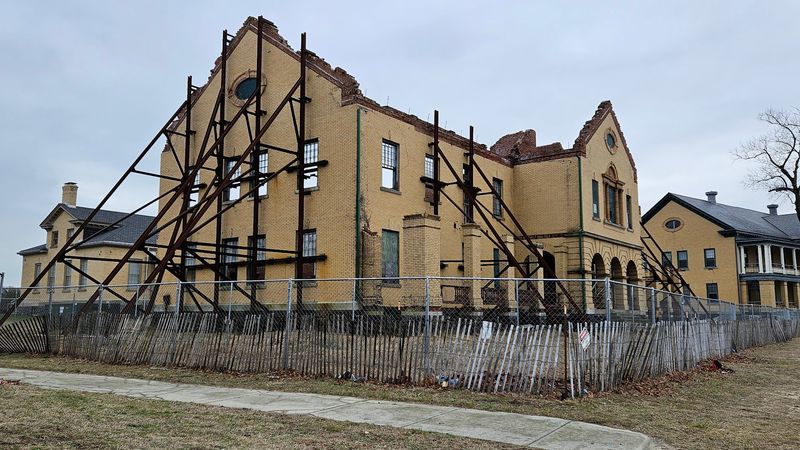
Fort Hancock sits at the very tip of Sandy Hook, where the Atlantic Ocean and New York Harbor meet in a wide, wind-swept stretch of shoreline.
The Officers’ Row ruins are among the most visually striking abandoned structures in the entire state, a long line of deteriorating Victorian-era military homes that once housed the families of Army officers stationed at the fort.
The combination of grand architectural bones and advanced decay creates a genuinely haunting visual experience.
The fort was active from the late 1800s through the Cold War era, which means the history here spans multiple chapters of American military life. Walking along Officers’ Row, you pass building after building with collapsed porches, boarded windows, and overgrown front yards that were once carefully maintained lawns.
The contrast between the elegant original design and the current state of disrepair is both sobering and strangely beautiful.
Sandy Hook itself is part of the Gateway National Recreation Area, which means the surrounding landscape is spectacular. Wide beaches, maritime forests, and sweeping bay views make this one of the most scenically complete day trips in New Jersey.
Food vendors operate seasonally near the beach areas, offering classic shore fare like fish sandwiches, clam chowder, and fresh-squeezed lemonade. Combining a beach walk, a seafood lunch, and a tour of the fort ruins makes for an exceptionally full and satisfying day.
Sunset visits to Officers’ Row are unforgettable, when the fading light turns the old brick facades a deep, warm amber that photographs like something out of a history book.
Address: 16 Hudson Rd, Highlands, NJ 07732
9. Old Weymouth Forge Ruins
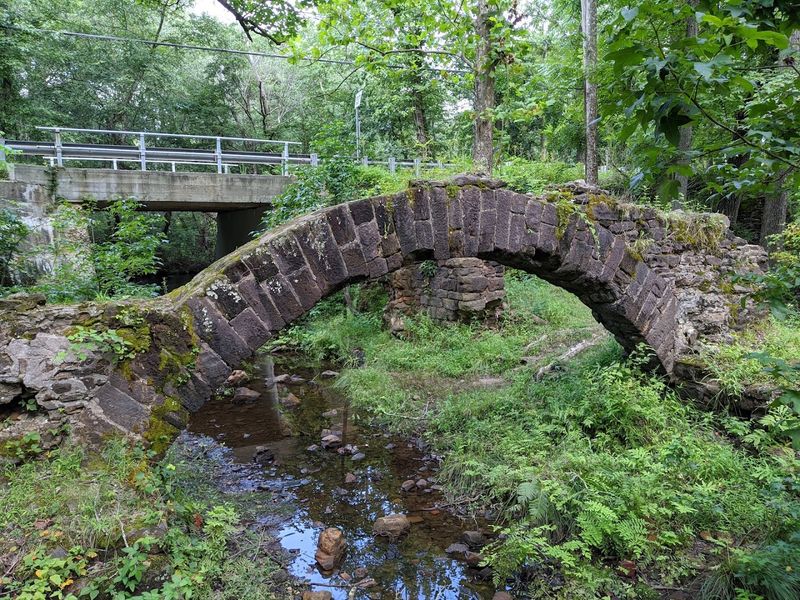
The Old Weymouth Forge Ruins have a quiet, unhurried quality that sets them apart from more dramatic historic sites.
Along the Great Egg Harbor River in the Atlantic County pinelands, these remnants of an eighteenth-century iron forge sit in a setting so naturally beautiful that the ruins almost feel like they were placed there on purpose, just to give the landscape a focal point.
The forge operated during the Revolutionary War era, producing iron goods that supported the colonial war effort.
Getting to the ruins involves a short walk through a landscape that is genuinely lovely in every season. The river runs clear and shallow nearby, reflecting the canopy overhead, and the surrounding forest has a peaceful, almost meditative quality.
The stone foundations and partial walls that remain are not enormous, but they carry a powerful historical resonance given their age and the role they played in American history.
Mays Landing is the closest town, and it punches well above its weight in terms of local food options. Family-owned diners serve generous portions of classic Jersey fare, from pork roll breakfast sandwiches to homemade soups that warm you up after a cool morning walk through the pines.
The forge ruins are part of the Weymouth Furnace County Park, which means the site is well-maintained and accessible year-round. Bringing a blanket and a packed lunch to enjoy by the river after exploring the ruins is a highly recommended way to extend the visit.
Few spots in South Jersey offer this combination of colonial history, natural beauty, and genuine tranquility.
Address: 7201 Black Horse Pike, Mays Landing, NJ 08330
Dear Reader: This page may contain affiliate links which may earn a commission if you click through and make a purchase. Our independent journalism is not influenced by any advertiser or commercial initiative unless it is clearly marked as sponsored content. As travel products change, please be sure to reconfirm all details and stay up to date with current events to ensure a safe and successful trip.
