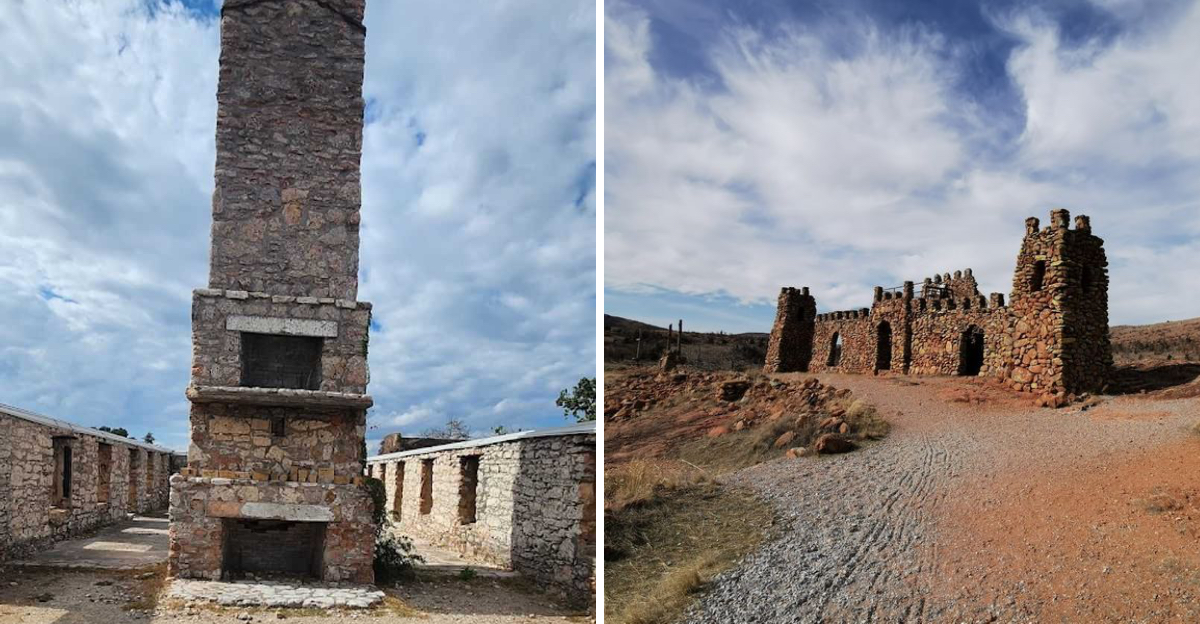
Oklahoma has a way of surprising you. Beneath its wide skies and rolling plains, the state holds layers of history that most people never get to see, from ancient earthworks built by civilizations long before European contact to historic forts and archaeological sites that shaped the American West.
I have spent time exploring these forgotten corners of the Sooner State, and I can tell you firsthand that each site carries a story worth knowing.
If you love history, archaeology, or simply the thrill of standing somewhere that feels untouched by time, this list is going to give you plenty of reasons to start planning your next road trip through Oklahoma.
1. Fort Washita Historic Site, Durant, Oklahoma
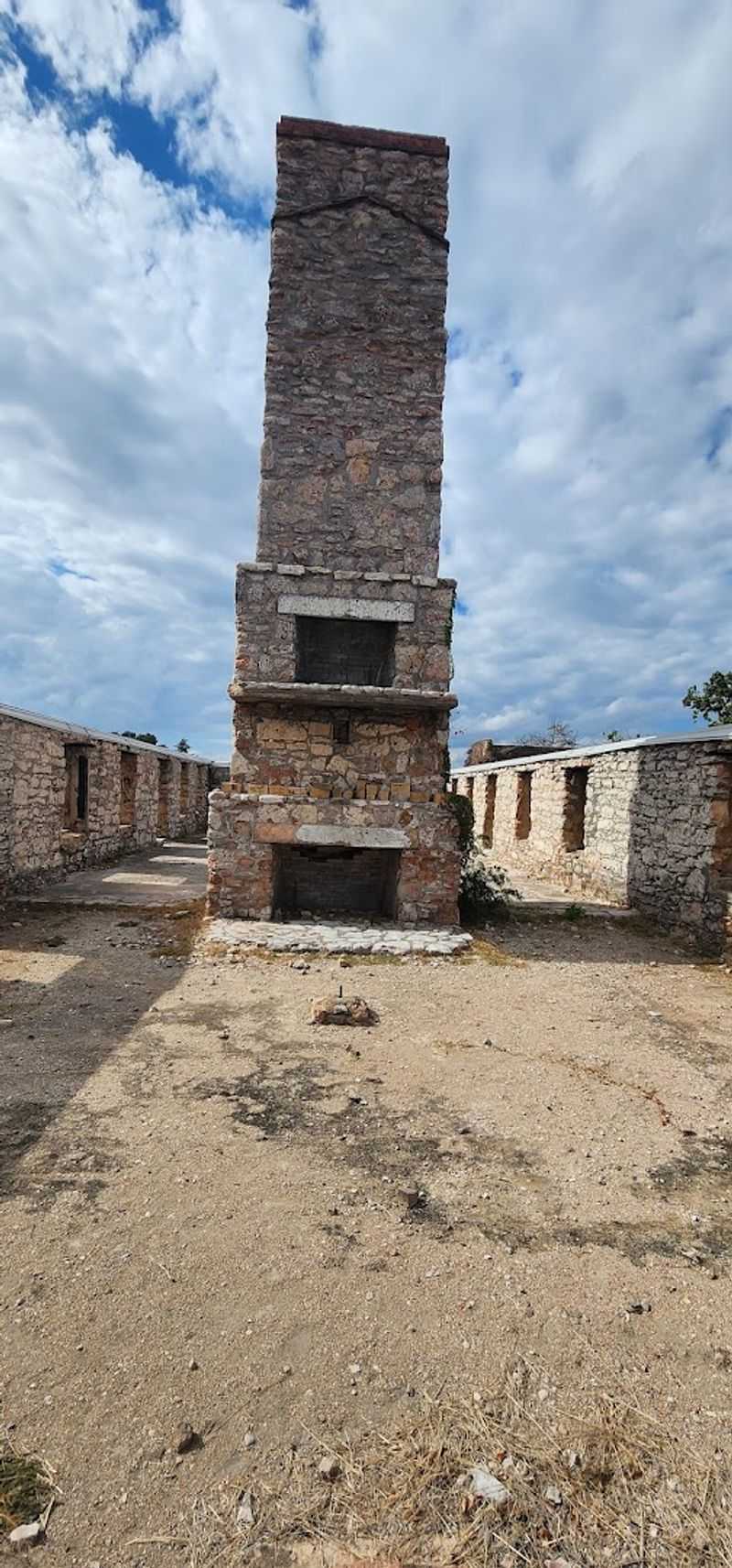
Southern Oklahoma holds one of the most evocative fort sites in the entire state, and Fort Washita, located near the city of Durant in Bryan County, has a history layered enough to keep history lovers occupied for hours.
Established in the 1840s under orders from President James K. Polk, the fort was built to protect the Chickasaw and Choctaw Nations during their resettlement in Indian Territory, and its strategic position near the Red River made it a significant military and logistical hub for the region.
When the Civil War broke out, Fort Washita changed hands and served as a Confederate supply and headquarters facility, adding yet another chapter to an already complex story.
What survives today includes reconstructed barracks, original stone and log structures, and the kind of atmospheric ruins that make history feel tangible rather than abstract.
I walked through the grounds on a quiet weekday afternoon and found the experience genuinely absorbing. The mix of original materials and careful reconstruction gives the site a coherent sense of place that many historic sites struggle to achieve.
The Oklahoma Historical Society manages Fort Washita and hosts living history events and reenactments throughout the year, which can transform a standard site visit into something far more dynamic and memorable.
The surrounding landscape of rolling southern Oklahoma hills and hardwood trees adds a natural beauty that makes the visit feel complete in a way that purely urban historic sites rarely do.
Fort Washita is a site that rewards curiosity, so bring your questions and take your time.
Address: 3348 OK-199, Durant, OK 74701
2. Holy City of the Wichitas, Lawton, Oklahoma
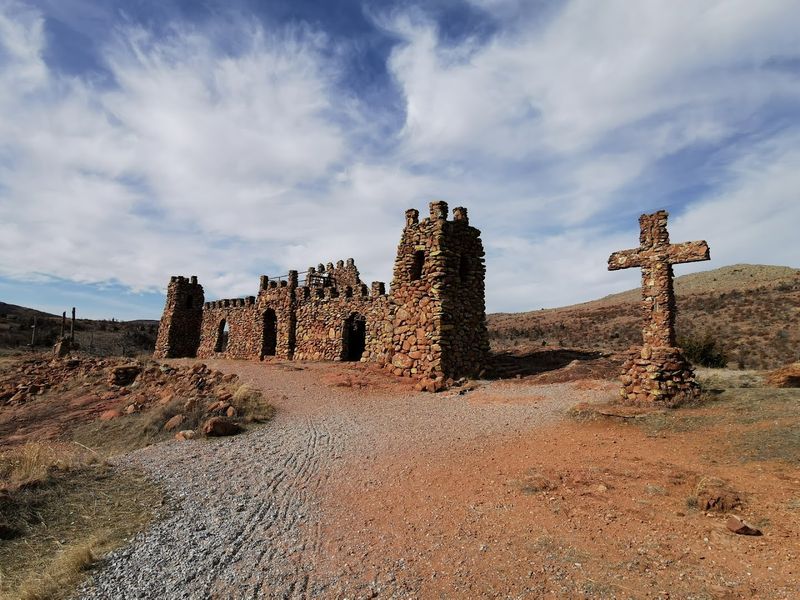
Nestled inside the rugged beauty of the Wichita Mountains near Lawton in southwestern Oklahoma, the Holy City of the Wichitas is one of the most unexpected and visually striking historic sites I have ever encountered anywhere in the country.
Spread across 66 acres, this stone village was constructed in the 1930s using native granite to replicate the look and feel of ancient Jerusalem, complete with gateways, watchtowers, shrines, a chapel, and winding stone pathways that give the whole place an atmosphere unlike anything else in Oklahoma.
The construction was carried out in part by workers from the Works Progress Administration during the New Deal era, and the craftsmanship visible in the stonework is genuinely impressive even by modern standards.
The site is listed on the National Register of Historic Places, and its origins are tied to an annual Easter passion play that began in 1926 and grew into the longest-running passion play in North America.
Walking through the stone structures, I found myself doing a kind of mental double-take, because the scale and detail of the place make it feel far older and more foreign than its actual 20th-century origins.
The surrounding Wichita Mountains Wildlife Refuge adds a spectacular natural backdrop, with bison, longhorn cattle, and prairie dogs often visible just beyond the site boundaries.
The combination of constructed history, natural landscape, and cultural significance makes the Holy City of the Wichitas one of the most layered and memorable stops on any Oklahoma itinerary.
Give yourself a full morning or afternoon to explore it properly.
Address: 262 Holy City Rd, Lawton, OK 73507
3. Fort Gibson Historic Site, Fort Gibson, Oklahoma
There is something quietly powerful about walking through a place where history did not just happen once but kept happening, decade after decade, for more than a century.
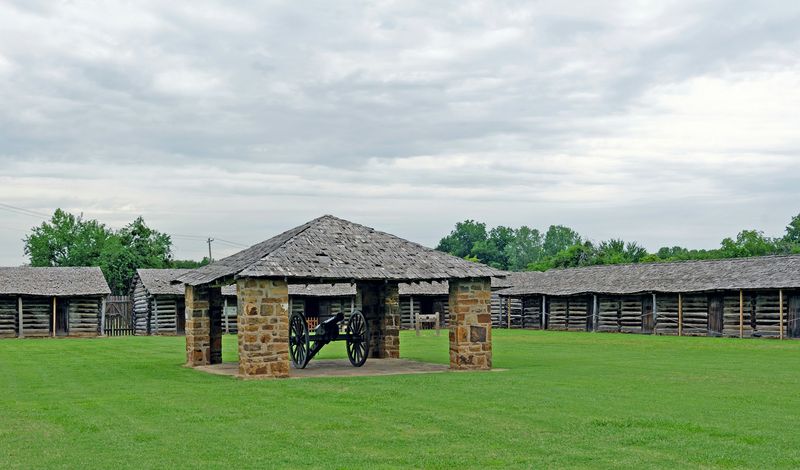
Fort Gibson, located in the town of the same name in eastern Oklahoma, was established in 1824 and holds the distinction of being the oldest U.S. military fort in what was then called Indian Territory.
The 80-acre site includes 29 historic structures, some original and some carefully reconstructed, along with archaeological remains that give the grounds a layered, almost textured sense of the past.
During its active years, Fort Gibson served as a hub for treaty negotiations, a stopping point for the forced relocations of the Five Civilized Tribes, and a base for military operations across the frontier.
I found the cemetery particularly moving, as it holds the remains of soldiers, civilians, and Cherokee Nation members who lived through one of the most turbulent periods in American history.
The interpretive exhibits inside the reconstructed barracks are thoughtfully done, offering context without softening the harder truths of what this place witnessed.
Fort Gibson sits along the Grand River, and the surrounding landscape adds a scenic quality to the visit that makes the whole experience feel immersive rather than purely academic.
History enthusiasts and casual visitors alike will find something meaningful here. Come with comfortable shoes, a curious mind, and enough time to wander the grounds without rushing.
Address: 803 N Garrison Ave, Fort Gibson, OK 74434
4. Spiro Mounds Archaeological Center, Spiro, Oklahoma
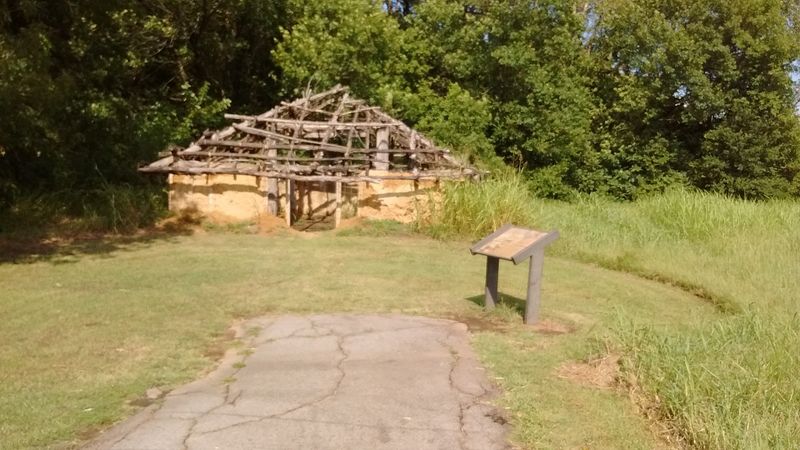
Long before European explorers ever set foot on North American soil, a highly organized civilization was already thriving near what is now the small town of Spiro in eastern Oklahoma.
The Spiro Mounds Archaeological Center sits on a 150-acre site that served as one of the most politically and spiritually significant locations in the entire Mississippian world, a culture that stretched across a large portion of the central and eastern United States between roughly 850 and 1450 CE.
Eight earthen mounds still rise from the landscape here, and the artifacts recovered from this site, including engraved shells, copper plates, and intricately decorated pottery, rank among the most impressive pre-Columbian objects ever found in North America.
Walking the interpretive trails that wind through the grounds, I kept thinking about the thousands of people who once gathered here for ceremonies, trade, and governance.
The on-site museum does an outstanding job of presenting these artifacts and explaining the complexity of the society that created them, making the experience educational without ever feeling dry or overwhelming.
This is not just an Oklahoma treasure. Archaeologists and historians consider Spiro one of the most important sites of its kind anywhere in the country, yet it remains far less visited than it deserves.
Plan to spend at least a half day here, and if possible, time your visit with one of the guided tours offered by the Oklahoma Historical Society. The knowledge you will walk away with is genuinely remarkable.
Address: 18154 1st St, Spiro, OK 74959
5. Fort Towson Historic Site, Fort Towson, Oklahoma
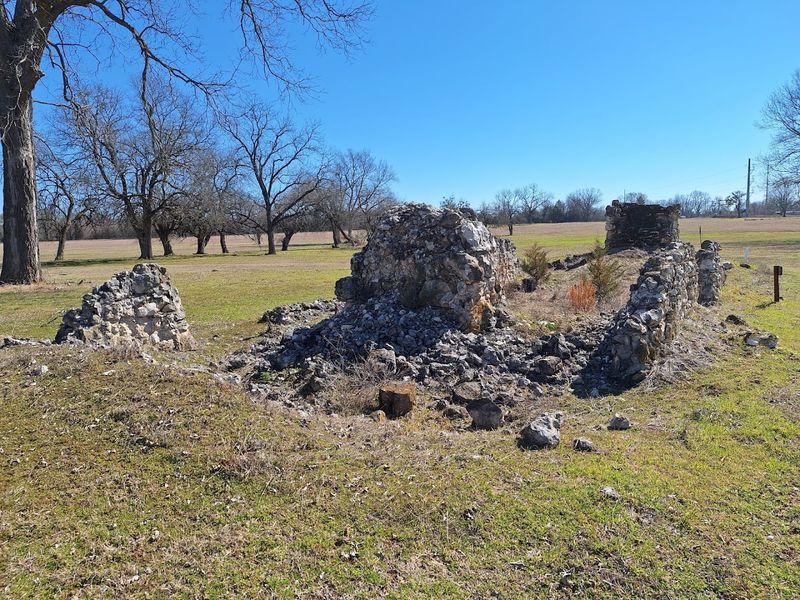
Tucked into the far southeastern corner of Oklahoma near the Red and Kiamichi Rivers, Fort Towson carries a history that spans some of the most consequential chapters in American frontier life.
Built in 1824, the fort was originally established to support frontier security and regional stability and later became a critical point of protection for the Choctaw Nation during and after their forced relocation along the Trail of Tears.
By the time the Civil War arrived, the fort had taken on yet another role, serving as a Confederate headquarters, and it was here that Confederate General Stand Watie surrendered in June 1865, making it one of the last Confederate holdouts in the entire conflict.
What remains today are atmospheric stone ruins, low walls, and foundation outlines that archaeological surveys have helped identify as former barracks, officer quarters, and a hospital.
I spent a quiet afternoon here, and the stillness of the place felt almost intentional, as if the land itself was asking you to slow down and pay attention.
The Oklahoma Historical Society manages the site, and the interpretive signage does a solid job of connecting the physical remains to the broader historical narrative.
Fort Towson is not a polished, high-traffic destination, and that is honestly part of its appeal. Fewer crowds mean more space to reflect, explore, and appreciate the weight of what happened here.
If you are building a southeastern Oklahoma history route, this site pairs beautifully with nearby Honey Springs Battlefield for a full day of exploration.
Address: 896 N 4375 Rd, Fort Towson, OK 74735
6. Honey Springs Battlefield, Checotah, Oklahoma
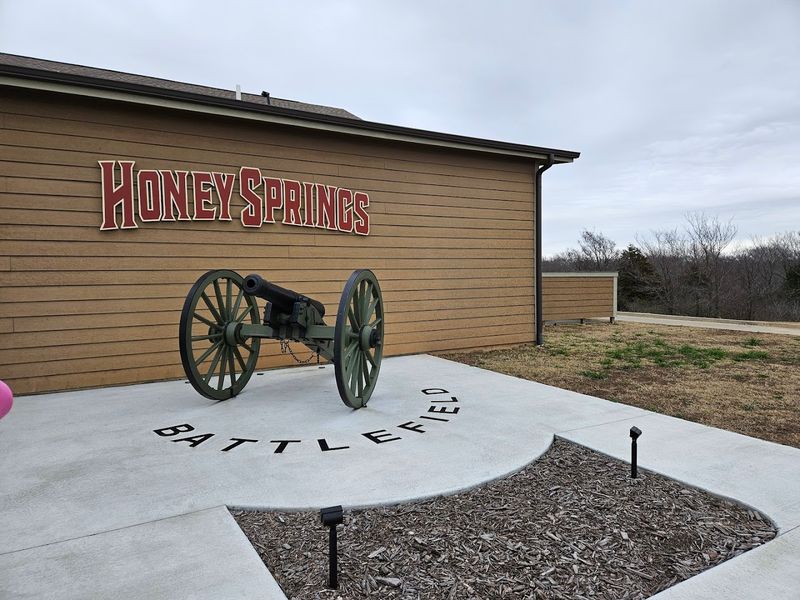
On a warm July day in 1863, the largest Civil War battle ever fought on Oklahoma soil unfolded across a stretch of prairie near present-day Checotah in McIntosh County, and the outcome helped shift the balance of power in Indian Territory decisively toward the Union.
The Battle of Honey Springs brought together a remarkably diverse set of forces, with Union troops that included African American soldiers of the First Kansas Colored Infantry facing Confederate units that included Native American regiments from several tribes.
Today, Honey Springs Battlefield is preserved as a state historic site, and walking its trails gives you a genuine sense of the terrain where that pivotal conflict played out.
The landscape is largely open prairie, and interpretive signs positioned throughout the grounds help you understand troop movements, key moments in the battle, and the broader significance of the Union victory here.
I found the site to be one of those places where the simplicity of the setting actually amplifies the weight of the history. There are no dramatic ruins or towering structures, just land, sky, and story.
The visitor center provides useful background before you head out onto the trails, and the staff there are knowledgeable and genuinely enthusiastic about sharing the site’s significance.
Honey Springs is often overlooked in broader Civil War discussions, which makes visiting feel a little like uncovering a secret that not enough people know about yet.
Plan for a two-hour visit at minimum to do the trails and exhibits proper justice.
Address: 423159 E 1030 Rd, Checotah, OK 74426
7. Red Ghost Cave Archaeological District, Kenton, Oklahoma
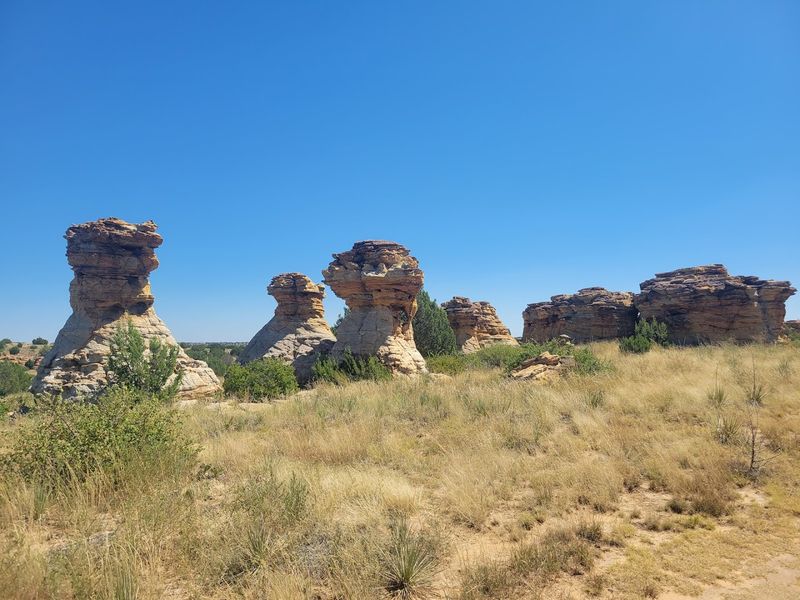
Way out in the Oklahoma Panhandle, where the land starts to feel more like New Mexico than the Midwest, a 10-acre site near the tiny town of Kenton holds one of the most fascinating collections of ancient and historic human markings in the entire state.
The Red Ghost Cave Archaeological District features prehistoric campsites, petroglyphs etched into stone surfaces by early inhabitants, and layers of historic-era graffiti left by travelers and settlers who passed through this remote canyon country over the centuries.
Getting here requires some effort, and that is part of what makes arriving feel like a genuine adventure rather than just another roadside stop.
The carvings range from abstract geometric patterns to figurative images, and standing in front of them, I had one of those rare moments where thousands of years of human presence suddenly felt very close and very real.
The site sits near Black Mesa, the highest point in Oklahoma, which means you can easily combine this visit with a hike to the mesa summit for a full day of natural and cultural exploration.
Because the area receives relatively few visitors compared to better-known archaeological sites, the experience has a raw, unfiltered quality that is increasingly hard to find.
Bring plenty of water, wear sturdy footwear, and give yourself time to move slowly through the landscape. The details here reward patience and close attention.
For anyone with an interest in ancient peoples and the landscapes they called home, Red Ghost Cave is an unforgettable stop on any Oklahoma road trip.
8. Cedar Breaks Archaeological District, Felt, Oklahoma
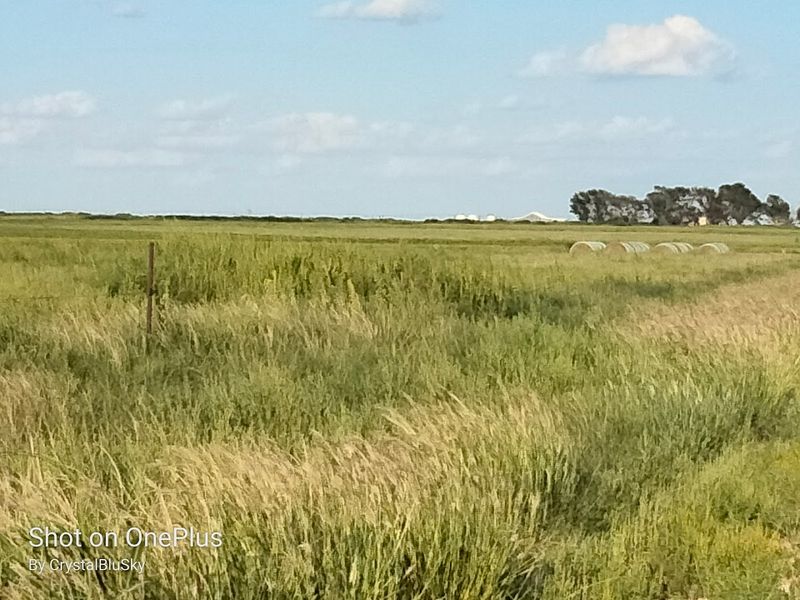
A short drive from the equally remote community of Felt in the Oklahoma Panhandle, Cedar Breaks Archaeological District offers a 160-acre canvas of prehistoric and historic human activity that feels genuinely world-class for those willing to seek it out.
Stone circles dot the landscape here, and a cave on the site contains petroglyphs alongside a cliff face decorated with both prehistoric carvings and more recent historic-era inscriptions, creating a layered visual record of human presence across an extraordinarily long span of time.
The setting itself is dramatic. High desert plains stretch out in every direction, the light shifts constantly throughout the day, and the quiet is the kind that makes you hyper-aware of everything around you.
I visited on a clear morning when the low-angle sunlight was hitting the cliff face just right, and the carvings practically jumped off the rock surface in a way that photographs simply cannot capture.
Cedar Breaks is listed on the National Register of Historic Places, a designation that reflects the genuine archaeological significance of what has been found and documented here.
Because this part of Oklahoma sees far less tourism traffic than the eastern or central parts of the state, you are likely to have the site largely to yourself, which makes the experience feel personal and unhurried.
Pairing Cedar Breaks with nearby Red Ghost Cave and a hike up Black Mesa creates one of the most rewarding single-day itineraries anywhere in the Panhandle.
Come prepared for sun, wind, and the particular magic of a place that most people have never heard of.
Dear Reader: This page may contain affiliate links which may earn a commission if you click through and make a purchase. Our independent journalism is not influenced by any advertiser or commercial initiative unless it is clearly marked as sponsored content. As travel products change, please be sure to reconfirm all details and stay up to date with current events to ensure a safe and successful trip.
