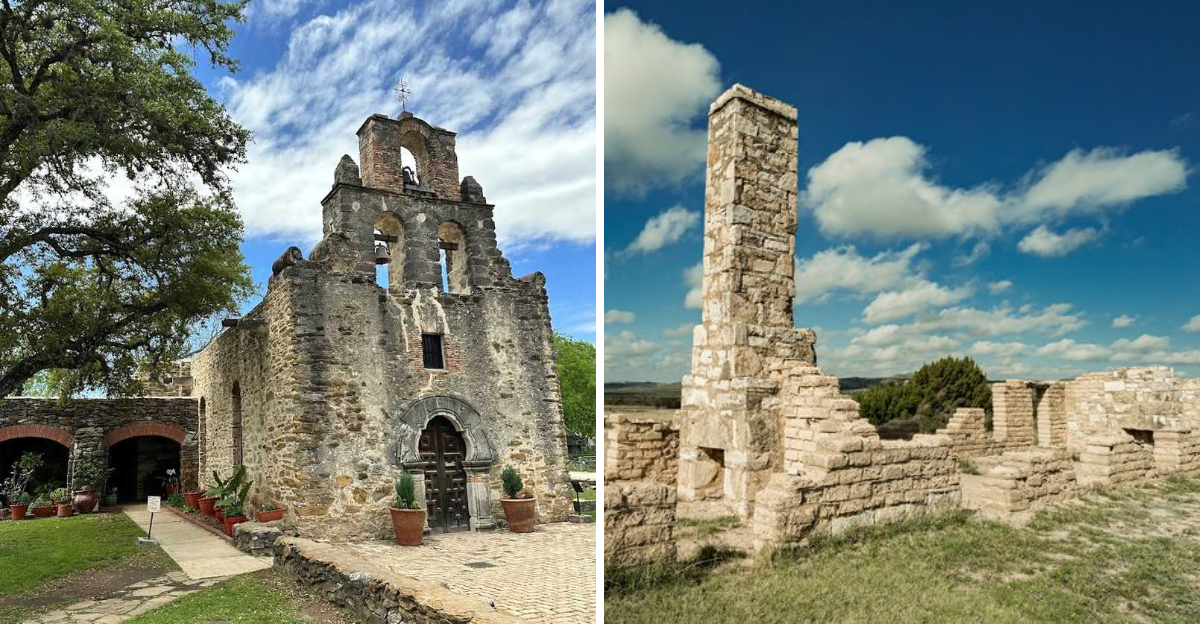
History feels different when you can actually walk through what is left of it.
These ruins across Texas tell their stories without much help, weathered walls, crumbling stone, and quiet spaces that once held something much bigger. No crowds, no barriers, just pieces of the past still standing in their own way.
It is less about checking off locations and more about taking your time with each one. In Texas, places like these remind you how much has come and gone, and how some of it still refuses to disappear.
1. Fort Phantom Hill
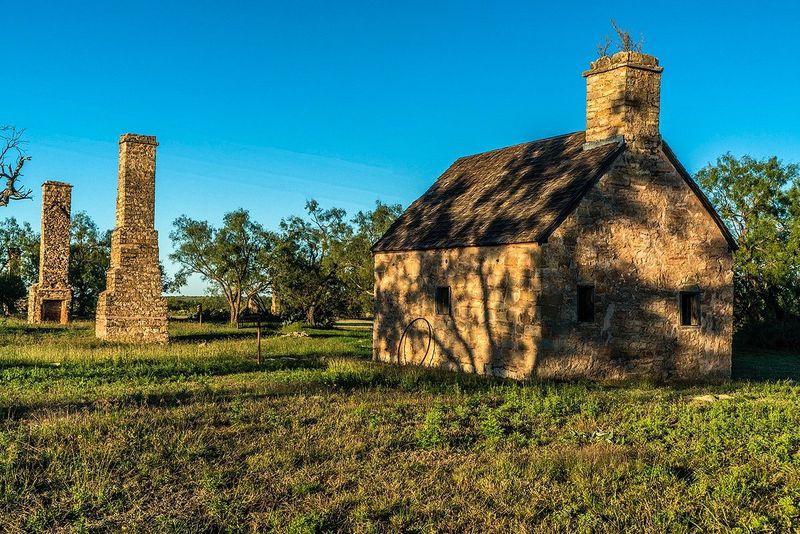
There is something quietly haunting about Fort Phantom Hill that gets under your skin the moment you arrive. The fort was established in 1851 to protect settlers moving through central Texas, but it never quite worked out the way the Army planned.
Soldiers complained about the harsh conditions, the lack of water, and the relentless wind that swept across the plains without mercy.
The fort was abandoned by 1854, and a fire destroyed most of the wooden structures shortly after. What remains today are stone chimneys rising like sentinels from the flat earth, a powder magazine, and a few stone walls that have somehow survived nearly two centuries of Texas weather.
The effect is genuinely eerie in the best possible way.
Visiting feels like flipping through a history book that nobody finished writing. The open grounds allow you to walk freely among the ruins at your own pace, and the surrounding landscape stretches out in every direction.
It is one of those places that rewards slow, quiet exploration rather than a rushed visit. Bring water, wear good shoes, and give yourself more time than you think you need.
Address: 10818 FM 600, Abilene, TX 79601
2. Mission San José
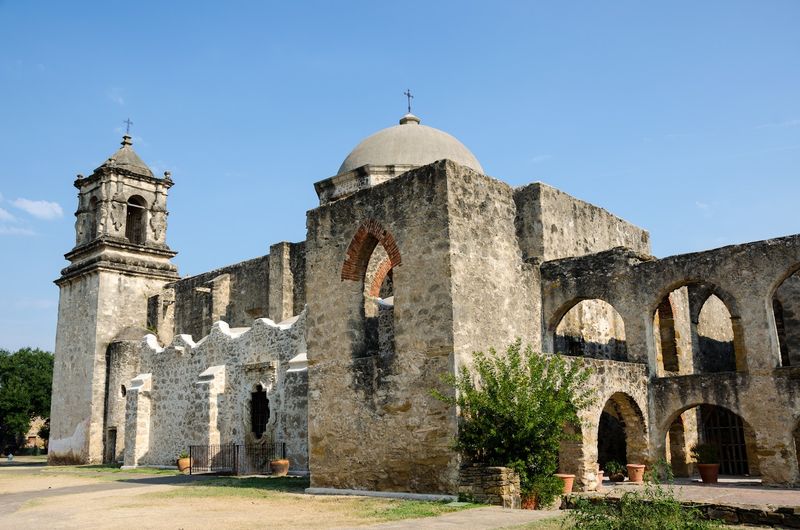
Known as the “Queen of the Missions,” Mission San José is one of the most beautifully preserved Spanish colonial sites in the entire country.
Founded in 1720, it once functioned as a fully self-sufficient community, complete with a granary, mill, and living quarters for hundreds of indigenous residents and missionaries.
The craftsmanship carved into the stone facade is the kind of detail that stops you in your tracks.
The famous Rose Window on the south wall is considered one of the finest examples of baroque stonework in North America, and seeing it in person genuinely lives up to the hype. There is a calm, almost contemplative atmosphere here that feels very different from busier tourist destinations.
The grounds are spacious, and the partially reconstructed walls give a real sense of the original scale of the mission complex.
Rangers and volunteers are often on hand to answer questions and share stories that bring the history to life. The site is part of San Antonio Missions National Historical Park, a UNESCO World Heritage Site, so it carries international recognition for good reason.
Plan to spend at least two hours here if you want to appreciate everything properly.
Address: 6701 San Jose Dr, San Antonio, TX 78214
3. Fort Lancaster and Battlefield State Historic Site
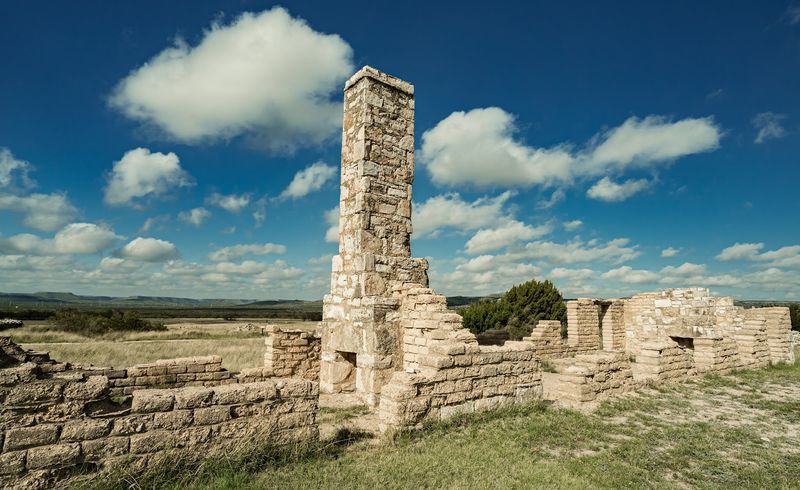
Out in the remote stretches of West Texas near the Pecos River, Fort Lancaster sits in a landscape so raw and open it almost feels like another planet.
Established in 1855 to guard the San Antonio-El Paso Road, the fort was a critical stop for travelers, mail carriers, and military units crossing some of the most unforgiving terrain in the state.
The isolation here is not just historical, it is something you feel in your bones.
The ruins are modest but meaningful. Stone foundations and partial walls mark where soldiers once lived, drilled, and kept watch over the surrounding hills.
A small visitor center provides helpful context about the fort’s role during the Civil War era and the later conflicts with Comanche and Apache raiders in the region. The battlefield designation adds another layer of significance to the site.
Getting here requires a bit of a drive, which honestly makes the experience feel more like a genuine adventure. The surrounding landscape of limestone bluffs and desert scrub is stunning in its own stark way, especially in the early morning or late afternoon light.
If you are already exploring Big Bend country, this stop is absolutely worth adding to the route.
Address: 629 Fort Lancaster Rd, Sheffield, TX 79781
4. Terlingua Ghost Town
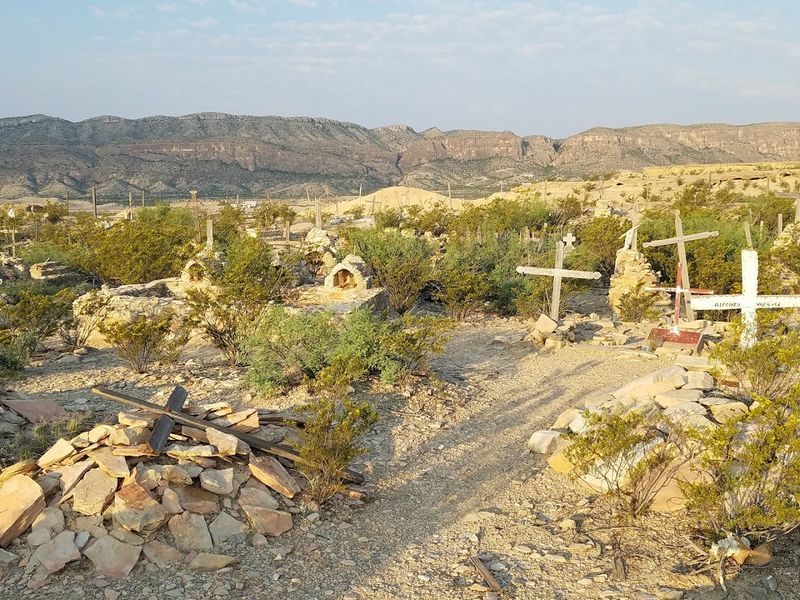
Terlingua is the kind of place that makes you feel like you have wandered off the edge of the map in the best possible way. Once a booming quicksilver mining town in the early 1900s, it produced a significant portion of the mercury used during World War I.
When the mines played out by the 1940s, the population scattered and left behind a remarkable collection of crumbling adobe and stone buildings.
What makes Terlingua especially interesting is that it is not entirely abandoned. A small, eccentric community of artists, adventurers, and off-grid enthusiasts has settled among the ruins over the decades, giving the ghost town a strange and wonderful double identity.
The cemetery on the hill is one of the most atmospheric spots in all of Texas, with hand-painted grave markers and desert wildflowers growing between the stones.
The proximity to Big Bend National Park makes Terlingua a natural basecamp for exploring the region, but the ghost town itself deserves its own dedicated afternoon. Sunset here is extraordinary, with the Chisos Mountains glowing in the distance and the ruins casting long shadows across the dust.
It is the kind of place that sticks with you long after you have driven away.
5. Shafter Ghost Town
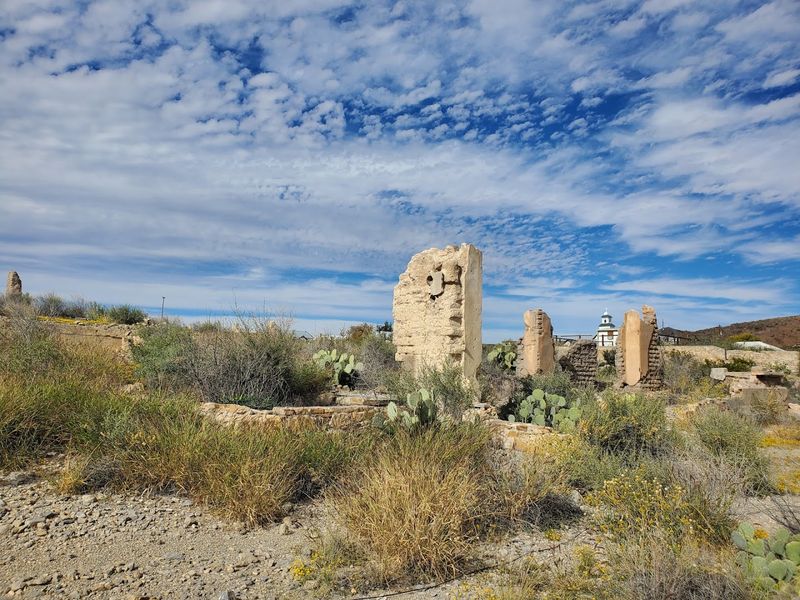
Shafter feels like a secret that West Texas has been keeping to itself for decades. Located in the high desert between Marfa and Presidio, this former silver mining town boomed in the 1880s and produced millions of dollars worth of ore before the industry collapsed.
The ruins left behind are more substantial than most ghost towns, with stone walls and adobe structures still standing in various states of dignified decay.
There is a church ruin here that is particularly striking, its roofless walls open to the sky like a frame around nothing but blue. The scale of the remaining structures gives a real sense of how significant this community once was.
At its peak, Shafter had thousands of residents, a company store, a hotel, and all the infrastructure of a working industrial town.
The surrounding landscape is gorgeous in that harsh, high-desert way that feels uniquely Texan. Rolling hills covered in dry grass and scattered juniper stretch out in every direction, and the light in this part of the state is something photographers travel long distances to capture.
Shafter sees far fewer visitors than better-known ghost towns, which means you often get the place almost entirely to yourself.
Address: Cibolo Creek Rd, Marfa, TX 79843
6. Presidio la Bahía State Historic Site
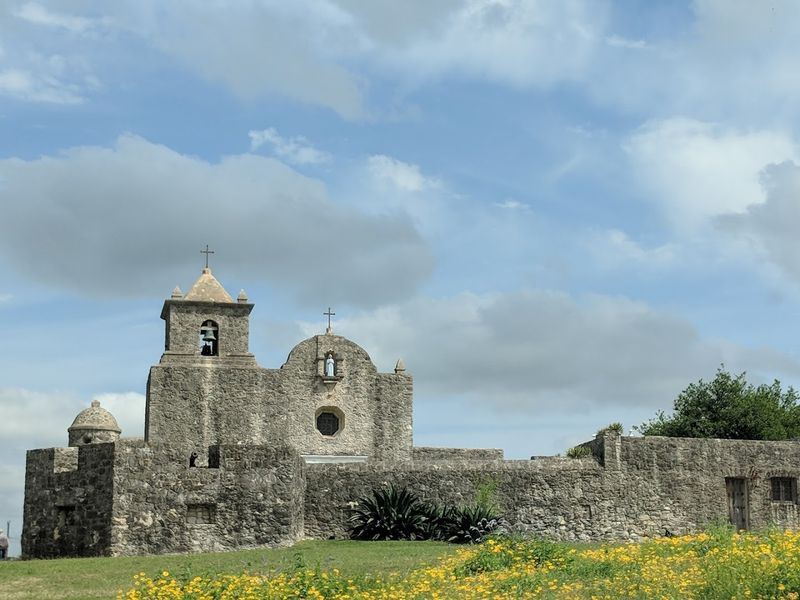
Few places in Texas carry as much historical weight as Presidio la Bahía, a Spanish fort that has stood in Goliad since the 1700s.
Originally established in 1722 and relocated several times before settling at its current location, the presidio has witnessed some of the most pivotal and heartbreaking events in Texas history.
The 1836 Goliad Massacre, in which over 300 Texian soldiers were executed on the orders of Santa Anna, took place here.
The fort has been carefully restored and is considered one of the best-preserved Spanish colonial military structures in the entire Western Hemisphere. Thick whitewashed walls, a beautiful chapel still in use today, and a museum packed with artifacts all combine to create an experience that feels genuinely immersive.
The chapel is especially moving, with its centuries of continuous use somehow visible in the worn stone floors.
Goliad itself is a charming small town worth exploring before or after your visit to the presidio. The site is managed thoughtfully, and the interpretive materials do an excellent job of presenting both the Spanish colonial perspective and the Texas Revolution context without oversimplifying either.
This is a place that deserves more attention than it typically gets.
Address: 217 Loop 71, Goliad, TX 77963
7. Fort Davis National Historic Site
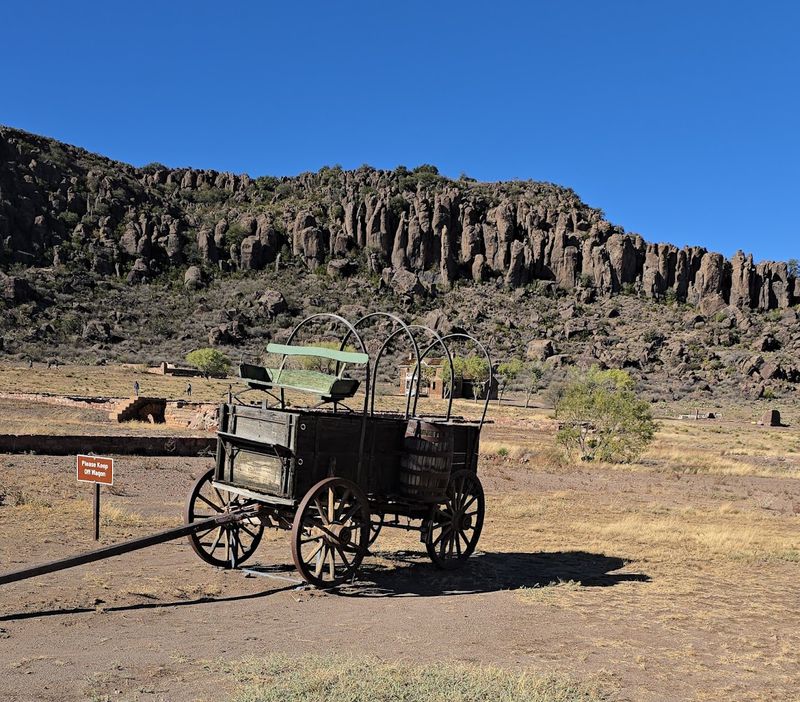
Perched at over 5,000 feet in the Davis Mountains, Fort Davis is one of the best-preserved frontier military posts in the American Southwest.
It was established in 1854 to protect the Chihuahuan Trail, a critical route connecting San Antonio to El Paso, from raids that threatened travelers and supply lines moving through the region.
The setting alone is worth the drive, with dramatic rocky peaks rising behind the long rows of restored stone and adobe buildings.
What sets Fort Davis apart from many historic sites is the sheer scope of what has been preserved. Officers’ quarters, enlisted men’s barracks, a hospital, and a commanding officer’s residence have all been carefully maintained and partially furnished to reflect life in the 1880s.
The fort is closely associated with the Buffalo Soldiers, the African American military units who served here and throughout the frontier West after the Civil War.
The surrounding town of Fort Davis is one of the most pleasant small towns in all of Texas, with good food, a famous observatory, and access to excellent hiking nearby. Spending a full day between the fort and the Davis Mountains State Park makes for one of the most satisfying day trips in the state.
Address: 101 Lt. Flipper Dr, Fort Davis, TX 79734
8. Indianola Ghost Town
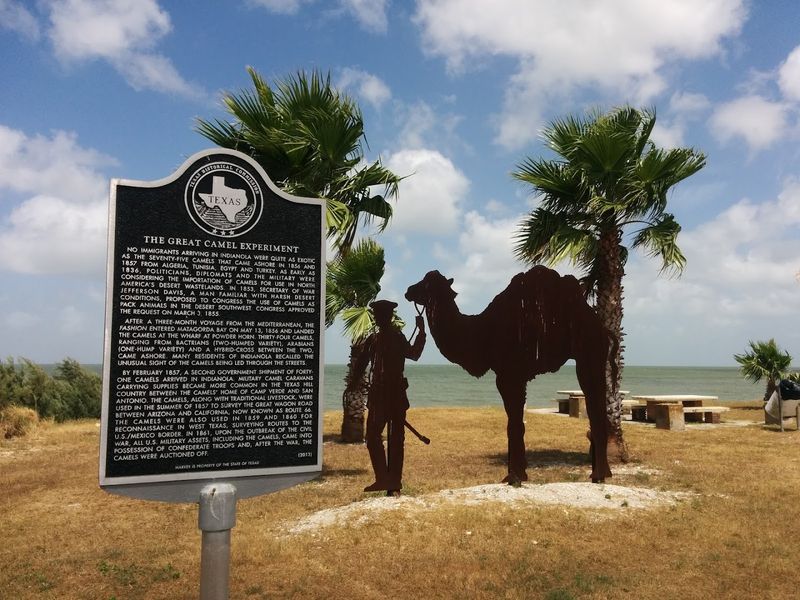
Indianola is a ghost town with a dramatic story, one that involves not war or economic collapse but the raw, unstoppable power of nature.
In the mid-1800s, Indianola was one of the busiest ports in Texas, a booming gateway through which thousands of immigrants, soldiers, and goods passed on their way into the interior of the state.
It was, by all accounts, a city with a bright future.
Two catastrophic hurricanes changed everything. The storm of 1875 devastated the city, and just when residents were beginning to rebuild, another massive hurricane struck in 1886 and finished what the first had started.
The town was largely abandoned after that second blow, and the Gulf eventually reclaimed much of what was left. Today, the site is mostly underwater or buried under decades of coastal sediment.
What remains are historical markers, a statue of René-Robert Cavelier de La Salle who landed near here in the 1680s, and the haunting flatness of the coastline where a city once hummed with activity. The melancholy beauty of the place is unlike anything else on this list.
It is a reminder that history is not always preserved in stone, sometimes it just disappears into the sea.
9. Fort McKavett State Historic Site
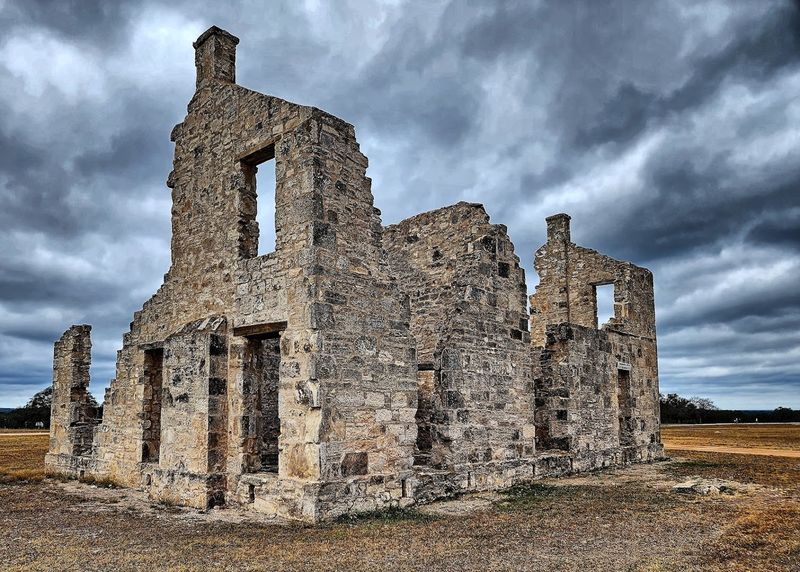
Hidden in the rolling limestone hills of the Texas Hill Country near the San Saba River, Fort McKavett has a peaceful, almost pastoral quality that makes it easy to forget you are standing in the ruins of a military post.
Established in 1852 and reoccupied after the Civil War, the fort played a significant role in the campaigns against Comanche and Apache groups during the turbulent 1870s.
The Buffalo Soldiers served here as well, adding another important chapter to the site’s layered history.
The ruins here are genuinely impressive. More than 20 original structures remain in various states of preservation, including a schoolhouse that was one of the first in the region, officers’ quarters, and a hospital building.
Some have been partially restored with stabilized walls and interpretive signage, while others have been left in their natural state of weathered stone and open sky.
The site is wonderfully uncrowded, and the surrounding landscape of live oaks, cedar, and limestone outcroppings is quintessential Hill Country. A small museum on the grounds provides excellent historical context, and the staff are genuinely knowledgeable and enthusiastic.
Fort McKavett is the kind of hidden gem that makes you feel like you have discovered something most people have missed.
Address: 7066 FM 864, Fort McKavett, TX 76841
10. Mission Espada – San Antonio Missions National Historical Park
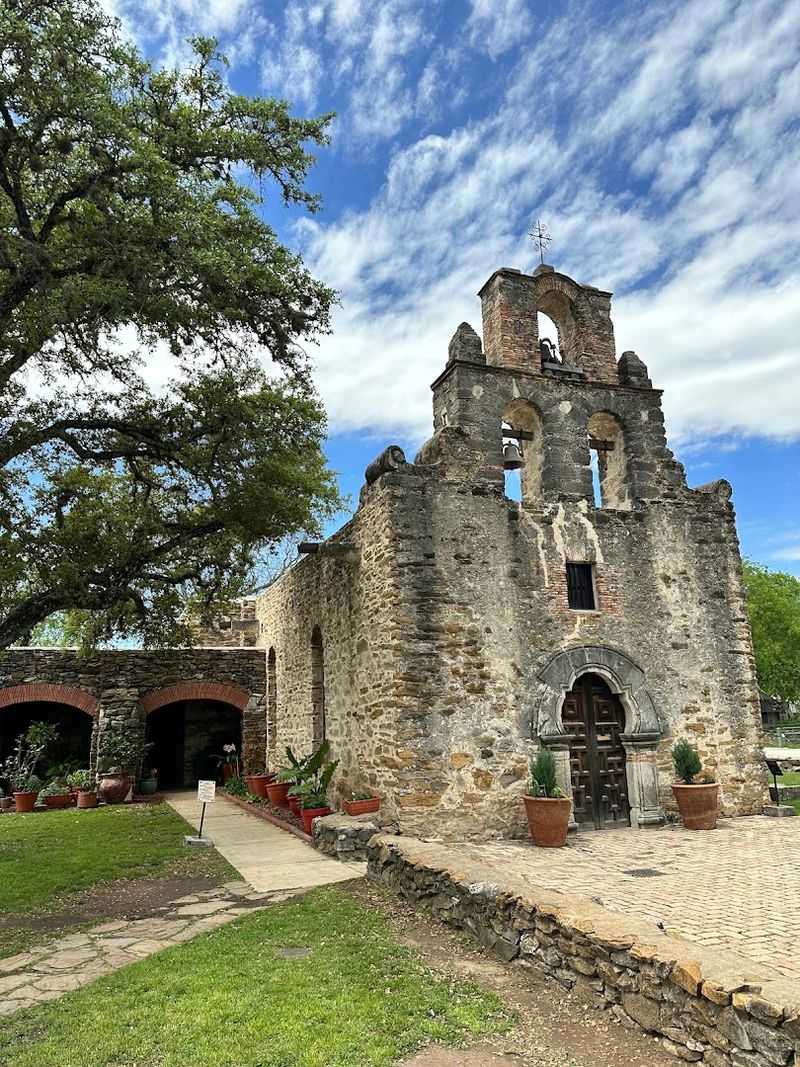
Mission Espada is the southernmost and arguably the most quietly beautiful of the four missions that make up San Antonio Missions National Historical Park.
Founded in 1690 as the first Spanish mission in Texas and relocated to its current site in 1731, it has one of the longest histories of any European-established institution in the entire state.
The small, simple stone church still holds regular services, which gives the place a living, breathing quality that larger tourist sites sometimes lack.
What I find especially fascinating about Espada is its acequia system, an 18th-century irrigation network that still functions today and is one of the oldest working aqueducts in the United States.
Water flows through stone channels built by hand centuries ago, and the sight of it still doing its job is quietly remarkable.
The grounds are lush and shaded compared to the more exposed sites, which makes it a pleasant place to slow down and linger.
The surrounding neighborhood has a genuine local character, and the mission sits comfortably within it rather than feeling like an isolated museum piece. Cycling between the missions along the dedicated trail is a wonderful way to experience all four sites in a single day.
Address: 10040 Espada Rd, San Antonio, TX 78214
11. Caddo Mounds State Historic Site
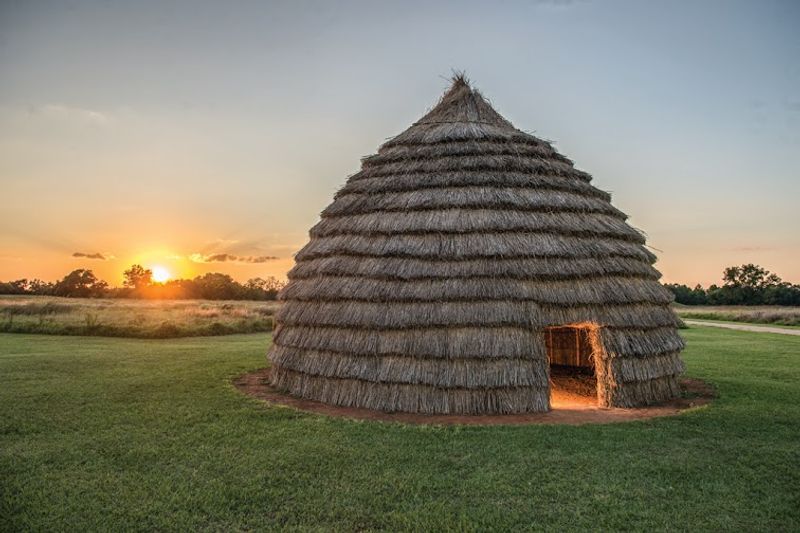
Caddo Mounds offers a completely different kind of historic ruin than anything else on this list, one that pushes Texas history back more than a thousand years before the first Spanish missionaries ever arrived.
The site preserves three large earthen mounds built by the Caddo people between roughly 800 and 1300 CE, making it one of the most significant pre-Columbian archaeological sites in the entire state.
There is a humbling quality to standing near something this ancient.
Two of the mounds served as ceremonial and political centers, while the third is a burial mound that speaks to the sophisticated social structure of the Caddo civilization.
A reconstructed Caddo house on the grounds helps visitors visualize what daily life might have looked like, and the museum does an exceptional job of presenting the Caddo as a living, complex culture rather than a distant abstraction.
East Texas feels dramatically different from the rest of the state, with tall pines, red clay soil, and a humid green landscape that catches many first-time visitors off guard.
Caddo Mounds sits comfortably within that setting, and the combination of natural beauty and deep history makes it one of the most underrated day trips in the state.
Give yourself at least half a day here.
Address: 1649 State Hwy 21 W, Alto, TX 75925
Dear Reader: This page may contain affiliate links which may earn a commission if you click through and make a purchase. Our independent journalism is not influenced by any advertiser or commercial initiative unless it is clearly marked as sponsored content. As travel products change, please be sure to reconfirm all details and stay up to date with current events to ensure a safe and successful trip.
