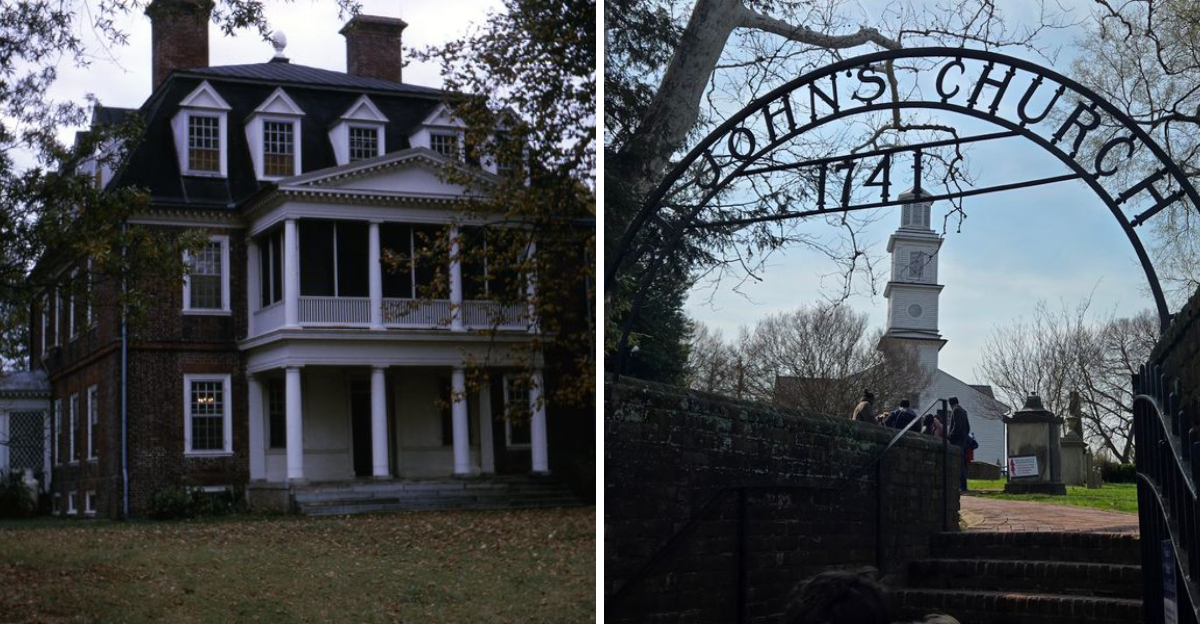
Some places don’t just tell history, they breathe it. Virginia is one of those rare states where you can literally stand on the ground where America took its first steps, made its boldest declarations, and fought its most defining battles.
From the marshy banks of the James River to the rolling hills of Appomattox, this state is packed with stories that shaped an entire nation. Locals will tell you these spots are sacred ground, tourists call them bucket-list worthy, but honestly?
They’re both right, and visiting them might just change the way you see the United States forever.
1. Historic Jamestowne
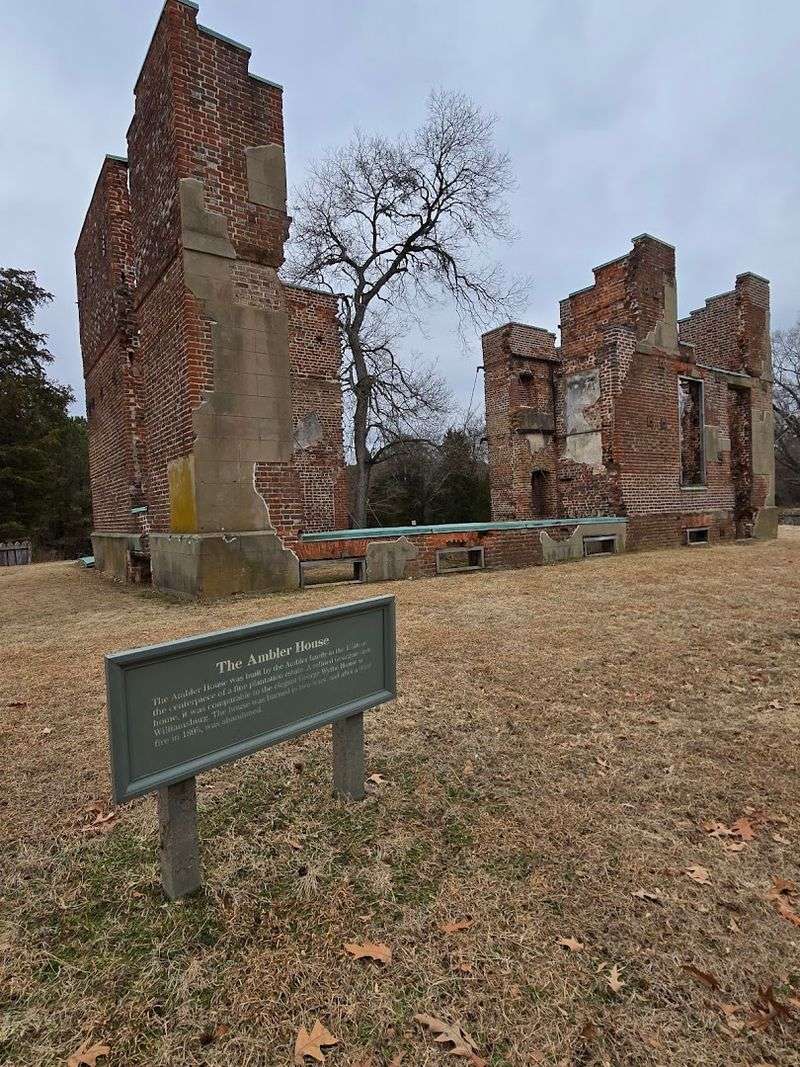
Standing at the edge of the James River, you can almost hear the creak of wooden ships and the cautious footsteps of settlers who had no idea they were about to change the world. Historic Jamestowne is where the English-speaking chapter of American history truly began, and the weight of that fact hits you the moment you step onto the island.
The site is remarkably well-preserved, with ongoing archaeological digs that continue to unearth artifacts from the early colonial period. You can walk the grounds, peer into the original fort outline, and stand beside the oldest surviving English church tower in North America.
It’s a jaw-dropping experience that no history textbook can replicate.
The Archaearium museum on site displays thousands of recovered objects, from armor fragments to personal belongings, all telling stories of survival, ambition, and cultural collision. The exhibits are thoughtfully curated and genuinely fascinating, even for younger visitors.
What makes Jamestowne especially compelling is its honesty. The site doesn’t shy away from the complicated truths of colonization, including the impact on the Powhatan Confederacy and the introduction of enslaved Africans.
That kind of layered storytelling makes this place feel real, not romanticized.
Located on Jamestown Island, the address is 1368 Colonial Pkwy, Jamestown, VA 23081. Plan to spend at least half a day here.
Virginia’s oldest story deserves your full, unhurried attention, and trust me, you’ll leave with more questions than answers in the best possible way.
2. Henricus Historical Park
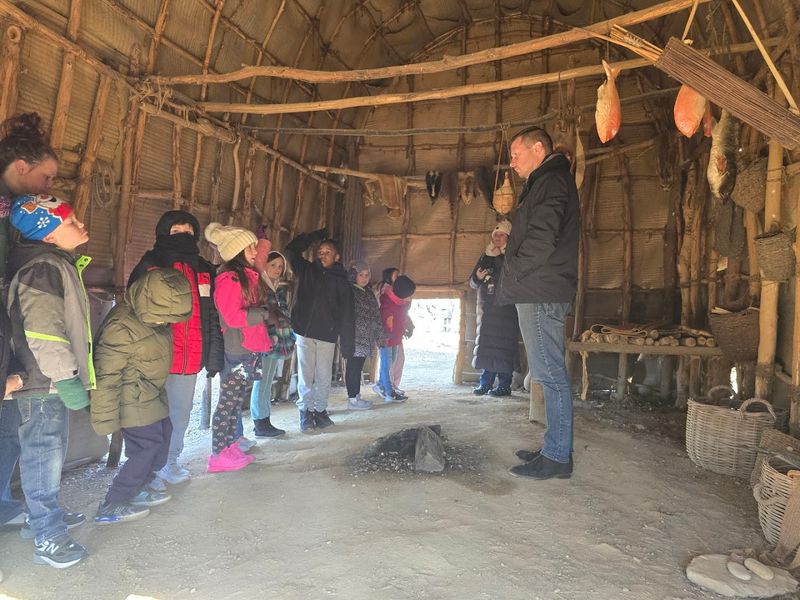
Most people have never heard of Henricus, and that is honestly their loss. Tucked along the banks of the James River in Chesterfield County, this living history park recreates the second successful English settlement in Virginia, founded just four years after Jamestown and every bit as fascinating.
Henricus Historical Park brings the early 17th century roaring back to life with reconstructed buildings, costumed interpreters, and hands-on demonstrations that make colonial Virginia feel tangible. You can watch blacksmithing, explore a recreated Native American village called Farrar’s Island, and learn about the surprisingly complex relationship between English settlers and the Powhatan people.
One of the most remarkable facts about this place is that it was home to the first hospital in the English colonies. That alone earns it a spot in the American history hall of fame, yet it remains wildly underappreciated compared to its more famous neighbors down the river.
The park also hosted early attempts to establish a college for both English and Native American students, a plan that was tragically cut short. That story alone sparks conversations about education, culture, and the road not taken in early American history.
Henricus Historical Park is located at 251 Henricus Park Rd, Chester, VA 23836. It’s the kind of place where you show up expecting a quick visit and end up staying for hours, completely absorbed in a chapter of Virginia’s past that most history books barely mention.
Go. Seriously.
3. St. John’s Church, Richmond
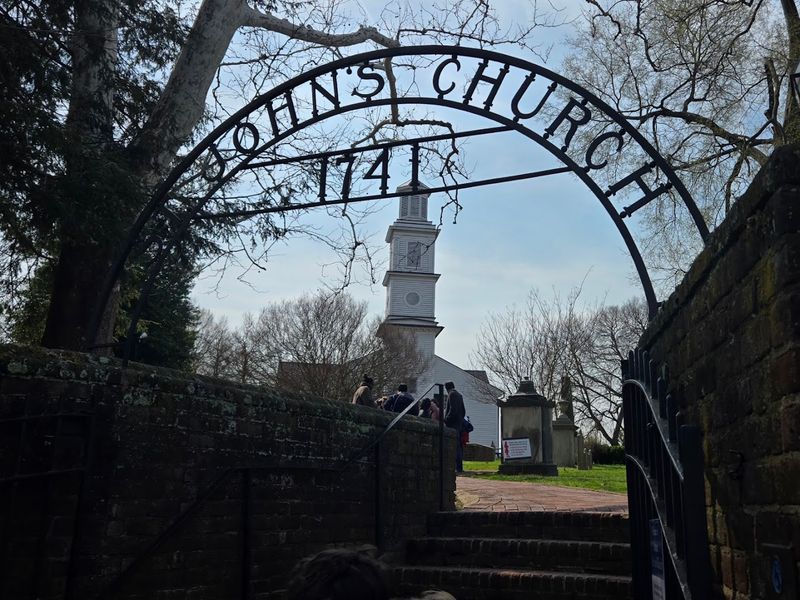
Picture a packed church in March of 1775, candles flickering, tensions running sky-high, and a Virginia delegate rising to deliver words that would echo through centuries. That delegate was Patrick Henry, and the church was St. John’s in Richmond, where he famously declared his preference for liberty over death.
Few speeches in American history have hit harder.
St. John’s Church, built in 1741, is the oldest surviving church in Richmond and one of the most electrically charged historical spaces in all of Virginia. Walking through the doors feels like crossing a threshold into another era, one where every word spoken carried the potential to ignite a revolution.
The church still holds regular reenactments of the Second Virginia Convention, complete with period-costumed actors delivering Henry’s speech in full. Watching it performed in the actual room where it happened sends a chill straight down your spine, no matter how many times you’ve read the words in a textbook.
The surrounding churchyard is equally captivating, filled with the graves of early Richmond residents and colonial-era tombstones that tell quiet stories of lives lived in tumultuous times. It’s peaceful and eerie all at once, a combination that feels entirely appropriate.
St. John’s Church is located at 2401 E Broad St, Richmond, VA 23223. Richmond is a city with layers of history stacked on top of each other, and this church sits right at the very foundation.
Come for the speech, stay for the stories carved in stone all around it.
4. Mount Vernon
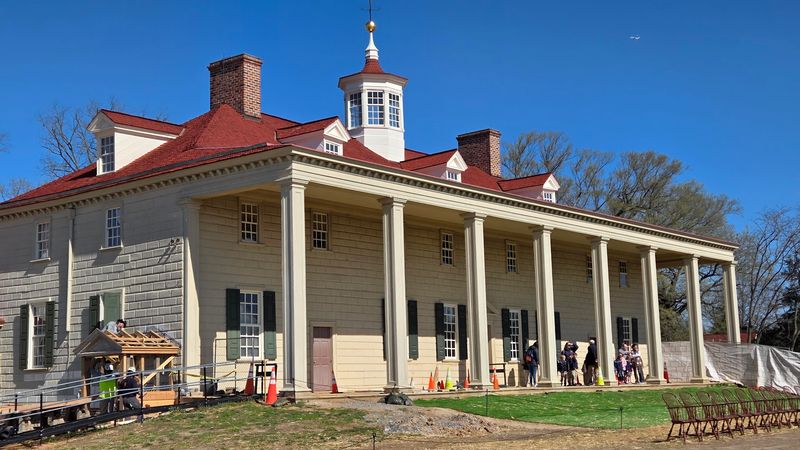
George Washington could have lived anywhere after the Revolution, and he chose here. That says everything.
Mount Vernon, perched magnificently above the Potomac River in Fairfax County, was the beloved home of America’s first president, and visiting it feels like stepping directly into the man behind the myth.
The estate is strikingly beautiful, with the iconic colonnaded piazza offering sweeping views of the river that Washington himself gazed upon for decades. The mansion has been meticulously restored to its appearance during Washington’s lifetime, and the attention to detail is extraordinary.
Every room tells a story, from the formal entertaining spaces to the surprisingly intimate family quarters.
Beyond the house, the grounds are packed with history. The working farm, the reconstructed greenhouse, the slave quarters, and the distillery all paint a fuller, more honest picture of 18th-century plantation life.
Mount Vernon deserves enormous credit for not sanitizing this history. The stories of the enslaved people who built and maintained this estate are told with dignity and depth.
Washington’s tomb is also on the property, a simple brick structure that somehow feels both modest and profoundly moving. Standing there, you realize you’re a few feet away from one of the most consequential figures in world history.
That’s not nothing.
Mount Vernon is located at 3200 Mount Vernon Memorial Hwy, Mount Vernon, VA 22121. Virginia holds many treasures, but this one sits at the very top of the must-visit list.
Give it a full day. You’ll need every minute.
5. Monticello
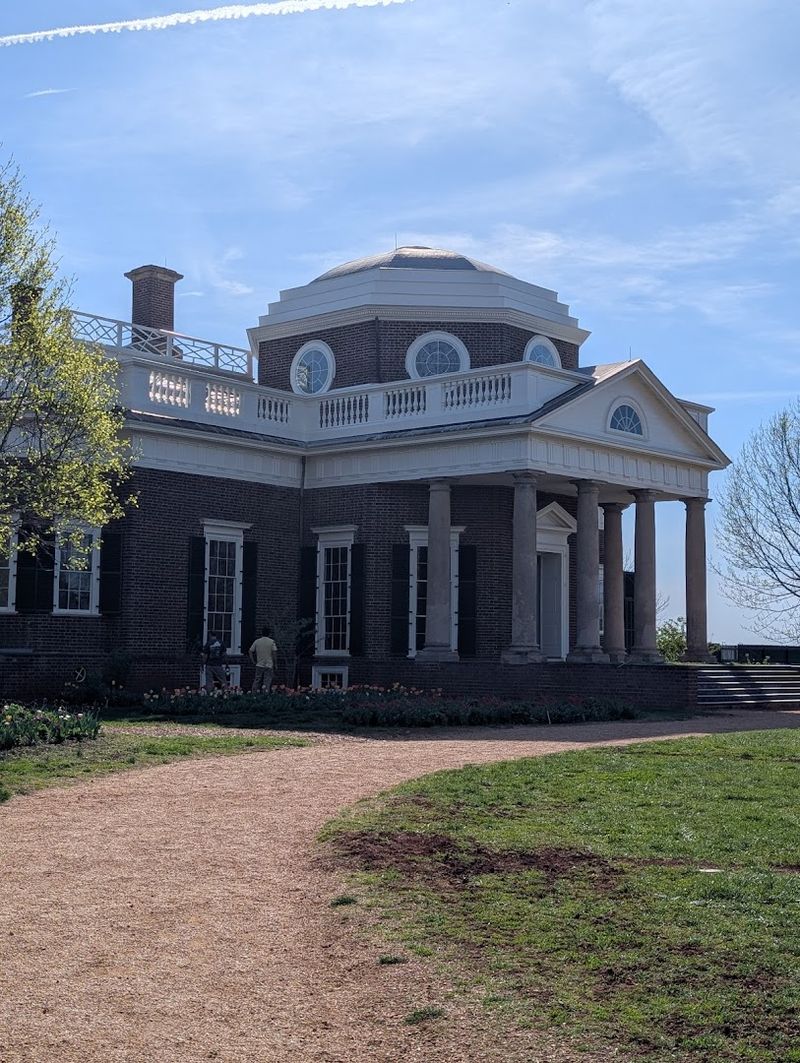
Thomas Jefferson designed his own home the way he approached everything, obsessively, brilliantly, and with an eye toward posterity. Monticello, perched on a hilltop outside Charlottesville, is the physical embodiment of one of history’s most complicated geniuses, and it rewards every visitor who arrives ready to think deeply.
The architecture alone is worth the trip. Jefferson spent decades refining and rebuilding Monticello, drawing inspiration from European neoclassicism and filtering it through his own restless intellect.
The iconic dome, the skylights, the clever alcove beds, the dumbwaiters built into the dining room walls. Every feature reveals something about the man who designed it.
The guided tours here are genuinely exceptional. They cover Jefferson’s political philosophy, his scientific curiosity, his enormous personal library, and, crucially, the enslaved community that made his lifestyle possible.
The story of Sally Hemings and the people who lived and worked on Mulberry Row is presented with the seriousness and nuance it deserves. This is not a sanitized shrine.
The gardens and grounds are spectacular in every season, with sweeping mountain views that explain why Jefferson called this place his essay in architecture. The vegetable garden alone, which Jefferson used as a living laboratory for plant species from around the world, is a delightful rabbit hole of botanical history.
Monticello is located at 931 Thomas Jefferson Pkwy, Charlottesville, VA 22902. Come curious, come open-minded, and come ready to sit with the beautiful contradictions that define both Jefferson and the nation he helped create.
6. Appomattox Court House National Historical Park
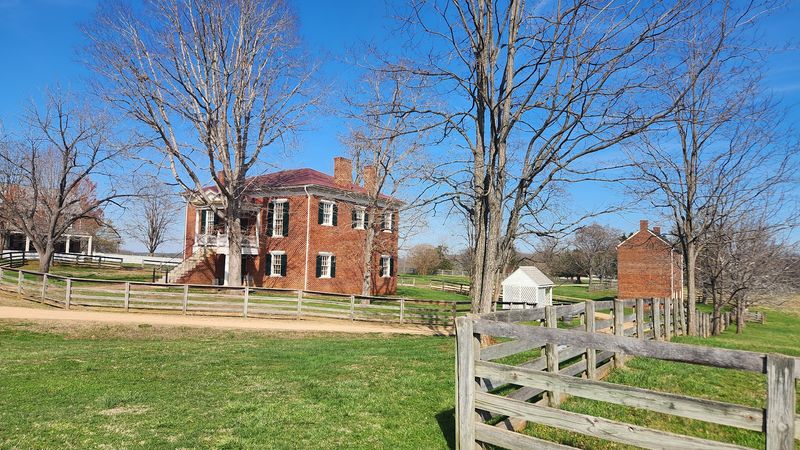
April 9, 1865. Two generals sat down in a modest Virginia parlor and, with the scratch of a pen, ended the bloodiest war in American history.
The McLean House at Appomattox Court House is that parlor, and visiting it is one of the most emotionally resonant experiences you can have on American soil.
The entire village at Appomattox Court House National Historical Park has been painstakingly restored to its appearance on that fateful day. Walking the quiet dirt roads between the historic buildings, you feel the weight of four years of devastating conflict finally lifting.
The silence here feels intentional, like the land itself is still processing what happened.
The park rangers at Appomattox are among the best storytellers in the National Park Service. Their interpretive talks don’t just cover the military details of the surrender.
They explore what it meant for the hundreds of thousands of soldiers on both sides, and for the four million enslaved people whose freedom hung in the balance of that moment.
The reconstructed McLean House interior is deeply affecting. The room where Lee and Grant met is spare and simple, which somehow makes the enormity of what happened there even more powerful.
You expect grandeur and find quiet dignity instead.
Appomattox Court House National Historical Park is located at 111 National Park Dr, Appomattox, VA 24522. Virginia gave America some of its greatest triumphs and its most painful chapters.
This place holds both, and it holds them with remarkable grace.
7. Harpers Ferry National Historical Park
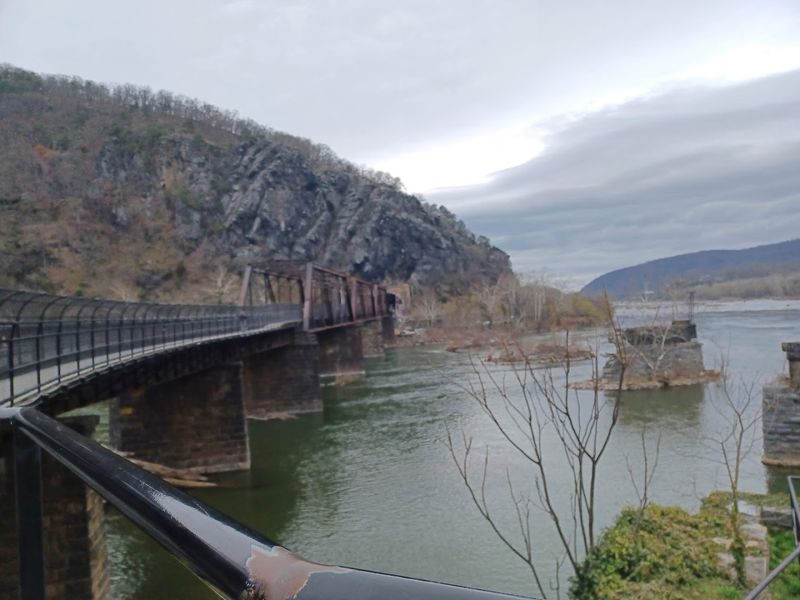
Harpers Ferry sits at one of the most dramatically beautiful spots in the entire mid-Atlantic region, where the Shenandoah and Potomac rivers crash together beneath towering cliffs draped in hardwood forest. Thomas Jefferson once called the view worth a voyage across the Atlantic.
He was not exaggerating.
But Harpers Ferry is far more than a pretty view. This is where John Brown launched his audacious 1859 raid on the federal armory, hoping to spark a massive uprising against slavery.
The raid failed militarily but succeeded in ways Brown never anticipated, accelerating the national crisis that led directly to the Civil War.
The lower town is a beautifully preserved collection of 19th-century stone and brick buildings that now house museums, exhibits, and ranger-led programs covering everything from the armory’s industrial history to the complex legacy of Brown’s raid. The stories told here are urgent and layered, touching on race, freedom, religion, and the nature of moral courage.
Hiking is a major draw at Harpers Ferry, with trails climbing to Maryland Heights and Jefferson Rock offering views that genuinely stop you in your tracks. The combination of natural beauty and historical weight makes this place uniquely compelling among Virginia-area national parks.
Harpers Ferry National Historical Park straddles the Virginia-West Virginia border, with the main visitor area located at 171 Shoreline Dr, Harpers Ferry, WV 25425. The Virginia connection runs deep here, and the stories told within this landscape are essential reading for anyone trying to understand how America arrived at its defining conflict.
8. George Washington Birthplace National Monument
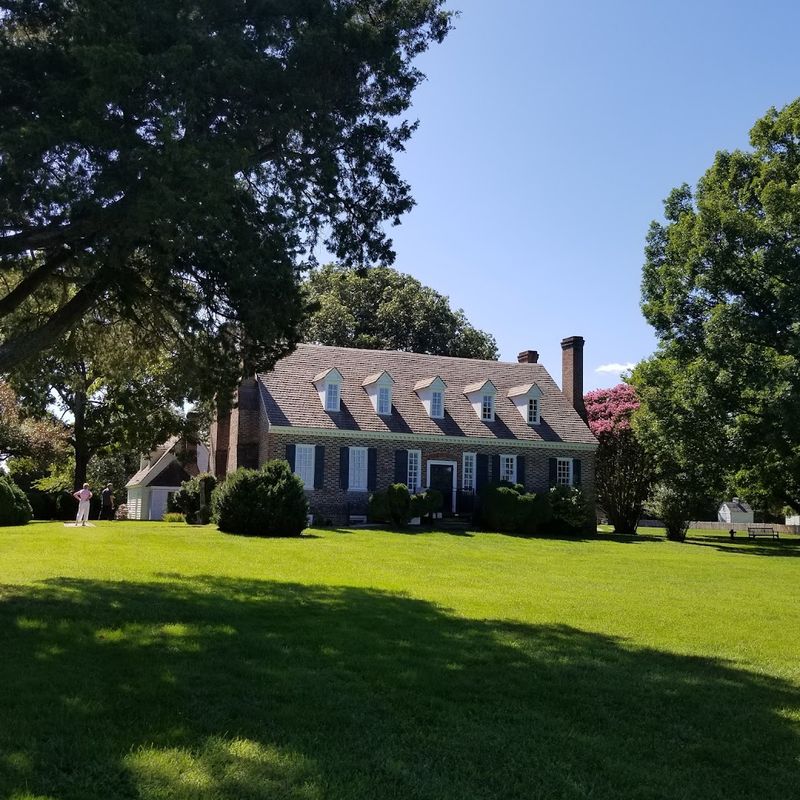
Long before he crossed the Delaware or presided over a new nation, George Washington was just a boy growing up on a tobacco farm beside the Potomac River in Westmoreland County. The George Washington Birthplace National Monument marks that origin point, and it’s a surprisingly moving place to visit precisely because of its quietness and simplicity.
The site features a colonial-era working farm that demonstrates what life looked like in 18th-century tidewater Virginia. Heritage breed animals roam the grounds, costumed interpreters tend the gardens, and the whole atmosphere feels genuinely unhurried, a welcome contrast to the frenetic pace of most major historical attractions.
The original birth house burned down long ago, but a memorial house built in the 1930s stands near the site, surrounded by a formal garden and ancient boxwoods that give the grounds an air of timeless elegance. The Washington family cemetery is also on the property, where several of Washington’s ancestors are buried beneath simple markers.
What I love most about this place is how it reframes Washington as a human being rather than a marble monument. He came from this land, learned from it, and carried it with him for the rest of his remarkable life.
That connection between person and place feels palpable here in a way it doesn’t at grander sites.
George Washington Birthplace National Monument is located at 1732 Popes Creek Rd, Washington’s Birthplace, VA 22443. Pack a picnic, bring your curiosity, and give yourself the afternoon to wander this genuinely lovely corner of Virginia at your own pace.
9. Shirley Plantation
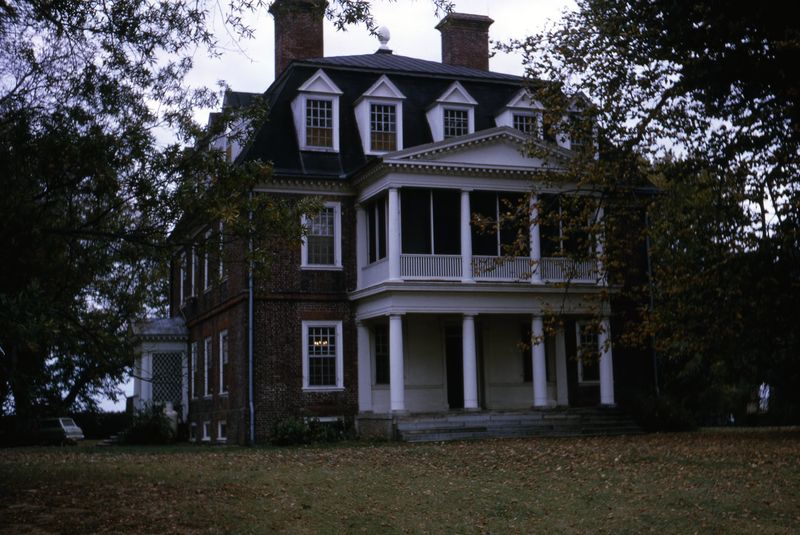
Shirley Plantation has been continuously occupied since 1613, making it the oldest active plantation in Virginia and one of the oldest family-owned businesses in the entire United States. That kind of unbroken continuity across more than four centuries is almost incomprehensible, and standing before the magnificent brick mansion makes that history feel completely real.
The house itself is an architectural gem, a perfectly proportioned Queen Anne-style mansion completed around 1738 and home to the Hill-Carter family ever since. The interior is filled with original family portraits, period furniture, and heirlooms that have never left the property.
It feels less like a museum and more like stepping into a living family home that happens to be four centuries old.
The approach to the house along an avenue of ancient trees is one of the most photogenic moments in all of Virginia. The formal forecourt, the flanking outbuildings, the sweeping lawn running down to the James River.
Every angle offers a view that looks like it was composed by a painter with an eye for drama and grandeur.
Shirley is also notable for its connection to the Carter family, one of colonial Virginia’s most powerful dynasties, and to Robert E. Lee, whose mother, Ann Hill Carter, was born here.
That connection adds another layer of historical complexity to an already richly storied property.
Shirley Plantation is located at 501 Shirley Plantation Rd, Charles City, VA 23030. Tours of the house and grounds run regularly.
Come ready to be completely charmed by a place that has quietly witnessed more American history than almost anywhere else in the country.
10. Yorktown Battlefield
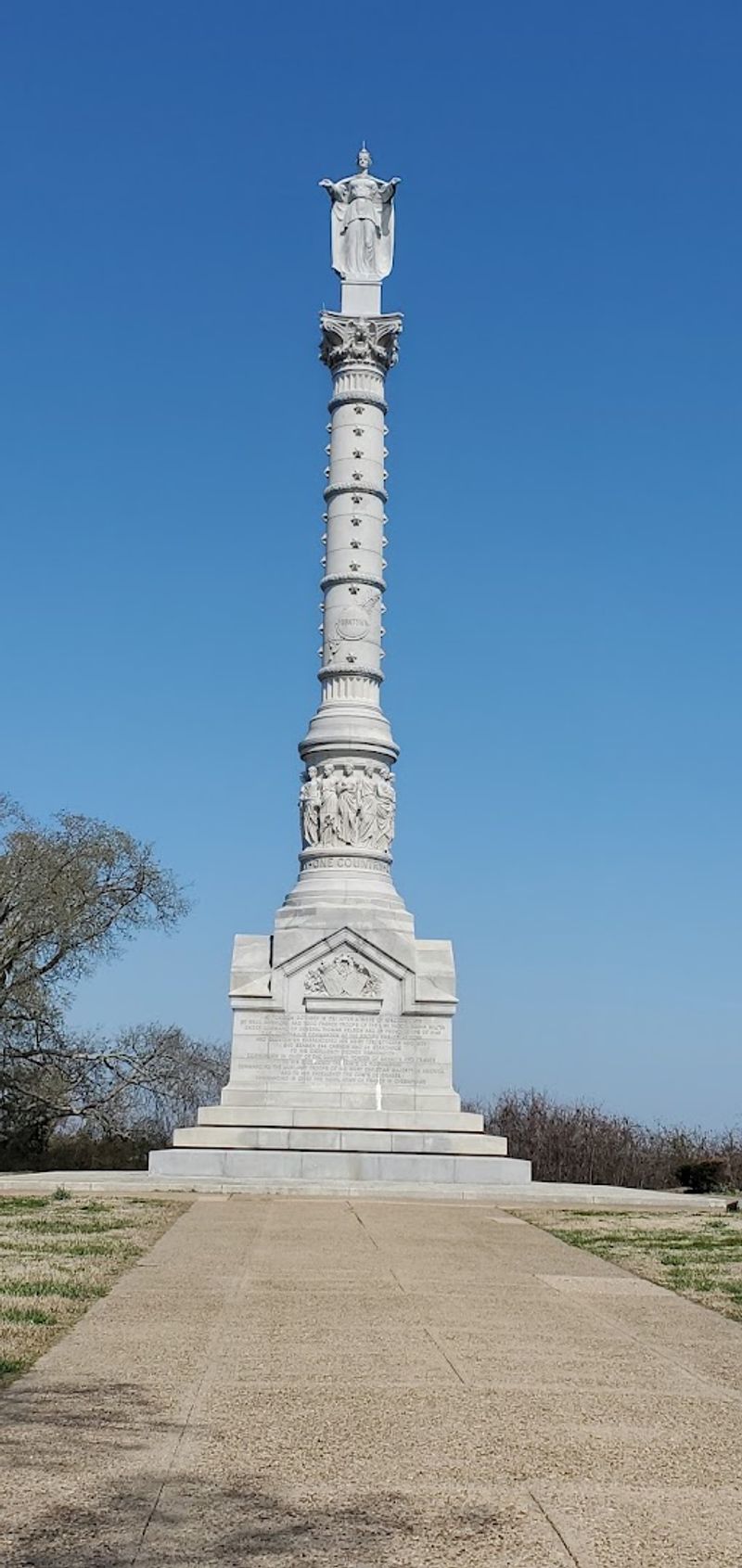
Yorktown is where the dream became real. In the autumn of 1781, a combined American and French force cornered the British army under General Cornwallis on this Virginia peninsula, and after a ferocious siege, the redcoats surrendered.
The American Revolution was effectively over, and a new nation stepped blinking into the light.
The battlefield today is managed by the National Park Service as part of Colonial National Historical Park, and it’s brilliantly interpreted. A driving tour takes you past the original earthworks, the Grand French Battery, and the two redoubts that American troops famously stormed in a nighttime assault that cracked the British defenses wide open.
The Yorktown Victory Center, now rebranded as the American Revolution Museum at Yorktown, sits nearby and offers one of the most comprehensive and engaging explorations of the Revolutionary War period anywhere in the country. Living history encampments, dramatic film presentations, and immersive exhibits make the story accessible and genuinely exciting for visitors of all ages.
The town of Yorktown itself is a delight, a small, beautifully preserved colonial waterfront community with historic buildings, sweeping views of the York River, and a quiet pride in the enormous role it played in world history. Grab a seat on the bluff overlooking the water and let the significance of the place wash over you.
Yorktown Battlefield is located at 1000 Colonial Pkwy, Yorktown, VA 23690. Virginia saved the best for last with this one.
The spot where America won its independence deserves every bit of reverence, and every bit of joy, that visitors bring to it. Pack your bags.
History is waiting.
Dear Reader: This page may contain affiliate links which may earn a commission if you click through and make a purchase. Our independent journalism is not influenced by any advertiser or commercial initiative unless it is clearly marked as sponsored content. As travel products change, please be sure to reconfirm all details and stay up to date with current events to ensure a safe and successful trip.
