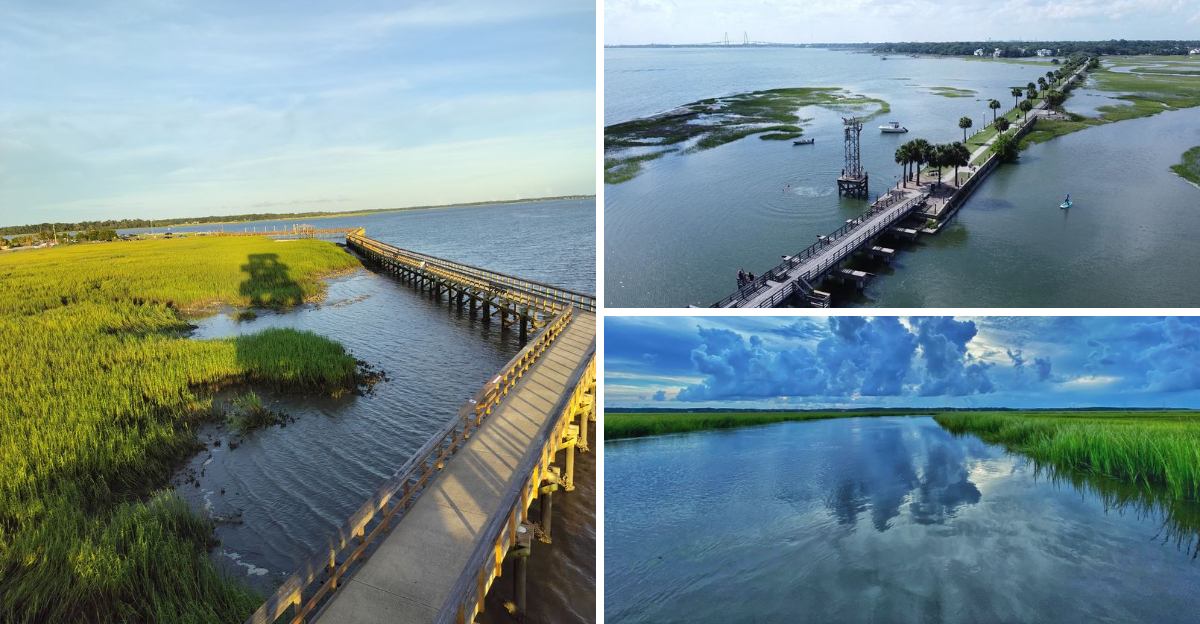
You notice South Carolina’s coastal marshes first in the air, a hint of salt, the quiet movement of cordgrass, and the steady rhythm of the tides that define the landscape.
These areas still catch the light at sunrise, but the pace, the activity, and the expectations around them have changed in ways that are easy to recognize when you arrive.
What once felt small-scale and familiar now comes across as more shared and active, shaped by new visitors and evolving uses.
Spend time along the creeks, and you can observe how the state’s marshlands have shifted over the years and how those changes may shape the experience for future trips.
Rising Tourism Numbers at Shem Creek Park
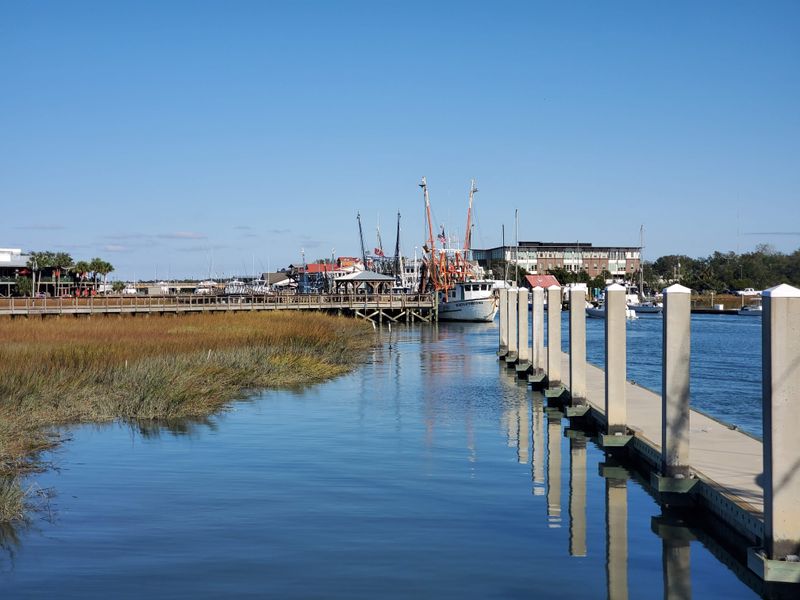
South Carolina’s marshes have always been special places for people who grew up near the coast.
I remember mornings filled with salty breezes, the quiet shuffle of fiddler crabs, and the thrill of catching blue crabs beside friends and neighbors.
These marshes carried a sense of home, a place shaped by everyday life, not just by postcard perfect views.
Today, though, many locals like me notice a change, especially along the boardwalks of Shem Creek Park at 140 Bridge St, Mount Pleasant, SC 29464.
The same creeks and grass flats still wind through the landscape, but the sense of being in a local, private world has faded as visitors arrive year round.
The feeling is hard to describe, but it’s real, a gentle hum of foot traffic that shifts the mood at dawn and dusk.
Every summer, parking fills quickly, and casual strolls turn into steady streams of sightseers following the waterfront overlook.
The hush that once ruled sunrise now mingles with camera clicks, laughter, and guided chatter along the piers.
Locals adapt, walking earlier, choosing quieter corners, or lingering on less traveled spurs.
Some say the crowds bring energy and support for conservation projects tied to visitor education at the park.
Others miss easy solitude, the kind you felt while watching shrimp boats slide past in near silence.
No matter your preference, it is clear the marsh now hosts a broader audience drawn by views and wildlife.
If you visit, arrive with patience, give anglers space, and pause often to let the creek’s rhythms settle in.
Shem Creek still rewards those who listen closely to wind, water, and birdsong, even on the busiest days.
Development Along the Edges at Pitt Street Bridge
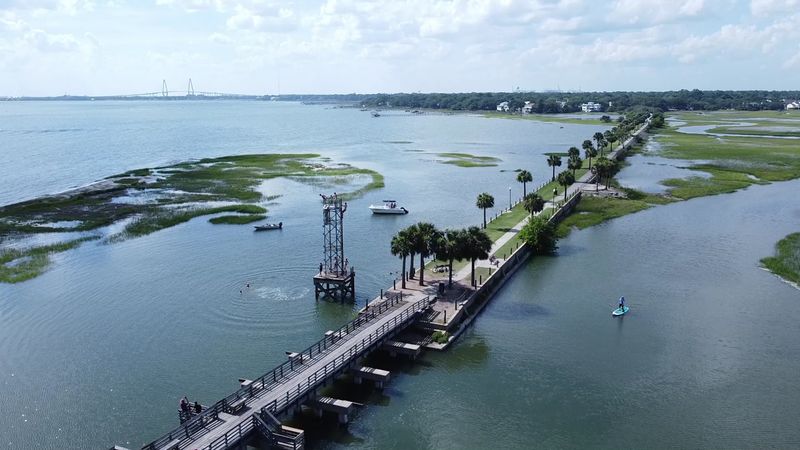
Not long ago, you could stand on the edge of the marsh and see only cordgrass, creeks, and distant islands.
At Pitt Street Bridge, 972 Pitt St, Mount Pleasant, SC 29464, new rooftops peek above treelines where open horizons once stretched.
Modern homes and amenities now sit close to these waters, changing how the transition from town to tidal flat feels underfoot.
The landscape’s edges present sharper lines, a quick shift from sidewalks to spartina that once unfolded more gradually.
Instead of wandering a lonely causeway, you might pass dog walkers, cyclists, and families sharing the views.
That company can be welcome, yet it reshapes the sense of discovery many remember from quieter years.
Access remains public, with benches and lookouts that invite long pauses above the marsh.
Those comforts, though, signal a curated experience rather than a rough path known mostly by neighbors.
Change shows up in sound as much as sight, soft wind now joined by conversation and rolling wheels.
It is still beautiful, still undeniably South Carolina, and still generous with pelicans and tidal sparkle.
To find calm, step out during weekday mornings, or watch for low tide patterns along exposed mudbanks.
Give the wading birds space, and keep to paths to protect fragile plants edging the trail.
Development brings access and eyes on the marsh, which can help stewardship if visitors tread lightly.
Here, the trick is to balance human comfort with the wild textures that make this place sing.
Commercial Tours at Kayak Launch, James Island County Park
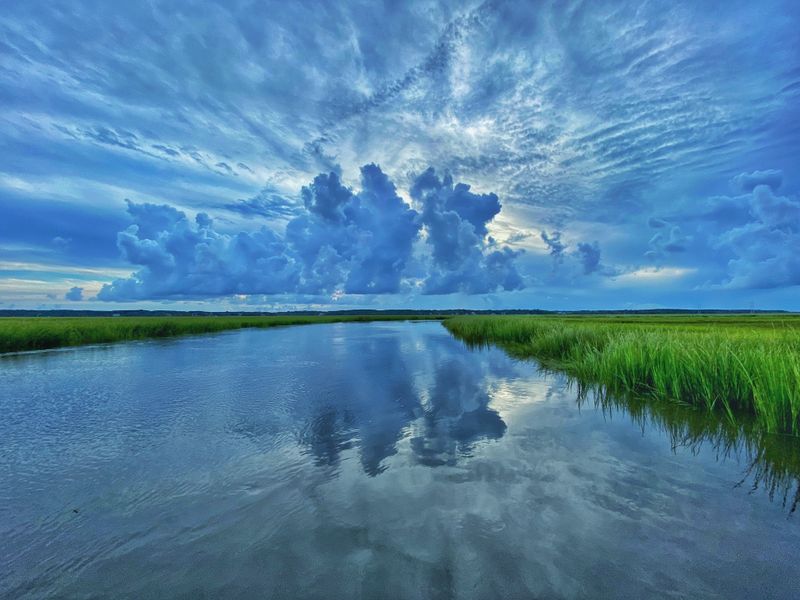
One morning last spring, I rolled up to the kayak launch at James Island County Park, 871 Riverland Dr, Charleston, SC 29412.
The dock buzzed with colorful fleets, guides sorting paddles, and eager groups listening to quick safety talks.
This scene has become common across South Carolina, a sign of growing demand to experience the marsh by water.
Outfitters open doors for newcomers who might not otherwise explore tidal creeks or read a chart.
Guided trips explain oyster reefs, bird rookeries, and tides with clarity that turns curiosity into care.
For locals with simple plans, though, squeezing past scheduled departures can feel like waiting in line.
The trick is timing, arriving early, or choosing slack tide windows between tour blocks.
That small shift restores the casual ease of a quiet paddle and a soft drift through cordgrass.
The launches themselves are well kept, with rinse stations and signage that helps protect habitat.
Respect posted routes, keep a courteous distance from groups, and let guides lead their clusters without wake.
The marsh can hold everyone when patience sets the tone and good manners shape the water.
South Carolina benefits when visitors leave with new respect for these living edges of land and sea.
Commercial access changes the vibe, but education can anchor stewardship for years to come.
Plan ahead, bring a chart, and give the creeks room to breathe while you slip quietly along.
Regulations and Access at Fort Johnson Boat Landing
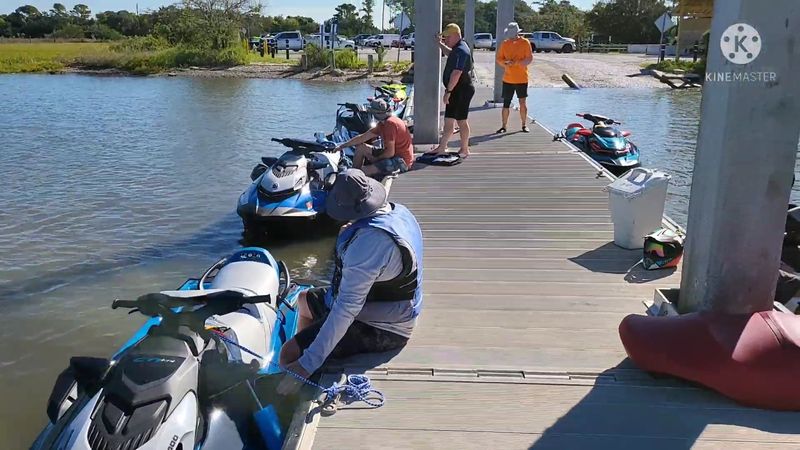
A friend joked you now need a rulebook to spend a day at the marsh, and the signs at Fort Johnson Boat Landing prove the point.
The site at 1880 Fort Johnson Rd, Charleston, SC 29412 posts clear guidance on ramps, hours, and protected areas.
These rules protect fragile banks, reduce crowding, and keep traffic organized when tides turn and winds rise.
For those raised on open access, the shift feels strict, like a latch where a simple gate once stood.
Still, South Carolina manages popular landings to balance safety with conservation on busy weekends.
Good planning helps, checking conditions, reading posted notices, and choosing quieter windows around peak use.
When boundaries are respected, dolphins feed undisturbed and wading birds settle into their routines.
Anglers find room to cast, and paddlers slide away without dodging hurried trailer backing.
The marsh benefits when small courtesies keep banks intact and oyster beds unscuffed.
Bring patience, park carefully, and let ramps clear between launches so lines never harden into conflict.
That rhythm returns the landing to a shared space where everyone gets a fair shot at the water.
Over time, rules feel less like restriction and more like the shape of coexistence.
Read the signs, pack out every scrap, and help new visitors learn quiet habits that protect the creek.
The reward is simple, cleaner water, safer ramps, and a calmer start to any marsh day.
Social Media Exposure at Sunrise Park
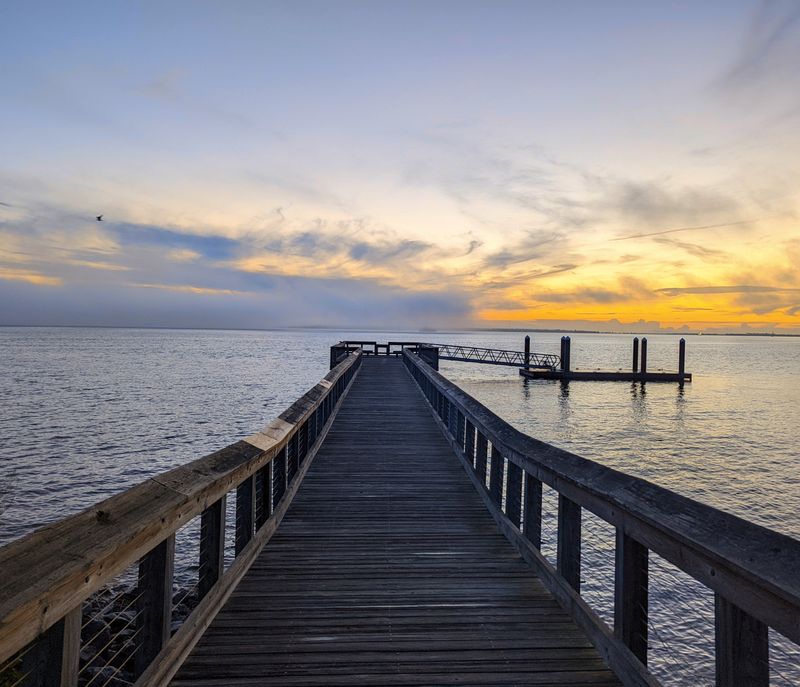
Not long ago, you learned about a prime cast from a neighbor’s whisper, not a trending tag.
At Melton Peter Demetre Park, 640 Wampler Dr, Charleston, SC 29412, tripods now stand where lawn chairs once rested.
A single reel can turn this quiet bluff into a steady parade the next clear morning.
South Carolina’s beauty travels fast, and the marsh frames every shot with soft water and patient grass.
Likes are not the problem, it is the sudden swell that strains parking and tramples edges.
One way to help is choosing paths, staying off mudbanks, and keeping photo sessions brief.
Photographers who arrive early find calm air, soft light, and fewer footprints cutting the berm.
Locals still gather for simple moments, a chat on a bench, or a long look over the flats.
That pace keeps the place human, not just a backdrop for a grid.
Share the view with care, credit the park, and leave space for others to sit and breathe.
The marsh holds better when attention comes with gentle footsteps and quiet respect.
Social posts can teach tide awareness and bird etiquette as easily as they draw crowds.
Use that influence to point people toward leave no trace habits that protect living shorelines.
The scene will still sparkle, and the creeks will thank you with silence between shutter clicks.
Environmental Pressures at Fort Fremont Preserve
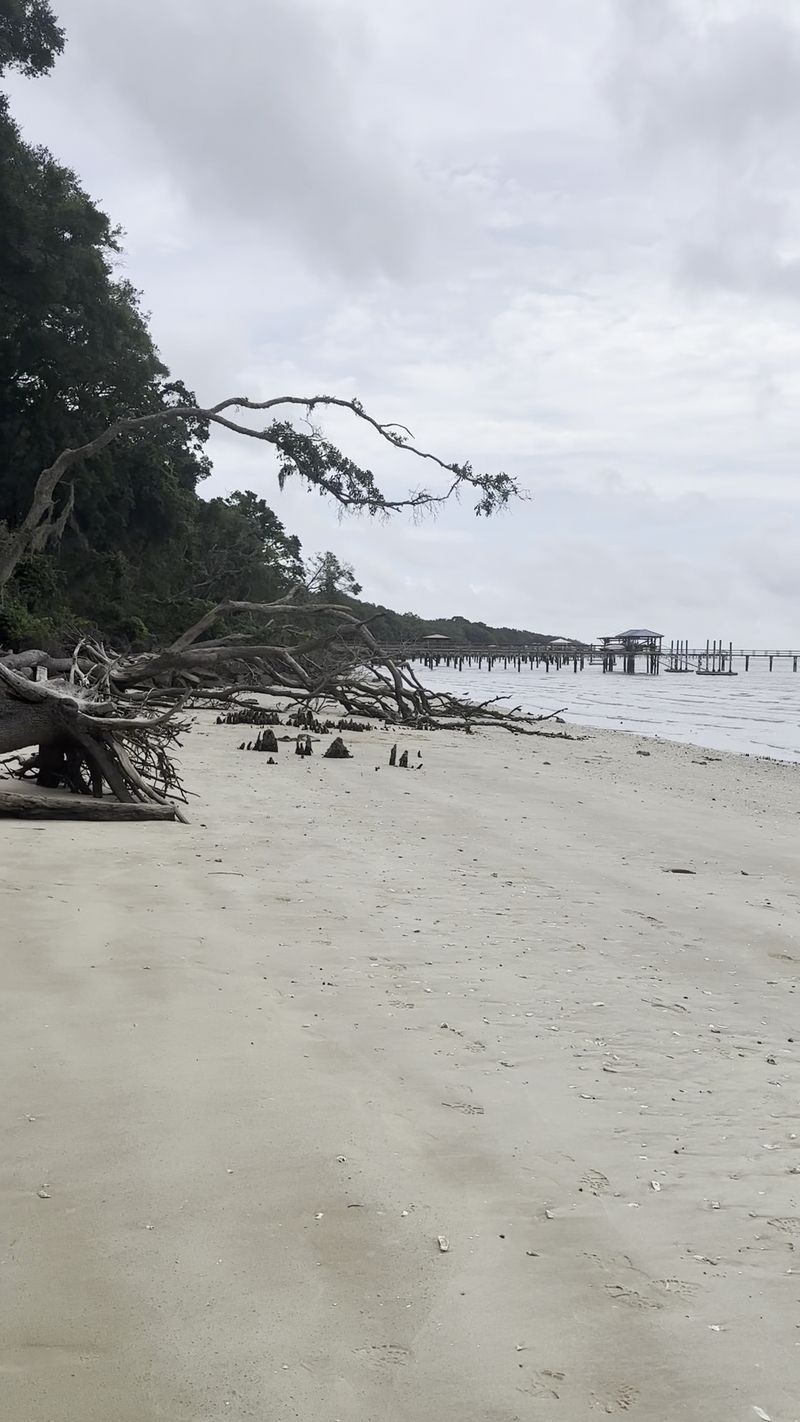
There is a bend near Fort Fremont Preserve, 1126 State Rd S-7-45, Saint Helena Island, SC 29920, where the bank has slipped quietly.
Each high tide seems to tug another slice of pluff mud toward the sound.
These changes come with rising water levels, stronger storms, and subtle shifts in salinity that reshape plant lines.
South Carolina’s marshes remain resilient, yet the edges tell careful stories in scoured roots and patchy oysters.
On some days the water runs clouded, a hint that runoff has carried silt and street dust downstream.
Oyster reefs that once felt steady now show gaps where spat struggled to anchor.
Preserve managers post signs urging visitors to stay on paths and avoid trampling young cordgrass.
That simple step gives restoration patches a chance to knit the bank back into place.
Look closely and you will find new shoots starting the patient work of stitching the shoreline.
Volunteers sometimes plant grasses during cooler months to bolster vulnerable margins.
Even small successes matter, because every tuft slows water and gathers sediment.
Walk with care, keep dogs leashed, and watch your footing near soft edges that can crumble quickly.
The beauty remains, quieter and more complex than a postcard suggests.
Listen for rails in the reeds, and let the preserve’s stillness explain what resilience looks like here.
From Community Hub to Backdrop at The Sands Boardwalk
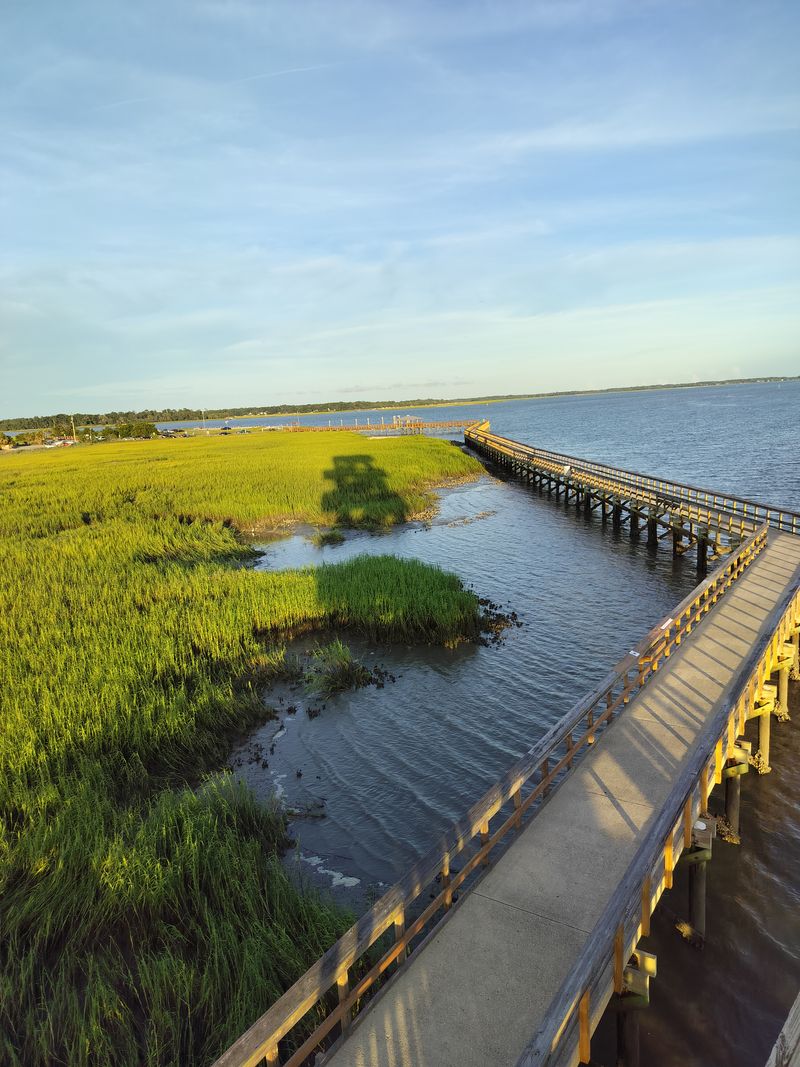
Years ago, the marsh buzzed with crab boils, lawn chairs, and unplanned meetups that stretched into twilight.
At The Sands Boardwalk, 50 Sands Beach Rd, Port Royal, SC 29935, the scene now leans toward photos and views.
Families still gather, yet many visitors arrive for the lookout tower and wide angle sunsets.
The shift is subtle, from utility and harvest to spectacle and shared frames.
South Carolina pride remains strong, but the role of place feels different under the same sky.
Neighbors taught knot tying here, and kids learned tides by touch rather than captions.
Today, careful signage reminds guests to protect dunes, avoid marsh edges, and pack out every scrap.
That guidance preserves the setting even as new eyes discover it daily.
It helps to slow down, listen to the planks creak, and greet the people around you.
Small conversations bring back the sense of common ground that once defined long evenings.
The boardwalk is still a bridge, wood between town and water, memory and present.
Stand on the tower and trace the patterns of current along the channel.
Let the view spark stories, not just snapshots, so the marsh stays woven into daily life.
Carry that spirit to the next stop, and the shoreline will feel local again.
Land Conservation Gains at Oyster Landing
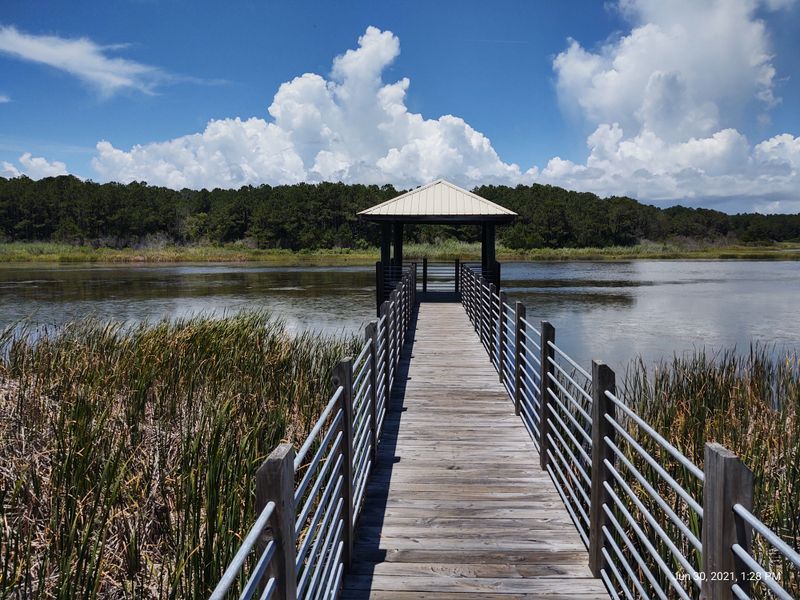
Not every change makes the marsh feel less local, and conservation at Huntington Beach State Park shows why.
At Oyster Landing, 16148 Ocean Hwy, Murrells Inlet, SC 29576, boardwalks shape careful access without crushing banks.
Trails lift feet above roots, and clear signs explain living shorelines and oyster reef restoration.
South Carolina agencies and partners have leaned into projects that guard habitat while welcoming visitors.
That balance lets you wander without worrying about where each step will land.
It also turns casual walks into lessons about tides, nurseries, and the work oysters do for water clarity.
Stand at the overlook and watch egrets pick through shallows for small flashes of life.
The marsh breathes easier when crowds channel along sturdy rails and defined platforms.
It is still public, still free to love, and still shaped by wind that skims the cordgrass.
The difference comes from design that nudges feet away from fragile edges.
That design offers a model for other busy sites along the South Carolina coast.
Choose quiet hours to hear the place without footsteps stacking up behind you.
Read the panels, notice the reef domes below, and trace the ripple lines they soften.
Leave with new respect, and the marsh will feel shared rather than overrun.
Working Waterfront Heritage at Bluffton Oyster Factory Park
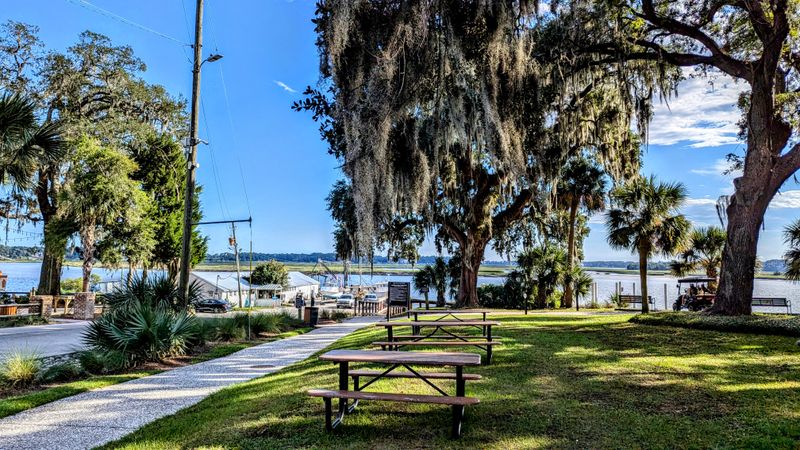
The marsh is more than scenery in Bluffton, where working stories still shape the tide line.
Bluffton Oyster Factory Park, 63 Wharf St, Bluffton, SC 29910, holds a living link to hands that worked these waters.
Interpretive signs describe seasons, tools, and the care that keeps shell piles from smothering young reefs.
South Carolina traditions echo in the creak of docks and the slow hush of water under planks.
The park offers space to sit, watch, and let the present meet the habits of earlier days.
You can trace how harvest and habitat depend on each other across generations.
That context changes the feeling of crowds, turning visitors into witnesses rather than just users.
It also reminds locals why patience at landings matters when boats queue at slack tide.
Stay on paths, give working areas room, and do not climb barriers near active docks.
Those simple choices honor the people who keep the water’s stories moving forward.
The marsh’s value is clearer when work and wonder stand side by side without friction.
Listen for gulls and the hollow knock of hulls, a rhythm older than the town’s sidewalks.
Let the park teach you to see edges as shared ground rather than empty backdrop.
Carry that lesson down the coast, and the creeks will feel more like neighbors again.
Birdlife and Quiet Trails at Caw Caw Interpretive Center
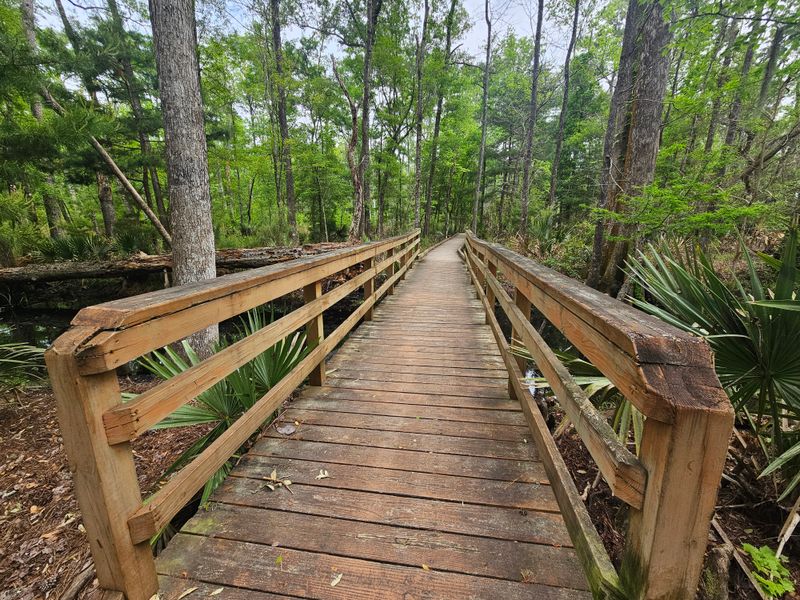
Caw Caw Interpretive Center, 5200 Savannah Hwy, Ravenel, SC 29470, gives you room to hear the marsh breathe.
Trails thread between freshwater and brackish zones, where quiet opens space for rails and herons.
This is a place where learning slips in gently, one sign and one birdsong at a time.
South Carolina’s layered history runs underfoot, with dikes and old rice fields guiding the water’s path.
Boardwalks reduce trampling and keep shoes above tender plants near the creek margins.
That design turns heavy interest into light touch, exactly what busy habitats need today.
Bring binoculars, move slowly, and let stillness make the wildlife less shy.
If the parking area looks full, choose a side loop to spread out and lower the noise.
Small choices preserve the listening space that makes this center special.
Follow posted routes to protect nesting spots, and leave logs where you found them.
The marsh rewards patience with flashes of movement and soft wingbeats over the grass.
When you exit, rinse your shoes to prevent seeds hitchhiking to other sites.
The care you take here echoes across the South Carolina coast in subtle, helpful ways.
Quiet trails keep the marsh feeling like a home you are welcomed into, not a set you pass through.
Sea Islands Change at Fish Haul Beach Park
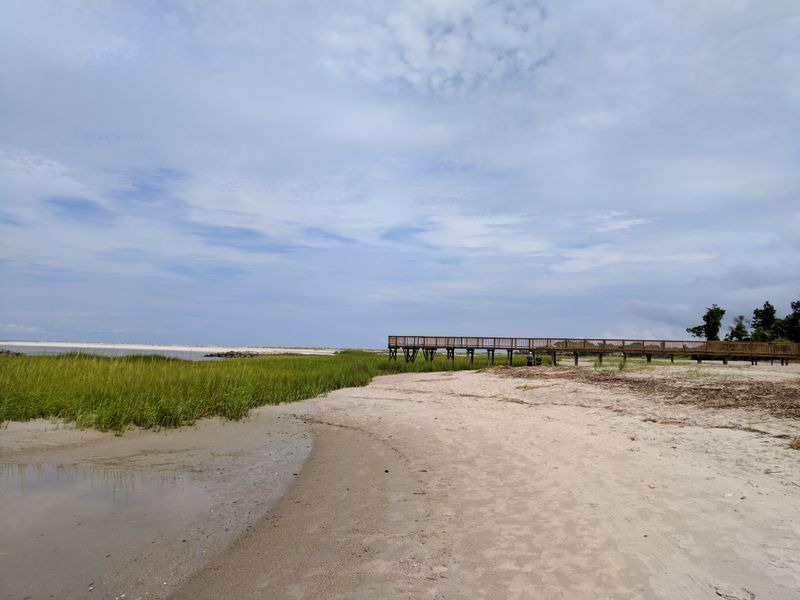
Fish Haul Beach Park, 120 Mitchellville Rd, Hilton Head Island, SC 29926, sits where marsh and flats meet quiet shore.
Here the tide writes fresh patterns daily, and the line between water and land moves with ease.
Visitors come for wide horizons, while locals look for familiar landmarks that still anchor memory.
South Carolina’s Sea Islands feel the push and pull of change in careful increments.
New paths improve access, but they also carry more footsteps to delicate edges.
Look for posted notes about shorebirds resting on flats, and give them the distance they need.
When you step lightly, the park opens a fuller story of tidal nurseries and feeding grounds.
Shallow creeks gleam at low water, revealing ripples where tiny fish shelter among spartina roots.
Sit on a bench and let wind push through the grass with a soft, steady hush.
If crowds arrive, walk farther along the boardwalk to find space where the view widens again.
The park’s calm holds when noise stays low and paths gather most of the wandering.
Pack out every wrapper and brush sand from shoes before leaving the decking.
These simple habits travel well across the South Carolina coast and help other marsh edges breathe.
You will leave with salt on your skin and a clearer sense of how the marsh keeps time.
Dear Reader: This page may contain affiliate links which may earn a commission if you click through and make a purchase. Our independent journalism is not influenced by any advertiser or commercial initiative unless it is clearly marked as sponsored content. As travel products change, please be sure to reconfirm all details and stay up to date with current events to ensure a safe and successful trip.
