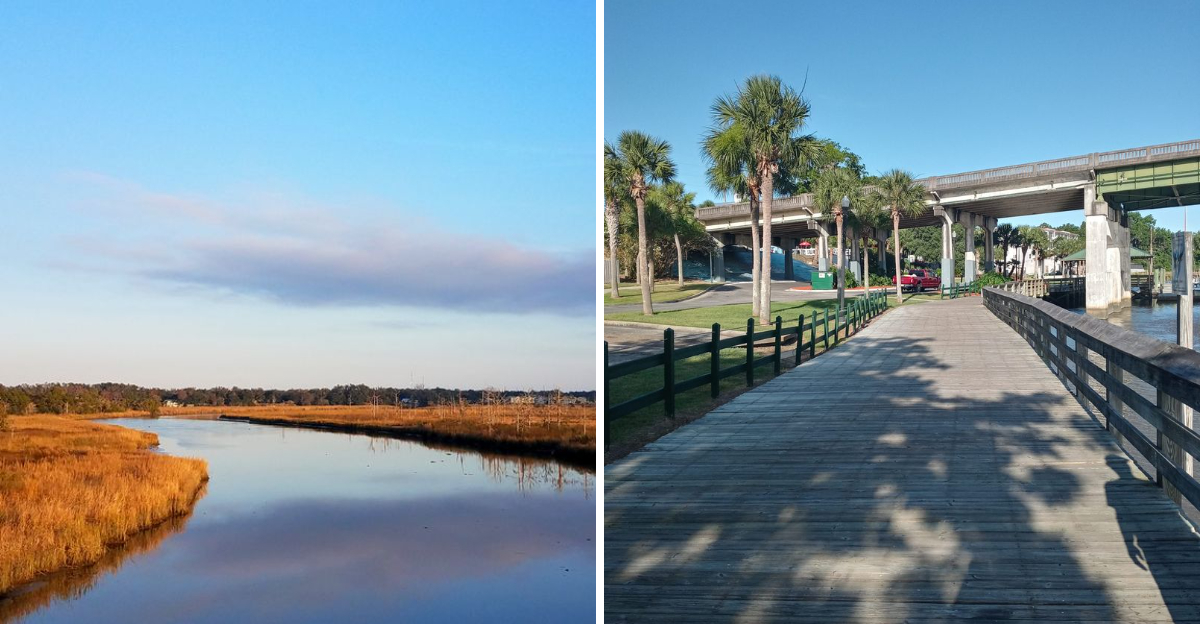
Nestled along Georgia’s winding coast where the mighty Altamaha River meets the Atlantic Ocean, Darien sits quietly about 50 miles south of Savannah, often missed by travelers rushing between bigger destinations.
Yet something unusual keeps happening in this historic river town: visitors arrive for a weekend and end up staying for a lifetime, drawn in by moss-draped oaks, endless marshlands painted gold at sunset, and a pace of life that feels like stepping backward into a gentler era.
The accidental migration to Darien isn’t about job opportunities or master-planned communities, but rather about stumbling upon a place where shrimp boats still dock at family-owned operations, where neighbors know your name within a week, and where the natural beauty of coastal Georgia unfolds in ways that make city stress feel like a distant memory.
Understanding what makes people fall unexpectedly in love with this McIntosh County seat reveals something important about what we’re all searching for when we travel, and sometimes, what we didn’t know we needed until we found it.
We’ve based this piece on stories we kept hearing, time spent wandering around town, and the pattern of visitors who stayed longer than planned.
“Accidental” moves usually involve a mix of timing, charm, and personal circumstances.
This take is unavoidably subjective.
The Altamaha River’s Hypnotic Pull
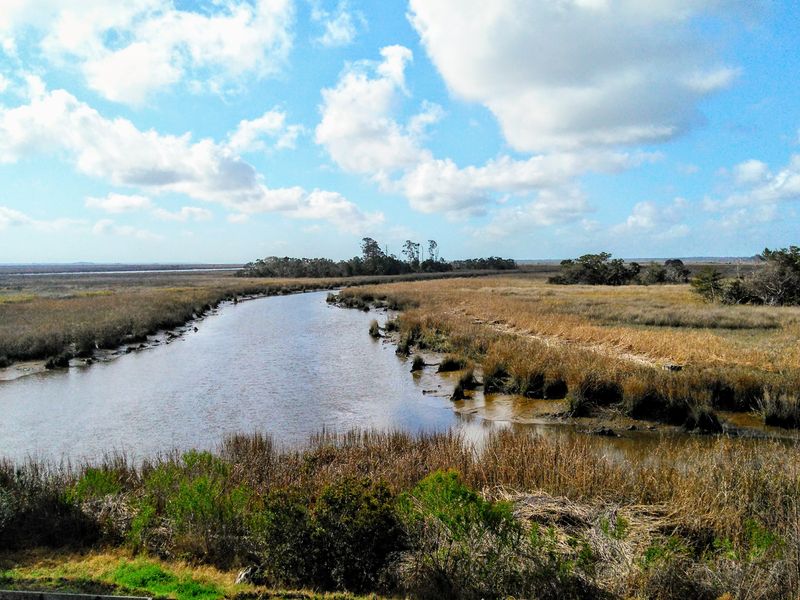
Georgia’s longest river flows through Darien with a presence so commanding that residents set their daily rhythms by its tides and moods.
The Altamaha stretches 137 miles from its formation to the Atlantic, creating one of the largest undammed river ecosystems in North America.
Kayakers who venture onto its dark, tannin-stained waters for a single afternoon often find themselves researching riverside properties before their trip ends.
The river’s banks explode with wildlife at every turn.
Herons stand motionless in shallow waters, alligators sun themselves on muddy banks, and dolphins occasionally swim upstream chasing fish during high tide.
Fishing here isn’t just a hobby but a way of connecting with an ecosystem that has remained largely unchanged for centuries.
Bass, catfish, and shad populate the freshwater sections while redfish and flounder cruise the brackish zones near the mouth.
The river creates a natural boundary that has protected Darien from overdevelopment, keeping the town feeling remote despite being accessible.
Sunrise over the Altamaha transforms the landscape into something almost otherworldly, with fog rising off the water and golden light filtering through Spanish moss.
People who experience these mornings from a boat or riverside bench often describe a sense of peace they didn’t know existed.
The river doesn’t just flow through Darien; it defines the town’s character, economy, and the inexplicable feeling that keeps visitors returning until they simply never leave.
Marshlands That Stretch to Infinity
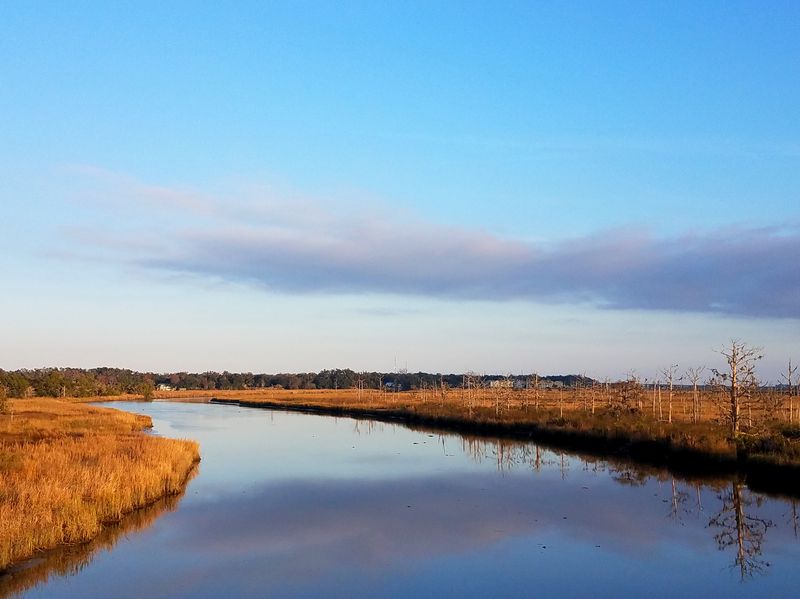
Standing at any elevated point in Darien reveals an endless expanse of salt marsh that seems to roll toward the horizon without interruption.
These coastal wetlands create a landscape unlike anywhere else in Georgia, with cordgrass swaying in constant motion and tidal creeks threading through like silver ribbons.
The marshes change personality with every season and every hour of the day.
Summer brings vibrant green growth and the musical buzz of insects, while autumn paints the grasses in shades of amber and rust.
Winter transforms the marsh into a muted palette of tans and grays, and spring awakens everything with new shoots and returning birds.
Photographers become obsessed with capturing the way light plays across these wetlands, returning day after day to catch different conditions.
The marsh ecosystem supports an incredible food chain, from tiny fiddler crabs to massive wood storks, making it one of the most productive natural environments on Earth.
Walking trails and boat launches throughout Darien provide access to this world without disturbing its delicate balance.
People who visit expecting typical beach scenery often feel initially confused by the marsh-dominated landscape, but something about its vastness and wildness gets under their skin.
The absence of high-rise condos and crowded beaches becomes a feature rather than a drawback.
Many accidental residents trace their decision to move here to a specific moment standing before these marshes, feeling simultaneously small and connected to something ancient and essential.
A Historic Downtown Frozen in Time
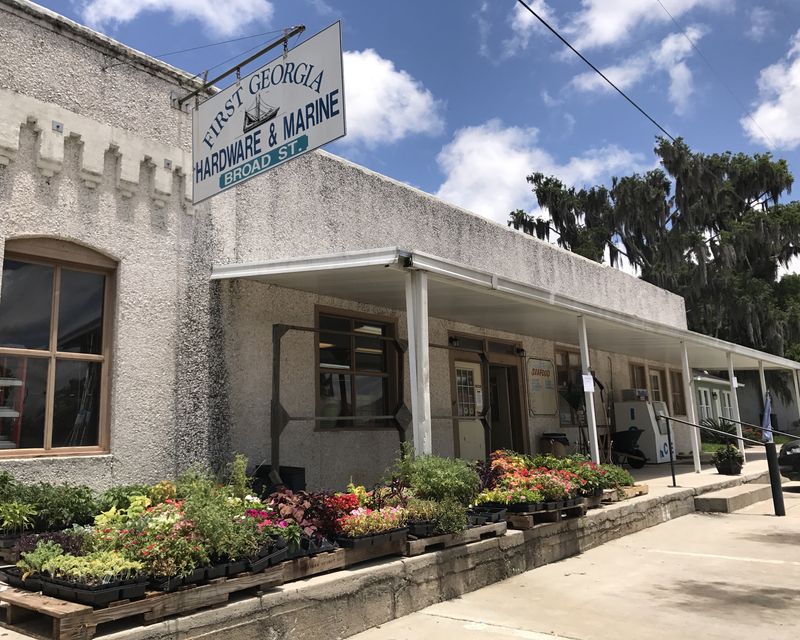
Walking down Darien’s main street feels like entering a photograph from decades past, with brick storefronts, wide sidewalks, and an absence of chain restaurants or corporate signage.
The town was established in 1736, making it one of Georgia’s oldest planned communities, and that history remains visible in the architecture and layout.
Buildings here tell stories of timber barons, Scottish Highlanders, and generations of families who built their lives around the river and sea.
Antique shops occupy spaces that once served as general stores, and local restaurants operate from structures that have housed businesses for over a century.
The pace downtown moves slower than modern life typically allows.
Shopkeepers step outside to chat with passersby, and strangers exchange greetings as naturally as neighbors.
This isn’t a preserved historic district maintained for tourists but a living community where people actually conduct their daily business.
Visitors expecting entertainment districts or bustling nightlife initially wonder what there is to do, but then they discover the pleasure of simply being rather than constantly doing.
Sitting on a bench watching the town go about its day becomes unexpectedly satisfying.
The absence of hurry creates space for conversations that last longer than transactional exchanges.
People who stop in Darien while traveling elsewhere often find themselves wandering these streets longer than planned, and that extra hour somehow plants a seed that grows into serious consideration of relocation.
The Shrimping Heritage That Still Lives
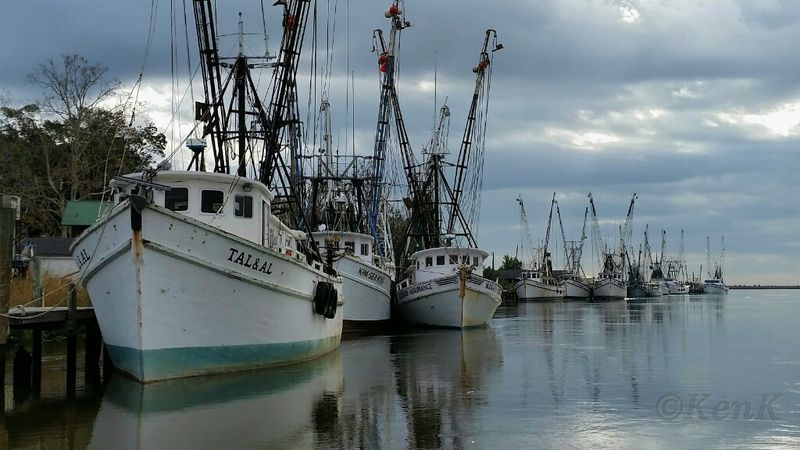
Unlike coastal towns where fishing has become purely tourist-oriented, Darien maintains a working waterfront where real shrimp boats still head out before dawn.
The town celebrates this heritage every October during the Blessing of the Fleet, when decorated boats parade through the river seeking protection and prosperity for the coming season.
Watching these vessels return loaded with fresh catch connects you to an industry that has sustained families here for generations.
The docks near downtown provide front-row seats to this ongoing tradition.
Captains unload their hauls while seabirds circle overhead, and the air carries the distinct smell of saltwater and seafood.
You can often buy shrimp directly from boats, getting seafood so fresh it was swimming hours earlier.
This authenticity stands in sharp contrast to coastal areas where fishing has been replaced by parasailing operations and jet ski rentals.
Darien’s identity remains tied to the water in functional rather than recreational ways.
People who value authenticity and connection to traditional ways of living find this incredibly appealing.
The shrimpers themselves embody a knowledge of tides, weather, and marine behavior that can’t be learned from books.
Conversations with these watermen reveal perspectives shaped by lifetimes spent reading natural signs and respecting the ocean’s power.
Visitors who take time to talk with working fishermen often leave with a deeper appreciation for where their food comes from and a longing to be part of a community still connected to such elemental work.
Fort King George’s Living History
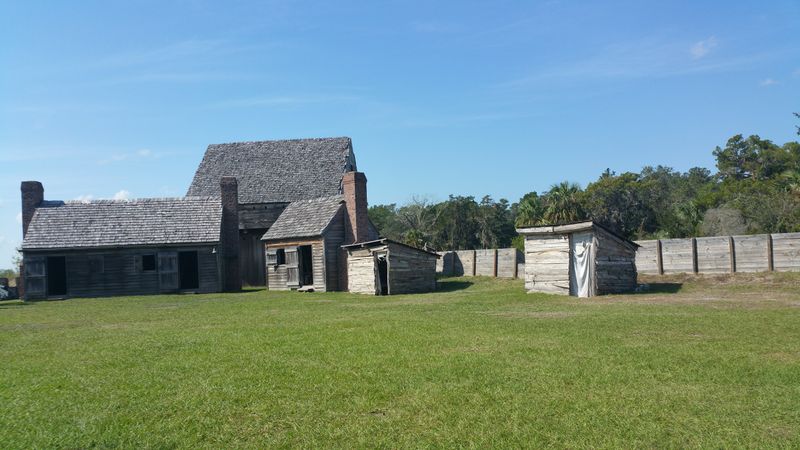
Perched on a bluff overlooking the Altamaha River, Fort King George Historic Site at 1500 Wayne Street preserves the location of Britain’s southernmost outpost in North America from 1721 to 1732.
The reconstructed fort, with its distinctive blockhouse tower, offers panoramic views of the river and marshes that explain exactly why this strategic location mattered to colonial powers.
Walking through the wooden fortifications transports you to an era when this frontier outpost represented the edge of European settlement.
Interpretive exhibits detail the harsh conditions soldiers endured, the interactions with Native American populations, and the sawmill operations that first exploited the region’s vast timber resources.
The site includes a museum with artifacts recovered from archaeological excavations, making history tangible rather than abstract.
Standing in the blockhouse and looking out over the same river view that sentries watched centuries ago creates an unexpected emotional connection to the past.
The grounds remain beautifully maintained but never crowded, offering a contemplative experience rather than a theme park atmosphere.
Nature trails wind through the property, combining historical education with coastal ecosystem exploration.
Many visitors arrive expecting a quick stop and end up spending hours absorbed in the stories and setting.
The fort represents something larger than local history; it illustrates how this small river town played a role in continental power struggles and colonial expansion.
People drawn to places with deep roots and layered stories find Fort King George validates their instinct that Darien offers substance beneath its quiet surface.
Affordable Waterfront Living
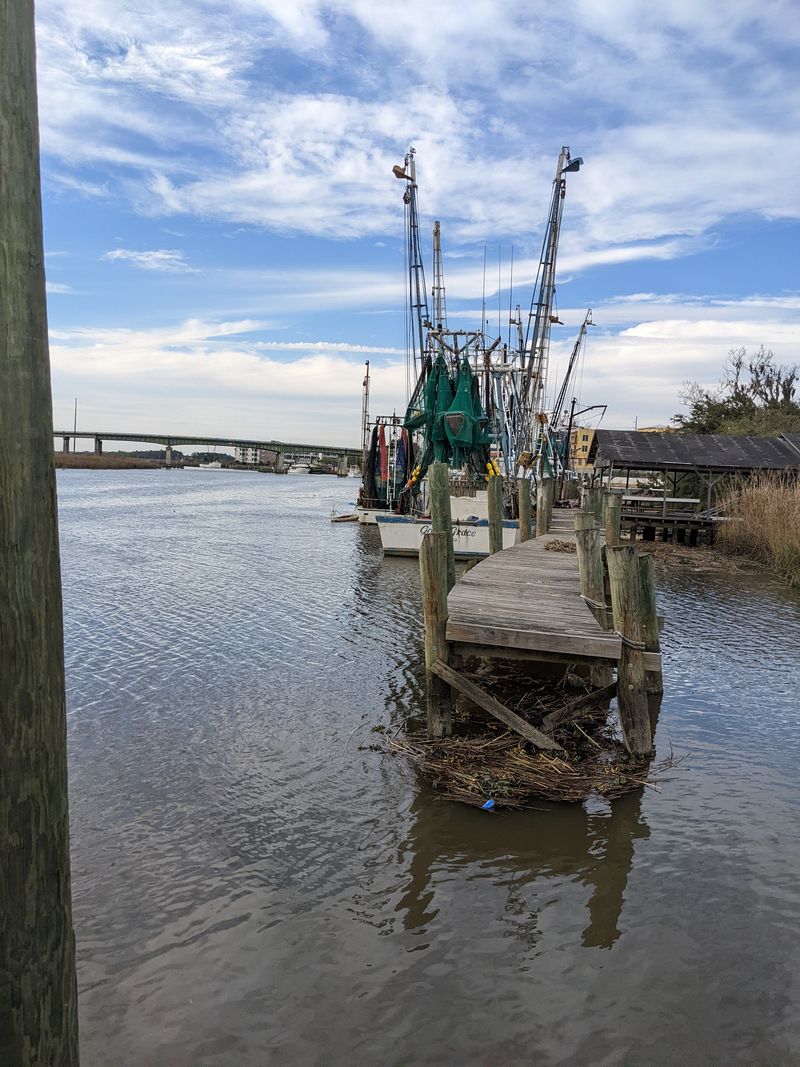
While coastal property prices have skyrocketed throughout most of Georgia and the Southeast, Darien remains surprisingly affordable, offering river and marsh views at fractions of what similar properties cost elsewhere.
This economic accessibility often proves the tipping point for people who have been dreaming of coastal living but assumed it was financially out of reach.
Homes with dock access, waterfront lots, and views of endless marsh can be found at prices that wouldn’t buy a small condo in more developed areas.
The affordability stems partly from Darien’s distance from major metropolitan areas and partly from its resistance to large-scale development.
Without resort infrastructure or beach access, the town has avoided the real estate speculation that transforms other coastal communities into playgrounds for the wealthy.
This creates opportunities for regular working people, artists, remote workers, and retirees to afford the kind of waterfront lifestyle typically reserved for the affluent.
Property taxes remain reasonable, and the cost of living overall stays manageable.
People who visit Darien and fall in love with the setting often do the math and realize relocation is actually possible rather than a fantasy.
The combination of natural beauty and economic accessibility creates a rare opportunity in today’s real estate market.
Young families, remote workers freed from office locations, and retirees seeking to stretch their savings all find Darien offers something increasingly rare: a chance to live well near water without financial strain.
This practical consideration transforms casual interest into serious house-hunting for many accidental future residents.
The Absence of Tourist Crowds
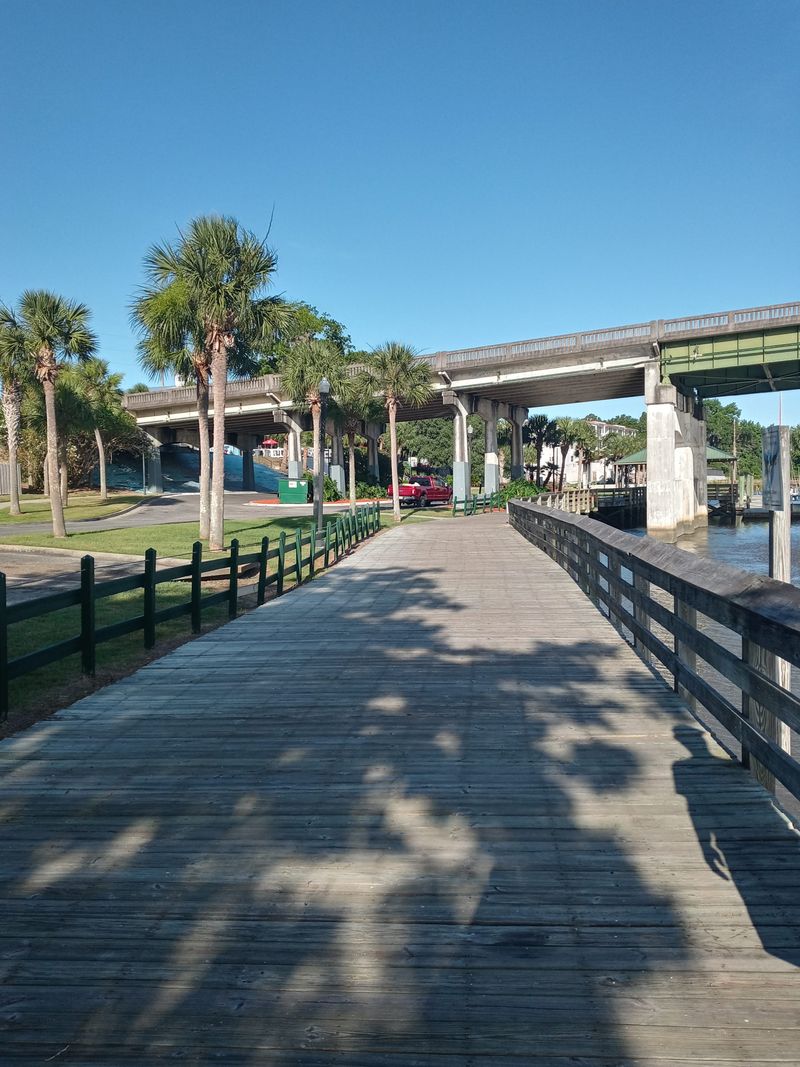
Darien’s greatest appeal for many people is what it lacks rather than what it offers.
There are no traffic jams, no restaurants with hour-long waits, no beaches packed shoulder-to-shoulder with umbrellas, and no souvenir shops selling mass-produced trinkets.
The town simply doesn’t appear on most tourist itineraries, which keeps it feeling authentic and uncrowded even during peak travel seasons.
You can kayak the river without encountering flotillas of rental boats, explore the marshes without competing for parking, and dine at local restaurants where the staff might remember you on your second visit.
This absence of crowds initially strikes some visitors as emptiness, but others recognize it as spaciousness.
The difference matters enormously to people exhausted by the constant stimulation and competition for space that characterizes modern life.
Darien offers room to breathe, think, and move without constantly navigating around other people.
The night sky reveals stars obscured by light pollution in most places, and natural sounds dominate over human noise.
Birdsong, wind through marsh grass, and river currents create the soundtrack rather than traffic and sirens.
People who have lived in crowded cities or popular tourist towns often describe arriving in Darien as feeling like pressure releasing from their chest.
The spaciousness isn’t loneliness because the community remains welcoming and connected, but it provides freedom from the constant low-level stress of overcrowding.
Visitors seeking this quality of life often realize they’ve accidentally discovered exactly what they needed without knowing they were looking for it.
A Community That Welcomes Newcomers
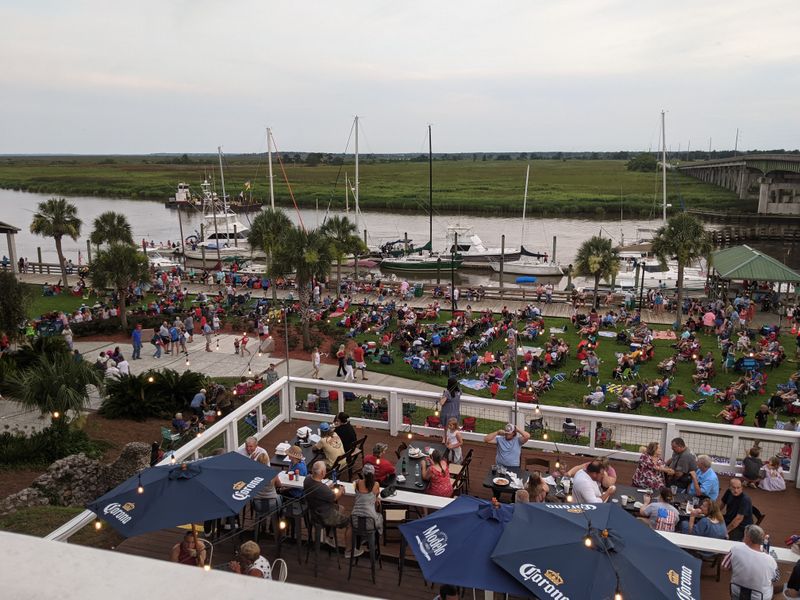
Small Southern towns sometimes struggle with insularity, treating newcomers with suspicion or maintaining social barriers that take decades to penetrate.
Darien defies this stereotype with a community culture that genuinely welcomes new residents while maintaining its authentic character.
Perhaps because the town has always existed as a crossroads, from its founding by Scottish Highlanders through its role as a timber and shipping center, Darien developed an openness to people from elsewhere.
Newcomers report being invited to community events, included in conversations, and made to feel like neighbors rather than outsiders within weeks of arrival.
Local churches, civic organizations, and informal social networks actively incorporate new people rather than maintaining closed circles.
This welcoming atmosphere doesn’t mean Darien has lost its identity or become generic.
The community maintains strong traditions, local knowledge, and family connections while simultaneously making space for fresh perspectives and energy.
People who have moved here from larger cities or other states consistently mention the warmth of their reception as a factor in their decision to stay.
The friendliness isn’t performative or superficial but reflects a genuine interest in who you are and what brought you to town.
Conversations go beyond pleasantries into real exchanges about life, interests, and experiences.
This social environment creates belonging quickly, which matters enormously when people are considering uprooting their lives.
Knowing you’ll be welcomed rather than tolerated transforms Darien from an attractive location into a potential home, tipping many visitors from admiration into commitment.
The Slower Pace That Heals
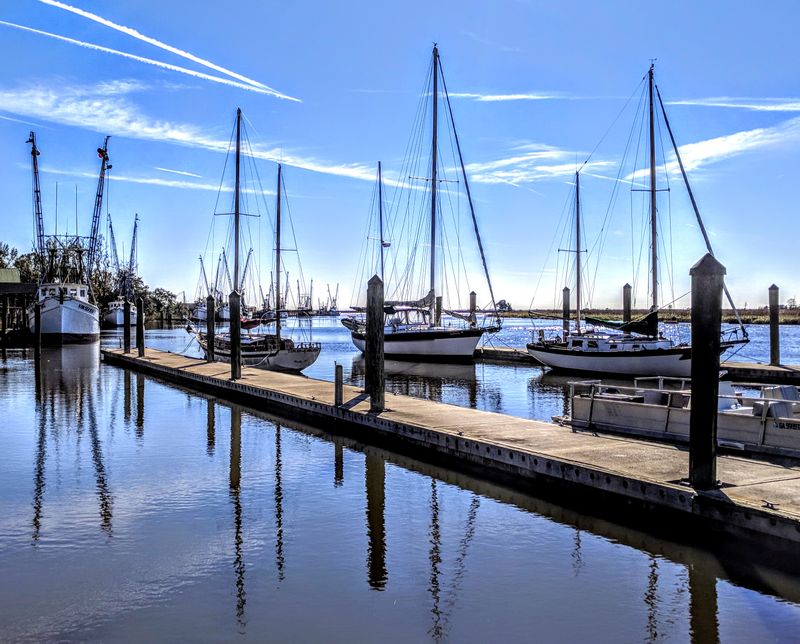
Modern life operates at a relentless pace that many people don’t recognize as abnormal until they experience an alternative.
Darien functions on a fundamentally different timeline, where rushing is rare and patience is standard.
Stores might close early if business is slow, appointments run on flexible schedules, and people prioritize conversations over efficiency.
This slower pace initially frustrates visitors accustomed to instant service and packed schedules, but something shifts after a day or two.
The constant internal pressure to hurry begins to ease, breathing deepens, and time starts feeling more spacious.
You notice details overlooked when rushing: the pattern of light on water, the smell of salt marsh, the specific call of different bird species.
Meals last longer because there’s no reason to hurry to the next thing, and conversations unfold naturally rather than being cut short by schedules.
People who spend even a few days in Darien often report sleeping better, feeling less anxious, and experiencing a mental clarity that had been missing.
The slower pace isn’t laziness but a different set of priorities, valuing quality of life over productivity metrics.
Work still gets done, but not at the expense of everything else that makes life worthwhile.
For people burned out by demanding careers, stressful commutes, or the general intensity of modern urban life, Darien’s pace offers something genuinely therapeutic.
Many accidental residents describe their move as a health decision as much as a lifestyle choice, recognizing that the slower rhythm might literally extend their lives by reducing stress-related illness.
Dear Reader: This page may contain affiliate links which may earn a commission if you click through and make a purchase. Our independent journalism is not influenced by any advertiser or commercial initiative unless it is clearly marked as sponsored content. As travel products change, please be sure to reconfirm all details and stay up to date with current events to ensure a safe and successful trip.
