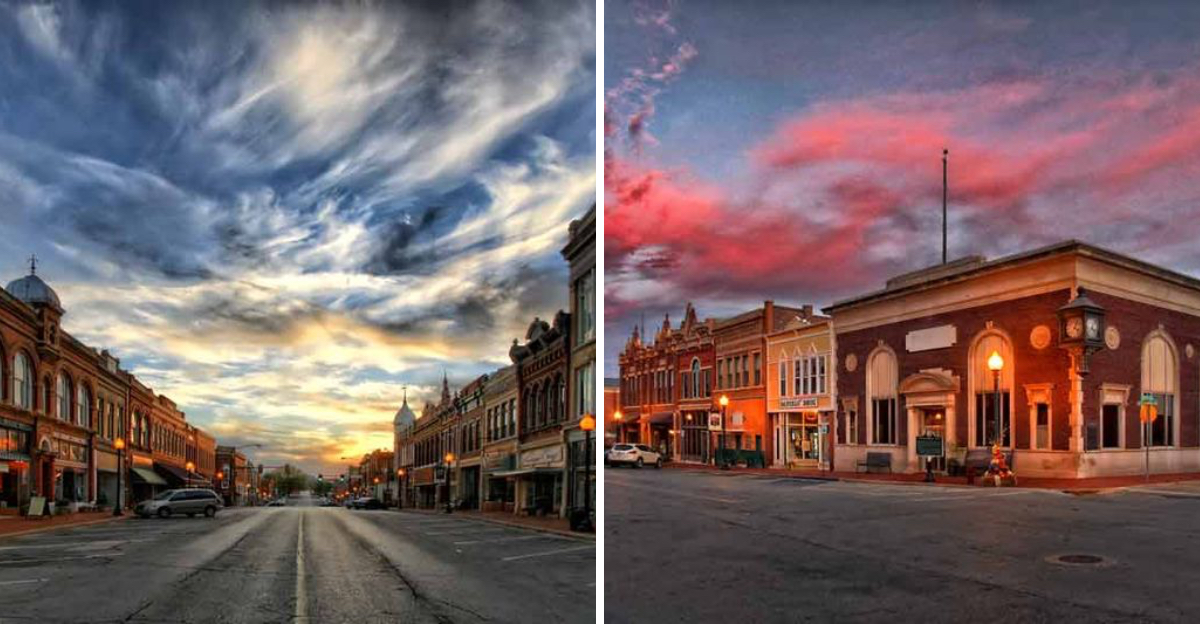
Guthrie sits in central Oklahoma like a time capsule wrapped in red brick and Victorian elegance, its tree-lined streets whispering stories of frontier ambition and creative rebirth.
Once the state’s first capital, this town has traded political power for something quieter and more enduring: a thriving community of painters, sculptors, writers, and musicians drawn to its affordable spaces and unhurried rhythm.
Galleries peek out from restored storefronts, studios fill historic buildings, and the air hums with the kind of creative energy that only flourishes when artists find room to breathe.
For travelers seeking art beyond the gallery walls, Guthrie offers an intimate glimpse into how a small Oklahoma town transformed itself into a haven where creativity and history walk hand in hand.
Victorian Architecture That Inspires Every Corner
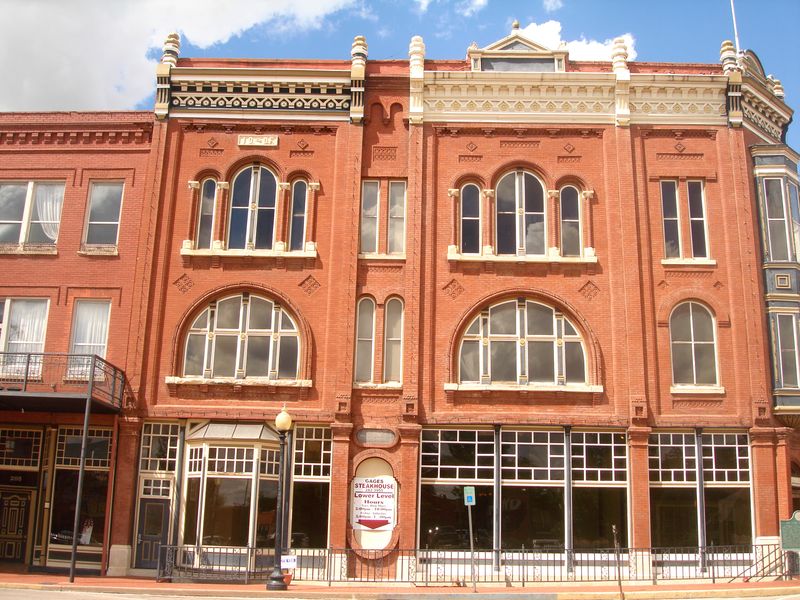
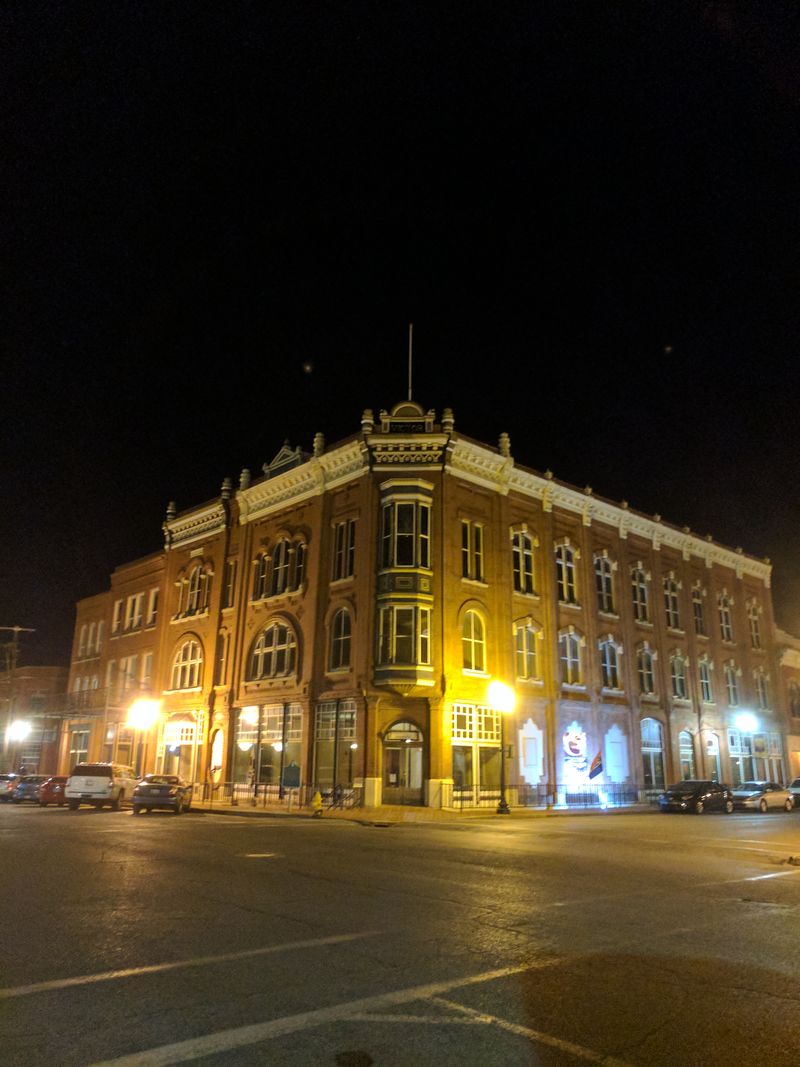
Walking through downtown Guthrie feels like stepping onto a film set where every building tells a chapter of the past.
The entire historic district spans over 400 acres, making it one of the largest contiguous urban historic districts in the nation.
Red brick facades rise three and four stories high, their windows framed by intricate stonework and cornices that catch the afternoon light.
Artists who settled here often cite these structures as their primary inspiration, with the ornate details providing endless subject matter for sketches, paintings, and photographs.
Many of the buildings date back to the late 1800s when Guthrie served as Oklahoma’s territorial and first state capital.
The preservation efforts began decades ago when locals recognized the architectural treasure they possessed.
Today, these same buildings house artist studios, galleries, and creative spaces where painters and sculptors work surrounded by century-old craftsmanship.
The Scottish Rite Masonic Temple stands as a particularly stunning example, its grand columns and detailed interior offering a glimpse into the town’s prosperous early years.
For artists seeking affordable rent in spaces with character, Guthrie delivers in abundance.
High ceilings, exposed brick walls, and large windows create ideal studio conditions that would cost a fortune in larger cities.
The architecture doesn’t just provide workspace; it creates an atmosphere where creativity feels natural and history becomes part of the artistic process.
Visitors can wander these streets and watch artists at work through studio windows, the Victorian backdrop adding depth to every creative endeavor.
Affordable Studio Spaces in Historic Buildings
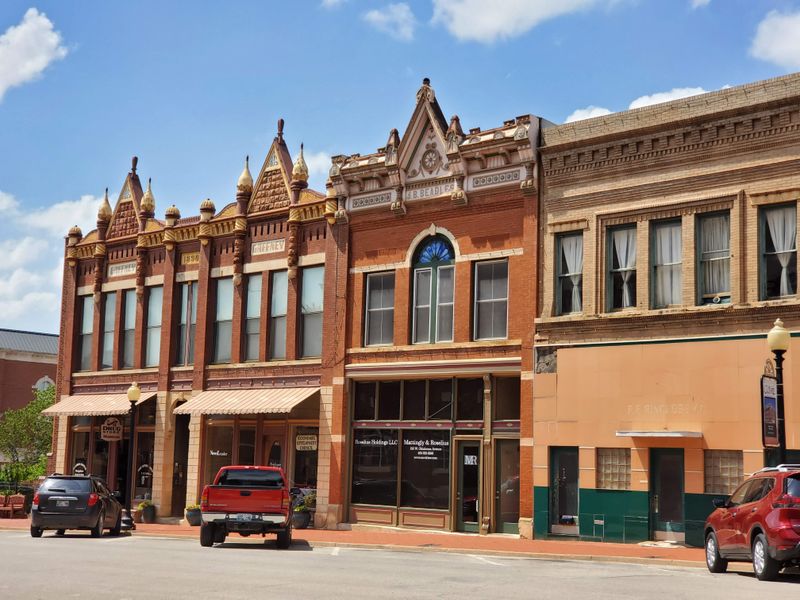
Real estate prices in Guthrie remain remarkably reasonable compared to Oklahoma City just thirty miles south.
Artists discovered this economic advantage years ago, and word spread through creative networks about the availability of spacious studios at prices that actually fit an artist’s budget.
Former retail spaces, old offices, and even residential buildings have been converted into working studios where painters stretch canvases and sculptors shape clay.
The combination of low rent and historic charm creates a rare opportunity for artists to claim generous square footage without sacrificing their entire income.
Some artists rent entire upper floors of downtown buildings, creating live-work spaces that blur the line between home and studio.
The bones of these old structures provide natural advantages: thick walls that muffle sound, sturdy floors that support heavy equipment, and architectural details that inspire daily.
Local property owners have embraced the artist community, often offering flexible lease terms and understanding the irregular income patterns that come with creative work.
This mutual respect between landlords and tenants has fostered stability, allowing artists to establish roots rather than constantly searching for the next affordable space.
Unlike urban centers where gentrification pushes artists out as neighborhoods gain popularity, Guthrie has maintained its welcoming affordability.
The town’s slower growth pattern means that studio spaces remain accessible even as the artistic community expands.
For emerging artists or those seeking to escape the financial pressure of city life, Guthrie represents a practical solution wrapped in historic beauty.
A Community That Values Creative Expression
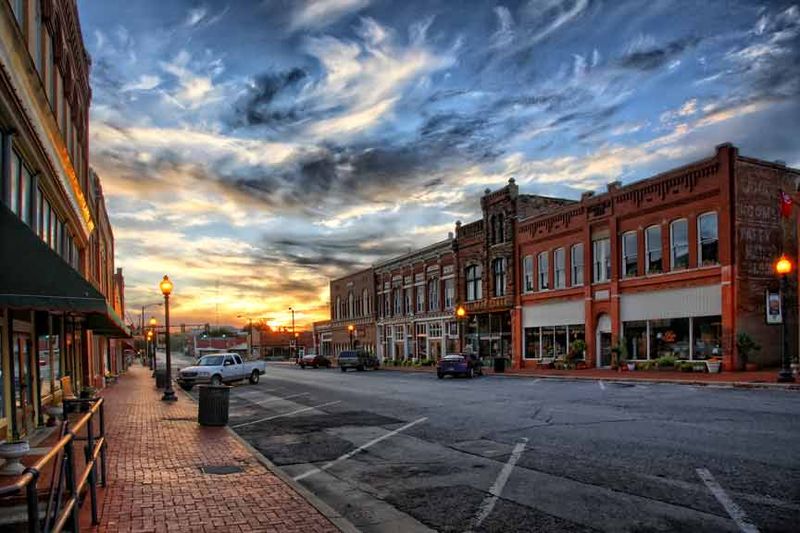
Small towns can sometimes feel suspicious of outsiders, but Guthrie welcomed its growing artist population with open arms and genuine curiosity.
The community recognized early that artists brought vitality to empty storefronts and renewed purpose to forgotten buildings.
Local businesses support gallery openings, residents attend studio tours, and the town government actively promotes the arts as part of Guthrie’s identity.
This isn’t a place where artists work in isolation; instead, they become woven into the fabric of daily life.
Coffee shops display rotating exhibitions, restaurants feature works by local painters, and public spaces incorporate sculptures and murals created by resident artists.
The annual events calendar includes multiple art-focused gatherings where the community comes together to celebrate creativity.
Long-time residents take pride in their town’s transformation, often sharing stories about specific artists or particular pieces that captured their imagination.
This cultural shift didn’t happen overnight but developed through years of artists proving their commitment to Guthrie and residents opening their minds to new possibilities.
Young families moving to the area appreciate the arts programming available to their children, from classes to performances.
Retirees find renewed engagement through gallery visits and conversations with working artists about technique and inspiration.
The mutual respect flows both ways, with artists participating in broader community activities beyond their studios and galleries.
This integration creates an environment where creativity isn’t viewed as separate from everyday life but as an essential thread in the town’s ongoing story.
The Territorial Museum and Cultural Heritage
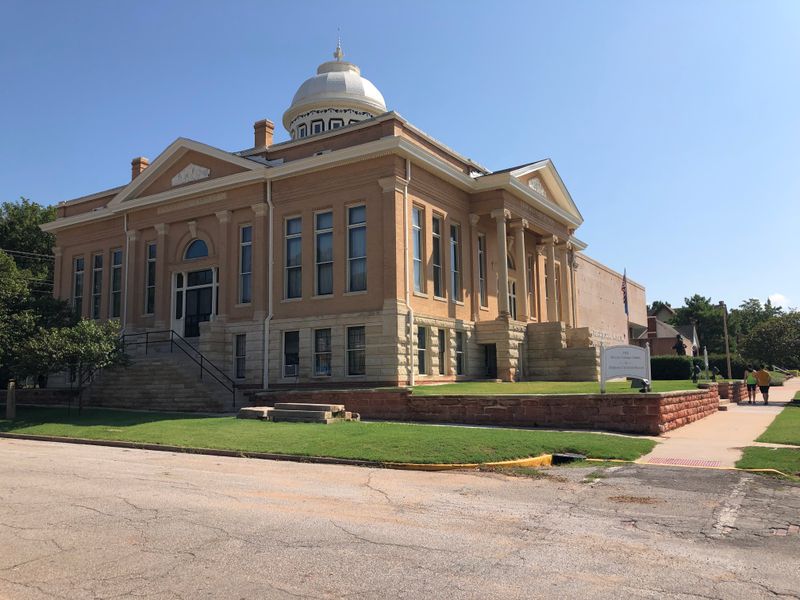
Understanding Guthrie’s past helps explain why artists feel such a strong connection to this Oklahoma town.
The Oklahoma Territorial Museum preserves the stories of land runs, statehood, and the town’s brief but significant time as the capital.
Housed in a historic building that once served as the Carnegie Library, the museum offers context for the architecture and atmosphere that surrounds visitors today.
Artists often visit to research period details for their work or simply to absorb the weight of history that permeates every exhibit.
The museum’s collections include photographs, documents, and artifacts that reveal how quickly Guthrie transformed from prairie to thriving city in the 1890s.
That same spirit of rapid transformation and bold ambition resonates with contemporary artists building their own creative community.
Exhibits rotate seasonally, ensuring that even frequent visitors discover new perspectives on the town’s layered history.
The building itself represents the architectural style that defines Guthrie, with its classical proportions and careful restoration.
For travelers interested in understanding what drew artists here, the museum provides essential background about the town’s character and resilience.
The staff members possess deep knowledge about local history and often connect historical threads to present-day cultural developments.
Special programs bring together historians and artists for conversations about how place shapes creativity.
The museum stands as a reminder that Guthrie has always attracted people willing to take risks and build something meaningful from raw potential.
Address: 406 East Oklahoma Avenue, Guthrie, Oklahoma
The Scottish Rite Masonic Temple’s Artistic Grandeur
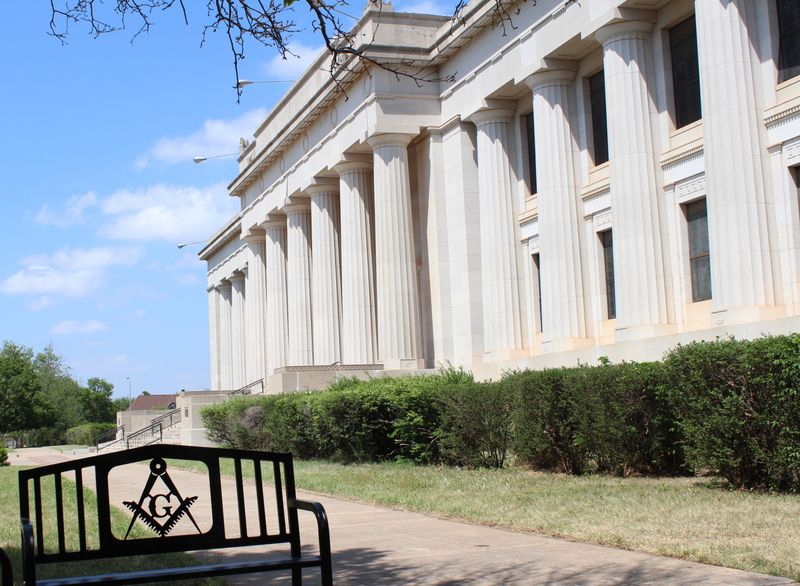
Few buildings in Oklahoma can match the sheer artistic ambition displayed in Guthrie’s Scottish Rite Masonic Temple.
Completed in 1919, this massive structure covers an entire city block and rises as a testament to craftsmanship and decorative arts.
The interior spaces feature hand-painted ceilings, elaborate plasterwork, stained glass windows, and theatrical stages that showcase multiple artistic disciplines.
Artists visiting Guthrie make this temple a priority stop, often spending hours studying the details that craftsmen painstakingly created over a century ago.
The building functions as both a working Masonic lodge and a public attraction offering guided tours that reveal layer after layer of artistic achievement.
Murals depicting allegorical scenes cover walls and ceilings, their colors still vibrant despite their age.
The attention to detail extends to doorknobs, light fixtures, and even radiator covers, each element designed with aesthetic consideration.
For contemporary artists, the temple serves as a reminder of what’s possible when artistic vision meets skilled execution.
The building also hosts special events and performances, its grand auditorium providing a dramatic setting for concerts and theatrical productions.
Photographers find endless compositions within these rooms, while painters study the color palettes and techniques used by the original artists.
The temple’s preservation demonstrates Guthrie’s commitment to protecting artistic heritage, a value that extends to supporting living artists today.
Standing inside these ornate spaces, visitors understand why artists feel drawn to a town that has always valued beauty and craftsmanship.
Address: 900 East Oklahoma Avenue, Guthrie, Oklahoma
Gallery Walks and Open Studio Events
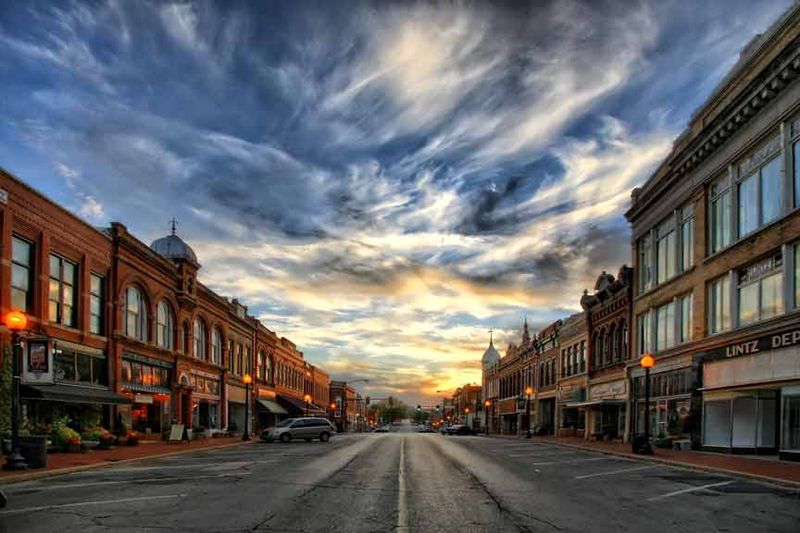
One evening each month, downtown Guthrie transforms into an open-air celebration of creativity as galleries and studios welcome visitors for coordinated openings.
These gallery walks have become essential to the town’s cultural rhythm, drawing locals and travelers who wander from space to space discovering new works.
The informal atmosphere encourages conversation between artists and viewers, breaking down the barriers that sometimes make gallery visits feel intimidating.
Artists stand beside their work, ready to discuss inspiration, technique, or the simple joy of making things.
The events span multiple blocks, with each participating space offering something different: paintings, sculpture, photography, fiber arts, pottery, and mixed media installations.
Food trucks often line up nearby, and musicians sometimes perform on street corners, adding layers of sensory experience to the visual art.
Families attend with children, introducing young people to the idea that art happens in their own community, created by people they might see at the grocery store.
The seasonal studio tours expand this concept, inviting visitors into working spaces where they witness the creative process mid-stream.
Seeing an artist’s environment, with works in progress and tools scattered about, demystifies the artistic practice and reveals the dedication required.
These events strengthen the bonds within the artist community as well, providing regular opportunities for creative people to support each other’s work.
For travelers planning a visit, timing the trip to coincide with a gallery walk offers the richest experience of Guthrie’s artistic life.
Escape from Urban Noise and Distraction
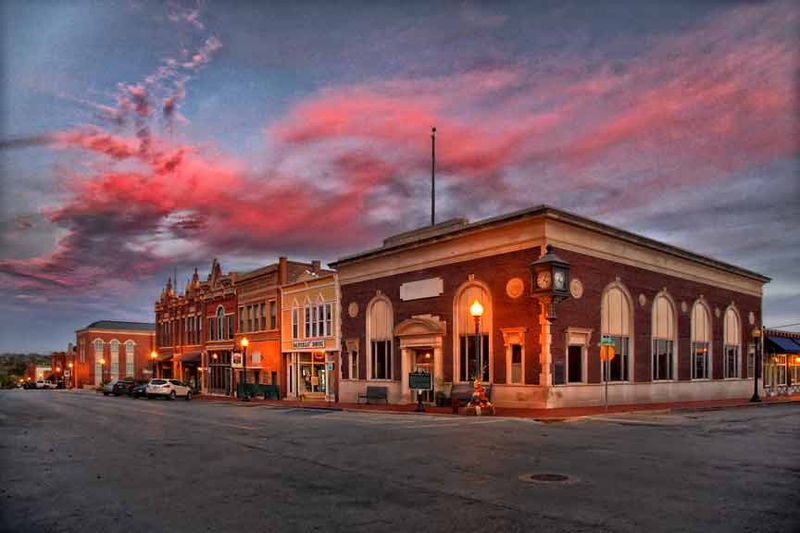
Many artists who relocated to Guthrie cite the simple gift of silence as one of the town’s greatest assets.
After years of creating work amid city traffic, sirens, and the constant hum of urban density, the quiet streets offer profound relief.
Concentration comes easier when the background noise fades to bird songs and wind through old trees.
The slower pace of life means fewer distractions pulling attention away from studio work.
Artists describe being able to think more clearly, to follow creative threads without interruption, to actually hear their own thoughts.
This mental space proves essential for work that requires sustained focus and deep engagement with materials and ideas.
The night sky above Guthrie reveals stars obscured by city lights, providing another form of inspiration for those who work after dark.
The town’s compact size means artists can walk to most destinations, building daily movement into their routines without the stress of commuting.
Local coffee shops and cafes provide gathering spots without the overcrowded, laptop-dominated atmosphere of urban equivalents.
The reduced cost of living removes financial anxiety that often plagues artists, allowing them to take creative risks without constant worry about making rent.
Some artists report producing more work in Guthrie than they ever managed in larger cities, the combination of time, space, and peace proving remarkably productive.
The town offers proximity to Oklahoma City when urban amenities become necessary, but the default setting remains calm and unhurried.
For artists seeking to prioritize their practice over the demands of city life, Guthrie provides exactly the refuge they need.
Pollard Theatre’s Role in Creative Community
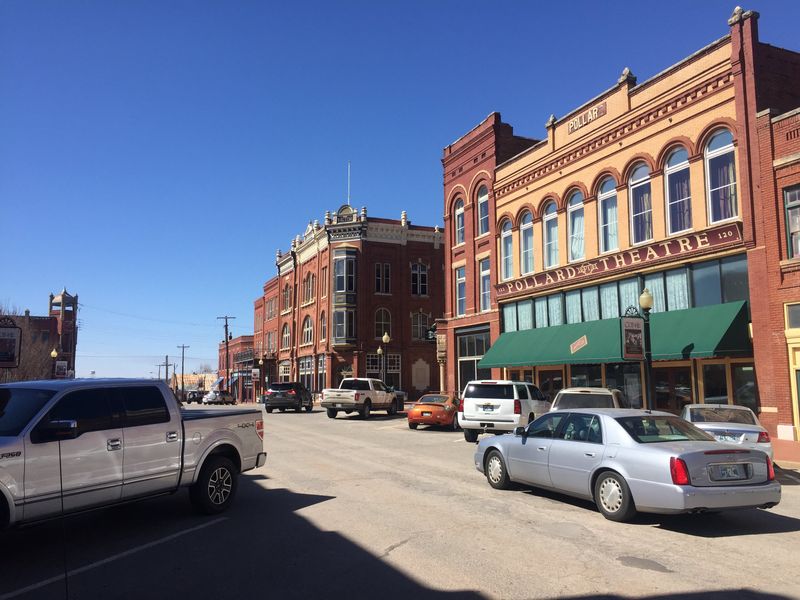
Theater arts thrive alongside visual arts in Guthrie, with the Pollard Theatre serving as a cultural anchor since the 1980s.
This professional theater company produces multiple shows each season, drawing audiences from across Oklahoma to its intimate venue in a restored downtown building.
The presence of a working theater adds another dimension to the artistic community, bringing actors, directors, designers, and technicians into the creative mix.
Visual artists often collaborate with theater productions, creating sets, props, and promotional materials that showcase their skills in new contexts.
The theater’s commitment to quality programming demonstrates that serious artistic work happens in small Oklahoma towns, not just in major metropolitan centers.
Performances range from classic dramas to contemporary comedies, with occasional musicals that fill the historic building with song.
The audience members who attend regularly have developed sophisticated tastes, supporting challenging work and experimental productions.
For artists living in Guthrie, the theater provides entertainment but also inspiration, as watching skilled performers reminds them why they chose creative lives.
The building itself carries history, its renovation representing the same preservation ethic that protects other downtown structures.
Behind the scenes, the theater employs local craftspeople and artists, creating economic opportunities beyond gallery sales.
Educational programs bring young people into contact with theatrical arts, planting seeds for future creative community members.
The Pollard Theatre proves that a thriving arts scene requires multiple disciplines supporting and enriching each other, creating a cultural ecosystem rather than isolated practices.
Address: 120 West Harrison Avenue, Guthrie, Oklahoma
Annual Events That Celebrate Local Creativity
Guthrie’s calendar fills with events that put artists and their work at the center of community celebration throughout the year.
The Jazz Banjo Festival brings musicians from across the country, filling downtown with sounds that spill from venues onto the streets.
Artists set up booths during street festivals, selling work directly to visitors who come specifically to support local creativity.
The Christmas season transforms the town into a Victorian-themed celebration, with artists contributing decorations, performances, and special exhibitions.
These recurring events provide artists with reliable opportunities to connect with buyers and build followings beyond gallery walls.
The festivals also attract tourists who might not otherwise discover Guthrie, exposing the town’s artistic community to broader audiences.
Local businesses sponsor events, demonstrating their investment in the arts as both cultural value and economic engine.
Artists volunteer to organize and staff these gatherings, strengthening their connections with each other and the wider community.
The events showcase diversity within the artistic community, from traditional landscape painters to experimental sculptors pushing boundaries.
Visitors leave with purchases but also with memories of conversations, performances, and the distinctive atmosphere that only Guthrie provides.
The annual rhythm of these celebrations gives structure to the artistic year, marking seasons and providing deadlines that motivate new work.
For travelers planning visits, these events offer concentrated experiences of Guthrie’s creative energy, though the town’s artistic character remains evident even during quieter months.
The commitment to regular arts programming signals that this Oklahoma town has fully embraced its identity as a refuge where creativity flourishes.
Dear Reader: This page may contain affiliate links which may earn a commission if you click through and make a purchase. Our independent journalism is not influenced by any advertiser or commercial initiative unless it is clearly marked as sponsored content. As travel products change, please be sure to reconfirm all details and stay up to date with current events to ensure a safe and successful trip.
