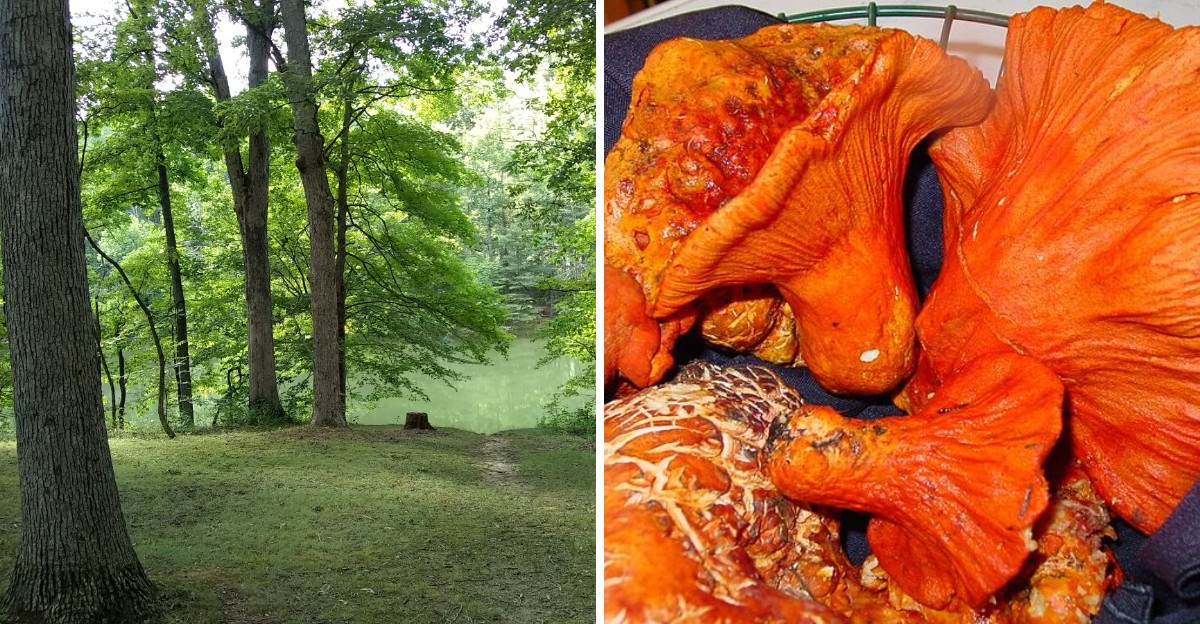
A basket makes sense once the forest floor starts looking suspicious. There is an orange shape under the leaves.
Then another. At first it looks like a leaf.
Then it looks like a mushroom. Then somebody remembers it is the one that supposedly tastes like lobster.
This Indiana forest covers more than 24,000 acres, so finding one takes more than a lucky glance from the parking lot. Ridges, hollows, creeks, and hardwood trails spread across the property, with fall bringing cool air and damp ground that mushrooms appreciate.
The best strategy is almost comically simple. Slow down.
Look down. Repeat.
Twenty-Four Thousand Acres of Unglaciated Indiana
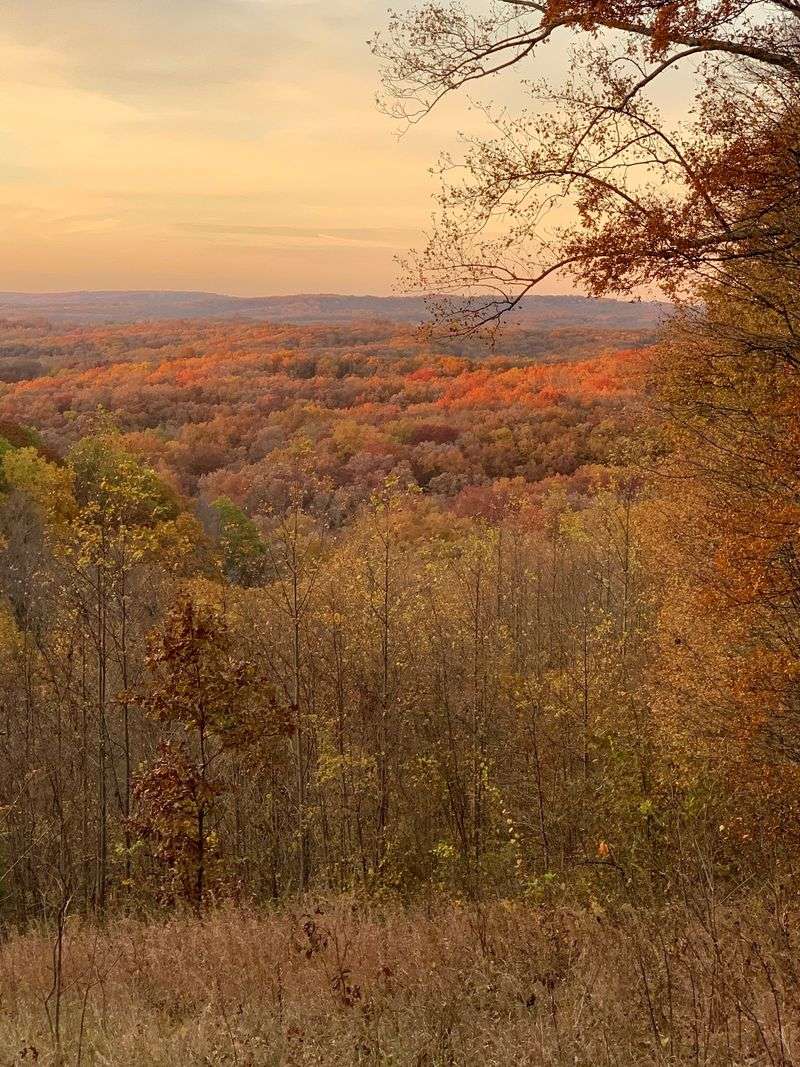
Most people picture Indiana as flat farmland, and then they get here. Ridges drop away into deep hollows, rock outcrops break through the hillsides, and the road curves like it was drawn by the terrain rather than a planner.
Credit the ice age, or rather the lack of it. Glaciers that flattened much of the state never reached this pocket of Morgan and Monroe counties, leaving behind steep slopes, unusual rock formations, and views that stack ridge behind ridge.
The state started buying the land in 1929 after early settlers gave up on farming soil that was mostly rock and clay. What failed as cropland became the second-largest state forest in Indiana.
Headquarters sits at 6220 Forest Rd, Martinsville, IN 46151, just outside town and an easy run south from Indianapolis. The office itself is worth a stop for maps and current trail conditions.
Fall turns the hardwood canopy into a patchwork of scarlet, rust, and butter yellow. Photographers tend to linger on the ridge roads.
Some interior roads are gravel and rough in spots, so a vehicle with decent clearance saves headaches. Check in advance for closures, since storm damage has affected sections of the property.
Big, quiet, and genuinely wild feeling.
The Orange Flash That Started All the Fuss
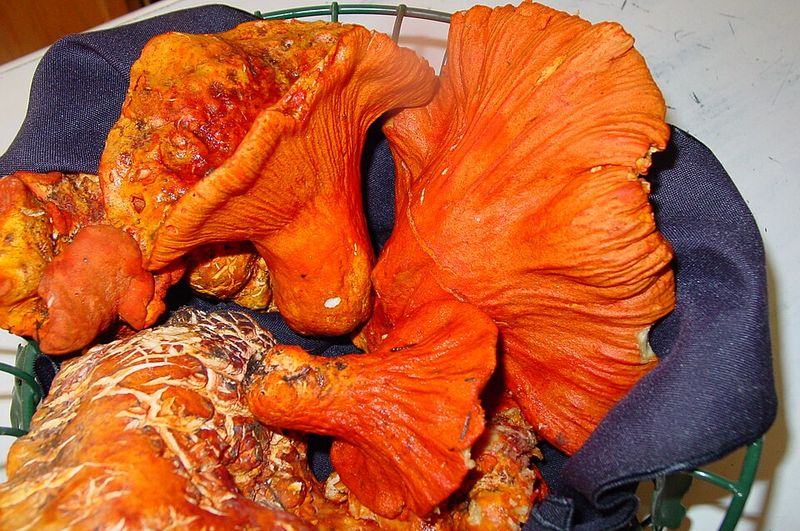
Nothing else on the autumn forest floor glows quite like it. A lobster mushroom sits low among the leaves, bright orange-red, looking far more like seafood than fungus.
The odd part is that it is not really one mushroom at all. A parasitic fungus called Hypomyces lactifluorum takes over a host, usually a Russula brevipes or a peppery Lactarius, and completely rebuilds it from the outside in.
Color changes, texture firms up, gills vanish under a smooth orange crust.
Season matters here. These show up from roughly mid-July into October, with late summer and early fall being the sweet spot, which makes a crisp Indiana autumn ideal timing.
Look in mixed woodlands where hardwoods like oak and poplar grow, and check near conifers such as pine or hemlock too. Edges of clearings and slopes above small ponds often pay off.
Slice one open and the inside should be dense and chalk-white, firm like a wedge of hard cheese. Soft, spongy, or discolored flesh means leave it alone.
The aroma seals the deal. Fresh specimens carry a mild shellfish scent that grows stronger once heat hits the pan.
Take a field guide, take your time, and never eat anything you cannot identify with full confidence. That rule never gets old.
Trails That Range From Easy Loop to Leg Burner
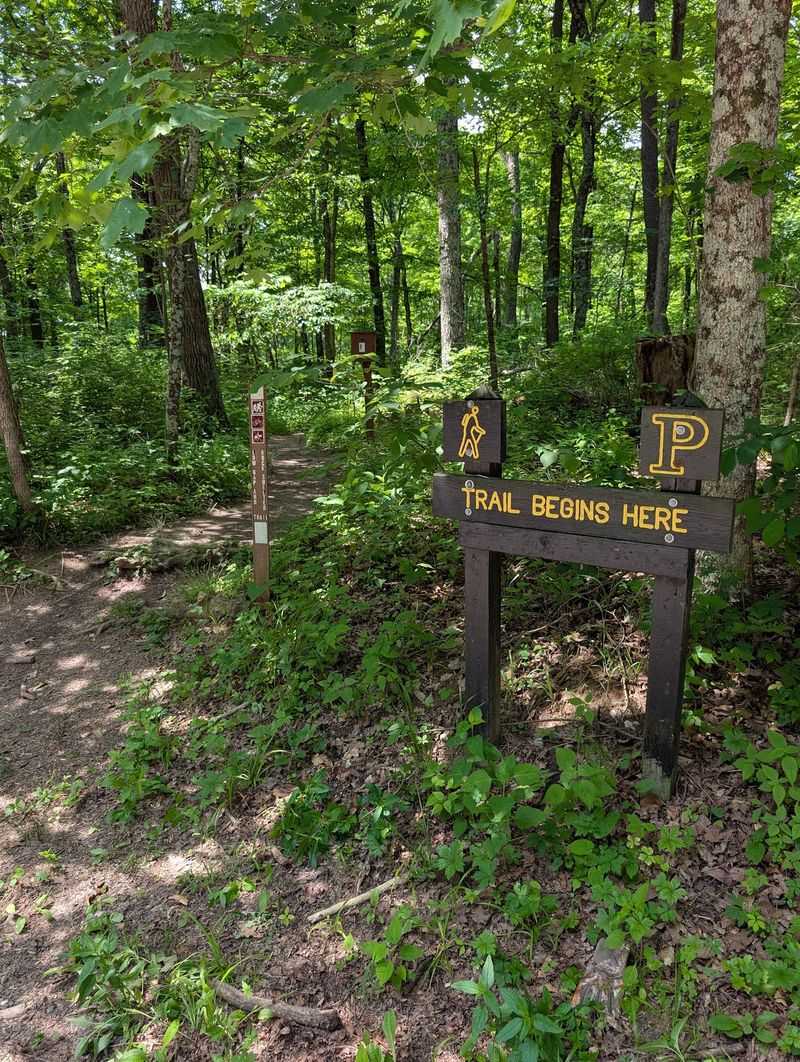
Trail options here cover a surprising spread, and picking wrong can make or break a day. Short interpretive loops sit near the office, while backcountry routes climb and drop for hours.
Beginners and families do well on the one-mile Tree Identification Trail, which doubles as a crash course in reading bark and leaf shapes. The half-mile Pathfinder Orienteering Trail adds a map-and-compass challenge, and the office hands out practice maps.
For something longer, the 5.2-mile Hike-Bike Trail runs paved and gently sloped, useful on rainy days or with a bike in tow.
Then there is Low Gap Trail, roughly 9.8 miles of ridge climbs, creek crossings, and two nature preserves. Hikers training for mountain trips use it for exactly that reason.
The Three Lakes Trail brings serious elevation change and wet feet, so spare socks belong in the pack. Sections of the 40-mile Tecumseh Trail also cut through the property.
Blazes and white diamonds mark the way well, though signage thins out in places. Download a map before losing cell service.
Since mushroom hunting is exempt from the stay-on-trail rule, trails work best as a home base rather than a strict route. Wander off, then navigate back with confidence.
Reading the Mushroom Like a Pro
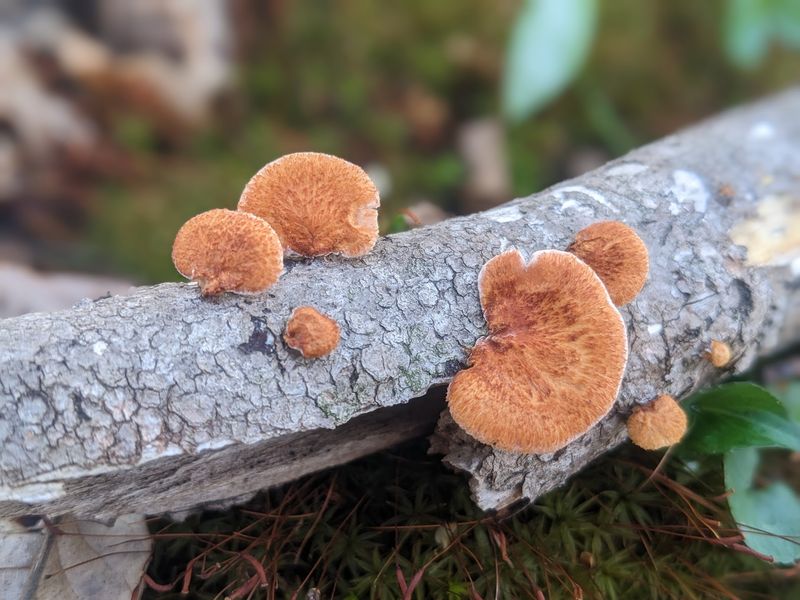
Identification is where confidence comes from, and this particular fungus makes things easier than most. Color alone does a lot of work, a vivid orange to reddish-orange that practically shouts from a brown forest floor.
Shape is the next clue. Expect something gnarled, lumpy, and irregular, often with no clear cap or stem, sometimes still showing white patches where the takeover was incomplete.
Flip it over. A true lobster mushroom has no gills, just a smooth surface or blunt reddish ridges, because the parasite erased the original structure.
Cut through the middle for the best confirmation. The interior should be solid, crisp, and bright white with no tunnels from insects and no mushy gray zones.
Give it a sniff too. That faint crustacean smell is unmistakable once recognized, and it intensifies dramatically over heat.
Older specimens can pick up a purplish cast, which is a signal to pass and keep looking. Freshness matters more than size.
No poisonous look-alikes are known, but responsible foragers still confirm every feature before anything reaches a skillet. Cross-check with a regional guide, and consider connecting with an Indiana mycological group for a second opinion.
Skip anything soft, slimy, or crumbling. Good specimens feel almost hard in the hand.
Foraging Rules, Baskets, and Good Manners in the Woods
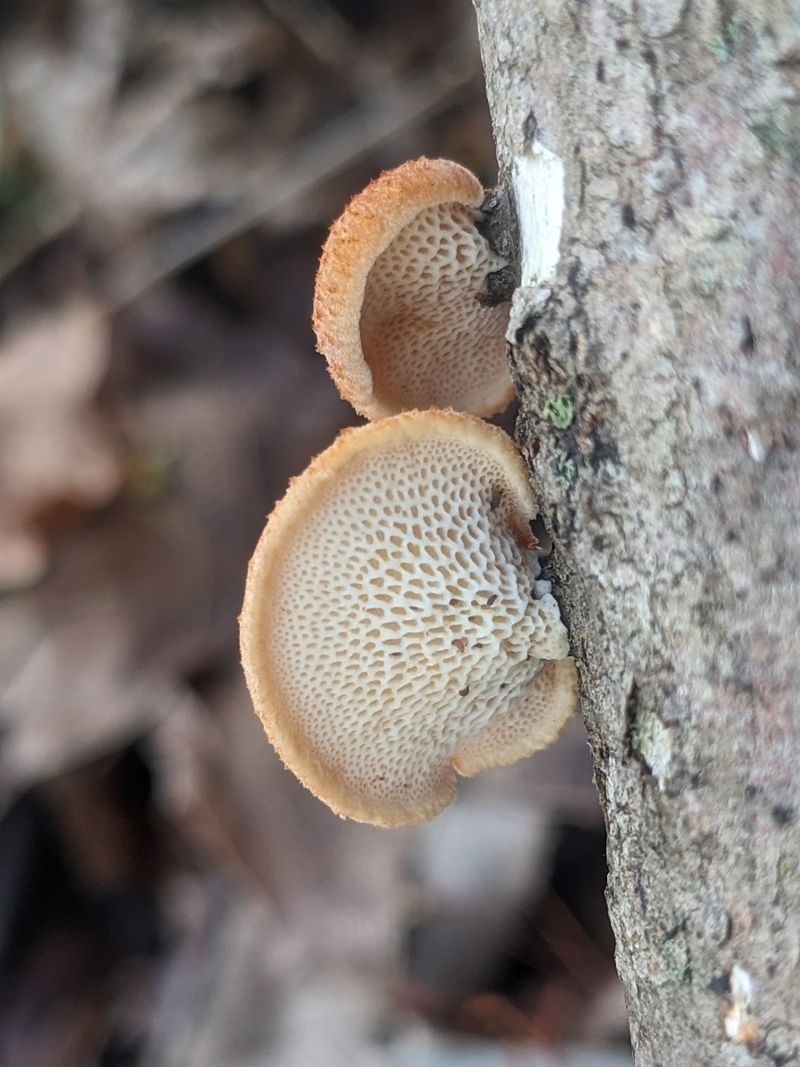
Good news for anyone worried about paperwork. Mushroom hunting for personal use is generally permitted in Indiana state forests, including this one, and no license is needed.
Even better, foragers are not bound to marked trails the way other visitors are, which opens up the slopes and hollows where the good stuff hides. Freedom like that comes with a responsibility to tread lightly and avoid trampling sensitive ground.
Carry an open-weave basket rather than a plastic bag. Spores drop through the gaps as you walk, quietly seeding the next season.
Leave plenty behind at every spot. Clearing out an entire patch helps nobody, least of all the fungus.
Field cleaning saves work later, since those crevices collect grit. A soft brush knocks off most of the soil before anything goes in the basket.
At home, finish with a dry brush or a barely damp cloth, which keeps the color vivid. Store them in a paper bag in the refrigerator, where they hold for about three to seven days.
Cook within a couple of days for the best texture. Also worth packing: bug spray for ticks, a whistle, and a charged phone, because the terrain looks identical in every direction once you leave the trail.
So Does It Actually Taste Like Lobster
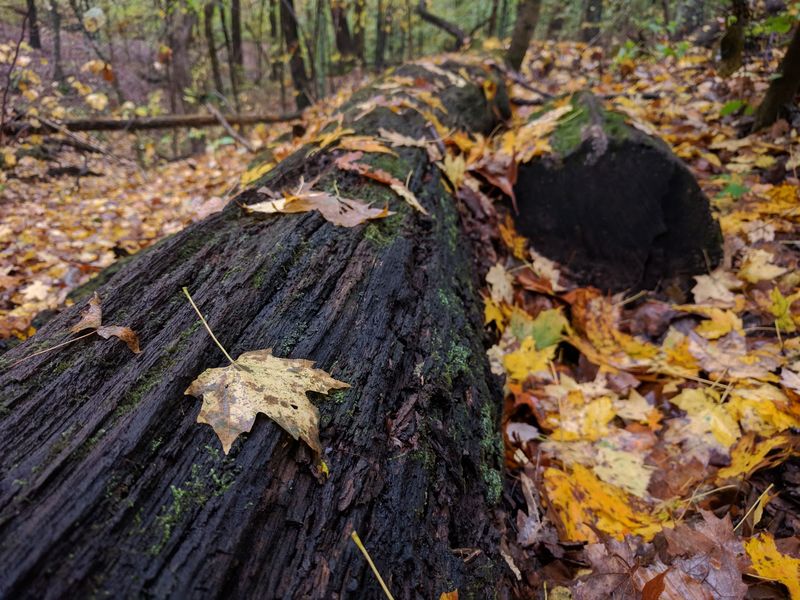
Expectations should be calibrated: this is not a seafood impersonation act. What shows up is a gentle shellfish note, slightly sweet, savory, and layered with nutty and woody undertones.
Some cooks describe the result as somewhere between a scallop and a mushroom, which lands pretty close. Mild, rich, and distinctly its own thing.
Texture is the real headline. The flesh stays firm and meaty through cooking, holding shape in a hot pan instead of collapsing into mush.
The parasite also performs a small kitchen miracle. A peppery milkcap that would normally be unpleasant loses its harsh bite entirely once transformed, turning an inedible host into a prize.
Heat brings the aroma forward in a big way. That orange coating also bleeds color into butter, oil, or cream, tinting a sauce a pretty coral shade.
Sauté slices with garlic, roast chunks alongside root vegetables, or grate the firmer pieces into chowder-style soups. The substantial bite makes it a favorite in vegetarian cooking where something hearty is needed.
Cook thoroughly every time, and try a small portion first if it is your introduction to wild mushrooms. Bodies react differently.
One skillet is usually enough to convert a skeptic. The smell alone does most of the persuading.
Lakes, Gold Pans, and a Night Under the Hardwoods
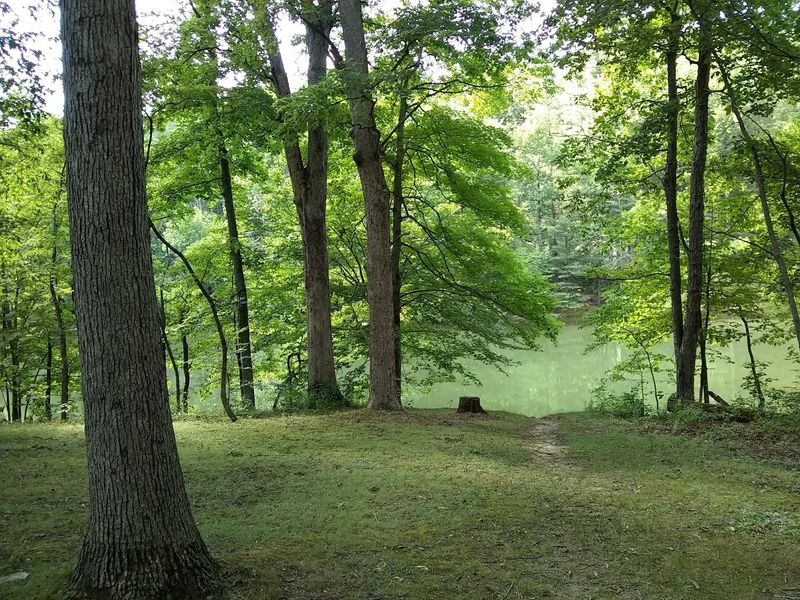
Foraging rarely fills an entire weekend, which is where the rest of the property earns its keep. Three lakes sit tucked into the hills: Bryant Creek, Cherry, and Prather.
Anglers need a valid Indiana fishing license, and boat ramps serve Bryant Creek and Cherry. Only electric trolling motors are allowed, so mornings stay wonderfully quiet, and swimming is off the table at all three.
Gold panning is the surprise on the activity list. A free permit from the forest office lets visitors sift gravel here and at nearby Yellowwood, a nod to the region’s prospecting history.
Overnight options run from primitive backcountry sites to the Mason Ridge campground with vault toilets and seasonal water. Two rental cabins round things out, the rustic Draper Cabin and the more modern Cherry Lake Lodge.
Picnic spots are scattered throughout, and the Walls Picnic Shelter at the junction of Forest Road and Beanblossom Road includes a playground for restless kids.
Rock Shelter Trail deserves a mention for its stone overhang, spectacular after rain and downright dramatic when winter ice forms.
Facilities stay limited by design, so pack water, snacks, and layers. Then let the evening do its thing as the ridges fade and the woods go quiet.
