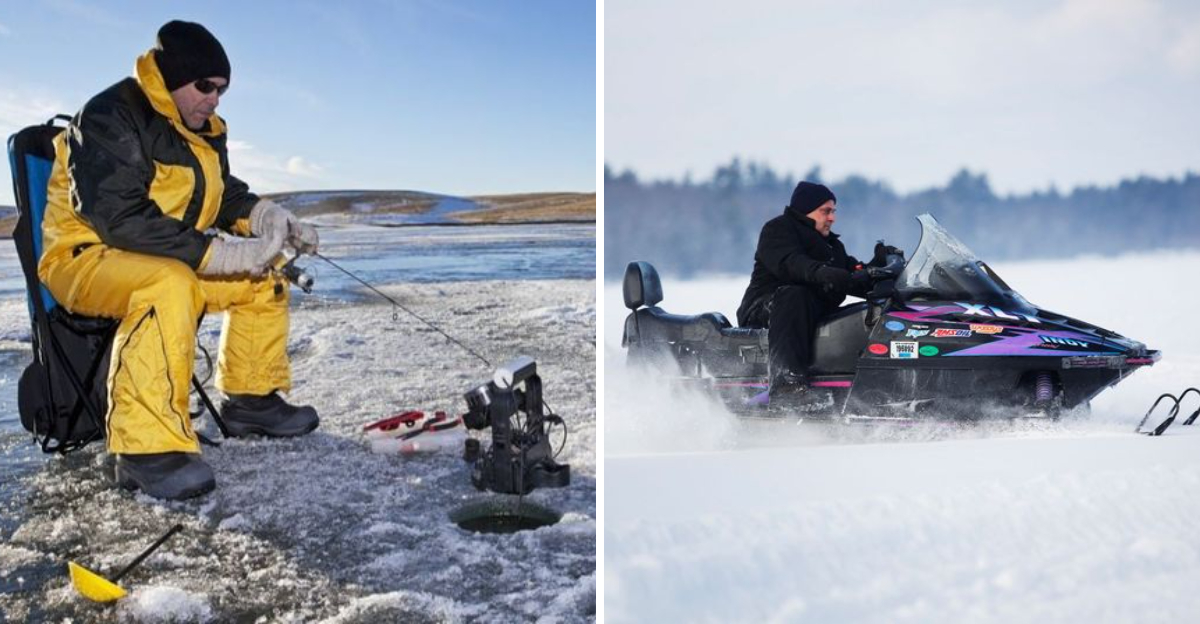
New Hampshire’s frozen lakes transform into stunning winter playgrounds each year, drawing visitors from near and far. But beauty can be deceiving, and what looks like a safe icy wonderland often comes with strict rules designed to protect both people and the environment.
Unfortunately, many tourists don’t realize they’re breaking the law until it’s too late, risking hefty fines or even dangerous situations. From illegal ice fishing setups to driving vehicles on unstable ice, these missteps can quickly turn a scenic outing into a rescue operation.
Local authorities ramp up patrols every winter, but the message still slips through the cracks.
1. Driving Vehicles Without Proper Permits
Many visitors assume that once a lake freezes solid, they can drive their trucks, ATVs, or snowmobiles anywhere they please. New Hampshire law actually requires special permits for operating motorized vehicles on most public frozen water bodies. Local authorities monitor ice roads and designated crossing areas closely.
Without the right paperwork, you could face fines ranging from several hundred dollars to over a thousand depending on the violation. Some lakes have zero-tolerance policies for unauthorized vehicle use. Park rangers and conservation officers patrol regularly, especially on popular weekends.
The permit system exists to protect the ice quality and ensure everyone’s safety. Heavy vehicles can create dangerous pressure cracks that spread quickly. Always check with the local town office or fish and game department before bringing any motorized vehicle onto frozen lakes.
Visitors who ignore these rules not only risk legal trouble but also endanger themselves and others enjoying the ice.
2. Ice Fishing Without Valid Licenses
Tourists often get so excited about the ice fishing experience that they forget one crucial detail: you need a valid fishing license in New Hampshire. Out-of-state visitors must purchase a non-resident license, which differs from resident permits.
Conservation officers conduct regular checks on frozen lakes, and getting caught without proper documentation means instant fines.
The penalties aren’t just a slap on the wrist either. First-time offenders can expect fines starting around $100, but repeat violations bring steeper consequences. Some visitors mistakenly believe their home state license works everywhere, but that’s simply not true.
Licenses are easy to obtain online or at sporting goods stores throughout the state. They help fund conservation efforts and fish stocking programs that keep New Hampshire’s waters thriving. The process takes just minutes and saves you from embarrassing encounters with law enforcement.
Before you drill that first hole, make absolutely sure your paperwork is in order and readily available for inspection.
3. Littering and Leaving Trash Behind
One of the most frustrating problems for New Hampshire residents is the trail of garbage some tourists leave on frozen lakes.
Empty bait containers, food wrappers, broken fishing line, and other debris get abandoned when visitors pack up for the day. State law considers this littering, and it carries significant penalties that can reach hundreds of dollars per violation.
What makes this especially problematic is that trash left on ice doesn’t just disappear. When spring arrives and the ice melts, all that garbage sinks to the lake bottom or washes ashore. It harms fish, wildlife, and water quality for everyone.
Conservation officers take littering complaints seriously and will issue citations when they catch offenders. Local communities often organize spring cleanup efforts to deal with the mess left behind. The solution is simple: bring a trash bag and pack out everything you bring in.
Respecting these beautiful natural spaces means leaving them cleaner than you found them, not treating them like outdoor garbage dumps.
4. Ignoring Posted Ice Thickness Warnings
Bright orange signs warning about thin ice aren’t just suggestions. They’re legal notices that carry real weight in New Hampshire.
When authorities post areas as unsafe due to insufficient ice thickness, entering those zones violates state safety regulations. Yet tourists regularly ignore these warnings, convinced they know better or that the signs are overly cautious.
Ice thickness varies dramatically across any lake due to currents, springs, and changing weather conditions. What’s safe in one spot might be dangerously thin just fifty feet away. Officials post warnings based on careful measurements and years of local knowledge.
Violating these posted restrictions can result in fines, but the real danger is much worse. Rescue operations for people who fall through thin ice put first responders at serious risk. Families have been torn apart by tragic accidents that could have been prevented.
If you see warning signs or barriers, respect them completely. Your life and the lives of potential rescuers depend on following these clearly posted guidelines.
5. Setting Up Permanent Structures Illegally
Those cozy ice fishing shacks might look inviting, but New Hampshire has specific regulations about where and how you can place them.
Tourists frequently set up elaborate shelters without realizing they need permits or that certain areas prohibit permanent structures entirely. Some lakes restrict the number of structures or require them to be removed by specific dates.
Regulations vary by town and water body, making it essential to research before you build. Structures left too long can become navigation hazards or environmental concerns when ice begins melting. Abandoned shacks that sink cost taxpayers money to remove and can damage lake ecosystems.
Local ordinances often require structures to display owner identification and contact information clearly. They may also mandate minimum distances from shorelines, boat launches, or other structures. Failure to comply brings fines and potential removal of your shelter at your expense.
Check with town offices before setting up anything more substantial than a portable pop-up shelter. Understanding local rules keeps you legal and helps preserve lake access for future seasons.
6. Exceeding Catch Limits and Size Requirements
New Hampshire’s fish and game laws set strict limits on how many fish you can keep and what sizes are legal. These rules exist to protect fish populations and ensure sustainable fishing for generations to come. Tourists sometimes assume the limits are just guidelines or that nobody really enforces them, but that couldn’t be further from the truth.
Conservation officers regularly check catches on frozen lakes, and violators face serious consequences. Fines increase based on how many fish over the limit you’ve taken and whether you’ve violated size restrictions. Some species have catch-and-release-only regulations during certain seasons.
Keep a current copy of the fishing regulations with you, as rules can change annually. Different species have different limits, and some lakes have special restrictions beyond statewide rules. Measuring your catch accurately and releasing undersized fish carefully protects the resource.
When in doubt, take a photo and release the fish rather than risking a violation. Respecting these limits ensures great fishing experiences remain available for everyone who visits New Hampshire’s beautiful frozen lakes.
7. Trespassing on Private Lake Property
Not every frozen lake in New Hampshire is open to public access. Many smaller ponds and lake sections border private property, and walking onto the ice from these areas constitutes trespassing. Tourists often don’t realize they’ve crossed onto private land because boundaries aren’t always obvious when everything is covered in snow and ice.
Property owners have legal rights to control access across their land to reach the ice. Some post clear no trespassing signs, while others rely on state laws that protect private property even without posted warnings. Violations can result in fines and potential criminal charges if you refuse to leave when asked.
Before accessing any lake, identify public boat launches, beaches, or parks that provide legal entry points. State and town websites usually list public access locations. Respecting private property maintains good relationships between residents and visitors.
When locals ask you to use designated public access points, they’re not being unfriendly. They’re protecting their legal rights and helping you avoid potential legal problems that could ruin your winter adventure in beautiful New Hampshire.
8. Operating Snowmobiles in Restricted Zones
Snowmobiling across frozen lakes ranks among New Hampshire’s most thrilling winter activities. However, many lakes have designated zones where snowmobiles are strictly prohibited due to safety concerns, environmental protection, or noise ordinances.
Tourists unfamiliar with local regulations often blast through these restricted areas, earning themselves hefty fines and creating conflicts with other lake users.
Some zones protect important fish habitats or areas with historically thin ice. Others exist near residential shorelines where noise complaints have led to strict enforcement. Speed limits also apply on many frozen water bodies, and exceeding them brings additional penalties.
Trail maps and local snowmobile clubs provide detailed information about where you can and cannot ride. Many towns require snowmobile registrations and proof of insurance. Conservation officers and local police patrol popular lakes regularly, especially during peak weekend hours.
Before you rev that engine, study the local rules and respect posted boundaries. The freedom of snowmobiling comes with responsibility to follow regulations that protect everyone’s enjoyment and safety on New Hampshire’s spectacular frozen lakes.
9. Building Fires Directly on Lake Ice
Picture this: a cozy fire crackling while you ice fish sounds absolutely perfect. Unfortunately, building fires directly on lake ice is illegal in New Hampshire and incredibly dangerous. The heat melts the ice underneath, creating weak spots that can lead to someone falling through.
Yet tourists regularly set up small grills or fire pits right on the frozen surface without realizing the legal and safety issues.
State regulations prohibit open flames on ice in most areas, with specific rules varying by location. Even small portable heaters in enclosed ice shacks must meet safety standards. Violations bring fines and potential liability if your fire causes accidents or property damage.
The environmental impact matters too. Fires leave ash and debris that pollute the lake when ice melts. Charred spots damage the ice quality for other users. If you need warmth, use approved portable heaters designed for ice fishing shelters.
Local authorities take fire violations seriously because they endanger lives. Stay warm with proper clothing and equipment rather than risking everyone’s safety with illegal fires on the ice.
10. Failing to Display Required Safety Equipment
New Hampshire law requires specific safety equipment when you’re out on frozen lakes, especially if you’re in an ice fishing shelter or operating vehicles.
Tourists often forget or don’t know about requirements for things like throwable flotation devices, ice picks, and proper lighting for structures. Getting caught without mandated safety gear results in citations and fines.
Ice shelters must have reflective materials or lights visible from specific distances, particularly during low-light conditions. This prevents snowmobiles and other vehicles from crashing into them. Personal safety equipment like ice picks worn around your neck can mean the difference between life and death if you break through.
Conservation officers check for required equipment during routine patrols. They’re not trying to ruin your fun but ensuring everyone goes home safely. The small investment in proper safety gear far outweighs the cost of fines or the tragedy of preventable accidents.
Before heading out onto any New Hampshire frozen lake, review the complete list of required safety equipment. Being prepared keeps you legal, safe, and ready to enjoy everything winter has to offer.
Dear Reader: This page may contain affiliate links which may earn a commission if you click through and make a purchase. Our independent journalism is not influenced by any advertiser or commercial initiative unless it is clearly marked as sponsored content. As travel products change, please be sure to reconfirm all details and stay up to date with current events to ensure a safe and successful trip.
