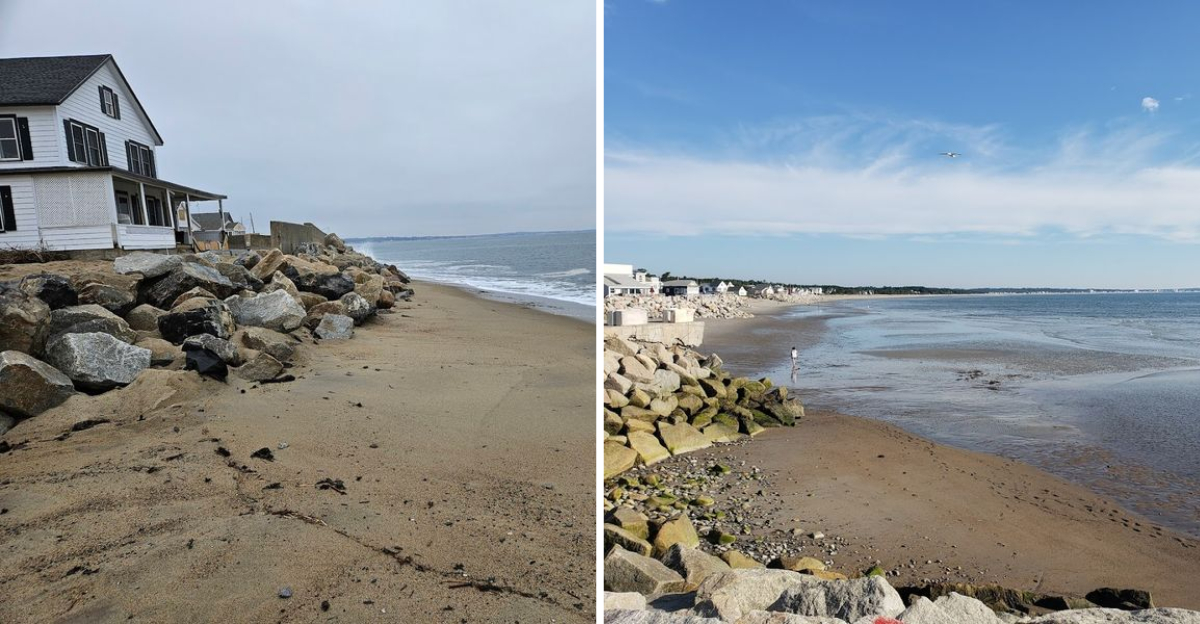
The ocean here does not ask permission. Over the past century, it has quietly swallowed nearly forty homes whole in this Maine community.
Some were dragged out to sea during storms. Others just slowly crumbled as the shoreline retreated beneath them. The first time I saw the remnants of a foundation poking out of the sand, I genuinely stopped and stared.
A long stone jetty built back in the 1860s to help ships ended up blocking the natural movement of sand. The shoreline began shrinking, and each extension made the problem worse. Roads washed away.
Houses abandoned. This little coastal community carries a weight you can feel the moment you arrive, and once you see it, you cannot stop thinking about it.
The Breakwater That Started It All
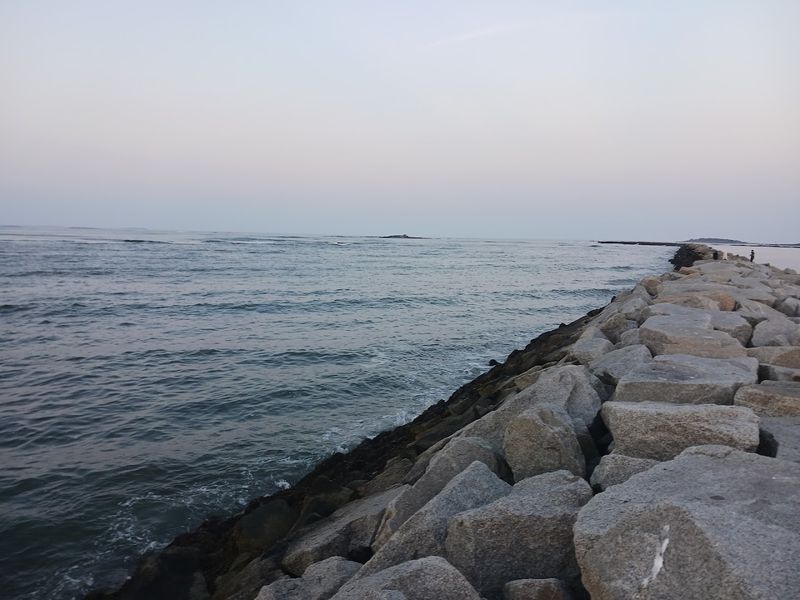
Most people see the long stone jetty at Camp Ellis and assume it was always just part of the scenery. It was not.
Back in 1867, the U.S. Army Corps of Engineers constructed the original breakwater at the mouth of the Saco River to help shipping vessels navigate safely.
What nobody fully anticipated was what that structure would do to the beach over time.
The jetty essentially blocked the natural movement of sand along the coastline. Sand that used to drift and replenish the beach was now cut off, and the shoreline began shrinking.
Extensions were added to the jetty over the years, and each one made the problem worse.
The beach at Camp Ellis has been losing ground at a rate of several feet every single year. That might not sound dramatic, but over decades it adds up fast.
The same structure that was meant to protect boats ended up threatening every home along the shore. There is something almost tragic about that, a solution that quietly became the source of a much bigger problem.
The jetty still stands today, and the erosion has never really stopped.
Nearly 40 Homes Lost to the Sea
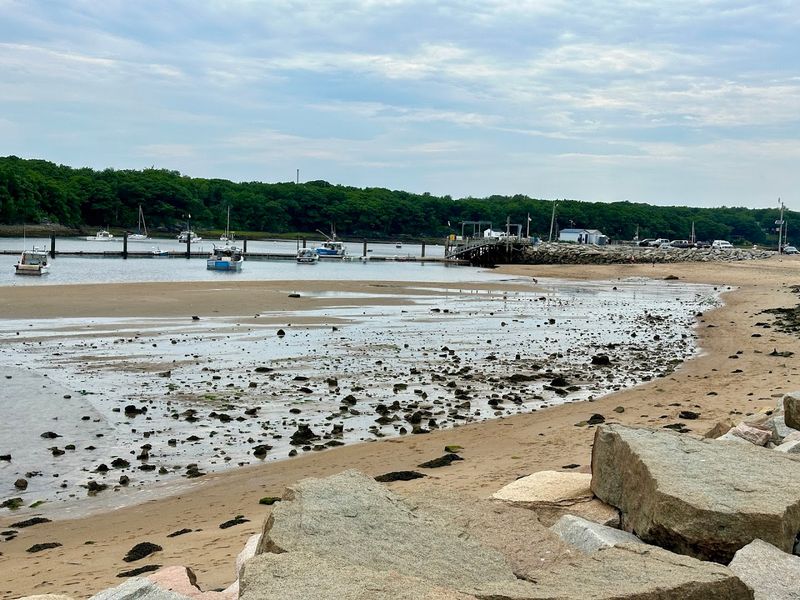
The number is staggering when you actually let it sink in. Close to 40 homes have been destroyed at Camp Ellis over the last hundred years, many of them taken by the sea during storms or simply undermined by relentless erosion.
Some sources point to 38 homes lost in just the past 50 years alone.
These were not empty lots. They were cottages where families spent summers, houses where people raised kids, porches where neighbors talked across the fence.
One longtime resident recalled watching a house her father had worked on get swept away by the ocean more than four decades ago. That kind of memory sticks with you.
When you walk the shoreline today, you can spot places where the land just ends abruptly, where a yard or a road once continued but now drops off into nothing. Foundations peek out from the sand like old bones.
It feels eerie and deeply sad at the same time. The ocean does not negotiate, and Camp Ellis has learned that lesson the hard way, over and over again across generations of families who called this stretch of coast home.
The breakwater that was supposed to help sits there still, a quiet monument to good intentions gone wrong. Each storm season brings new damage, new losses, new stories of people packing up what they can carry and watching the water rise.
The sea does not care about sentiment. It only knows the tide.
Roads Washed Away and a Shrinking Shoreline
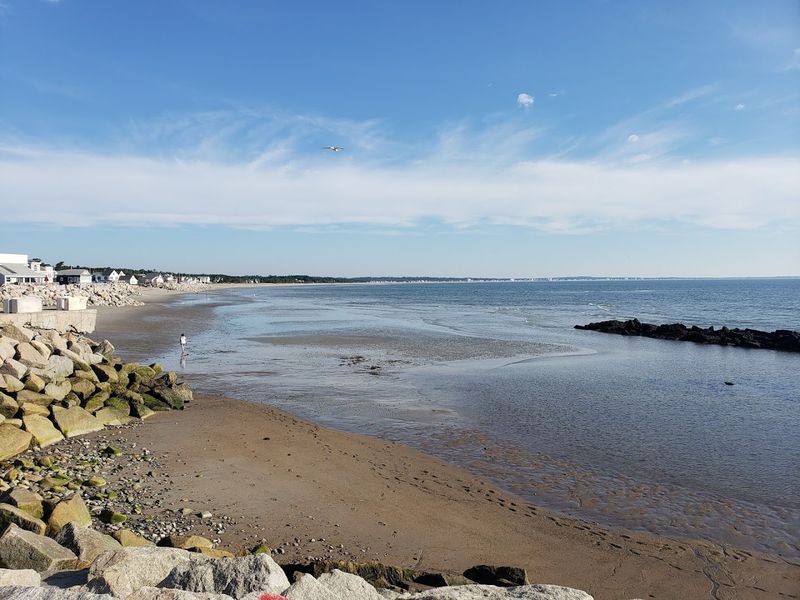
It is not just houses that the sea has taken. Roads have disappeared too, sections of pavement that once connected the community now gone entirely, swallowed up or rendered useless as the land beneath them eroded away.
That detail hit me harder than I expected when I first read about it.
Imagine a street you grew up driving down, one you knew by heart, just ceasing to exist. The beach at Camp Ellis has been retreating at a pace of several feet per year, which means every season the community loses a little more ground, literally.
Some stretches of shoreline that existed decades ago are now underwater at high tide.
There is a quiet surreal quality to standing at the edge of what remains and trying to picture what used to be there. Old photographs of Camp Ellis show wide sandy beaches and rows of cottages stretching back from the water.
Today the buffer between the homes and the ocean is painfully thin in some spots. The erosion is not a future threat for this community, it is an ongoing, present reality that reshapes the landscape with every major storm season.
Walking along the edge, you notice how some driveways just stop mid air, leading to nothing but sand and sea. A collapsed seawall here, a tilted staircase there.
The land is shrinking faster than anyone can keep up with, and the people who stay know exactly what they are risking every time winter rolls in.
The Abandoned House That Stopped Me Cold
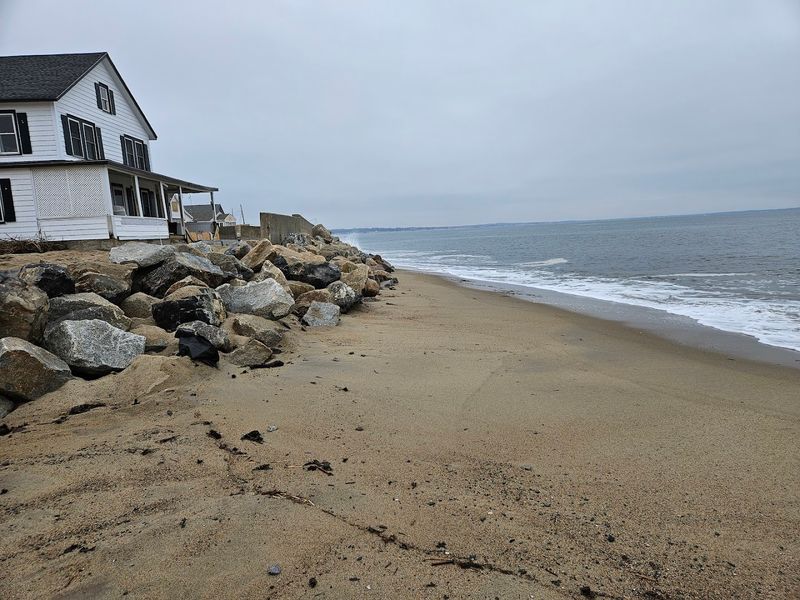
There is a specific kind of stillness that comes from a house that has been left behind. You notice it before you even get close, something about the way the windows look empty, how the paint has gone gray and papery, how the yard has just given up trying to look cared for.
The first abandoned structure I found at Camp Ellis had all of that. A small cottage, clearly once someone’s warm summer retreat, now sitting at an uncomfortable angle as if the ground beneath it had shifted and never corrected itself.
The porch railing was partly gone. A window on the side had cracked clean through.
What made it genuinely unsettling was not the decay itself, it was the context. This was not a house abandoned because someone simply moved on.
It was a house abandoned because staying meant gambling against the Atlantic Ocean, and the ocean has a perfect record here. Knowing that history changes how you look at a crumbling structure.
These photos, taken on a grey afternoon with the wind off the water, still give me a chill when I scroll back through them. Some places carry their stories in the walls, and this one carries them loudly.
Camp Ellis Remembered and Reimagined
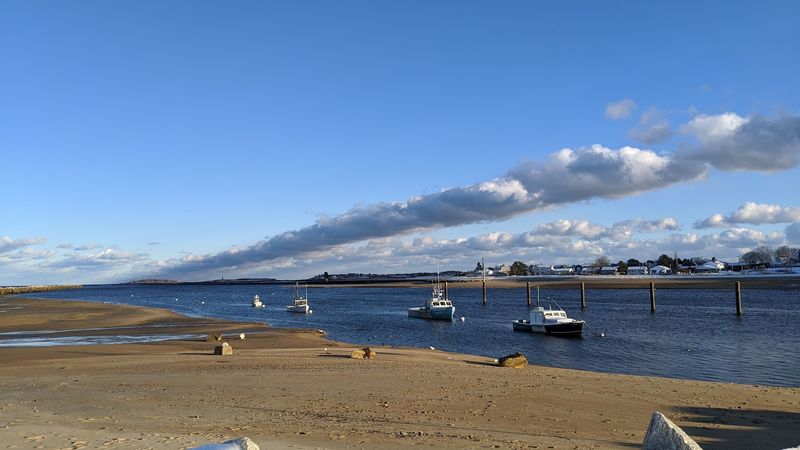
Not everyone who loves Camp Ellis has given up on it. Two community groups, Camp Ellis Remembered and Camp Ellis Reimagined, have formed over the years to make sure the neighborhood’s past is honored and its future gets a real conversation.
That kind of grassroots effort says a lot about how much this place means to the people connected to it.
Camp Ellis Remembered focuses on preserving the history of the community, collecting stories, photographs, and records of what the neighborhood looked like before so many homes and roads disappeared. It is a way of holding onto something that the ocean keeps trying to take.
Camp Ellis Reimagined looks forward, working on questions about how to address the ongoing erosion and what the community could look like in the years ahead. These are hard conversations involving engineering, policy, and deeply personal stakes for residents whose homes are still standing, for now.
Both groups reflect the same core feeling: this place matters, and the people here are not ready to let it disappear quietly. Visiting Camp Ellis without knowing this history would mean missing the real story, which is one of resilience, grief, and stubborn love for a stretch of Maine coastline.
Volunteers gather to document what remains, photographing cottages and streets before they vanish. They interview old timers who remember the beach before the jetty changed everything.
It is slow, careful work, the kind that does not make headlines but keeps memories from drowning. The ocean takes.
The community holds on.
Why Camp Ellis Still Pulls People Back
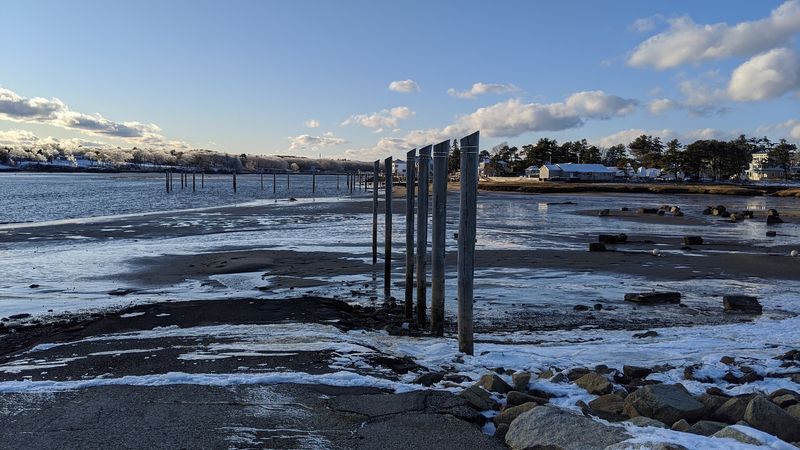
For all the loss and uncertainty that defines Camp Ellis, people keep coming back. There is a raw, unfiltered quality to the place that most polished beach towns have long since smoothed away.
The cottages that remain are modest and lived-in. The ocean here feels genuinely powerful, not decorative.
The mouth of the Saco River meeting the Atlantic creates a dramatic, shifting landscape that photographers and nature lovers find endlessly interesting. On a calm day the light here is extraordinary, bouncing off the water in ways that make even a simple snapshot look considered.
On a stormy day it is something else entirely, loud and grey and humbling.
Camp Ellis developed as a seasonal community after the breakwater was built, and traces of that original character still survive in the older structures and the tight layout of the streets. It never became a resort town, and that is honestly part of its appeal.
The history of loss is visible in the landscape, but so is the stubborn presence of a community that has chosen to stay. Visiting here feels less like a typical beach trip and more like bearing witness to something real, beautiful, complicated, and worth remembering.
Address: Saco, Maine 04072
