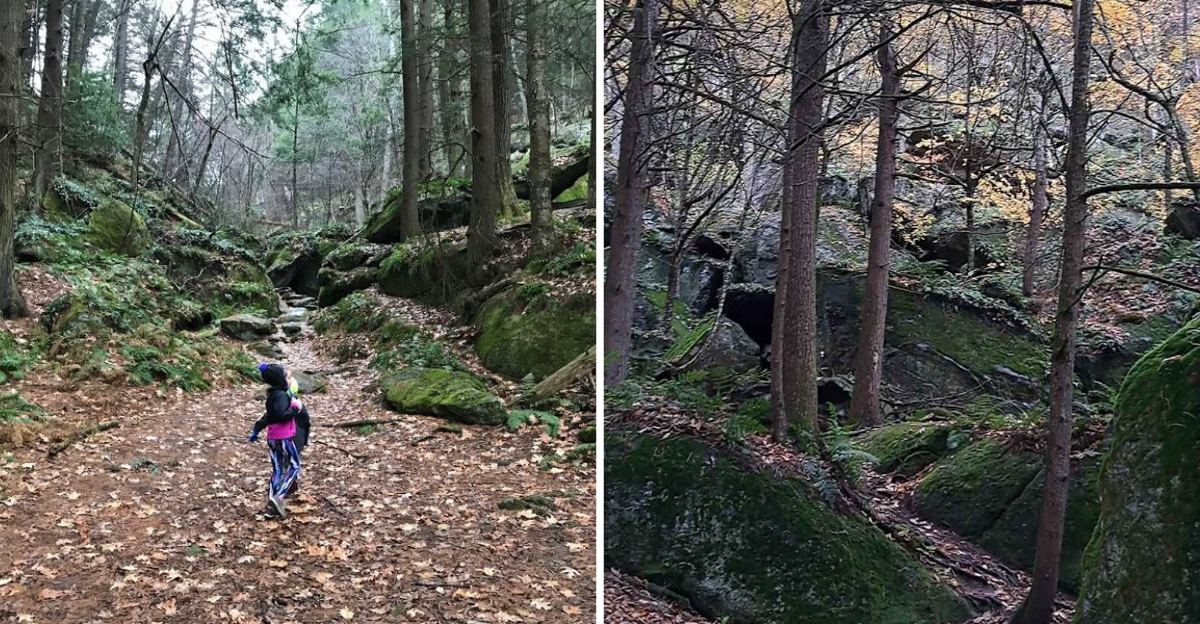
There is a place in Massachusetts that feels like it belongs to a different world entirely. Tucked into a corner of a small Berkshire town, a glacial ravine carved out during the last ice age has been quietly waiting there ever since. The moment you slip between its towering boulders and ancient hemlocks, the temperature drops noticeably, even on a blazing summer afternoon.
That chill is not your imagination. It is geology doing something remarkable, and once you feel it, you will never forget it. The cold hits you before you expect it, wrapping around your arms and making you want to pull your sleeves down even though you packed for a summer hike.
This is one of those rare spots that earns every bit of its reputation.
The Cold That Hits Before You Expect It
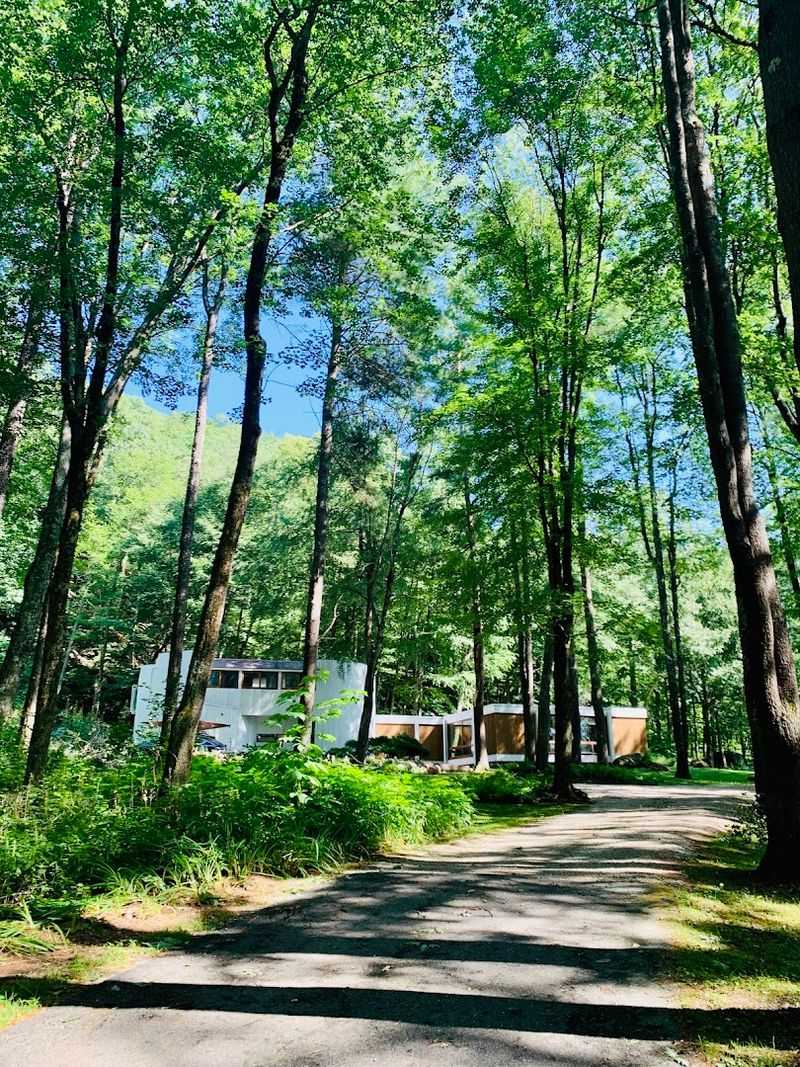
The temperature change happens fast. One moment you are walking a warm trail through the Berkshires, and the next, a wave of cool air rolls out from between the boulders like something opened a door to a giant freezer.
Ice Glen earns its name in the most literal way possible. The ravine runs north to south, which means sunlight rarely reaches deep into its crevices.
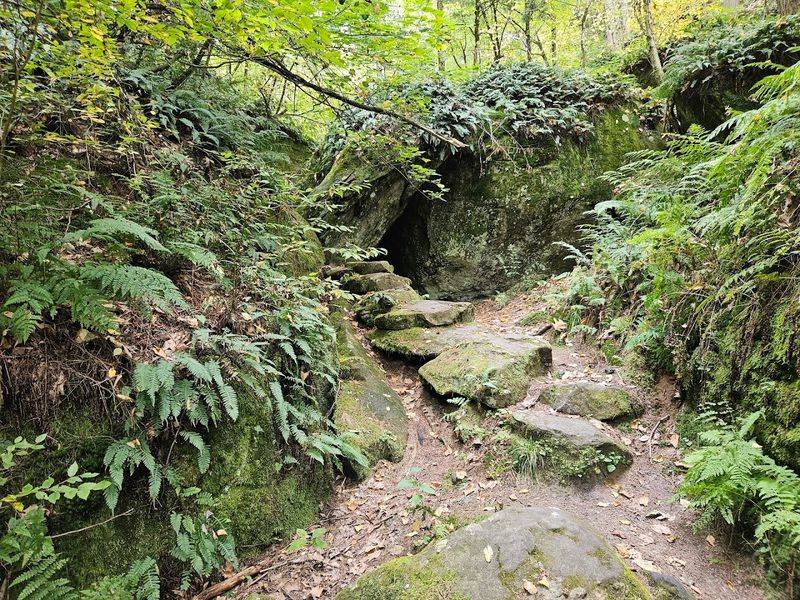
Those enormous glacial boulders, stacked and tilted at strange angles, trap cold air underneath them and release it slowly throughout the warmer months.
Ice and snow have been documented lingering in the deepest rock pockets well into late spring, and sometimes even summer. The stones act like natural insulation, holding onto winter long after the rest of the Berkshires has thawed out completely.
Hikers who visit on hot July days often stop mid-trail just to stand still and feel it. That sudden coolness is not subtle.
It wraps around you, prickling your arms and making you want to pull your sleeves down even though you packed for a summer hike.
This natural refrigerator effect is what made Ice Glen famous in the 1800s, drawing curious visitors from across the region. The science behind it is simple, but experiencing it firsthand feels genuinely surprising every single time.
Some places explain themselves. Ice Glen just makes you feel it first.
A Ravine With Real Literary Roots
Not many hiking trails in Massachusetts can claim a connection to two of American literature’s biggest names. Ice Glen has that distinction, and it adds a layer of atmosphere to the place that goes beyond just rocks and trees.
Nathaniel Hawthorne visited Ice Glen during his time in the Berkshires. Herman Melville, who lived nearby in Pittsfield, referenced it in “Moby-Dick,” describing a wood “as green as mosses of the Icy Glen.” That single line has sent literary-minded travelers down this trail for generations.
The first documented excursion through the glen was recorded in 1841, which means people have been squeezing between these boulders and marveling at the cold for well over 180 years. That kind of history quietly charges the air around a place.
Knowing that Hawthorne and Melville walked somewhere similar to where you are standing shifts how you look at the moss, the shadows, and the way the trees block out the sky. It makes the whole experience feel more layered, more weighted with meaning than your average nature walk.
The Berkshires attracted serious creative minds throughout the 19th century, and Ice Glen was part of that landscape. It was not just scenery.
It was inspiration. Visiting today with that context in mind turns a short hike into something closer to a conversation with history.
The glen has stories pressed into every stone.
Old-Growth Trees That Redefine Scale
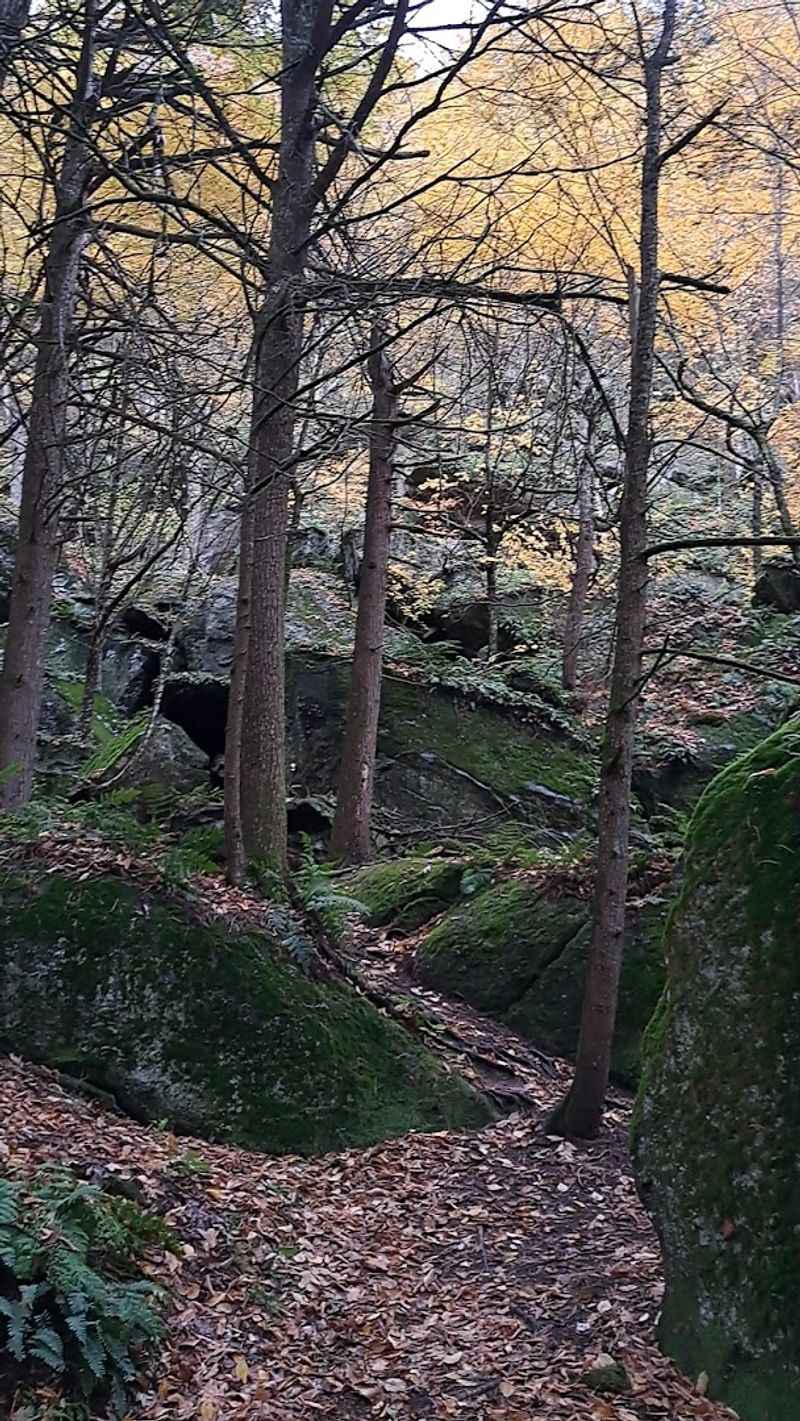
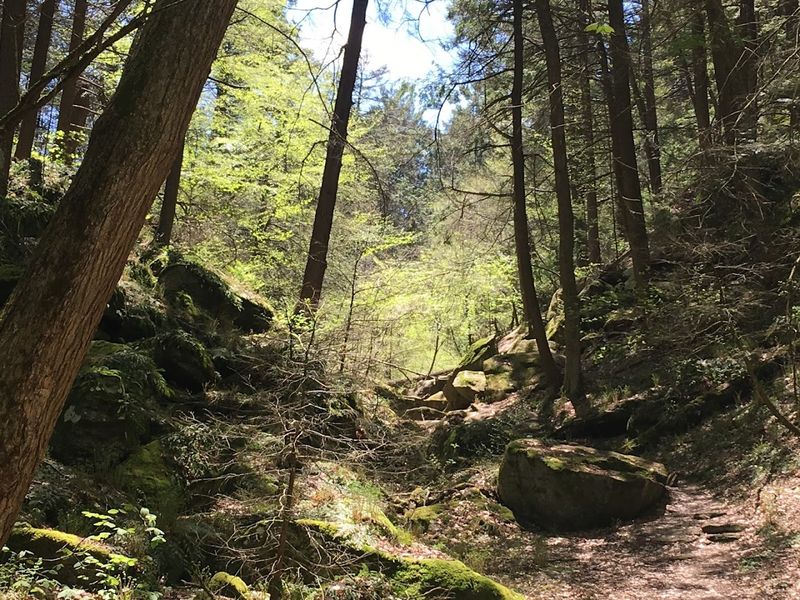
Looking straight up inside Ice Glen is genuinely humbling. The hemlock and pine trees here have been growing for over 300 years, and some of them reach between 130 and 160 feet into the sky.
That is not a typo. These trees are enormous.
Ice Glen is considered one of the most accessible old-growth forests in all of Massachusetts. That is a remarkable thing to have tucked inside a small Berkshire town, and most people driving through Stockbridge have no idea it exists just a short walk from the road.
Old-growth forest in New England is genuinely rare. Centuries of logging cleared most of the original forest cover across the region, which makes places like this not just beautiful but ecologically significant.
The trees here have never been cut, and that makes them living records of a much older landscape.
The scale of these hemlocks changes how the light falls inside the ravine. Everything feels filtered, green-tinted, and hushed.
Sound behaves differently under a canopy that dense, and your footsteps feel quieter, more respectful, almost automatically.
Conservation efforts have been active here in recent years, specifically targeting the hemlock woolly adelgid, an invasive pest that threatens hemlock populations across the Northeast. Treatments were initiated in early 2021 to protect these irreplaceable trees.
Visiting Ice Glen is, in a small way, a reminder of why protecting old-growth habitat actually matters beyond just aesthetics.
The Trail Itself Is Half the Adventure
The trail through Ice Glen is not long, clocking in at roughly 1.25 miles total. But short does not mean easy, and anyone who has navigated the boulder field inside the glen will tell you that distance is not really the point here.
You will use your hands. That is just the reality of this hike.
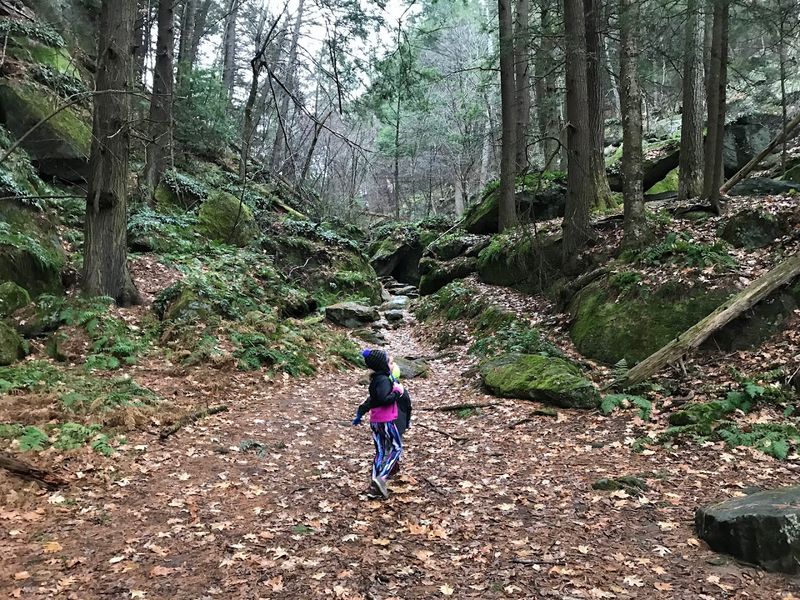
The path winds between and over massive glacial rocks, some of which require a careful scramble to get past. Good boots with ankle support are genuinely useful, not optional.
Wet or icy conditions make the trail significantly more difficult and slippery. If rain has come through recently, the moss-covered rocks get very slick.
Timing your visit for a dry day makes the whole experience more enjoyable and a lot safer.
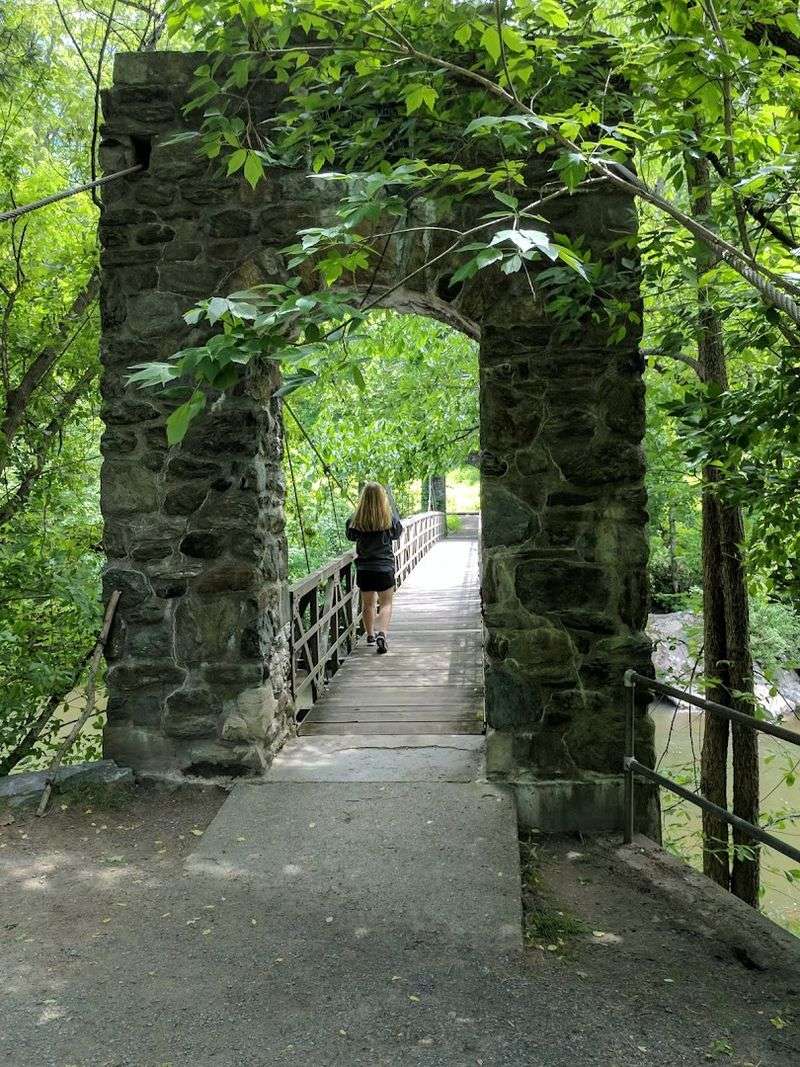
The access point typically starts at the dead end of Park Street, where you cross the Goodrich Memorial footbridge over the Housatonic River before picking up the trail. That bridge crossing is its own quiet pleasure, with the river moving beneath you before the forest closes in ahead.
Many visitors loop back out via Ice Glen Road, which opens up to lovely views of the surrounding hills before connecting back to Route 7 and then Park Street. The whole loop takes most people between one and two hours depending on pace.
It feels much longer in the best possible way, like the glen stretches time a little once you are inside it.
David Dudley Field Jr. and the Gift of Public Land
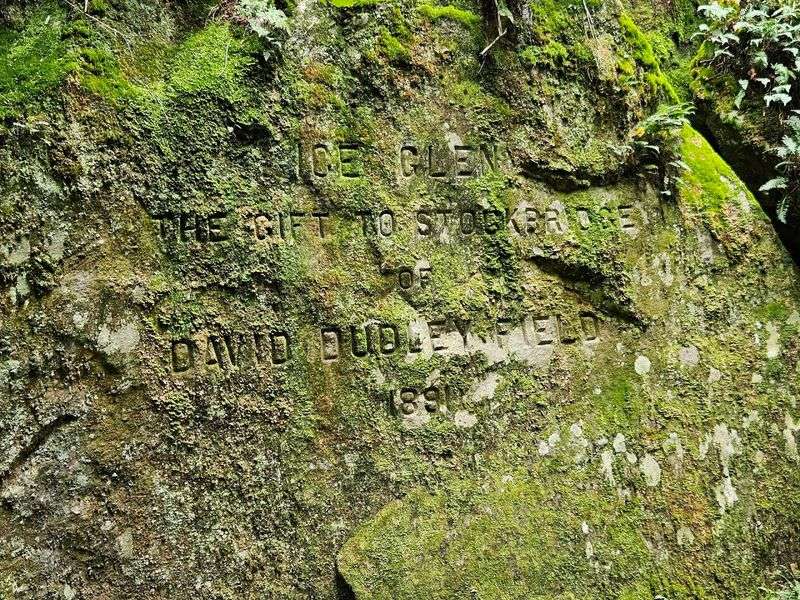
Not every remarkable natural place survives because of luck. Ice Glen exists as a public preserve today largely because of one person’s deliberate decision to protect it over 130 years ago.
In 1891, legal reformer David Dudley Field Jr. donated approximately 40 acres containing Ice Glen to the town of Stockbridge. That act of generosity ensured the ravine would remain open to the public rather than disappearing into private ownership or development.
It is the kind of quiet civic gesture that tends to get forgotten but whose impact compounds with every generation that gets to walk through these trees.
The Laurel Hill Association, founded in 1853 and recognized as one of the oldest village beautification societies in the entire country, has maintained the property and its trail network ever since. Their ongoing stewardship is the reason the trails are navigable and the land stays protected.
There is something worth sitting with in that history. A place this special did not stay special by accident.
People fought to preserve it, maintained it through changing seasons and changing times, and kept the gates open for anyone who wanted to come.
Visiting Ice Glen today is a small act of participating in that long chain of care. You are walking a trail that someone loved enough to give away, maintained by people who have spent over a century making sure it stays worth visiting.
That adds real texture to the experience.
The Torchlight Procession Tradition
Some places develop traditions that stick around for over a century. Ice Glen is one of them, and the tradition it inspired is genuinely unlike anything else in the Berkshires.
By the late 19th century, Ice Glen had become the centerpiece of an annual torchlight procession through the ravine. Imagine winding through that narrow, boulder-filled gorge at night, lit only by handheld torches, with the cold air still rolling out from between the rocks and ancient trees towering overhead in the dark.
That event became a signature Stockbridge tradition and has continued to draw participants for generations. It transforms a daytime nature walk into something theatrical, even a little mysterious.
The glen at night, with its deep shadows and irregular rock formations, must feel completely different from any daylight visit.
Traditions like this reveal how a community relates to a place over time. Ice Glen was not just scenery to the people of Stockbridge.
It was a gathering point, a setting for shared experience, a landmark woven into the town’s identity.
If your visit happens to coincide with the torchlight event, that is a genuinely rare experience worth planning around. Even if it does not, knowing the tradition exists changes how you look at the trail.
Every rock and root you step over during the day has been stepped over by torchlight too, by people going back well over 100 years. That continuity is quietly moving.
Why Ice Glen Stays With You After You Leave
Some hikes are easy to forget once you are back in the car and heading to lunch. Ice Glen is not one of those.
There is something specific about it that lodges in your memory and stays there.
Part of it is the physical sensation of that cold air. Your body remembers temperature in a way it does not always remember scenery.
That chill, arriving suddenly in the middle of a warm day, leaves a sensory impression that holds.
Part of it is the scale of those ancient trees pressing in from above and the boulders pressing in from the sides. The ravine is narrow and the forest is dense, which creates a feeling of being genuinely enclosed by something much older and larger than yourself.
It is not uncomfortable. It is clarifying.
And part of it is just the surprise of the place. Most people do not expect to find a glacial ravine with old-growth hemlocks and a literary history tucked into a small Berkshire town.
The gap between expectation and reality is where memorable travel lives.
Ice Glen rewards the curious and the unhurried. It is not a destination that rushes you or asks you to perform enthusiasm.
It simply exists, cold and green and ancient, and lets you figure out what it means to you. That kind of quiet confidence in a place is rare.
It is also exactly why people keep coming back.
Address: Park Street, Stockbridge, MA 01262
