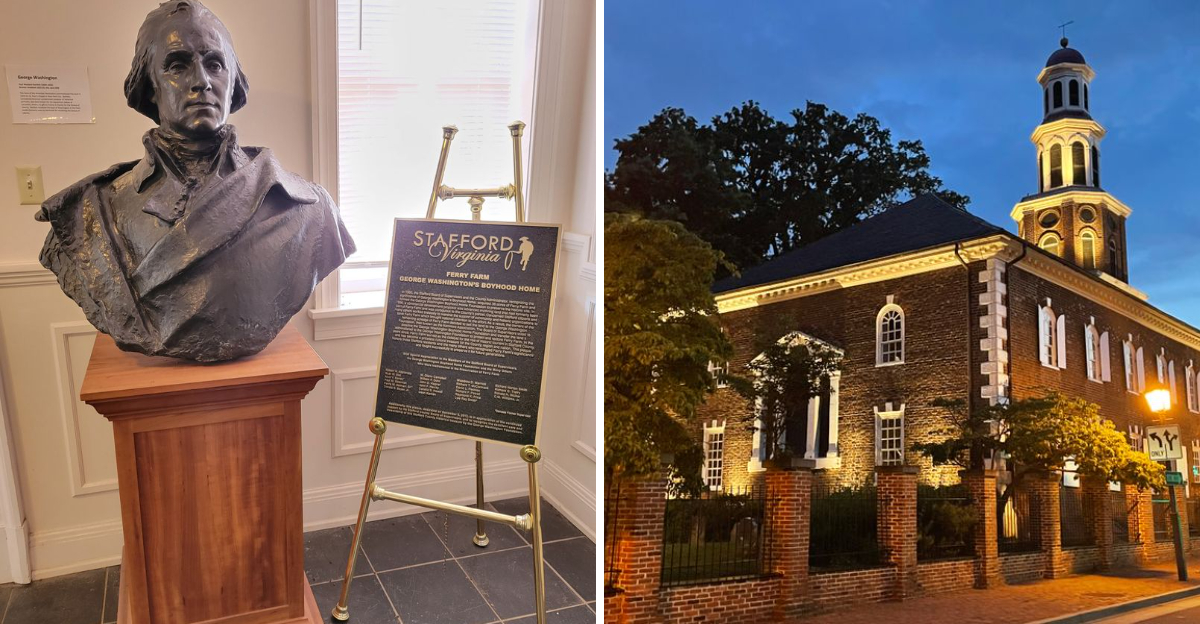
Think you know the real George Washington? Most people picture the stern portrait on the dollar bill, but the man behind the legend was so much more than powdered wigs and wooden teeth myths.
Virginia holds the keys to understanding America’s first president in ways no textbook ever could. Walking the same grounds where he grew up, worshipped, commanded troops, and built his dream estate brings history to life in the most thrilling way possible.
This Presidents’ Day weekend offers a rare chance to celebrate his birthday exactly where he celebrated it, surrounded by the places that shaped the father of our nation. From his beloved Mount Vernon to battlefields that changed the course of history, these ten Virginia landmarks invite you to step back in time and experience Washington’s world firsthand.
Whether you’re a history buff or just looking for an unforgettable weekend adventure, Virginia’s tribute to its most famous son promises stories, surprises, and maybe even a slice of birthday cake at the place where it all began.
1. George Washington’s Mount Vernon
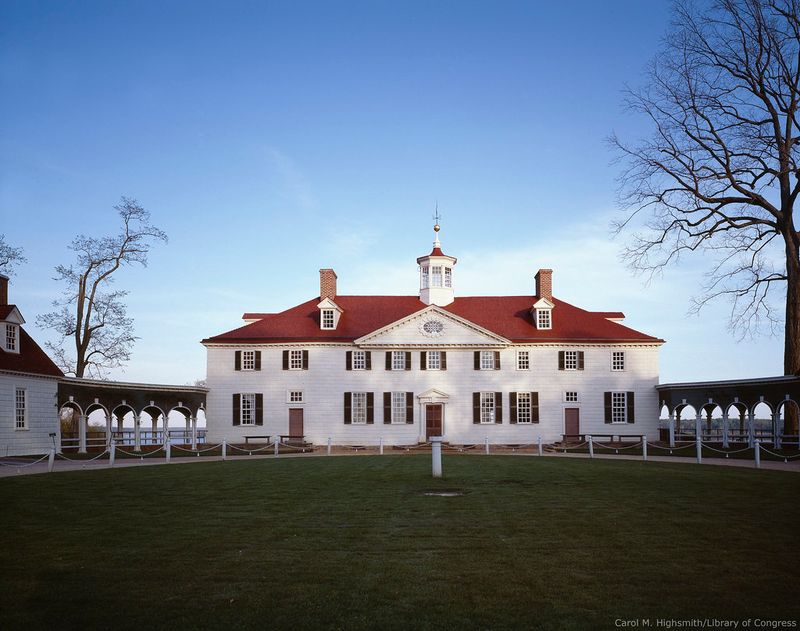
Picture waking up to sweeping views of the Potomac River from a piazza George Washington himself designed. Mount Vernon wasn’t just a home; it was Washington’s passion project, a place he constantly improved and expanded throughout his life.
Located at 3200 Mount Vernon Memorial Highway, this estate reveals the private side of a very public figure.
February 22 transforms the grounds into a patriotic celebration worthy of the man who never wanted to be king. The day kicks off at nine in the morning and runs until four in the afternoon, packed with events that honor both Washington’s legacy and American ideals.
New citizens take their oath during a naturalization ceremony at eleven, a moving reminder that the freedoms Washington fought for still draw people from around the world.
At noon, dignitaries gather at his tomb for a solemn wreath-laying ceremony. The silence during this moment feels profound, connecting visitors across centuries to the man resting just feet away.
Later, the United States Air Force Strings fill the air with music at two-thirty, adding an elegant soundtrack to your exploration.
Between ceremonies, you can wander through meticulously restored rooms where Washington made decisions that shaped a nation. His study, bedroom, and even the kitchen offer intimate glimpses into daily life at the estate.
The grounds stretch across acres of gardens, outbuildings, and walking trails that Washington himself once strolled.
Don’t miss the museum and education center, where interactive exhibits bring the Revolutionary era to vivid life. Mount Vernon makes history feel less like dusty facts and more like meeting an old friend.
2. George Washington Birthplace National Monument
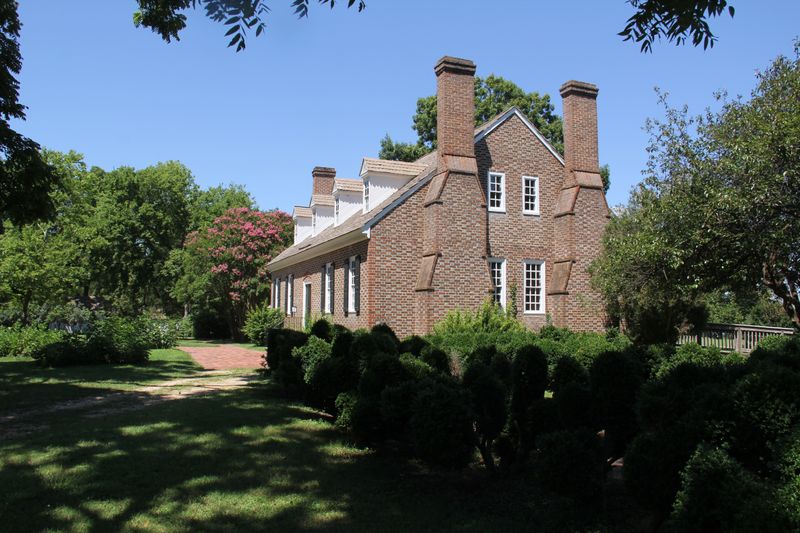
Colonial Beach holds the ultimate Washington origin story. The George Washington Birthplace National Monument marks the exact spot where America’s first president entered the world on February 22.
Standing here feels like touching the very beginning of the American experiment, long before anyone imagined what this baby would accomplish.
The monument sprawls across peaceful countryside at Colonial Beach, VA 22443, recreating the colonial plantation where Washington spent his earliest years. A Memorial House built during the 1930s sits near the original foundation, offering a glimpse into eighteenth-century Virginia plantation life.
Brick walkways connect various buildings and gardens designed to reflect the period.
February 22 brings the place to life with festivities running from ten in the morning until five in the evening. Live music drifts across the grounds while a blacksmith demonstrates colonial metalworking techniques, hammering red-hot iron just as craftsmen did during Washington’s childhood.
These hands-on demonstrations make history tangible in ways museums rarely achieve.
The real party happens at two o’clock at the Log House, where visitors gather for birthday cake and punch. Yes, actual cake, just like Washington might have enjoyed during his own celebrations.
The atmosphere turns festive as strangers bond over shared slices and speculation about what the birthday boy would think of modern America.
At three-thirty, the mood shifts to reverence during the formal wreath-laying ceremony. This tradition honors not just Washington’s birth but everything he represents about leadership, sacrifice, and vision.
Walking the nature trails afterward, with the Potomac Creek flowing nearby, you can almost imagine a young George exploring these same woods, completely unaware of his destiny.
3. The George Washington Masonic National Memorial
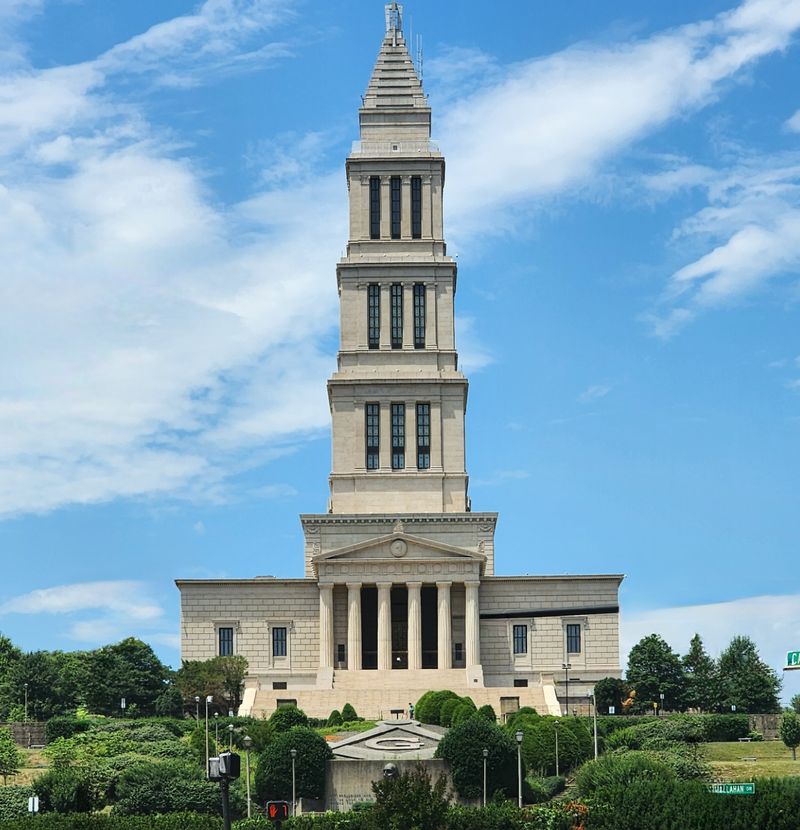
Soaring above Alexandria at 101 Callahan Drive, this memorial dominates the skyline like a beacon honoring Washington’s lesser-known role as a Freemason. The building itself commands attention, a towering tribute blending ancient Egyptian and classical Greek architectural elements.
Washington joined the Masons as a young man, and the fraternity shaped much of his philosophy about brotherhood and civic duty.
While the main birthday banquet typically happens earlier in the month, the memorial remains open for guided tours throughout late February. These tours peel back layers of symbolism woven throughout the building, from the grand entrance hall to the various themed rooms on upper floors.
Each space tells part of Washington’s Masonic journey and the values he carried into public service.
Climbing to the ninth floor rewards visitors with the best panoramic views anywhere in the region. From this observation deck, you can see the Potomac River, the Capitol dome, and landmarks scattered across Northern Virginia and Maryland.
Washington himself surveyed much of this land as a young man, so gazing across it from this height creates a powerful connection to his early career.
The memorial houses fascinating artifacts, including items Washington actually owned and used during Masonic ceremonies. Seeing his personal apron or reading letters he wrote to fellow Masons makes the historical figure feel remarkably human.
The building also contains a research library for those wanting to dig deeper into his Masonic connections.
Guides share stories that textbooks skip, revealing how Masonic principles influenced Washington’s approach to leadership and unity. The memorial celebrates not just a man but an entire philosophy of service, equality, and brotherhood that resonated throughout his life and presidency.
4. Gadsby’s Tavern Museum
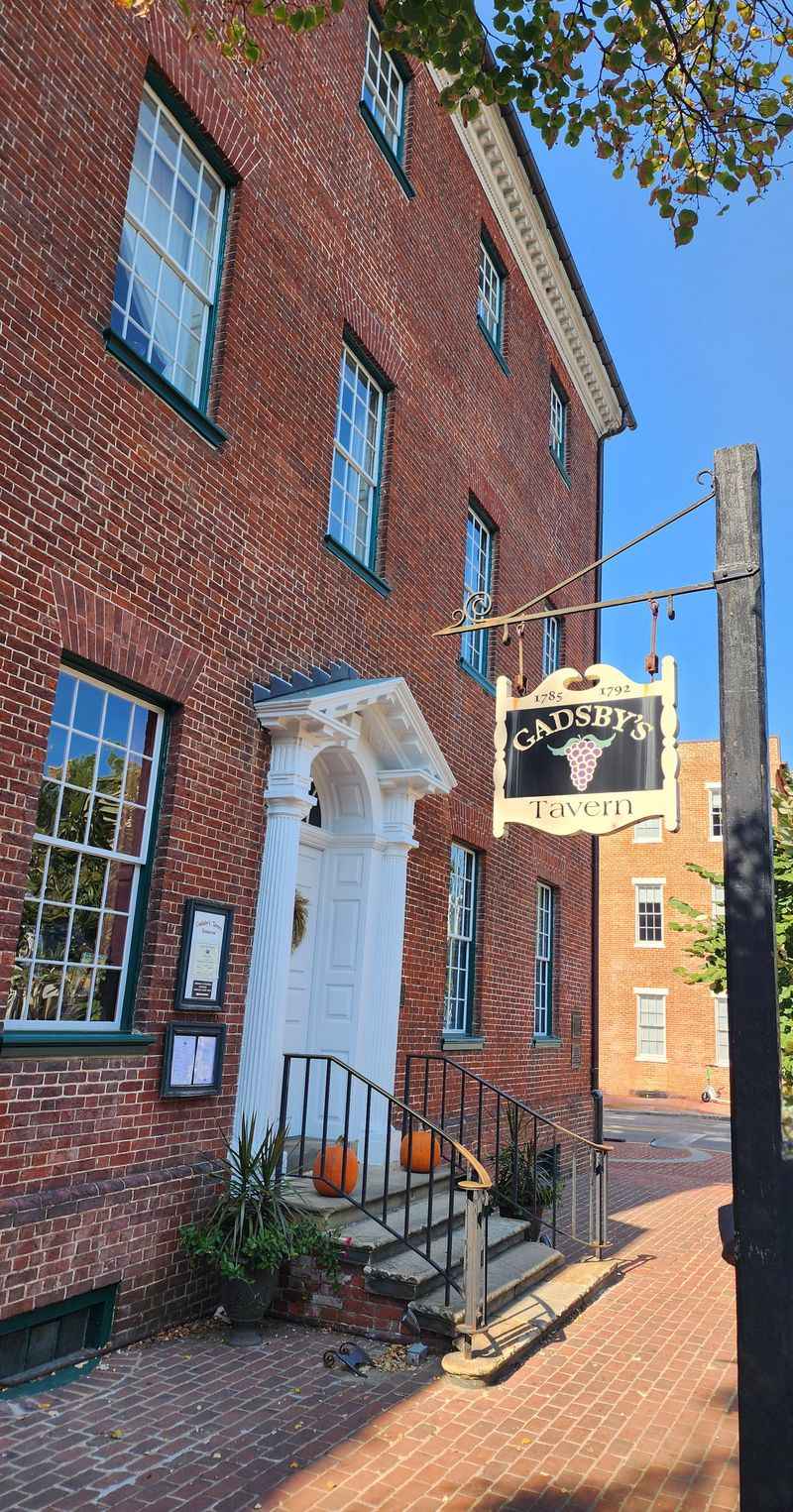
Alexandria’s historic district preserves a social hub where Washington regularly celebrated, debated, and danced. Gadsby’s Tavern Museum at 134 North Royal Street served as the beating heart of colonial social life, hosting everyone from traveling merchants to founding fathers.
Washington loved this place, returning again and again for both business and pleasure.
The tavern’s most famous connection involves the annual Birthnight Balls held in Washington’s honor. Imagine the ballroom filled with candlelight, musicians playing period instruments, and Washington himself leading dances with Martha by his side.
These weren’t stuffy political events but joyful celebrations where the future president relaxed and enjoyed himself among friends.
Tours run Wednesday through Sunday in late February, guiding visitors through the same rooms where history unfolded. The ballroom still echoes with phantom music, its polished floors reflecting the chandeliers just as they did centuries ago.
Costumed interpreters share stories about specific events, like the time Washington gave his final military address to his officers in an upstairs room.
Downstairs, the tavern’s public rooms reveal how colonials socialized before television and smartphones. Men gathered around tables for heated political discussions, sealed business deals with handshakes, and shared news from distant colonies.
The atmosphere encouraged the kind of face-to-face interaction that built revolutionary fervor and eventually a new nation.
Don’t rush through the second-floor lodging rooms, where traveling guests once slept. These intimate spaces show the reality of eighteenth-century accommodations, far removed from modern hotel comfort.
Washington stayed here multiple times, making these rooms direct links to his personal experiences and the era that shaped American independence.
5. Christ Church Alexandria
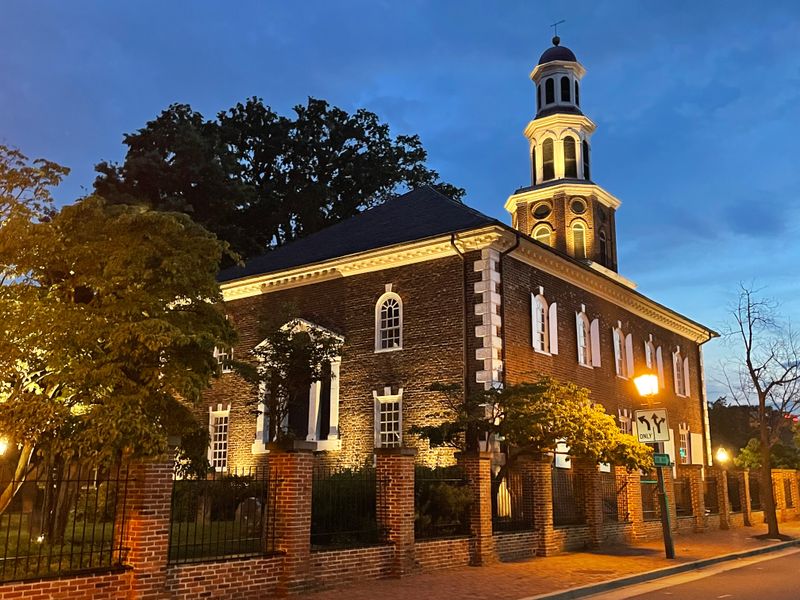
Worship where Washington worshipped. Christ Church Alexandria at 118 North Washington Street has welcomed congregations since before American independence, and Washington maintained a family pew here throughout his life.
The red brick building with its white steeple remains remarkably unchanged, offering a rare chance to sit exactly where a founding father sat every Sunday.
Walking through the front door feels like stepping through a time portal. The interior preserves its colonial character, from the box pews to the brass chandeliers hanging from the ceiling.
Pew 60 belonged to the Washington family, and sitting in it during a service connects you across generations to their spiritual practice.
The church stays active, hosting regular worship services and special commemorative events during the week of Washington’s birthday. These services blend traditional Anglican liturgy with reflections on Washington’s faith and how it influenced his leadership.
Hearing hymns Washington himself sang creates goosebumps, especially when sunlight streams through the original glass windows.
Beyond Sunday services, the church offers historical tours that explore its role in colonial and Revolutionary life. Guides explain how religion and politics intertwined during the founding era, with churches serving as community gathering spots for much more than prayer.
Washington’s attendance here wasn’t just about faith; it was about community leadership and setting an example.
The churchyard surrounding the building invites quiet reflection among old gravestones and ancient trees. Many early Alexandrians rest here, their stories woven into the fabric of the church and city.
Washington’s connection to this sacred space reminds visitors that even the father of the country needed spiritual grounding and community worship to navigate the challenges he faced.
6. Colonial Williamsburg
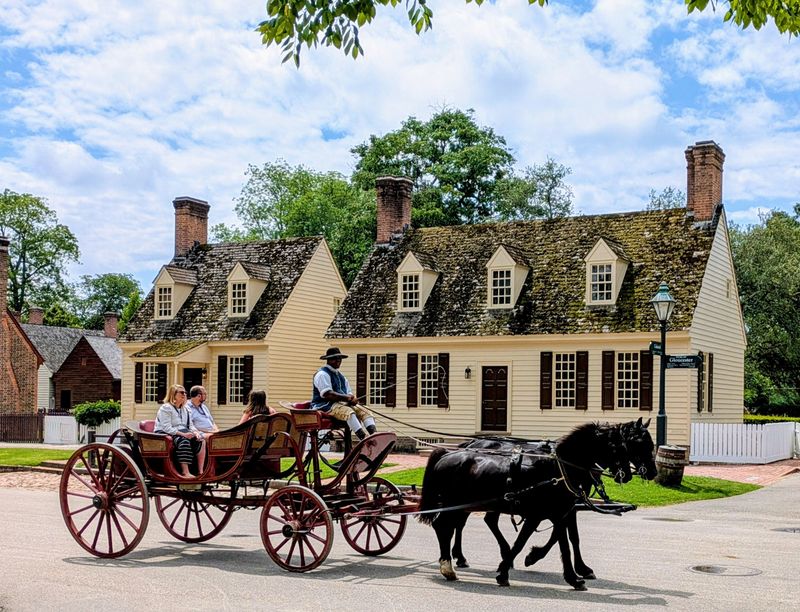
Step into the largest living history museum in America at 101 Visitor Center Drive. Colonial Williamsburg recreates an entire eighteenth-century city where Washington walked, legislated, and learned the political skills that would later save a revolution.
The restored capital stretches across hundreds of acres, populated by costumed interpreters who bring the past to vivid, breathing life.
Meeting a George Washington character interpreter ranks among the most surreal experiences Virginia offers. These talented performers don’t just wear the costume; they embody Washington’s mannerisms, speech patterns, and worldview.
Conversations with this living portrait reveal the man behind the mythology, answering questions about everything from his military strategy to his thoughts on slavery.
Special thematic tours focusing on Washington’s time in the House of Burgesses typically run through the end of February. These guided experiences trace his political evolution from a young surveyor to a colonial legislator grappling with British tyranny.
Walking the same streets where he debated Virginia’s future makes abstract history feel immediate and relevant.
The Capitol building stands as the centerpiece, where Washington and other burgesses argued policies that would eventually spark revolution. Interpreters reenact historical debates, showing how colonial government actually functioned and how Washington honed his leadership abilities.
The passion in these performances makes dry civics lessons suddenly fascinating.
Beyond Washington-specific programming, Williamsburg offers countless other historical experiences. Blacksmiths forge tools, bakers pull fresh bread from colonial ovens, and printers set type for newspapers.
Taverns serve period-inspired food and drink, letting you taste what Washington might have enjoyed after long legislative sessions. Every corner reveals another layer of colonial life, creating an immersive experience unlike any traditional museum.
7. Yorktown Battlefield
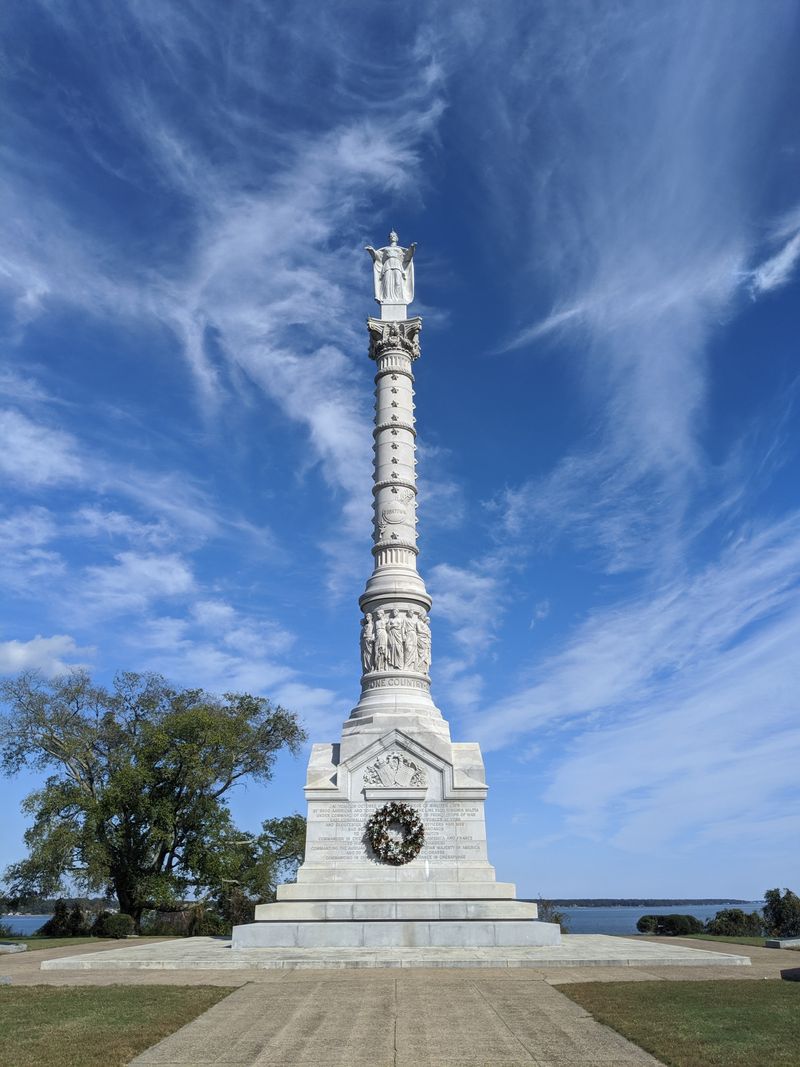
Victory tastes sweetest at the place where Washington secured it. Yorktown Battlefield at 1000 Colonial National Historical Parkway preserves the site of the final major battle in the Revolutionary War, where combined American and French forces trapped British General Cornwallis and forced his surrender.
Washington’s brilliant strategy and patience culminated here in a triumph that changed world history.
The visitor center sets the stage with exhibits explaining the complex military and diplomatic maneuvering that made Yorktown possible. Maps illustrate troop movements, while artifacts recovered from the battlefield bring the siege to tangible life.
Watching the orientation film before exploring the grounds helps visitors understand what they’re seeing and why it mattered so profoundly.
Driving the battlefield tour route takes you past earthworks, redoubts, and artillery positions that still scar the landscape. Interpretive signs mark where crucial actions occurred, like the nighttime assault on Redoubt 10 that tightened the noose around Cornwallis.
Standing at these spots, imagining cannon fire and desperate charges, makes the Revolutionary War feel less like ancient history and more like yesterday’s news.
The surrender field deserves extended contemplation. This open ground witnessed British troops laying down their arms while their band allegedly played a tune called The World Turned Upside Down.
Washington watched from horseback, maintaining the dignified bearing that defined his command style. The moment represented not just military victory but the birth of a new nation.
Walking trails wind through the battlefield, offering quieter ways to explore the terrain. These paths pass through woods and fields that soldiers once fought across, their sacrifice literally embedded in the soil.
Yorktown reminds visitors that freedom came at tremendous cost, purchased by courage Washington inspired in men who believed his vision of independence.
8. Mary Washington House
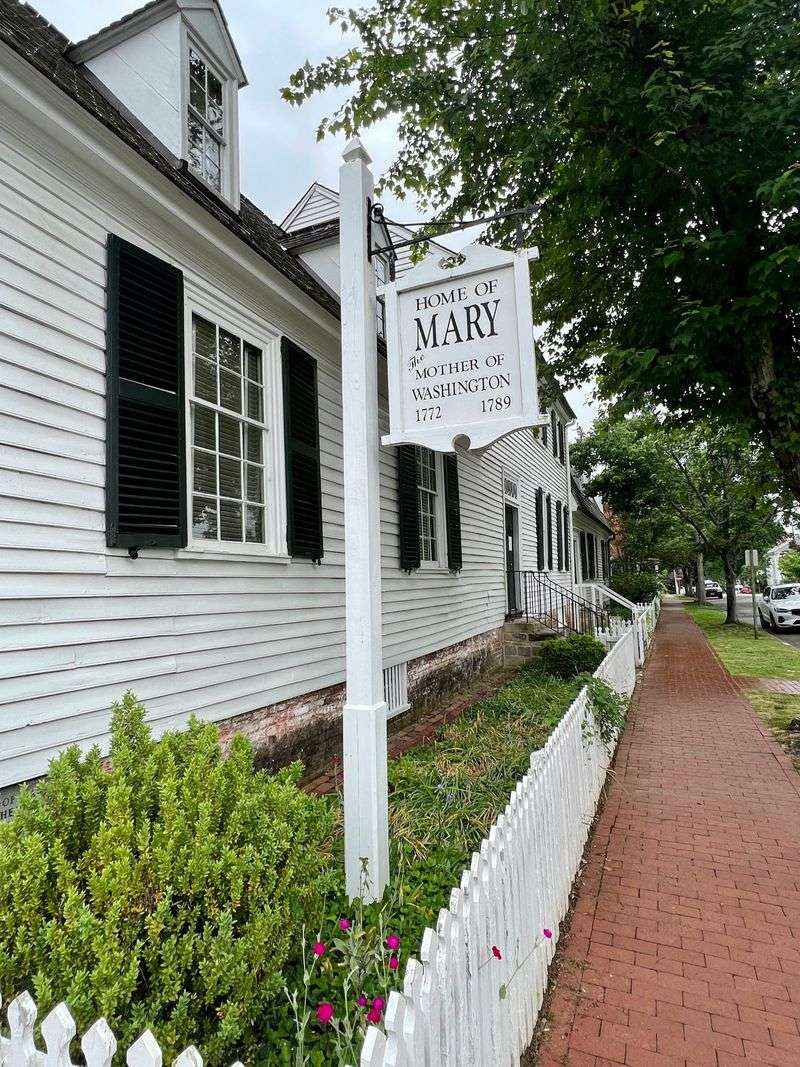
Fredericksburg holds the key to understanding Washington’s family dynamics. The Mary Washington House at 1200 Charles Street served as the final home of George’s mother, a strong-willed woman who shaped her famous son in complex ways.
Their relationship mixed deep affection with frequent tension, revealing a more human side of Washington than most monuments acknowledge.
Mary Ball Washington lived here during her son’s presidency, maintaining her independence rather than moving to the capital. Tours explore this choice and what it reveals about both mother and son.
The modest house contrasts sharply with Mount Vernon’s grandeur, showing Mary’s practical nature and her preference for simplicity over status.
Open for tours late in the month, the house preserves period furnishings and personal items that illuminate daily life for an eighteenth-century widow. Mary’s bedroom, kitchen, and parlor feel intimate, inviting visitors to imagine her routine and thoughts.
She gardened extensively, and the restored grounds showcase plants she would have grown for food and medicine.
George visited regularly, though their interactions often involved disagreements about money and her persistent requests for financial help. These very human conflicts make Washington more relatable, showing that even founding fathers dealt with complicated family relationships.
The house doesn’t shy away from these tensions, presenting a balanced portrait of both mother and son.
Guides share stories about Mary’s influence on George’s character, particularly her emphasis on honesty and duty. The famous cherry tree legend may be fiction, but Mary’s insistence on truthfulness clearly shaped Washington’s reputation for integrity.
Understanding her role adds depth to appreciating the man who couldn’t tell a lie, even if that specific story never happened.
9. George Washington’s Ferry Farm
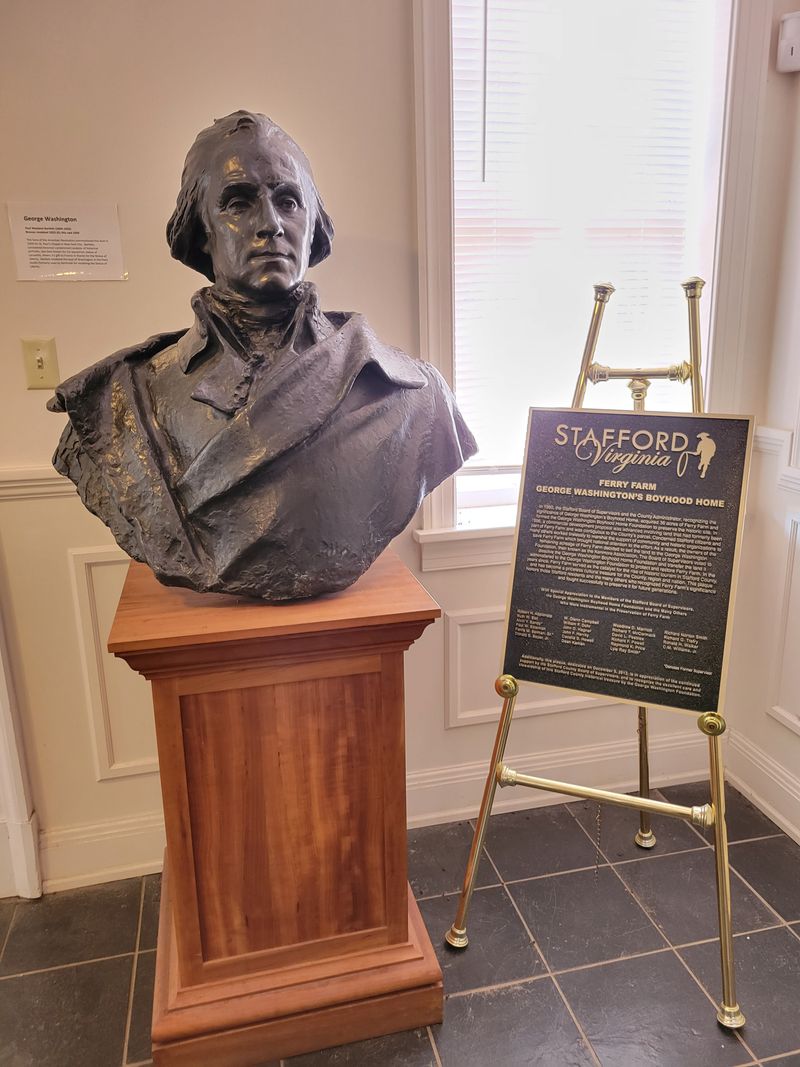
Childhood shapes destiny, and Washington’s began at Ferry Farm, located at 268 Kings Highway. This property along the Rappahannock River hosted the future president from age six through young adulthood, providing the setting for his formative years.
While the main public birthday festival typically occurs earlier, the site remains open for tours of his reconstructed boyhood home and fascinating ongoing archaeological digs.
Archaeologists continue uncovering artifacts that reveal daily life during Washington’s youth. Pottery shards, tools, buttons, and even toys emerge from the soil, each piece adding detail to our understanding of his early environment.
Visitors can often watch excavations in progress, seeing history literally unearthed before their eyes.
The reconstructed house stands on the original foundation, built using eighteenth-century techniques and materials. Walking through rooms where young George studied, ate meals, and dreamed about his future creates powerful connections.
These weren’t the quarters of wealth and privilege; the Washington family lived comfortably but modestly during these years.
Ferry Farm’s location along the Rappahannock placed it at a transportation crossroads, exposing young George to travelers and traders from across the colonies. This early exposure to diverse people and ideas likely broadened his perspective and prepared him for later leadership roles.
The river itself offered opportunities for swimming, fishing, and exploring that shaped his love of the outdoors.
Interpreters demonstrate colonial skills like candle-making and hearth cooking, showing how households functioned without modern conveniences. These hands-on activities help visitors appreciate the labor involved in daily survival and the resourcefulness Washington learned as a boy.
The famous cherry tree supposedly stood here, and whether true or not, the legend speaks to values his mother instilled during these formative Ferry Farm years.
10. George Washington’s Office Museum
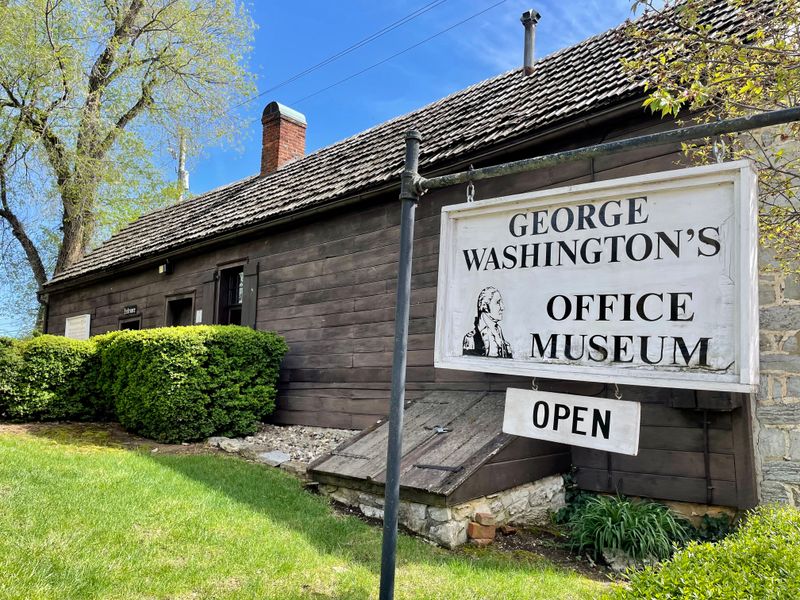
Winchester preserves Washington’s earliest professional workspace. The small stone building at 32 West Cork Street served as his military headquarters during the French and Indian War, years before anyone imagined American independence.
This humble structure witnessed Washington’s transformation from a young colonial officer into a seasoned military leader who would eventually command the Continental Army.
Open for seasonal tours starting in late February, the office feels remarkably intimate compared to grander Washington sites. Its small scale emphasizes how young he was during these frontier campaigns, barely in his twenties yet responsible for defending Virginia’s western border.
The stone walls still radiate the seriousness of that responsibility and the harsh realities of frontier warfare.
Inside, period furnishings recreate the workspace where Washington wrote reports, planned defenses, and managed troops scattered across a vast wilderness. Maps on the walls show the territory he protected, highlighting the challenges of coordinating defense across such distances with primitive communication.
His desk, similar to one he actually used, invites visitors to imagine him bent over correspondence by candlelight.
These French and Indian War years taught Washington crucial lessons about military leadership, supply logistics, and the limits of colonial support from Britain. Frustrations with British commanders and insufficient resources planted seeds of resentment that would later fuel revolutionary fervor.
The office represents not just a historical site but a classroom where Washington learned skills that would prove essential decades later.
Winchester itself offers charming historic districts worth exploring after visiting the office. The town played important roles throughout American history, and walking its streets connects Washington’s early career to the broader story of Virginia’s frontier settlement and westward expansion.
Dear Reader: This page may contain affiliate links which may earn a commission if you click through and make a purchase. Our independent journalism is not influenced by any advertiser or commercial initiative unless it is clearly marked as sponsored content. As travel products change, please be sure to reconfirm all details and stay up to date with current events to ensure a safe and successful trip.
