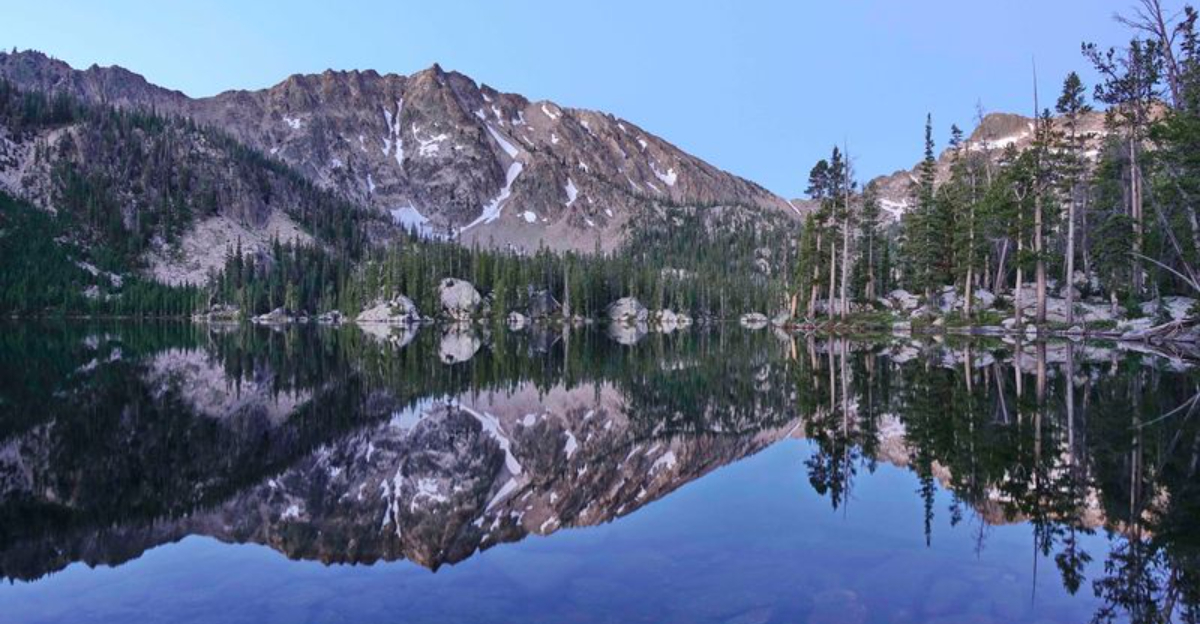
Idaho’s backcountry holds secrets that modern technology can’t always unlock, and some of the state’s most breathtaking alpine lakes remain hidden from the digital world.
These remote bodies of water sit tucked away in wilderness areas where cell signals fade and satellite imagery becomes unreliable, forcing adventurers to rely on old-fashioned navigation skills and local knowledge.
Finding these pristine lakes requires patience, determination, and sometimes a willingness to bushwhack through unmarked terrain where even the most sophisticated GPS units struggle to maintain accuracy.
The reward for your effort includes crystal-clear waters, untouched shorelines, and the kind of solitude that’s increasingly rare in our connected age.
Whether you’re an experienced backcountry explorer or someone looking to disconnect from the digital noise, these hidden gems offer an authentic wilderness experience that reminds us why some places are worth the extra effort to find.
Pack your topographic maps, brush up on your compass skills, and prepare to discover Idaho’s most elusive alpine treasures where technology takes a backseat to traditional wayfinding.
The journey to these lakes becomes part of the adventure itself, testing your navigation abilities while rewarding you with views that few people ever witness.
1. Heart Lake in the Sawtooth Wilderness
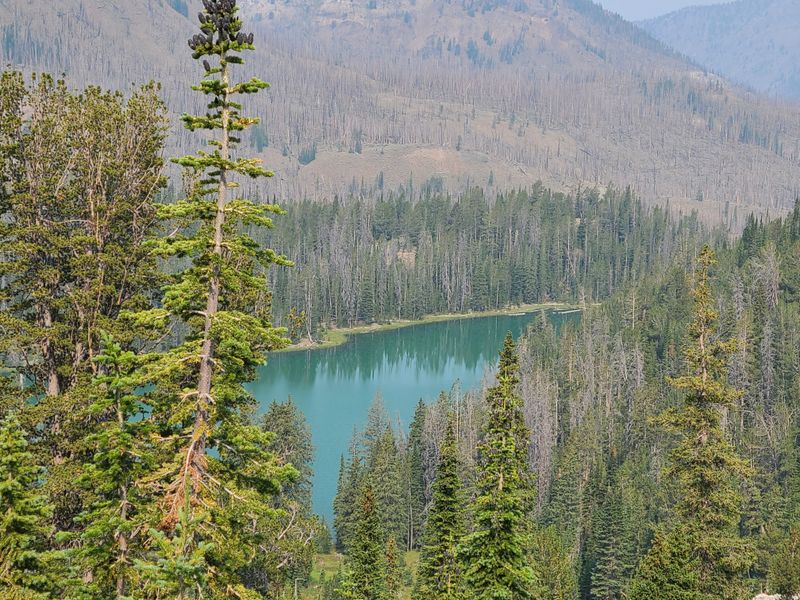
Tucked deep within the rugged White Cloud Mountains, Heart Lake earns its evocative name from its near-perfect heart shape, a secret revealed only to those daring enough to ascend the jagged granite ridges that cradle its basin.
Despite popular misconception, many hikers search for this hidden gem in the neighboring Sawtooths, yet it quietly rests at 8,875 feet within the vast expanse of the Sawtooth National Recreation Area, far from the usual crowds.
Cell service disappears long before you reach the remote trailhead at Fourth of July Creek, forcing adventurers to rely on intuition, detailed topographic maps, and a keen sense of direction through the wilderness.
The final stretch demands a careful scramble across loose scree, alpine meadows dotted with wildflowers, and rocky outcrops where GPS signals drift unpredictably due to the steep surrounding peaks.
Heart Lake’s icy waters remain chilled well into the summer, with snowbanks clinging stubbornly to the shoreline, creating a striking visual contrast between pure white snow and the deep, dark greens of surrounding evergreens.
This is a place where modern technology fails, where hikers must attune themselves to the whisper of the wind through whitebark pines, the distant calls of mountain birds, and the profound silence of Idaho’s most literal “hidden heart.”
Every step along the trail feels like entering a secret world untouched by time, where solitude, raw beauty, and the thrill of discovery combine to create an experience that lingers in memory long after the descent begins.
2. Sliderock Lake in the White Cloud Mountains
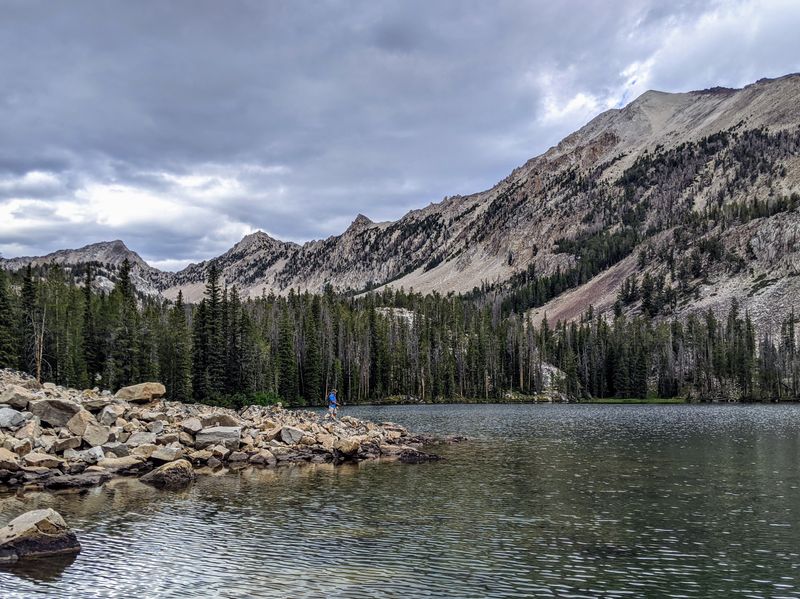
Massive granite slabs give Sliderock Lake its memorable name, with smooth stone faces plunging directly into water so clear you can see thirty feet down to the rocky bottom.
The White Cloud Mountains remain one of Idaho’s least-developed wilderness areas, and this particular lake exemplifies why GPS technology struggles in such rugged terrain.
Satellite signals bounce unpredictably off the surrounding cliffs, sometimes placing you hundreds of yards from your actual position.
Experienced backcountry travelers suggest bringing a detailed topographic map and knowing how to read terrain features, since the electronic breadcrumb trail on your device might lead you astray.
The approach follows an old mining road for the first two miles before deteriorating into a scramble over loose scree and through dense willow thickets.
Mountain goats frequently appear on the cliffs above the lake, their white coats blending perfectly with the pale granite that gives these mountains their distinctive appearance.
The lake itself sits in a glacial cirque, carved thousands of years ago by massive ice flows that shaped this dramatic landscape.
Summer thunderstorms build quickly in the afternoon, making early morning starts essential for safety and comfort during your visit.
The water temperature rarely exceeds fifty degrees Fahrenheit, but brave swimmers enjoy jumping from the smooth rock formations into the deep pools near the shore.
Camping options are limited due to the steep terrain, with only a few flat spots tucked between boulders where you can pitch a small tent.
The nearest maintained trail lies more than a mile away, and bushwhacking through the dense undergrowth requires patience and sturdy clothing to protect against scratches.
3. Chamberlain Lakes in the Selkirk Mountains
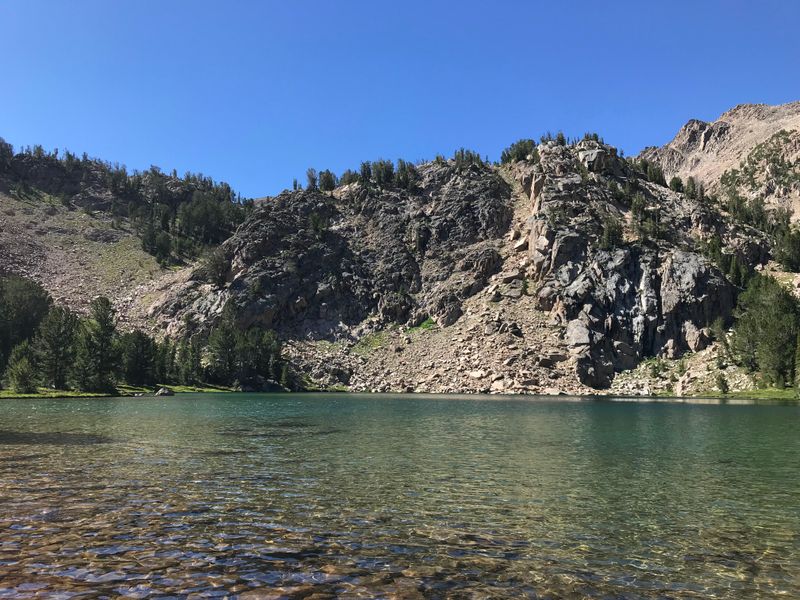
Forget the dense forests of the northern Panhandle, because the true Chamberlain Lakes are a chain of high-alpine sapphires nestled in the shadow of the massive Castle Peak, gleaming like jewels in the sunlight.
This interconnected system of lakes stretches across a glacial valley where satellite signals often bounce off the 11,000-foot summits, rendering digital compasses and GPS devices unreliable for navigation.
Reaching these hidden waters demands a crossing of a high mountain pass, where the air thins with every step and the landscape gradually transforms from dense forest to a stark, rugged moonscape carved by ancient glaciers.
Instead of towering cedar groves, hikers encounter resilient subalpine firs clinging to rocky slopes and meadows that burst into vivid swaths of lupine and paintbrush during the fleeting summer months.
The lakes themselves act as enormous mirrors, reflecting the jagged, serrated peaks above and creating a visual portal that evokes a sense of stepping back into an untouched, primeval era.
This is wilderness in its purest form, where modern technology falters and the only trustworthy guide is the unmistakable silhouette of the mountains etched against the expansive Idaho sky.
Every step along the trail feels like a journey through a living painting, where solitude, raw alpine beauty, and the exhilaration of discovery combine to create an unforgettable experience that lingers long after you descend.
4. Crater Lake in the Pioneer Mountains
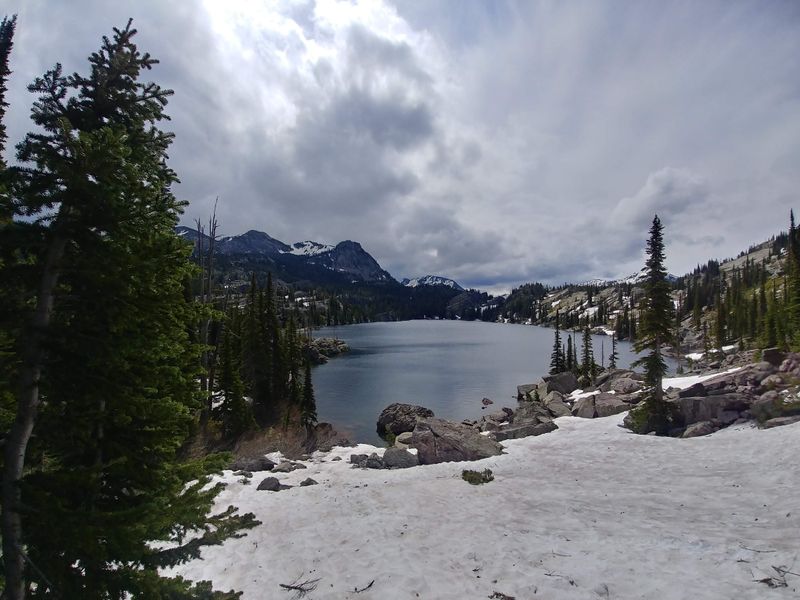
Though its name evokes fire and lava, Crater Lake in the Pioneer Mountains is actually a magnificent relic of the Ice Age, nestled in a flawless glacial cirque that feels like a natural cathedral carved by ancient glaciers.
Perched high above the timberline, the lake is encircled by sheer cliffs that create a literal “GPS shadow,” challenging even the most experienced navigators who attempt to rely on technology.
The Pioneers are famed for their mineral-rich geology, which locals claim can interfere with electronic gear, forcing adventurers to return to the fundamentals of map reading and landmark navigation.
Crater Lake’s waters possess a deep, almost electric blue hue that shifts dramatically as the sun arcs across the sky, making each moment on the shoreline feel unique and fleeting.
There are no maintained trails leading to the lake; the approach is a test of skill and intuition as hikers navigate pathless rock gardens, loose scree, and steep alpine slopes.
When you finally crest the final ridge, the lake unfolds like a hidden reservoir of a primordial world, completely disconnected from the digital noise and modern conveniences of the 21st century.
Every glance across the shimmering water invites awe and reflection, as if time itself slows and the ancient power of glaciers, stone, and sky whispers directly to those who have earned their way here.
5. Mushroom Lake in the Gospel Hump Wilderness
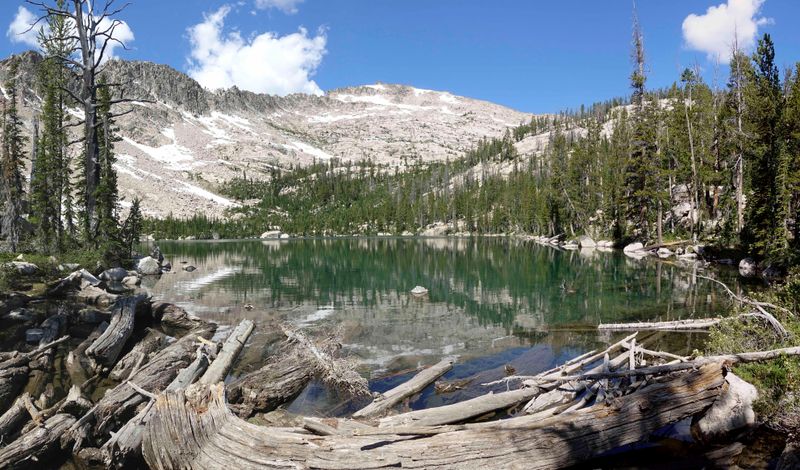
Named for the unusual mushroom-shaped rock formations around its perimeter, this lake hides in one of Idaho’s most remote wilderness areas where human visitors are genuinely rare.
The Gospel Hump Wilderness sees fewer hikers than almost any other protected area in the state, and Mushroom Lake exemplifies why this region remains so untouched.
GPS coverage is spotty at best, with devices often showing you’re miles from your actual position or simply displaying “searching for signal” for extended periods.
The surrounding forest is so thick that visibility extends only twenty or thirty feet in most directions, making it impossible to spot the lake until you’re practically standing on its shore.
Traditional navigation using map and compass becomes essential, with creek drainages serving as the most reliable guides through the confusing terrain.
The lake supports a healthy population of small rainbow trout that eagerly strike at almost any lure or fly you present.
Elk tracks mark the muddy sections of shoreline, evidence of the large herds that roam this wilderness throughout the year.
Access requires either a very long day hike or an overnight backpacking trip, with the nearest trailhead located more than eight miles away over rough, poorly maintained paths.
Creek crossings can be treacherous during spring runoff, and several sections require wading through knee-deep water where bridges have washed out.
The mushroom rocks themselves are composed of softer stone capped by harder mineral deposits, creating the distinctive shapes through thousands of years of erosion.
Photographers find endless interesting compositions around the lake, especially during golden hour when low-angle sunlight illuminates the unusual geological features.
6. Twin Imogene Lakes in the Boulder Mountains
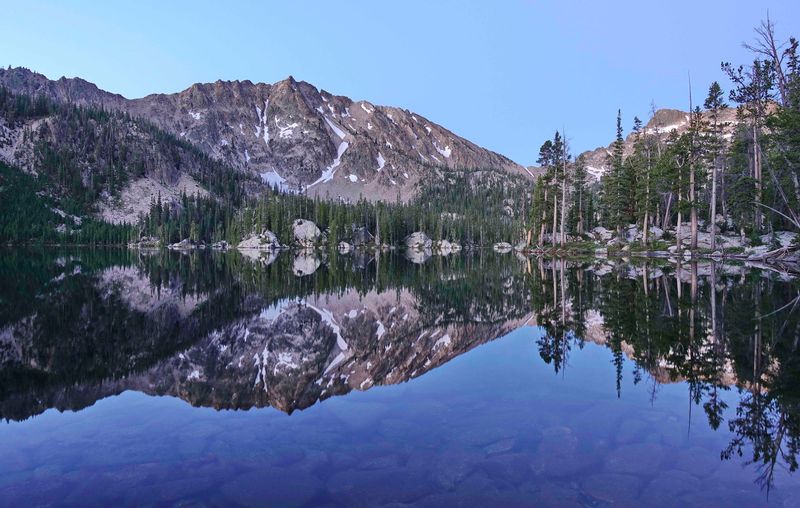
Separated by less than fifty yards but sitting at slightly different elevations, the Twin Imogene Lakes create a unique high-altitude destination where navigation technology proves almost useless.
The Boulder Mountains feature complex terrain with countless similar-looking basins and ridges that confuse even experienced mountaineers.
Your GPS might show both lakes on the screen, but determining which direction to walk becomes surprisingly difficult when every ridge looks identical and the scale on your device doesn’t match the actual distances.
Many hikers report walking right past the lakes without seeing them, only realizing their mistake when they’ve climbed too high and need to backtrack.
The upper lake feeds the lower one through a small cascade that’s often hidden beneath lingering snowfields until mid-summer.
Both lakes remain frozen well into July most years, with ice sometimes persisting in shaded corners throughout the entire summer season.
The surrounding peaks still hold small glaciers that feed these waters, keeping them exceptionally cold and crystal clear year-round.
Wildflower displays peak in early August when the snow finally melts enough to expose the alpine meadows surrounding the lakes.
Marmots whistle warnings from the boulder fields, their sharp calls echoing off the rock walls and adding to the wilderness atmosphere.
Camping is possible on the narrow ridge between the two lakes, though the exposed location means you’ll face strong winds that funnel through this high pass.
The views from this vantage point stretch for miles across the Boulder Mountains, with countless unnamed peaks visible in every direction.
7. Reflection Lake in the Bitterroot Range
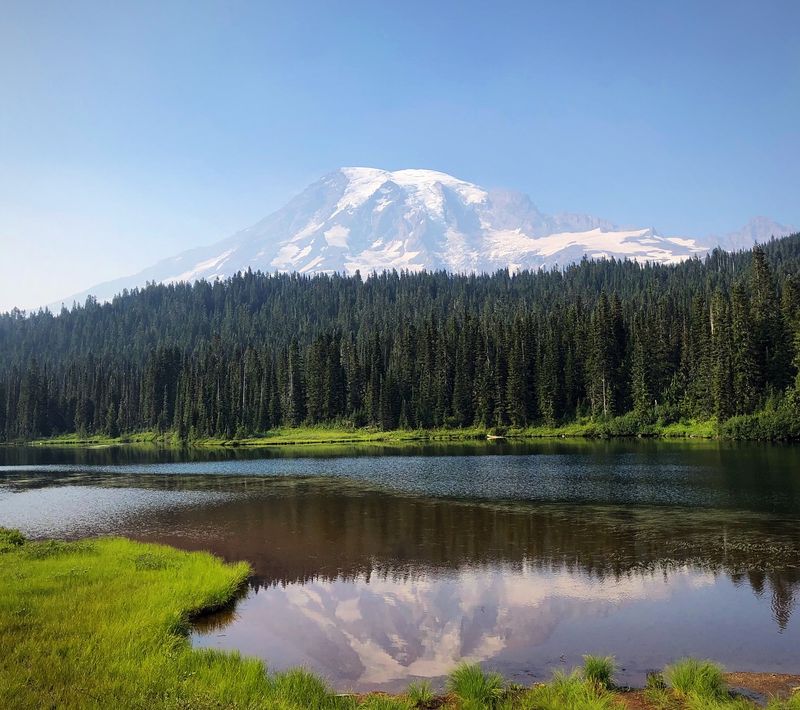
On calm mornings, the surface of Reflection Lake becomes a perfect mirror, creating the stunning double images that inspired its simple but descriptive name.
The Bitterroot Range straddles the Idaho-Montana border, and this particular lake sits in a location where state boundaries become somewhat unclear on the ground.
GPS coordinates place it in Idaho, but the actual shoreline might cross into Montana depending on seasonal water levels.
The confusion extends to navigation, with multiple trails approaching the area but none leading directly to the lake itself.
Hikers must choose the correct unmarked spur path from a main trail, and GPS devices offer little help since the forest canopy blocks signals and the topographic features all look remarkably similar.
Local knowledge proves invaluable for finding this spot, with many visitors relying on verbal directions from rangers or experienced hikers rather than trusting their electronic devices.
The lake occupies a shallow basin that warms considerably by late summer, making it one of the few high-elevation lakes in Idaho where swimming feels pleasant rather than punishing.
Lodgepole pines surround most of the shoreline, providing excellent camping spots with natural shade and wind protection.
The forest floor features thick beds of pine needles that create soft, comfortable sleeping areas for those who prefer cowboy camping under the stars.
Wildlife sightings are common, with black bears occasionally wandering through campsites and deer regularly coming to the shore to drink during dawn and dusk.
The fishing is inconsistent, with some years producing excellent catches while other seasons yield few bites despite similar conditions and techniques.
Dear Reader: This page may contain affiliate links which may earn a commission if you click through and make a purchase. Our independent journalism is not influenced by any advertiser or commercial initiative unless it is clearly marked as sponsored content. As travel products change, please be sure to reconfirm all details and stay up to date with current events to ensure a safe and successful trip.
