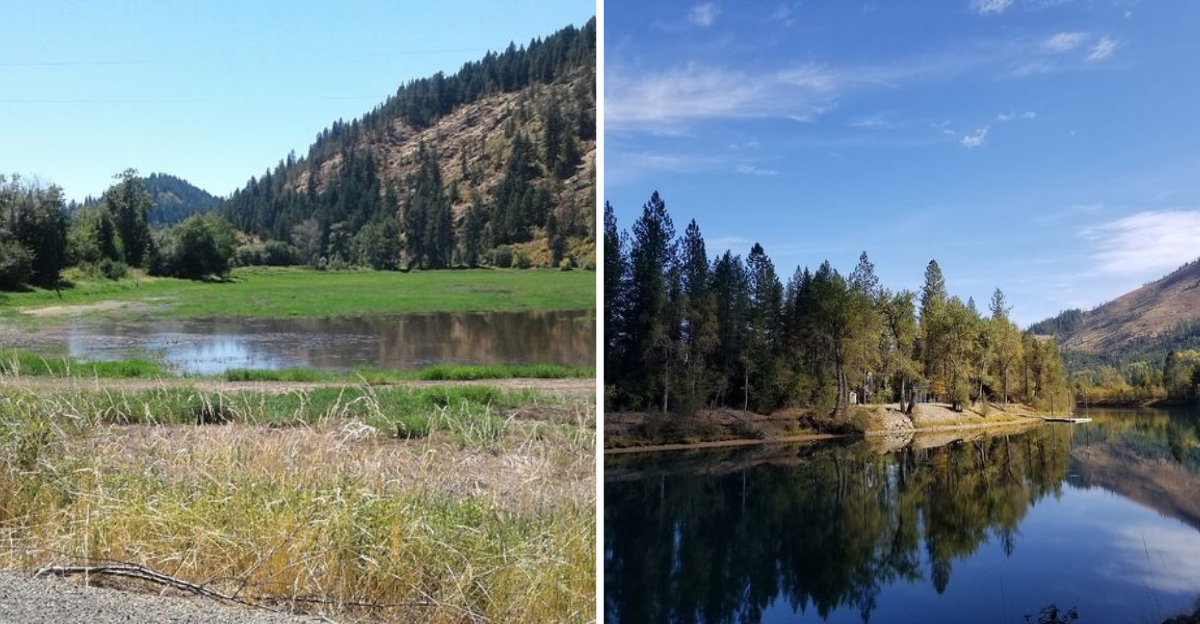
Riding a trail that used to carry freight trains through the mountains of northern Idaho. Seventy two miles tracing the ghost of a railroad line that shut down decades ago. I could hardly believe a fully paved path this long existed cutting through wetlands, lake shores, and historic silver country.
The landscape shifts from rugged mining valley to glassy lake reflections in a matter of miles. Wildlife shows up without warning. The air smells like pine and fresh water.
The asphalt beneath your tires is smoother than most city bike lanes. If you have ever wanted a long distance ride that feels like pedaling through a living postcard, this is the one worth planning your trip around.
The History Beneath Your Wheels: Silver Valley and the Old Railroad Route
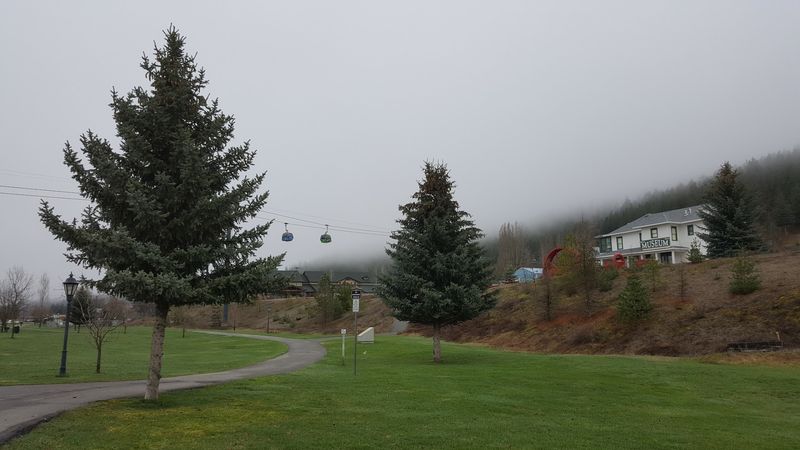
Few bike trails carry as much buried history as this one. The Trail of the Coeur d’Alenes follows the exact right-of-way of a Union Pacific Railroad line originally built to haul silver, lead, and zinc out of the Coeur d’Alene Mountains.
That mining operation once made this region one of the most productive silver-producing areas in the entire world.
Mullan, the eastern trailhead, sits at the heart of what locals still call the Silver Valley. Riding out of town, you pass through a landscape shaped by over a century of industrial activity.
Old headframes and weathered buildings dot the hillsides, giving the ride an almost open-air museum quality.
The railroad ceased operations in 1991, and rather than letting the corridor go to waste, a remarkable partnership formed between the Coeur d’Alene Tribe, Union Pacific, the U.S. Government, and the State of Idaho.
The trail officially opened in March 2004, just over a decade after the last train rolled through. That timeline feels fast when you consider how much remediation work had to happen first.
Mining left behind serious contamination, including heavy metals in the soil. The paved surface actually serves a dual purpose: it provides a smooth riding experience while also acting as a physical cap to isolate those contaminants from the surrounding environment.
Riding here means participating in something genuinely innovative. The trail is not just a recreational path but a living example of environmental engineering done thoughtfully and well.
The Coeur d’Alene River Corridor: Riding Alongside Moving Water
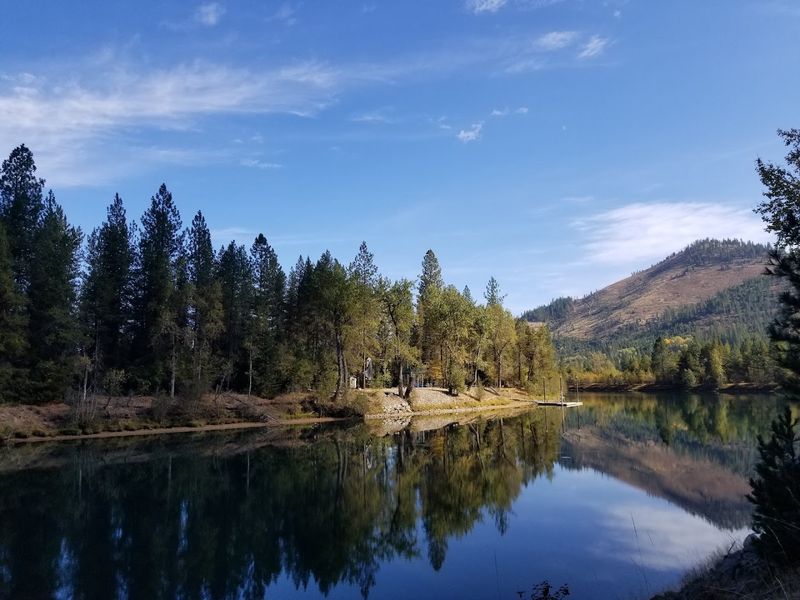
There is a stretch of this trail where the Coeur d’Alene River becomes your constant companion, and honestly, it never gets old. The water moves alongside you for miles, sometimes fast and glinting in the morning sun, sometimes slow and mirror-still in the shaded bends.
I found myself stopping more times than I planned just to watch the current.
The river corridor offers some of the most consistent scenery on the entire trail. Cottonwood trees line the banks, and their leaves catch the light in a way that makes the whole valley feel golden in the afternoon.
The gradient here is almost perfectly flat, which makes sense given the old railroad bed it follows, and that flatness lets you settle into a comfortable rhythm without grinding uphill.
Wildlife sightings along this section are surprisingly common. Osprey hunt the shallows with serious focus, and great blue herons stand in the water like they own the place.
Moose have been spotted wading near the banks in the early morning hours, which is the kind of encounter that makes you glad you started your ride before breakfast.
The river also carries a quiet ecological story. It was heavily impacted by mining runoff over the decades, and restoration efforts have gradually brought fish populations back.
Seeing the water clear and active now feels like witnessing a comeback. This section runs roughly between Mullan and Pinehurst, covering some of the most rewarding early miles of the full 72-mile journey.
The Chain Lakes Region: Fifteen Lakes and a World of Wetland Life
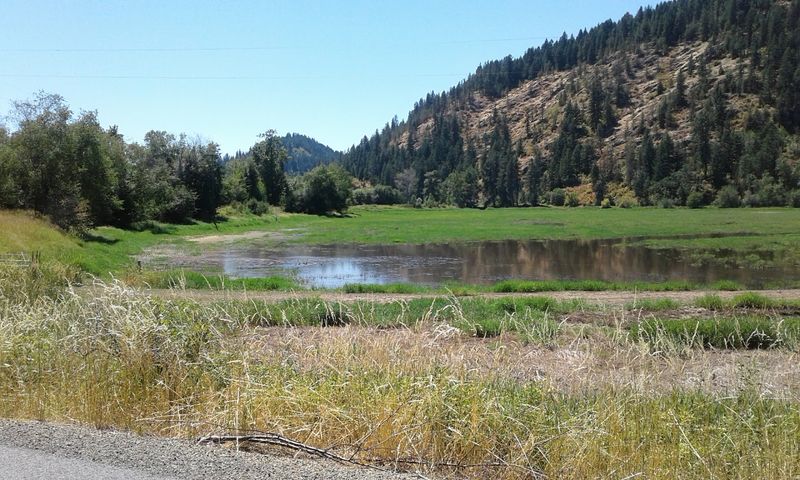
Somewhere around the middle section of the trail, the landscape shifts in a way that catches you off guard. The mountains pull back, the valley opens up, and suddenly you are surrounded by a sprawling network of small lakes and marshes that seem to stretch in every direction.
This is the chain lakes region, and it contains fifteen separate lakes connected by wetland corridors.
The birdwatching here is genuinely exceptional. Ducks, geese, herons, and shorebirds crowd the shallows, and if you are lucky, you might spot a bald eagle circling overhead.
The wetlands act as a natural filter for the watershed, and the biodiversity that has returned to this area over the past two decades is a real conservation success story.
Riding through this section feels slower in the best possible way. There is so much to look at that your pace naturally drops.
The trail runs along elevated berms in places, giving you wide views across the reed beds and open water. Morning fog sits in the hollows between the lakes, creating a scene that feels almost dreamlike before the sun burns it off.
Several waysides and picnic areas are scattered along this stretch, making it easy to stop, eat something, and just sit with the scenery for a while. The chain lakes region is roughly midway along the trail, which makes it a natural mental checkpoint too.
Getting here means you have earned the view, and the view absolutely delivers on that promise.
Lake Coeur d’Alene and the Chatcolet Bridge: The Trail’s Most Dramatic Moment
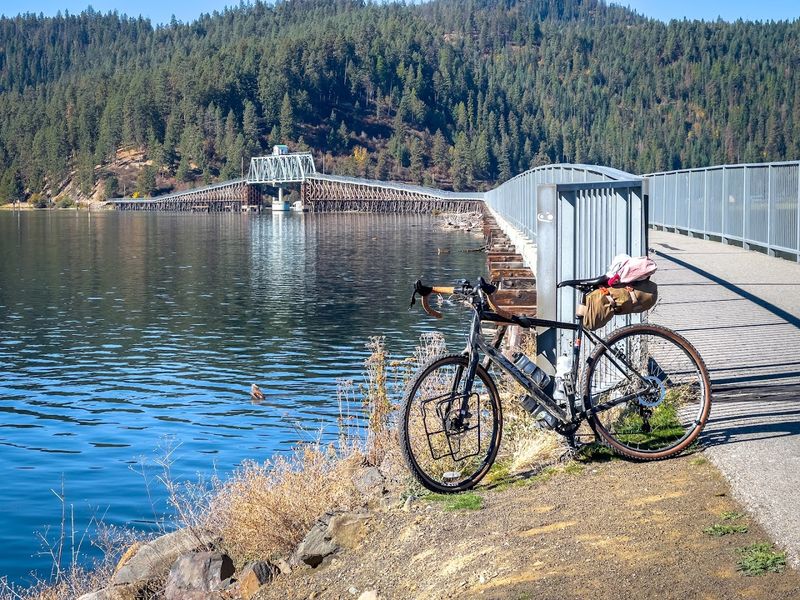
Nothing quite prepares you for the Chatcolet Bridge. You come around a bend, and suddenly the full expanse of Lake Coeur d’Alene opens up in front of you, blue and enormous and framed by forested ridgelines on every side.
The bridge carries the trail directly across the water, and pedaling over it feels like floating.
Lake Coeur d’Alene is one of the most celebrated lakes in the Pacific Northwest, and seeing it from a bike at water level is a completely different experience than viewing it from a boat or a hillside overlook. The scale hits differently when you are moving slowly across its surface with nothing but a railing between you and the water.
On calm days, the reflection of the sky in the lake makes it hard to tell where the water ends and the air begins.
The bridge crossing also marks a significant transition in the trail’s character. Behind you is the mining history and river corridor.
Ahead lies the quieter, more pastoral western section of the route toward Plummer. Many riders treat the bridge as a natural rest point, and it is hard to argue with that instinct.
The surrounding area near Chatcolet also connects to Heyburn State Park, Idaho’s oldest state park, which adds another layer of exploration for anyone willing to venture off the main trail. Camping, swimming, and wildlife trails are all available nearby.
It is the kind of stop that can easily turn a single riding day into a full weekend if you let it, and most people are glad they did.
Heyburn State Park: Idaho’s Oldest Park Right Along the Route
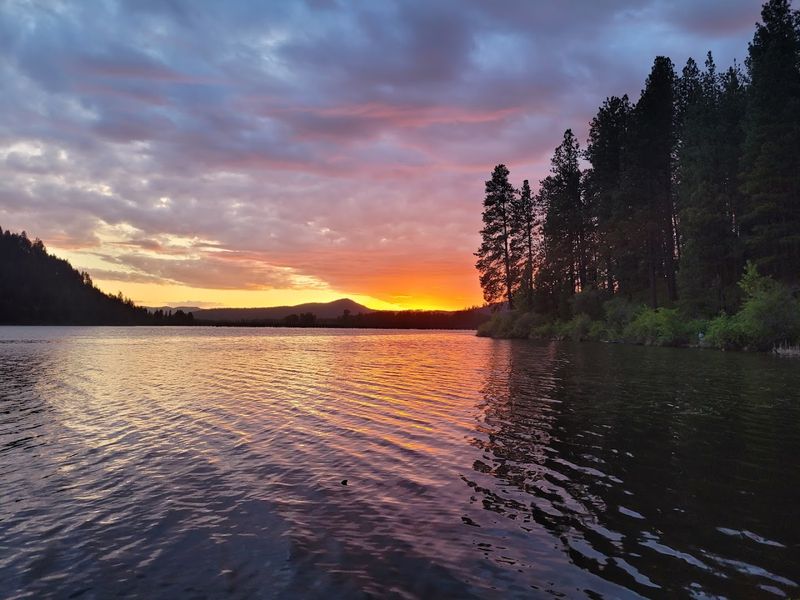
Heyburn State Park has been around since 1908, which makes it Idaho’s oldest state park by a comfortable margin. The Trail of the Coeur d’Alenes passes directly through it, and that proximity gives riders an easy reason to slow down and spend some time in a place that has been welcoming visitors for well over a hundred years.
The park covers more than 5,700 acres and includes multiple lakes, forested campgrounds, and hiking trails that branch away from the main paved route. Rocky Point, one of the park’s most visited areas, sits right along the lake and offers picnic spots with genuinely beautiful water views.
I stopped there on a warm afternoon and ended up staying nearly two hours longer than planned.
Wildlife inside the park feels more concentrated than along the open trail sections. White-tailed deer move through the trees with surprising casualness, and the bird activity around the lakes is constant.
The park’s mature ponderosa pines give the whole place a cathedral-like stillness that is hard to find elsewhere along the route.
For riders doing the full 72 miles over multiple days, Heyburn makes an ideal overnight stop. Campsite reservations are available, and having a proper base camp here means you can explore the park’s side trails in the evening after your riding day is done.
The combination of the main trail and the park’s own network of paths makes this area one of the most rewarding segments of the entire Mullan to Plummer journey. Address: Heyburn State Park, 57 Chatcolet Road, Plummer, Idaho.
Planning Your Ride: Trailheads, Amenities, and Practical Tips for the Full Route
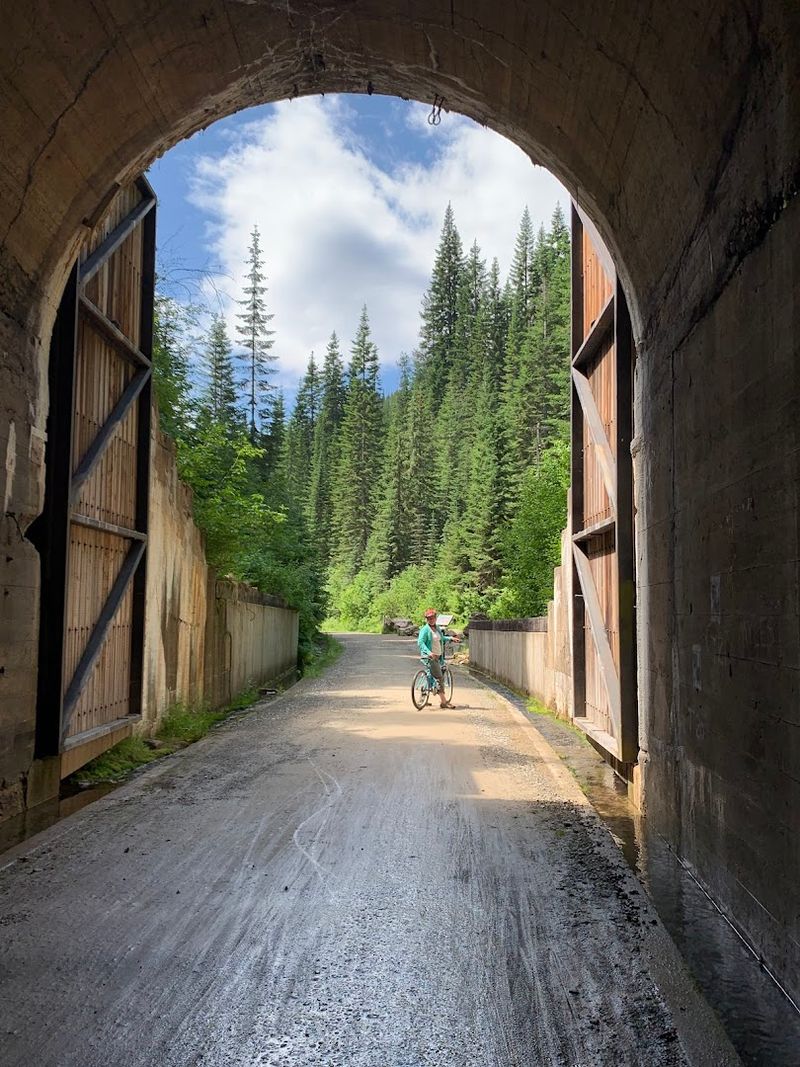
Logistics matter on a 72-mile trail, and the good news is that this one is genuinely well set up. There are 20 developed trailheads spaced along the route between Mullan and Plummer, which means access points and parking are never far away.
Each trailhead has restrooms, and many include water, bike repair stations, and covered shelters.
The trail is entirely paved with smooth asphalt, which makes it accessible to road bikes, hybrids, and even inline skaters. The elevation change is modest throughout, a result of the old railroad grade it follows, so you do not need to be an experienced climber to complete the full route.
Most fit riders complete the whole trail over two days, though plenty of people do it in sections across multiple trips.
Water and snacks are worth carrying regardless of how long your planned segment is. Some trailhead towns have small stores or cafes nearby, but spacing between services can stretch out in the more rural middle sections.
The town of Harrison, situated along the lake, is a popular stop for food and has a welcoming small-town energy that fits the trail’s overall mood perfectly.
The trail is open year-round, though spring and fall offer the most comfortable temperatures and the best wildlife activity. Summer brings more visitors, especially near the lake sections, but the trail is wide enough that crowding rarely becomes a real problem.
Going early in the morning almost always guarantees a quieter, more personal experience. Address: Trail of the Coeur d’Alenes Trailhead, 301 Pine Street, Mullan, Idaho.
