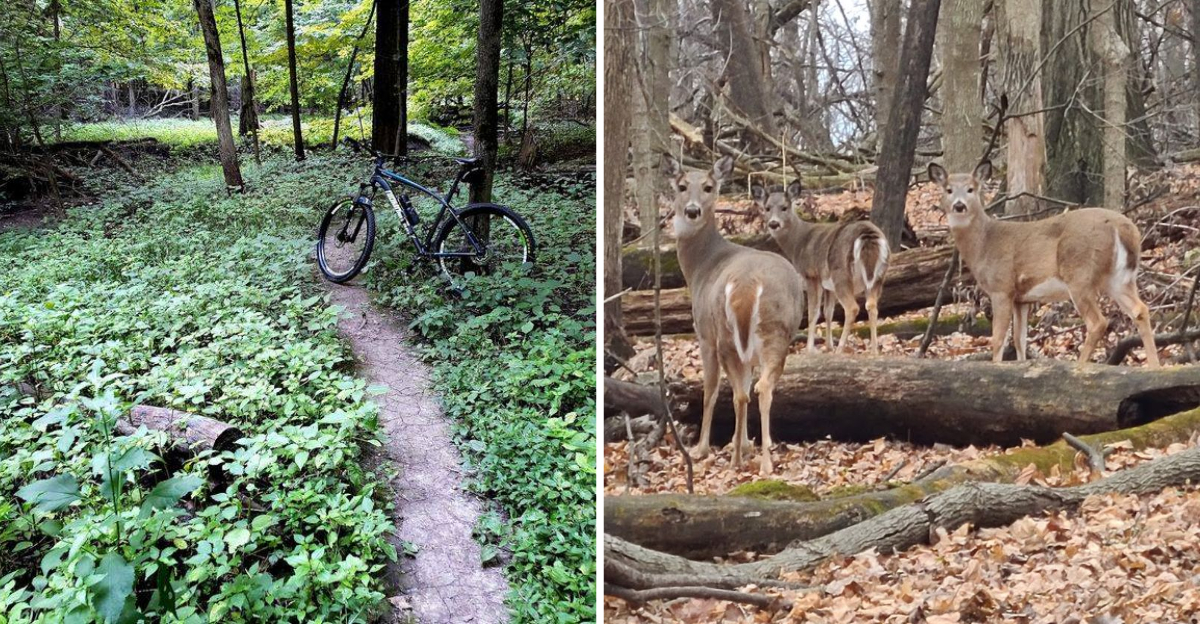
You would never guess it. Jet engines roaring.
Planes taking off every few minutes. But right next to O’Hare, one of the busiest airports in the world, sits a bird sanctuary that should not exist.
And yet it does. I parked my car, walked down a path, and suddenly the plane noise faded into background static. Herons stood in shallow water.
Ducks paddled in circles. A hawk circled overhead, completely unbothered by the 747 climbing behind it.
The sanctuary is tiny, easy to miss, and totally unexpected. Illinois is full of surprises.
But a quiet wetland filled with birds, hiding in the shadow of an airport runway? That might be the strangest and best one yet.
A Nature Preserve With a Surprisingly Deep History
Long before birdwatchers and hikers claimed O’Hara Woods as their favorite weekend escape, this land had a much stranger past. During World War II, a portion of what is now the preserve was used for dynamite storage, earning it the nickname “Dynamite Woods” among locals.
Old bunker foundations and remnants of wartime roads are still tucked beneath the leaf litter if you know where to look.
The preserve was officially designated an Illinois Nature Preserve on July 7, 1982, under the Illinois Nature Preserves System Act. That classification is not handed out lightly.
It means O’Hara Woods is recognized as one of the highest-quality natural habitats in the entire state.
Today, it is jointly managed by the Forest Preserve District of Will County, which oversees 57 acres, and the Village of Romeoville, which manages roughly 80 acres. The history layered into this land, from wartime secrets to ecological treasure, gives every walk through the trees a quiet sense of depth.
There is something grounding about knowing the ground beneath your boots has held so many different chapters of life.
Over 130 Bird Species Call This Place Home
The numbers alone are enough to make any birdwatcher do a double take. More than 130 species of birds have been identified within O’Hara Woods, and that figure keeps growing as more birders visit and log their sightings.
The preserve sits directly along a migratory bird route, which makes it a critical rest stop for birds traveling through the region each spring and fall.
Early May mornings are particularly magical here. Arriving just after sunrise, you can hear as many as 60 different bird species all singing at once, layering into a sound that is almost overwhelming in the best possible way.
Migratory songbirds, sparrows, woodpeckers, waterfowl, and shorebirds all pass through or take up residence at various points throughout the year.
Winter visits are far from quiet, either. Mallards, Dark-eyed Juncos, Red-tailed Hawks, Cooper’s Hawks, and Black-capped Chickadees are common cold-weather residents.
Rarer sightings have included Winter Wrens, Purple Finches, and Brown Creepers. For birders chasing a diverse life list without traveling far, this preserve delivers in a way that genuinely surprises first-time visitors.
The Last Undisturbed Maple Prairie Grove in Northeastern Illinois
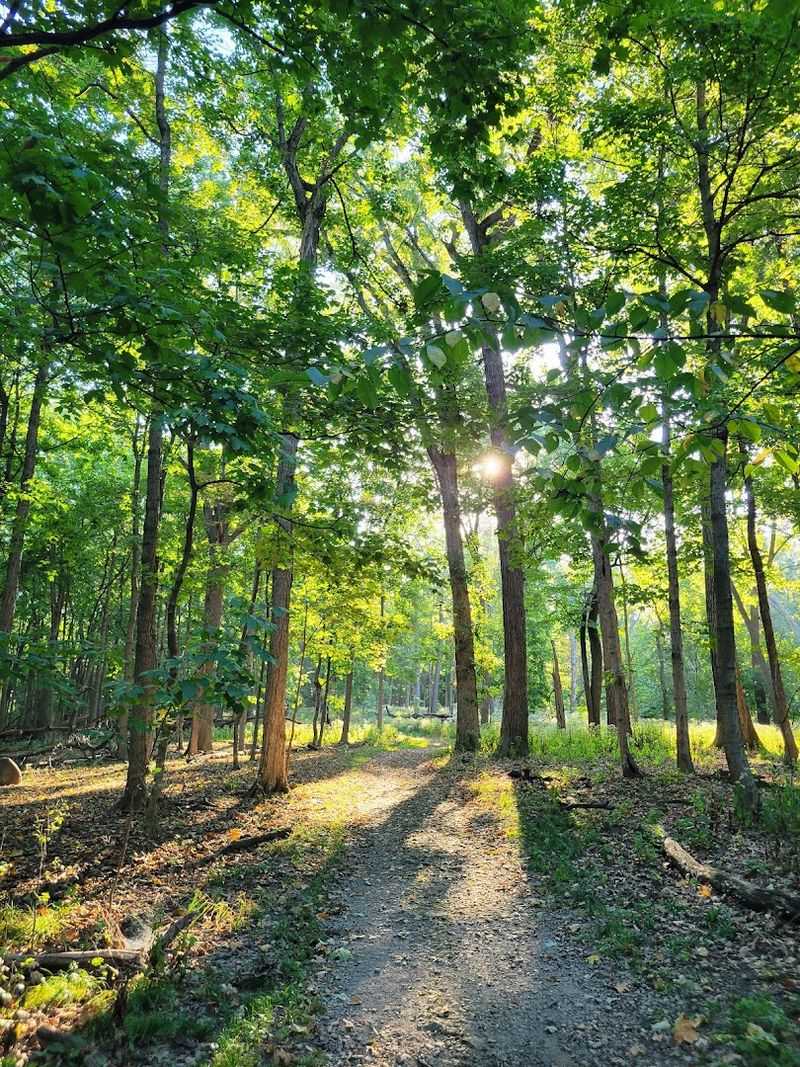
There is something quietly remarkable about walking through a forest that has never been plowed, developed, or cleared. O’Hara Woods protects one of the last remaining undisturbed maple prairie groves in all of northeastern Illinois, which puts it in a very rare category.
Most of the natural landscapes that once covered this region were converted to farmland or suburbs long ago.
The tree canopy here includes sugar maple, red oak, walnut, basswood, blue ash, bur oak, and hawthorn. These are not young, scraggly trees either.
The canopy feels old and established, the kind that creates deep shade in summer and turns into a riot of color every fall. A portion of the historic Lily Cache Slough winds through the preserve, adding a wetland dimension that makes the ecosystem even richer.
The mix of woodland and savanna environments in one compact space is genuinely unusual. Ecologists describe this kind of habitat blend as critically rare, and once you see it up close, you understand why.
The forest floor alone holds more biodiversity than most people encounter in an entire year of outdoor activity in the Chicago suburbs.
Spring Wildflowers That Turn the Forest Floor Into a Painting
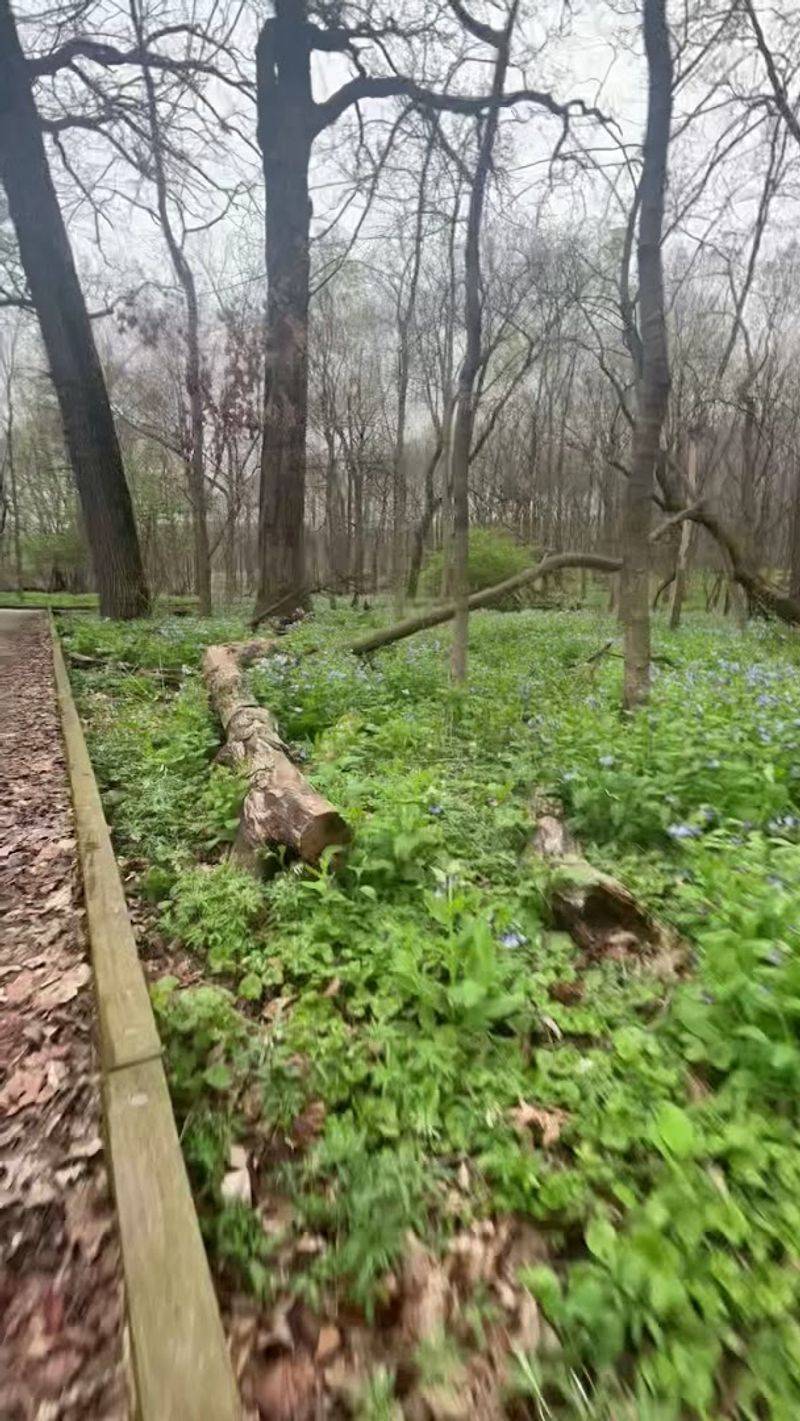
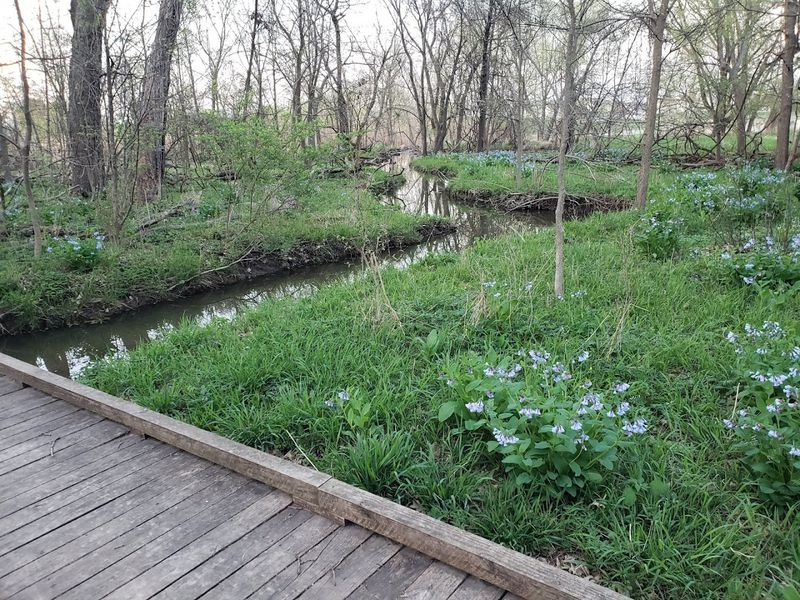
By late March, something extraordinary starts happening at O’Hara Woods. The forest floor erupts in Virginia bluebells, spreading across the ground in waves of soft blue and purple that feel almost unreal against the dark soil.
It is one of those sights that genuinely stops people mid-step, phone already out before they even realize they have reached for it.
The spring wildflower display does not stop with bluebells. Trillium, Dutchman’s breeches, trout lily, and mayapples all emerge in sequence, each one adding a new layer to the seasonal show.
Skunk cabbage and marsh marigold appear in the wetter areas near the slough, thriving in the soggy ground that other plants avoid. The timing shifts slightly each year depending on winter conditions, so no two springs look exactly alike.
Visitors are encouraged to stay on the trails and resist the urge to step off the path, since the wildflowers are fragile and easy to crush underfoot. The preserve rewards patience and attention.
Arriving on a quiet weekday morning, when the light is low and the air is still cool, gives you the best chance of experiencing the full effect without distraction.
Wildlife Beyond Birds: Deer, Foxes, and More
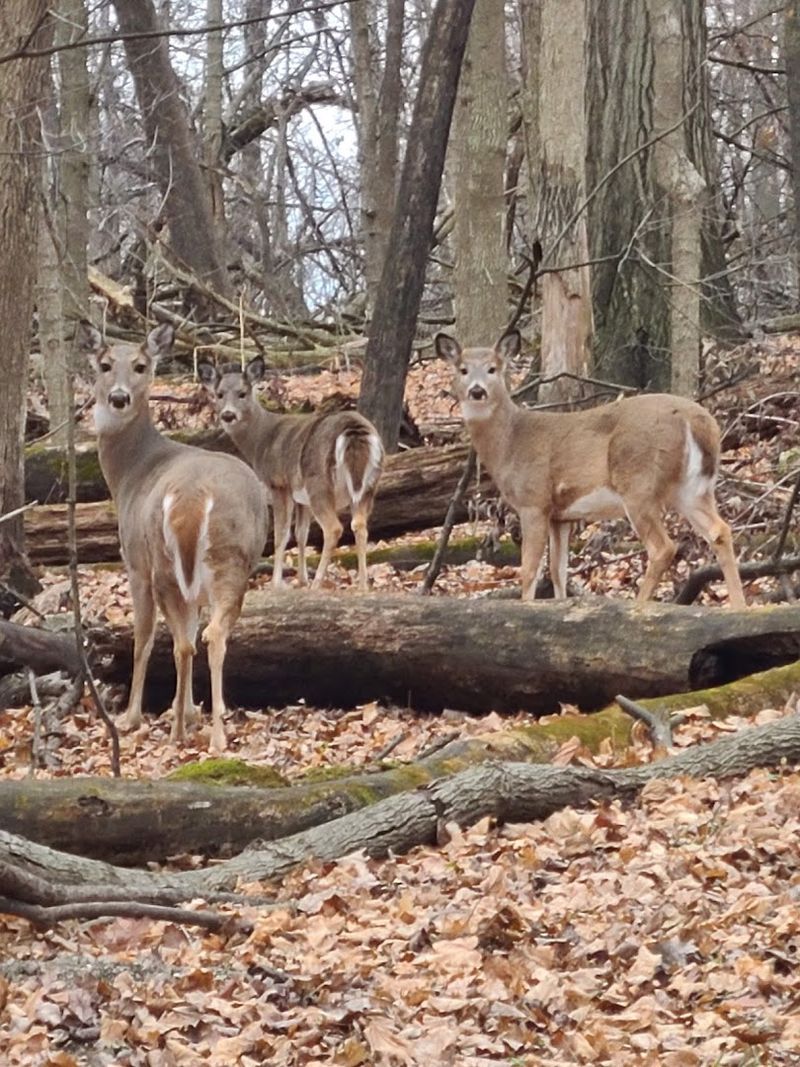
Birds get most of the attention at O’Hara Woods, but the preserve is full of other wildlife that shows up reliably if you move slowly and keep your eyes open. White-tailed deer are a near-constant presence on the trails, often spotted in small groups near the forest edges in the early morning or late afternoon.
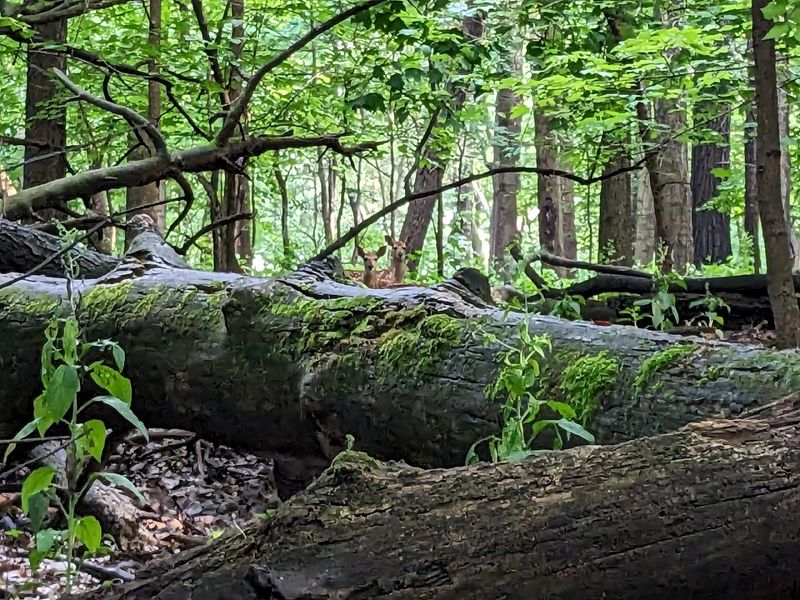
Seeing a pair of fawns step into a sunny clearing is the kind of moment that makes the whole trip feel worthwhile.
Red foxes also move through the preserve, though they tend to be shyer and harder to catch in the open. Raccoons and squirrels are everywhere, going about their business with the casual confidence of animals that know they own the place.
The wetland areas near Lily Cache Slough attract a different mix of creatures altogether, including frogs, turtles, and insects that form the base of a complex food web.
The diversity of wildlife here reflects the quality of the habitat. When a landscape supports this many species across this many different niches, it is a sign that the ecosystem is genuinely healthy.
For families with curious kids, O’Hara Woods is the kind of place that sparks real interest in the natural world without requiring any special equipment or expertise.
Trails That Connect You to Something Bigger
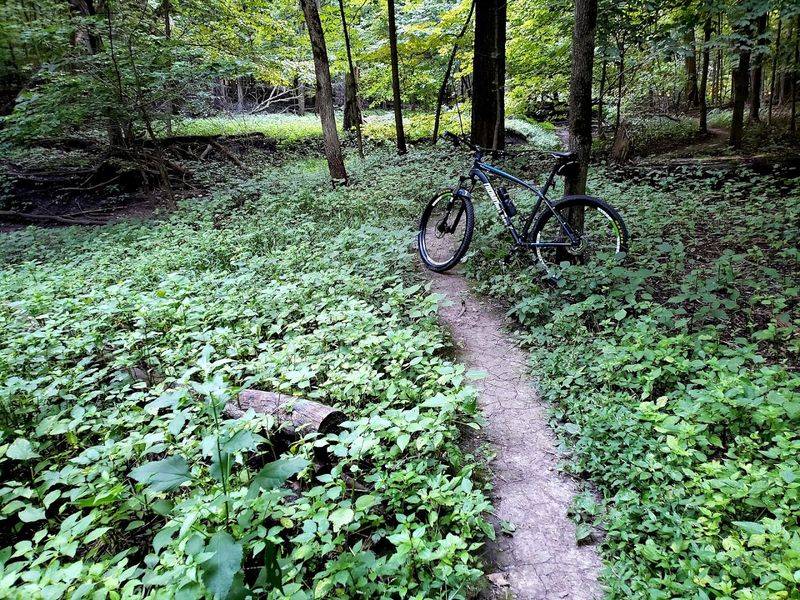
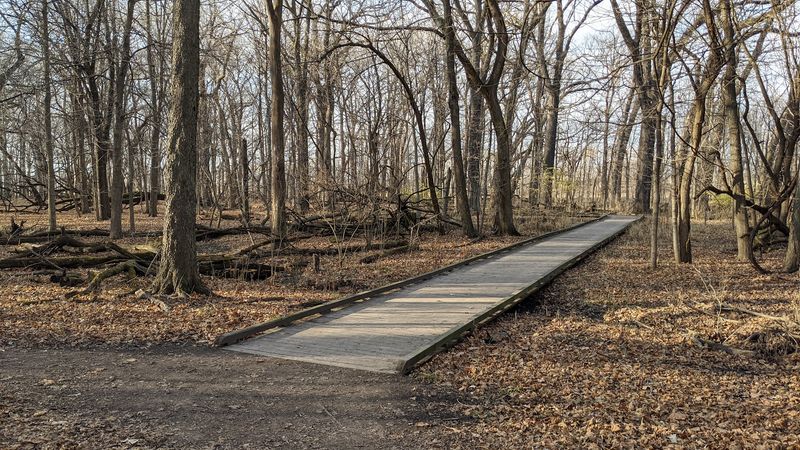
The trail system at O’Hara Woods is modest in length but surprisingly varied in character. Roughly 0.67 miles of paved, boardwalk, and natural surface trails wind through the preserve, and they connect to a larger village trail network that extends the experience well beyond the preserve boundaries.
The transition from open paved path to narrow natural trail happens quickly and feels like crossing into a different world.
Hikers, runners, and snowshoers all use these trails depending on the season. In winter, the bare canopy opens up the sightlines considerably, making it easier to spot birds and deer that the summer foliage would normally hide.
The boardwalk sections that cross the wetter areas near the slough are especially well-suited for watching waterfowl and wetland birds up close without disturbing them.
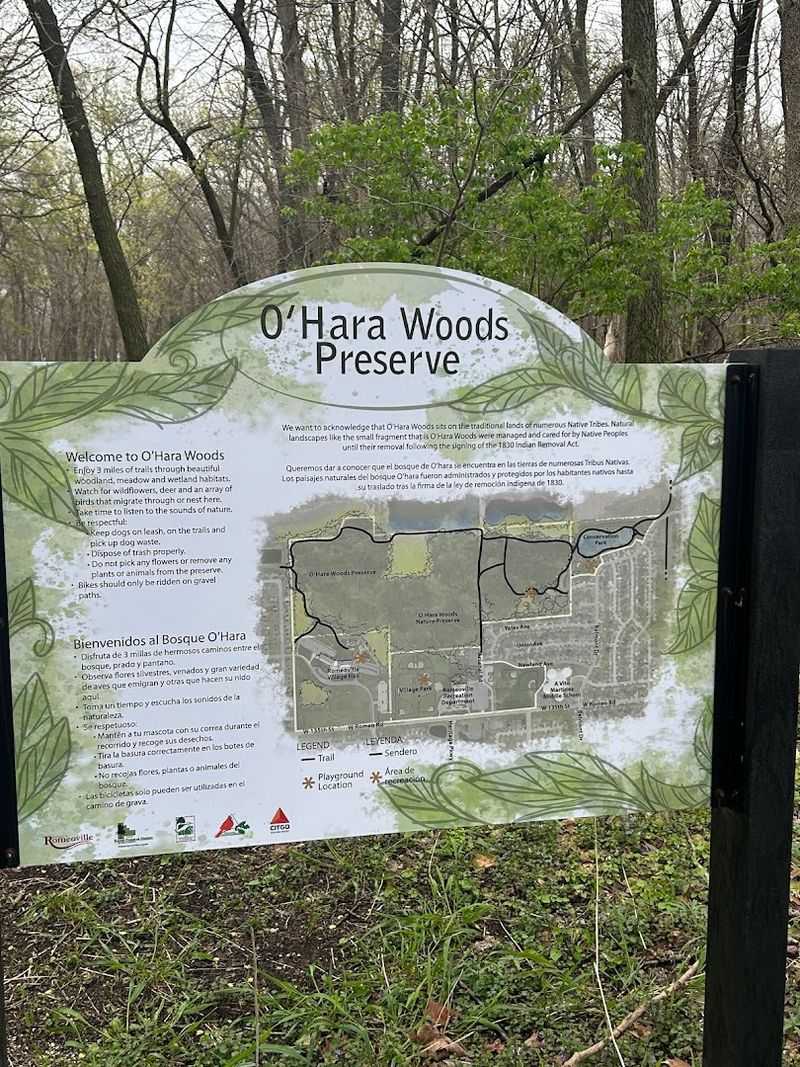
The trail entry near Romeoville Village Hall is a popular starting point, and from there the path shifts naturally between prairie-like open sections and deep woodland cover. The variety keeps the walk interesting even on a short route.
For anyone who finds longer hikes intimidating, this is a genuinely welcoming place to start building a habit of getting outside regularly.
Why the Location Along a Migratory Route Makes This Place Special
Geography plays a huge role in what makes O’Hara Woods so productive for birdwatching. The preserve sits directly along a migratory bird corridor, meaning birds traveling north in spring and south in fall funnel through this patch of habitat as a natural rest and refueling stop.
In a landscape dominated by pavement and buildings, a 137-acre block of mature forest and wetland stands out like a beacon to exhausted migrants.
This is why early May mornings here can feel almost chaotic with sound. Birds that have been flying overnight drop into the canopy at first light, and the feeding and singing that follows is intense and fast-moving.
Warblers, thrushes, vireos, and flycatchers appear in numbers that seem disproportionate to the size of the preserve. Experienced birders refer to mornings like these as “fallouts,” and O’Hara Woods delivers them reliably when conditions are right.
Understanding the migratory context also helps explain why protecting small urban and suburban preserves matters so much. Each patch of quality habitat along a flyway is a link in a chain that spans thousands of miles.
Losing even one of those links puts pressure on everything else, which is part of why the 1982 nature preserve designation here was such an important decision.
Visiting O’Hara Woods: What to Know Before You Go
Planning a visit to O’Hara Woods does not require much preparation, but a few practical details make the experience smoother. The preserve is located at 1034 W 135th St in Romeoville, with parking available near the trailhead.
The trail entry near Romeoville Village Hall also offers easy access, along with a playground and pavilion facilities that make it a solid option for families spending a longer stretch of time outdoors.
Early morning visits are almost always the best choice, especially during spring migration from late April through May. Bringing binoculars dramatically improves the birdwatching experience, though even without them the sheer volume of activity is impressive.
Comfortable, sturdy shoes are recommended since the natural surface trails can get muddy after rain, particularly near the slough and wetland sections.
The preserve is managed jointly by the Forest Preserve District of Will County and the Village of Romeoville, and both organizations are committed to maintaining the site as a protected natural area. Dogs are welcome on leash, and the atmosphere is relaxed and unpretentious.
First-time visitors often leave surprised by how much is packed into a relatively small space, and most come back. It has that effect on people.
Address: 1034 W 135th St, Romeoville, IL 60446
