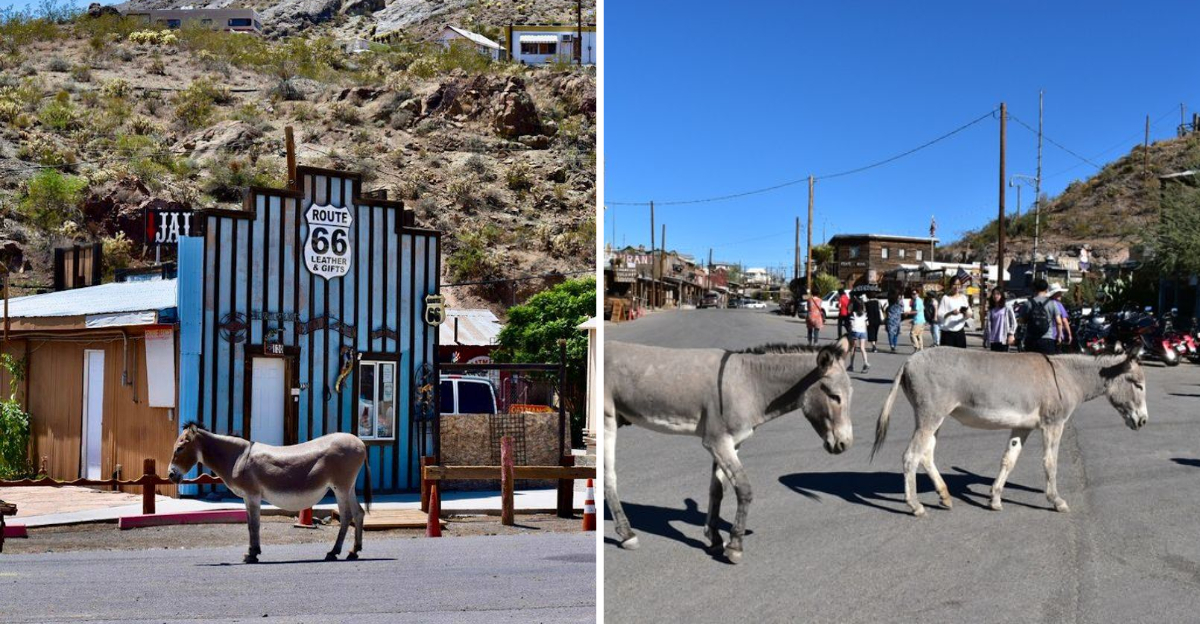
You are sitting at a red light in this Arizona town and suddenly traffic stops moving. Not because of an accident.
Not because of construction. Because a donkey is standing in the middle of the crosswalk, waiting for someone to offer a snack. This happens all the time here.
The donkeys are descendants of animals brought by miners over a century ago. Now they roam freely through the streets, walking into bars, poking their heads into shop doorways, and absolutely holding up traffic for carrots. Locals keep bags of baby carrots in their cars.
Tourists pull over to take photos. The donkeys have learned exactly where to loiter for maximum snack potential.
Arizona has some quirky spots. This town might be the quirkiest.
The Wild Burros of Oatman: How They Got Here
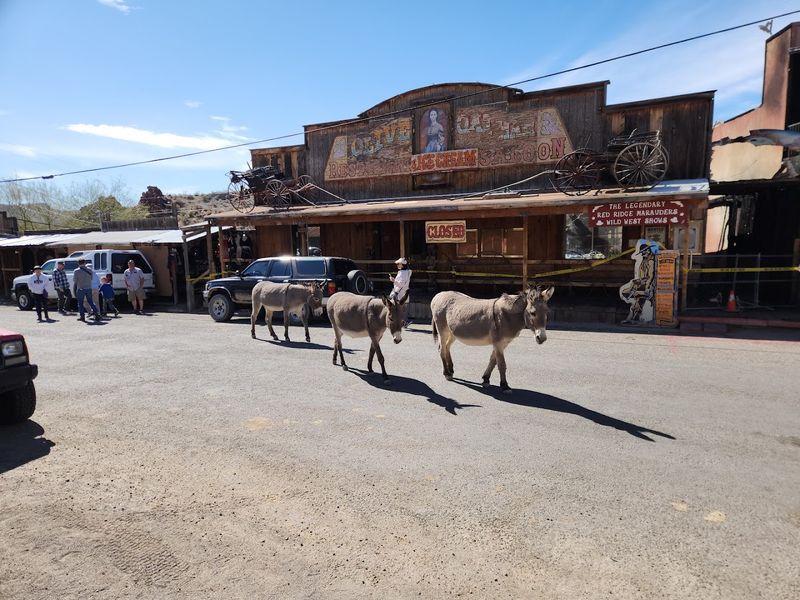
Most towns have a mascot on a sign somewhere. Oatman has actual living ones wandering the main street like they own the place, and honestly, they kind of do.
The burros you see here are not pets, they are descendants of the working animals brought to this region by gold prospectors in the early 1900s.
When the mines shut down, the miners released their burros into the surrounding desert rather than haul them elsewhere. Over generations, those animals multiplied and eventually drifted back toward town, drawn by the presence of people and, more importantly, food.
Today, the herd is estimated at around 25 to 30 animals that call the Oatman area home. They roam the hills at night and come into town during the day.
Nobody herds them in, and nobody herds them out. They just show up, which is part of what makes the whole thing feel so wonderfully unscripted.
Knowing their history makes every encounter feel a little more meaningful, like you are meeting a living piece of Arizona mining lore face to fuzzy face.
Stopping Traffic Like They Own the Road
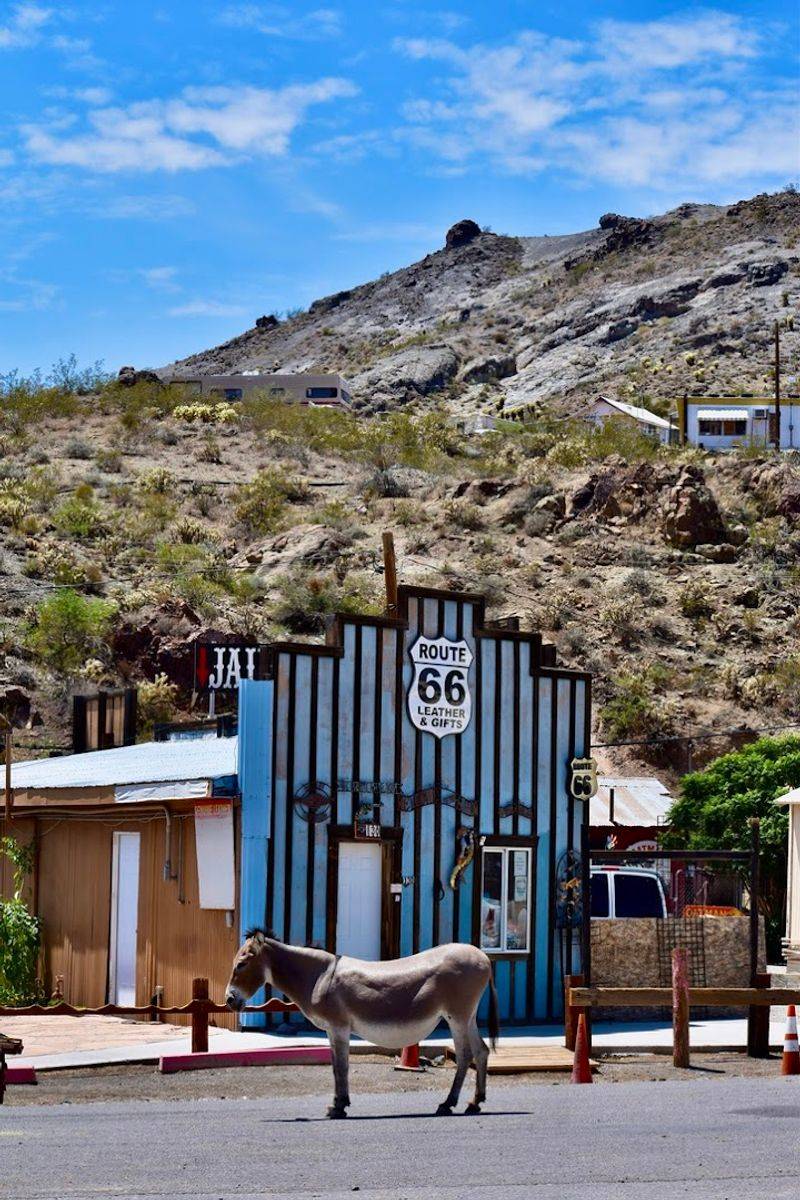
There is something genuinely funny about watching a full line of vehicles come to a complete halt because a donkey decided the center of the road looked like a good place to stand. It happens constantly in Oatman, and the drivers almost always respond with smiles instead of horns.
The burros have no concept of traffic flow, and they are completely at ease with the attention. Some will stand still for several minutes, ears twitching, looking mildly interested in the vehicles around them.
Others will slowly amble from one side of the road to the other before disappearing into an alley.
Locals and repeat visitors know the drill. You slow down, you wait, and you enjoy it.
First-timers tend to grab their phones immediately, which means Oatman probably generates more impromptu wildlife videos than almost anywhere else in the Southwest. The town has never tried to redirect the burros or create designated crossing zones.
That would miss the whole point. The unpredictability is what makes Oatman feel alive in a way that carefully managed tourist attractions simply cannot replicate.
Feeding the Burros: Carrots, Pellets, and a Few Ground Rules
Feeding a wild burro from your hand is one of those experiences that sounds simple but feels surprisingly memorable. The moment you hold out a carrot, a soft nose bumps your palm and big dark eyes look directly at you with total focus.
It is hard not to laugh.
Most shops along Oatman’s main street sell alfalfa pellets and carrots specifically for this purpose. The burros have learned the routine well, and they will approach visitors with calm confidence, especially anyone holding a small paper bag of treats.
There are a few important guidelines worth knowing before you start handing out snacks. Carrots can be a choking hazard for young burros, so the rule is to avoid feeding the babies.
Visitors are also asked not to feed the animals anything other than the approved treats available in town. Do not attempt to ride them or chase them for a better photo.
These are wild animals with their own boundaries, even if they seem relaxed. Respecting those limits keeps the interaction safe and enjoyable for everyone, including the burros themselves, who seem to genuinely appreciate a good carrot offered with a calm and steady hand.
When Donkeys Walk Into Shops and Become Local Legends
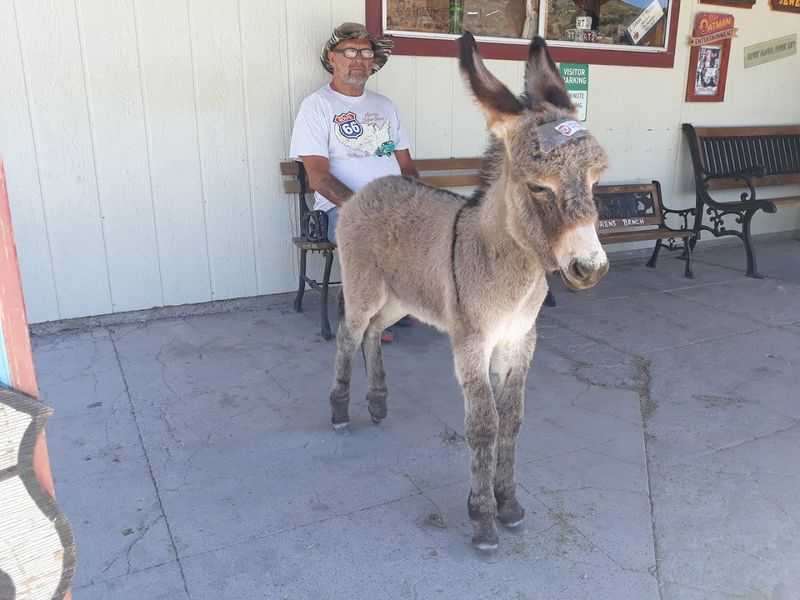
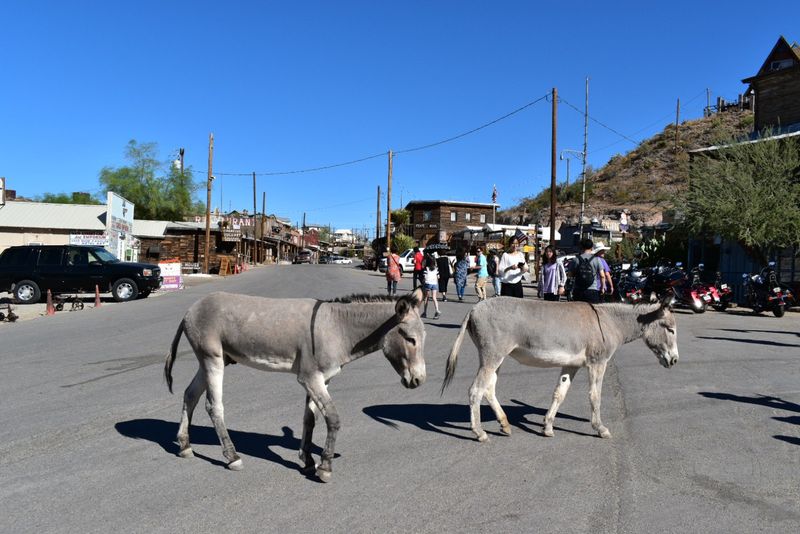
One of the stranger and more delightful sights in Oatman is a burro with its entire head inside a shop doorway, sniffing around like a customer who lost their wallet. It happens more often than you might expect, and the shop owners take it completely in stride.
The burros have learned that open doors sometimes mean treats, and their curiosity does the rest. Some businesses have leaned into this fully, keeping a small supply of pellets near the entrance and welcoming the visits as part of the daily atmosphere.
Over the years, certain burros have become genuinely famous in town. One was even elected as the official mayor of Oatman, which sounds like a joke but was a real thing that actually happened.
The town has always had a playful relationship with its four-legged residents, treating them less like wildlife to be managed and more like neighbors to be tolerated and celebrated. That attitude is part of what gives Oatman its distinct personality.
You get the sense that the burros shaped the culture here just as much as the gold rush did, maybe even more, since they stuck around long after the miners left.
Oatman’s Route 66 Roots and Gold Rush Ghost Town Vibe
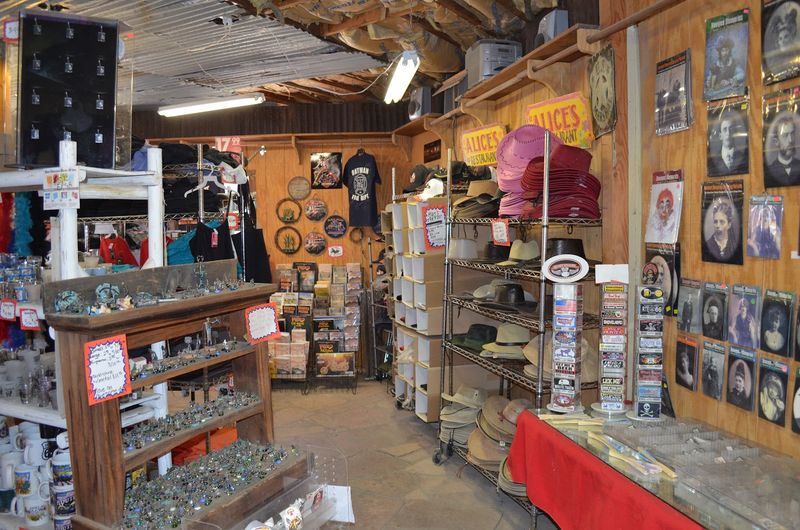
Before the burros became the headline attraction, Oatman was already a place with serious historical weight. The town grew up around gold mining in the early 1900s and at its peak had a population of around 3,500 people.
That number has dropped considerably, but the bones of the old town are still very much intact.
Walking the main street feels like being on a film set, except everything is real. The wooden storefronts, the old signage, the narrow sidewalks, all of it has been preserved in a way that feels organic rather than staged.
Route 66 runs right through the heart of town, connecting Oatman to a much longer story about American road culture.
The drive to Oatman along the old highway is itself worth the trip. Hairpin turns through the Black Mountains offer views that feel almost theatrical in their scale.
The road is narrow and winding, and it demands your full attention, but the payoff when you roll into town is immediate. There is a particular quality to the light in late afternoon that hits the storefronts just right and makes the whole place look like a photograph taken a hundred years ago and somehow left to breathe.
What to Do in Oatman Beyond the Burros
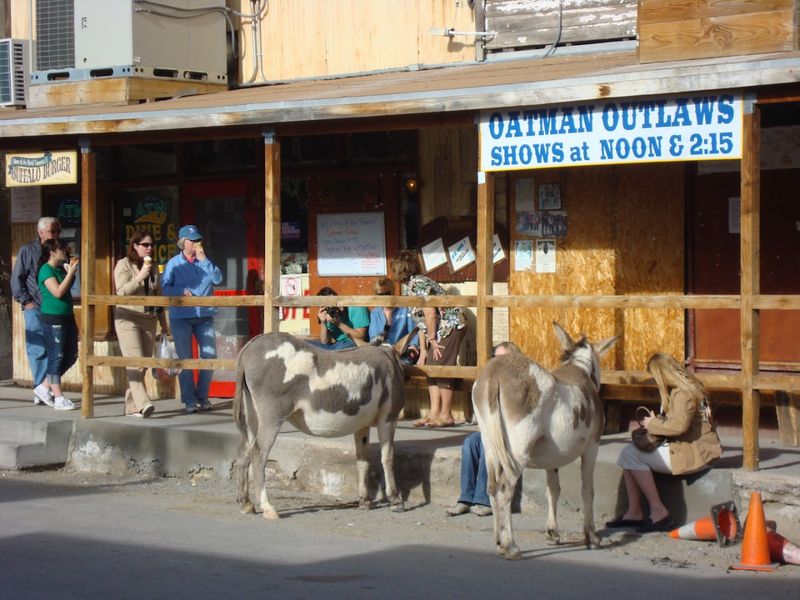
The burros draw people in, but Oatman has enough going on to keep you around for a few hours. The main street is lined with shops selling everything from Route 66 memorabilia to handmade jewelry, and the browsing is genuinely enjoyable without ever feeling like a hard sell.
On weekends, the town hosts mock gunfight shows right in the middle of the street. Local performers reenact Old West showdowns with theatrical flair and enough humor to make it fun for all ages.
The performances are loud and dramatic, and the burros nearby tend to ignore them completely, which adds its own comic layer.
The Oatman Hotel, located at 181 Main Street, Oatman, AZ 86433, is one of the most historically significant buildings in town. Built in 1902, it has hosted some notable guests over the decades and is filled with old photographs and memorabilia that tell the story of the town’s wilder days.
Even if you are not staying overnight, stepping inside to look around is well worth a few minutes. The whole town rewards slow exploration, the kind where you wander without a plan and end up discovering something unexpected around every corner.
Planning Your Visit to Oatman, Arizona
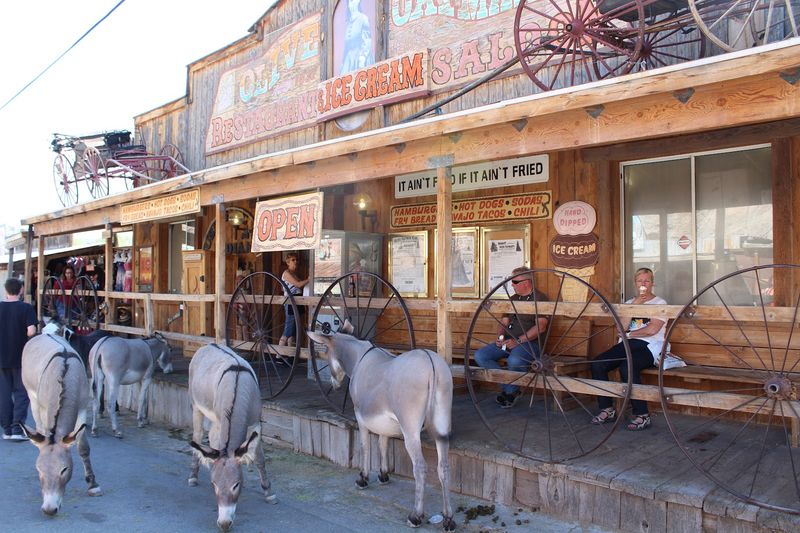
Oatman is about 30 miles south of Kingman, Arizona, and the drive along Route 66 through Sitgreaves Pass is part of the experience. The road is not suitable for large RVs or vehicles towing trailers, so keep that in mind when planning how you get there.
A regular car handles the mountain road just fine.
The town is most lively on weekends and during cooler months between October and April. Summer temperatures in the Mohave Desert can be intense, and while the burros seem unbothered, visitors tend to prefer the more forgiving weather of fall and spring for a comfortable experience.
There is no admission fee to visit Oatman. Parking is available along the main road and in small lots nearby.
Most shops are open daily, though hours can vary by season, so checking ahead if you are making a long drive is a smart move. Bring cash since not every vendor accepts cards.
Most importantly, bring patience and a relaxed attitude, because Oatman runs on its own clock. The burros will appear when they feel like it, the town will charm you without trying, and you will leave wondering why more places are not quite this wonderfully strange.
Address: 181 Main Street, Oatman, AZ 86433.
