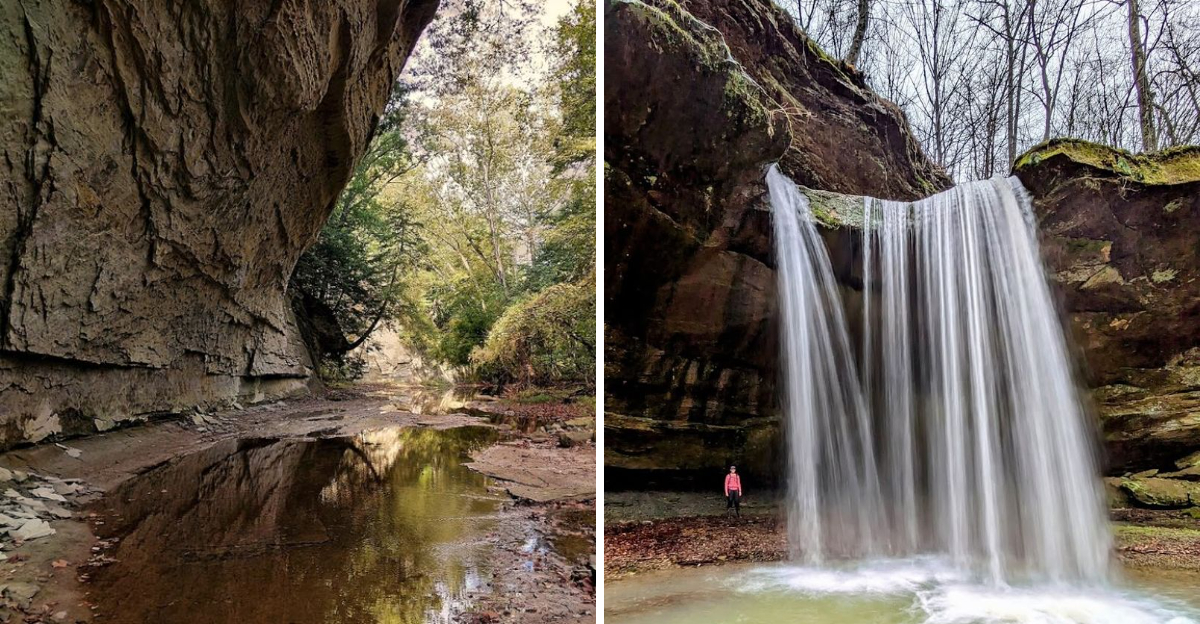
I never thought I’d feel like I was standing somewhere in the Pacific Northwest without leaving Indiana.
But some of these canyon preserves genuinely stopped me in my tracks, with mossy sandstone walls, dripping ferns, and the kind of cool, shadowy air that makes you forget the cornfields are just a few miles away.
Indiana is full of surprises like that. If you love wild, dramatic landscapes but can’t always make the trip out west, these nine hidden gems are exactly what you’ve been looking for.
1. Portland Arch Nature Preserve
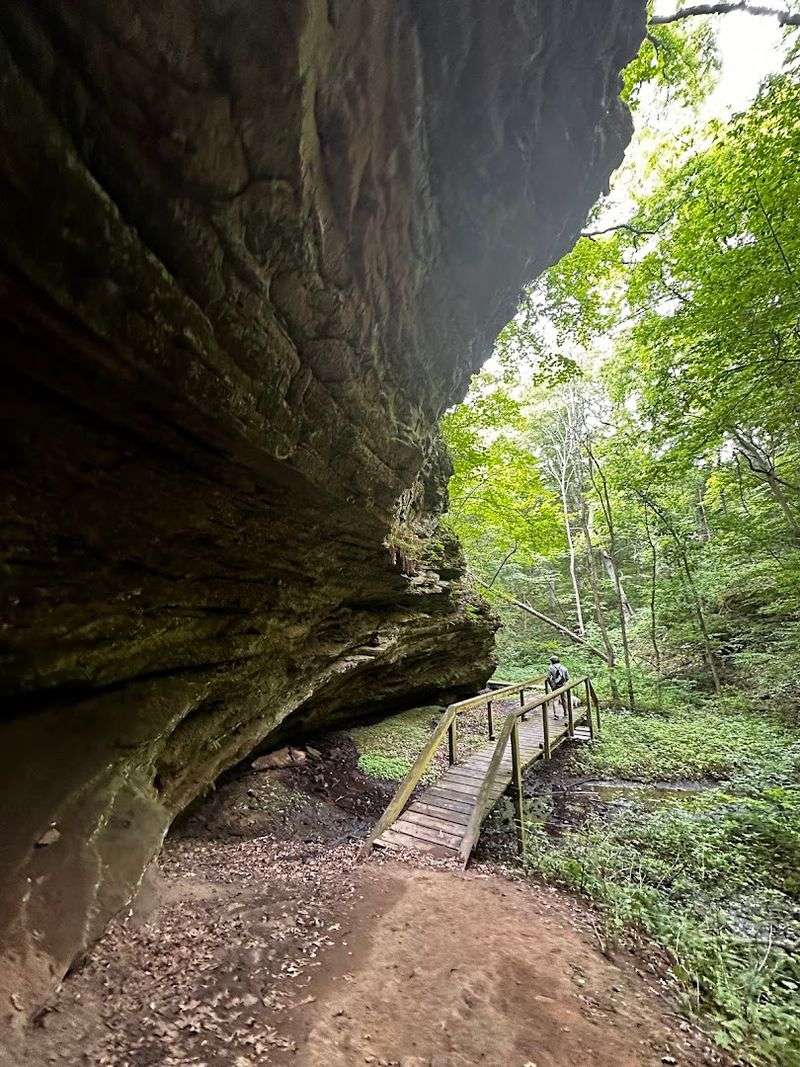
Most people drive through Covington without knowing one of Indiana’s rarest geological wonders sits just outside town. Portland Arch Nature Preserve , located at 1599 W Scout Camp Rd, Covington, IN 47932, holds a genuine natural sandstone arch, a feature so unusual for the Midwest that geologists still find it fascinating.
It’s the kind of place that makes you feel like you accidentally wandered into the Oregon Coast Range.
The preserve sits along Big Pine Creek, where the trail winds through a deep, fern-choked ravine with sandstone walls rising on both sides. The moisture trapped in the canyon keeps everything green and lush, even in the heat of summer.
Rare plant species cling to the rock faces, and the whole scene feels more like a rainforest floor than an Indiana nature trail.
Covington itself is a quiet little town along the Wabash River, easy to explore before or after your hike. The trail to the arch is moderate and well worth every step.
Go early in the morning when mist still hangs in the ravine and the light filters through the tree canopy in long golden shafts. That’s when the magic really hits.
Bring sturdy shoes because the path gets muddy and slick near the creek crossings. This is a place that rewards slow walkers who stop often.
2. Rocky Hollow-Falls Canyon at Turkey Run State Park
Some places earn their dramatic nicknames and actually deliver. Rocky Hollow-Falls Canyon inside Turkey Run State Park, located at 8121 E Park Rd, Marshall, IN 47859, near Marshall, Indiana, is one of them.
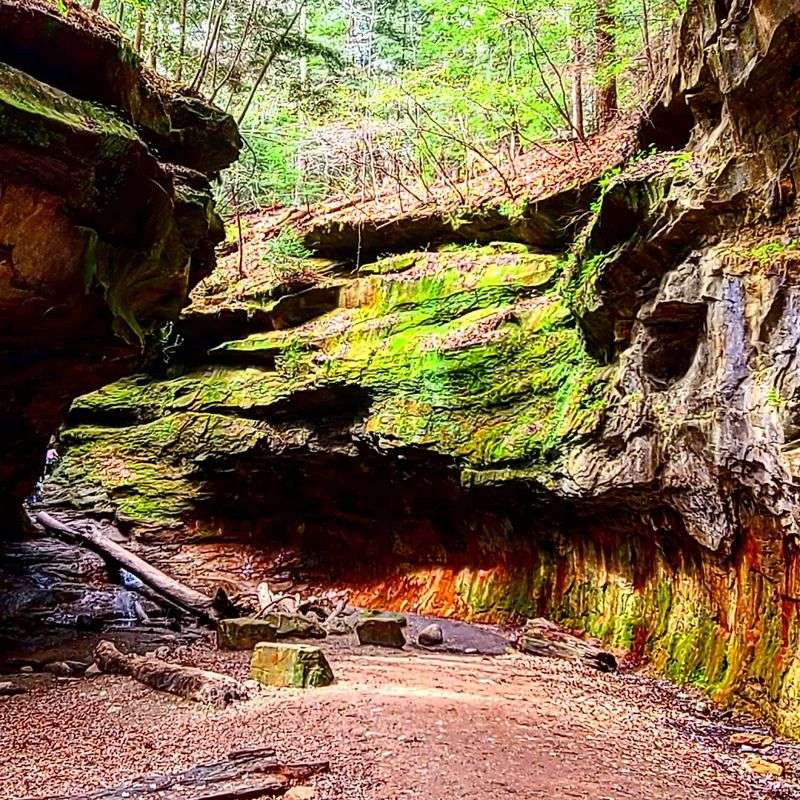
People have called this stretch the Grand Canyon of the Midwest, and once you drop down into those canyon corridors with 70-foot sandstone walls pressing close on both sides, you’ll understand why.
The trails here require some real effort. You’ll wade through Sugar Creek, squeeze through narrow rock passages, and climb iron ladders bolted into the canyon walls.
It sounds extreme, but families with older kids do it regularly and come out grinning. The sandstone is streaked with iron oxide in deep reds and oranges, and ferns spill from every crack in the rock.
Mossy grottos collect water and echo with the sound of distant falls.
Marshall is a tiny town, but the park itself has a full-service inn, a nature center, and a dining room if you want to make a weekend of it. The Lieber State Recreation Area is also nearby for those wanting more water access.
Trail 3, which runs through Rocky Hollow, is the crown jewel of the whole park. Go after a rain if you can handle the mud, because the waterfalls run full and the canyon walls practically glow green.
This is the kind of hiking that stays with you long after you get home.
3. Hemlock Cliffs Nature Preserve
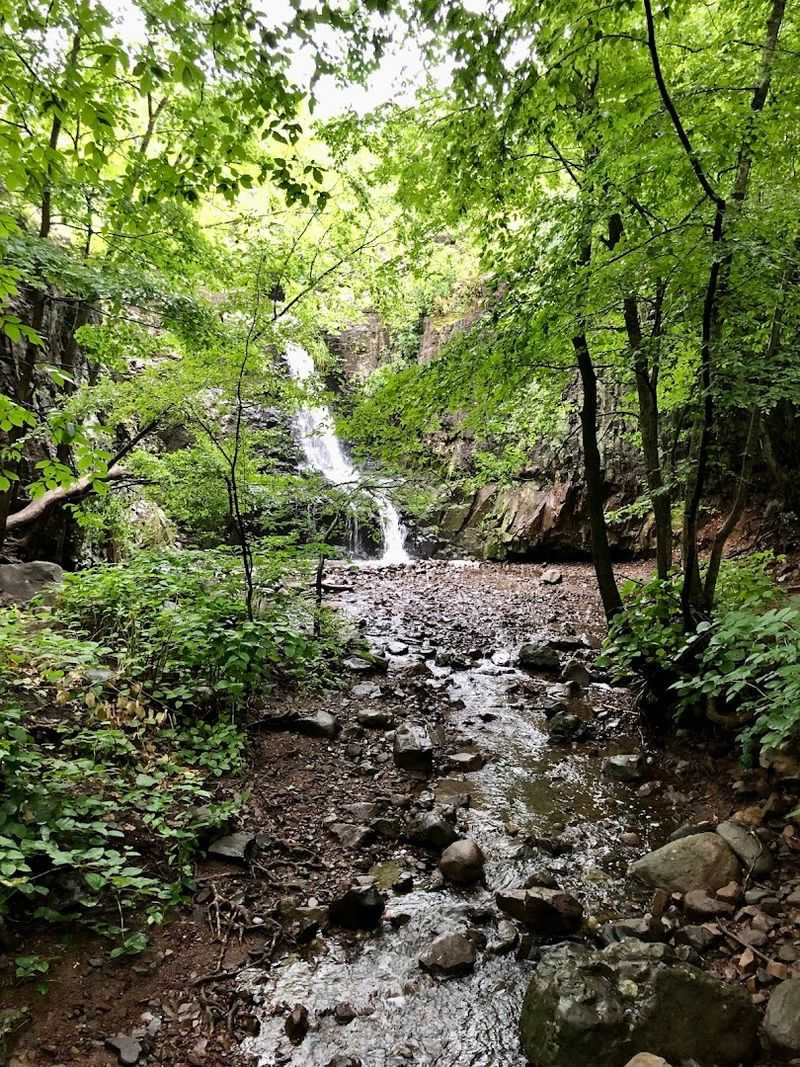
Near the small southern Indiana town of English, Hemlock Cliffs, located at National Forest Rd, English, IN 47118, feels like a secret the Hoosier National Forest has been keeping for decades. The preserve features a horseshoe-shaped box canyon where seasonal waterfalls spill over sandstone ledges and rare eastern hemlock trees grow in the cool, sheltered hollows below.
It’s genuinely unlike anything else in the state.
The loop trail is only about two miles, but it packs in more visual drama per step than trails three times its length. You’ll walk along the canyon rim, then descend into the bowl where the moisture and shade create a microclimate that supports plants typically found hundreds of miles to the north.
The hemlock trees themselves are ancient-looking, with shaggy bark and drooping branches that give the whole place a slightly otherworldly feel.
After heavy rains in spring, the waterfall at the back of the canyon runs with real force, crashing into a shallow pool and sending mist drifting through the hemlocks. In summer, the canyon stays noticeably cooler than the surrounding forest.
English is a small community in Crawford County, and nearby Marengo Cave offers another underground adventure worth building your day around. Hemlock Cliffs has no admission fee and limited crowds, which makes it one of the most rewarding free experiences in all of Indiana.
Pack a lunch and stay longer than you planned.
4. Fern Cliff Nature Preserve
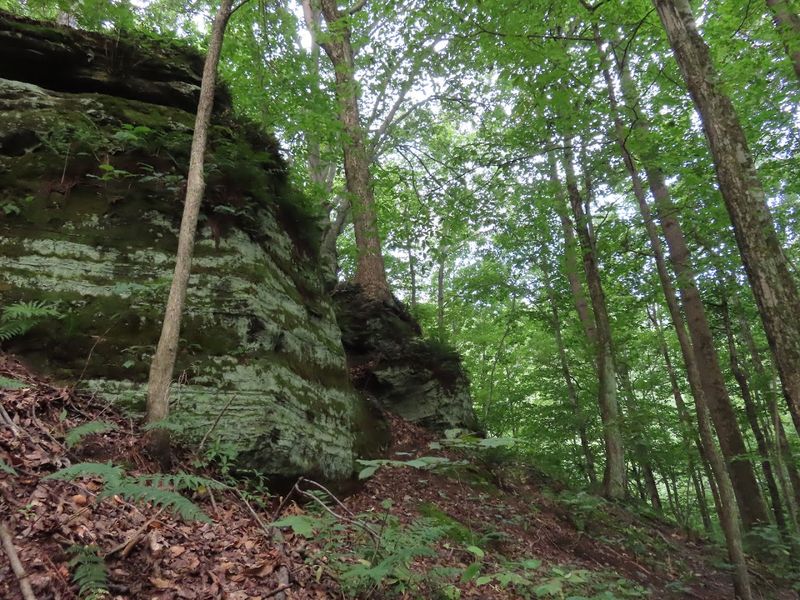
Fern Cliff Nature Preserve, located at W County Rd 375 S, Greencastle, IN 46135, outside Greencastle might be the most visually striking place in all of Indiana that most people have never heard of. The sandstone cliffs here are literally blanketed in ferns from base to top, creating a wall of living green that looks like something from a fantasy film set.
It’s the kind of scene that makes you stop mid-sentence and just stare.
The preserve is managed by the Indiana chapter of The Nature Conservancy and protects a rare plant community that includes dozens of fern species, mosses, and wildflowers. Big Walnut Creek runs through the gorge below the cliffs, adding the sound of moving water to the already immersive atmosphere.
The humidity trapped in the ravine feeds the fern growth and keeps the whole area feeling perpetually fresh and green.
Greencastle itself is home to DePauw University and has a lively small-town character with local cafes and shops worth visiting. The Putnam County Museum on Washington Street gives good context for the area’s natural and cultural history.
At Fern Cliff, the trail is short but the footing can be tricky near the creek, so waterproof boots are a smart call. Visit in late spring when the ferns are at their most vibrant and the wildflowers add splashes of color along the ravine floor.
Photographers especially love the soft, diffused light that settles into the gorge on overcast days.
5. Shades State Park and Pine Hills Nature Preserve
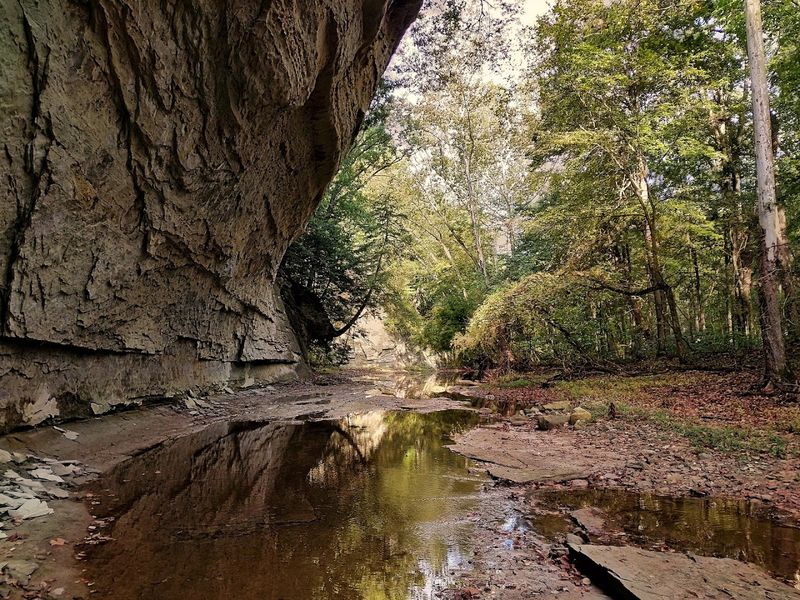
There’s a narrow ridge at Shades State Park, located at 7751 W 890 S, Waveland, IN 47989, called The Backbone, and walking across it with 100-foot ravines dropping away on both sides is one of the most thrilling things you can do in Indiana without a harness. The park sits near Waveland, a town so small you might blink and miss it, but the landscape it borders is genuinely spectacular.
Locals have been calling Shades the Little Smoky Mountains for generations.
Pine Hills Nature Preserve, located within the park, contains some of the most dramatic terrain in the entire state. Ancient hemlock groves shade the canyon floors, and sandstone outcroppings jut from the walls at impossible angles.
Sugar Creek carves its way through the whole system, creating beaches and swimming holes that families return to every summer.
The trails range from easy creek-side walks to challenging ridge scrambles, so there’s something here for every comfort level. Trail 5 takes you through the deepest part of the ravine system and past several impressive geological features.
Waveland has limited dining options, so packing a picnic is the move. Crawfordsville, about 15 miles east, has more restaurants and the Ben-Hur Museum at 200 Wallace Ave, which is worth a quick stop.
Shades is less crowded than Turkey Run and feels more intimate, which is saying something for a place this beautiful. Come in October when the canyon walls are set ablaze with fall color.
6. Hathaway Preserve at Ross Run
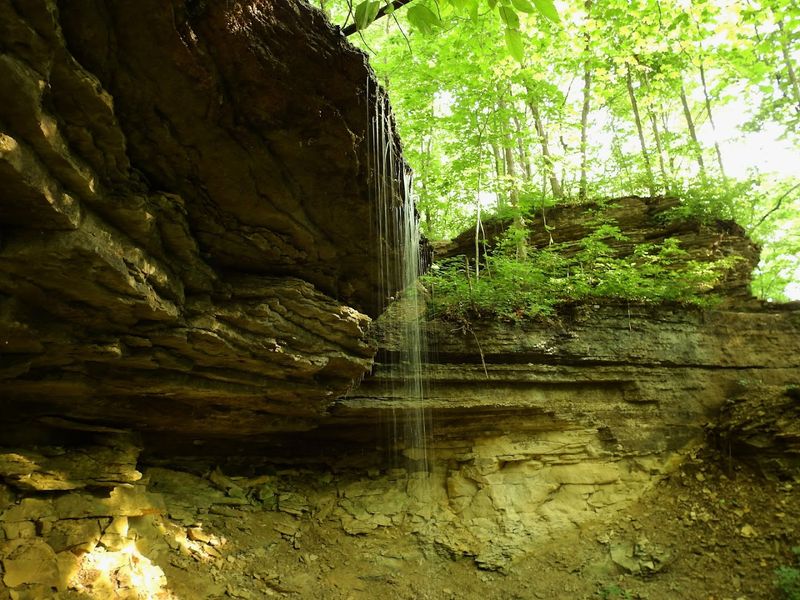
Not many people outside of serious Indiana nature enthusiasts know about Hathaway Preserve, located at 1866 E Baumbauer Rd, Wabash, IN 46992, at Ross Run near Wabash, and that’s exactly what makes it feel so special when you find it. The gorge here features vertical limestone cliffs that rise 75 feet straight up from the creek bed, with multiple waterfalls threading down the rock faces and pooling in clear, cold basins below.
It’s genuinely breathtaking.
The preserve is managed by the Acres Land Trust, an organization that has protected some of the finest natural areas in northern Indiana. Ross Run itself is a small tributary that has spent thousands of years cutting through the limestone bedrock, creating this miniature canyon that feels wildly out of place in the otherwise flat agricultural landscape surrounding Wabash.
The contrast is part of what makes it so memorable.
Wabash has a fascinating history as the first electrically lit city in the world, and the downtown area along Market Street still has beautiful 19th-century architecture worth exploring. The Eagles Theatre, one of the oldest movie houses in Indiana, hosts events and is a local landmark.
At the preserve, the trails are rugged and the terrain is uneven, so take your time and watch your footing near the cliff edges. Spring visits are rewarded with full waterfalls and wildflower blooms carpeting the gorge floor.
This is a spot that genuinely rewards the effort to find it.
7. Fall Creek Gorge – The Potholes
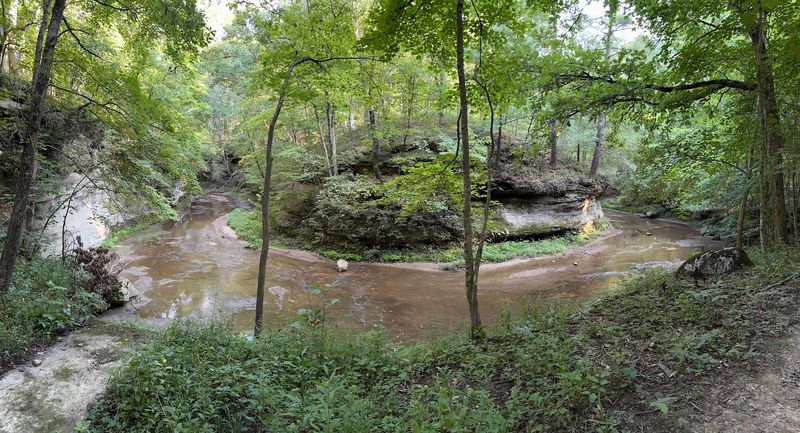
Fall Creek Gorge, located at 1598 N 25 E, Williamsport, IN 47993, near Williamsport is famous for one of the most geologically fascinating features in the entire Midwest. The creek bed here is riddled with deep, perfectly circular depressions called potholes, carved over thousands of years by swirling water and stones grinding into the sandstone.
Some of these bowls are several feet deep and wide enough to sit inside, and they look like something a sculptor designed rather than something nature made.
The gorge itself is steep and forested, with sandstone walls and a canopy of old-growth trees that keeps the whole canyon shaded and cool. The Nature Conservancy manages this preserve as well, and the trail system is modest but effective at getting you down to the creek where the real show is.
Wading through the shallow pools and examining the potholes up close is an experience kids and adults both find genuinely captivating.
Williamsport is a small town in Warren County, and it sits near the edge of the Wabash River valley. The nearby Williamsport Falls, one of Indiana’s widest waterfalls, is an easy additional stop just a short drive away on the edge of town.
Fall Creek Gorge has limited signage and no formal visitor center, so come prepared with downloaded maps. Morning light hits the sandstone in a way that makes the whole gorge glow amber and gold.
Wear shoes you don’t mind getting wet because creek crossings are part of the experience here.
8. Seven Pillars of the Mississinewa
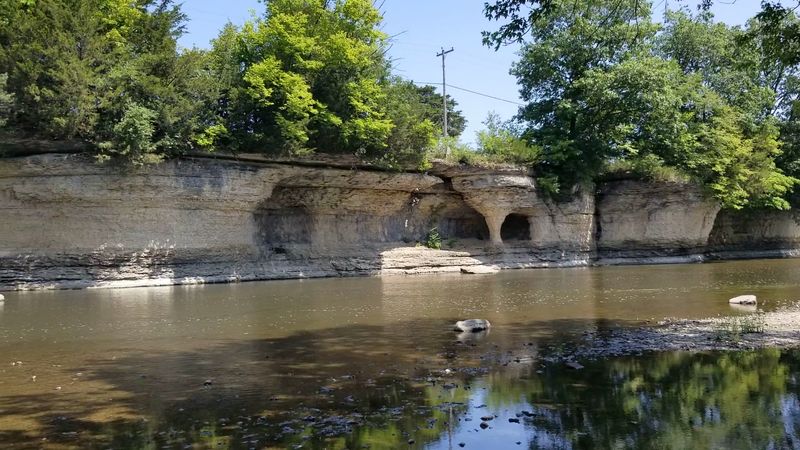
Few natural landmarks in Indiana carry as much historical weight as Seven Pillars of the Mississinewa, located at W 400 N, Peru, IN 46970, near Peru. These massive, rounded limestone columns rise directly from the riverbank along the Mississinewa River, carved by centuries of water erosion into shapes that genuinely look architectural.
Miami Nation leaders used these pillars as a meeting place and sacred site long before European settlers arrived, and that history adds a layer of meaning to every visit.
The pillars themselves are impressive on a purely visual level, standing in a row along the limestone bluff with the slow, green river reflecting their shapes below. The surrounding forest is thick with sycamore and river birch, and the whole scene has a quiet, ceremonial atmosphere that makes you want to speak softly.
A short trail leads from a small parking area down to the riverbank for close-up views.
Peru, Indiana, has an unexpectedly rich cultural identity as the former winter home of several major American circuses. The International Circus Hall of Fame at 3076 Circus Lane is a genuinely fun stop and a perfect complement to a day that also includes the pillars.
The Miami County Museum downtown adds more historical depth to the region’s Indigenous and pioneer history. Seven Pillars is accessible year-round and free to visit, making it one of the most rewarding low-effort natural and cultural experiences in north-central Indiana.
Sunrise visits are particularly stunning when mist rises off the river.
9. Yellow Birch Ravine Nature Preserve
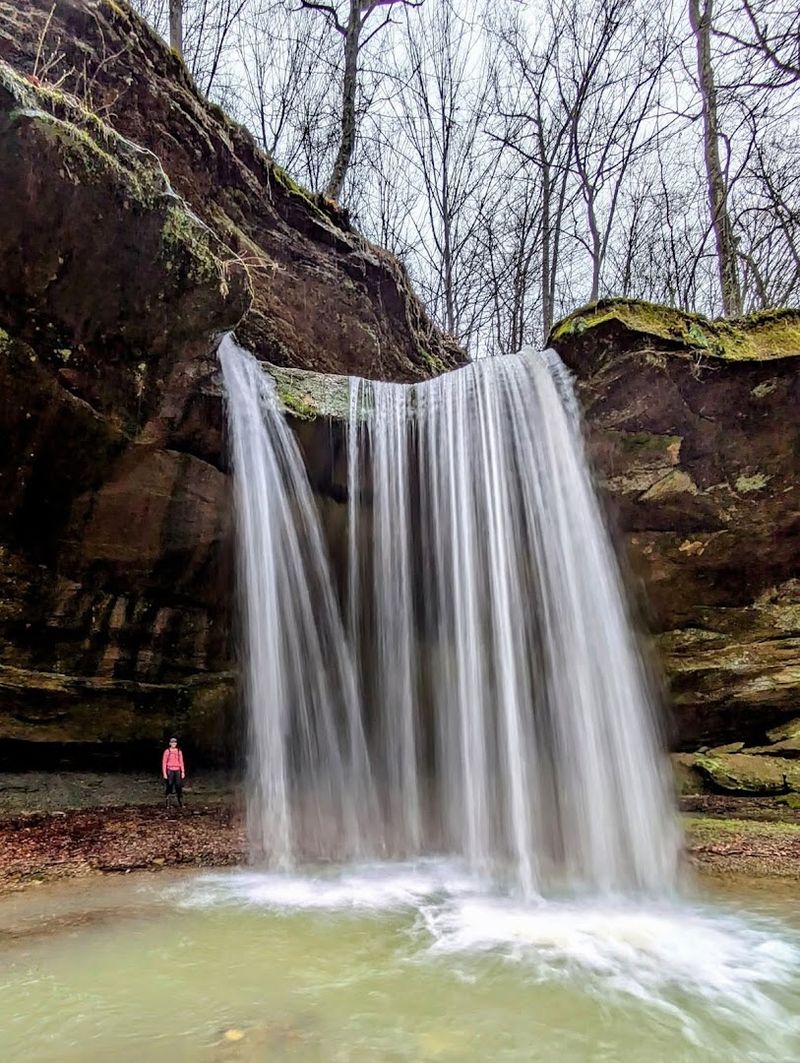
Yellow Birch Ravine, located at Trestle Rd, Taswell, IN 47175, near the tiny community of Taswell in Crawford County might be the most remote and atmospheric canyon preserve in all of Indiana. Getting there requires navigating back roads through deep southern Indiana hill country, but the payoff is a sandstone ravine so lush and secluded that it genuinely feels like a lost corner of the Olympic Peninsula.
Rare yellow birch trees, typically found far to the north, grow here because the cool, moist microclimate of the ravine mimics conditions hundreds of miles away.
The Nature Conservancy protects this site, and visitor numbers stay low, which preserves the sense of genuine solitude that makes the experience so powerful. Sandstone cliffs rise steeply above the ravine floor, dripping with moisture and covered in thick layers of moss and fern.
A small stream winds through the bottom, and on cool mornings, mist collects in the hollow and drifts between the birch trunks in slow, ghostly wisps.
Taswell is barely a crossroads, but the surrounding Crawford County landscape is full of worthwhile destinations. Wyandotte Caves, part of O’Bannon Woods State Park nearby, offers underground exploration that pairs beautifully with a Yellow Birch Ravine hike.
Harrison-Crawford State Forest also surrounds the area with miles of additional trails. Yellow Birch Ravine requires some navigation skill and comfortable footwear since the terrain is uneven and the trail is minimally maintained.
That’s part of the appeal. This one is for people who love finding places that feel genuinely undiscovered.
Dear Reader: This page may contain affiliate links which may earn a commission if you click through and make a purchase. Our independent journalism is not influenced by any advertiser or commercial initiative unless it is clearly marked as sponsored content. As travel products change, please be sure to reconfirm all details and stay up to date with current events to ensure a safe and successful trip.
