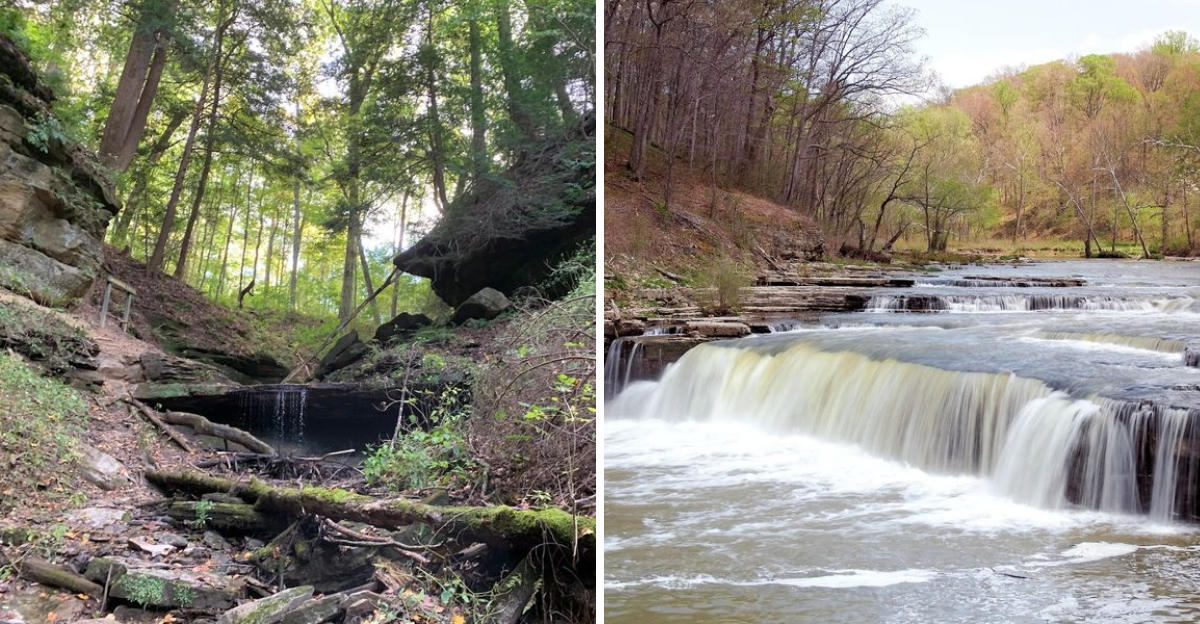
I grew up in Indiana thinking I knew every corner of this state, but then I stumbled onto a mossy creek trail that made me feel like I had walked into a completely different world. That moment changed how I explore.
Indiana has a quiet side that most people miss entirely, tucked along river bends, inside limestone caves, and beneath ancient forest canopies where the water moves slow and the air smells like cool earth. These hidden waterways are the kind of places that make you stop, breathe, and feel genuinely small in the best possible way.
Whether you are a kayaker, a hiker, a curious kid, or someone who just needs to escape the noise, these nine spots will remind you that Indiana holds far more wonder than most people ever give it credit for.
1. Bluespring Caverns Park
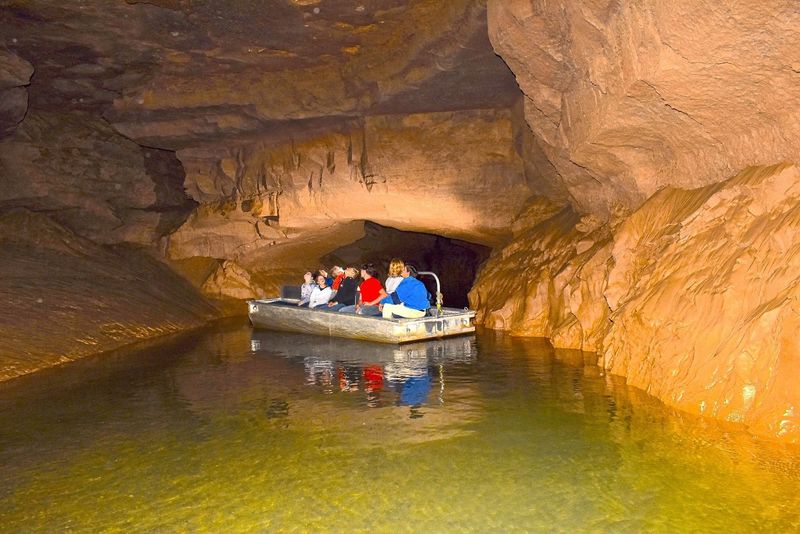
Most people have no idea that beneath the rolling farmland of southern Indiana, a silent river has been flowing in complete darkness for thousands of years. Bluespring Caverns Park at 1459 Blue Spring Caverns Rd, Bedford, IN 47421 offers boat tours through one of the longest known underground rivers in the United States.
The experience is genuinely unlike anything else in the Midwest.
Inside the cave, the air drops to a cool 52 degrees year-round. Blind crayfish and eyeless fish glide through the water because in total darkness, eyes simply became unnecessary over generations.
Your guide narrates the journey while the flat-bottomed boat drifts through chambers with names like the Cathedral Room, where the ceiling soars far above the lantern light.
Families with young kids especially love this place because the wonder on a child’s face when they realize fish have literally lost their eyes is priceless. Reservations are recommended during summer weekends since tours fill up fast.
Bluespring is one of those rare Indiana experiences that earns a permanent spot in your memory the moment you float out from that first dark corridor into the hush of ancient stone.
2. Pogue’s Run Art and Nature Park
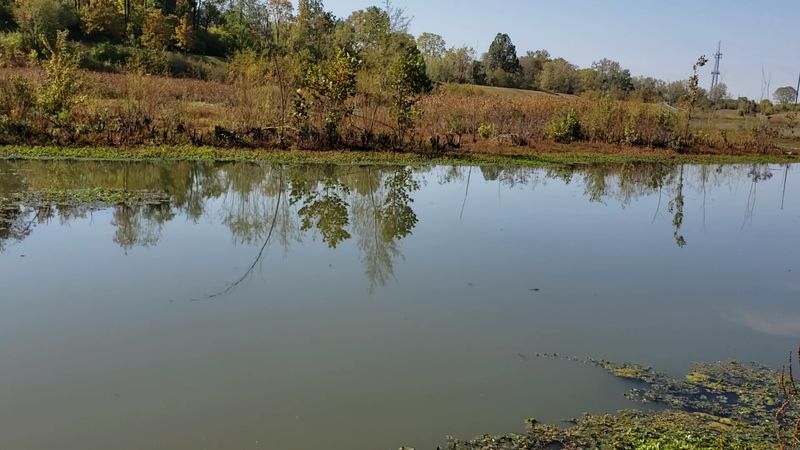
Not every hidden waterway requires a long drive into the countryside. Right inside Indianapolis at 2300 Dequincy St, Indianapolis, IN 46218, Pogue’s Run Art and Nature Park follows an actual creek through a neighborhood that most city residents have never explored on foot.
The creek itself has been part of Indianapolis history since the city was founded, and walking its banks feels like reading a chapter of the city that got left out of the tour books.
The trail is lined with public art installations that change over time, created by local artists who respond to the natural environment around them. Painted rocks, mosaic walls, and sculptural benches appear between stretches of native prairie plantings and restored wetland areas.
On a weekday morning, you might have the whole path nearly to yourself, which is a rare gift inside a major city.
Pogue’s Run is also a serious ecological restoration project. Volunteers and environmental groups have worked for years to bring native plants back to the creek corridor and improve water quality.
Bringing kids here is a smart move because it teaches them that nature does not only exist in faraway parks. Sometimes it runs right through your own neighborhood, waiting for someone to notice it.
3. Hemlock Cliffs Trailhead
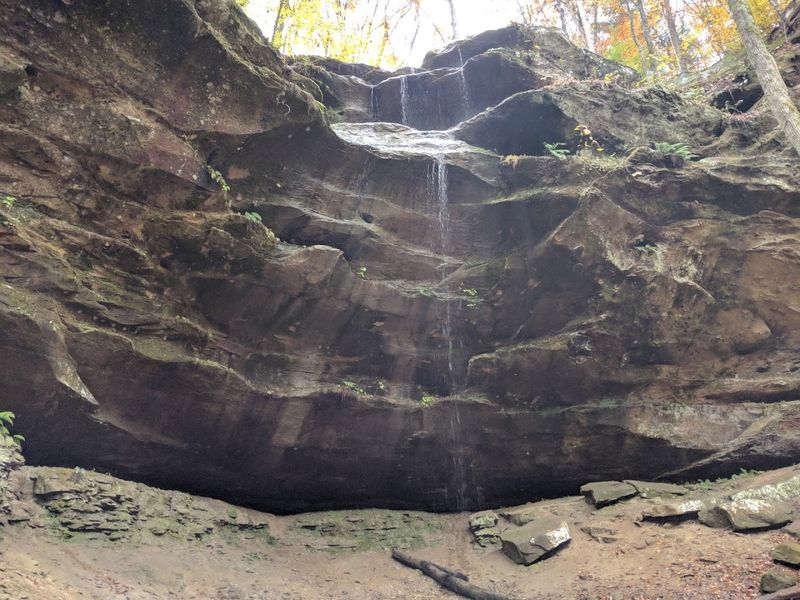
Few places in Indiana inspire the kind of jaw-drop reaction that Hemlock Cliffs delivers on a first visit. Located off National Forest Rd near English, IN 47118 inside the Hoosier National Forest, this sandstone canyon feels more like a scene from the Pacific Northwest than southern Indiana.
Ancient hemlock trees hang over the cliff edges, and seasonal waterfalls pour into pools on the canyon floor below.
The loop trail is roughly two miles and considered moderate difficulty, meaning most reasonably active hikers can complete it without trouble. What makes it special is the geology.
The canyon walls are carved from sandstone that has been shaped by water over millions of years, and you can see the layered history of the earth in every horizontal stripe along the rock face. In spring, the waterfalls are at their most dramatic after rainfall.
Wildlife sightings here are common. Salamanders hide under wet rocks near the water, and birdsong echoes off the canyon walls in a way that feels almost amplified.
Parking is limited at the trailhead, so arriving early on weekends is a smart move. This is the kind of place where you spend twice as long as you planned because every turn in the trail reveals something worth stopping to look at more carefully.
4. Wabash and Erie Canal Park
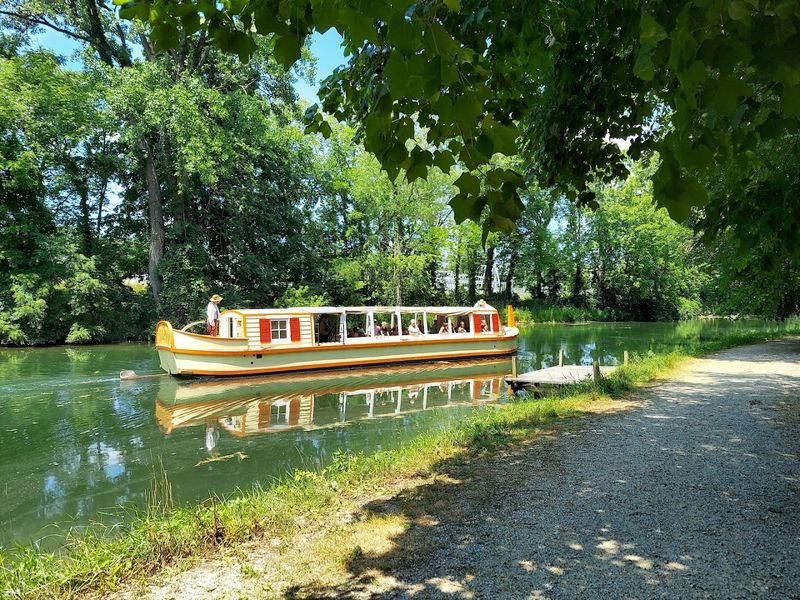
History and water come together in a way that feels genuinely moving at Wabash and Erie Canal Park in Delphi, Indiana. The park at 1030 N Washington St, Delphi, IN 46923 preserves a working section of what was once the longest canal in North America, stretching over 460 miles across Indiana and Ohio.
Walking the towpath alongside the still green water, it is easy to imagine the mule-drawn boats that once carried cargo through this corridor in the 1800s.
The park operates a replica canal boat called the Delphi that takes visitors on narrated rides through the restored canal section. Costumed interpreters share stories about the families who lived and worked on the canal, and the whole experience has a warmth that purely digital history lessons simply cannot replicate.
The Carroll County Wabash and Erie Canal interpretive center nearby adds more depth to the story.
What surprises most visitors is how peaceful the canal corridor feels today. Herons stand motionless in the shallows, turtles line up on logs in the sun, and the towpath is shaded by mature trees that have grown for well over a century.
Whether you come for the history or simply for a quiet walk beside water, Wabash and Erie Canal Park delivers something genuine that you will not find anywhere else in Indiana.
5. Tippecanoe River State Park
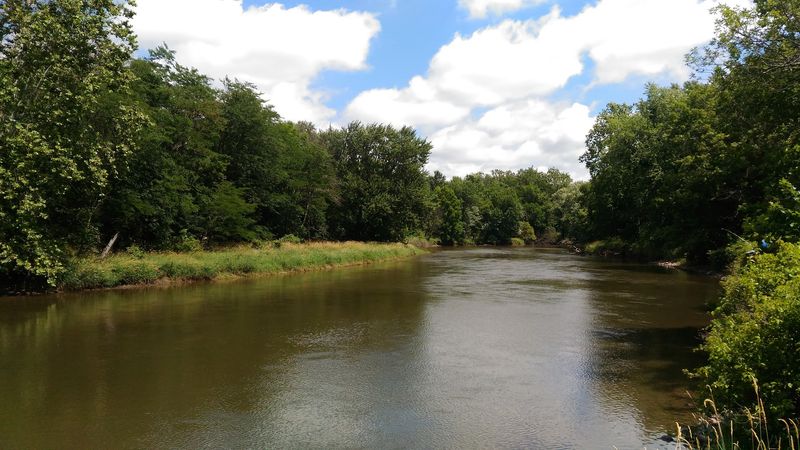
Some rivers just have a personality, and the Tippecanoe River is one of them. At Tippecanoe River State Park, 4200 N US Hwy 35, Winamac, IN 46996, the river moves through a landscape of white pines and oak savannas that looks more like northern Wisconsin than central Indiana.
The park covers over 2,700 acres and offers some of the best flatwater paddling in the state for kayakers and canoeists of all skill levels.
The river here is wide and calm through most of the park, making it a great choice for beginners or families with kids who want their first paddling experience to feel manageable rather than terrifying. Fishing is excellent along the banks, with smallmouth bass and walleye drawing anglers throughout the warmer months.
The campground sits close to the river, so falling asleep to the sound of moving water is part of the experience.
Hiking trails wind through the pine plantation section of the park, where the forest floor is carpeted with needles and the light filters through in long golden columns during the late afternoon. Bald eagles have been spotted along this stretch of river, and white-tailed deer are practically guaranteed at dawn or dusk.
Tippecanoe River State Park is the kind of place that rewards slow, unhurried visits more than quick stops.
6. Blue River at Cave Country Canoes
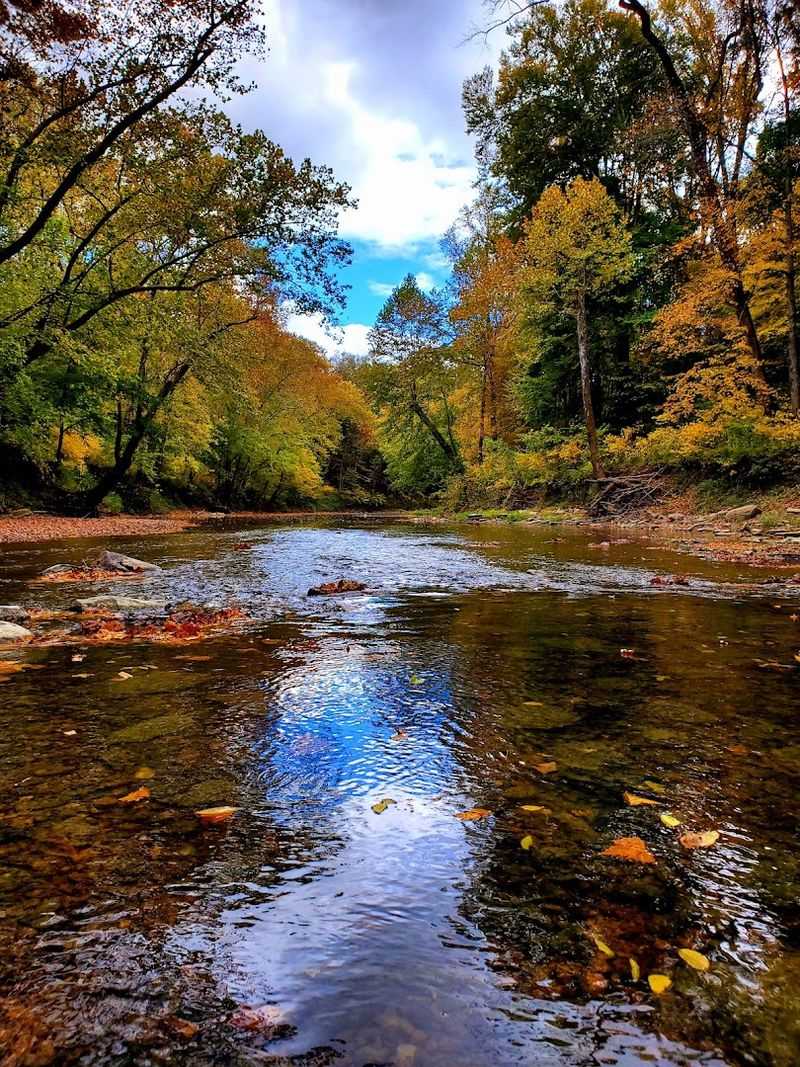
The Blue River earns its name. The water running through this southern Indiana valley near Milltown is genuinely, startlingly clear, fed by springs that bubble up through the limestone bedrock and keep the river cool even in the middle of summer.
Cave Country Canoes at 112 W Main St, Milltown, IN 47145 has been outfitting paddlers on this river for decades and remains one of the most beloved outdoor recreation businesses in the region.
Trips range from a few hours to a full day, and the river corridor passes through some of the most visually dramatic scenery in Indiana. Limestone bluffs rise above the water on sharp bends, sycamore trees stretch their white limbs over the surface, and the occasional cave entrance appears in the hillside.
Great blue herons are constant companions on the Blue River, lifting off ahead of your canoe and landing again just around the next bend.
The current is gentle enough for beginners but interesting enough to keep experienced paddlers engaged. Swimming holes appear naturally along the route, and on a hot Indiana summer day, dropping over the side of the canoe into that cold spring water is one of life’s simple pleasures.
The folks at Cave Country Canoes are friendly, knowledgeable, and genuinely enthusiastic about sharing this river with people who have never seen it before.
7. Shades State Park
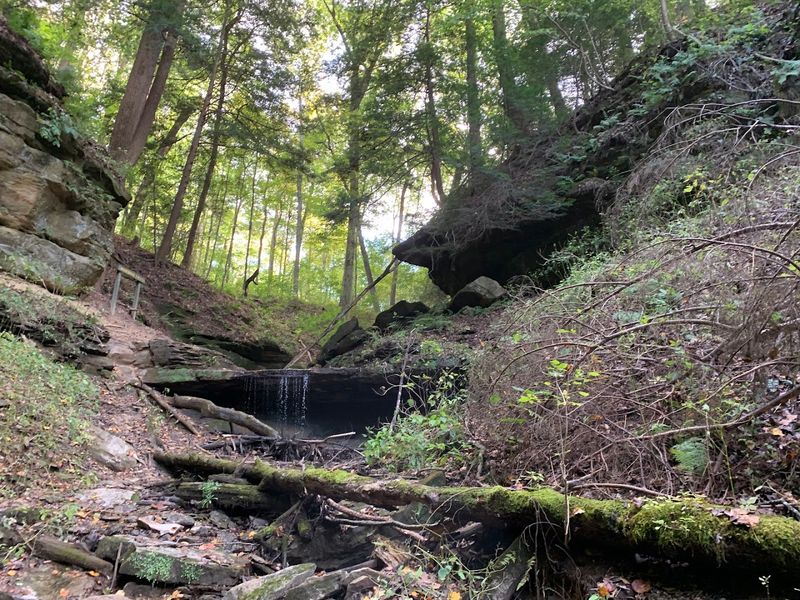
Shades State Park has a reputation among Indiana hikers that borders on legendary, and a single afternoon spent there makes it obvious why. Located at 7751 S 890 W, Waveland, IN 47989, the park sits along Sugar Creek in west-central Indiana and features a series of deep sandstone ravines that plunge dramatically below the surrounding farmland.
The creeks and streams that cut through these ravines feel genuinely secretive, hidden from the world above.
The trail system here is more rugged than most Indiana parks, with steep descents into ravines and creek crossings that require some careful footing. That extra effort is exactly what filters out the casual visitors and gives Shades its quiet, wild character.
The most iconic feature is the Devil’s Punchbowl, a circular depression carved by water that looks like something from a fantasy novel rather than central Indiana.
Fall is spectacular here when the sugar maples and beeches turn the ravine walls into walls of gold and orange. Spring brings wildflowers in abundance along the creek bottoms.
Shades is directly adjacent to Turkey Run State Park, and many visitors make a weekend of it by camping and exploring both parks back to back. Honestly, if you have never walked down into one of Shades’ ravines and stood beside the stream at the bottom, you are missing one of Indiana’s most underappreciated natural experiences.
8. Cataract Falls State Recreation Area
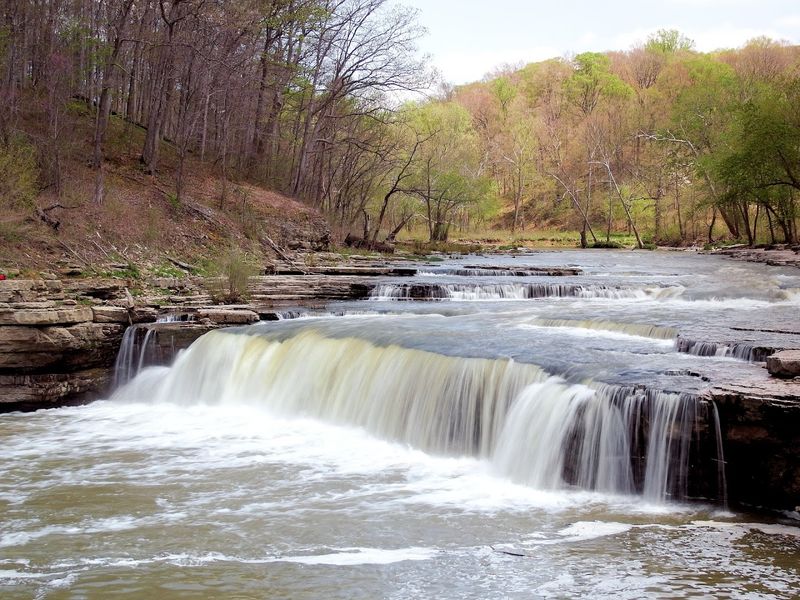
Indiana’s largest waterfall is not some modest trickle. Cataract Falls at 2605 N Cataract Rd, Spencer, IN 47460 drops in two separate sections on Mill Creek in Owen County, and during high water in spring, the roar of the upper falls carries through the trees long before you can see the water.
The upper falls drops about 18 feet, and the lower falls just downstream adds another 8, creating a cascade sequence that genuinely impresses even people who have seen waterfalls all over the country.
The surrounding park land is laced with trails that follow both sides of the creek, passing through mature hardwood forest and offering multiple viewpoints of the falls from above and below. A covered bridge near the park adds a layer of old Indiana charm that photographers love.
Mill Creek itself is a beautiful stream beyond the falls, clear and rocky, with good fishing for those who bring gear.
Visiting in late winter or early spring after a good rain gives you the most dramatic version of the falls. Summer visits are more crowded but still worthwhile, especially in the early morning before the parking area fills.
Cataract Falls is one of those Indiana places that locals are quietly proud of but rarely advertise too loudly, as if they want to keep it a little bit theirs.
9. Patoka Lake at Newton-Stewart State Recreation Area
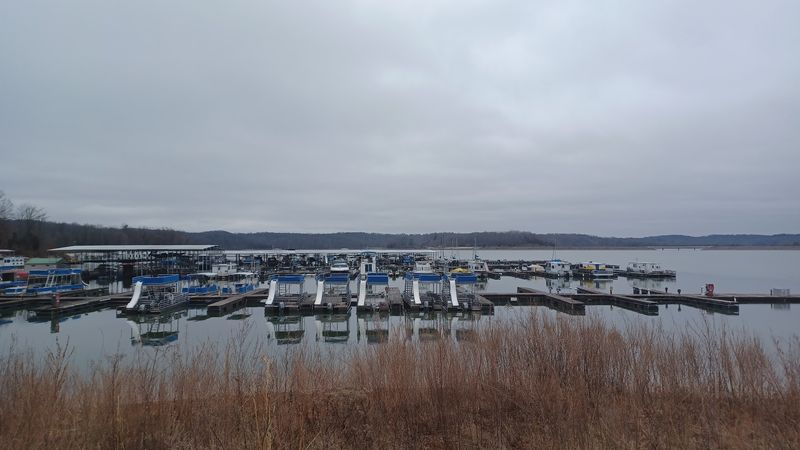
Patoka Lake is the second-largest reservoir in Indiana, but it carries itself with the quiet dignity of a place that has never tried too hard to get attention. The Newton-Stewart State Recreation Area at 3084 N Dillard Rd, Birdseye, IN 47513 serves as the main hub for accessing the lake, and the surrounding landscape of forested hills and coves makes this feel far more remote than it actually is.
On a calm morning, the water mirrors the tree line so perfectly that it is hard to tell where the forest ends and the reflection begins.
The lake has over 150 miles of shoreline, most of it undeveloped and forested, which is increasingly rare for a reservoir of this size in the Midwest. Kayaking and canoeing along the quieter coves on the eastern end of the lake puts you in close contact with osprey, great blue herons, and the occasional bald eagle that has taken up residence along the wooded banks.
Anglers come from across the region for the largemouth bass and crappie fishing.
The campground here fills up on summer weekends, so booking ahead is essential if you want a site near the water. Hiking trails wind through the surrounding hills and offer elevated views of the lake that reward the climb with some of the best scenery in southern Indiana.
Patoka Lake is proof that Indiana can compete with any state when it comes to beautiful, unhurried water landscapes.
Dear Reader: This page may contain affiliate links which may earn a commission if you click through and make a purchase. Our independent journalism is not influenced by any advertiser or commercial initiative unless it is clearly marked as sponsored content. As travel products change, please be sure to reconfirm all details and stay up to date with current events to ensure a safe and successful trip.
