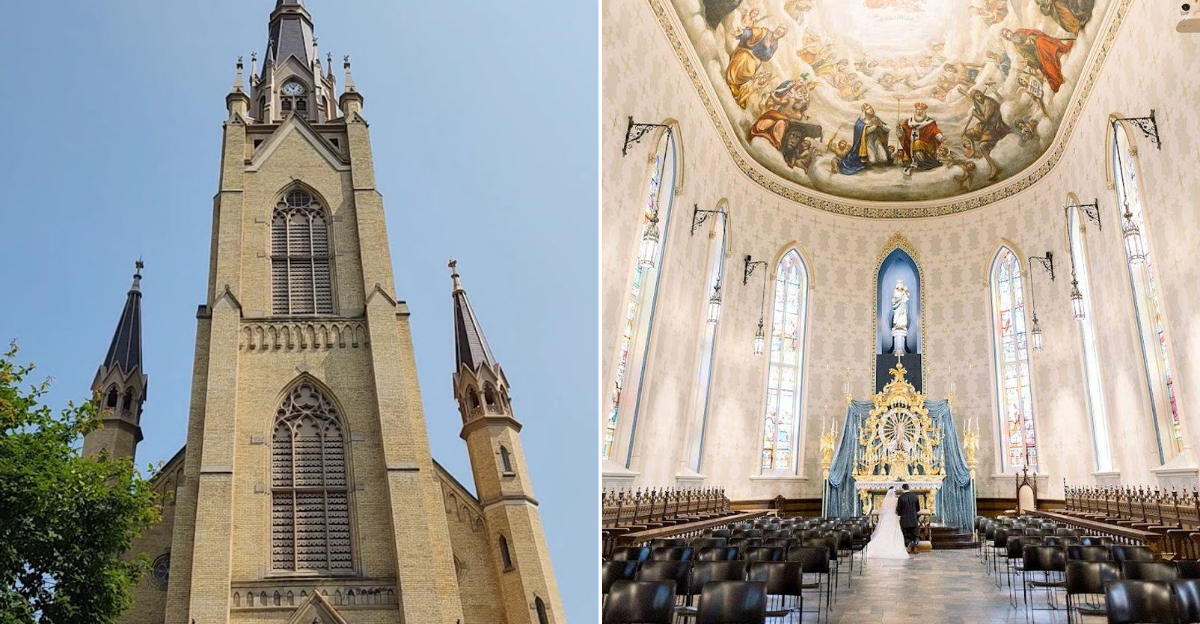
Have you ever walked into a building that made your breath catch before you even said a prayer? That is the power of this magnificent Gothic Revival basilica in Indiana, a soaring masterpiece of stone and stained glass that rivals anything you might find in Europe.
The twin spires pierce the sky, and the rose window explodes with color when the afternoon sun hits just right. You step inside and your head tilts back, trying to take in the vaulted ceilings, the intricate carvings, the quiet hum of something ancient and holy.
The architecture is not just beautiful. It is overwhelming in the best possible way.
Visitors come for the art, the history, or simply a moment of peace, and they leave feeling like they have witnessed something rare. Indiana does not always get the spotlight for grand cathedrals, but this basilica belongs on any short list of America’s most breathtaking sacred spaces.
Pull open the heavy door, step inside, and let the silence do its work.
That First Look From The Lawn
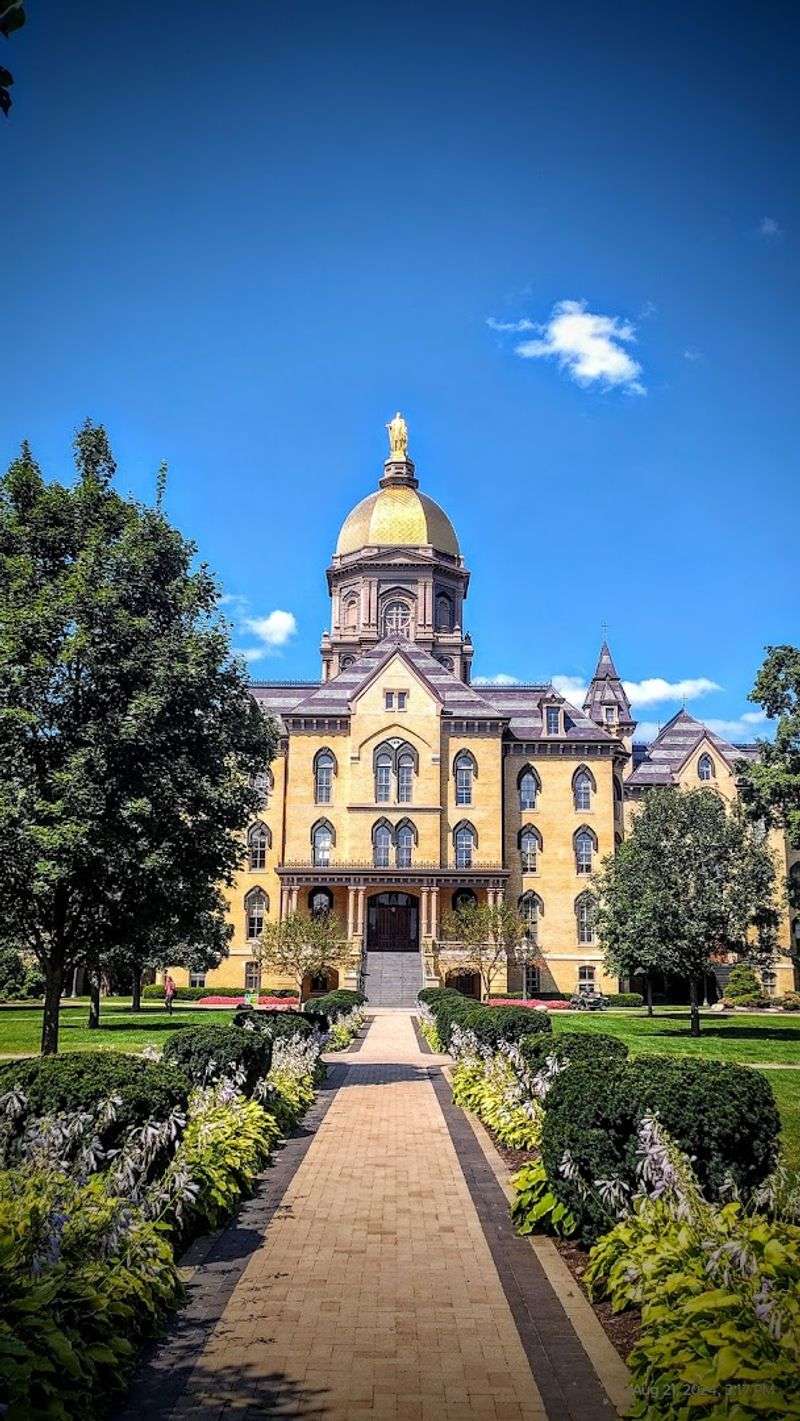
The first thing that hits you is how confidently this church stands there, like it already knows you are going to stop walking and stare for a while. From the lawn, the basilica feels tall in that old-world way, with sharp lines, stone details, and a steeple that seems to pull your eyes straight into the sky.
Even before you step inside, it already feels bigger than a normal campus landmark.
What I like most is that it does not come off cold or distant, even with all that grandeur. The building has that rare mix of formality and warmth, where the Gothic Revival style feels dramatic without feeling stiff, and you can appreciate it whether you know architecture terms or not.
In Indiana, that kind of reaction sneaks up on you, because you are not expecting something this European in mood to appear so naturally.
If you pause and really look, the small carvings and vertical lines start doing their work on you. Everything seems designed to lift your attention upward, which is kind of the point, and you can feel it before anyone explains a single thing.
It is one of those places where the outside already changes your pace.
By the time you reach the doors, you are not rushing anymore. You are already in that quieter headspace, and honestly, that feels like part of the visit too.
Walking Up To The Front Doors
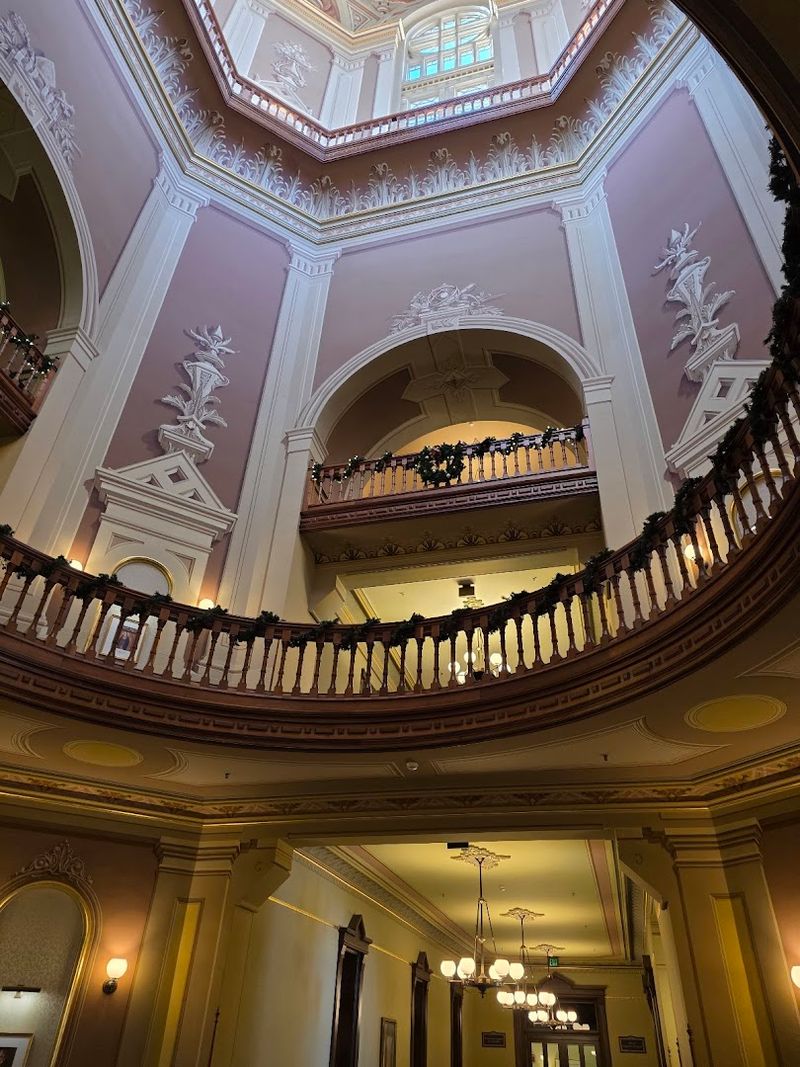
As you get closer, the basilica stops feeling like a postcard and starts feeling personal, which is honestly what surprised me most. The walk up to it at Basilica of the Sacred Heart, 101 Basilica Dr, Notre Dame, IN 46556, gives you a little time to notice how the building changes from faraway spectacle to incredibly detailed craft.
Suddenly the stonework, the entry, and the vertical sweep all feel less abstract and more human.
I always think this is the moment when the place really lands. You notice how carefully everything was composed, but it still feels welcoming instead of overly polished, like it was built to impress and also built to be used.
That balance is hard to pull off, and this church does it without showing off.
There is also something about approaching it on foot that works in its favor. You are not just arriving at a destination, you are easing into a mood, and the architecture quietly does the heavy lifting.
In Indiana, that kind of slow reveal feels especially memorable, because the setting around it is calm enough to let the basilica be the main event.
By the time you reach the entrance, the excitement is not loud anymore. It turns into curiosity, and that is a much better way to step inside.
The Ceiling That Changes Everything
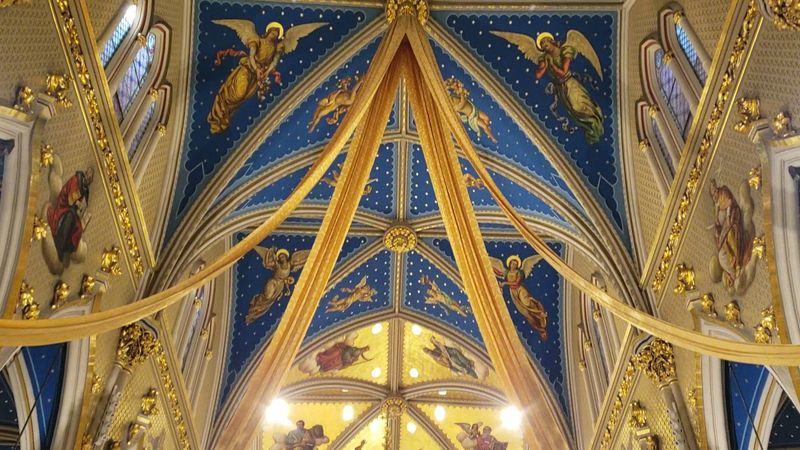
You know that feeling when you walk into a place and your brain needs a second to catch up with your eyes? That is exactly what happened to me when I looked up and saw the blue ceiling scattered with gold stars, because it instantly shifts the whole room from beautiful to unforgettable.
It is bold, intricate, and somehow still serene at the same time.
I love that the ceiling does not feel like decoration added for effect. It feels essential to the atmosphere, like it is part of the emotional architecture of the basilica, quietly telling you to slow down and pay attention.
The stars, painted figures, and rich color pull everything upward, and the room starts to feel more expansive than the walls alone can explain.
What really gets me is how the color keeps the interior from becoming visually heavy. Gothic spaces can sometimes feel dark or severe, but here the painted ceiling adds this lift and brightness that softens the grandeur without taking anything away from it.
You still get the drama, just with a little more grace and wonder mixed in.
Once you notice it, you keep glancing up even while looking at everything else. It kind of becomes the quiet thread tying the whole visit together.
Those Windows Are Not Playing Around
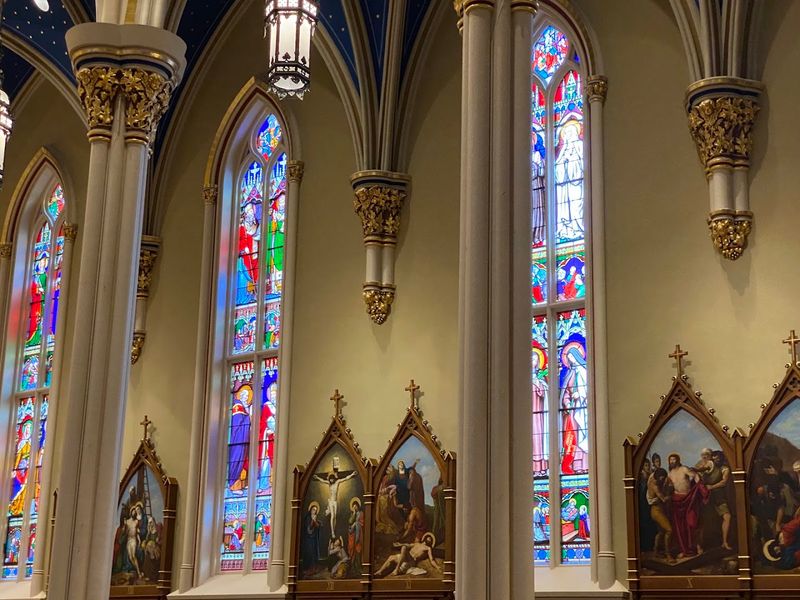
I am not being dramatic when I say the stained glass in this basilica can completely hijack your attention. Light comes through in a way that feels almost layered, and every window seems to hold more detail the longer you stand there.
You start out casually looking, and then suddenly you are studying color, faces, patterns, and tiny scenes you almost missed.
What makes it so special is not just that the glass is beautiful, because a lot of churches have beautiful glass. Here, the collection is unusually extensive and deeply expressive, and it gives the whole interior this living, shifting texture as daylight moves through the space.
The windows do not sit politely in the background, they actively shape how the basilica feels from one moment to the next.
I think that is why people who are not especially church-minded still connect with this place. The glass does not require specialized knowledge to hit you emotionally, because color and light do that work on their own.
In Indiana, seeing a collection with this kind of historic depth and artistic richness feels genuinely surprising in the best way.
Give yourself more time here than you think you need. The windows reward patience, and honestly, they make patience feel easy.
The Murals Keep Pulling You In
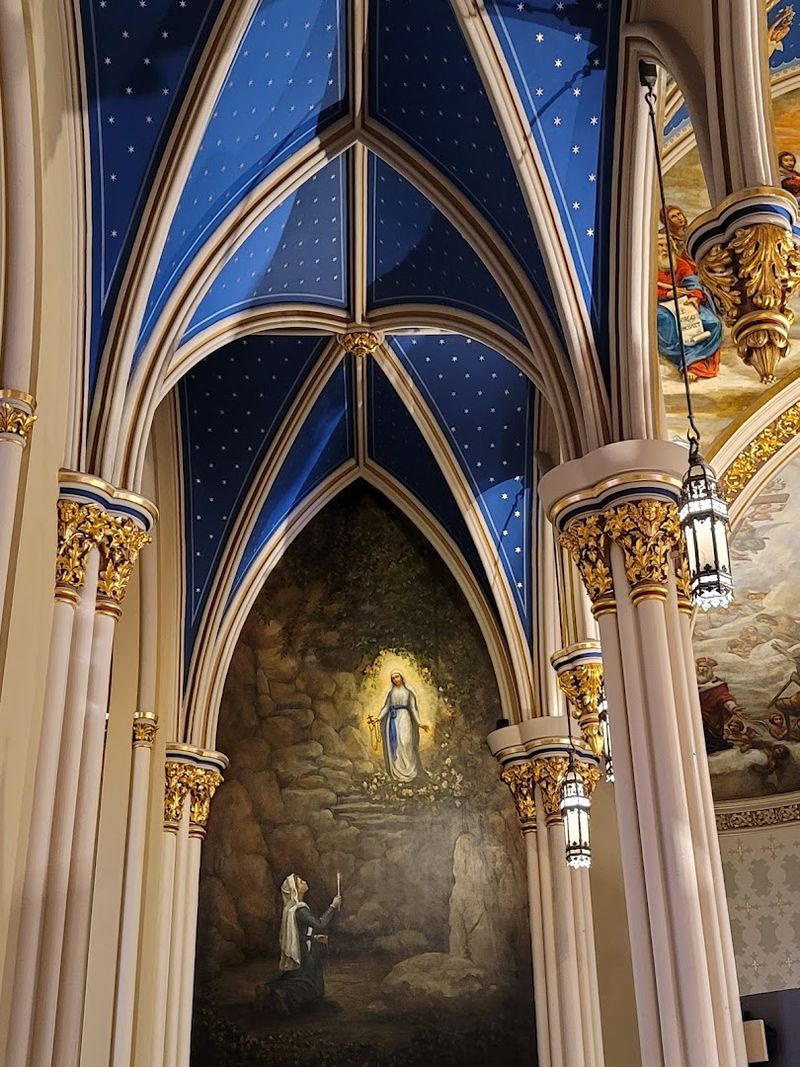
After the stained glass grabs you, the murals step in and make sure you are not done looking around. Painted details stretch across the interior in a way that feels generous rather than crowded, and the longer you stay, the more the walls seem to open up.
It is one of those spaces where your eyes are always finding one more thing.
I really appreciate that the art does not feel random or scattered. There is a sense of purpose to where your attention goes, and the imagery helps the basilica feel immersive instead of merely ornate.
The paintings give the church a lived-in sacredness, like beauty here was meant to surround people from every angle instead of being reserved for a single focal point.
What surprised me most was how approachable all that richness felt. Sometimes heavily decorated interiors can create distance, but here the effect is the opposite, because the murals make the space feel human, story-filled, and emotionally available.
You do not need to decode everything to feel the care behind it.
This is probably where you notice your pace slowing down again. You stop thinking about seeing the building efficiently, and you start letting the place reveal itself in layers, which is much more rewarding anyway.
A Quiet Moment In The Side Chapels
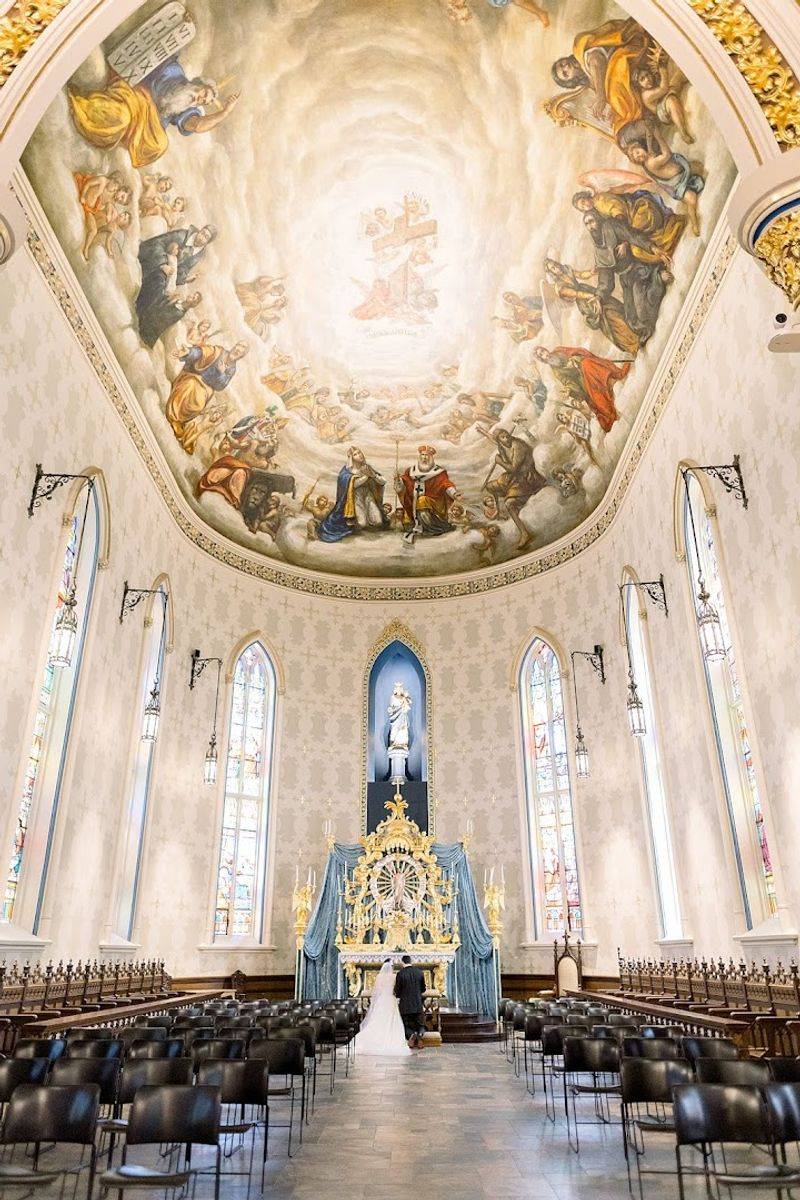
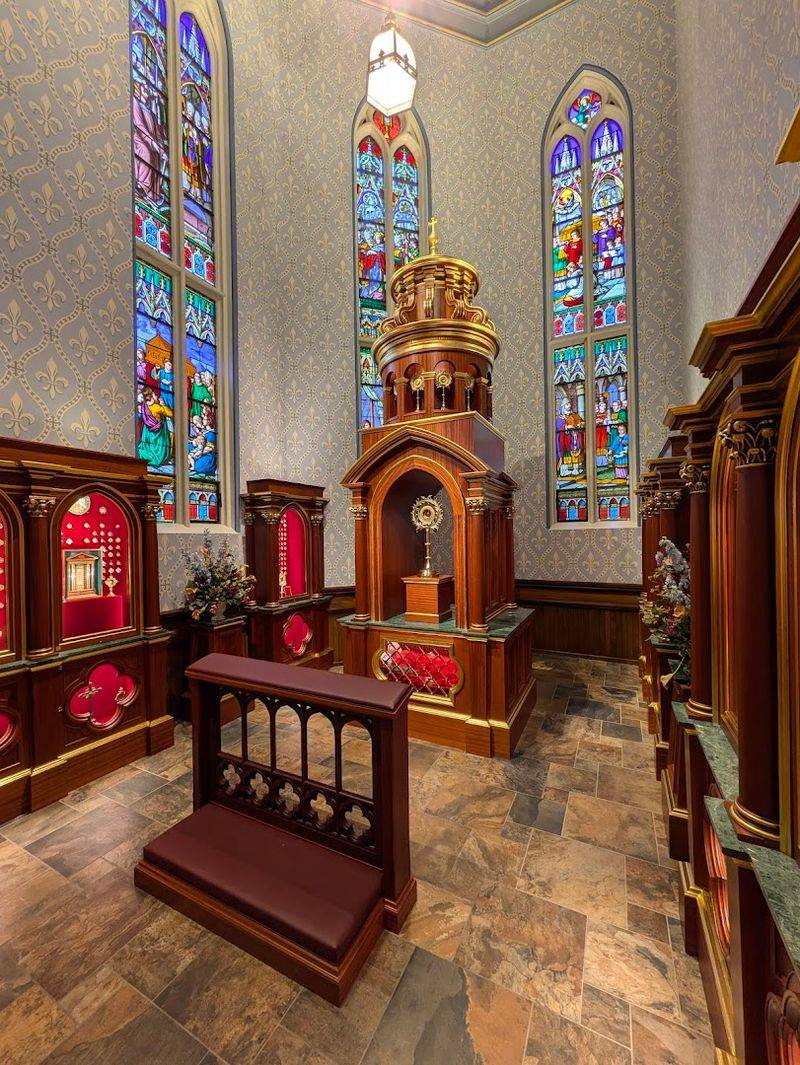
What I did not expect was how much I would love the side chapels. After taking in the scale of the main interior, those smaller spaces offer a different kind of experience, one that feels quieter, closer, and a little more personal.
They give the basilica this rhythm of grandeur and intimacy that keeps the visit from becoming visually overwhelming.
Each chapel has its own mood, and that is part of the charm. You can drift from the larger sweep of the church into a tucked-away corner and feel the atmosphere shift without losing the overall unity of the place.
It is still the same basilica, still richly detailed, but the smaller scale makes your attention settle differently.
I think this matters more than people realize when they visit a church this elaborate. Not every memorable moment comes from the biggest view, and sometimes the spot that stays with you is the one where the room gets still and the details come into focus at eye level.
That contrast makes the whole building feel more thoughtful and more human.
If you are the kind of person who likes to linger, this is where you probably will. The side chapels invite that naturally, without ever feeling staged or precious.
It Feels Bigger Than A Campus Church
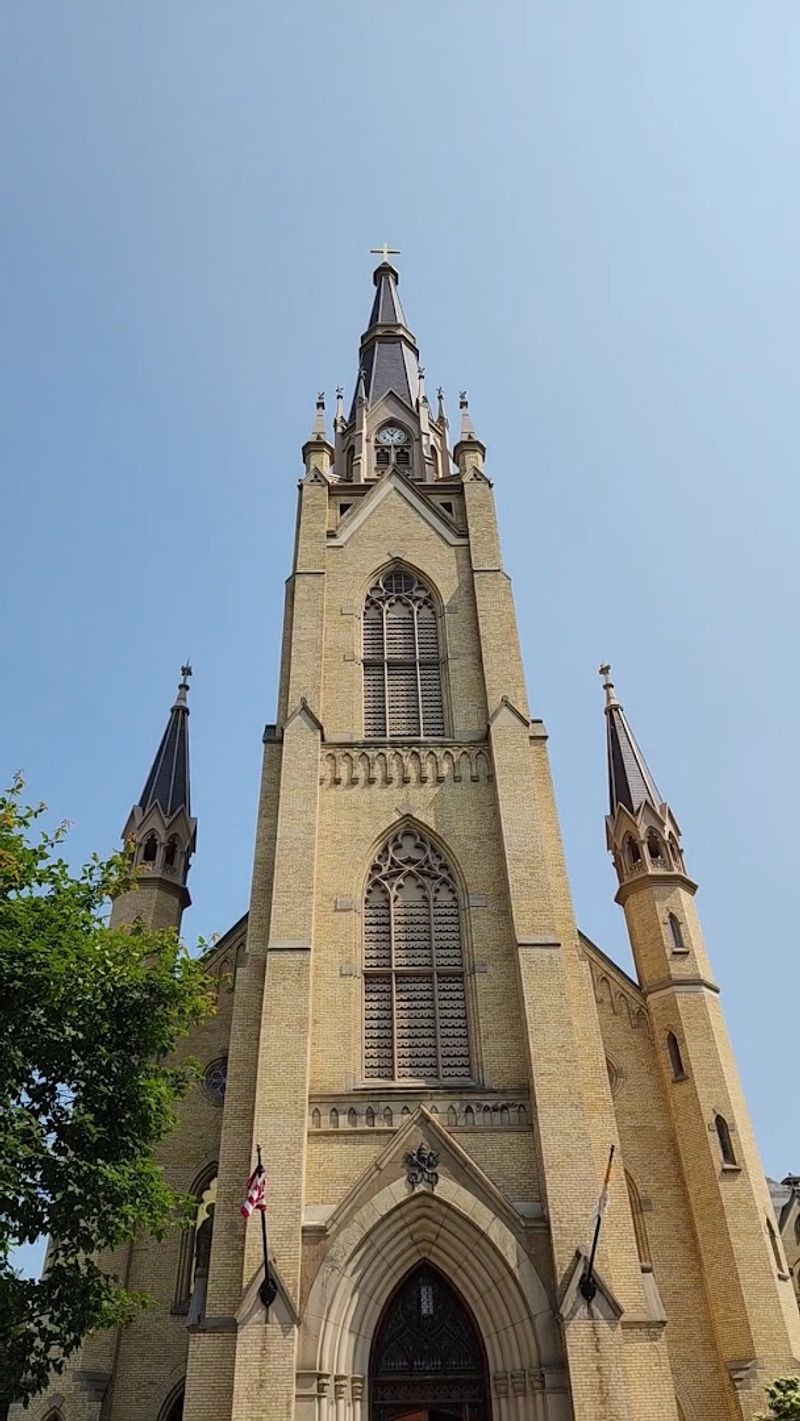
I kept coming back to the idea that this place feels bigger than the label most people first give it. Yes, it sits on a university campus, but the basilica has a presence that goes beyond that role, and you feel it almost immediately.
It is woven into Notre Dame, of course, yet it also stands on its own as one of the most striking religious spaces in America.
Part of that comes from scale, but not all of it. The deeper reason is that the church carries artistic, spiritual, and architectural weight at the same time, and none of those elements feels secondary.
It serves the community around it while also drawing visitors who arrive simply because they have heard there is something extraordinary here in Indiana.
I think that layered identity is what makes the visit so memorable. You are not entering a museum piece sealed off from life, and you are not just passing through a functional building either.
You are stepping into a place where beauty and daily meaning still meet, which is rarer than it should be.
That balance gives the basilica an unusual kind of energy. It feels rooted, active, and genuinely beloved, which somehow makes all the grandeur feel more convincing instead of less.
Why You Will Keep Thinking About It
Here is the thing I did not expect: the basilica stayed with me long after I left. It was not just one feature or one dramatic view, but the way everything worked together, from the stone exterior to the windows, murals, chapels, and that starry ceiling overhead.
Some places impress you in the moment, and others keep echoing later, and this one definitely does the second thing.
I think it lingers because the experience feels both grand and personal. You can admire the building as a major work of Gothic Revival architecture, but you can also connect to it in a quieter, simpler way that has nothing to do with formal knowledge.
It meets you where you are, which is not something every famous place manages well.
If you find yourself anywhere near northern Indiana, this is the kind of stop that can reset your whole day without trying too hard. You walk in curious, maybe a little skeptical, and then leave talking more softly and looking around more carefully.
That shift is subtle, but it is real.
Honestly, that is why I would tell a friend to go. Not because it is famous, but because it feels meaningful in a way that is hard to shake once you have seen it.
