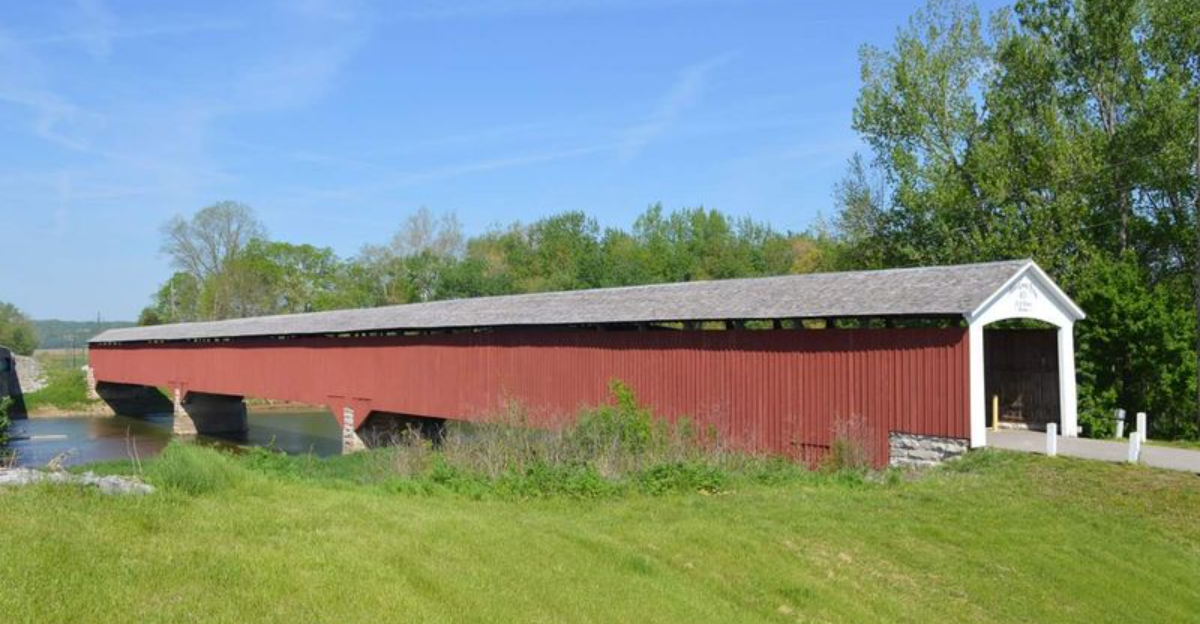
Some places carry a kind of quiet power that stops you in your tracks. This historic covered bridge in Jackson County, Indiana is one of those places.
Stretching more than 431 feet, it holds the distinction of being the longest historic covered bridge in the United States, a feat made possible by the craftsmanship of builder Joseph J. Daniels in 1875.
What makes it remarkable is not just its scale, but the sense of history preserved within its massive timber structure. Every beam and weathered board reflects a different era of engineering, travel, and small-town Indiana life.
If you have never made the trip, there are plenty of reasons this landmark continues to fascinate history lovers, photographers, and curious travelers alike.
A Record-Breaking Length That Still Amazes People Today
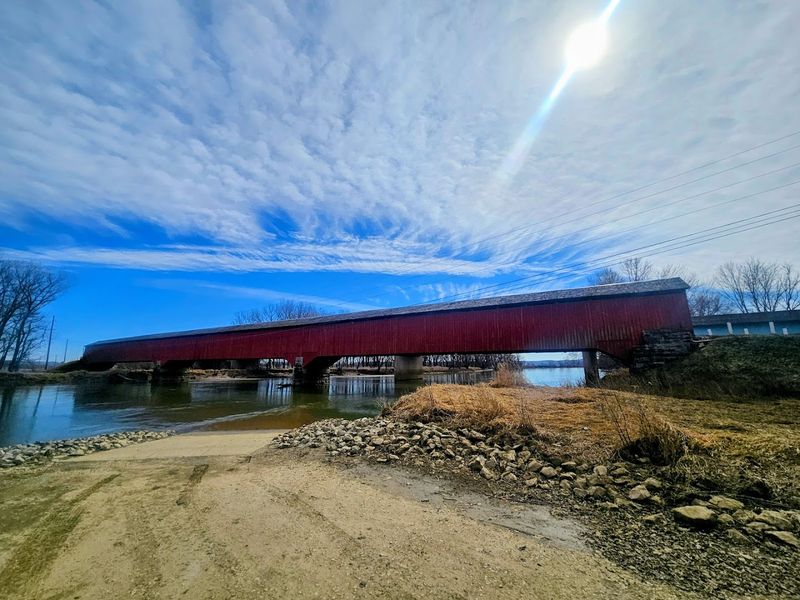
Most covered bridges you come across are charming little structures, maybe 100 feet long if you are lucky. The Medora Covered Bridge is something else entirely.
At 431 feet and 10 inches from abutment to abutment, with a roof stretching 461 feet, it is the longest historic covered bridge in the entire United States.
That is not a small claim. Covered bridges were once common across America, and thousands were built during the 1800s.
The fact that this one in rural Jackson County still holds the record more than 150 years later says a lot about how well it was designed and how hard communities have worked to protect it.
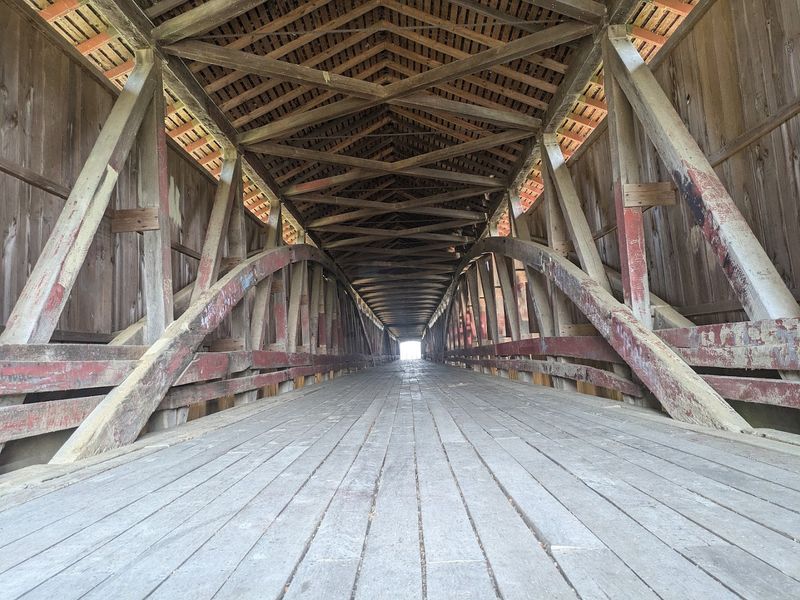
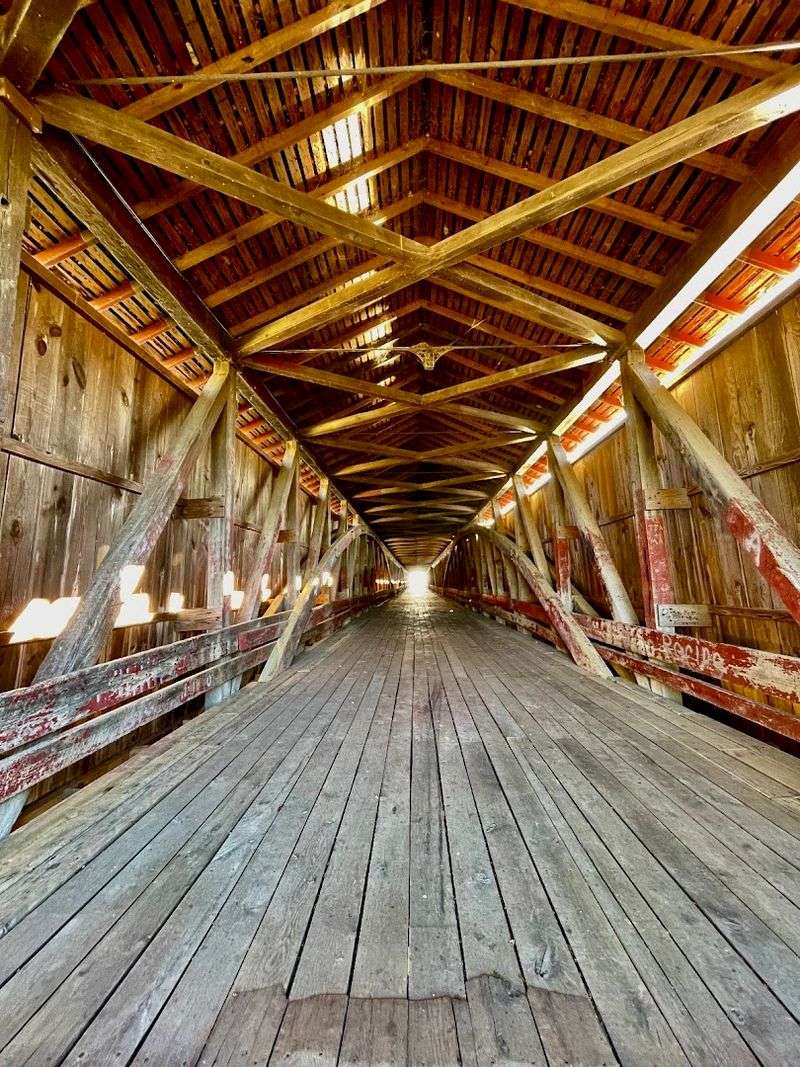
Walking through it gives you a real sense of its scale. The darkness inside, which earned it the local nickname “The Dark Bridge,” wraps around you as you look toward the far end.
It takes a moment for your eyes to adjust, and when they do, you realize just how long this tunnel of history actually is. For anyone who appreciates engineering, nature, or simply something genuinely impressive, this bridge delivers without any exaggeration.
The experience of standing inside it, knowing it has outlasted wars, floods, and even a planned demolition, makes the visit feel meaningful in a way that a photo simply cannot capture.
The Remarkable Story Behind Its Construction in 1875
Joseph J. Daniels was not a casual carpenter.
He was one of the most productive covered bridge builders in Indiana history, and the Medora Covered Bridge stands as one of his finest achievements.
Built in 1875 at a cost of $18,142, the project took nine months to complete and replaced a ferry service that had previously carried people across the East Fork of the White River.
The design Daniels chose was a Triple Span Burr Arch with King Posts, a system built to protect the wooden truss from rain, sun, and the wear of constant use.
The original floor planks were laid lengthwise rather than across the bridge, which reduced the impact of horse hooves and created a smoother, quieter ride for travelers.
That kind of thoughtful engineering detail reveals how seriously Daniels took his work.
What makes this history even more tangible is that some of the original poplar siding boards are still part of the structure today. During the 2011 rehabilitation, workers identified seven original boards by their square nail holes and carefully reinstalled them on the north side of the far west end.
You can actually see these boards during your visit. History is not just something to read about here.
It is something you can stand next to and touch, which makes learning about the bridge feel less like a lesson and more like a discovery.
How a Planned Demolition Turned Into a Story of Survival
Not every piece of history gets a second chance. The Medora Covered Bridge almost did not survive past 1968.
As traffic increased and the bridge aged, officials scheduled it for demolition, a fate that had already claimed thousands of covered bridges across the country. But this one had people in its corner.
Governor Edgar Whitcomb stepped in during 1971 and helped save the structure from being torn down. A modern parallel bridge opened in 1973 to handle vehicle traffic, which allowed the covered bridge to be closed to cars and trucks and preserved as a pedestrian landmark.
That decision turned out to be one of the best things that ever happened to it.
In 2007, the bridge was officially added to the National Register of Historic Places, recognizing its cultural and architectural significance on a national level.
Then in 2011, a major rehabilitation project replaced deteriorated cedar shake shingles, siding, and some rafters while preserving the original truss system underneath.
Cameras were later installed inside to discourage vandalism and graffiti. The fact that the bridge survived a demolition order, outlasted political debates, and still stands open to the public today is a story worth telling.
It is proof that when communities care about something, they can protect it for future generations. Visiting the bridge now feels like participating in that ongoing effort to keep history alive.
Walking Through the Bridge Is Free and Open Every Day
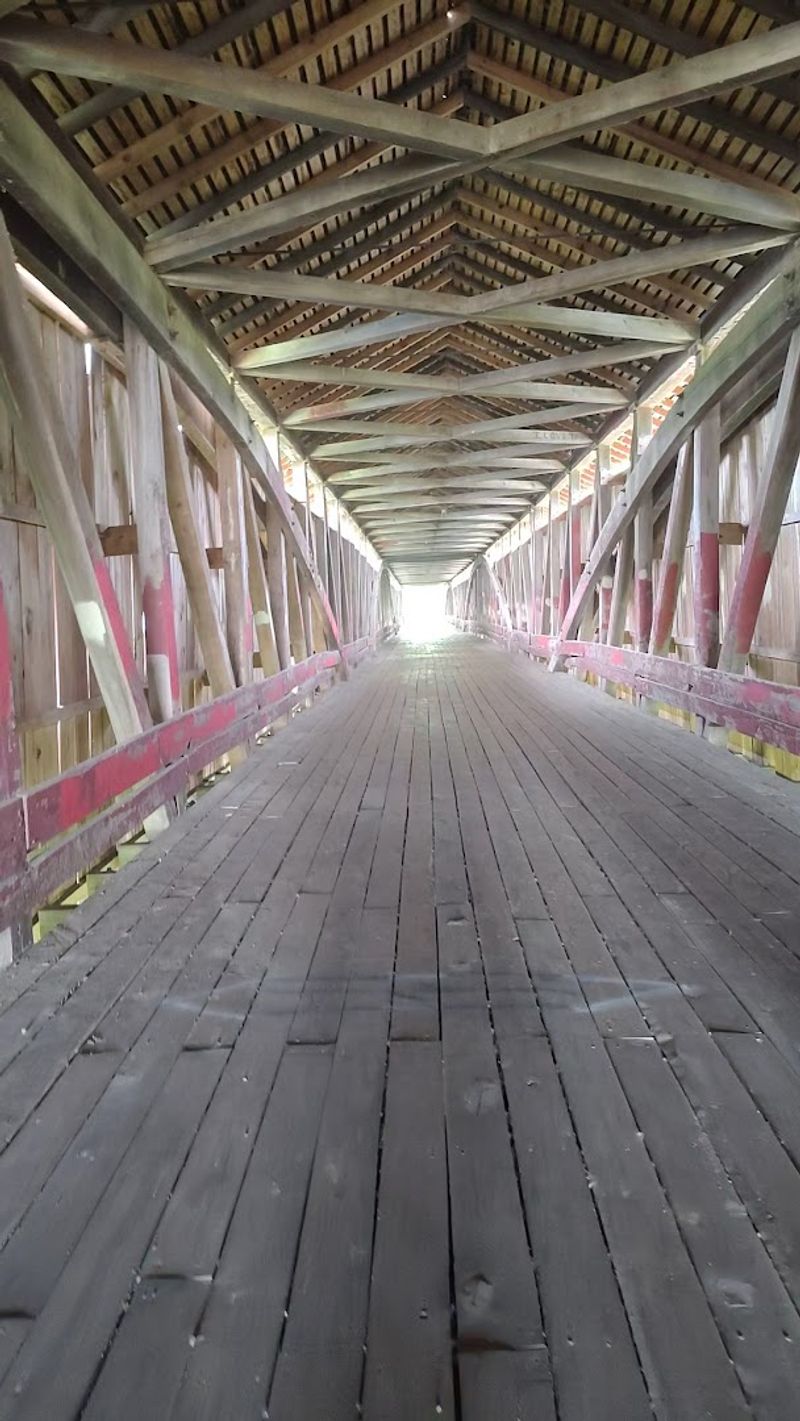
Free admission and open 24 hours a day, seven days a week. That combination alone makes the Medora Covered Bridge worth adding to any road trip itinerary.
There are no tickets to buy, no timed entry windows, and no crowds blocking your view. You simply show up and walk through one of the most historically significant wooden structures in the country.
Pedestrians and cyclists are welcome to cross the bridge at their own pace. Most people take their time, pausing to look at the massive wooden beams overhead and reading the informational plaques posted near the parking area on the west end.
Those plaques give a solid overview of the bridge’s history and the preservation efforts that kept it standing. It is a good idea to read them before you walk across so the experience feels more connected to what you are seeing.
The bridge is located along IN-235 near Vallonia, Indiana, which puts it within a reasonable drive from several nearby towns. Parking is available on the west end, and the area around the bridge is clean and well-maintained.
Whether you visit on a quiet weekday morning or a warm summer afternoon, the experience tends to feel unhurried and personal. There is something genuinely refreshing about a historic landmark that simply asks you to show up, look around, and appreciate what has been preserved for you.
The Picnic Area and River Access Make It a Full Day Out
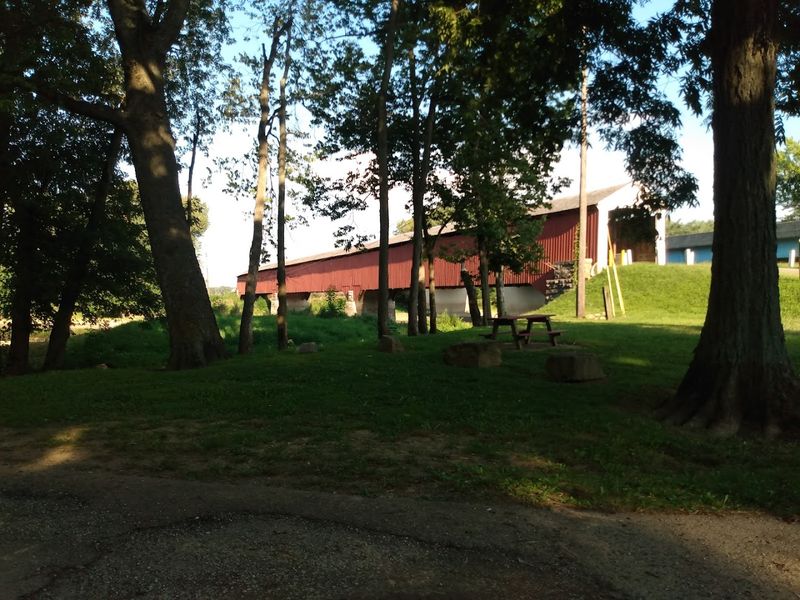
A visit to the Medora Covered Bridge does not have to be a quick stop. The west end of the bridge has a picnic area with benches where families can sit, eat, and enjoy the sound of the East Fork of the White River moving beneath the structure.
It is the kind of simple, relaxed setting that makes an afternoon feel well spent without requiring much planning.
There is also a boat launch ramp nearby, which opens up the visit for people who enjoy fishing or getting out on the water. Bank fishing along the river is a popular activity for visitors who want to combine a bit of history with some time outdoors.
The combination of the bridge, the river, and the surrounding trees creates an environment that feels genuinely peaceful rather than overly developed or commercial.
For anyone planning a longer outing, Starve Hollow State Recreation Area is located in Jackson County as well, offering camping, fishing, and swimming at Starve Hollow Lake, 4930 S Starve Hollow Rd, Vallonia, IN 47281. If you want a meal before or after your visit, the town of Medora is just about a mile to the west.
The whole area rewards visitors who take their time and treat the trip as more than just a photo opportunity. Bring a blanket, pack some food, and settle in for a while.
Annual Events on the Bridge Create Unforgettable Memories
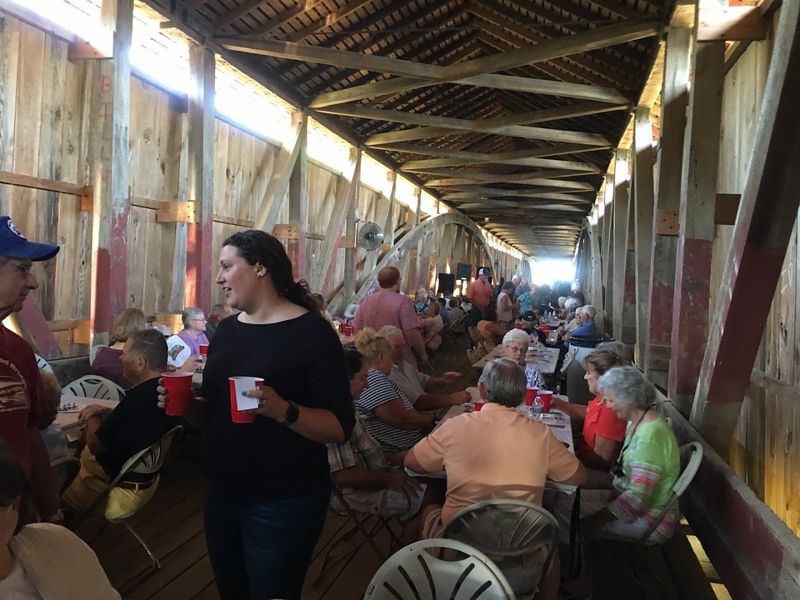
Once a year, the Medora Covered Bridge becomes something even more extraordinary than usual. The Friends of the Medora Covered Bridge organize two signature events each summer, typically held in early August.
One is called “Day at the Bridge,” a community gathering that celebrates the structure and its history. The other is “Dinner on the Bridge,” where guests purchase tickets to enjoy a sit-down meal inside the bridge itself.
Imagine eating dinner surrounded by 150-year-old wooden beams, with the East Fork of the White River flowing just below you. That kind of experience is rare anywhere in the world, and the fact that it happens right here in rural Indiana makes it feel even more special.
The events sell out, so checking ahead and planning early is a smart move if you want to attend.
These gatherings are not just fun. They also support the ongoing preservation of the bridge by raising awareness and funds for its upkeep.
Attending one of these events connects you to a larger community of people who genuinely care about keeping this landmark alive. Even if you cannot make it to an event, knowing they exist gives the bridge an extra layer of personality.
It is not a museum piece behind glass. It is an active, living part of the community, and the annual events prove that better than anything else could.
Nearby Attractions Make the Whole Area Worth Exploring
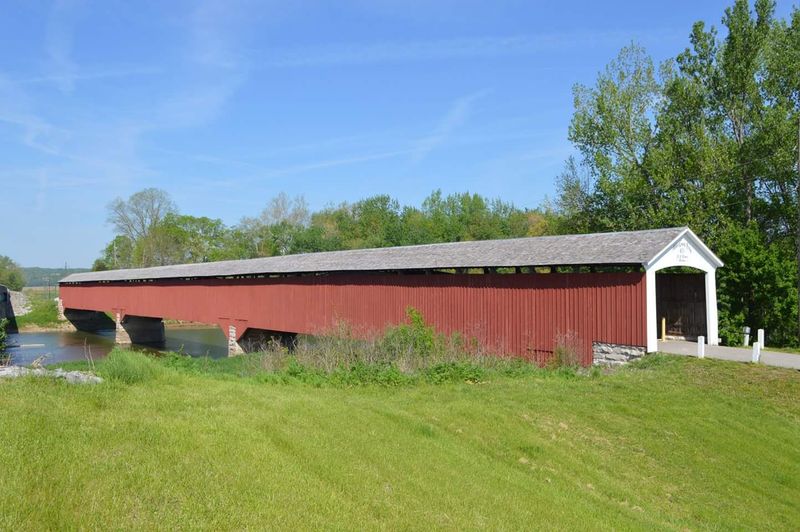
The Medora Covered Bridge sits at the center of a region that has more to offer than most first-time visitors expect. The town of Medora, about one mile to the west, is home to the historic Medora Brick Plant, one of the oldest continuously operating brick manufacturers in Indiana.
It is a fascinating piece of industrial history that complements the story of the bridge nicely.
Guthrie Creek, accessible near the town, is a natural area where visitors can enjoy quiet time outdoors away from the more visited spots.
Jackson County is also known for several other covered bridges, making it a worthwhile destination for anyone interested in completing a covered bridge tour of the region.
The county has a rich collection of historic structures that tell the story of rural Indiana in the 1800s.
If you are looking for a place to eat while exploring the area, Brownstown, the Jackson County seat, is a short drive away. Brownstown offers local dining options including Brock’s Restaurant at 216 W Walnut St, Brownstown, IN 47220, which serves straightforward American food in a casual setting.
The combination of the bridge, the town of Medora, the surrounding natural areas, and the nearby county seat gives visitors a genuinely full experience. This is not a one-stop destination.
It is an entire corner of Indiana waiting to be explored at a comfortable, unhurried pace.
